The mansion from X2 is on Vancouver Island. The town in It is in Ontario. And the French square at the end of Catch Me If You Can? That is Québec City.
These 25 movie locations in Canada give you more than a familiar backdrop to recognize. Each stop below pairs a film with the real place, explains what you can see today, and flags the access detail that could change your plans. They are grouped by region so you can build a sensible trip around a few favorites.
Start with one region. Vancouver, the Calgary area, Toronto, and Québec City make useful bases; Cape Forchu belongs on a separate southwest Nova Scotia trip. This is a collection of places to choose from, rather than a single cross-country weekend route.

Visual note: The images are AI-generated travel concepts, not film stills or photographs documenting the actual locations. Architecture, scenery, and viewpoints are illustrative; use the location names and access notes to plan your visit.
Choose your movie-location trip
- British Columbia, stops 1–8: superhero castles, Vancouver streets, a mine museum, and First Blood country.
- Alberta, stops 9–13: Brokeback Mountain, Inception, prairie streets, and dramatic badlands.
- Ontario, stops 14–21: a Toronto film walk, two very different It stops, and classic Niagara scenery.
- Québec, stops 22–24: European-looking squares, a Hitchcock landmark, and Old Montréal.
- Nova Scotia, stop 25: the windswept coast behind The Lighthouse.
For an easy introduction, pick an urban cluster with public sidewalks. For a scenery-focused trip, give the Alberta mountains and badlands separate days. The suggested visit times below are planning estimates, not official tour lengths.
British Columbia: castles, city streets, and coastal scenery
1. Hatley Castle, Colwood — X2 (2003)
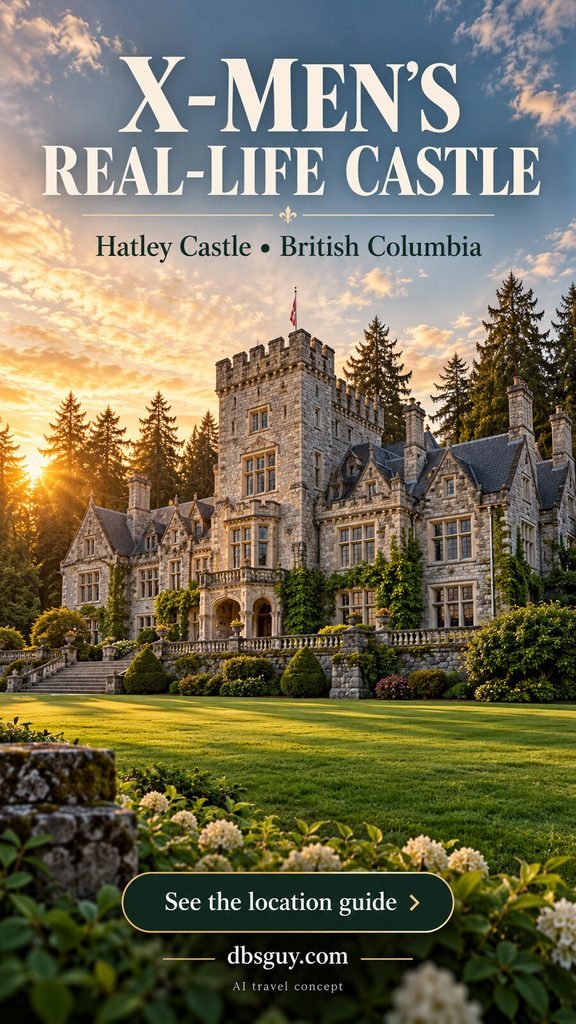
Find it: Hatley Park at Royal Roads University, 2005 Sooke Road, Colwood, on Vancouver Island near Victoria.
Hatley Castle supplies the instantly recognizable exterior of Xavier’s school in X2. The stone walls, crenellated tower, and garden-facing façade make this a satisfying stop even if you never step inside. Hatley Park’s own film list confirms the production connection.
Plan around the park’s current garden access and guided-tour schedule. Castle interiors are accessible only with a guided tour, and this remains a working university setting. Allow roughly 1–2 hours for a relaxed exterior-and-garden visit. If you are starting in Vancouver, book and budget for the ferry crossing; the castle is on the island, not in the city.
2. First Avenue, Ladysmith — Sonic the Hedgehog (2020)
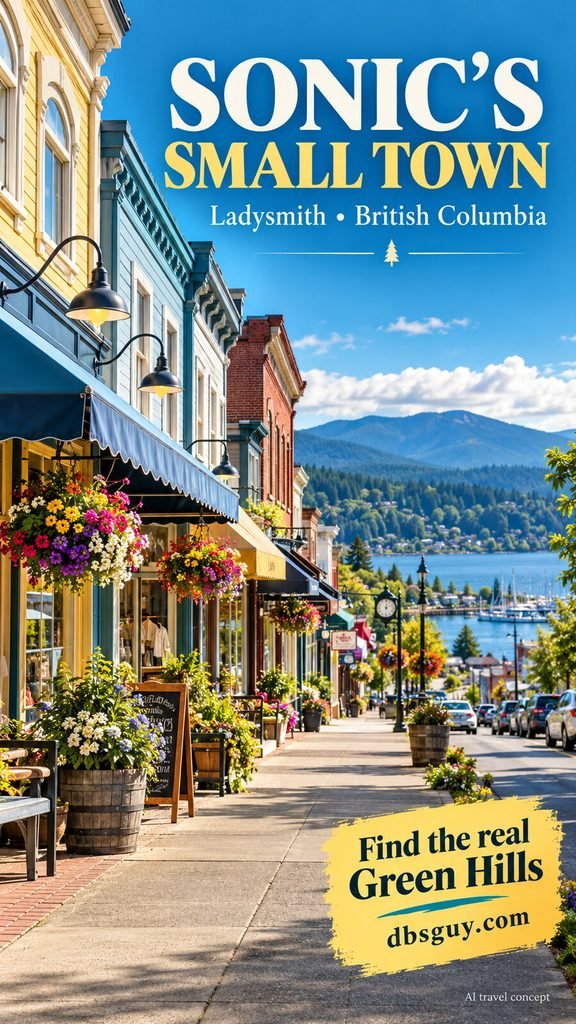
Find it: First Avenue between Roberts Street and Gatacre Street, Ladysmith, Vancouver Island.
Green Hills, Montana, was built from this real Canadian downtown. Tourism Ladysmith identifies Bayview Framing as the movie’s police station and Top Drawer Consignment as the transformed donut shop. That makes this an unusually easy location to explore on foot.
Walk the short filming stretch, browse whichever businesses are open, and leave time for a café break. Expect present-day storefronts rather than preserved movie dressing. Ladysmith and Hatley Castle can anchor an island itinerary, but they are separate stops requiring travel between them. A leisurely hour downtown is more useful than chasing every camera angle.
3. Gastown, Vancouver — The NeverEnding Story (1984)
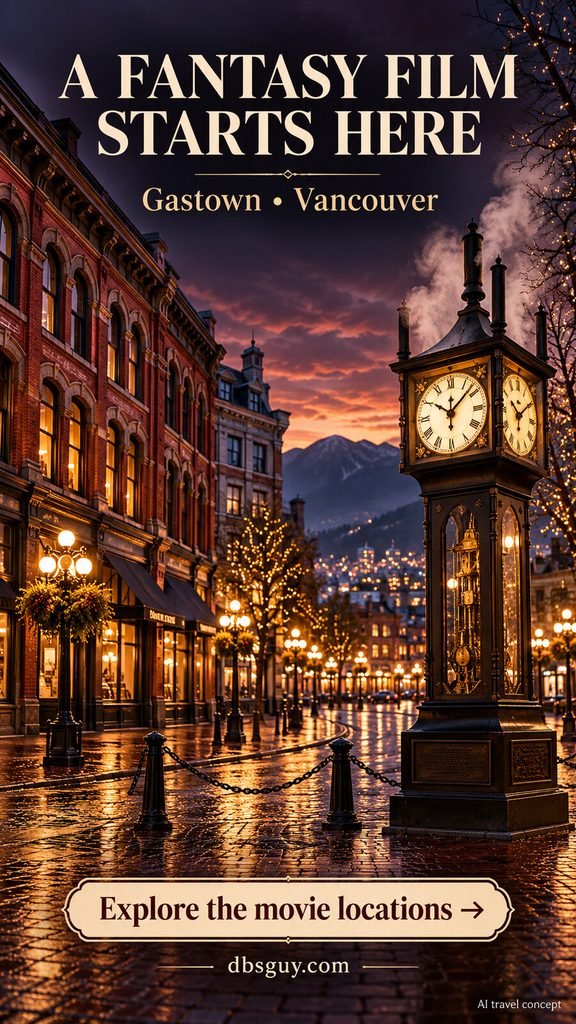
Find it: Gastown’s historic streets around Water Street and Cambie Street, Vancouver.
Before the story enters its fantasy world, The NeverEnding Story used Vancouver locations, including Gastown. Canada’s Historic Places identifies the district’s connection to the film. The appeal today is the streetscape: brick buildings, period details, and lanes that can change character with lighting alone.
Use the steam-clock area as an easy meeting point, then walk the public streets rather than assuming every famous landmark appeared in the movie. This is a district-level film connection, not a promise that the clock marks a specific shot. Overcast weather can suit the brick textures beautifully; keep photography clear of doorways and ordinary pedestrian traffic.
4. The Orpheum, Vancouver — The Imaginarium of Doctor Parnassus (2009)

Find it: The Orpheum, 601 Smithe Street, downtown Vancouver.
The charity-gala scene in The Imaginarium of Doctor Parnassus used this elaborate theater. Its warm ornament, sweeping auditorium, and decorative ceiling are a completely different kind of movie location from an outdoor street or mountain viewpoint.
Make the visit part of a performance night or a publicly offered tour, when available. An exterior walk-by will not show you the auditorium featured in the film, and a ticket does not automatically allow unrestricted photography. Check the event’s rules before bringing a camera. Pair the Orpheum with Gastown for a downtown day, leaving enough time to enjoy the theater for its current program as well as its screen history.
5. Britannia Mine Museum, Britannia Beach — Scooby-Doo 2: Monsters Unleashed (2004)
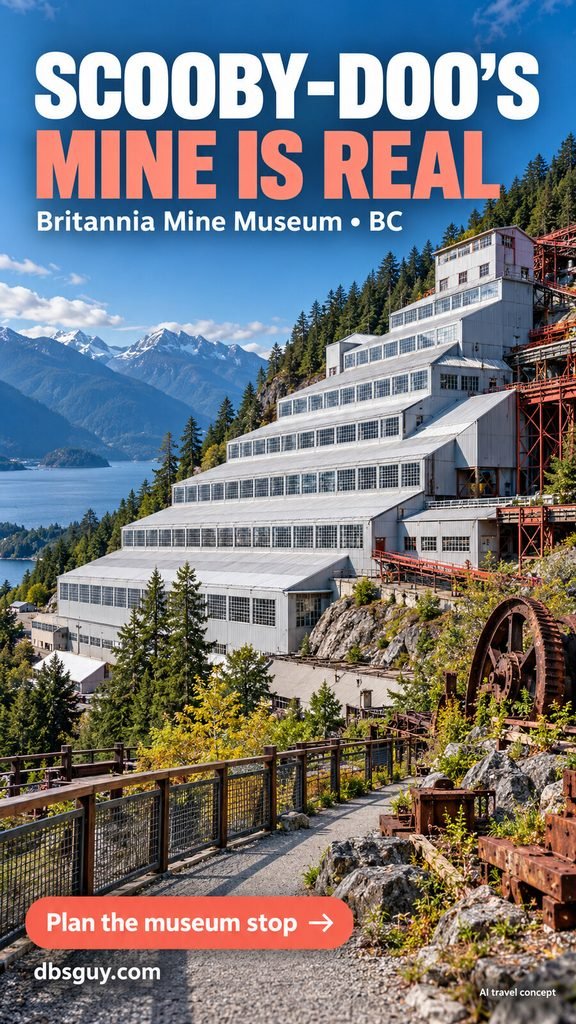
Find it: Britannia Mine Museum, 1 Forbes Way, Britannia Beach, on the Sea-to-Sky Highway.
The museum lists Scooby-Doo 2: Monsters Unleashed among the movies filmed on its property. Its huge hillside concentrator and industrial spaces explain the appeal: the setting has visual drama without needing a fantasy castle or a city skyline.
Book a normal museum visit and follow the museum’s tour arrangements; do not expect a surviving Scooby-Doo set. This is a particularly good choice for a group with mixed interests, because the mining exhibits give everyone something to do. Allow a half day if you want a comfortable visit plus the drive and another Sea-to-Sky stop. Use official pullouts for coastal photographs.
6. Buntzen Lake, Anmore — Freddy vs. Jason (2003)
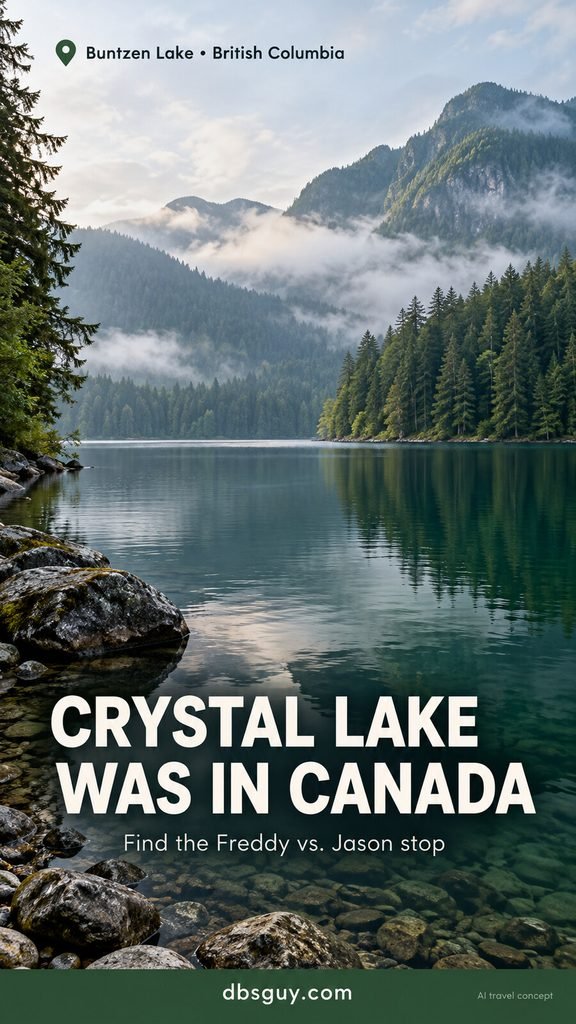
Find it: Buntzen Lake Recreation Area in Anmore, northeast of Vancouver.
BC Hydro identifies Buntzen Lake as the backdrop for Camp Crystal Lake sequences in Freddy vs. Jason. You can trade the film’s unsettling atmosphere for an ordinary day by the water, with mountain slopes and dense forest supplying the recognizable mood.
The recreation area has seasonal gate hours and summer vehicle-parking reservations. Check BC Hydro’s current rules before driving out, including trail notices. A lakeside stop is a different commitment from hiking to more distant shores; choose the route that fits your group rather than assuming a complete loop is necessary. Expect scenery, not a preserved camp or access to a private film set.
7. Downtown Hope — First Blood (1982)
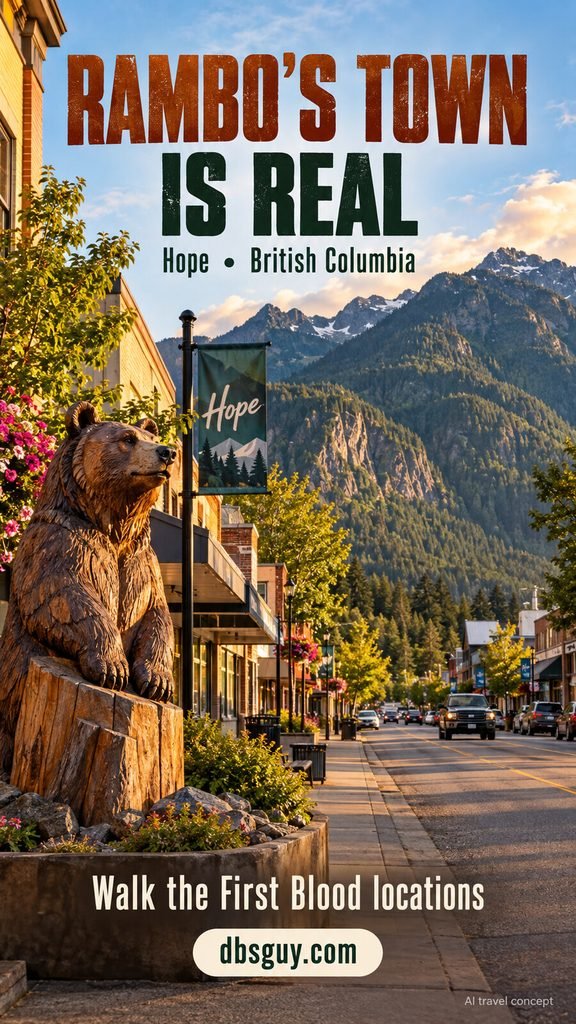
Find it: Downtown Hope, British Columbia; start with the local visitor center’s film-location information.
Hope became the small American town in First Blood. Today, a self-guided walk gives you the contrast that makes the film memorable: an ordinary downtown framed by imposing mountains. The local tourism organization confirms Hope’s starring role.
Leave room for a slow walk and compare locations with a saved scene image where you can do so from public space. Some buildings and road features have changed since filming. In particular, the original bridge used in the movie was removed, so do not arrive expecting to walk across that structure. Hope suits action-film fans who enjoy tracing a town’s geography more than visiting a single exhibit.
8. Othello Tunnels, near Hope — First Blood (1982)

Find it: Coquihalla Canyon Park, reached via Tunnels Road near Hope.
The canyon around the Othello Tunnels supplied rugged First Blood terrain. Unlike downtown Hope, this stop is about granite walls, dark railway tunnels, and the river far below. The historic-site register documents the film connection.
Access checked October 12, 2026: the park operator reports Tunnels 1–4 open, with the route closed from the start of Tunnel 5 onward for stabilization work. Recheck before traveling, because seasonal and repair closures change. Bring a flashlight, stay on the permitted path, and follow barriers. BC Parks prohibits swimming here; the canyon is a viewing location, and the film’s stunts are not activities to recreate.
If Ladysmith and Hope appeal because you love a walkable downtown, our 15 Dreamy Small Towns in America That Feel Made for a Fall Weekend offers more inspiration for a separate U.S. getaway.
Alberta: mountain drama and prairie movie towns
9. Upper Kananaskis Lake — Brokeback Mountain (2005)
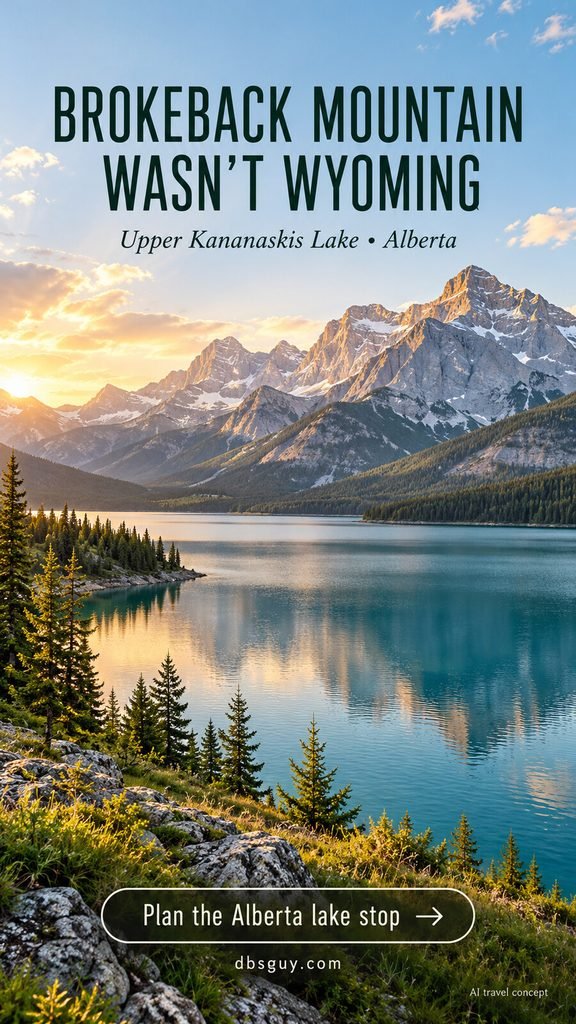
Find it: Upper Kananaskis Lake in Peter Lougheed Provincial Park, Kananaskis Country.
Travel Alberta identifies this lake among the filming locations used for Brokeback Mountain. The practical attraction is the landscape itself: a mountain-ringed lake where you can enjoy the setting without finding a house or purchasing a film-specific tour.
Choose an open day-use area and a short lakeside walk if scenery is your priority. A full circuit is a separate hiking plan and should depend on conditions and ability. Vehicles parked at provincial park sites in the pass area generally need a Kananaskis Conservation Pass; check the current rules and exemptions. Treat early snow, wildlife notices, and reduced daylight as reasons to adjust the day, even when a concept image shows clear weather.
10. Fortress Mountain — Inception (2010)
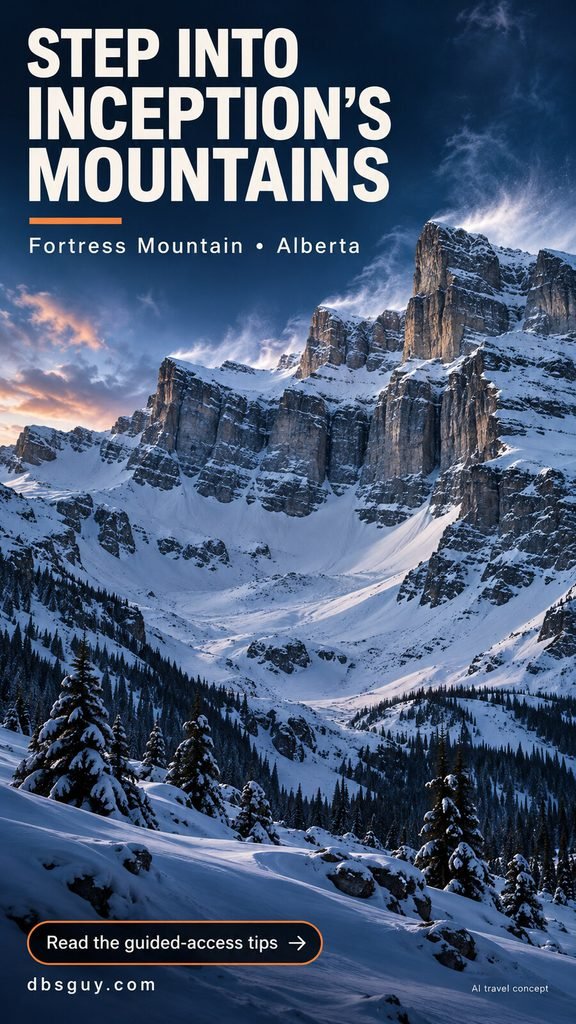
Find it: Fortress Mountain in Kananaskis Country, west of Calgary.
The snowbound dream level in Inception was filmed here. Travel Alberta describes the production’s purpose-built mountain set, an important distinction if you are imagining a permanent fortress waiting at the end of a trail.
Plan access through the operator rather than treating it as an unrestricted roadside attraction. Fortress advertises guided hiking and winter adventures, with availability dependent on operations and conditions. Ask which currently offered experience is appropriate for seeing the filming landscape. Book only after confirming access, meeting arrangements, and what the tour actually covers. This is a worthwhile mountain experience for committed film fans, but it needs more planning than an urban sidewalk stop.
11. Historic downtown Fort Macleod — Ghostbusters: Afterlife (2021)
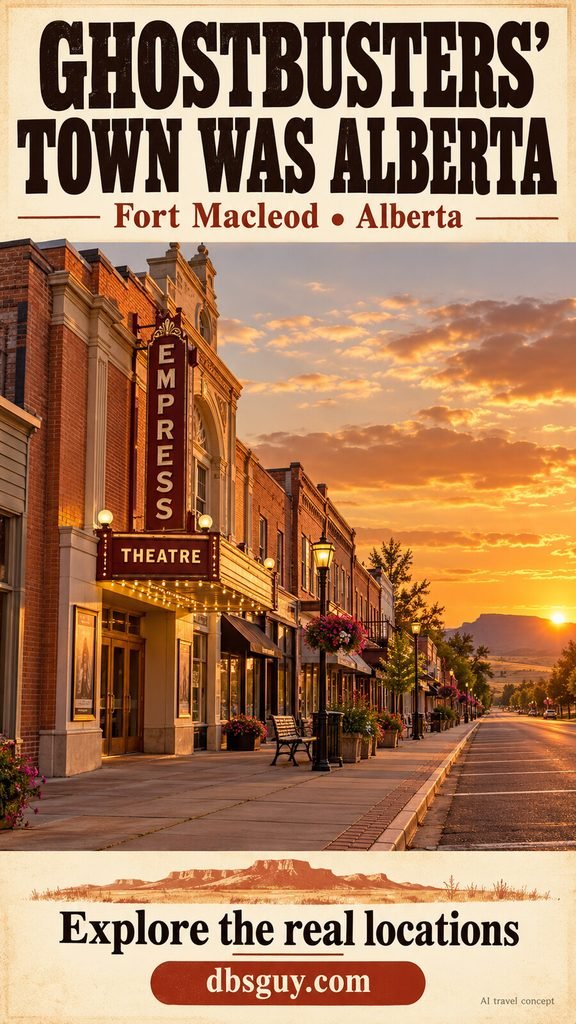
Find it: Historic downtown around 24th Street and the Empress Theatre, Fort Macleod.
Ghostbusters: Afterlife presents Summerville as an Oklahoma town, but Alberta supplied its real-world pieces. Fort Macleod’s historic streets and Empress Theatre are part of that filming geography, as documented by Travel Alberta.
This is an easy place to slow down: walk the block, look at the storefront proportions, and spend money at an open local business. Do not expect every location in Summerville to sit around the same corner. A 1–2-hour stop works well for the town itself, but the badlands locations below belong to another driving area. Keep the theater visit dependent on public opening or event arrangements.
12. Horsethief Canyon, near Drumheller — Ghostbusters: Afterlife (2021)
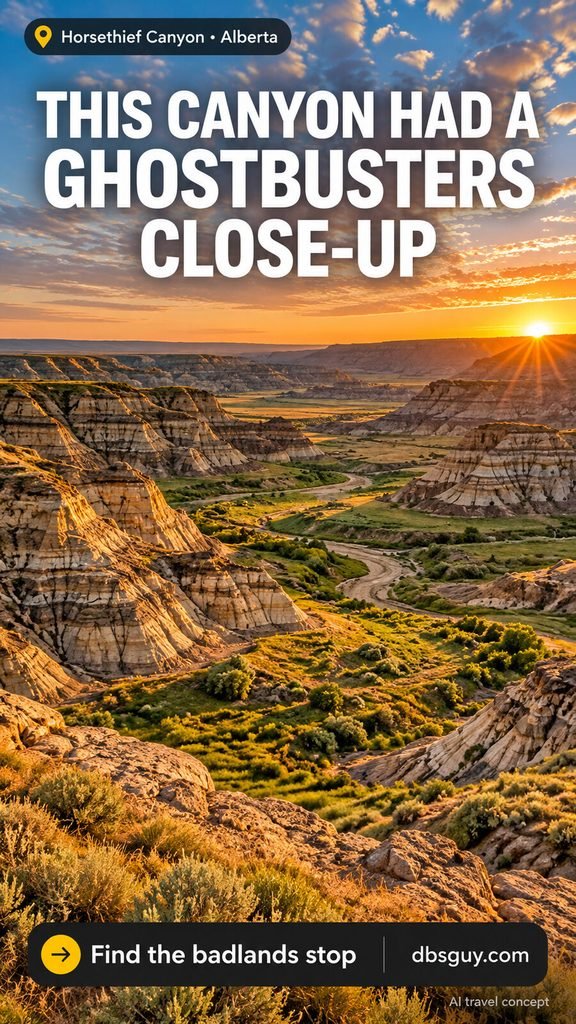
Find it: Horsethief Canyon on the North Dinosaur Trail near Drumheller.
This broad badlands landscape appears in Ghostbusters: Afterlife and is named in Travel Alberta’s filming guide. The layers and ridgelines make it compelling even for travelers who have not seen the movie.
Use the designated viewpoint for a straightforward stop. You do not need to descend into the canyon to appreciate the setting, and a rim visit should not be mistaken for a planned backcountry outing. The name matters: Horsethief Canyon and Horseshoe Canyon are separate attractions. Save the correct location before driving. Bring water and footwear suited to loose ground, and stay back from unstable edges when composing a photograph.
13. Drumheller Hoodoos — Unforgiven (1992)
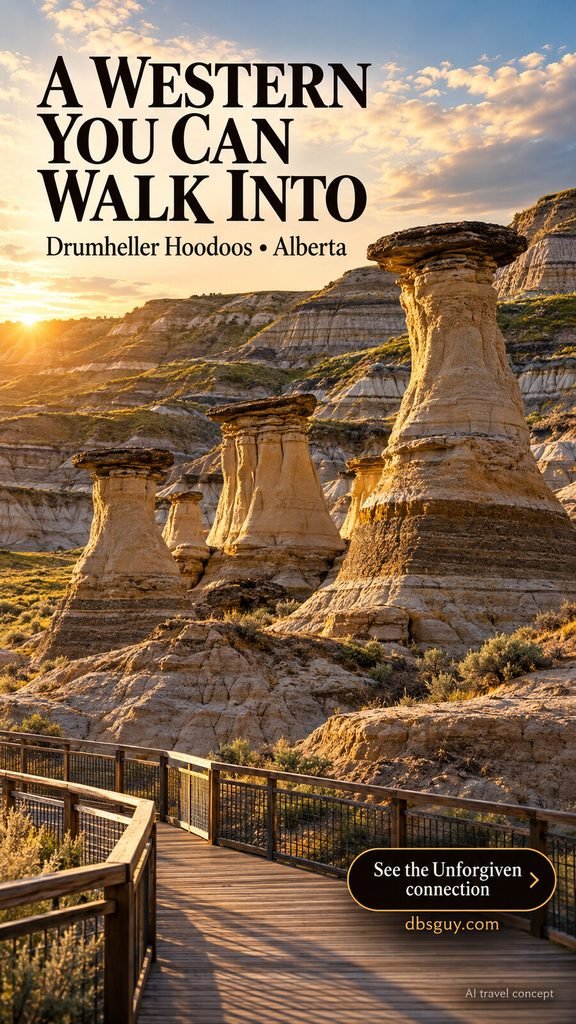
Find it: The designated Drumheller Hoodoos site along Highway 10, southeast of town.
Canada’s Historic Places connects these distinctive columns and caprocks with Clint Eastwood’s Unforgiven. Compared with the wide panorama at Horsethief Canyon, this is an intimate stop: texture, shape, and scale are the reasons to get out of the car.
View the formations from the designated paths and do not climb the pillars. The cinematic appeal comes from the landscape, not a surviving Western town set. Pair the hoodoos with another Drumheller-area attraction and keep the schedule flexible for weather. The two badlands stops work together, while Fort Macleod should be planned as a separate prairie leg.
For more landscape-led travel ideas beyond these film stops, explore People Are Trading Perfect Resorts For Places That Feel Almost Unreal—25 “Mystic Outlands” Worth Getting Lost In.
Ontario: Toronto film spots and memorable day trips
14. Casa Loma, Toronto — X-Men (2000)
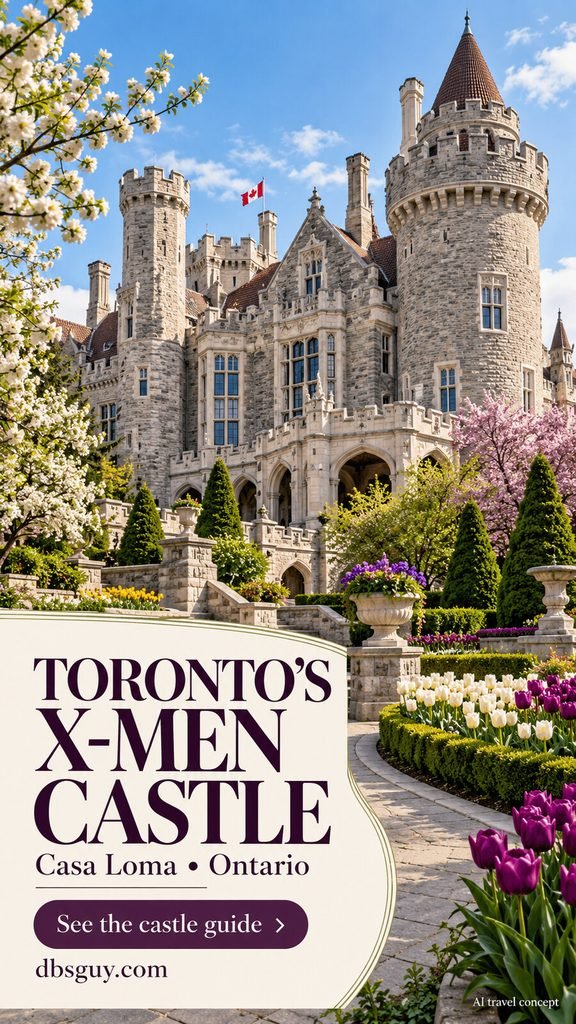
Find it: Casa Loma, 1 Austin Terrace, Toronto.
The first X-Men used Casa Loma as part of Xavier’s school. A visit is especially rewarding for the interiors and the castle’s film-history displays. It also explains why a single screen mansion can seem impossible to match: movies often combine multiple properties.
Book regular admission and give yourself a few hours to explore what is open. Look for the Hollywood Film Gallery rather than expecting every room to match a screen shot. This entry covers the 2000 film’s Toronto castle location; Hatley’s later exterior and Parkwood’s original exterior are separate places. That distinction is useful when choosing the stop most likely to deliver the scene you remember.
15. Distillery District, Toronto — Chicago (2002)
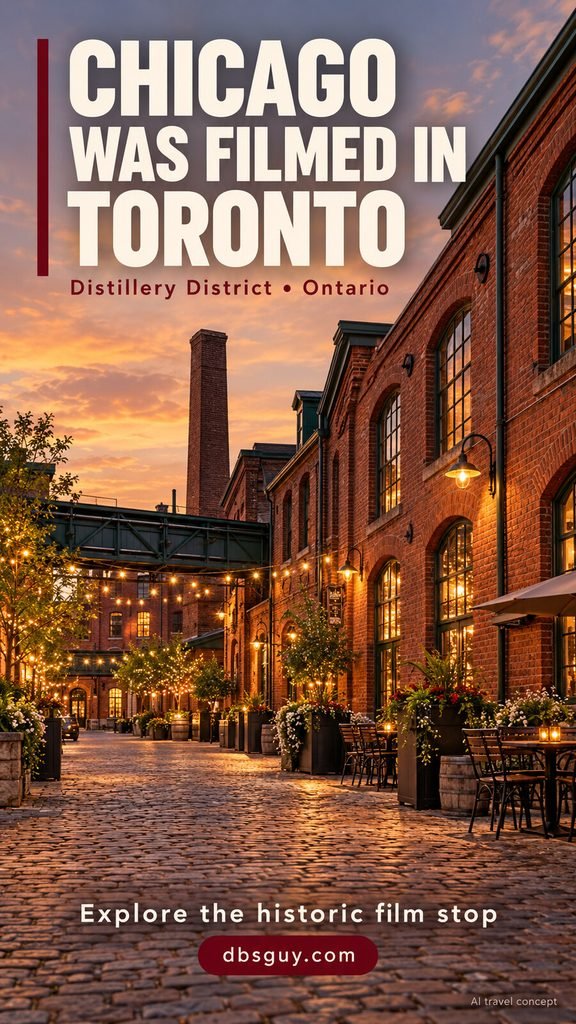
Find it: The pedestrian Distillery District around Trinity Street, Toronto.
The prison exteriors in Chicago used the district’s historic industrial buildings. Destination Toronto confirms the connection. Brick façades and broad windows are the details to notice; the location does not need to resemble modern downtown Chicago to make the film’s period world convincing.
The public lanes are easy to explore, while restaurants, shops, and special events have their own hours and arrangements. Visit early for a quieter architectural walk or later for a livelier food stop. Leave a couple of hours if you plan to eat. This is one of the best choices for travelers who want film history folded into an enjoyable city day.
16. The Lakeview, Toronto — The Shape of Water (2017)
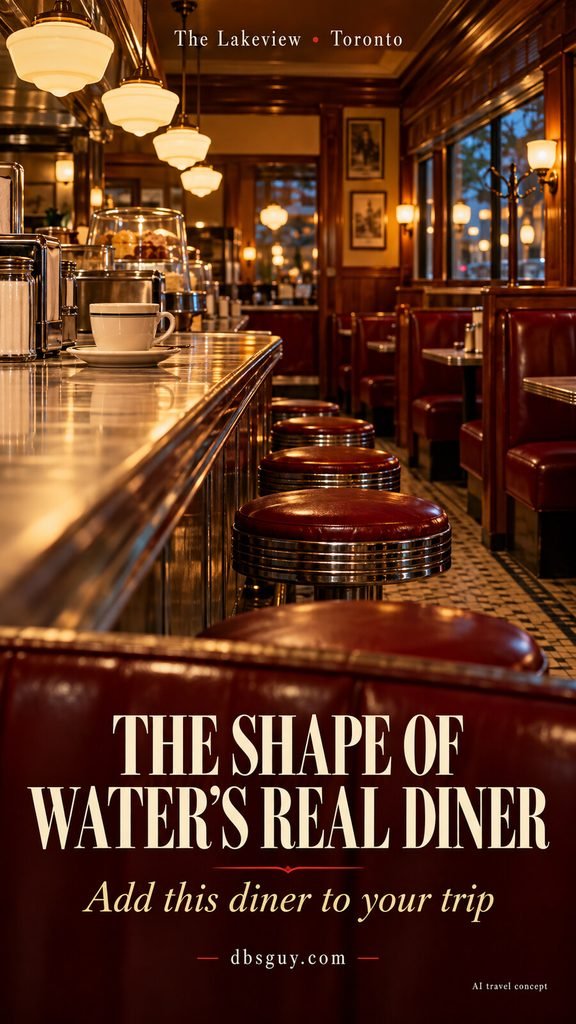
Find it: The Lakeview, 1132 Dundas Street West, Toronto.
The pie-and-conversation diner scenes involving Giles in The Shape of Water were filmed at The Lakeview. Destination Toronto identifies the restaurant, giving you a film stop with a practical purpose: lunch, coffee, or a break from walking.
Check the current restaurant hours and treat the space as a working business. Buy something if you sit down, and ask before photographing inside. The movie’s booths, angles, and dressing should not be treated as a guarantee about today’s layout. For a couple or a solo traveler, this can be more enjoyable than a location you only glimpse through a fence.
17. Toronto Reference Library — RED (2010)

Find it: Toronto Reference Library, 789 Yonge Street, Toronto.
RED used this library for its library scene. The multilevel atrium and curved balcony lines make the building worth noticing even if the film is only a faint memory. It is a useful indoor option when the weather makes a long streetscape walk less appealing.
Visit during public opening hours and keep the stop quiet and unobtrusive. This is a library serving readers, researchers, and local residents. Take any permitted photographs without framing people who are studying, and follow staff instructions. The location is convenient to combine with other central Toronto plans; there is no need to devote an entire day to a short architectural look.
18. Parkwood Estate, Oshawa — X-Men (2000)
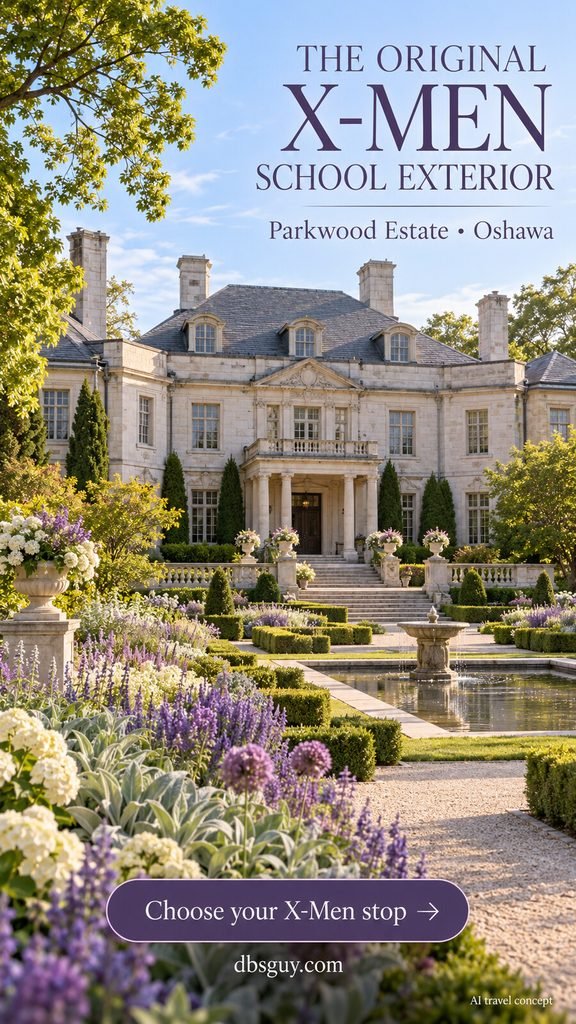
Find it: Parkwood National Historic Site, 270 Simcoe Street North, Oshawa.
Parkwood’s own account identifies the estate’s exterior as the academy in the first X-Men. This is the Ontario stop to choose if the outside of the school interests you more than Casa Loma’s interior rooms.
Check the estate’s tour and grounds arrangements before making the trip. Specialty film tours may be limited, so do not assume one is available on any date. The gardens and heritage house also stand on their own as a visit. Oshawa sits east of Toronto and can be paired with an eastbound trip toward Port Hope, provided the opening schedules line up.
19. Downtown Port Hope — It (2017)
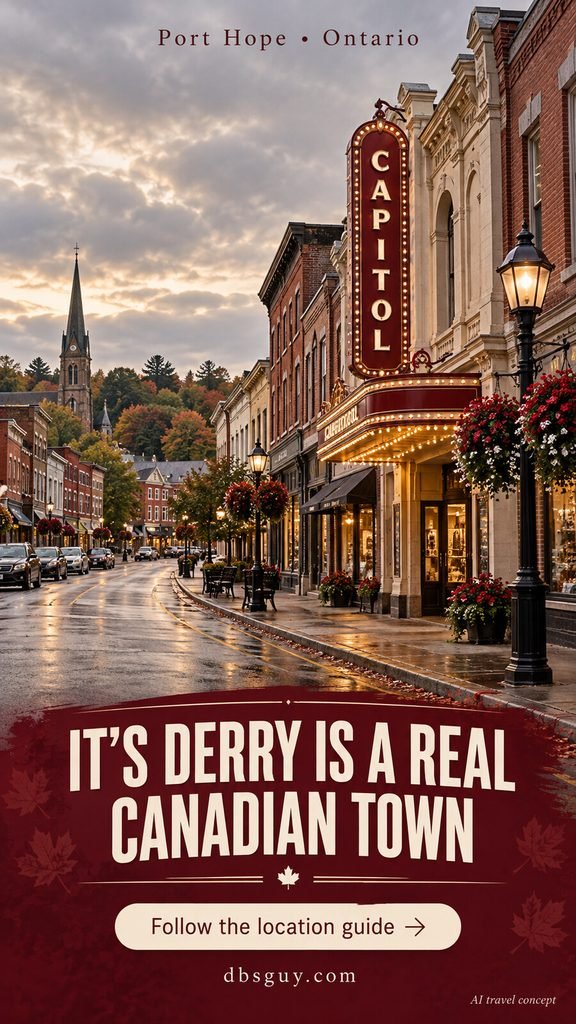
Find it: Downtown Port Hope, especially the Walton Street and Queen Street area.
The fictional town of Derry, Maine, borrowed Port Hope’s real streets in It. The town’s official walking tour identifies the Capitol Theatre as the Derry movie theater and its lobby as the arcade used by the Losers’ Club. Queen Street supplied the Fourth of July parade location.
Use that walking-tour information to make the visit specific rather than wandering after a vague “Derry” map pin. The streets remain public, but homes and businesses are not open film sets. Allow a relaxed half day if you want the downtown walk, a meal, and a look at the river. Expect local storefronts and everyday activity, not the movie’s fictional signs.
20. Elora Quarry — It (2017)
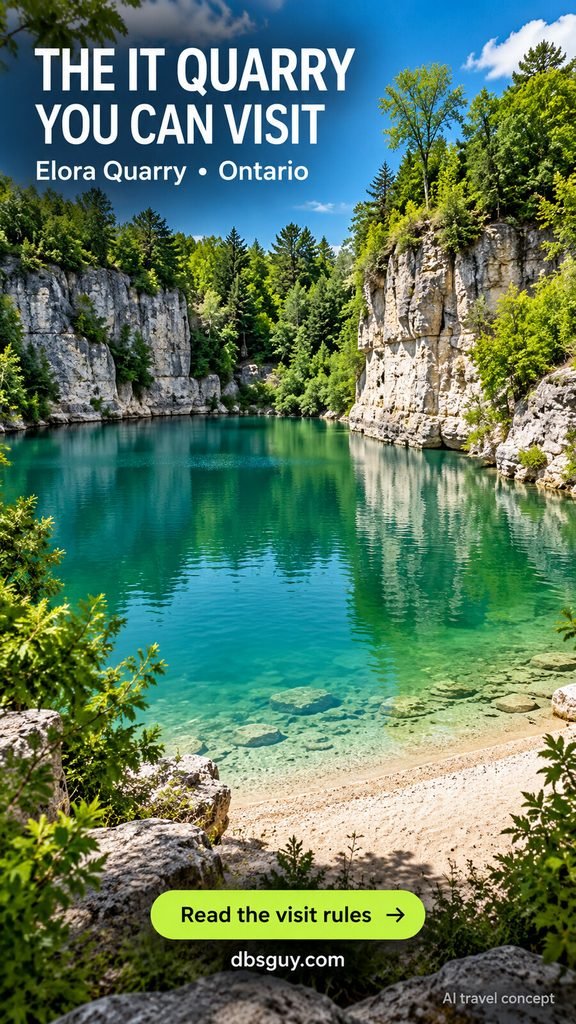
Find it: Elora Quarry Conservation Area, 319 Wellington Road 18, near Elora.
The quarry sequence in It used this limestone-walled swimming spot. Local tourism identifies the film connection, and the Grand River Conservation Authority manages visits. It is a very different experience from the Port Hope street locations.
Book the required timed admission when the quarry is open, and check the current season before traveling. Jumping, diving, and climbing from the cliffs are prohibited. A movie scene is not permission to repeat the activity. Enjoy the designated beach and permitted paths instead. Elora lies west of Toronto, while Port Hope lies east, so these two It stops are better planned on separate days.
21. Table Rock and the Horseshoe Falls, Niagara Falls — Niagara (1953)
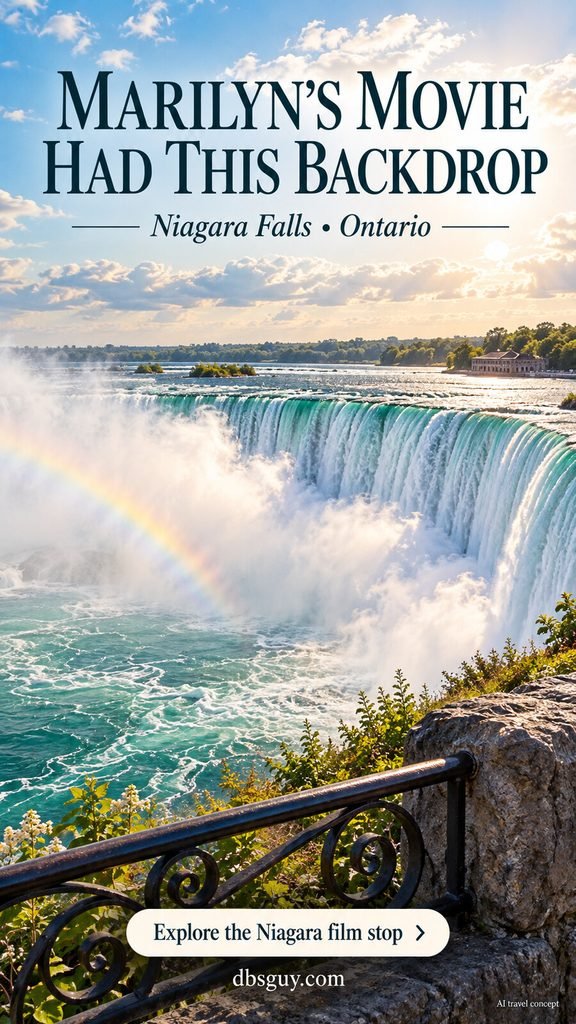
Find it: The Canadian-side promenade by Table Rock Centre and Horseshoe Falls, Niagara Falls, Ontario.
Niagara used the falls as far more than background decoration. Niagara Falls Tourism documents Marilyn Monroe filming near Table Rock House by the Canadian Horseshoe Falls. The water, mist, and sheer scale remain the reasons to come.
Begin with the public promenade and decide separately whether you want a paid attraction. A falls view does not require matching a 1950s hotel or entering a restricted building. Bring a layer that can handle mist, keep your phone secure, and follow the railings. Give Niagara its own day instead of squeezing it between east-of-Toronto locations.
Québec: European streets without crossing the Atlantic
22. Place Royale, Québec City — Catch Me If You Can (2002)

Find it: Place Royale, in the Lower Town of Old Québec.
The arrest sequence near the end of Catch Me If You Can is the payoff here. Québec City’s tourism authority identifies Place Royale and Notre-Dame-des-Victoires Church as the stand-in for a village in northern France.
Walk the square, then look back toward the church to understand the setting’s enclosed, European feel. Christmas decorations and winter light may echo the film’s mood, but the location is worth visiting in any comfortable walking season. Lower Town streets and the route up to Upper Town involve slopes and stairs in places, so plan your return before choosing footwear or taking a long detour.
23. Château Frontenac, Québec City — I Confess (1953)
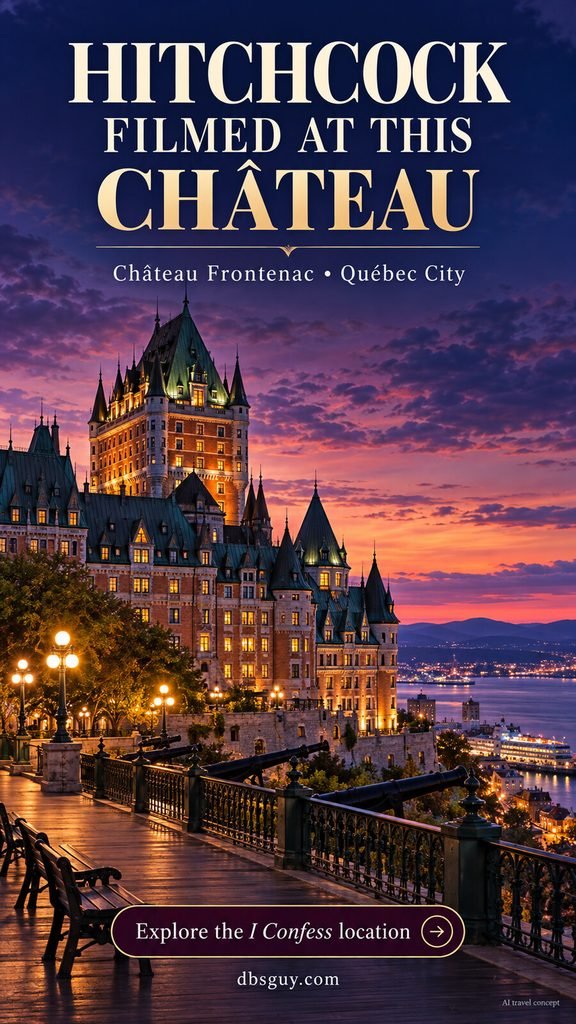
Find it: Fairmont Le Château Frontenac beside Dufferin Terrace in Upper Town, Québec City.
Alfred Hitchcock’s I Confess was filmed in Québec City, with the château among the locations identified by the city’s tourism authority. It gives classic-film fans a landmark that also belongs naturally on a first visit to the city.
Start outside on the public terrace, where you can appreciate the building without needing a room reservation. Interior visits, dining, and tours depend on the hotel’s current arrangements. Combine the château and Place Royale into one Old Québec day, leaving time for the climb or another suitable connection between Upper and Lower Town. The real hotel is an operating property, not a preserved Hitchcock set.
24. Old Montréal — Taking Lives (2004)
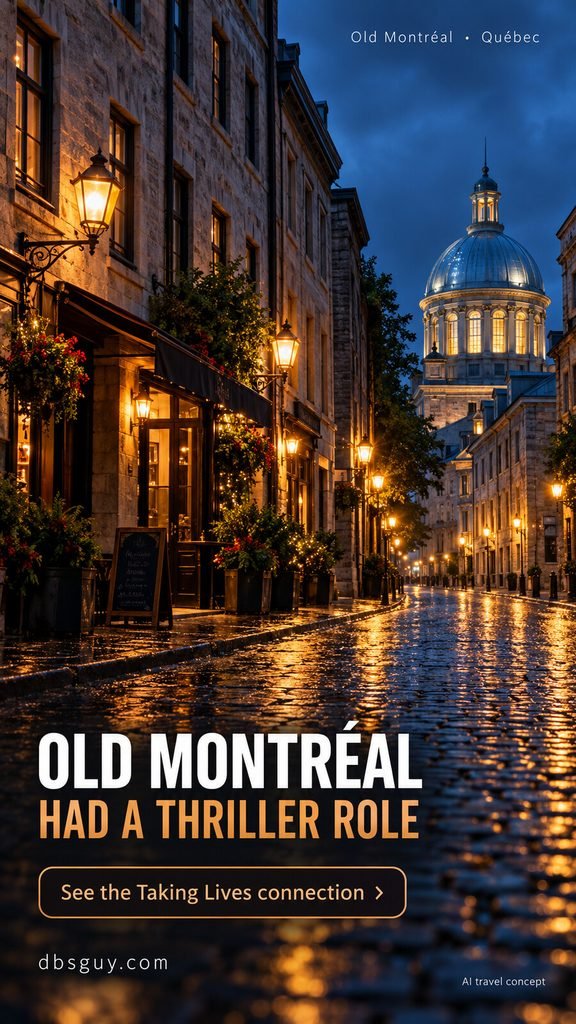
Find it: Old Montréal’s historic district, with Rue Saint-Paul as a useful starting area.
Canada’s Historic Places identifies Old Montréal’s historic district as a location for Taking Lives. The stone buildings and older street proportions supply the connection; the neighborhood is also a good choice for anyone who wants cafés and architecture alongside film history.
This is a district-level entry, so the starting area is a practical walking suggestion rather than a claimed exact camera position. Explore public streets and respect entrances, courtyards, and residents. Plan Montréal as its own base or a separate leg from Québec City. The two cities offer different movie experiences, and moving between them uses a meaningful part of the travel day.
Nova Scotia: a windswept final stop
25. Cape Forchu, near Yarmouth — The Lighthouse (2019)
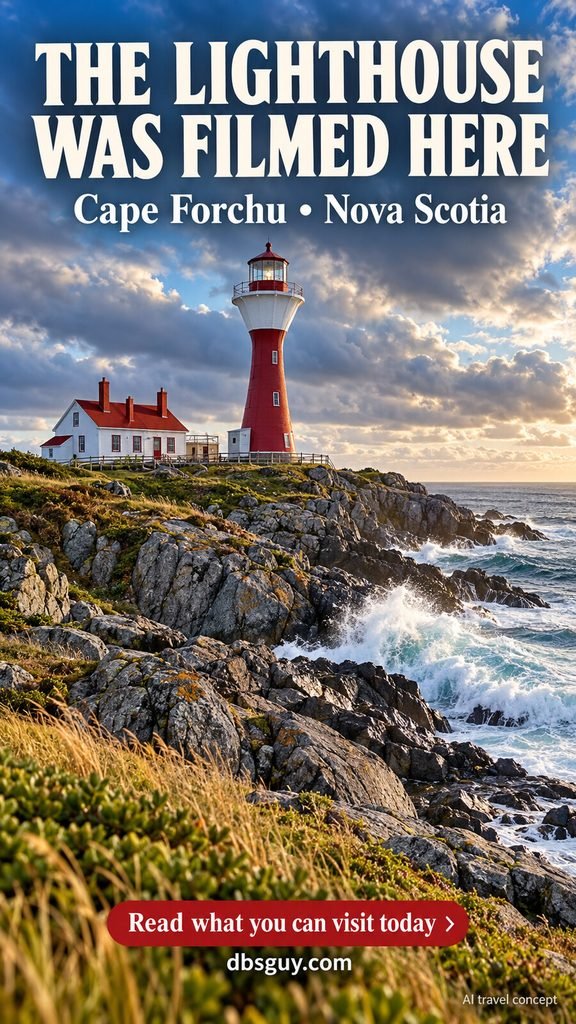
Find it: Cape Forchu near Yarmouth, southwest Nova Scotia.
The Lighthouse used this exposed coast, with a temporary tower built for production. Tourism Nova Scotia documents that purpose-built set, and Cape Forchu’s own history places filming around the Leif Erikson Trail area.
The movie tower is not the modern red-and-white lighthouse you visit today. Come for the rocky headland and Atlantic setting, rather than expecting a standing replica of the screen building. Check current trail, tower-tour, and facility openings; they can have different seasonal schedules. Wind and sea spray deserve respect, so keep to marked areas. Plan this as a Yarmouth-area outing, with travel time to southwest Nova Scotia accounted for.
Turn a few locations into a trip that makes sense
Choose places you would enjoy even without the movie connection. A beautiful lake, a good diner, or a theater performance makes the day worthwhile when the exact shot has changed or an interior is unavailable.
A Vancouver trip with an island extension
Start with Gastown and a properly booked Orpheum visit. Give Britannia Mine Museum a separate Sea-to-Sky outing, and Buntzen Lake its own recreation day. Hope and the accessible part of Othello Tunnels can share a day if conditions allow. Add Victoria-area Hatley Castle and Ladysmith only after planning ferry travel and island accommodation.
A Calgary-area scenery trip
Use separate days for Upper Kananaskis Lake, any confirmed Fortress booking, and the Drumheller badlands. Fort Macleod belongs to a southbound prairie leg. Avoid treating all five Alberta locations as nearby stops simply because they share a province.
A Toronto trip with selected day trips
Combine central Toronto plans with Casa Loma, the Distillery District, The Lakeview, and the Reference Library as their hours allow. Travel east for Parkwood and Port Hope. Choose another day for Elora, and another for Niagara if both matter to you. You can enjoy the city entries with transit; the wider Ontario collection requires more transport planning.
An Old Québec walk and a Montréal extension
Place Royale and Château Frontenac fit one Old Québec day. Montréal deserves its own time rather than becoming a rushed detour. Cape Forchu is an entirely separate Atlantic-coast plan.
What to check before you go
- Access first: confirm tours, restaurant hours, reservation requirements, park notices, and whether the specific area you want is public.
- Match the transport to the region: island ferries, Alberta mountain access, and day trips beyond Toronto need more planning than downtown walks.
- Let the season decide the extras: quarry swimming, alpine outings, and lighthouse facilities may be seasonal. An urban film walk is easier to adapt when conditions change.
- Pack for the actual outing: a rain layer for coastal stops, comfortable shoes for historic streets, and water and suitable footwear for exposed viewpoints. A movie-inspired outfit should still work for the weather.
- Keep a scene reference offline: it helps you recognize a building without assuming that every movie detail was real or still exists.
If you are flying into your chosen base, our Airport Outfit Ideas: What To Wear When Traveling can help with comfortable travel-day dressing.
Frequently asked questions
Can you visit all 25 movie locations in one trip?
You could build a long trip around them, but they span five provinces and include an island and Atlantic-coast travel. For a normal vacation, pick one or two regional clusters. Confirm the transport and access before deciding how many stops fit.
Which locations are easiest without a car?
Downtown Vancouver, central Toronto, and Old Québec offer the most straightforward urban clusters. Gastown, the Distillery District, and Place Royale are public walking areas; interiors and attractions have separate access rules. Alberta’s rural scenery, Cape Forchu, and the full island combination need a different transport plan.
Are these places free to visit?
Some are public streets or viewpoints, while castles, museums, tours, quarry admission, and some parking arrangements have fees or reservations. A free exterior view does not grant interior access. Check the operator’s current terms rather than budgeting from the film’s age or a social-media caption.
Is Xavier’s school Hatley Castle, Casa Loma, or Parkwood?
All three have a connection, but to different screen elements. The original X-Men used Parkwood’s exterior and Casa Loma interiors. Hatley Castle supplies the familiar school exterior in X2 and later franchise productions. Choose by the film and the part of the building you want to see.
Can I recreate the movie’s swimming or stunt scene?
Follow the location’s present-day rules. Elora Quarry prohibits jumping, diving, and climbing from its cliffs, and BC Parks prohibits swimming in Coquihalla Canyon Park. Visit from permitted viewing and recreation areas; filmed stunts do not describe visitor access.
Will the place look exactly like the film?
Often only some details will match. Productions add signage, combine locations, build temporary structures, and use visual effects. At Cape Forchu and Fortress Mountain, the landscape is the attraction; the movie’s constructed buildings are not permanent visitor sights.
For more background on several heritage locations featured here, Canada’s Historic Places guide to historic sites on screen documents connections including Gastown, the Orpheum, Parkwood, and the Drumheller Hoodoos. Check each location operator separately for current visiting arrangements.