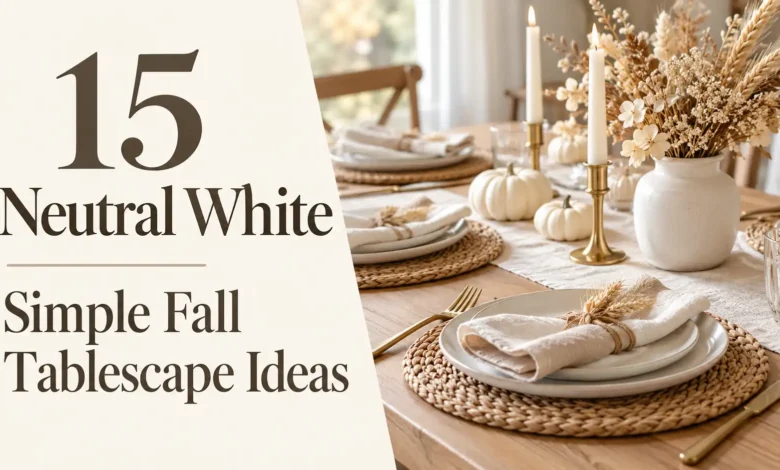
White pumpkins, familiar dishes, and one warm texture can do a lot for a fall table. The trick is giving the whites something to stand against: oatmeal linen, pale wood, a woven tray, or the brown of a few pinecones.
These 15 simple fall tablescapes offer different ways to get there, from a narrow pumpkin path to a table with no centerpiece at all. Choose the detail that fits the meal you are serving, then leave enough space to pass the bread.
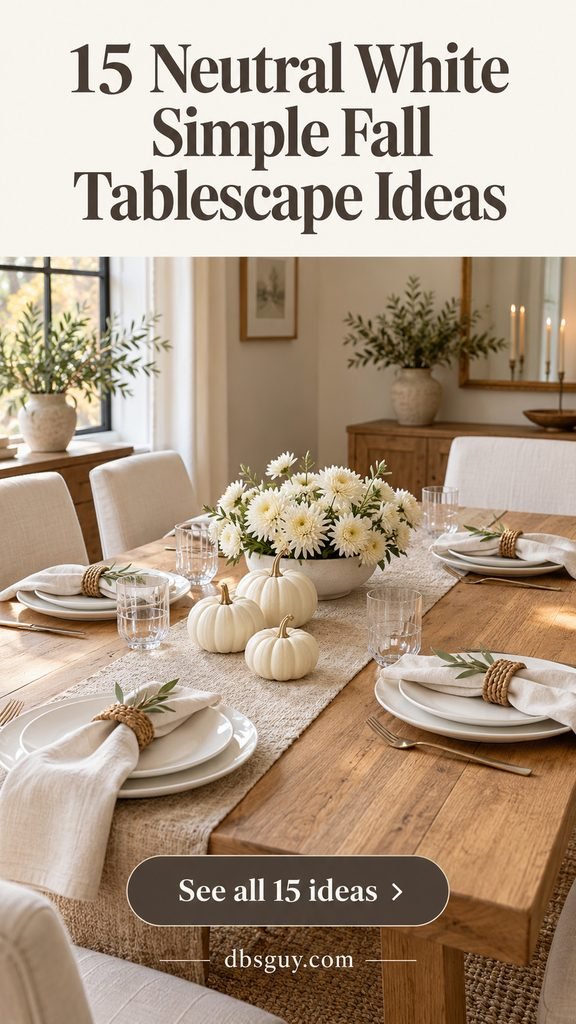
The visuals are AI-generated styling concepts. They illustrate the arrangements rather than document completed or tested table settings.
Choose Your Starting Point
- Use mostly what you own: try the pumpkin path, scalloped plates, or crosswise runners in ideas 1, 9, and 14.
- Skip fresh flowers: choose LED pillars, fabric pumpkins, paper leaves, or pinecones in ideas 5, 10, 11, and 13.
- Keep a small table usable: put the detail at each seat in idea 2, or gather the centerpiece on a removable tray in idea 8.
- Serve Thanksgiving family style: let the gratitude cards in idea 15 supply the decoration while the food fills the center.
Start by putting out your plates, glasses, and largest serving dishes. The space left between them tells you how much decor the table can hold. Keep your existing white dinnerware, choose ivory or oatmeal for the fabric, and repeat one natural texture. The whites can vary a little; a smooth plate beside a ribbed pumpkin is more interesting than everything having the same finish.
1. Make a Narrow Path of White Pumpkins
Lay an oatmeal runner down a bare wood table and space three small white pumpkins along it. Keep the runner relatively flat so the pumpkins sit securely. White plates, plain folded napkins, and clear tumblers finish the setting without adding another decorative layer.
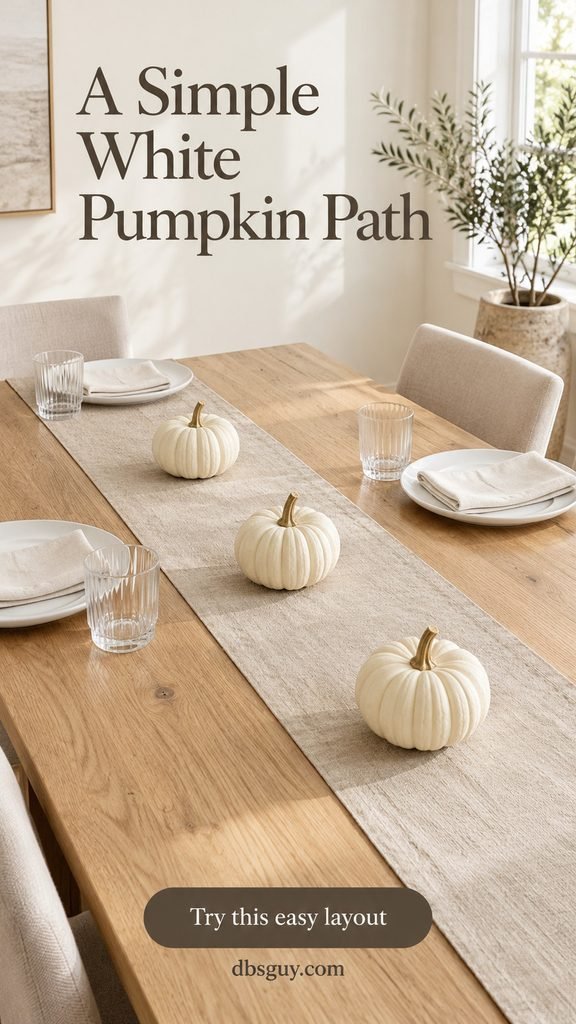
The useful part is the gap between each pumpkin. Reserve those openings for a bread basket, a water carafe, or the side dishes you actually plan to serve. If a bowl will not fit, remove a pumpkin before adding more fabric or pushing the place settings toward the edge.
This is a good first choice when you want the oak or walnut tabletop to stay visible. On a small table, one white pumpkin can carry the same idea.
2. Turn Mini White Pumpkins Into Place Cards
Move the seasonal detail to the plates when you need the middle of the table clear. Rest a miniature white pumpkin on each folded ivory napkin, then tie a small cream name tag loosely around its stem with cotton twine.
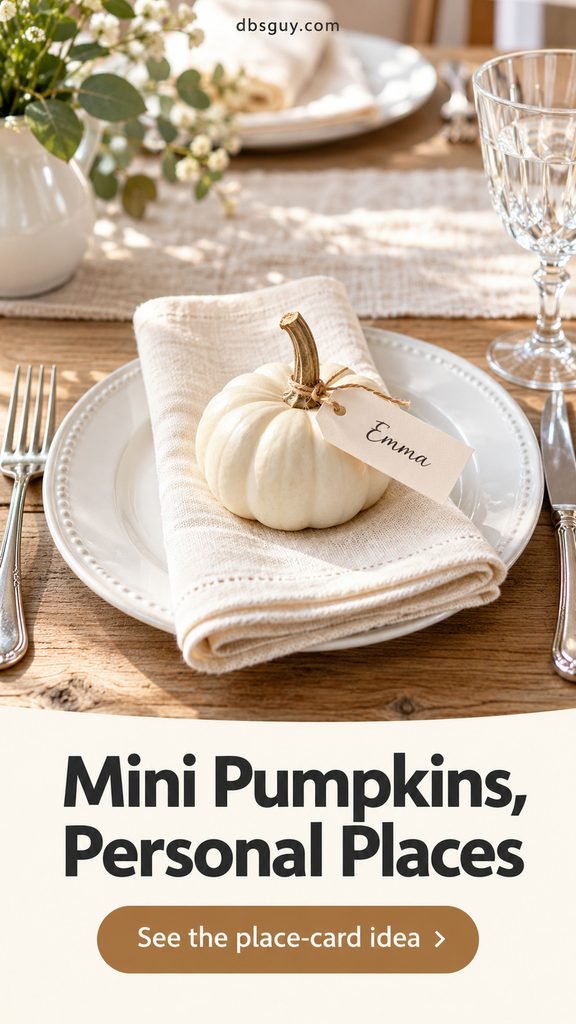
Use a tag large enough to read from the chair, and turn it toward the guest. The stem holds the tag; you do not need to cut a slot into the pumpkin. Leave the tie easy to undo, especially if guests will take the pumpkins home.
Set aside a small tray or a spot on the sideboard where people can move their pumpkins before the first course. If the pumpkin makes the napkin wobble or takes up most of the plate, choose a smaller one or place it just above the setting instead.
3. Keep White Mums in One Low Bowl
A compact bowl of white chrysanthemums gives you a flower-focused table without a sprawling arrangement. Choose a short, wide vase or watertight ceramic bowl, trim the stems to suit it, and gather the flower heads into a low dome. Let their creamy centers supply a little warmth.
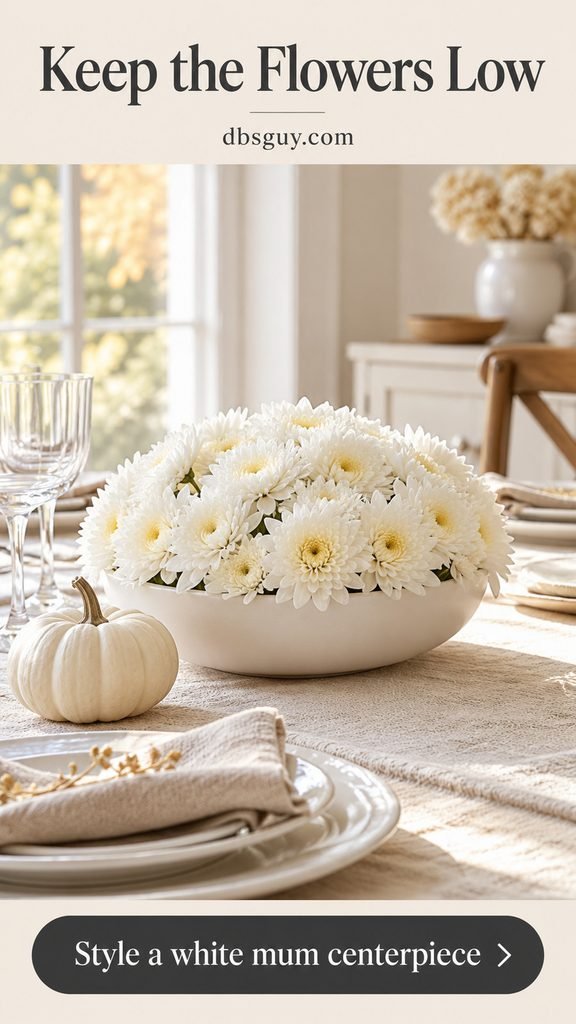
Place the bowl on ivory cloth with oatmeal napkins and one small white pumpkin nearby. That single pumpkin makes the season clear; the rest of the table can stay plain. Use a vessel narrow enough to leave room around the plates, rather than trying to fill the entire center.
Before arranging all the flowers, test a few stems in water. If they slide outward, switch to a narrower opening or use several smaller flower heads. Sit across from someone to check the finished height, and keep the water contained beneath the blooms.
4. Put a Wheat Pitcher at the Unused End
Dried wheat brings a harvest texture to an otherwise white table. A plain white pitcher gives the stems a clean outline, particularly against a light wall. Keep the bundle narrow enough that you can still see the individual heads instead of creating a dense, oversized fan.
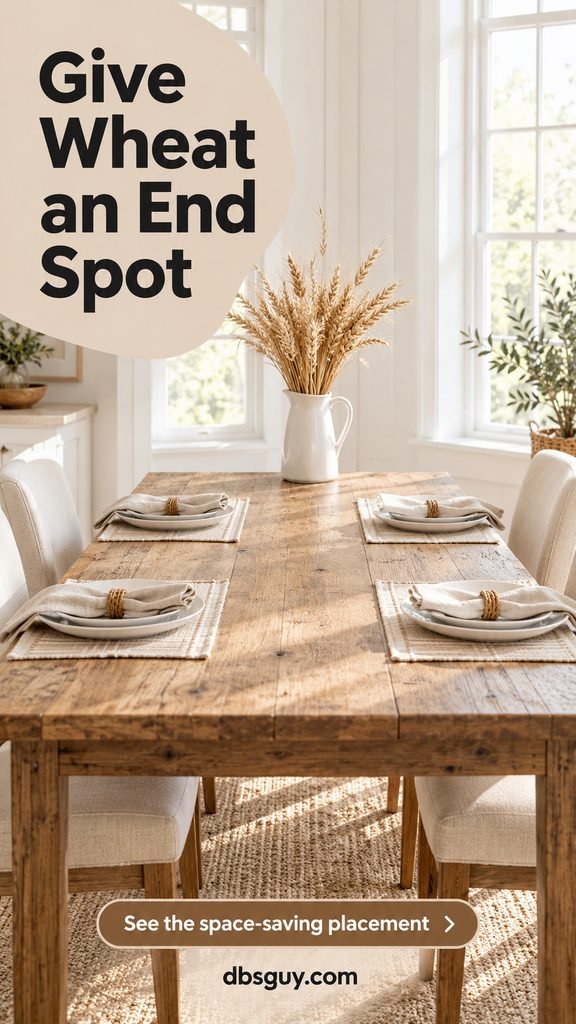
Put the pitcher at an unused table end, where its height will not sit between two people. This works for a table with guests seated along the sides. If someone needs the end seat, move the pitcher to a sideboard and let the white plates and oatmeal napkins carry the palette.
Build this arrangement away from food, shake out loose debris, and remove stems that shed onto the cloth. Keep dried wheat away from open flames; it does not need candles beside it to feel like fall.
5. Use Ivory LED Pillars for an Evening Table
For a dinner after sunset, make the light the main feature. Group three ivory LED pillar candles of different heights in separate clear glass cylinders, with a little breathing room between them. Set them on a plain white runner and use silver flatware to keep the overall palette quiet.
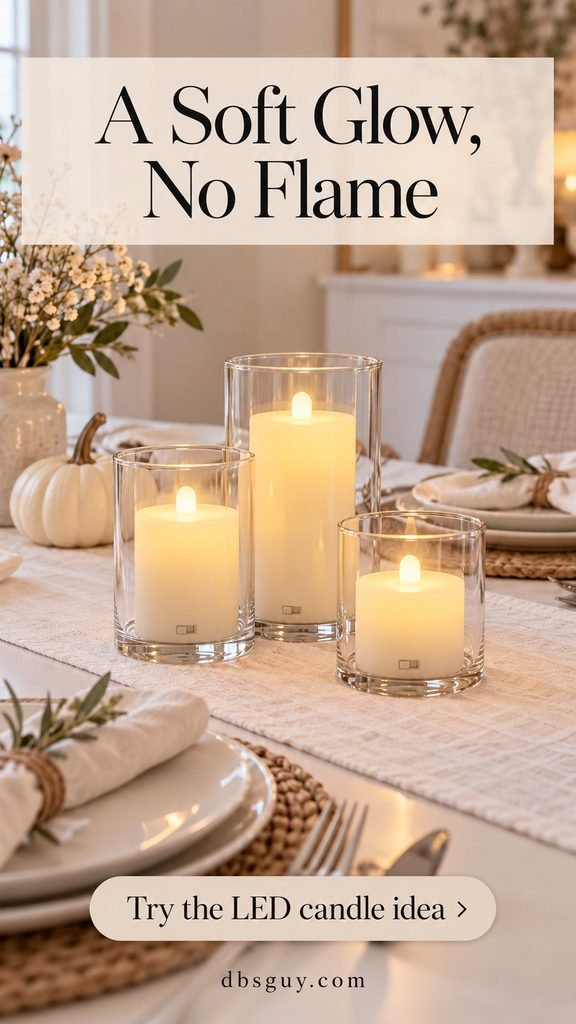
Check the candles in your dining room before setting the table. A warm glow will suit cream linen better than a cool blue-white light. Keep the glass low enough for conversation and choose cylinders that sit steadily when someone reaches across the table.
Use battery candles for the close arrangements shown here. If you choose real candles elsewhere, follow NFPA’s candle-safety guidance: keep them at least 12 inches from anything that can burn, use sturdy holders, and extinguish them when leaving the room. A glass cylinder does not make nearby linen or dried stems safe.
6. Let Bosc Pears Warm Up a White Compote
If white-on-white feels too cool in your room, a few whole Bosc pears add a soft brown accent. Arrange them in a low white footed bowl, keeping the mound shallow enough that the pears cannot roll off. Ivory linens and white plates keep the fruit from taking over the color scheme.
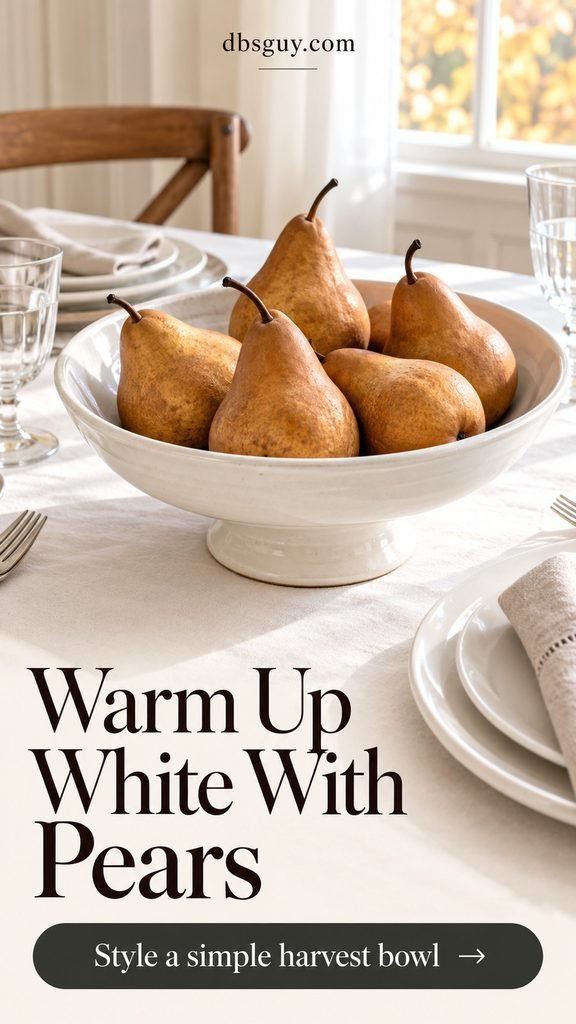
Use a clean, food-safe bowl if you plan to eat the fruit afterward. Keep paint, glitter, floral treatments, and decorative sprays off the pears. You can leave the fruit loose so guests can choose one later, rather than wiring or gluing it into an arrangement.
The footed bowl gives this table a defined center without requiring flowers. Choose a low base, though: a tall cake stand plus a pile of fruit can quickly block the person sitting across from you.
7. Make White Pumpkin Bowls the Seasonal Detail
Already own white pumpkin-shaped soup bowls? Put them to work at each place setting instead of buying another centerpiece. Their lids and ribbed sides supply the fall motif, while a plain dinner plate underneath gives each bowl a clear base.
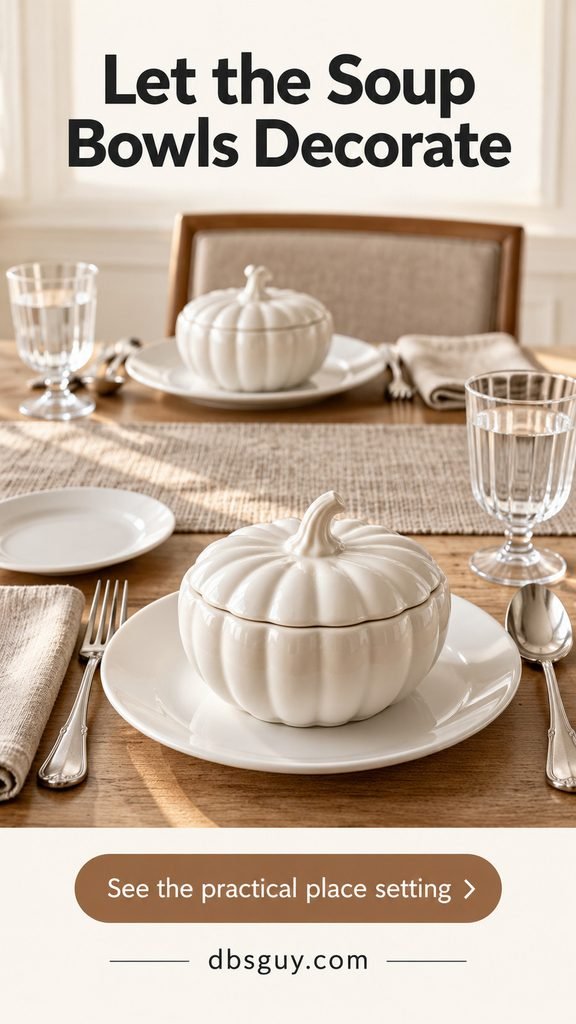
Keep the rest of the table simple: an ivory cloth, neatly folded sand-colored napkins, clear glasses, and the spoons needed for your first course. Skip extra mini pumpkins on the plates. The bowls are already doing that job.
Use bowls intended for food and follow their care and heat-use instructions. Before serving, decide where the lids will go. A small side plate at each seat, or a tray cleared by the host, is easier than asking guests to balance a lid beside a full glass. If soup is not on the menu, choose another idea rather than adding dishes nobody will use.
8. Give a Round Table One Removable Woven Tray
A round table often works better with one compact grouping than a long runner. Center a shallow woven tray holding one small white pumpkin and two LED votives in clear cups. The weave outlines the white objects, so you do not need greenery or loose filler around them.
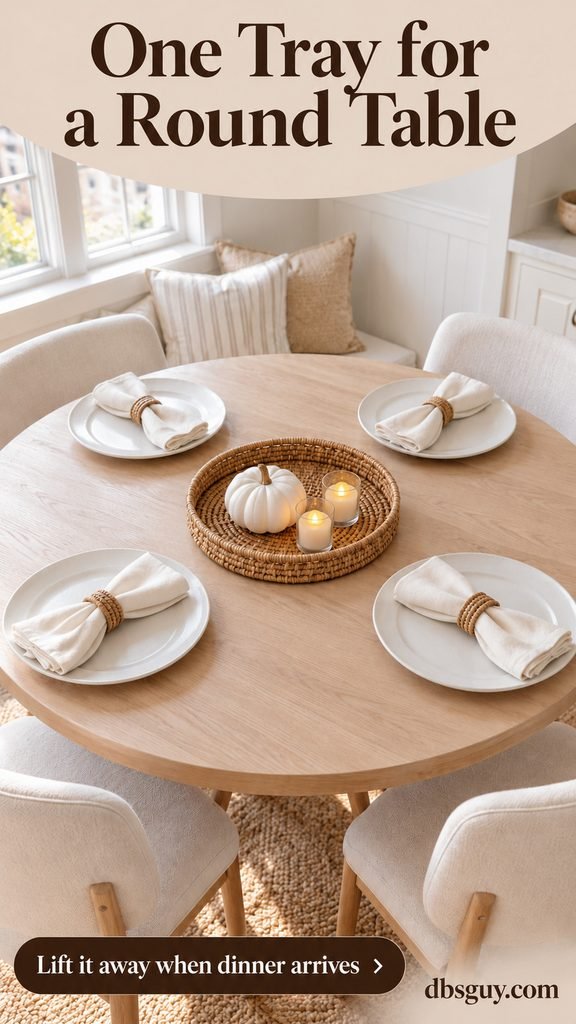
Set the places first, then choose a tray that leaves comfortable space between its rim and the plates. Keep everything within the tray’s footprint. A pumpkin perched on the edge makes the display awkward to lift when dinner arrives.
For a family-style meal, move the whole tray to a nearby surface and replace it with the serving dishes. This arrangement gives you a dressed table when guests arrive and a usable table when they sit down. It also suits a small square breakfast table.
9. Pair Scalloped White Plates With Quiet Stripes
Let the dishes provide the pattern. A scalloped white salad plate over a plain white dinner plate adds a visible edge, while a sand-and-ivory striped napkin supplies a second, softer detail. Keep the stripes narrow and the napkin loosely folded so the place setting feels relaxed.
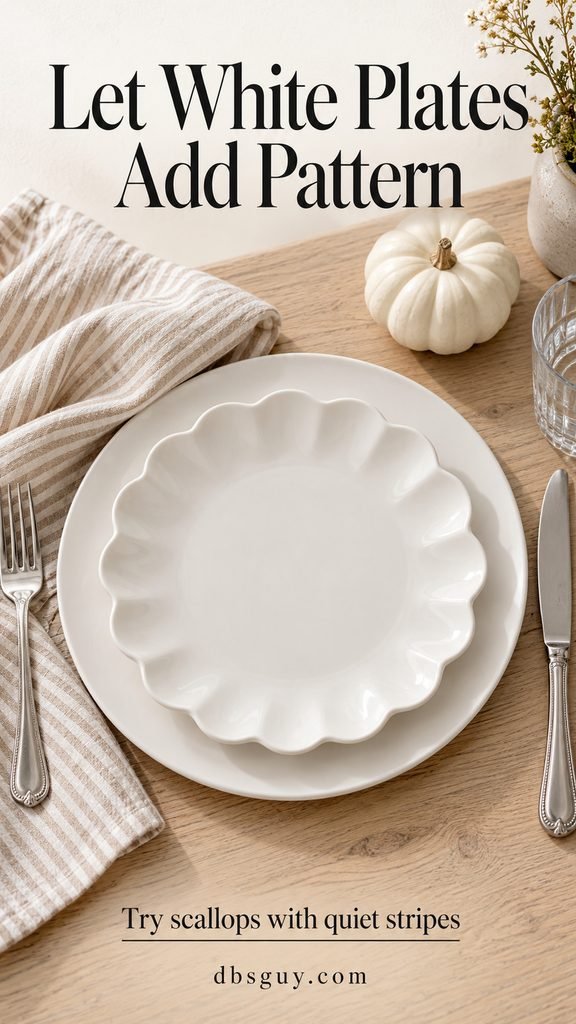
You only need the extra plate if you will use it for a starter, salad, or bread. Otherwise, use one scalloped dinner plate on its own. A small white pumpkin farther up the table connects the setting to fall without covering the dish’s outline.
This is a useful way to bring different white dish sets together: repeat the same napkin at every seat. Avoid adding a patterned charger, an elaborate ring, and another print at once. The scalloped edge should remain easy to see.
10. Gather Soft Fabric Pumpkins in a Shallow Bowl
For a reusable centerpiece, collect three small fabric pumpkins in a shallow white bowl. Mix cream linen, ivory velvet, and a pale knit so the interest comes from their surfaces. Keep the colors close and let the stems point in slightly different directions.
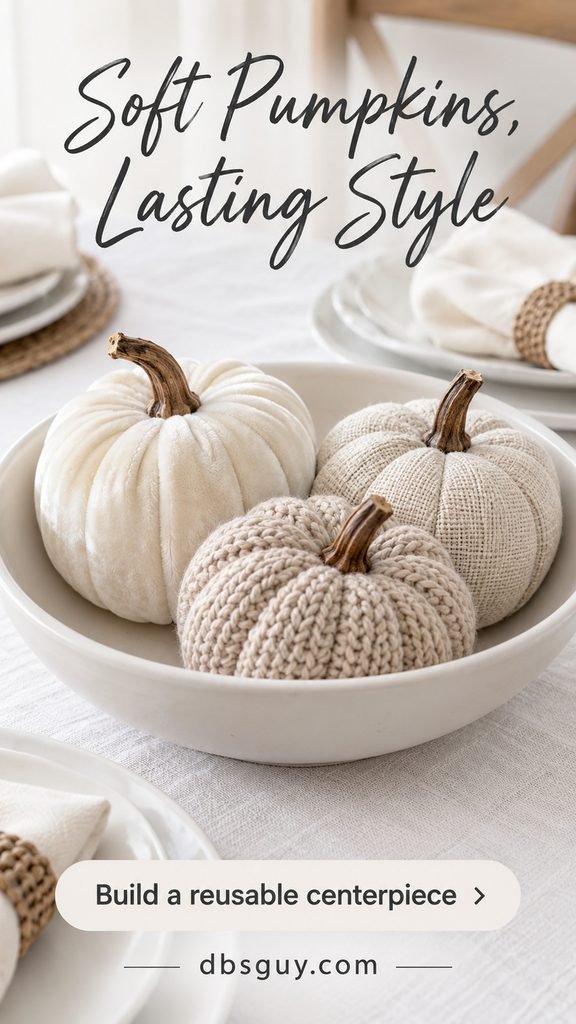
A bowl keeps the soft shapes together and makes them easy to move when you need serving space. Choose pumpkins that sit inside it without being stacked into a tower. Leave enough of the bowl’s rim visible to frame the fabric.
Use this option when you want to set out the dry decor ahead of the meal. Keep it away from splashes and open flames, and store it clean and dry afterward. You do not need three matching pieces; similar scale matters more here than identical fabric.
11. Make a Flat Runner From Cream Paper Leaves
A trail of paper oak leaves gives a white table a fall shape without adding height. Cut a few leaf sizes from cream and warm white cardstock, then overlap them loosely down the center of a bare wood table. Keep the vein details simple, or leave the leaves plain.
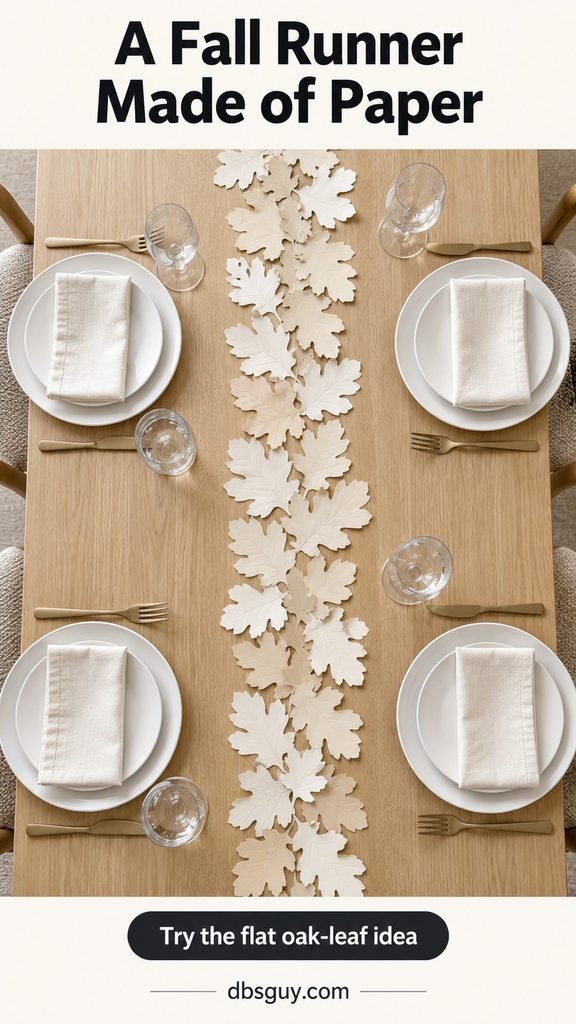
Arrange a short section first to check the width. The leaves should fit between the place settings rather than spreading beneath the glasses. If the trail shifts easily, connect neighboring leaves with small pieces of tape on their undersides; do not tape them to a finished tabletop.
Keep serving dishes on suitable trivets beside the paper, and use LED lighting if you want a glow nearby. This is a forgiving craft because the outlines can vary. A few clear oak-leaf shapes will read better than a dense layer of tiny cutouts.
12. Style Pale Lunaria in Short White Vases
Dried lunaria, often sold as money plant, has thin, translucent oval pods that bring a different texture from wheat or flowers. Put a few short stems in two matte white vases and leave space between the pods so their papery shapes show.
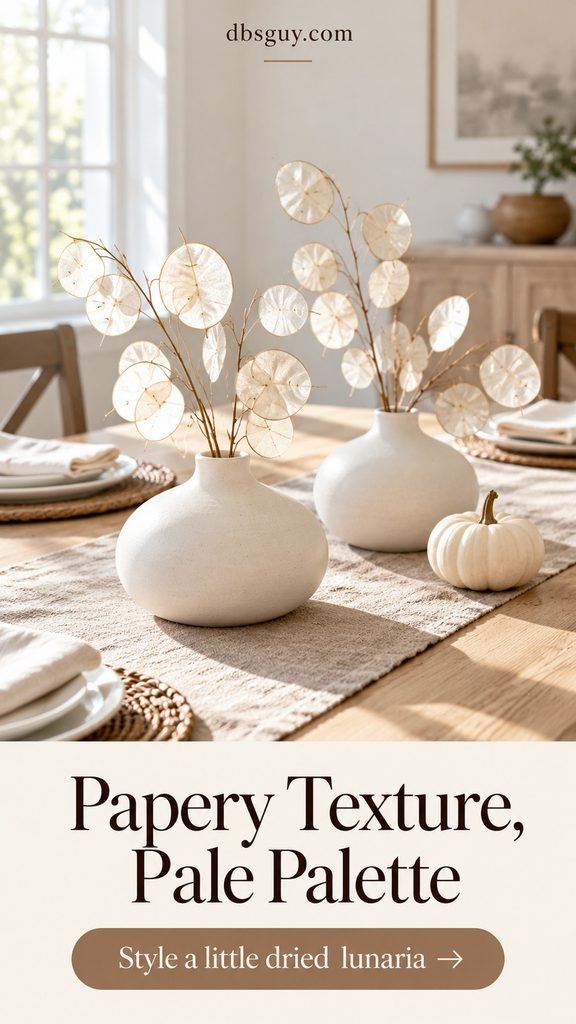
Use vases with broad, stable bases and keep the stems low enough to see across. One small white pumpkin beside the pair makes the seasonal connection, while a pale taupe runner separates the white ceramics from the tabletop.
Handle the dried stems gently and arrange them before bringing food to the table. If the bunch sheds or the stems keep leaning into a place setting, use fewer stems or move the vases to a sideboard. This look depends on a light outline, so resist filling every opening.
13. Use Pinecones to Outline a White Serving Bowl
For a woodland version of a neutral table, gather clean, dry pinecones in a shallow white serving bowl. The brown scales create contrast against the white ceramic. Fold ivory napkins plainly and leave the surrounding tabletop open.
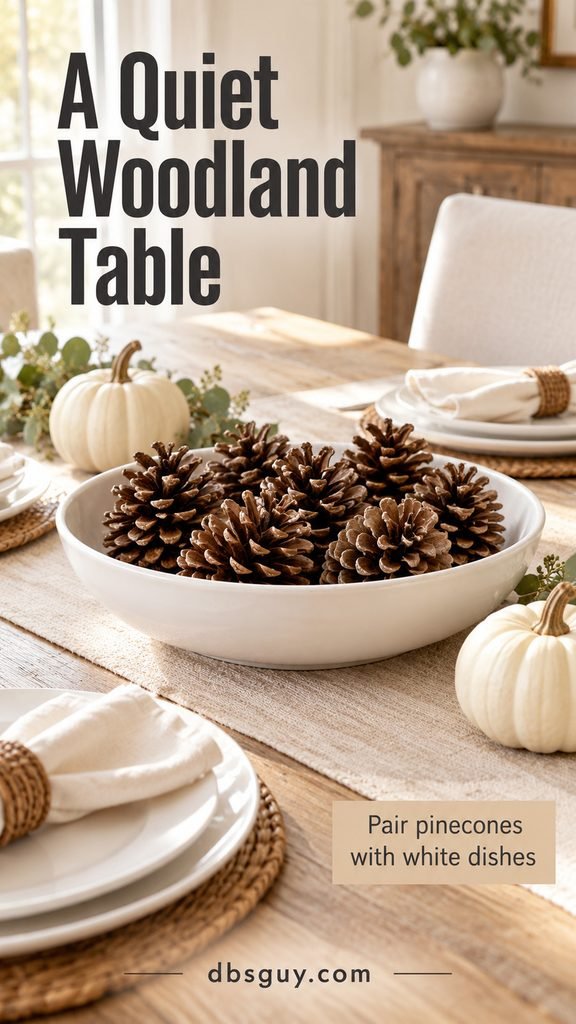
Use decorative pinecones without glitter or fragrance, and check them for loose debris before setting them near the meal. Keep them inside the bowl rather than scattering them among the plates. A few small white pumpkins elsewhere on the table can soften the darker center.
Reserve that bowl for decor during dinner. If it normally serves food, wash it appropriately before returning it to kitchen use. This idea suits a rustic wood table especially well; a white cloth underneath gives it a lighter, more formal version.
14. Run Two White Runners Across the Table
Change the direction of the fabric when a lengthwise runner feels predictable. On a four-seat rectangular table, lay two white runners across the short dimension, one connecting each pair of opposite seats. The exposed wood between them becomes part of the design.
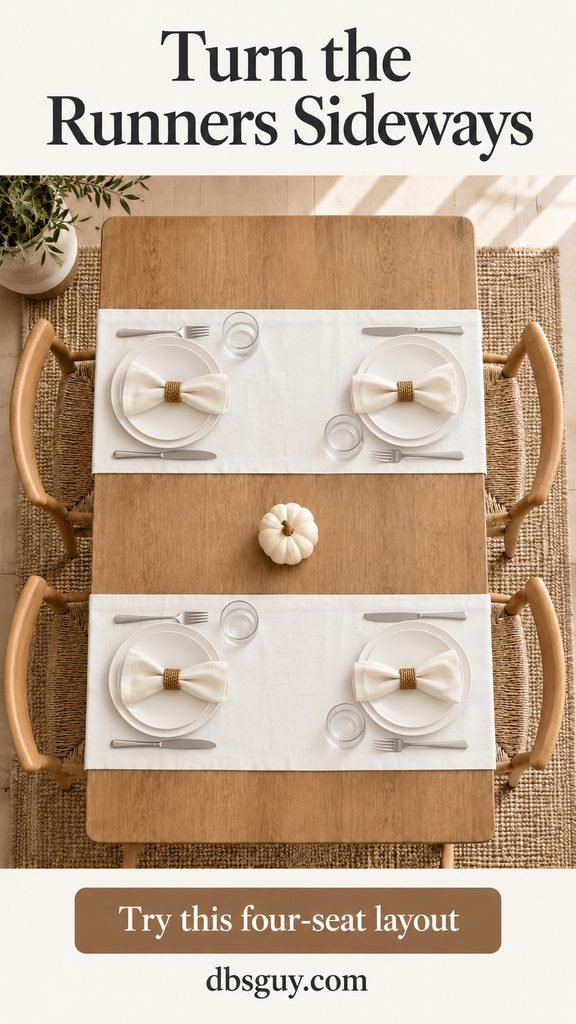
Put each plate fully on its runner and keep the fabric smooth beneath the glasses. Choose widths that fit your actual settings, with an open strip of wood between the two runners. Check the drop at both sides so the ends do not bunch in anyone’s lap.
A single small white pumpkin in the middle is enough to signal fall. Skip a second runner running lengthwise through the center; the crosswise bands already give the table its structure. For more seats, repeat the pair-based layout only if the runners can remain separate.
15. Leave Room for Dinner With Gratitude Cards
For Thanksgiving, let a small activity replace the centerpiece. Put a cream card on a flat ivory napkin at each seat, along with a simple prompt such as “One thing I’m thankful for.” Add a pencil beside the card, where guests can reach it without moving a glass.
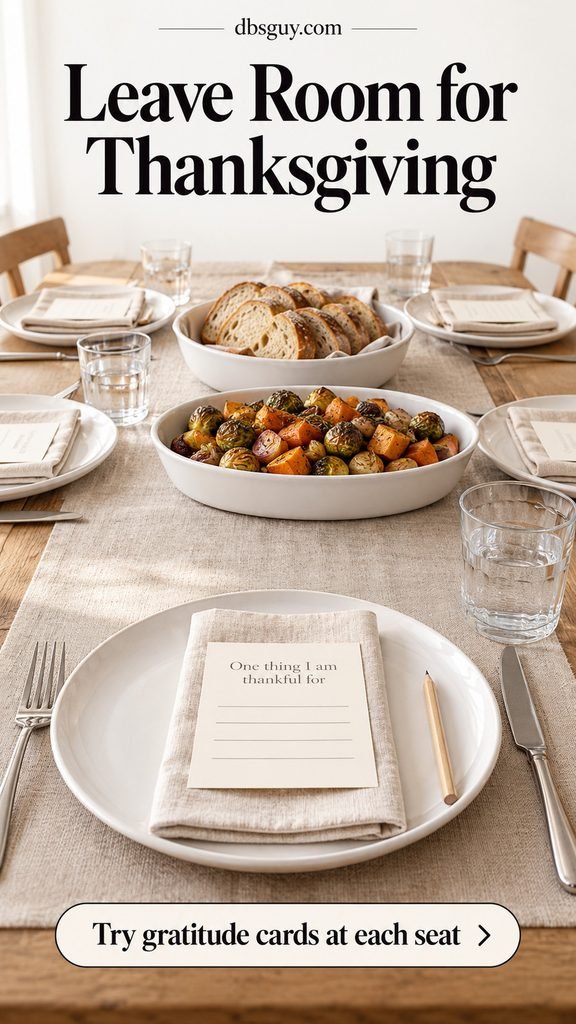
Keep the center open for platters and serving bowls. White dishes, oatmeal fabric, and the repeated cards create a complete setting even before the food arrives. Invite guests to share what they wrote if they want to, or let them keep the card private.
This is one of the most practical Thanksgiving tablescape ideas for a crowded meal because the decoration stays at each seat. For activities beyond the table, browse 27 Fun & Cozy Friendsgiving Ideas Everyone Will Love.
Make the White Palette Work With Dinner
Look at your linens beside the plates in the room where you will eat. If a bright white cloth makes your cream dishes look dingy, try oatmeal fabric or bare wood between them. If everything blends together, change a texture first: a ribbed bowl, woven tray, or striped napkin can give the white pieces a clearer outline.
For a seated dinner, check the view from both sides and remove anything that blocks faces. For family-style service, place the empty serving dishes on the table during your trial setup. Move decor to the sideboard if you cannot lift a platter without brushing a vase.
Set out clean dishes and dry decor ahead if that helps, then add fresh flowers and water closer to the meal. Choose one of these fall centerpiece ideas rather than combining several. A table with a wheat pitcher, paper leaves, flowers, and fruit will need more space than most dinners allow.
Neutral White Fall Tablescape Questions
How do I make a white table feel like fall?
Choose one recognizable harvest detail: white pumpkins, wheat, paper oak leaves, pears, or pinecones. Then repeat a warm texture such as oatmeal linen or woven fiber. You can keep the plates and glasses exactly as they are.
Can I mix white, ivory, and cream?
Yes. Check them together in your dining-room light, then repeat each shade so it looks intentional. For example, use white plates and pumpkins with ivory napkins at every seat. Pale wood or taupe fabric can separate shades that look awkward directly beside one another.
What is the simplest centerpiece for a small table?
Start with one small white pumpkin in a shallow dish. If even that crowds the meal, skip the centerpiece and use a name tag or gratitude card at each seat. The empty space is useful when you need room for serving.
Do I need to buy new white dishes?
No. Try the runner, napkin, or centerpiece ideas with the dishes you own. If your plates have a colored rim, repeat a quiet neutral in the fabric and keep the seasonal accent white. Chargers and extra plate layers are optional.
How can I keep the setup affordable?
Pick the idea closest to what is already in your cupboard. A serving bowl can hold pears or pinecones, a pitcher can hold wheat, and plain cardstock can become leaves or gratitude cards. Count the pieces you need before shopping, and leave out accessories that do not serve the chosen arrangement.
Also Read
For a wider mix of autumn looks, see 30 Fall Table Decor Ideas to Create a Warm & Cozy Vibe. For a richer color direction, try 17 Burgundy & Plum Simple Fall Tablescape Ideas.