11 Scenic Fall Road Trips in the USA Worth Planning Your Whole Weekend Around

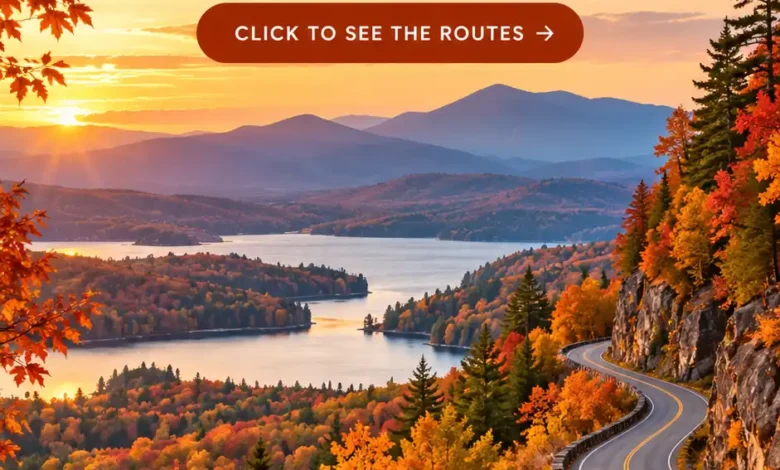
There is a big difference between a pretty fall drive and a road trip that is actually worth giving up an entire weekend for.
A great autumn road trip needs more than colorful trees outside the windshield. It needs places where you genuinely want to stop: a mountain overlook that makes you turn off the engine, a small town worth walking around, a trail that gets you out of the car, a farm stand or café that tastes like the season, and enough variety that Sunday does not feel like a repeat of Saturday.
That is the standard behind this list.
These 11 fall road trips cross very different parts of the United States, from the maple-covered mountains of New England to golden aspens in Colorado and New Mexico, lake roads in the Midwest, the Ozarks, the Blue Ridge, and waterfall country in Oregon. Some routes can be driven in a few hours, but each becomes far more rewarding when you slow it down and build a two- or three-day weekend around it.
One planning rule matters everywhere: do not treat a predicted peak-foliage date like a reservation. Fall color changes with elevation, latitude, temperature, rain, wind, and cold snaps. Use the seasonal windows below as a starting point, then check current foliage reports, weather, road conditions, and park alerts shortly before leaving.
1. Kancamagus Highway, New Hampshire

The Kancamagus Highway is only about 34.5 miles long, which sounds almost too short for a weekend road trip. That is exactly why people underestimate it.
The road crosses the White Mountains between Lincoln and Conway, passing river pull-offs, mountain overlooks, trailheads, picnic areas, waterfalls, and dense forest that can look almost unreal when the foliage peaks. If you drove straight through with no traffic, you could finish surprisingly quickly. In fall, that would miss the point completely.
Why it deserves a full weekend
Use Lincoln and North Conway as your two anchors. One day can focus on the Kanc itself: stop at overlooks, walk down toward the Swift River, and choose one short hike instead of trying to collect every pull-off. The other day can reach Franconia Notch, Crawford Notch, or nearby mountain towns depending on where the strongest color is showing.
The New Hampshire tourism office specifically warns that peak-season traffic can turn a short drive into a much longer experience. There are also no gas stations along the central Kancamagus stretch and cell service can be limited. Fill up before you enter the route and download maps in advance.
Best weekend base: Lincoln for easy western access, or North Conway for restaurants, shops, and eastern White Mountain exploring.
Best for: First-time New England leaf peepers, photographers, mountain scenery, easy roadside stops, and travelers who enjoy getting out of the car often.
Smart move: Start early. The same overlook that feels peaceful shortly after sunrise can feel completely different once midday traffic arrives.
2. Vermont Route 100 and the Green Mountain Byway
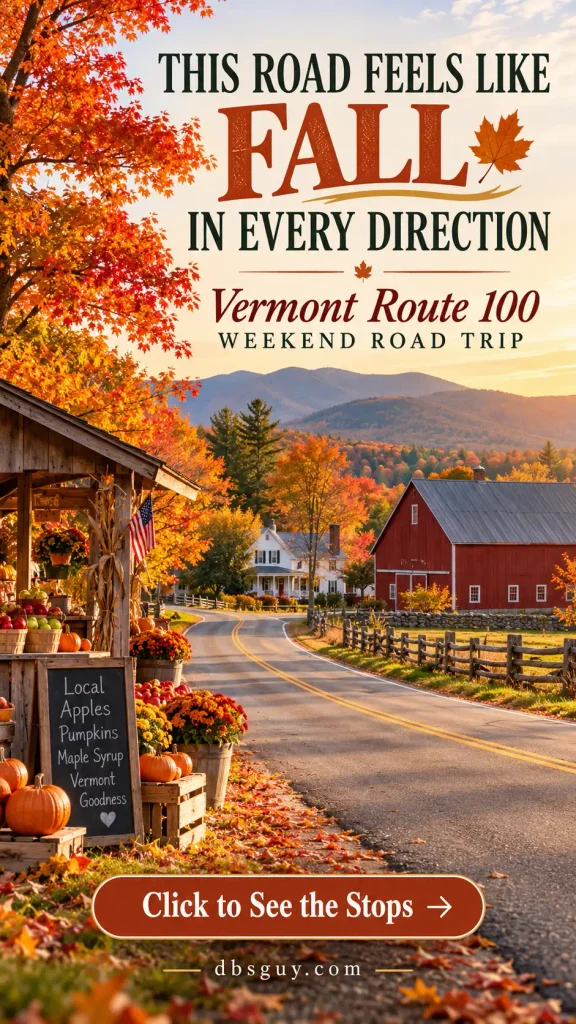
If the Kancamagus is about dramatic mountain scenery, Vermont Route 100 is about the accumulation of small moments.
You drive past barns, villages, rivers, ski towns, farm stands, general stores, and forested hills that seem to change color every few miles. Route 100 stretches much farther than most people should attempt in a single weekend, so the smarter move is to choose one section rather than treating the road like a mileage challenge.
A particularly useful weekend focus is the Green Mountain Byway area around Waterbury, Stowe, Morrisville, and the surrounding mountains. Vermont tourism describes the local byway loop as roughly 71 miles, with Route 100 forming an important backbone through the region.
Build the weekend around stops, not distance
Start with a bakery or coffee stop rather than a stopwatch. Spend time in Waterbury, wander Stowe, and choose one outdoor detour such as a forest walk or mountain viewpoint. If conditions are good, side roads can be every bit as memorable as the famous highway.
The magic here is variety. You can photograph a covered bridge, buy maple products, take a foliage walk, eat somewhere genuinely good, and still have time to sit outside with a hot drink instead of spending eight hours behind the wheel.
Best weekend base: Stowe or Waterbury.
Best for: Couples, food-focused road trips, classic New England villages, farm-country scenery, and travelers who want a slower pace.
Smart move: Avoid trying to “do Route 100” end to end. Pick a region and explore it properly.
3. Skyline Drive, Shenandoah National Park, Virginia
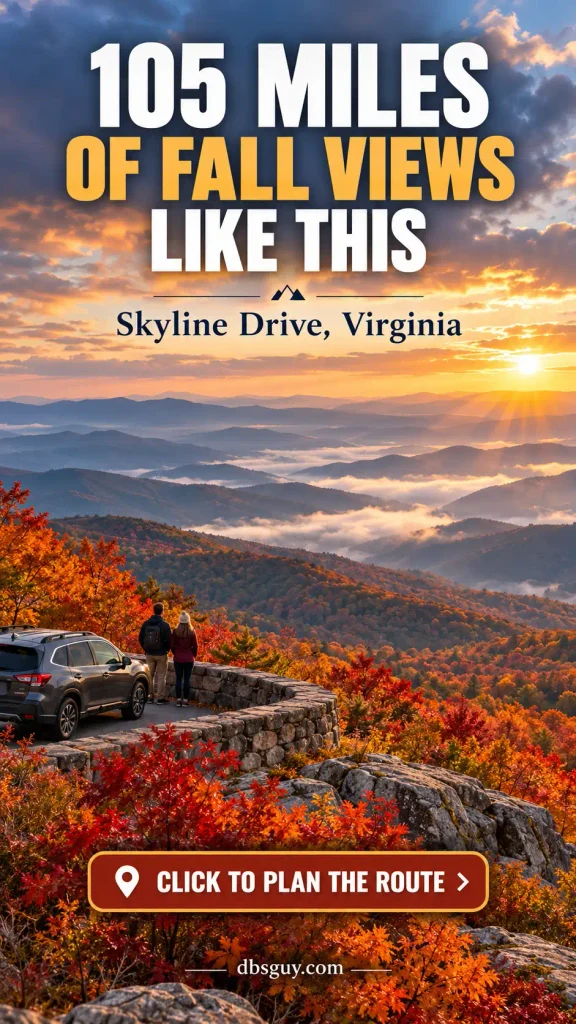
Skyline Drive runs for 105 miles along the crest of the Blue Ridge Mountains through Shenandoah National Park. On paper, the National Park Service says the entire road takes about three hours to drive on a clear day without significant stopping.
In fall, three hours is not a realistic way to experience it.
The reason to come is the rhythm of overlooks, trailheads, ridgelines, changing elevation, and wide views over the Shenandoah Valley and Virginia Piedmont. You will want to stop, and then stop again.
A weekend gives you permission to slow down
Instead of racing from Front Royal to Rockfish Gap, divide the park into sections. Spend one day exploring the northern and central portions, then devote the next morning to a hike or a quieter section of road before continuing south.
Choose one trail that fits your ability rather than hiking simply because a viewpoint is famous. Even short walks can give you a completely different relationship with the forest than you get from the car.
Best weekend base: Luray for central access outside the park, or park lodging when available if you want to wake up directly on the ridge.
Best for: Washington, DC-area weekenders, national-park lovers, panoramic overlooks, hiking, and couples looking for an easy-to-understand route.
Smart move: Check Shenandoah’s current fall-color report and park alerts before departure. Fog and weather can completely change visibility at higher elevations.
4. Blue Ridge Parkway, Virginia and North Carolina
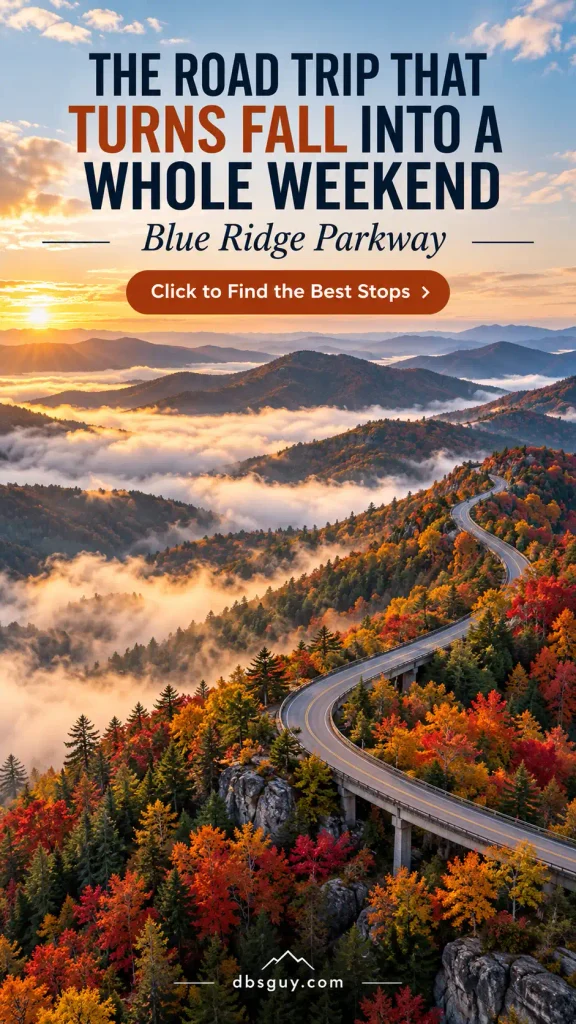
The Blue Ridge Parkway is too long to think of as one weekend drive. That is precisely what makes it useful: you can return more than once and experience a completely different trip.
For a fall weekend, choose a manageable segment around the part of the mountains you most want to explore. In Virginia, that can mean overlooks, historic sites, and mountain communities. In North Carolina, towns such as Blowing Rock and areas around the High Country can pair the drive with hikes, restaurants, and lodging.
The scenery changes with elevation, so the strongest color may not be in the same place from one weekend to the next.
Current planning matters here more than usual
As of the 2026 fall season, the National Park Service has continued reopening and repairing sections affected by Hurricane Helene while also completing other road projects. Some segments may still involve closures, detours, or construction changes.
Do not build a rigid route from an old blog post or saved social-media map. Check the National Park Service’s current Blue Ridge Parkway road-status page immediately before the trip and build your weekend around sections that are confirmed open.
Best weekend base: Blowing Rock for a North Carolina High Country trip, or a Virginia mountain town if you are focusing farther north.
Best for: Big mountain views, repeat road trips, photographers, active couples, and travelers who prefer choosing their own route length.
Smart move: Think in 50- to 100-mile scenic sections, not the entire parkway. Stops and overlooks make scenic miles take much longer than interstate miles.
5. Door County Coastal Byway, Wisconsin
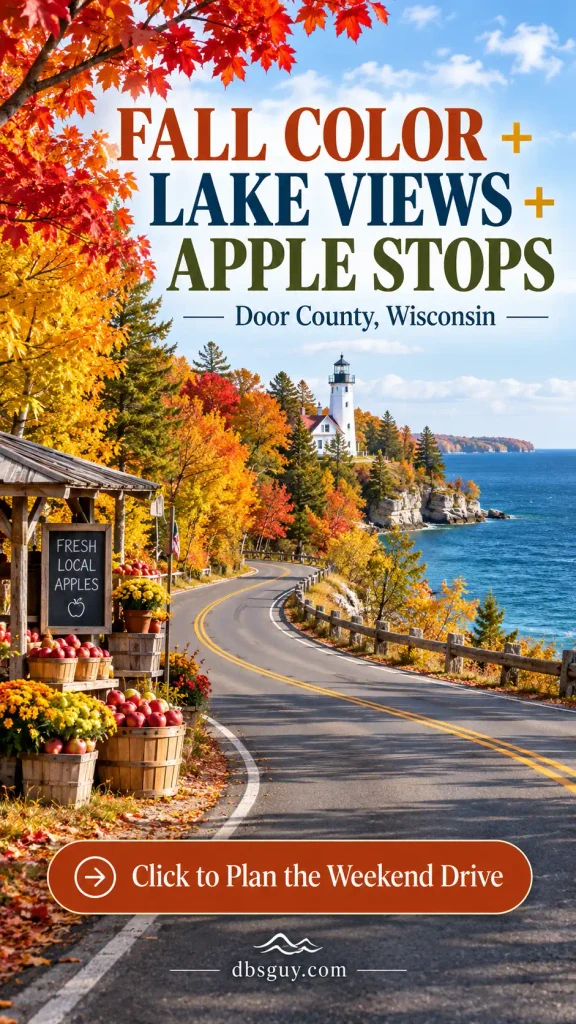
Door County proves that a fall road trip does not need mountains to feel dramatic.
The Wisconsin peninsula is surrounded by water, dotted with small communities, orchards, lighthouses, parks, harbors, and backroads where hardwood forest meets the lake. In autumn, that combination gives you a very different palette from the Blue Ridge or New England.
Official Door County guidance notes that color typically develops from the northern part of the peninsula southward, with strong viewing often extending from late September into mid-October depending on the year.
Make the road trip about more than leaves
Use one day to work your way through communities such as Fish Creek, Ephraim, Sister Bay, and farther north. Stop at Peninsula State Park, seek out water views, and leave room for an orchard or farm-market stop.
The next day can be slower: breakfast in town, a shoreline walk, lighthouse stop, gallery, or another park. Door County’s strength is that driving, eating, walking, and small-town browsing all feel like part of the same trip.
Best weekend base: Fish Creek, Ephraim, or Sister Bay depending on the atmosphere you prefer.
Best for: Midwest couples, families, lake scenery, orchards, lighthouse lovers, and travelers who want an easy blend of driving and stopping.
Smart move: Check the county’s live fall-color report because the peninsula can change noticeably from north to south.
6. Keweenaw Peninsula, Michigan
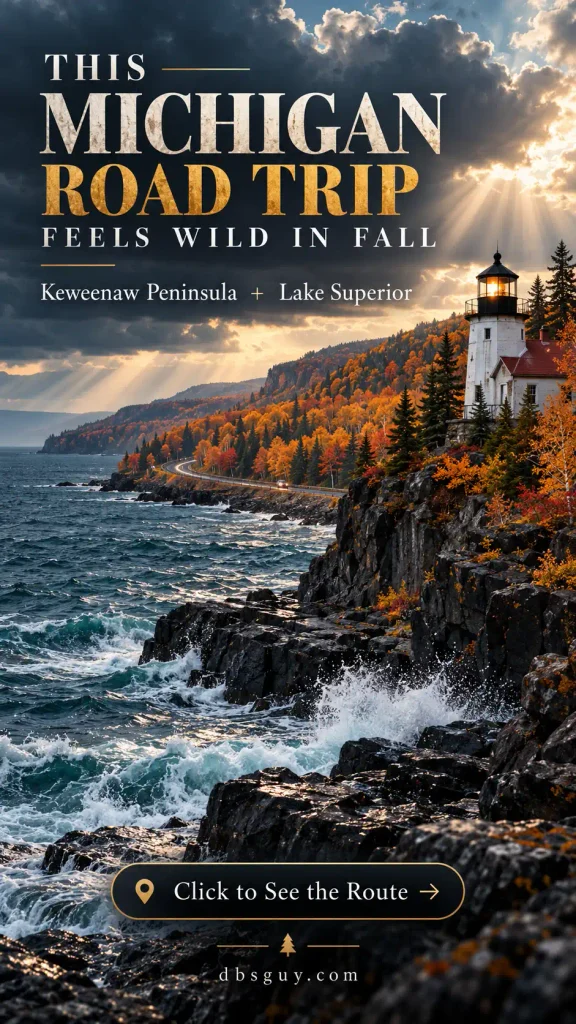
If you want a fall road trip that feels noticeably farther from ordinary city life, head north into Michigan’s Upper Peninsula and keep going.
The Keweenaw Peninsula combines forest roads with old mining communities, Lake Superior shoreline, lighthouses, waterfalls, rocky beaches, and broad views from places such as Brockway Mountain. Pure Michigan specifically highlights M-26 and the Copper Country roads as standout autumn driving routes.
This is a destination where the road can feel quiet and remote, particularly once you move beyond Houghton and toward Copper Harbor.
Do not underestimate distances or weather
A weekend works best if you choose a base and create loops rather than changing hotels every night. Spend one day exploring toward Copper Harbor and Brockway Mountain, then use the other for waterfalls, historic sites, lakeshore stops, or smaller roads back toward Houghton.
The Upper Peninsula changes earlier than much of Michigan. Fall color generally progresses from the northern reaches of the state southward, so use Michigan’s current fall-color map instead of assuming Lower Peninsula timing applies here.
Best weekend base: Houghton for more services, or Copper Harbor if remote atmosphere matters more.
Best for: Great Lakes scenery, adventurous couples, photographers, quiet roads, mining history, and travelers who enjoy a sense of remoteness.
Smart move: Keep fuel above half a tank once you head into quieter areas, and pack layers. Lake Superior weather can change the feel of the day quickly.
7. Great River Road Through Minnesota Bluff Country

For a road trip that feels open, easy, and surprisingly scenic, follow the Mississippi through southeastern Minnesota.
Minnesota’s portion of the Great River Road stretches hundreds of miles, but the Bluff Country section is especially practical for a weekend. The river moves between steep forested bluffs, historic towns, overlooks, parks, and broad backwaters that catch autumn color beautifully.
Explore Minnesota recommends the region as a weekend road trip and notes that fall is the most popular season because of the foliage.
A simple two-day shape
Build the trip around river towns rather than trying to chase every mile. Red Wing, Lake City, Wabasha, and Winona can form a natural sequence depending on where you begin. Stop for bluff views, walk a downtown, and choose one state park or elevated viewpoint so you can see the Mississippi from above instead of only through the windshield.
The drive is also a good choice for travelers who want less intense mountain driving. The scenery is dramatic without requiring high passes or remote alpine roads.
Best weekend base: Winona for the southern stretch, or a river town that fits your starting point.
Best for: Easy road trips, Midwest fall weekends, river scenery, small towns, couples, and travelers who like frequent food and walking stops.
Smart move: Minnesota recommends following the color south as the season progresses, so check the state’s current fall-color finder before finalizing your route.
8. Boston Mountains Scenic Loop, Arkansas
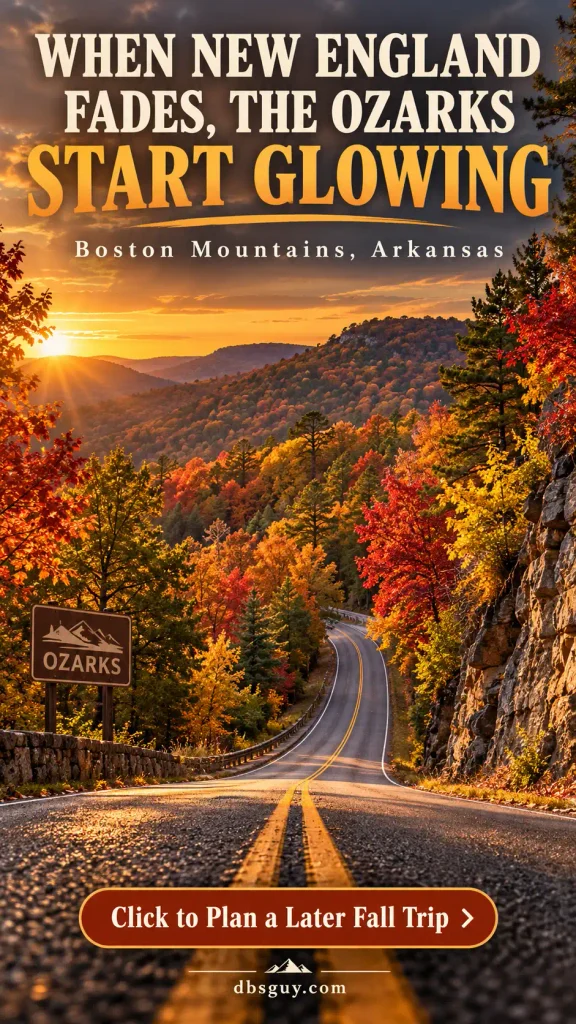
One of the smartest ways to extend fall road-trip season is to look south.
Arkansas tourism says color typically begins developing in northern Arkansas in early October, with the Ozarks often becoming especially strong later in the month. Exact timing still changes each year with heat, rainfall, and cold snaps, but the general progression can make Arkansas useful when northern destinations are already moving past peak.
The Boston Mountains Scenic Loop uses U.S. 71 and I-49 through the highest part of the Ozarks, giving you two very different perspectives on the same mountain region.
Why this route works as a weekend
Instead of simply completing the loop, connect it with Fayetteville, nearby Ozark communities, overlooks, hikes, and food stops. U.S. 71 gives you the slower scenic-road feeling; I-49 provides a practical way to cover ground and create a loop without retracing every mile.
That combination lets you adjust the trip around weather and daylight rather than feeling trapped by one road.
Best weekend base: Fayetteville for restaurants and an easy launch into the Boston Mountains.
Best for: Later-season foliage, Ozark scenery, travelers from the South or central U.S., relaxed road trippers, and anyone who missed northern peak color.
Smart move: Book lodging early on popular autumn weekends and check Arkansas’s current foliage updates before departure.
9. Enchanted Circle Scenic Byway, New Mexico

New Mexico’s Enchanted Circle is the road trip to choose when you want fall color without repeating the look of New England.
The scenic byway loops through the high country around Taos, Questa, Red River, Eagle Nest, Angel Fire, and the Sangre de Cristo Mountains. The landscape moves between high desert, alpine valleys, old mining country, evergreen forest, and brilliant stands of yellow aspen.
New Mexico tourism also highlights side trips such as the Rio Grande Gorge Bridge, which adds another completely different landscape to the weekend.
Make Taos the anchor, not the only stop
Spend part of the weekend experiencing Taos itself, then give the loop a full unhurried day. Stop in the mountain communities, get out for short walks, and allow extra time for switchbacks and high-elevation views.
The cultural history of the region matters as much as the scenery. If visiting Taos Pueblo or other culturally significant places, check current visitor information and follow local rules respectfully.
Best weekend base: Taos.
Best for: Golden aspens, Southwest landscapes, art and culture, high-altitude scenery, and travelers who want a visually different autumn trip.
Smart move: Pack for major temperature changes. Warm sun at lower elevations does not mean mountain passes will feel the same.
10. San Juan Skyway, Colorado
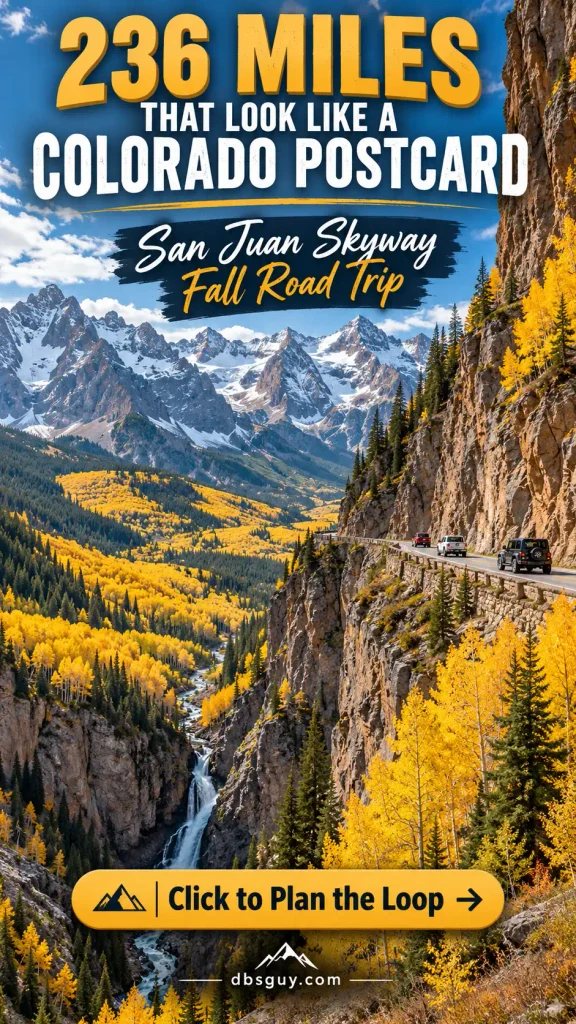
The San Juan Skyway is the road trip on this list that most deserves the word dramatic.
The roughly 236-mile loop connects Durango, Silverton, Ouray, Telluride, and the landscapes of southwestern Colorado. One famous section—the Million Dollar Highway between Silverton and Ouray—clings to mountainous terrain where the road itself becomes part of the experience.
In fall, the dark evergreens and rocky peaks make Colorado’s golden aspens look even brighter.
Do not rush this loop
Colorado tourism recommends treating the San Juan Skyway as a multiday experience, and that is good advice. The mileage alone does not explain the time you will want for mountain towns, overlooks, weather changes, and possible side trips.
Use Durango, Ouray, Telluride, or another town as your anchor and explore in sections. You do not earn anything by finishing the entire loop if you spent the whole day watching the clock.
Best weekend base: Durango for services and rail-trip options, or Ouray for a compact mountain-town atmosphere.
Best for: Experienced road trippers, photographers, golden aspens, mountain towns, dramatic landscapes, and couples who enjoy scenic driving as a main activity.
Smart move: Mountain weather and road conditions deserve respect. Check forecasts and current road information, and do not let a photography schedule pressure you into driving faster than feels comfortable.
11. Historic Columbia River Highway and Hood River, Oregon
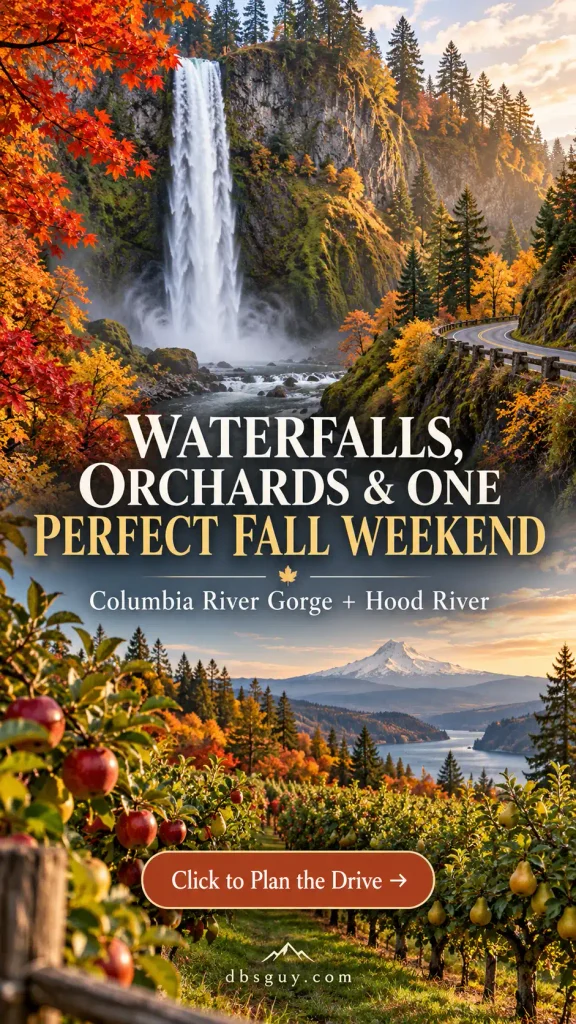
Oregon’s Historic Columbia River Highway gives you something unusual for a fall road trip: a route where waterfalls, forest, river views, historic engineering, orchards, and harvest season can all fit into the same weekend.
Travel Oregon describes the historic byway as roughly 70 miles, with a basic drive taking several hours. But once you add waterfall stops, viewpoints, short walks, and Hood River, the experience expands naturally into a full weekend.
Pair the Gorge with harvest season
Spend one day exploring the historic highway and Gorge, choosing a few waterfalls rather than attempting every possible stop. Then let the next day shift toward Hood River and the surrounding Fruit Loop, where orchards, farm stands, cider, seasonal produce, wineries, and views toward Mount Hood create a completely different kind of road-trip day.
This balance is what makes the route memorable: one day feels lush and dramatic; the next feels warm, agricultural, and slow.
Best weekend base: Hood River.
Best for: Waterfalls, food and cider, orchards, Pacific Northwest scenery, couples, photographers, and travelers who like variety.
Smart move: Parking at popular Gorge trailheads can be limited, especially on weekends. Check current road, trail, and parking information and start popular stops early.
How to Pick the Right Fall Road Trip
The best route is not automatically the one with the brightest leaves. It is the one that matches how you actually like to travel.
For the classic New England road-trip dream: choose the Kancamagus Highway or Vermont Route 100.
For nonstop mountain overlooks: Skyline Drive or the Blue Ridge Parkway.
For lakes, lighthouses, and orchards: Door County.
For a wilder Great Lakes feeling: the Keweenaw Peninsula.
For an easygoing Midwest river route: Minnesota’s Great River Road.
For a later-season trip: watch the Ozarks and Boston Mountains as color moves south.
For a completely different fall palette: drive the Enchanted Circle in New Mexico.
For the biggest mountain drama: the San Juan Skyway.
For waterfalls plus harvest season: the Columbia River Gorge and Hood River.
5 Things That Make a Fall Road Trip Better
1. Check foliage and road conditions separately
A destination can have beautiful color and still have a road closure, storm, construction project, or parking issue that changes your plan. Check both.
2. Download offline maps
Mountain and rural roads can lose cell service exactly when you need directions most. Save your route, lodging address, and key stops before leaving.
3. Plan fewer stops than you think you can fit
A scenic overlook, small town, or trail almost always takes longer than the pin you saved makes it look. Three memorable stops beat eight rushed ones.
4. Protect the first two hours of the day
Early morning usually gives you lighter traffic, easier parking, better photography light, and a calmer experience at famous places.
5. Leave space for the unplanned stop
The best road-trip memory may be the orchard you had not heard of, the roadside river access, a bakery in a town you were supposed to drive through, or a viewpoint that never appeared in your original itinerary.
Final Thoughts
A fall road trip should not feel like you are trying to beat the leaves to the finish line.
The season is already short. There is no reason to make the weekend feel shorter by filling every hour.
Choose one route that fits your starting point and travel style. Check the current conditions. Pick a few stops that genuinely matter to you, and then allow the road itself to become part of the trip.
Maybe that means driving through New Hampshire before breakfast while mist still hangs between the mountains. Maybe it is watching the Mississippi from a Minnesota bluff, finding a lighthouse through the trees in Michigan, seeing Colorado aspens glow beneath snow-dusted peaks, or ending an Oregon waterfall day with apples and cider in Hood River.
The best fall road trips are not memorable because you covered the most miles.
They are memorable because somewhere along the way, you stopped looking at the clock.