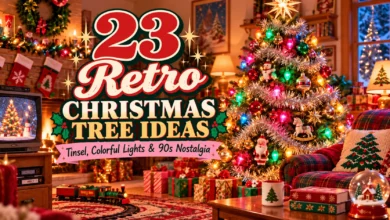
A snowy tree, a handful of pale-blue ornaments, and a little reflective sparkle can bring that frozen winter feeling into a room without turning everything blue. The key is choosing one detail to lead the design: glass icicles, velvet ribbon, paper snowflakes, flowers, or even blue branches.
These 15 icy blue Christmas tree ideas show different ways to get there, including full-size statement trees, a narrow apartment tree, and a tabletop version. Each look includes the colors, materials, and placement choices that make it work.
The visuals below are AI-generated decorating concepts, created to illustrate the palettes and arrangements rather than document real decorated homes.

Choose Your Icy-Blue Starting Point
For a classic frosted look, begin with ice blue, snowy white, and silver. Choose blue ornaments with a soft gray undertone if you want a wintry feel; brighter turquoise shifts the mood toward coastal. Neither is wrong, but they create different trees.
Use your existing tree if you like its shape. Green branches make pale ornaments stand out. A flocked tree adds a snowy texture, a white tree makes the palette softer, and a powder-blue tree turns the tree itself into the color statement.
If you want a quick way to choose, try the classic silver look for a traditional living room, the sparse Nordic look for a quieter space, the pencil tree for a tight corner, or the paper-snowflake tree for a handmade holiday. The placement and sizing suggestions here are starting points to adapt to your branches and room.
1. Classic Frosted Blue and Silver
This is the most straightforward place to start: snowy branches, pale-blue baubles, and silver ornaments in a few different finishes. Satin blue keeps the tree soft, while mirrored and ribbed silver pieces give the light something to catch.

Hang several of the larger blue ornaments slightly inside the middle and lower branches, then bring smaller silver pieces toward the tips. That creates depth instead of a layer of decorations sitting only on the outside. Repeat the blue across the tree so one side does not feel heavier.
A silver star and a simple silver collar finish the arrangement without introducing another color. For a lower-cost version, keep your white lights and silver ornaments, then add one coordinated set of pale-blue baubles. You do not need to replace everything to change the mood.
2. A Clear-Icicle Tree With Blue Glass Drops
Long, clear icicles make this tree feel like frost caught on branches. Translucent blue drops supply the color, while open spaces let the shapes hang freely. It is a good choice if you enjoy a sparkling tree but want to skip wide ribbon and large flower picks.

Choose lightweight clear acrylic icicles or glass ornaments suited to your household. Place the longest pieces where there is empty space underneath, and use shorter ones near neighboring branches. Blue teardrops can sit between the clear icicles rather than lining up in neat rows.
Before filling every gap, view the tree with its lights on. A few small silver balls can connect the design, but too many opaque ornaments hide the transparent effect. Near a window, this look also gives you a different mood in daylight and after dark.
3. Ice-Blue Velvet Ribbon Cascades
Ribbon gives you large areas of blue without buying a tree full of blue ornaments. Here, broad velvet cascades flow down a lightly frosted green tree, surrounded by white and silver baubles. The ivory bow at the top keeps the finish gentle.
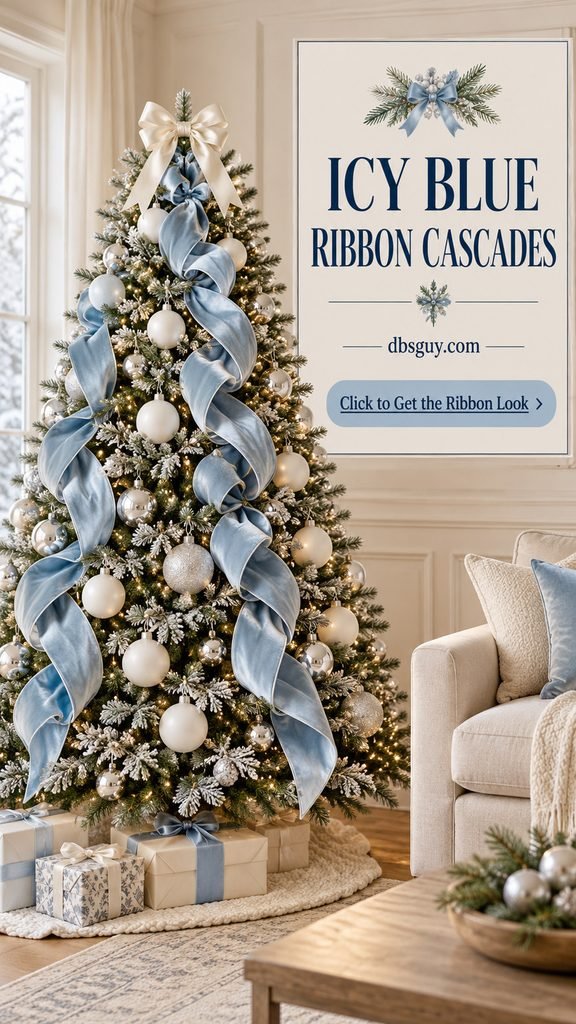
Start with wired ribbon around 2½ to 4 inches wide, scaled to your tree. Test a short length first. Tuck one end into an inner branch, bring the ribbon forward in a relaxed curve, and tuck it back in lower down. Repeat in staggered sections so the visible loops feel connected.
For a full-size tree, you might begin with three paths around the tree and add more only where needed. Work with the branch structure rather than making identical loops. Secure ribbon to branches without pulling on light wires, and leave enough greenery visible between the cascades.
4. A White-to-Blue Ombré Christmas Tree
An ombré tree uses ornament placement to create a gradual color shift. Pearly white sits near the top, pale ice blue fills the middle, and muted steel blue gives the lower branches a little more weight.
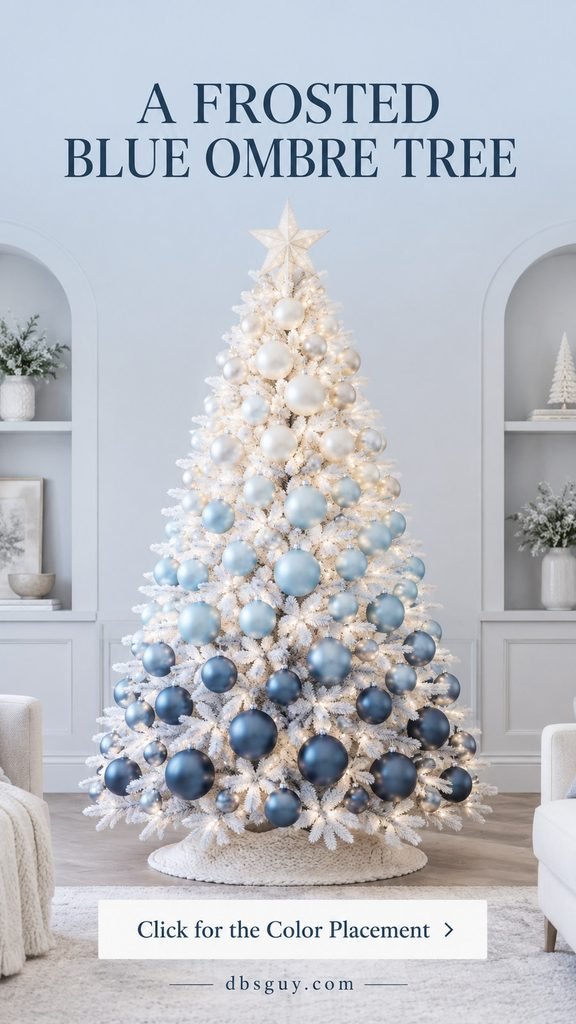
Sort your ornaments into color groups before hanging them. Decorate the top and bottom first, then fill the middle. At each transition, mix a few neighboring shades together so the tree does not look like three separate stripes.
A white tree makes the gradient easy to read, although snowy green branches can work too. Keep ornament shapes fairly consistent and skip a contrasting ribbon that would interrupt the effect. If your deepest blue starts to dominate, remove a few dark baubles and replace them with the middle shade.
5. A Sparse Scandinavian Tree With Ice-Blue Accents
The Nordic version depends on breathing room. An open green fir, a few matte blue balls, folded white paper stars, and natural wood ornaments create a calm winter tree without covering every branch.
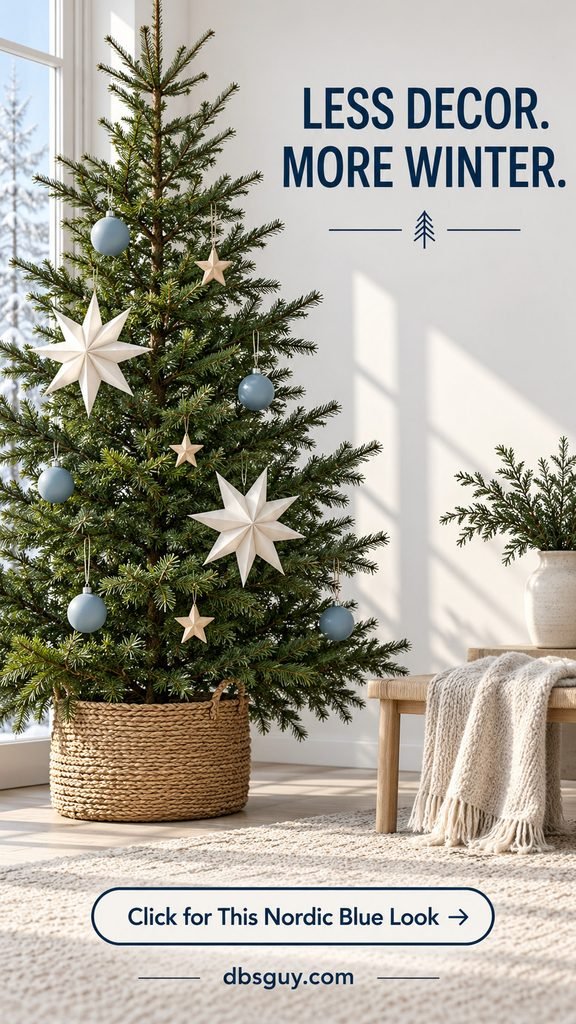
Choose one or two larger paper stars as focal points, then space smaller blue and wooden ornaments around them. Let the branch tips and uneven silhouette remain visible. A woven basket can conceal the tree’s proper stand if it fits comfortably; the basket should not replace the stand.
The concept is intentionally unlit, which keeps the materials and greenery in focus. You can add suitable white lights if you prefer an evening glow. When the tree starts to look busy, remove decorations before adding more. This is a useful option for making a small ornament collection feel deliberate.
6. Icy-Blue Hydrangeas on Snowy Branches
Blue hydrangea heads give the tree a floral shape that round baubles cannot. Large clusters of soft petals sit against snow-covered branches, with white flowers and frosted foliage filling selected spaces between them.
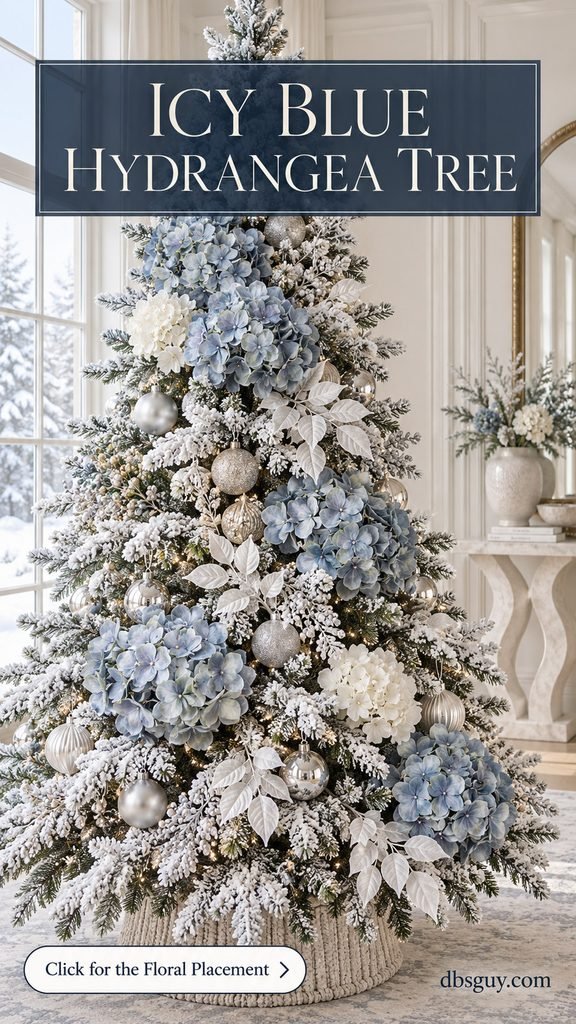
Use artificial floral stems in a muted ice-blue shade. Test one flower head against the tree before buying a full set; a very green-blue flower can change the palette. Place the main clusters along a loose diagonal, varying their height and depth rather than pushing them all to the outer tips.
Use branch-safe ties where needed and keep stems clear of light sockets and wiring. A handful of silver ornaments adds contrast, but the flowers should remain the main feature. If a bloom is wider than its branch can comfortably support, move it inward or use a smaller cluster.
7. A Frosted Woodland Tree With Pinecones and Owls
Natural brown pinecones make icy blue feel at home in a wood-filled room. White owl ornaments, light wooden shapes, and snow-tipped branches give this look a woodland character while pale-blue baubles keep it connected to the frozen palette.

Begin with commercially finished pinecone ornaments or clean craft pinecones made for indoor decorating. White-tipped cones echo the flocking without hiding their texture. Scatter the blue ornaments between the brown and white pieces, and reserve a few open branches for the owls.
A twig star and a woven collar carry the natural materials down the tree. Brown paper gifts tied with pale-blue ribbon are an easy finishing detail. Avoid piling every woodland ornament into one area; repeating the materials from top to bottom makes the mix feel connected.
8. A Frosted Coastal Tree in Sea-Glass Blue
This variation leans gently toward pale aqua. Glass-like blue ornaments, white shells, and a few starfish shapes give the snowy tree a coastal identity without losing its winter feeling.
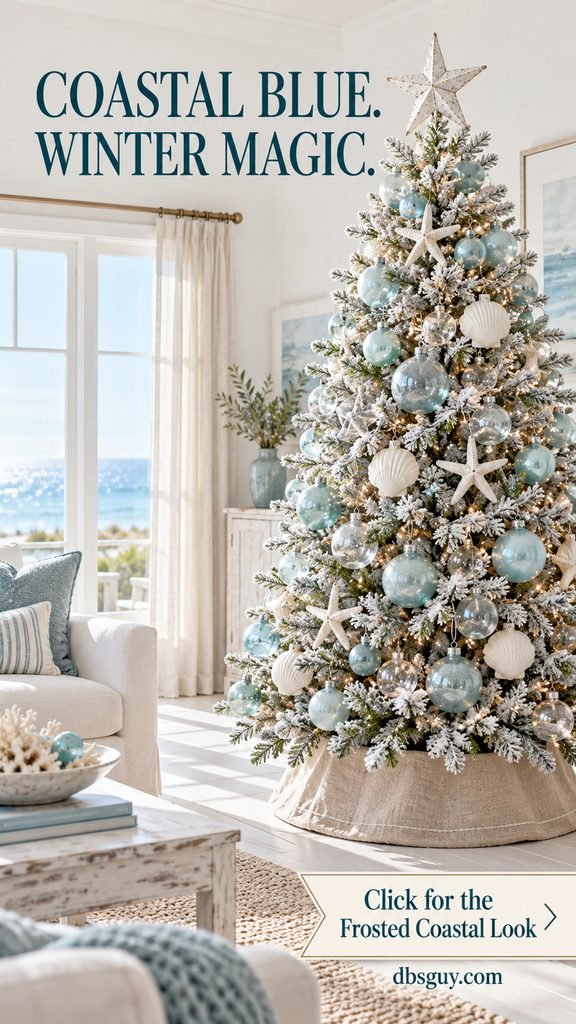
Choose pale, translucent blues rather than a strong turquoise for the main baubles. Use white shell and starfish ornaments as accents, then add clear balls to keep the tree light. The concept pairs them with warm white lights and a natural linen base cover.
If real shell ornaments are heavy, hang them on sturdy inner branches or choose lightweight replicas. Keep the surrounding room simple: pale linen, white wood, and one sea-glass-blue textile are enough to support the theme. A collection of bright nautical decorations would change the mood considerably.
9. A Slim Frosted Pencil Tree for a Small Space
A pencil tree gives you height with a smaller footprint. Snowy branches make the narrow silhouette noticeable, while little blue baubles and silver stars keep the decorations in proportion.

Measure the tree’s listed widest diameter and the width of its stand before ordering. Mark that footprint on the floor, then check that drawers, doors, and walking paths still work. Remember to include the topper when checking ceiling clearance.
On a slim tree, start with ornaments around 1 to 2½ inches across, adjusting to the branch spacing. A few larger ones can sit low and inward, but broad ribbon loops may overwhelm the shape. Use a compact collar and keep gifts close to the base so the display does not spread into the space you saved.
10. A Tabletop Tree in a White Ceramic Pot
A small frosted tree on a sideboard can deliver the whole palette in one compact arrangement. Pale-blue mini baubles, little silver stars, and white berry sprigs look especially clear against a powder-blue wall.
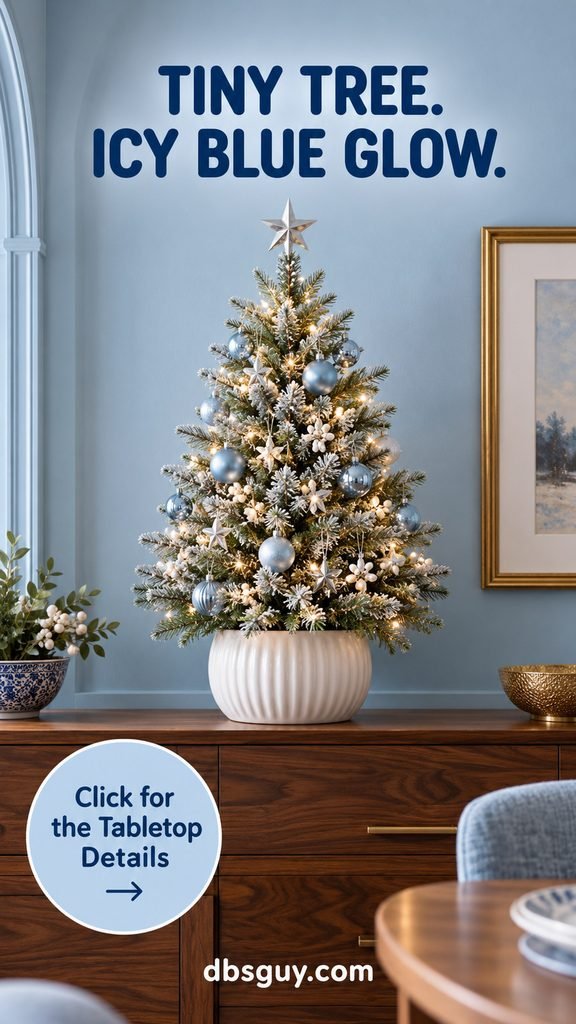
For a similar setup, look for an artificial tabletop tree roughly 2 to 3 feet tall. Check the combined height of the furniture, tree, and topper before placing it beneath shelves or artwork. Keep the manufacturer’s stable stand intact; a wide ceramic cachepot can hide it if the fit is secure and the pot does not interfere with the branches or cords.
Use small ornaments and just a few berry picks. Rotate the tree as you decorate so the side facing the room has a balanced shape. Set it back from the furniture edge and route any power cord where it will not be pulled or tripped over.
11. A Celestial Tree With Silver Moons and Stars
Silver crescents and stars bring a night-sky feeling to the icy palette. The tree itself stays pale, with blue satin baubles and white lights; a dark blue room provides the drama around it.
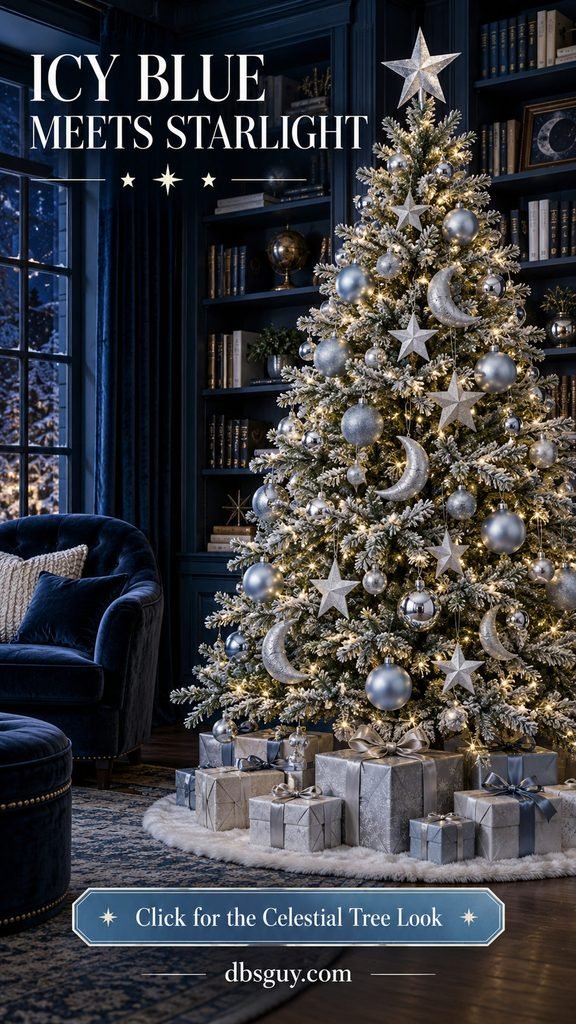
Choose flat or lightweight moon ornaments so they hang facing outward. Separate the larger stars and crescents with smaller blue baubles rather than grouping all the celestial shapes together. A single silver star at the top completes the theme.
You do not need to repaint the room to try it. A dark blue curtain or an existing navy chair can provide enough contrast. Skip additional ribbon and icicles if they obscure the moon shapes. A white skirt and silver-gray wrapping help the base feel like part of the same scene.
12. A Handmade Paper-Snowflake Tree
Cut white paper snowflakes turn an ordinary ornament collection into a frosted display. Their flat, open shapes stand out against green branches, while pale-blue balls add a consistent color between the handmade pieces.

Cut several sizes from white paper, unfold them carefully, and flatten the folds before hanging. Simple designs with thicker connecting sections are easier to handle than very delicate cuts. Use thread loops through reinforced holes and vary their length so the snowflakes hang clear of nearby needles.
Place the largest flakes on the middle and lower branches, then fill smaller gaps with little stars and blue baubles. Keep paper clear of lamps, sockets, and wiring, and follow the light manufacturer’s clearance instructions. This is also a flexible budget option: you can make the snowflake collection larger while keeping the purchased ornaments modest.
13. Blue Velvet Bows and Faux Pearl Garland
Small blue bows and ivory pearl strands create a softer, more delicate tree. White branches make each bow visible, and a few matte blue balls echo the ribbon without adding much shine.
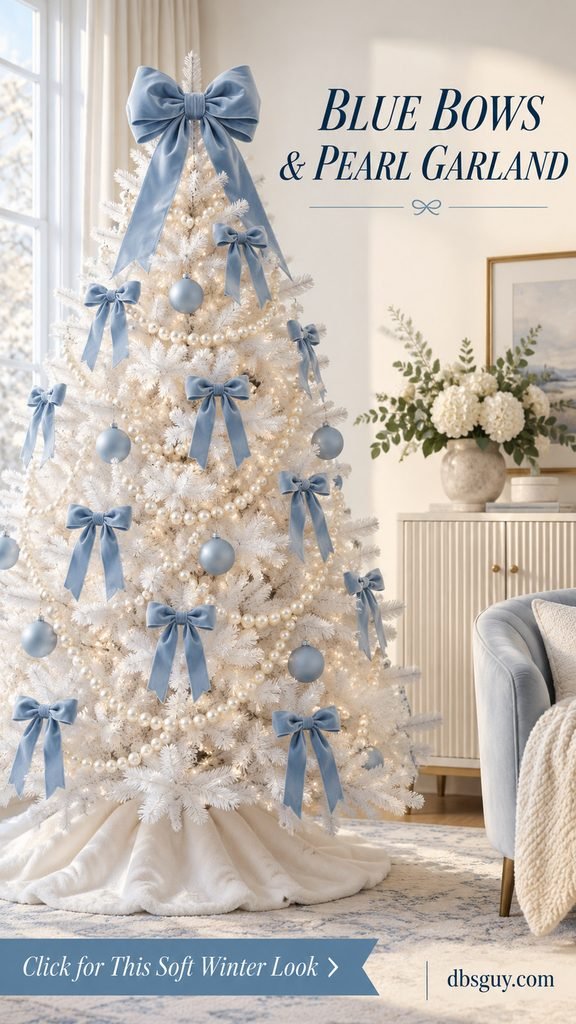
Drape the pearl garland in shallow arcs first, supporting it at several branch points so its weight does not pull the tips downward. Next, place bows between the arcs, with some nearer the trunk and others on the outer branches. Use a larger bow at the top and smaller ones lower down.
The ribbon does not need to cascade here; short tails keep the individual bows distinct. Faux pearl strands and their small parts belong out of young children’s reach. For a simpler version, keep the blue bows and baubles and omit the garland entirely.
14. A Frosted Mirror-Ball Tree With Ice-Blue Baubles
Mirror-ball ornaments give the frozen palette a party mood. Their little reflective squares stand out against flocked branches, while matte pale-blue ornaments soften the overall shine.

Mix a few medium mirror balls with smaller ones, leaving space around their reflective surfaces. Use lightweight versions where possible, and hang heavier ornaments closer to the trunk on branches that can support them. The concept combines a silver star, white lights, and a fluted silver collar.
Keep the surrounding display restrained so the reflected sparkle remains the feature. Use a conventional artificial tree with synthetic needles for this lighted look. A true metallic tree has different electrical safety considerations; the CPSC advises against electric lights on metallic trees.
15. A Powder-Blue Tree With White Frosted Ornaments
If you want the blue to be visible even between the ornaments, start with a powder-blue artificial tree. Pale synthetic branches, white snowflakes, pearly baubles, and clear balls make the tree itself the statement.

Check product images closely before buying: powder blue, turquoise, and saturated royal blue create very different results. Look at both lit and unlit images when available, and verify the material, dimensions, and lighting instructions with the seller.
Keep most ornaments white or clear so they stand apart from the blue needles. A white snowflake topper and a pleated white skirt give the silhouette a clean finish. If you already own a green tree, use one of the ornament-led looks above instead of assuming spray paint is suitable for its branches or electrical components.
Put the Frosted Look Together in a Practical Order
Choose one of the designs as your starting point, then gather its main materials before decorating. Combining flowers, wide ribbon, mirror balls, moons, pearls, and icicles on the same tree can make each detail harder to appreciate.
- Set the tree and check the lights. Assemble it according to its instructions, shape the branches if needed, and test the lights before covering them with ornaments.
- Try your blue in the room. Hold an ornament beside the branches in daylight and with the tree lights on. This small check helps you see whether the shade feels icy, gray, or more aqua.
- Place the main feature. Arrange ribbon, pearl garland, or flower clusters before filling the remaining spaces with baubles. For an icicle or paper-snowflake tree, reserve clear hanging spaces for the statement shapes.
- Build depth. Put some ornaments inside the branches and others near the tips. Turn the tree or walk around it if more than one side will be visible.
- Finish the base and step back. Add your collar or skirt and a few coordinating gifts, then view the whole tree from the doorway. Adjust any crowded patches before adding more.
For a cohesive result, repeat just one blue from the tree in gift ribbon or a nearby cushion. A cream throw, wood furniture, or warm white lights can make a frosted palette feel comfortable in a living room. Cool white lights give a crisper impression; the choice is aesthetic, and the actual look varies by product.
Keep the setup practical as well as pretty. The CPSC’s holiday safety guidance recommends watering live trees and looking for a fire-resistant label on artificial trees. Its decorating guidance also calls for checking lights for damage, keeping trees away from heat sources and doorways, and avoiding sharp or breakable decorations within young children’s reach. Follow your tree and light manufacturers’ instructions, including connection limits.
FAQs About Icy Blue Christmas Trees
What colors go best with an icy blue Christmas tree?
White, silver, and clear ornaments are easy starting points. Ivory and natural wood soften the palette, while small touches of deeper blue add contrast. To keep the result frosted, let pale blue remain the main colored accent.
Do I need a flocked tree for a frozen look?
No. White snowflakes, clear icicles, pale-blue ornaments, and white lights can give a green tree a wintry mood. Flocking supplies a snowy branch texture, but it is one design choice rather than a requirement. If you want to add flocking, first check whether your tree manufacturer permits it; do not assume craft sprays are appropriate for a pre-lit tree.
Should I use warm white or cool white lights?
Choose warm white for a softer glow with cream walls, velvet, and natural wood. Choose cool white if you prefer a crisp effect with white branches, clear ornaments, and silver. Compare the actual products if possible, since names and color appearance differ among manufacturers.
How many ornaments do I need?
There is no single useful count for all trees. Height, branch density, ornament size, visible sides, and your preferred fullness all matter. Hang your largest pieces and main feature first, then add smaller ornaments where the arrangement needs them. A sparse Nordic tree and a full floral tree should not use the same shopping target.
How can I try this palette on a small budget?
Keep your current tree and compatible white lights. Reuse white or silver decorations, add a coordinated set of pale-blue ornaments, and make paper snowflakes or simple ribbon bows. Pick one main detail and repeat it; that usually gives a clearer result than buying a few unrelated decorations from several themes.
Can a frozen-looking tree still feel cozy?
Yes. Combine the icy ornaments with warm white lighting, a knitted white skirt, a linen chair, or wood furniture. You can keep the snow-and-blue theme on the tree while choosing softer textures around it.
Start with the look that fits both your room and the decorations you already enjoy. A few carefully placed blue accents may be all you need; if you want a bigger change, ribbon, flowers, or blue branches can carry the color for you.