
A realistic college self-care routine makes room for food, sleep, a pause between obligations, and people you can lean on. Start with three points in your day: after you wake up, between classes, and when you finish studying. Add a short weekly check-in, and keep a smaller version for the days when everything feels difficult.
You can build this around an 8 a.m. lab, a closing shift, or a long commute. There is no special wake-up time, shopping list, or perfect streak to maintain. A face mask can be enjoyable; it just cannot solve a schedule that leaves you no time for lunch.

The visuals are AI-generated concepts illustrating the routine, not photographs documenting students or a tested wellness program.
Your College Self-Care Routine at a Glance
- After waking: handle basic hygiene, eat something accessible, and check where your next meal fits.
- Between obligations: notice one need and respond to it before starting the next task.
- After your last study session: leave a note for tomorrow, pack what you need, and make room for sleep.
- Once a week: address one recurring hassle and make one plan you actually want to keep.
- On a hard day: use the essentials-only version below and ask for support when you need it.
Use these as flexible starting points. Try one first. A useful starting question is: What keeps making my day harder—missing meals, running out of clean clothes, studying until bedtime, or feeling alone? Start where the answer points.
1. After Waking: Cover the Basics Before the Day Takes Over
Build this part around the time you actually get up. Keep your usual hygiene routine, get dressed, and choose a breakfast you can manage with the food and facilities available to you.

Peanut-butter or sunflower-seed-butter toast with a banana is one option. Yogurt with oats is another if you have refrigeration. If you use a dining hall, decide whether you will eat before class or pick something up on the way. The point is to have an available option rather than designing a new breakfast every morning.
Before leaving, look at your schedule for a meal gap. A class ending at 11:50 and a lab starting at noon may leave travel time but no realistic lunch break. Pack something suitable for your storage situation, eat earlier, or plan a stop after the lab. A snack can bridge a gap; it does not need to become your whole day’s food.
Put a water bottle where you will see it, and check the essentials you need to get home: keys, ID, and a charged phone. Use a note by the door if you keep forgetting the same item.
For rushed mornings: move one decision to the night before—set out clothes or put a shelf-stable breakfast in your bag. Do not shorten your sleep just to make this routine look more impressive.
If food costs are the obstacle, check your campus basic-needs office or food pantry for current hours, access rules, and available support. A reminder to eat is only useful when you can get food.
2. Between Classes: Respond to One Actual Need
Use a transition you already have: after a lecture, before a library session, or once you arrive safely on campus. Pause before opening the next app or assignment and ask, “What do I need before I keep going?”

Match the break to the answer:
- Hungry or thirsty? Get food or refill your bottle instead of using the whole gap to scroll.
- Uncomfortable from sitting? Take an easy walk, change position, or choose movement that is comfortable and accessible for you.
- Overloaded? Sit somewhere quieter for a few minutes. Look around, let your shoulders relax, and leave the next task closed for a moment.
- Lonely? Send a specific invitation: “Want to eat together after our afternoon class?” A person you already know is a good place to start.
You do not need to do all four during every break. If you have three minutes, use them for the need that matters most right now. A bathroom stop may be more useful than squeezing in a mindfulness exercise.
A short movement break is a starting point, not your entire exercise plan. If you want a separate, structured movement option, try Morning Stretch Routine for Students: 10 Minutes Before Your First Class when you have time to follow the full instructions.
3. After Studying: Give the Day a Clear Ending
When your last study session ends, spend a few minutes handing the work to tomorrow. Write down where you stopped and the first concrete action to take next. “Open the lab worksheet and finish question four” is easier to return to than “catch up on everything.”

Then pack the items you need for your first obligation and clear enough space to use your desk or bed. You can leave the rest of the room alone. If tidying turns into a full cleaning session, stop once tomorrow’s essentials are ready.
Work backward from your required wake-up time to protect a sleep window. The CDC recommends at least seven hours of sleep for adults ages 18–60; some people need more. If you are 17, its recommendation is eight to ten hours. Allow time to fall asleep, too.
Try turning off electronic devices at least 30 minutes before bed, as the CDC advises. Put charging equipment somewhere you can use without lying in bed scrolling. Choose a quiet activity you enjoy, such as reading a few pages or listening to something restful with the screen off.
In a shared room, make a practical request while you are both awake: “I need to sleep around 11 tonight. Could you use your desk lamp and headphones after that?” If repeated noise conflicts continue, ask residence-life staff about your school’s process for help.
During exam week: set a stopping point before you begin the evening session. If the work still will not fit, contact your instructor or advisor about priorities or available options. An extension is something to request, not something to assume.
4. Once a Week: Remove One Recurring Hassle
Choose a gap that usually exists in your week. Sunday is optional. About 10–15 minutes is a reasonable starting estimate for checking and planning; laundry, shopping, and appointments will take additional time.
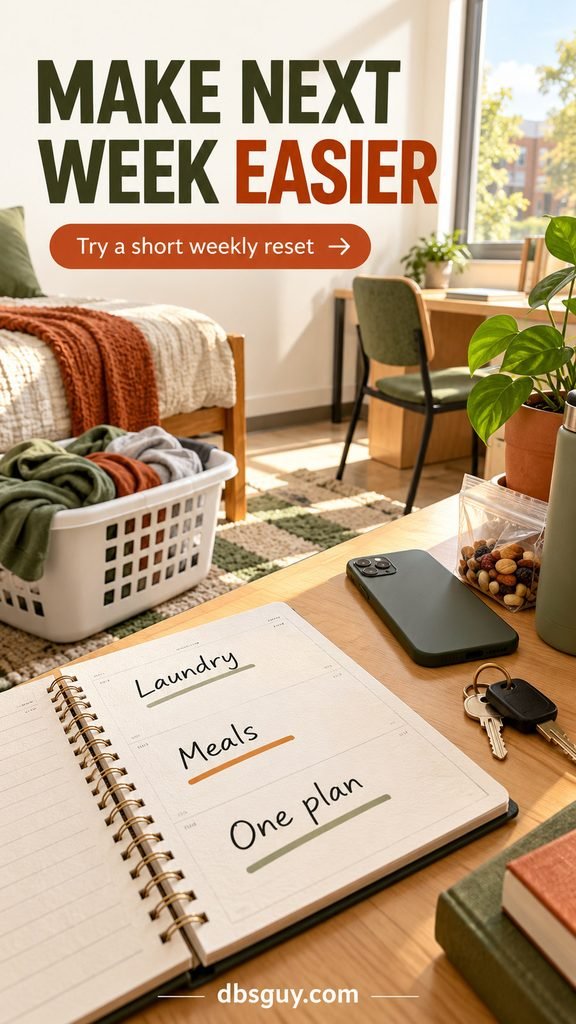
Look ahead at classes, shifts, travel, and deadlines. Find the day most likely to become difficult, then make one useful adjustment. Schedule laundry before you run out of clothes, choose a meal you can manage after a late lab, or send the email you need answered before a deadline.
Also put one enjoyable thing on the calendar. It could be lunch with a friend, a game, an hour with a library book, or a call home. Leave room to enjoy it without requiring yourself to finish every assignment first.
If you want more regular contact with people, choose an activity you would like to repeat. How to Join Clubs in College: Find Your People Freshman Year explains how to find an active group and confirm its schedule before committing.
Check your capacity before accepting something new. “I can come to the meeting, but I cannot take on the fundraiser this month” is a complete, useful boundary.
5. On Low-Energy Days: Use a Smaller Version
When you are exhausted or overwhelmed, skip the weekly planning and room reset. Start with the next immediate need. This short list is a way to get through the next part of the day, not a complete long-term routine:

- Eat the easiest available meal and get something to drink.
- Handle one basic hygiene need, such as brushing your teeth or changing clothes.
- Make a place where you can rest.
- If you need company or practical help, tell someone directly.
Try: “I’m having a rough day. Could you sit with me while I eat?” or “Could you help me figure out who to contact about this class?” A specific request gives the other person something they can respond to.
If an assignment or shift needs attention, send a brief message as soon as you can. You do not have to explain your whole personal situation to ask about your options.
Return at the next available anchor. Missing the morning does not require restarting the week, and a hard day does not create extra self-care tasks to make up tomorrow.
When a Routine Is Not Enough
Self-care can support your well-being, but it does not replace mental health care. The National Institute of Mental Health’s self-care guidance recommends professional help for severe or distressing symptoms lasting two weeks or more. You can seek help sooner, especially if symptoms are worsening or interfering with daily life.
If low mood, anxiety, sleep trouble, or difficulty managing ordinary tasks keeps getting in the way, contact campus counseling, student health, or a healthcare professional. Ask about appointments, fees, eligibility, and options while you wait; services vary by school. You do not need to perfect a routine before asking for care. If you cannot stay safe, seek immediate emergency help.
Questions About Making This Routine Work
How much time should college self-care take?
There is no useful single total. Meals, sleep, hygiene, relationships, and movement need real space in your schedule. The check-ins can be brief, but they cannot compress those needs into a five-minute checklist. Start by protecting the need you keep missing.
What if my schedule changes every day?
Keep the sequence and move the time. Your evening handoff can happen after a late shift, and a between-class check-in can happen before an online lecture. Commuters can pack essentials before leaving and plan around travel. Do any phone-based planning while safely parked or off the road.
What if I keep forgetting?
Attach one action to something you already do: check tomorrow’s schedule when you plug in your phone, or refill your bottle after lunch. If the same step keeps failing, change its location, timing, or size before adding more reminders.
Does relaxing still count if it is not productive?
Yes. You can enjoy a show, a hobby, or time with a friend without turning it into another improvement project. If the activity regularly pushes out meals or sleep, adjust when or how long you do it.
For today: choose the next anchor you will reach and decide on one action. That might be eating before your afternoon class or writing tomorrow’s first task before closing your laptop. Leave the rest until it is useful.
Also Read
- 23 Easy Microwave Recipes for Dorm Rooms: No Kitchen Needed — meal options for days when cooking facilities are limited.
- Dorm Yoga for Beginners: Quiet Flows for Tiny Spaces — a separate movement guide for a small shared room.