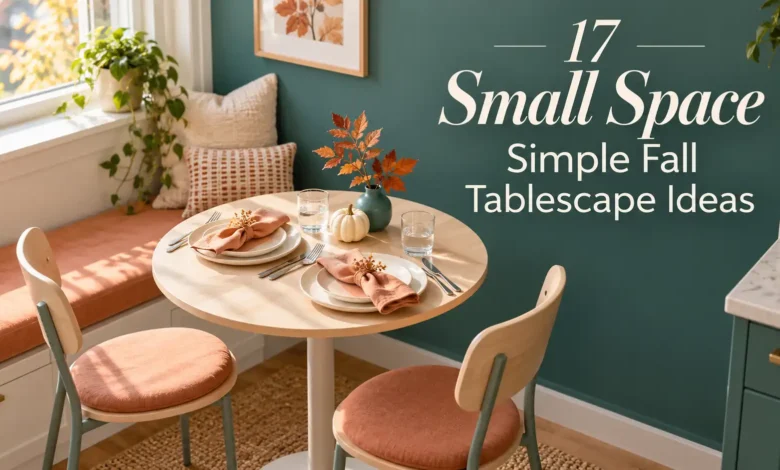
A small fall table needs room for dinner first. Choose one seasonal feature that fits around your plates and glasses: a single mini pumpkin, a flat napkin detail, or a centerpiece you can lift away when the food arrives.
These 17 simple fall tablescapes work with bistro tables, breakfast nooks, narrow dining tables, and kitchen counters. Some use a little decoration in the middle; others put all the interest at each seat. Pick the solution for the space you actually have, then use the colors and dishes you like.

The visuals are AI-generated styling concepts. They illustrate the ideas below, rather than documenting completed or tested table settings.
Find Your Table’s Spare Space First
Before buying anything, set out one complete place for every diner, including the glasses and utensils the meal needs. Put your empty serving dishes on the table, too. The space left over is your decorating space.
- A tiny round table: start with one mini pumpkin in idea 1, or skip the centerpiece with idea 7.
- A narrow rectangular table: try the folded runner in idea 3, the slim fruit dish in idea 5, or the unused-end arrangement in idea 11.
- A table that doubles as a work surface: choose the lift-away tray in idea 6.
- A full Thanksgiving meal: keep the seasonal details flat, or serve from the counter as in idea 17.
The measurements and quantities below are starting points for these concepts, not universal table-setting rules. If a decoration only fits after you push a glass toward the edge or squeeze two places together, choose a smaller version or leave it out.
1. Give a Bistro Table One Mini Pumpkin
For a two-person round table, one small cream pumpkin can be the entire centerpiece. Set it between ivory dinner plates and mustard napkins, letting the wood show around everything. The pumpkin supplies a recognizable fall detail without a runner, vase, and scattered filler competing for space.
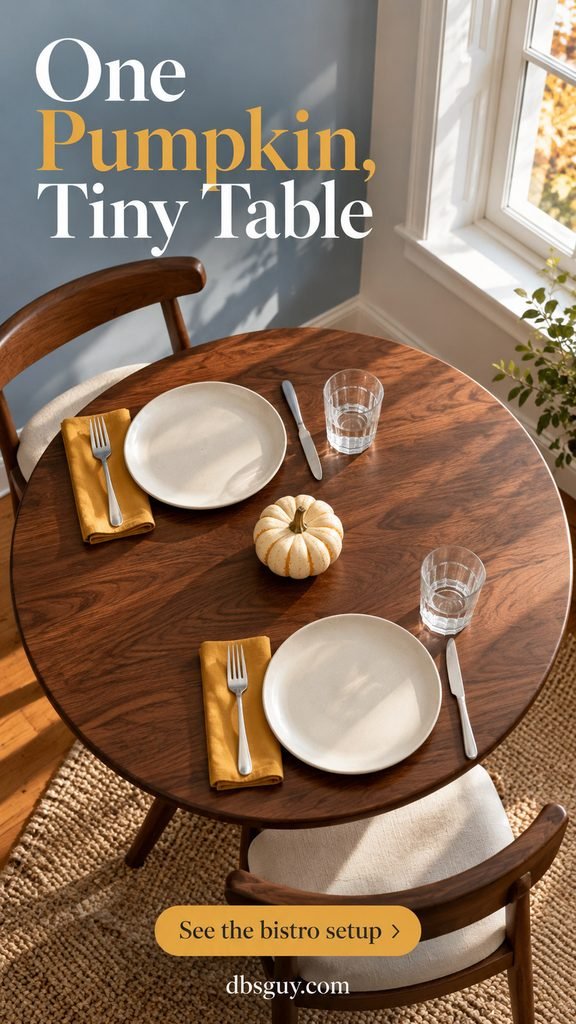
Choose the pumpkin after the plates are in position. It should sit comfortably inside the central gap, with room to pick up both glasses. Clean and dry its base and protect a delicate tabletop. If the meal needs a shared bowl, move the pumpkin to the windowsill before serving.
2. Make a Flat Paper-Leaf Napkin Band
A paper leaf gives a plain napkin a seasonal detail without adding another object beside the plate. Use sage napkins, narrow kraft-paper bands, and one rust-colored cardstock leaf per setting. Keep the center bare for passing dishes.
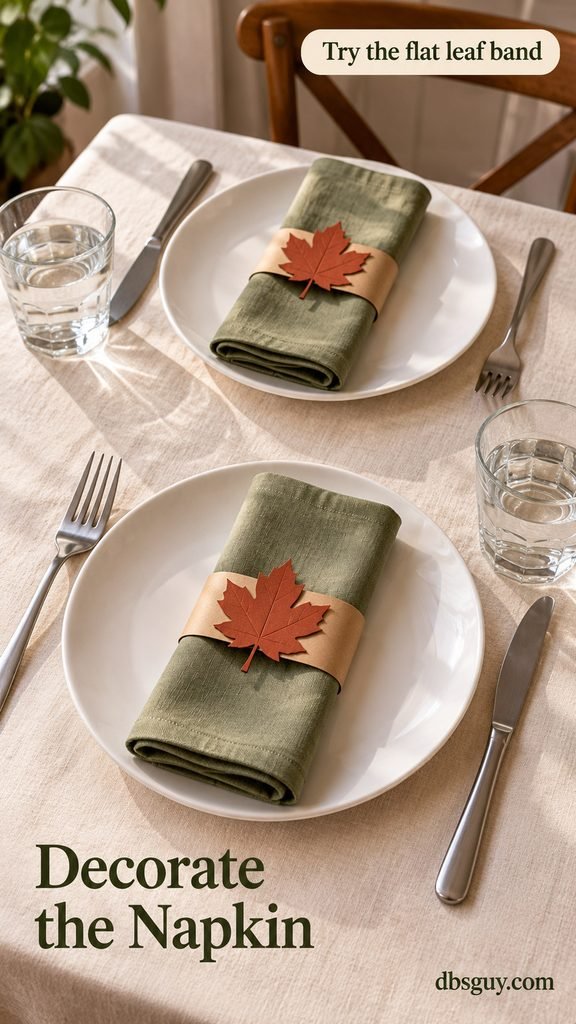
Fold each napkin into a rectangle. Wrap a paper strip loosely around its middle, overlap and tape the ends together on the back, then attach the leaf to the front of the band. Keep tape on the paper rather than the fabric. The whole band should slide off easily; guests can set it aside before putting their napkins on their laps.
3. Fold a Runner into a Narrow Center Strip
If a standard runner spreads beneath the edges of your dinner plates, fold it lengthwise. A terracotta strip about 6 inches wide is a useful first try on a narrow table, but let the actual gap between the place settings decide its width.
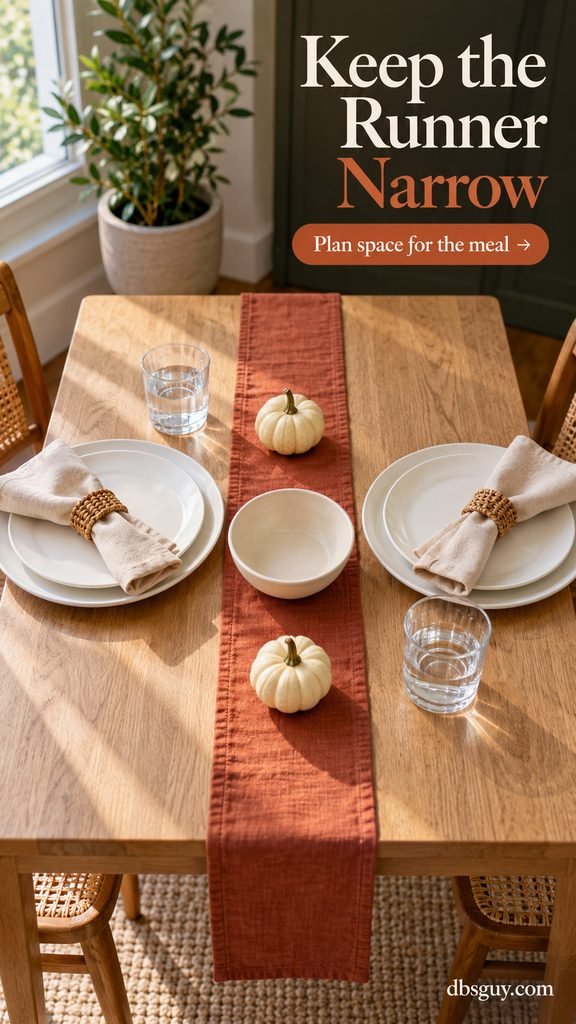
Set two tiny white gourds apart along the strip and test a serving bowl in the gap between them. That open interval gives the arrangement a purpose beyond looking tidy. Keep the runner flat under the bowl, and remove a gourd if its position interferes with serving. Avoid bunching fabric into a ridge that makes dishes wobble.
4. Use a Mug for a Low Flower Arrangement
A squat ceramic mug can hold a small posy without the footprint of a large vase. Try a few short rust-colored carnation stems in a cream mug, with pale blue plates and oatmeal napkins. The handle makes the familiar container part of the styling.
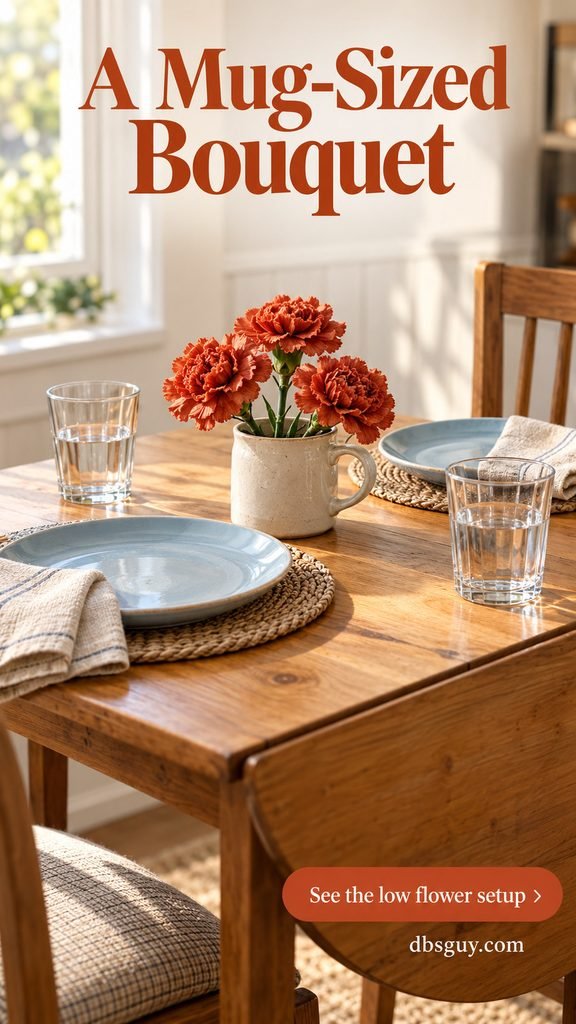
Use a sound, watertight mug and add water before arranging. Trim the stems gradually, checking from a chair so the blooms do not hide the person opposite you. Keep the flower heads gathered over the mug instead of reaching across the plates. The concept includes woven mats; leave those out if their edges overlap on your table.
5. Line Up Apples in a Slim Oval Dish
For a long, skinny table, borrow the shape of an olive dish or a narrow serving bowl. Place three whole red apples in one row rather than piling them in a round fruit bowl. Olive napkins and everyday white dishes keep the red fruit as the main accent.
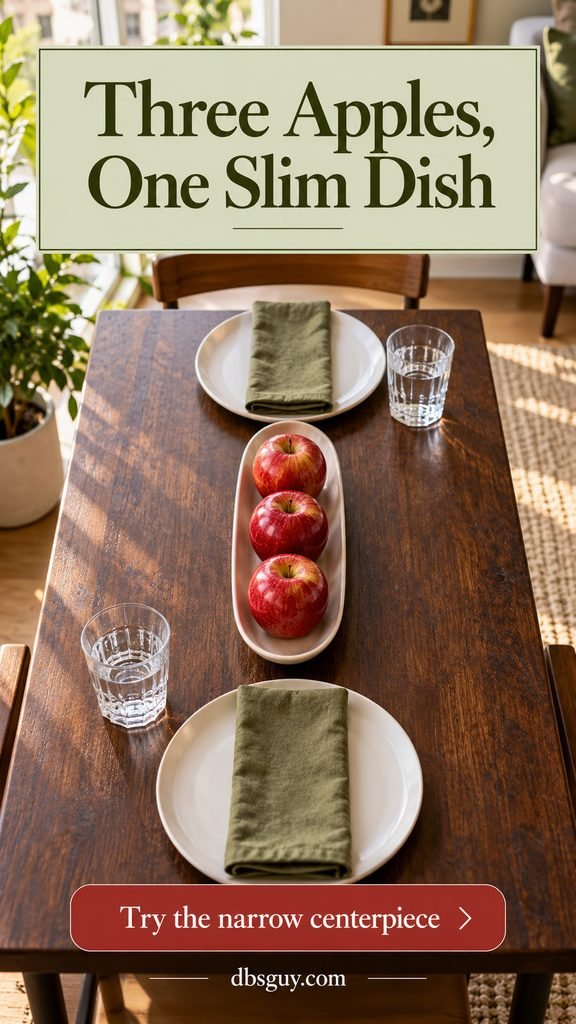
Check the width at the dish’s widest point, including any handles, before setting it between the plates. The apples should sit inside the rim rather than balance on it. Use a clean food-safe dish if you plan to eat the fruit, and keep paint, glitter, and floral products off it. Move the dish to the counter when a larger platter needs its place.
6. Put the Whole Centerpiece on a Handled Tray
A tray suits a dining table that becomes a desk or homework spot between meals. Group one small white pumpkin and two short amber holders with LED tea lights on a compact handled tray. Brick-red napkins repeat the warm color without adding more pieces to move.
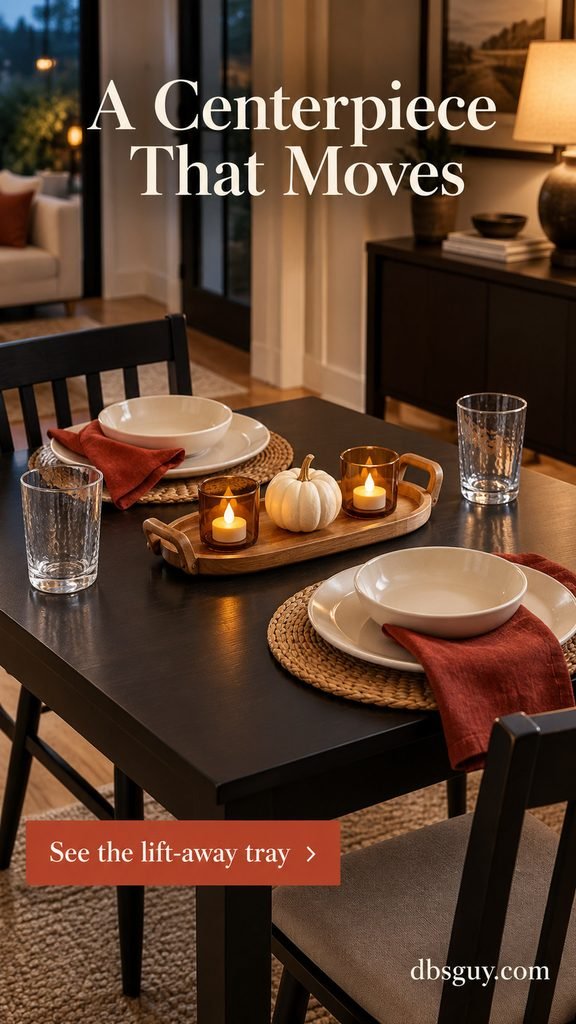
Leave both handles accessible and test the loaded tray’s balance before setting the table. Clear a landing spot nearby so you can lift the whole arrangement away before dinner. Choose a tray small enough to lift without brushing the glasses; a tray that fills the entire middle is still too large, even if everything fits on it.
7. Turn a Pear into a Place Card
When there is no room for a centerpiece, use a whole Bosc pear at each place. Rest it on a folded plum napkin on the dinner plate and loosely tie a small name tag to the stem. The warm brown fruit and purple cloth make the setting feel autumnal without orange pumpkins.
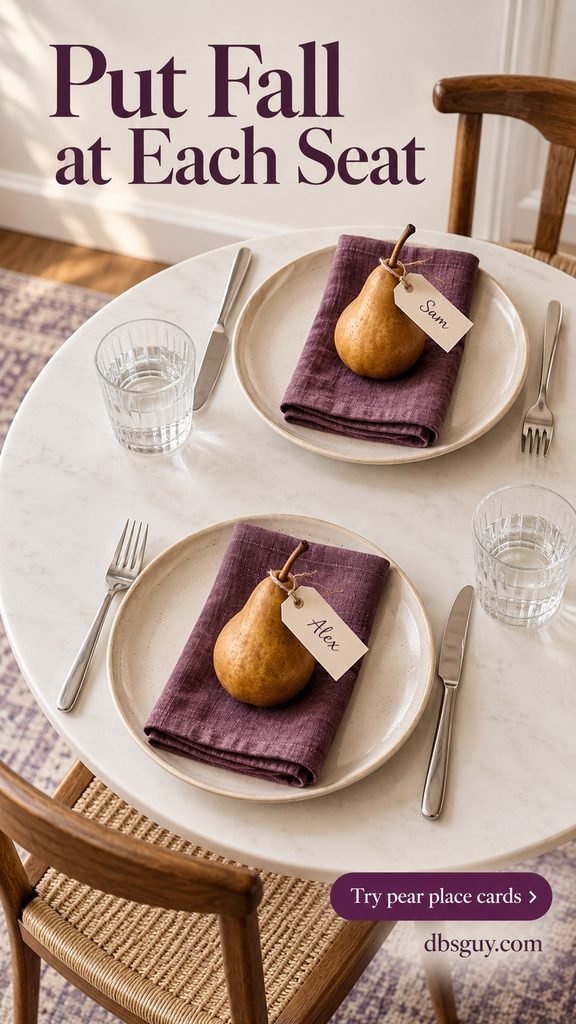
This works especially well when you want assigned seats for a small dinner. Make the names easy to read and keep glue and ink on the tags, away from the fruit. Have a bowl on the counter where guests can put the pears and tags before eating, so the decorations do not migrate into the space beside every glass.
For more ways to use these deeper colors, see 17 Burgundy & Plum Simple Fall Tablescape Ideas.
8. Fold Utensils into Rust Napkin Pockets
At a breakfast counter, a napkin pocket keeps each place compact before guests sit down. Put the folded bundle on the plate and set the water glass above it. Rust cotton and amber glasses carry the fall palette; the counter does not need a centerpiece.
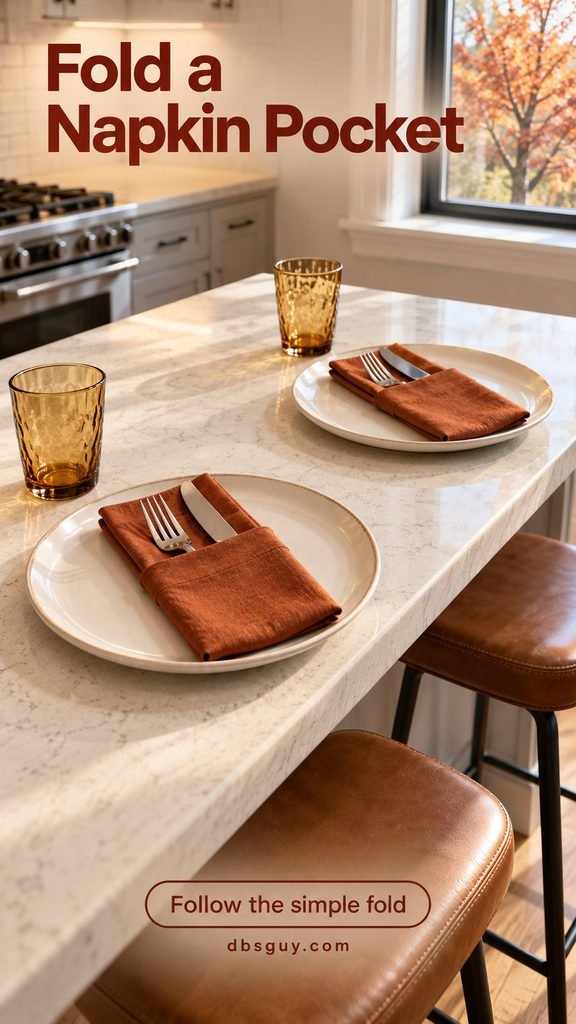
For a simple pocket, lay a square napkin flat and fold its lower third upward. Turn it over, keeping the folded edge at the bottom. Fold the left and right sides inward until they overlap, then turn it face up again. The folded lower edge forms the pocket. Slip in only the utensils the meal requires, with handles inside and the knife blade facing the fork.
Choose a napkin large enough to hold the utensils securely. Guests should be able to remove them and unfold the cloth without undoing ribbon or moving a decoration.
9. Run One Gingham Strip Across Two Places
For two diners seated opposite each other on the long sides of a rectangular table, run one cloth strip across the short width. Both plates sit on it, making a shared band of pattern. Rust-and-cream gingham with muted blue napkins gives plain dishes a fall breakfast look.
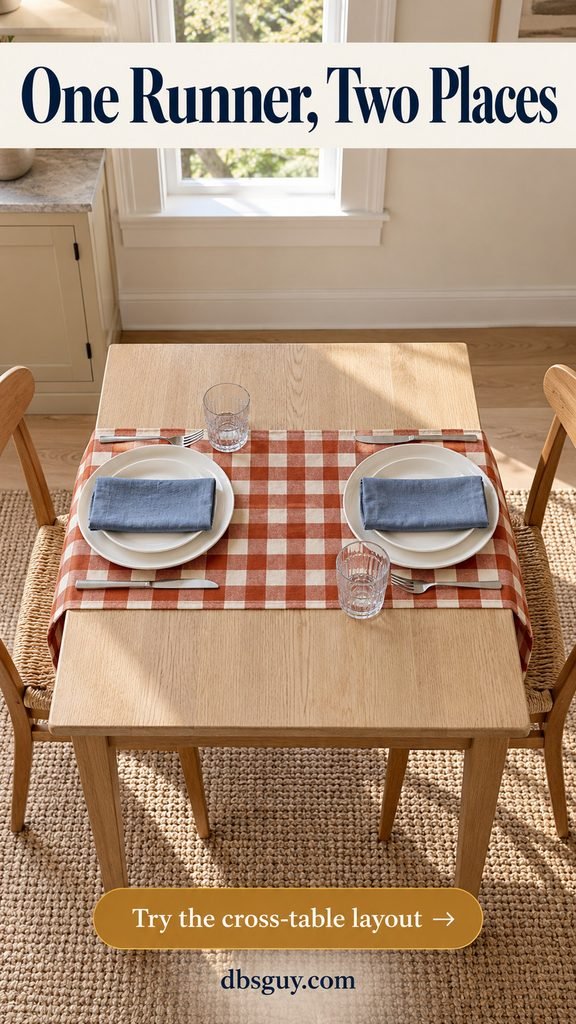
The runner replaces two separate placemats in this arrangement. Center it beneath the two seats and check that each plate sits fully on the fabric rather than partly on a folded edge. Keep the ends clear of chair seats and laps. Leave the middle undecorated; the visible checks already connect the two settings.
10. Let the Bread Basket Be the Centerpiece
If bread will be on the table anyway, make its basket the feature. Line a small oval basket with a clean rust gingham napkin and add a few rolls. Cream stoneware and plain brown napkins keep the pattern concentrated in one useful piece.
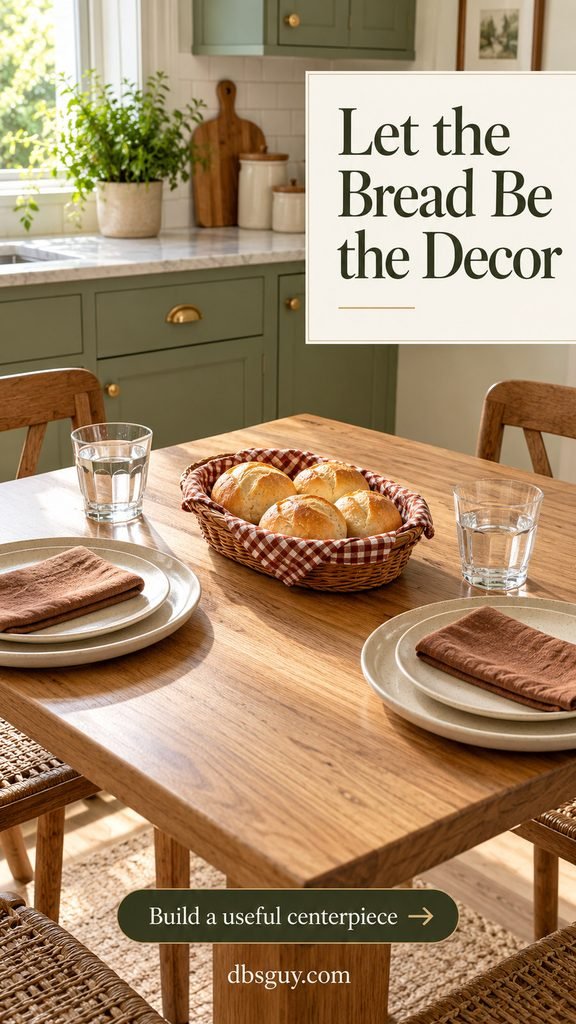
Use a basket small enough to pass comfortably. Fold the liner inside the rim instead of spreading its corners across the table. Set butter on the table only if there is a convenient place for it; otherwise, offer it at the serving counter. Refill the basket as needed rather than choosing a larger one just to hold every roll at once.
11. Decorate the End Where Nobody Sits
On a narrow table with an unused short end, shift the fall arrangement there. A low terracotta bowl holding two tiny white pumpkins can sit near the wall while the two long-side places remain comfortable. The middle stays available for a serving dish.
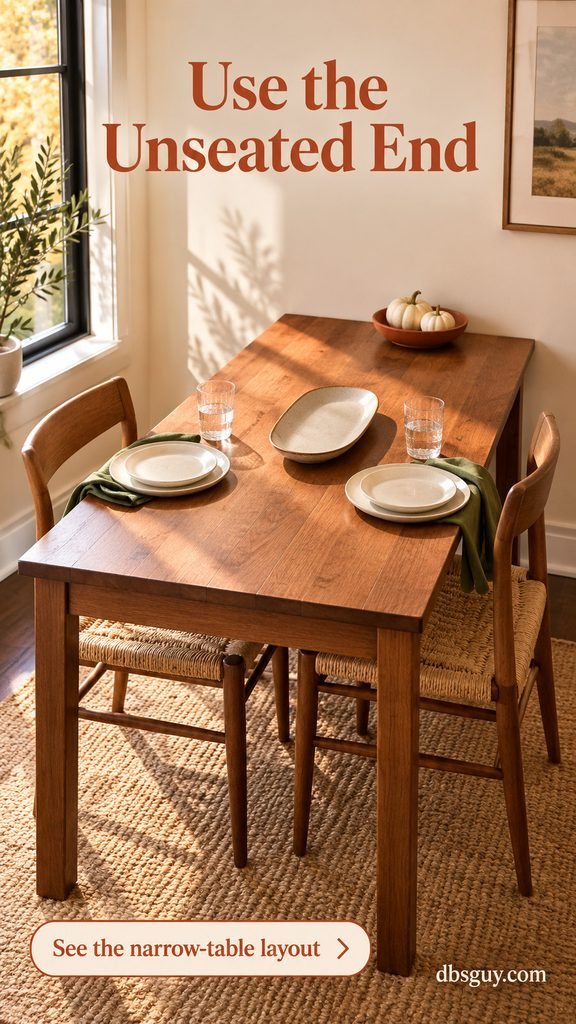
This only works when that end is genuinely free. Do not put the bowl in front of an extra guest’s plate or where someone needs space to get into a chair. Test the layout with the serving dish in place. If every seat is occupied, move the pumpkin bowl onto a shelf and keep the olive napkins as the table’s seasonal accent.
12. Move the Fall Display onto the Wall
A breakfast nook can feel decorated even when the tabletop is almost empty. Arrange three oversized paper leaves on the wall behind it: rust, mustard, and copper-brown. Cinnamon napkins echo the display at the two place settings below.
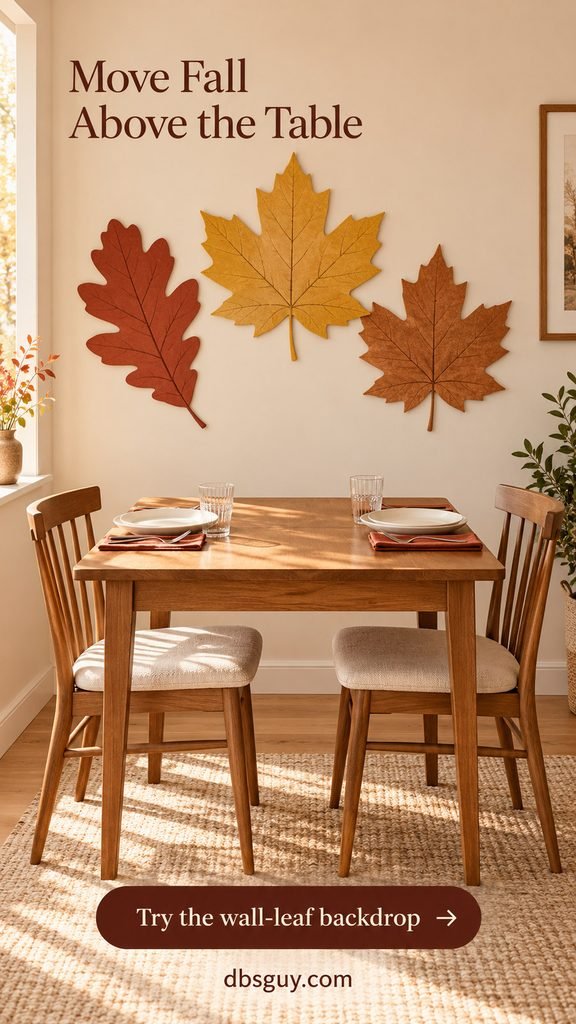
Cut simple leaf silhouettes from cardstock and position them with space between the shapes. Use a mounting method suitable for your wall finish and follow its removal directions. Keep the leaves flat against the wall, away from heat sources, rather than dangling above food. This is a useful option when the same little table hosts meals, crafts, and laptop work.
13. Choose Two Low LED Lights Instead of a Tall Candelabra
For an evening meal, two short ribbed-glass holders can give a small round table a focal point without tall stems or a branching candleholder. Put an LED tea light in each, use simple coasters beneath them, and add ochre napkins against ivory plates.
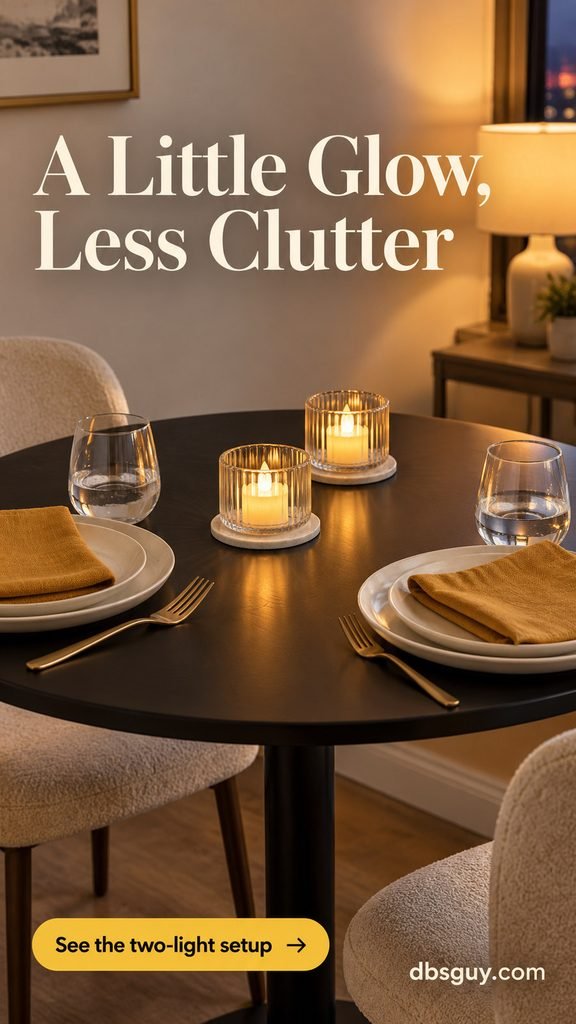
Keep the holders close enough to read as one small group, but leave room to lift them individually. Switch the LEDs on with the room lights at dinner level before deciding whether you need anything else. A nearby lamp should still provide enough light to see the food. The candles are a small accent, not a reason to darken the entire room.
14. Contain One Small Rosemary Plant
If you prefer greenery to cut flowers, use one compact rosemary plant in a glazed clay-colored cachepot. Oatmeal napkins, white plates, and amber glasses give it a harvest palette without extra ornaments. Keep the plant’s full spread in mind, not just the pot’s diameter.
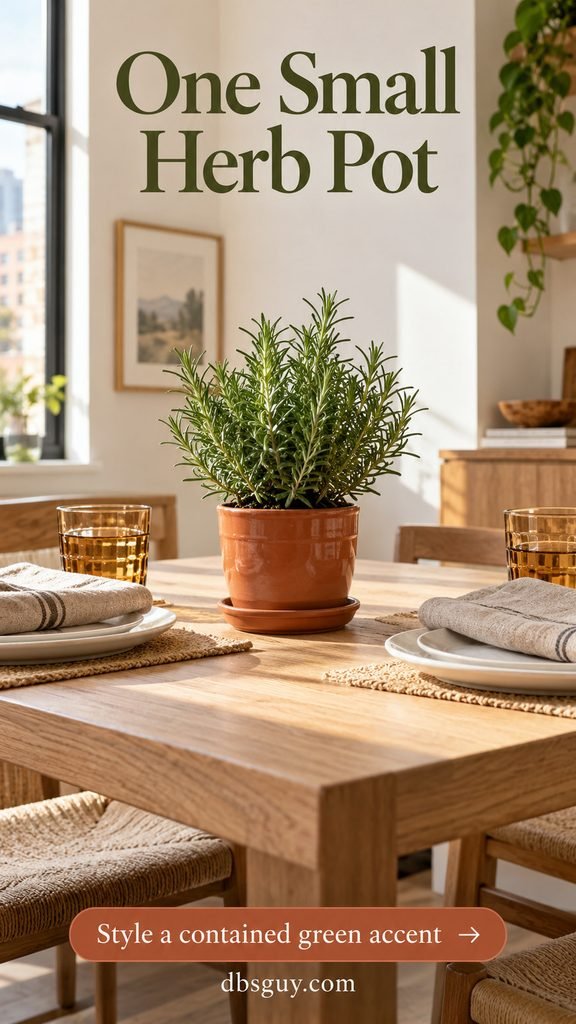
Keep the nursery pot inside a watertight outer pot, with a protective saucer underneath. Water and drain the plant away from the table, then wipe the base before bringing it back. Choose a smaller plant or move it aside during the meal if the foliage blocks conversation. This is a decorative placement for dinner, not a substitute for the light and care the plant needs afterward.
15. Let a Plaid Tablecloth Supply All the Pattern
A lightweight plaid cloth can do the decorating when even a small centerpiece gets in the way. Look for rust, mustard, and cream, then use plain cream dishes and napkins. Leaving the middle empty makes the checks easier to see and leaves room for the meal.
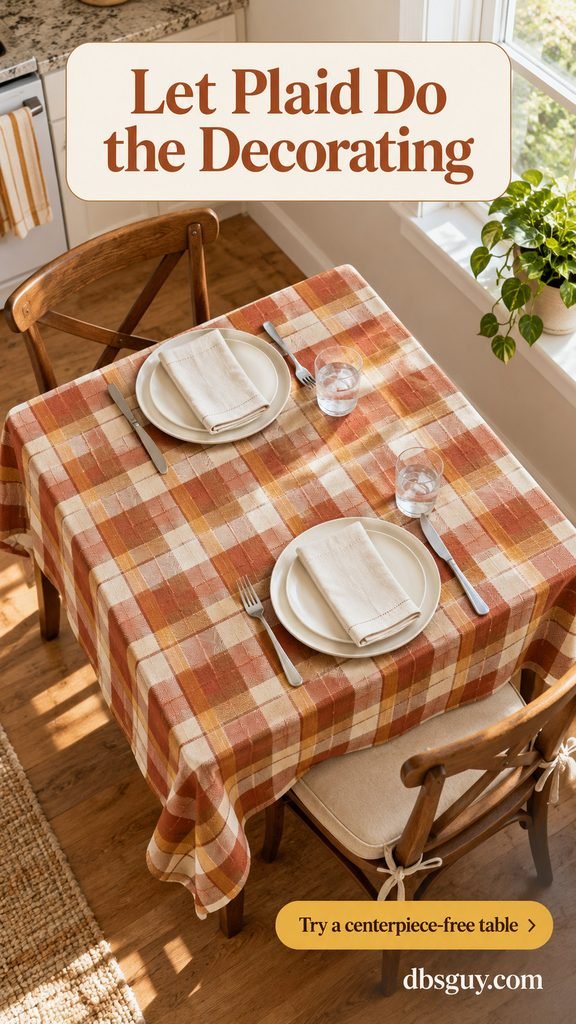
Check the cloth against the actual table before buying it. For an even overhang, add twice your chosen drop to each tabletop dimension. For example, a 30-inch square table with a 6-inch drop needs a 42-inch square cloth. Adjust the drop around your chairs, and smooth the surface so glasses sit steadily. Treat those numbers as an example, not a required size.
16. Put Fall Color Under Each Water Glass
Broad, flat leaf-shaped felt coasters bring a fall motif into a place you already need for a drink. Use rust-colored leaves with clear tumblers and sand-colored napkins. Keep the rest of the tabletop plain so the small shapes stay visible.
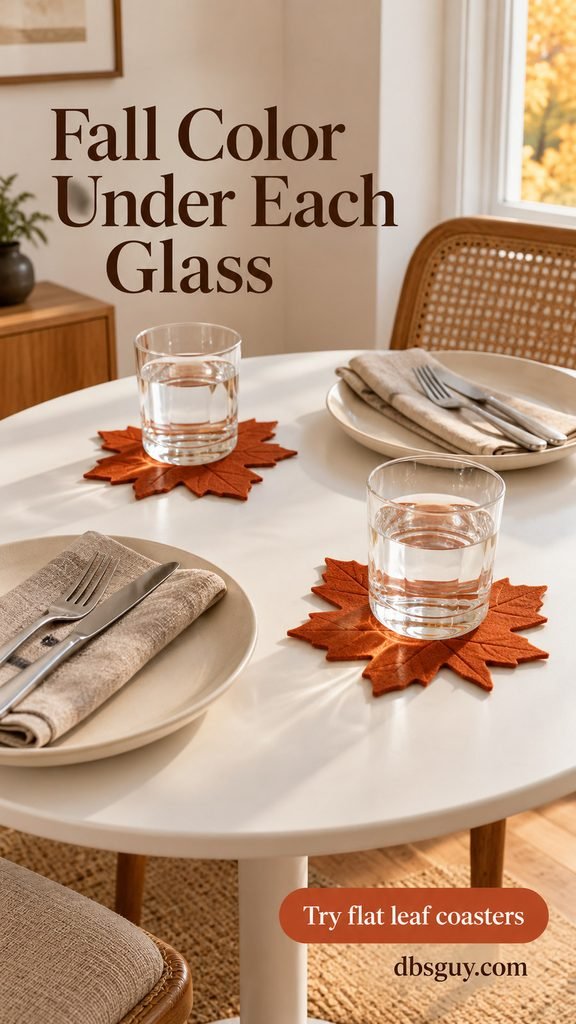
Choose coasters whose solid middle is wider than the entire glass base. Test the glass on a dry, flat coaster; it should not rock on thick stitching or an overlapped edge. Avoid loose leaf scatter around the glasses, which adds clutter without protecting the surface. Felt can absorb moisture, so lift damp coasters after the meal rather than leaving them on finished furniture.
17. Serve from the Counter and Keep the Dining Table Clear
For a Thanksgiving or Friendsgiving meal with several dishes, the best small-table arrangement may be a buffet. Put the serving bowls on a nearby counter and keep the dining table to plates, rust napkins, glasses, and the utensils you need. A small pumpkin can sit at the far end of the counter, outside the serving area.
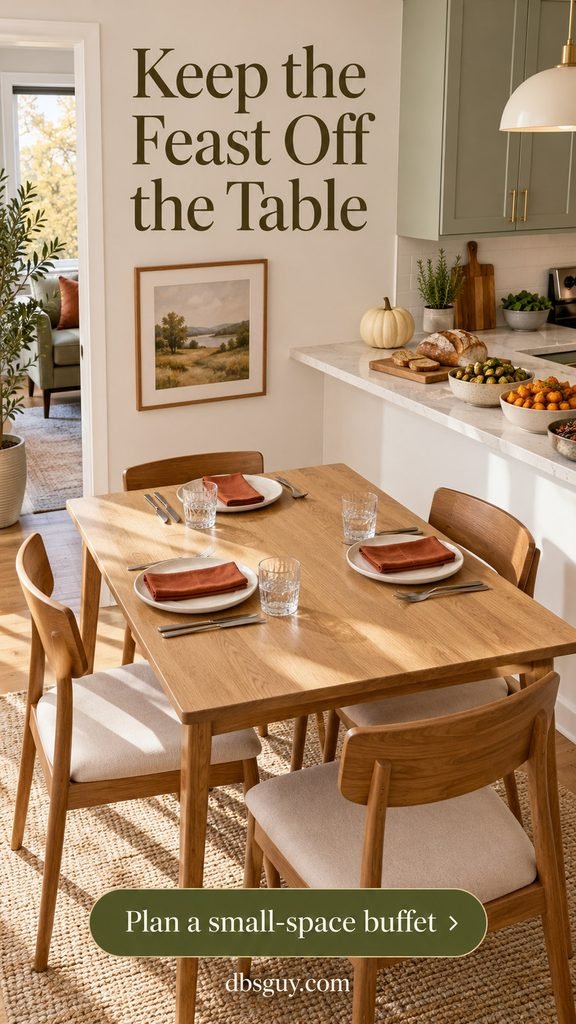
Have guests take their plates from the table to the counter, and put a serving utensil beside each dish. Keep drinks away from the busiest part of the counter so guests are not trying to pour and serve in the same spot. Protect surfaces beneath hot cookware, and leave a clear walking route back to the chairs. If there is no suitable counter, plate the meal in the kitchen instead.
For the rest of the gathering, browse 27 Fun & Cozy Friendsgiving Ideas Everyone Will Love.
Do One Seated Check Before Guests Arrive
Sit in each chair, pull it toward the table, and reach for the glass and shared dish. Check the arrangement from the opposite seat, too. A vase that looks small from above can still cover someone’s face when you sit down.
Keep the dishes your menu needs and remove the decorative layer that interferes. Extra chargers, stacked plates, and several glasses can use more space than the centerpiece itself. Bring dessert dishes and utensils out with dessert if they are not needed earlier.
The lighting concepts here use flameless LEDs. If you substitute real candles, follow NFPA’s candle safety guidance: use sturdy holders on an uncluttered surface, keep candles at least 12 inches from anything that can burn, and extinguish them when you leave the room. On a cramped table with paper and fabric, use LEDs when you cannot maintain that clearance.
Questions About Small-Space Fall Tablescapes
How big should a centerpiece be on a small table?
Let the remaining space after the place settings determine its size. Check the arrangement’s widest point, including leaves, flowers, and tray handles. For height, look across it from a chair. If it blocks a person or makes passing food awkward, shorten it, reduce it, or move it off the table.
How can I decorate a small round table for fall?
Use one compact central object, such as the mini pumpkin in idea 1, or put the seasonal detail on the plates with the pear place cards in idea 7. Avoid adding a long garland just because it looks good on a rectangular table. A round tabletop needs space around the whole center.
Do simple fall tablescapes need a tablecloth?
No. Bare wood with napkins can work, as can a narrow runner or a single patterned cloth. Choose the layer that contributes the most: a cloth for pattern, a runner for a band of color, or coasters and mats where you need surface protection. You do not have to use all of them together.
What is the easiest way to make a small Thanksgiving table feel special?
Repeat one detail at every seat, such as a paper-leaf napkin band, and decide where the food will go before adding a centerpiece. That gives each guest a finished-looking place without creating a collection of decorations to clear when dinner is ready.
What can I prepare the day before?
Make the paper bands or name tags, wash and fold the linens, and test the dishes on the table. Set out dry pieces ahead only if the table can stay undisturbed. Add fresh flowers and food on the day, check vase water, and turn on LED lights before the meal.
Choose the idea that leaves your table easiest to use. Once everyone has a comfortable place and the food has somewhere to go, one well-placed fall detail is plenty.