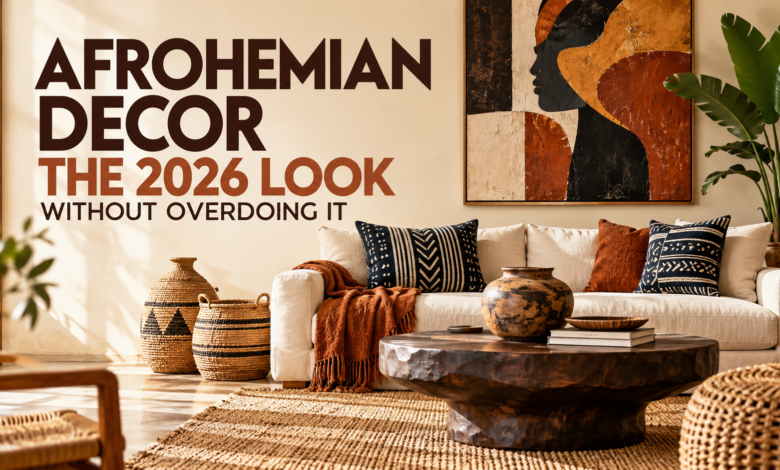
To get the Afrohemian look without overwhelming your room, keep the furniture you already like, choose one meaningful focal piece, and repeat a few colors through textiles and everyday objects. Let the pattern have somewhere quiet to land. You can start with a single cushion cover and a basket that actually stores something; a complete room makeover is optional.
This guide walks you through five styling decisions, including what to buy first, what to keep simple, and how to tell when the room has enough.
What is Afrohemian decor—and what makes it a 2026 look?
Afrohemian decor pairs African art, textiles, and craft with the relaxed, eclectic layering associated with bohemian interiors. Pinterest included Afrohemian Decor in its official 2026 forecast, highlighting colorful textiles, wall art, woven baskets, and natural fiber rugs. That makes the year in the title a real trend reference, rather than a reason to replace everything you own.
Africa encompasses many countries, makers, and distinct traditions. A useful shopping description names the artist, textile technique, or place of production. “African-inspired” can describe a contemporary interpretation, but it does not establish an item’s origin or prove that it was handmade.
For a restrained version, the practical goal is simple: make room for distinctive work, then use your existing furniture and quieter surfaces to support it. The limits suggested below are styling starting points, not cultural rules or requirements set by Pinterest.
The images in this guide are AI-generated styling concepts. They illustrate color, placement, and balance; they do not document completed homes or authenticate the origin of pictured objects.
1. Choose the piece you want the room to revolve around
Before adding a rug, pillows, wall baskets, and another chair, decide what you want to notice first. A work by an African or diaspora artist, a textile with documented provenance, or a piece you already treasure can give the room its direction. Choose something you would still enjoy if the trend name disappeared.

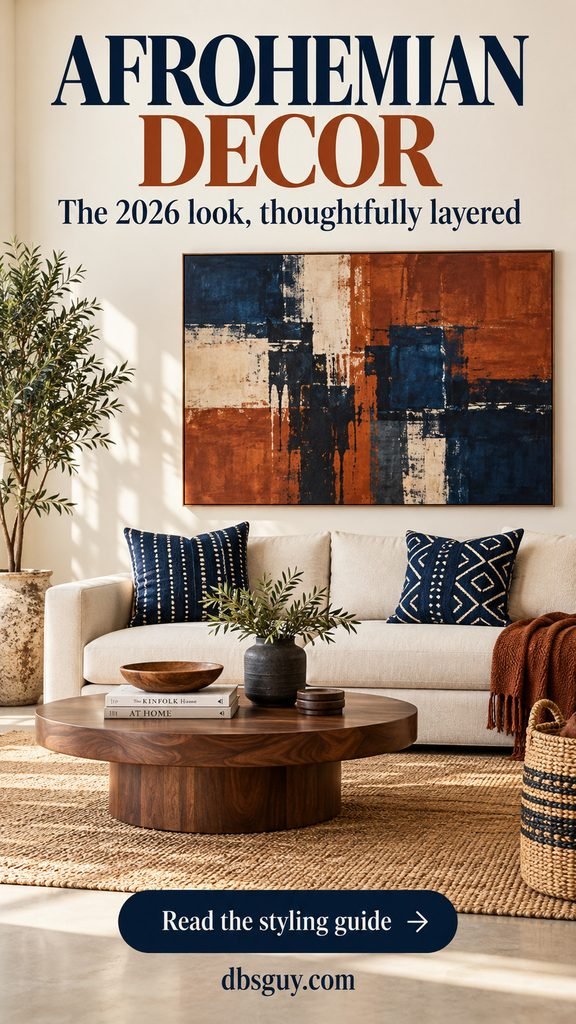
The concept above uses a large contemporary abstract artwork as its focal point. Its rust, cream, and indigo colors could guide later purchases, while the sofa remains plain. The pictured artwork is illustrative; when buying art, find an actual artist whose work interests you rather than searching only for an aesthetic label.
Try a paper outline on the wall before ordering a large framed piece. Look at it from the doorway and from your usual seat. If it feels lost above the sofa, a larger single work may solve the problem more cleanly than several unrelated accessories.
If a patterned rug is already your favorite item, let it lead instead. Keep the wall art quieter and avoid buying a second statement just to complete a checklist. For more ways to arrange the supporting furniture, explore our modern boho living room ideas.
2. Pull your palette from that piece and your existing furniture
Look for two colors you can repeat, then account for the large surfaces already in the room: flooring, sofa, curtains, and walls. Those surfaces matter more than a small accessory. Cream, wood, indigo, and rust make an approachable combination, but vivid color can work just as well when it has a clear relationship to the focal piece.
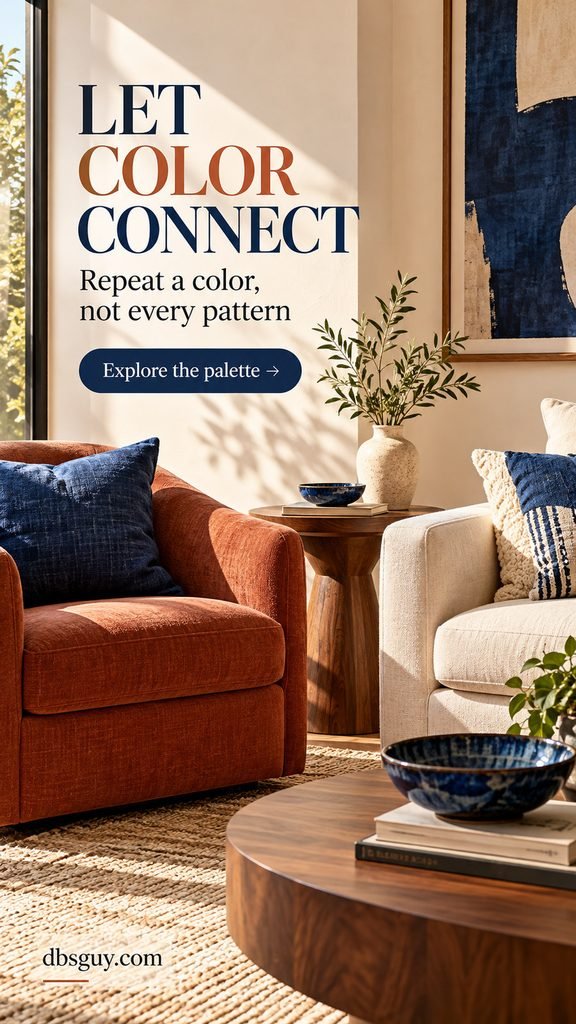
In this corner, a terracotta chair supplies warmth while an indigo cushion and blue bowl connect separate parts of the room. They echo each other without matching every detail. That is enough repetition to make the choices feel related.
If you have a gray sofa: try a warm cream throw and a patterned cushion containing both blue and a warm accent. Test fabric samples against the upholstery before buying; gray can lean blue, green, or violet, and the undertone changes how neighboring colors look.
If your room is already colorful: keep its strongest color and simplify the smaller accessories. You do not need to repaint everything beige to make this style work. A plain curtain or uncluttered tabletop can provide the breathing space instead.
Before painting, examine a sample in daylight and under your evening lamps. For an October refresh in a US home, rust or ochre can feel seasonally comfortable, but this is an editorial palette suggestion, not a seasonal requirement. Keep your chosen textiles and art year-round if you love them.
3. Give one expressive textile some quiet surroundings
Textiles are a manageable place to begin because a cushion cover changes the room without changing its layout. Start with one patterned cover on the sofa, then add a solid cushion or plain throw. Sit down and check that the arrangement still leaves you enough usable seat space.
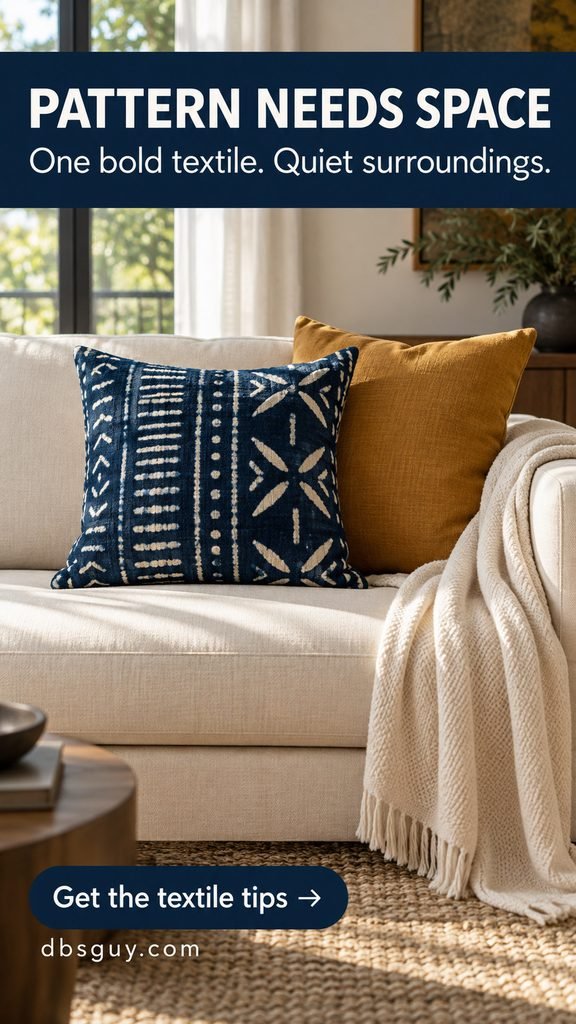
The indigo cushion in this concept has a resist-inspired pattern, supported by a solid ochre cushion and cream throw. The image shows the styling relationship; it is not proof that the cloth is authentic adire.
For context, the Smithsonian’s Adire Cloth from Nigeria exhibition description identifies adire with indigo-dyed, patterned textiles made by Yoruba women in Nigeria. A blue-and-white printed cushion is not automatically adire. Ask the seller how the fabric was made, who made it, and where it was produced.
On a small sofa, a roughly 20-inch square patterned pillow is a useful size to try, provided it fits the seat. A smaller lumbar cushion may suit a compact chair better. These are practical trial sizes, not universal proportions.
If you add another pattern later, vary its scale: a larger motif beside a narrow stripe is usually easier to read than two equally busy prints. Repeat at least one color between them. When the rug, curtains, and cushions all compete, remove one patterned layer before adding anything else.
Check the actual care label, closure, and fabric composition before purchasing. Hand-dyed fabrics may need particular care; do not assume a decorative cover is machine washable or colorfast against pale upholstery.
4. Add natural texture where it serves a purpose
A basket for blankets, a wood table for your drink, and a comfortable woven chair create layers you can use. This approach is especially helpful in a small room: the texture becomes part of daily life rather than another object to work around.
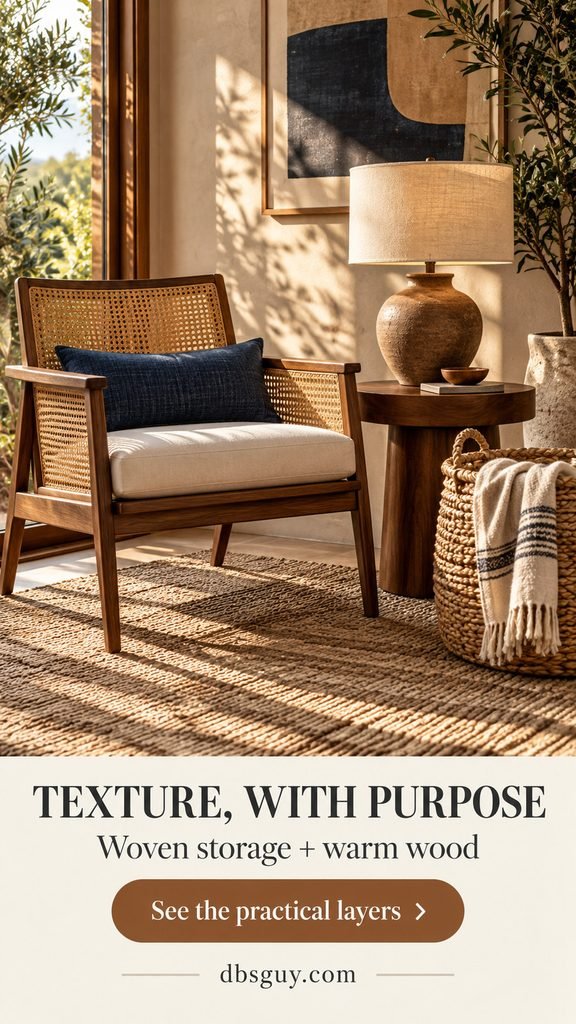
The reading corner combines a cane-backed chair, walnut-toned table, ceramic lamp, and a basket holding a throw. Cream upholstery and a plain indigo cushion keep the seat visually simple. None of these materials alone establishes African provenance; the maker and sourcing information still matter.
Choose the chair for comfort first. Inspect used cane for breaks or sagging, and budget for repairs before buying. A decorative stool can be a useful accent, but check that it is rated for seating before treating it as an extra chair.
For the floor, a single flatwoven rug may give you enough texture. You do not have to layer two rugs. In a dining area or a room with frequent spills, prioritize the manufacturer’s cleaning guidance over the appearance of the fiber. Keep rug edges flat and use a suitable pad for your flooring.
If you’re adapting this to one corner rather than a whole living room, our reading nook ideas for small spaces offer useful seating and placement options. Carry one textile color into the corner so it belongs to the larger room.
5. Edit the room from the doorway—and from the sofa
Once the main pieces are in place, stop shopping long enough to use the room. Take a photo from the doorway. Then put your phone down, sit on the sofa, and try setting down a drink, reaching the lamp, and walking past the table.
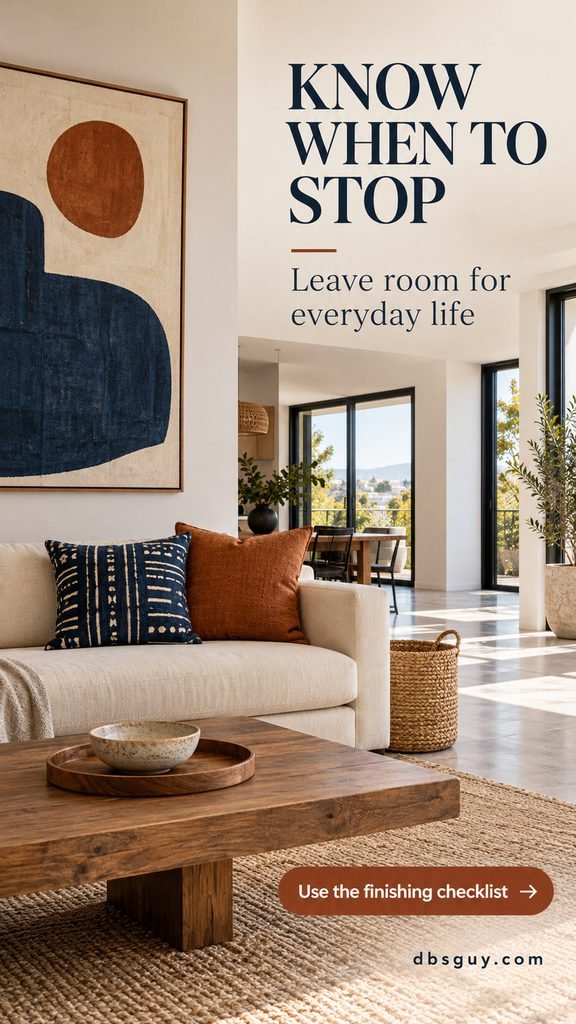
The finished concept keeps the walkway open and gives the coffee table a small tray and bowl. A patterned cushion, a solid warm accent, artwork, and woven storage provide character while the larger surfaces stay calm.
Use this finishing check:
- Can you identify the focal piece immediately? If three things demand equal attention, relocate one or simplify its surroundings.
- Can every seat be used comfortably? Store extra pillows instead of stacking them on the floor.
- Is there space for everyday objects? Leave room for a mug, book, or laptop where you actually use them.
- Can people move freely? Shift baskets and stools out of regular walking routes.
- Does each addition earn its place? Keep pieces that are useful, meaningful, or visually important; reconsider purchases made only to match the trend.
If the layout still feels crowded after accessories come out, the seating footprint may be the issue. Our guide to choosing sofa designs for your living room layout can help you evaluate the shape and size before buying a replacement.
What to buy first—and what can wait
Start by moving what you own into the proposed arrangement. Then buy the missing item that makes the biggest difference: perhaps a documented textile cover, a print directly from an artist, or a storage basket that replaces visible clutter.
Check measurements, shipping, returns, care, and any framing costs before comparing prices. One thoughtful purchase can be a better use of a limited budget than several accessories you do not have space for. You can keep your current sofa, curtains, and table while building the look slowly.
When a listing uses a broad cultural label, look for specifics. Ask for the maker’s name, country of production, materials, technique, and whether the piece is an original, reproduction, or contemporary interpretation. Vague descriptions are a reason to ask questions, not evidence of authenticity. For objects with ceremonial or sacred significance, learn their context before using them as decorative props.
Frequently asked questions
How is Afrohemian different from ordinary boho decor?
The emphasis is on African and diaspora creative work, textiles, and craft within a relaxed, layered interior. Rattan furniture and earth tones can support the room, but they do not define that connection by themselves. Specific sourcing gives the style more substance than a generic collection of boho accessories.
Can the look work in a rental or small apartment?
Yes. Begin with a removable cushion cover, an artwork displayed using a lease-permitted method, and useful woven storage. Concentrate the changes in one seating area. Check wall-mounting permissions and hardware instructions before installing anything heavy.
Do all the colors have to be neutral?
No. Keep a bold color if you enjoy it. Restraint can come from fewer competing patterns, simpler furniture shapes, and open space rather than an all-neutral palette.
How do I know I’ve overdone it?
If the main piece disappears into the background, the furniture becomes awkward to use, or every surface feels full, remove a layer. Put the extras away for a week and see what you actually miss. The room should work as well on an ordinary evening as it does in a saved pin.
Your first move: choose the piece you most want to keep, pull a color from it, and clear enough space for it to stand out. Build from there, one useful decision at a time.