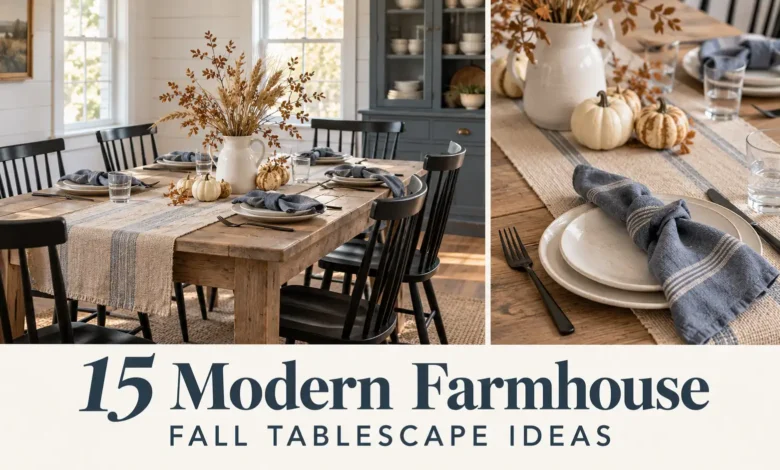
A wood table, simple dishes, and one well-chosen fall detail can do most of the decorating. Start with the plates and serving pieces your meal needs, then add the texture or color that makes the setting feel seasonal.
These 15 modern farmhouse fall tablescape ideas take different approaches: bare wood and pumpkins, amber glass, a breakfast check, a compact round-table arrangement, or a supper where the food becomes the centerpiece. They are simple fall tablescapes you can adapt without replacing everything in your cupboard.
The images are AI-generated styling concepts. They illustrate these arrangements rather than document completed or tested table settings.
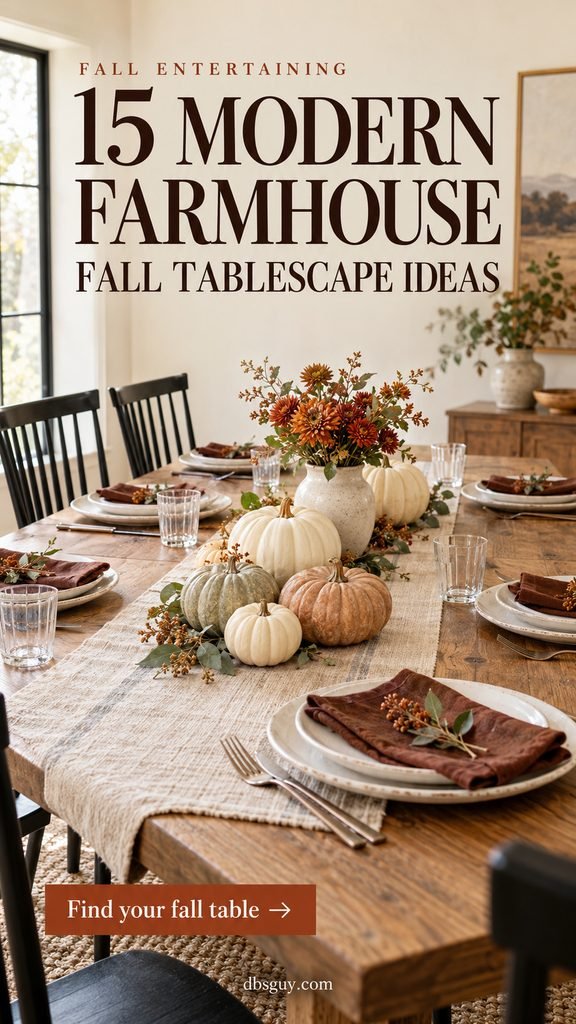
Choose a Look That Fits Your Meal
- For a quick seasonal change: try the three-pumpkin cluster in idea 1 or the paper-leaf napkins in idea 10.
- For a small table: use the round tray in idea 5 or the two-person layout in idea 13.
- For family-style serving: choose cross-runners in idea 4, the soup supper in idea 14, or the sideboard arrangement in idea 15.
- For an evening gathering: let the black candleholders in idea 2 supply the contrast.
For the farmhouse balance used here, pair a tactile element, such as wood, linen, or woven fiber, with something simpler: plain ceramic dishes, clear glass, or clean-lined metal. Set one complete place before buying chargers or extra decor. The quantities below describe each concept; scale them to the space left after plates, glasses, and serving dishes are in place.
1. Let Three Pumpkins Stand on Bare Wood
For the most stripped-back version, gather three small pumpkins in cream, gray-green, and muted terracotta. Place them in a compact, uneven triangle on the wood, with the largest just off center. Oatmeal napkins topped with a short faux leafy sprig and plain white plates give the group a quiet frame.
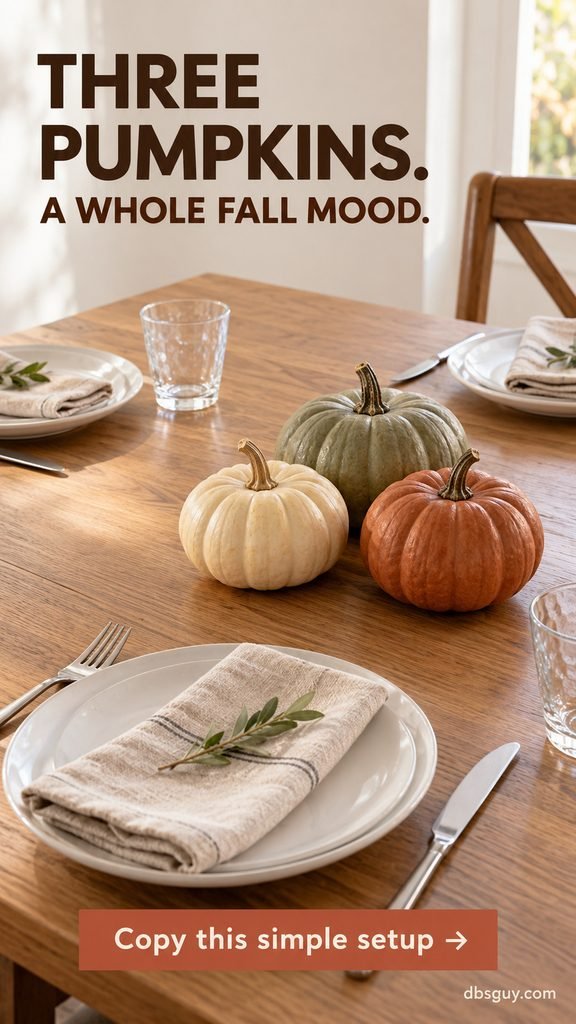
The exposed tabletop is part of the look, so skip the runner, garland, and extra bowl. Try the cluster beside your largest serving platter before settling its position. Clean and dry the pumpkin bases, and protect a sensitive finish with discreet pads suited to that surface. If the arrangement crowds dinner, use smaller pumpkins rather than pushing plates toward the edge.
2. Pair Black Iron with Flax Linen for Dinner
Two slender black metal candleholders create a clear outline against a flax runner. Fit them with ivory LED tapers, then add charcoal napkins, cream dishes, and one small cream ceramic pumpkin. This suits a narrow table where a broad floral arrangement would take too much room.
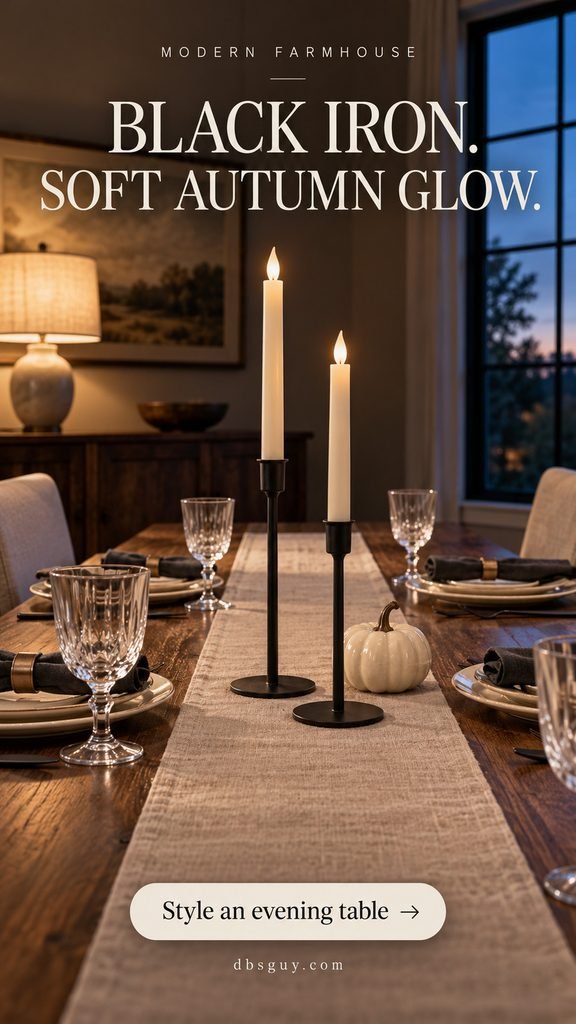
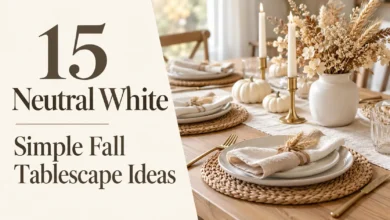
Keep the runner flat under the holders and check that the tapers sit securely. Switch them on with your dining-room lights at the level you will use for dinner; their glow should supplement enough light to see the food. The restrained black accents keep the wood-and-linen combination feeling crisp. If you want a softer green textile instead, browse our 23 Olive Green Simple Fall Tablescape Ideas.
3. Spread a Few Rust Flowers Among Amber Bottles
Short amber bottles bring warm color even when each holds only a small stem. Use three wide-based bottles with rust chrysanthemums, trimming the stems so the flowers sit close to the openings. Keep the napkins cream and let the glass carry most of the color.
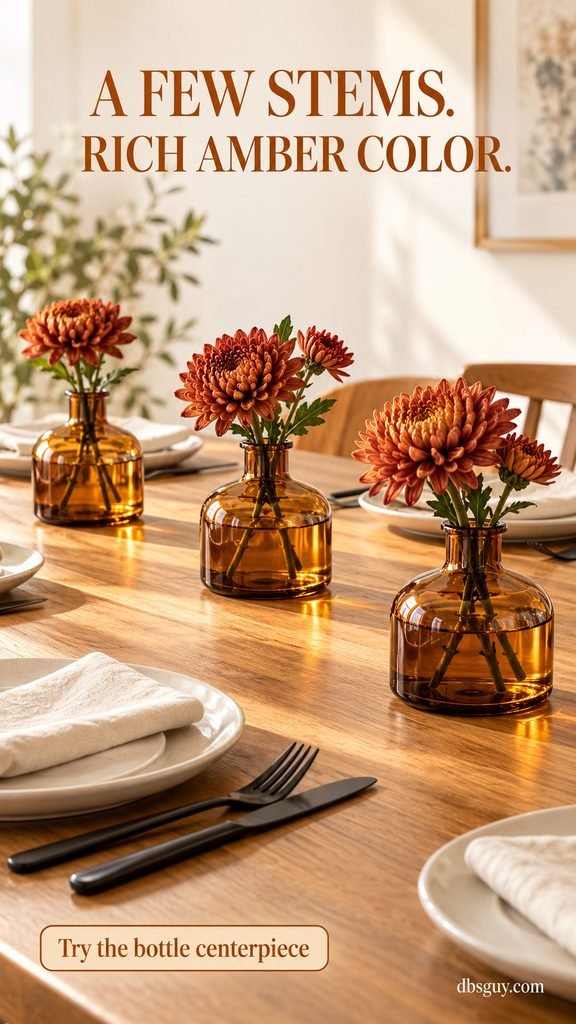
Arrange the bottles separately along the table rather than building a dense centerpiece around them. Reserve the gaps for the actual bowls or bread basket you will use. Bottles with very narrow bases can be easy to knock over, so test their stability before filling them. Sit opposite someone and check the flower height; shorten any stem that interrupts the view.
4. Run the Linen Across the Table for Family-Style Serving
Turn the usual runner direction around. On a six-seat rectangular table, lay three narrow oatmeal cross-runners across the short width, each connecting a pair of opposite settings. Cream plates and rust napkins repeat at every seat, while serving dishes occupy the remaining central spaces.
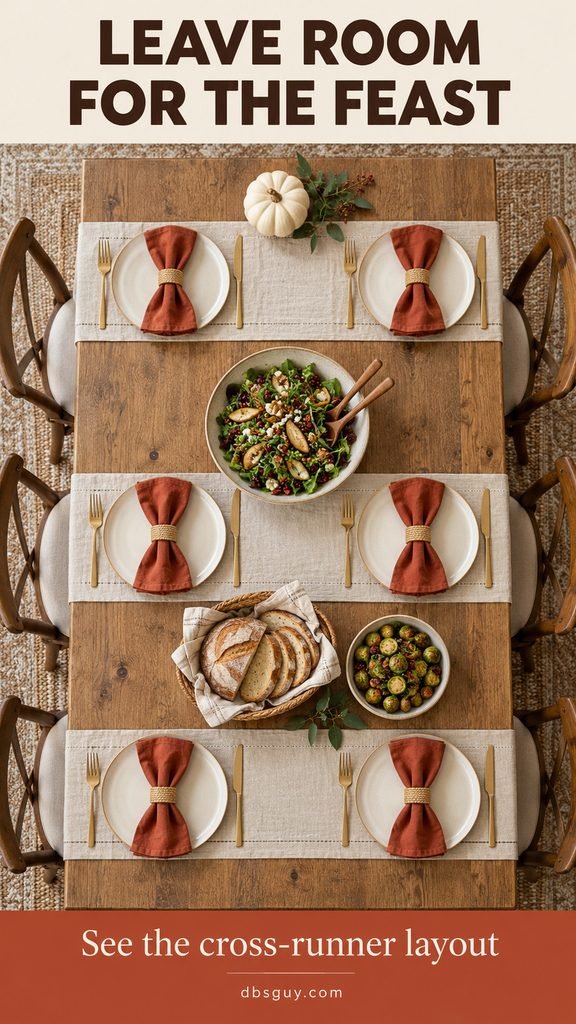
Test one cross-runner with two complete settings before cutting or buying fabric for the others. Its width should frame those plates without bunching beneath neighboring glasses. The cloth may pass under part of the serving area; proper trivets still belong beneath hot dishes. Keep fall decor to one small pumpkin near an end. This is a useful choice when Thanksgiving side dishes need more room than a centerpiece.
5. Give a Round Table a Small Lift-Away Tray
A shallow round woven tray echoes a round tabletop and contains the decor in one place. Put two small cream pumpkins and one brown pear inside, keeping the grouping low. Four white bowl-and-plate settings, flax napkins with a subtle stripe, and clear glasses are enough around it.
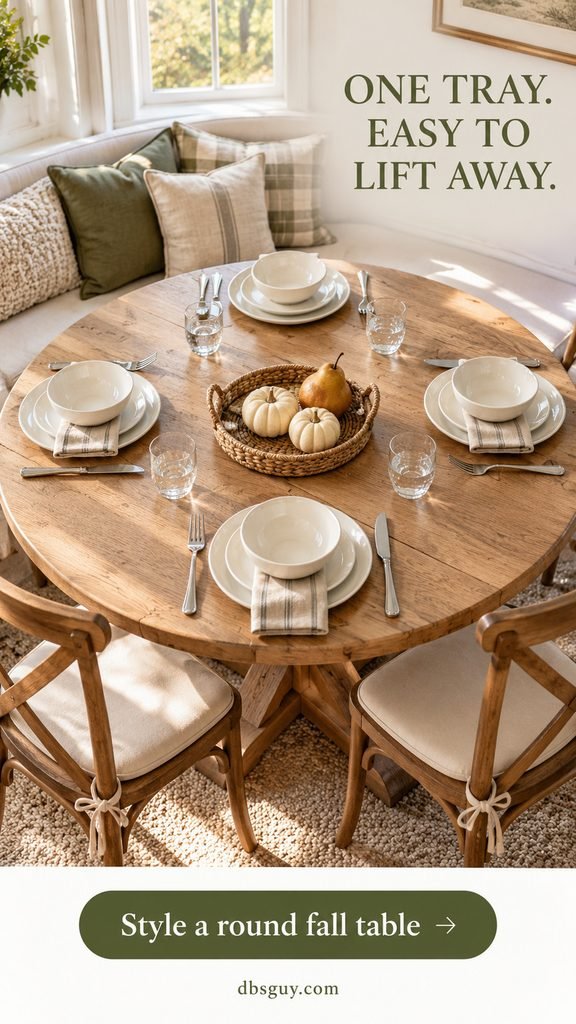
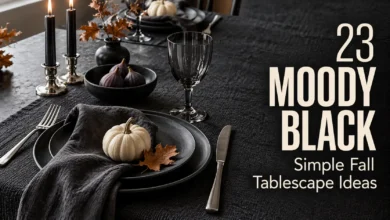
Choose the tray after you have laid out the place settings. It should fit inside the space they leave, with room to pick it up by its handles. A tray that nearly touches all four plates will feel oversized even if the decorations themselves are small. Move it to a nearby counter when shared dishes arrive. If the pear will be eaten, keep it on a clean food-safe liner away from decorative materials.
6. Use Caramel Gingham for a Fall Brunch
Small cream-and-caramel checks bring the farmhouse pattern into breakfast. Spread a gingham cloth under white mugs, cereal or oatmeal bowls, and plain side plates. Cinnamon-colored napkins and a cream pumpkin beside the coffee jug give it an autumn direction.
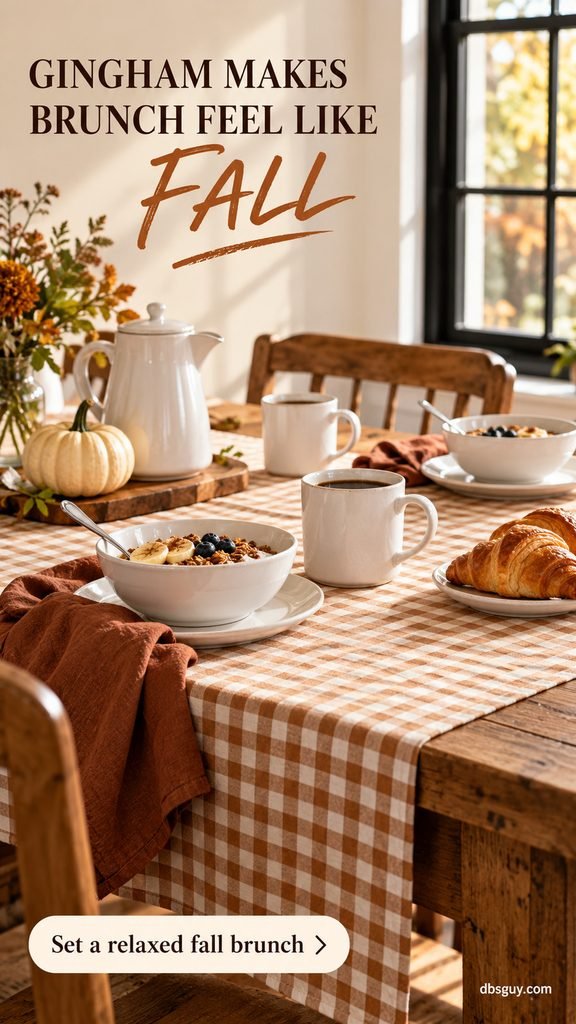
Let the check be the only strong pattern. A printed mug collection can still work, but lay it out with the cloth first to see whether the table feels too busy. Keep the jug’s landing spot clear and put its handle where someone can reach it comfortably. There is no need to add dinner chargers or wine glasses to a breakfast setup; use that space for the food and coffee.
7. Make a Copper-and-Wheat Arrangement You Can Move
A copper pitcher filled with dried wheat gives a long table a harvest focal point without a fresh bouquet. Place the pitcher and one small ochre gourd on a low tray near an end of the table. Taupe napkins and ivory plates let the metal and grain stand out.
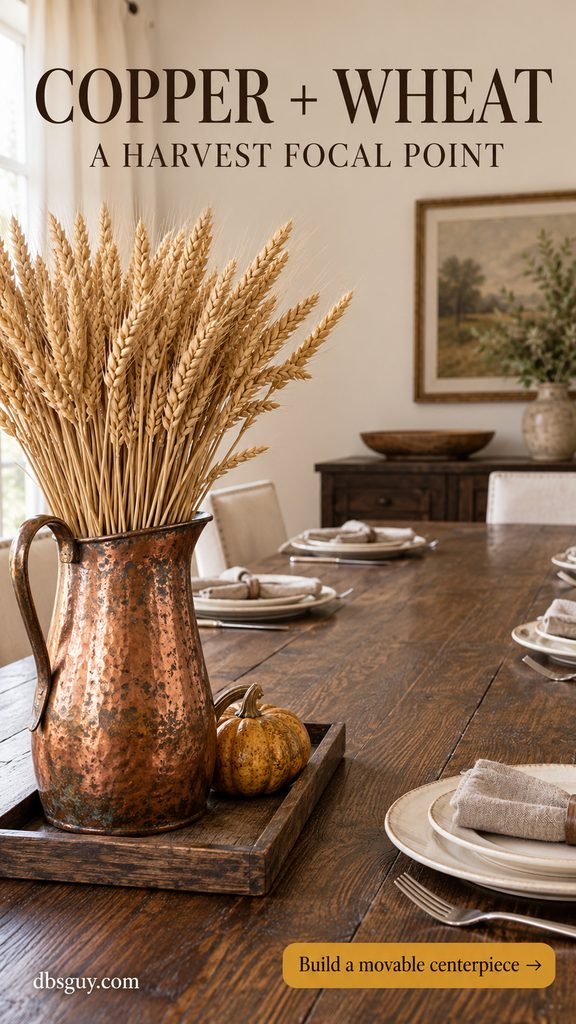
Treat this as a welcome display: the wheat is tall, so lift the tray onto a sideboard before guests settle in if it blocks conversation. Use a stable pitcher and a restrained bundle that does not splay into glasses. Keep loose seed heads away from food. For a meal where you want the decoration to stay put throughout, choose the low flower bowl in idea 9 instead.
8. Build an Orchard Table with Apples and Chambray
Red and golden apples make a straightforward alternative to a pumpkin centerpiece. Gather them in a shallow white food-safe bowl and pair it with washed blue chambray napkins. The blue gives the warm fruit and wood a different backdrop from the usual cream-and-rust combination.
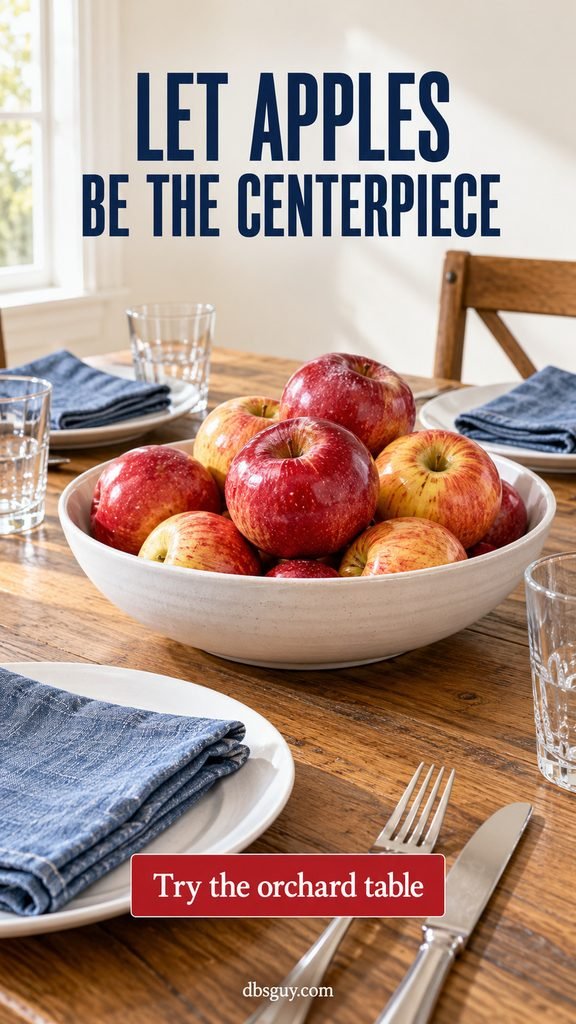
Keep the apples in a low mound, with none balanced precariously above the rim. Leave out faux stems, glitter, and floral products if you plan to eat the fruit. You can use an ordinary serving bowl rather than buying a decorative vessel. This look works especially well when you already have casual blue linens; plain white dishes connect everything without another print.
9. Keep Burgundy Flowers Low Against a Light Table
A whitewashed table gives deep burgundy flowers a light background. Use a low, wide cream compote and trim dahlias and smaller chrysanthemums into a compact mound. Plain ivory dishes and oatmeal napkins keep the attention on the blooms.
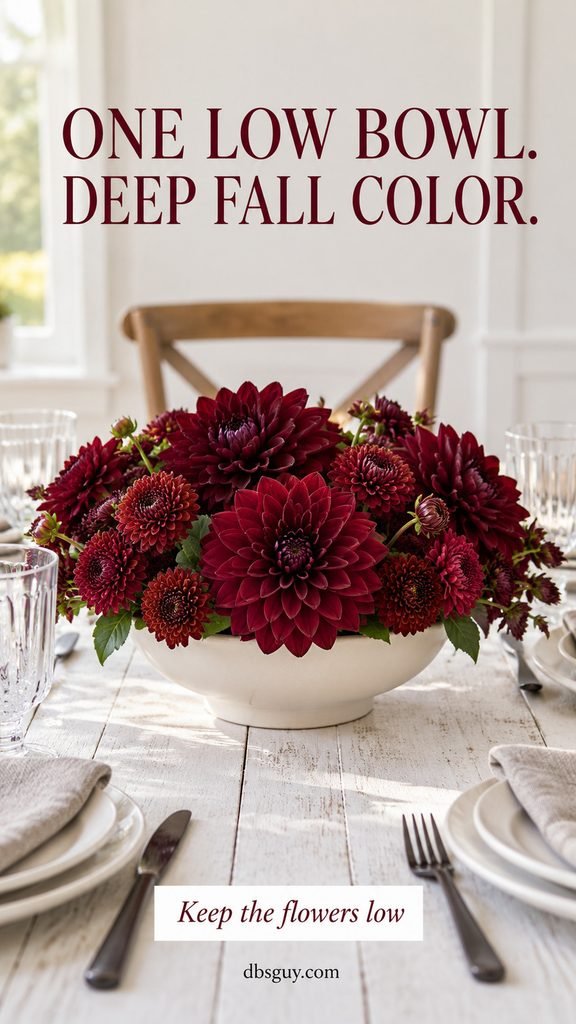
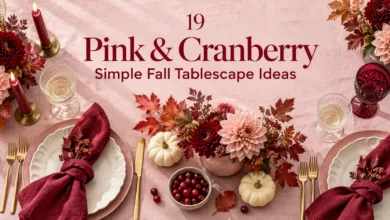
Pick the container before choosing the number of stems. Start with a few larger flowers, then fill only the visible gaps with smaller ones. The outer petals should stay clear of plates and glasses, and the finished arrangement should let seated guests see across it. Check that the vessel holds water without leaking. For more ways to use these wine tones, see 17 Burgundy & Plum Simple Fall Tablescape Ideas.
10. Tie a Kraft-Paper Leaf onto Each Napkin
Move the fall detail to the place settings when the center needs to stay open. Draw a simple oak-leaf shape on kraft paper, cut it out, and tuck it beneath a loose loop of brown leather-look cord around a rust linen napkin. Set the napkin across a plain white plate.
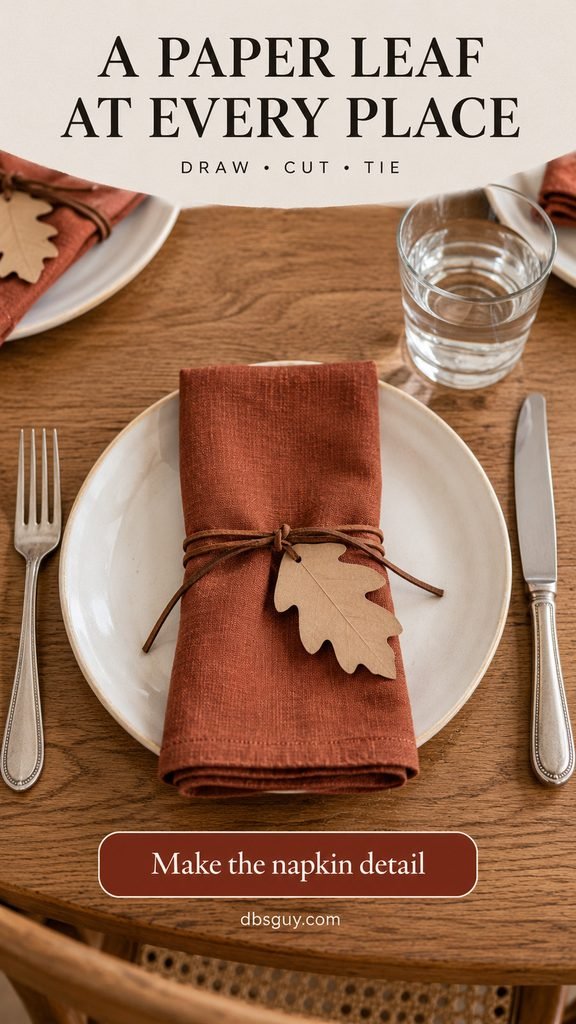
Make one sample first. The leaf should be large enough to read as a leaf without covering the entire napkin, and the cord should slide off easily. Leave the tag blank for a quiet look or add a guest’s name for assigned seats. Keep the paper on the dry napkin, away from food. This detail supplies a seasonal cue without a centerpiece, chargers, or extra glassware.
11. Let Different White Plate Rims Be the Pattern
A collected mix of plain, scalloped, and embossed white dishes can give the table character. Repeat the same flax napkin and clear tumbler at every seat so the changing plate rims feel connected. Set out a small cream sauceboat for the meal and group three tiny pale ornamental gourds beside it for the fall reference.
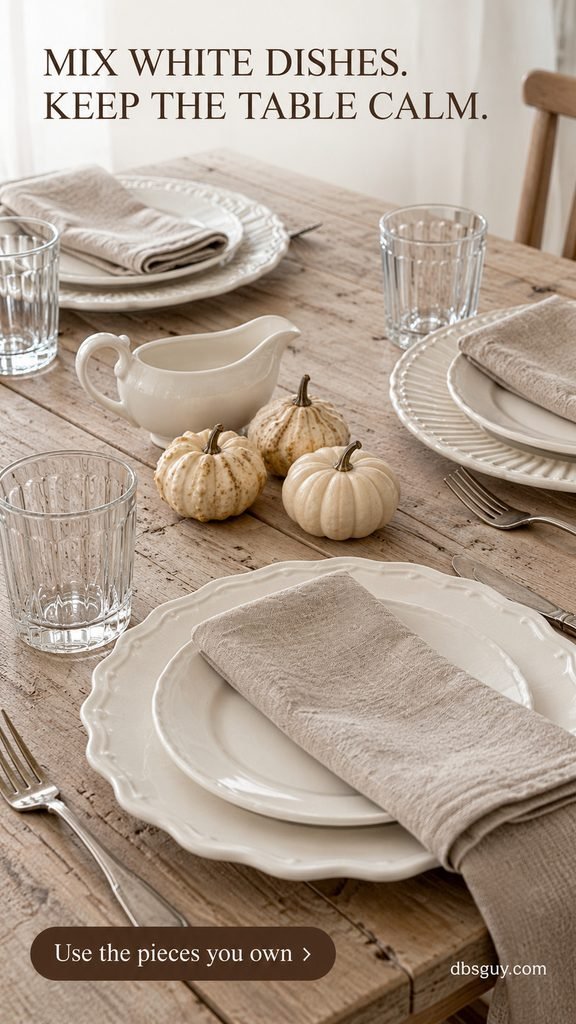
Set similar plate sizes at neighboring seats, and check each place with the utensils it needs. The dishes do not have to be identical shades of white, but inspect them together in your dining-room light before committing. Use intact, food-safe dinnerware for the meal; unfamiliar decorative or vintage pieces can hold decor instead. Skip patterned napkins here so the variation in the ceramics remains visible.
12. Use One Potted Mum for a Sheltered Porch Supper
On a covered porch, one small rust-colored mum in a terracotta pot can anchor the table. Put a clean waterproof saucer underneath and keep the plant compact enough to see over. Cream bowls and plates on woven mats, a narrow neutral runner, and dusty-rust napkins held in simple wooden rings connect the flowers to the settings.
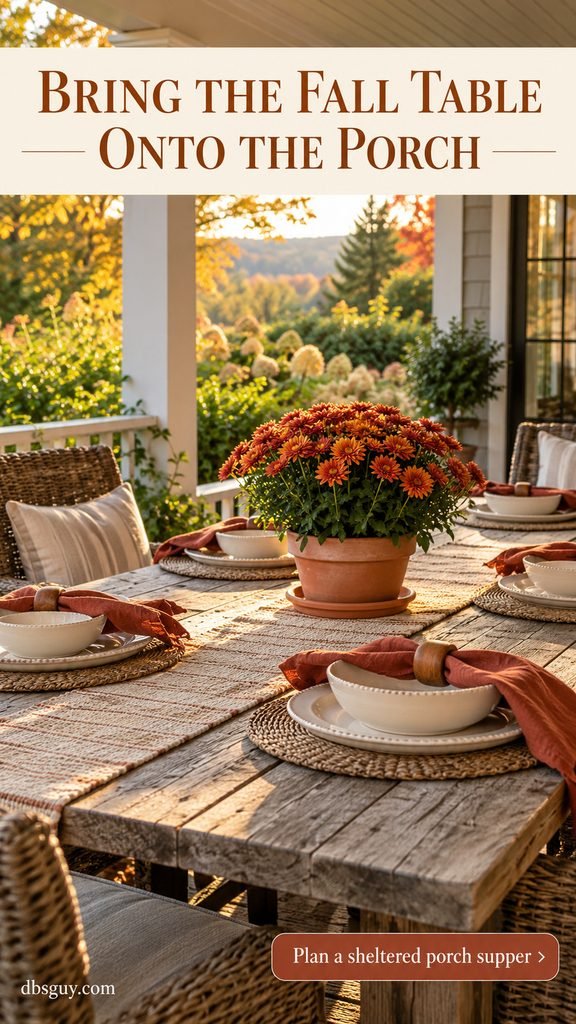
Check the forecast and the table’s exposure before bringing everything out. Napkin rings help keep cloth folded, but they are not a substitute for moving indoors when wind or rain makes dining awkward. Avoid loose leaves and paper confetti that can blow into dishes. Keep the pot and soil separate from food, protect the tabletop, and leave enough room to lift the plant away without nudging glasses.
13. Keep a Two-Person Table Almost Bare
For a small square kitchen table, use two white plates, narrow rust napkins, two water glasses, and only the utensils the meal needs. Put one small cream pumpkin on a tiny saucer near a back corner. Keep the center available for a shared bowl.
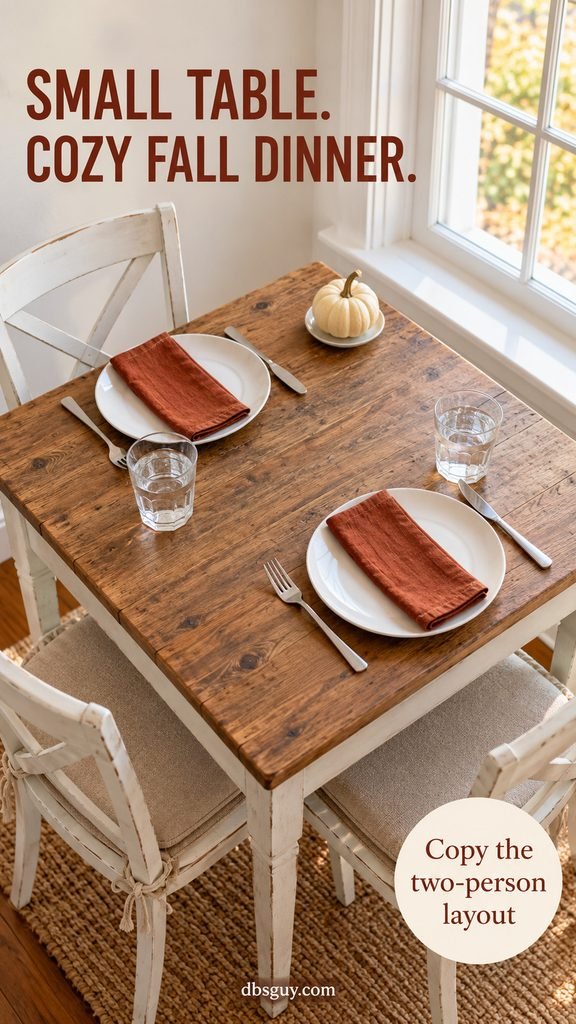
Lay out both seats fully before adding the pumpkin. If reaching for a glass means brushing the decor, move the pumpkin to the windowsill. A tablecloth, chargers, and a large centerpiece would take attention and space away from this small arrangement. The warm napkins carry enough fall color on their own, making this a workable choice for an apartment dinner or a quiet meal for two.
14. Let Soup and Bread Supply the Harvest Color
A casual soup supper needs very little separate decoration. Serve orange squash soup in cream bowls over plain plates, add brown gingham napkins, and set sliced bread on a clean food-safe board in the middle. A small butter dish completes a centerpiece people can actually share.

Arrange the empty bowls and board before dinner to confirm the fit, then bring out the food when it is time to eat. Keep the bread within reach without extending the board into anyone’s place setting. Leave decorative stems and gourds off the food surface. This approach suits a simple fall gathering where the meal already supplies the color, texture, and reason to sit down.
15. Put Tall Fall Branches on the Sideboard
For Thanksgiving, move the largest arrangement off the dining table. A stable cream crock of tall faux rust-colored oak branches on a sideboard gives the room its seasonal focal point. On the table, keep a narrow flax runner, white dishes, tobacco napkins, and just one small cream pumpkin.
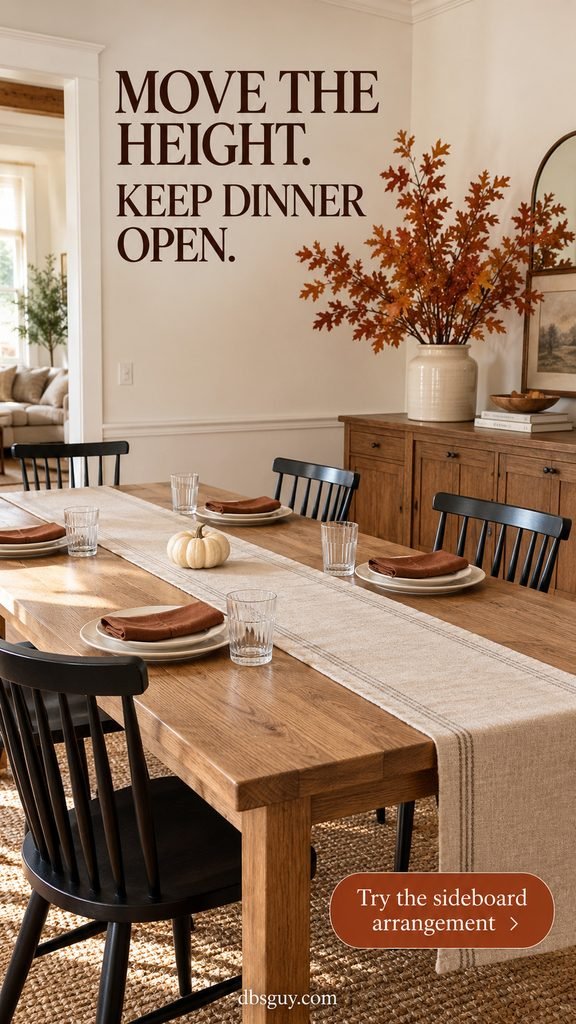
Place the branch crock away from the edge and check that its spread does not intrude into the serving area or walkway. If the sideboard also holds food, reserve separate clear landing space for those dishes. Bring your empty platters to the dining table for a rehearsal before the holiday. This is one of the most useful fall tablescape ideas when a full meal matters more than a table-length display.
Check the Table from a Guest’s Seat
Before calling the arrangement finished, sit at each end and along the sides. Reach for a glass, imagine passing a bowl, and check whether any stems hide the person opposite you. Move or remove whatever interferes. You can photograph the fuller welcome display and still simplify it for dinner.
The candle concepts here use battery-operated LEDs. The U.S. Fire Administration’s candle guidance recommends considering flameless candles; if you choose real ones, keep them in stable holders at least 12 inches from anything that can burn and extinguish them when leaving the room. Dried wheat, paper leaves, and loose fabric make LEDs the easier choice for these arrangements.
Frequently Asked Questions
What makes a fall tablescape feel modern farmhouse?
For these looks, the balance comes from familiar textures paired with simple shapes: wood beside plain white dishes, flax linen beside black metal, or woven fiber beside clear glass. Choose one rustic feature to lead, then give it space. You can use color; cream is a starting point rather than a requirement.
How can I decorate without buying a new dinner set?
Keep your everyday plates and glasses. Add one useful layer, such as rust napkins, a few apples in a serving bowl, or paper-leaf tags made at home. Lay everything out before shopping so you can see which single addition would help most.
What centerpiece works best on a small table?
Choose something low, compact, and easy to remove: a shallow tray, a small fruit bowl, or one pumpkin near a corner. Measure the space after setting the plates and glasses. If there is no comfortable gap, use napkins as the seasonal feature and put the centerpiece nearby.
Can I set the table the day before Thanksgiving?
You can arrange clean, dry dishes, linens, and nonperishable decor ahead if the table can remain undisturbed and protected from pets and dust. Check everything again before guests arrive. Add food at serving time, and refresh or add flowers when needed rather than assuming every arrangement will hold overnight.