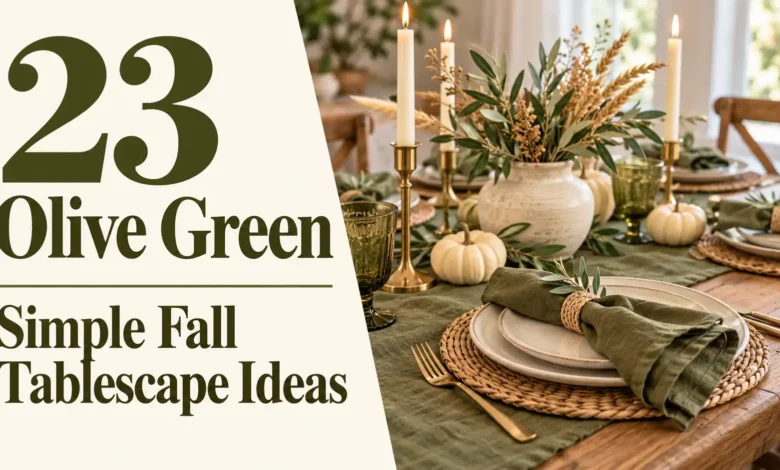
An olive napkin, a cream plate, and one small fall detail can be enough. For a fuller table, move the green into a runner or tablecloth and keep the dishes quiet. Decide where the color will appear before choosing extra decorations.
These 23 simple fall tablescapes give olive green a different job in each setup, from framing blue china to lining the bread basket. Choose one that fits your meal and table, then borrow only the pieces you need.
The images are AI-generated styling concepts. They illustrate the arrangements described here; they do not document completed or tested table setups.
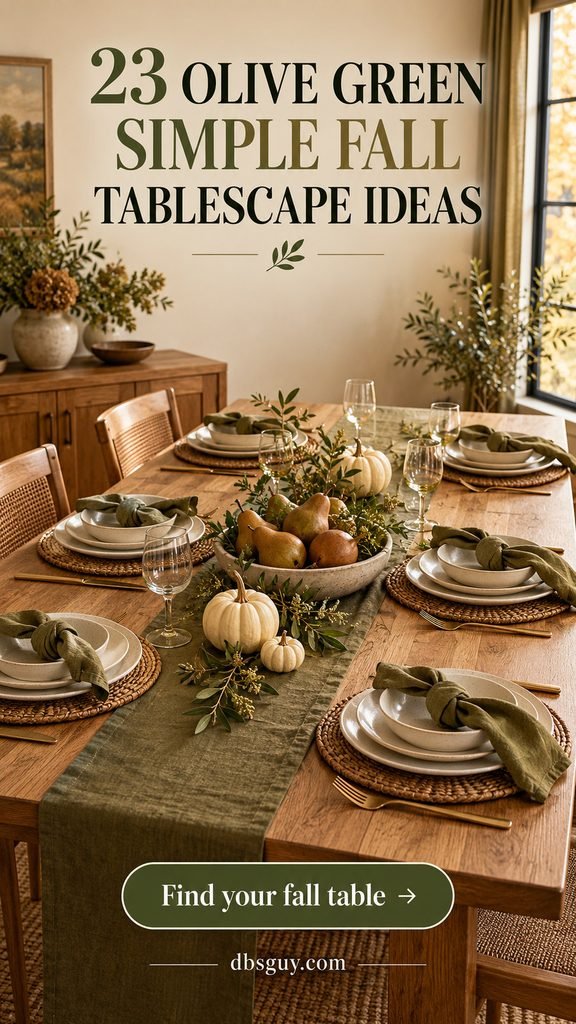
Choose Your Starting Point
Look at your olive item beside your dishes in the light where you will eat. A yellow-brown olive will read differently from a gray-green sage. There is no need to match every green exactly, but checking them together helps you avoid an accidental mix that feels distracting.
- Keep your everyday dishes: use olive napkins in idea 1 or an olive bread-basket liner in idea 11.
- Make one textile the feature: choose pumpkins on a runner in idea 2, gingham in idea 6, or ticking stripes in idea 15.
- Work with a small table: look at the round layout in idea 3 or the two-person setup in idea 17.
- Serve a full Thanksgiving meal: put the interest at each place with idea 14 or use the cross-runners in idea 23.
The quantities below describe each concept, not a required shopping list. Scale the decoration after you have set out the plates, glasses, and serving pieces you actually need.
1. Make Olive Napkins the Only New Layer
If you already have white plates and a wood table, this is the easiest place to begin. Lay a plainly folded olive cloth napkin across each plate and keep your clear glasses and everyday silverware. One cream mini pumpkin near the middle supplies the fall reference.
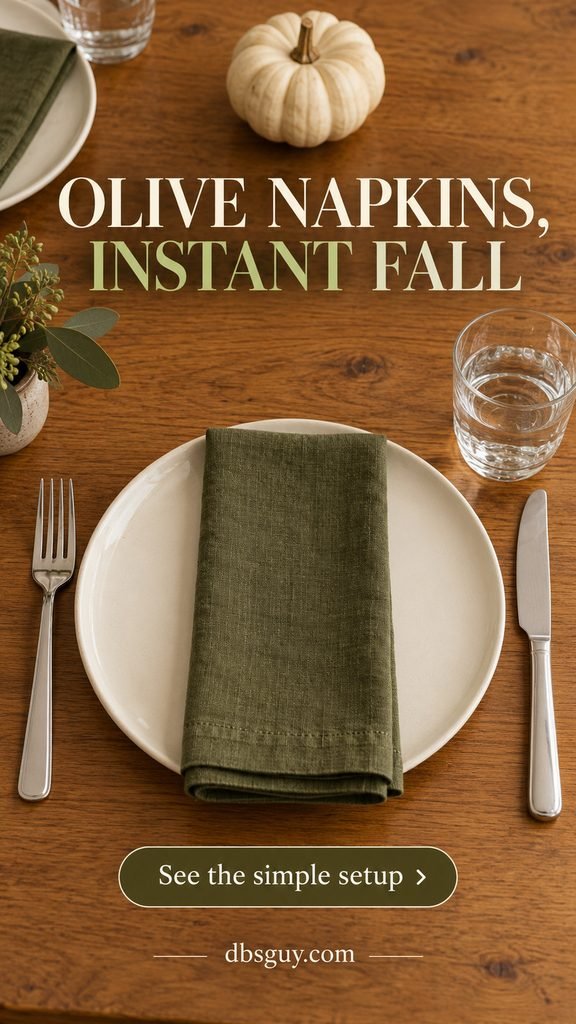
Skip chargers and napkin rings for this version; the contrast between the fabric, ceramic, and wood is the point. Put out only the utensils the meal requires. If your plates have busy rims, fold the napkin into a narrower rectangle so some of the pattern remains visible.
2. Space Cream Pumpkins Along an Olive Runner
A row of small pumpkins suits a long table better than one oversized arrangement. In this concept, five cream pumpkins follow a flat olive linen runner, with a little variation in their position and size. Oatmeal napkins keep the color concentrated down the middle.
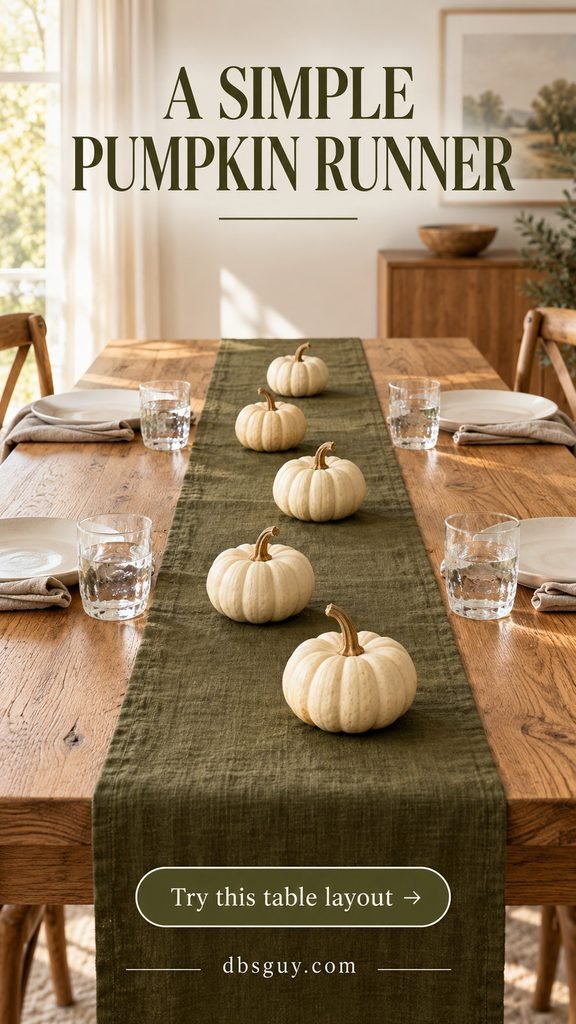
Lay down the runner, place your largest serving dish where it will sit, and arrange the pumpkins around that space. You may need only three on a shorter table. Clean and dry their bases, and use a discreet protective layer where your tabletop finish needs one. Avoid adding a garland that fills all the useful gaps.
3. Use Rattan to Frame a Round Table
On a round table, repeat the circle rather than trying to fit a long centerpiece across it. Round woven placemats frame four cream plates, while olive napkins give each seat the same color cue. A shallow woven basket of brown pears occupies the center.
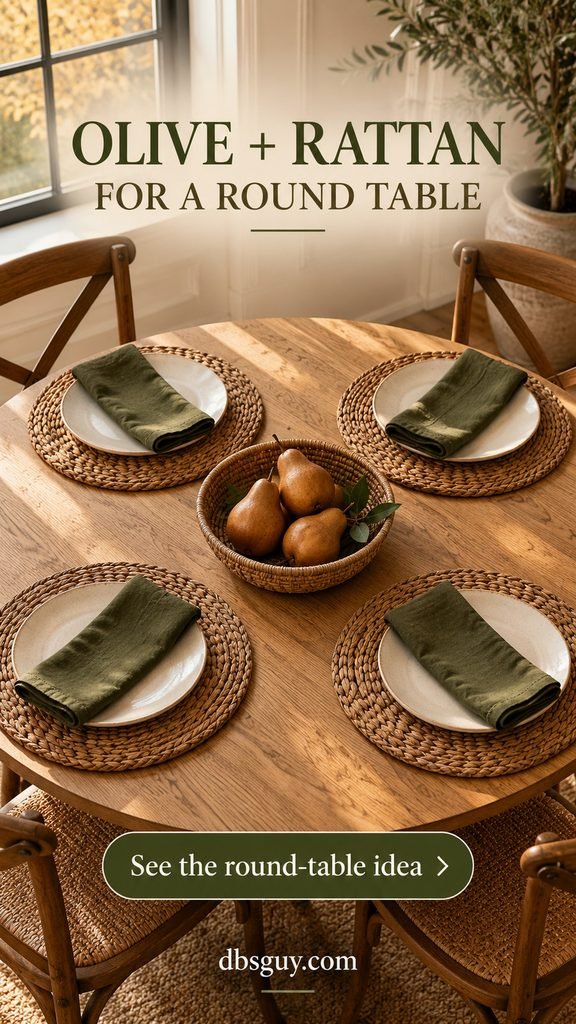
Try one complete place setting before laying out all four mats. Their edges should fit without overlapping the neighboring setting or hanging awkwardly off the table. Keep the basket small enough to leave room for drinks and passing food. If the table is tight, the pears can move to the counter once dinner begins.
4. Build a Low Pear-Bowl Centerpiece
Brown Bosc pears bring a warm, quiet contrast to olive linen without adding flowers. Arrange five in a shallow cream bowl, resting them in a low mound rather than stacking them high. Two short faux olive twigs tucked at the rim finish the shape; leave the rest of the table simple.
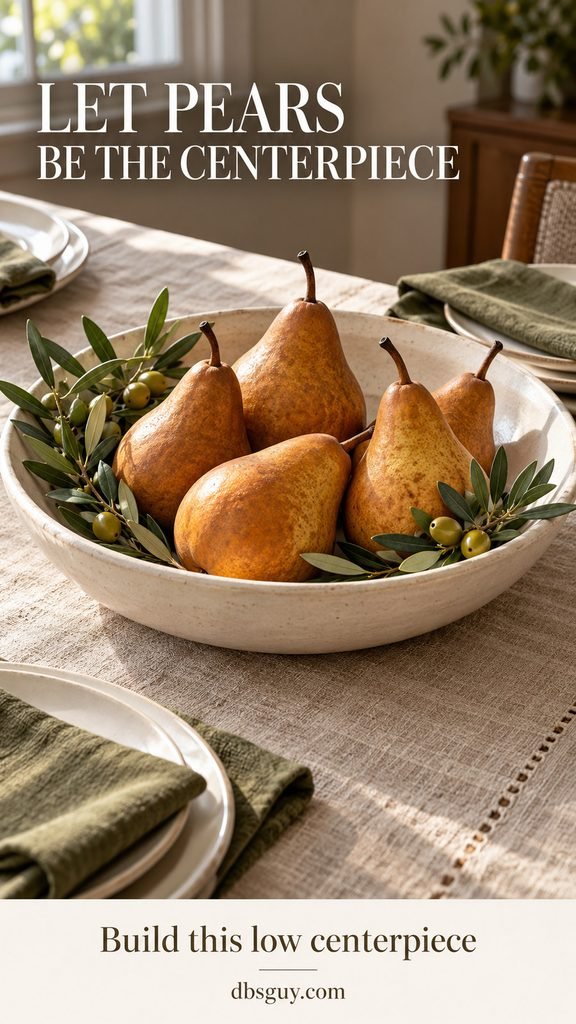
This is one of the fall centerpiece ideas to choose when you want a single piece you can move easily. If the pears will be eaten, use a clean food-safe bowl, keep decorative stems separate from the fruit, and remove them before serving. Paint, glitter, and floral products do not belong on edible decorations.
5. Leave Serving Gaps Between Small Flower Vases
Three short clear vases can spread a small amount of flowers across a rectangular table. Give each vase a small cluster of ivory chrysanthemum stems and set them on a narrow folded olive runner. The open intervals matter as much as the flowers.
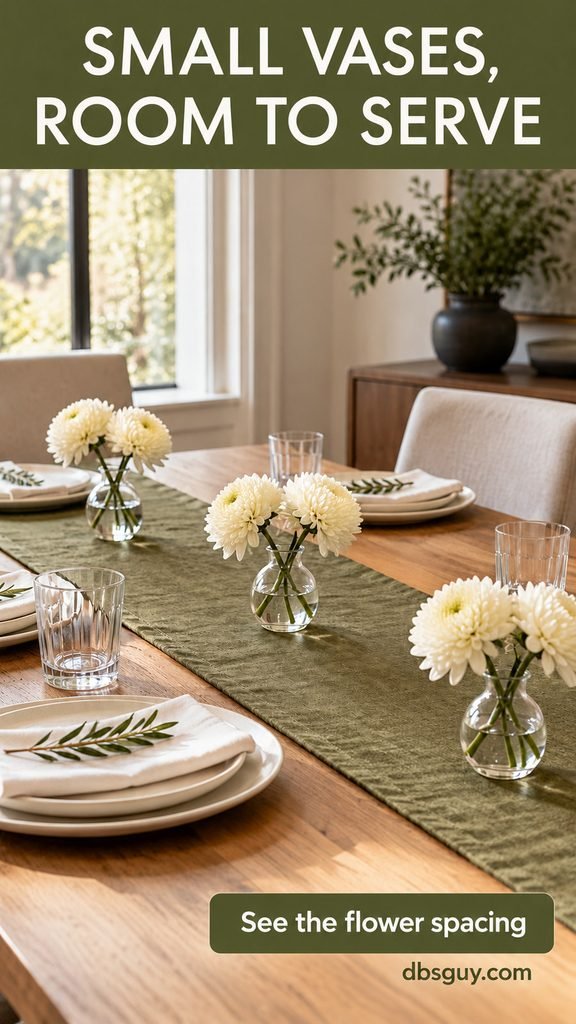
Choose broad-based containers and trim the stems while checking the arrangement from a chair. The flower heads should not hide the person opposite you. Reserve a gap for the bread and another for a serving bowl before adding any extra stems. Keep water-filled vases on a flat part of the fabric so they sit steadily.
6. Let Olive Gingham Carry a Fall Brunch
Small olive-and-cream checks give breakfast dishes a seasonal setting without needing formal dinner decor. Use white mugs, plain bowls, and rust-colored napkins over the gingham cloth. A single small cream pumpkin off to one side is enough beside the coffee jug.
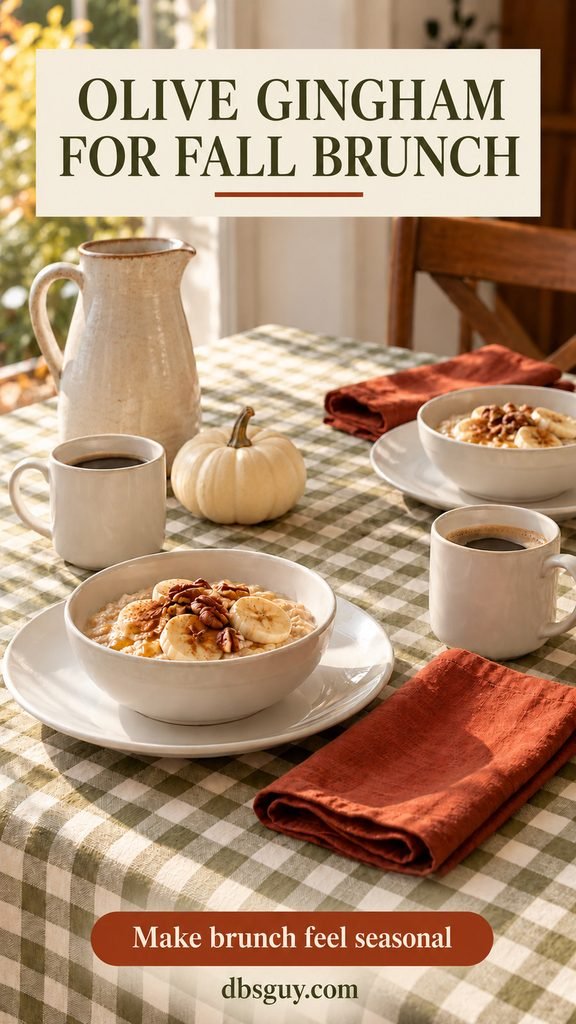
Let the checks be the main pattern. Printed mugs, patterned plates, and a second busy textile can make a small breakfast table harder to read. Set the jug within easy reach and keep the pumpkin out of its landing spot. This arrangement suits an October weekend as well as a casual Thanksgiving breakfast.
7. Pair Olive Gauze with a Low Terracotta Jug
Terracotta adds an earthy orange note when you want fall color without a table full of pumpkins. Lay an olive gauze runner down the center, add ivory plates, and put three short rust-colored dahlias in a low matte terracotta jug. Cinnamon napkins connect the flowers to the place settings.
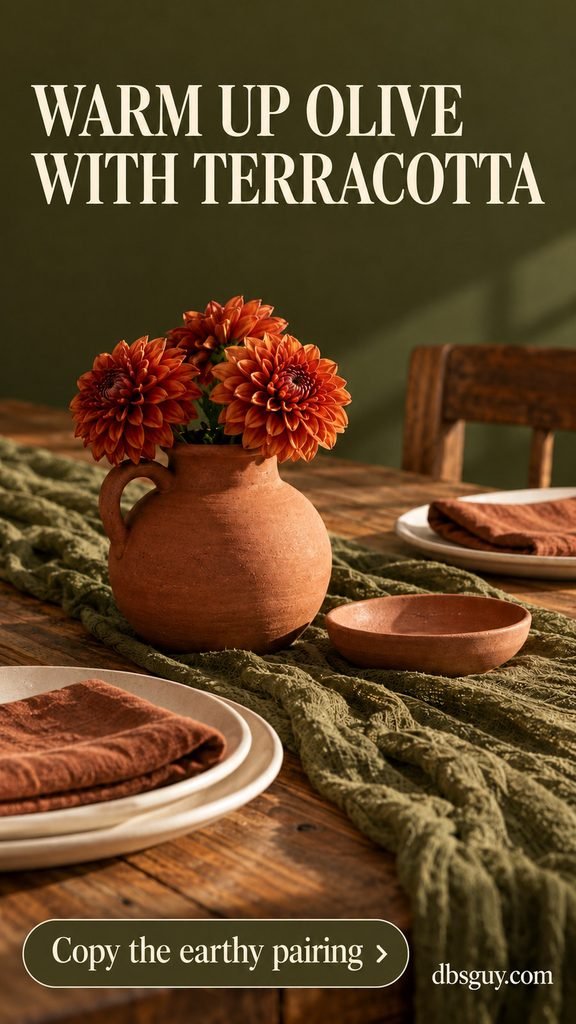
Check that the vessel is watertight; use a separate inner container if necessary. Keep the gauze flat beneath it and gather any loose folds between the settings. A narrow runner leaves more wood visible and keeps this from becoming a heavy arrangement. Stop with the jug rather than adding a second orange centerpiece.
8. Dress an Evening Table in Olive and Gold
An olive tablecloth makes ordinary ivory dishes feel more deliberate for an evening dinner. Add gold-colored flatware if you own it, then use two brass holders with ivory LED tapers as the main lighting accent. A low bowl of cream mini pumpkins supplies a small seasonal detail.
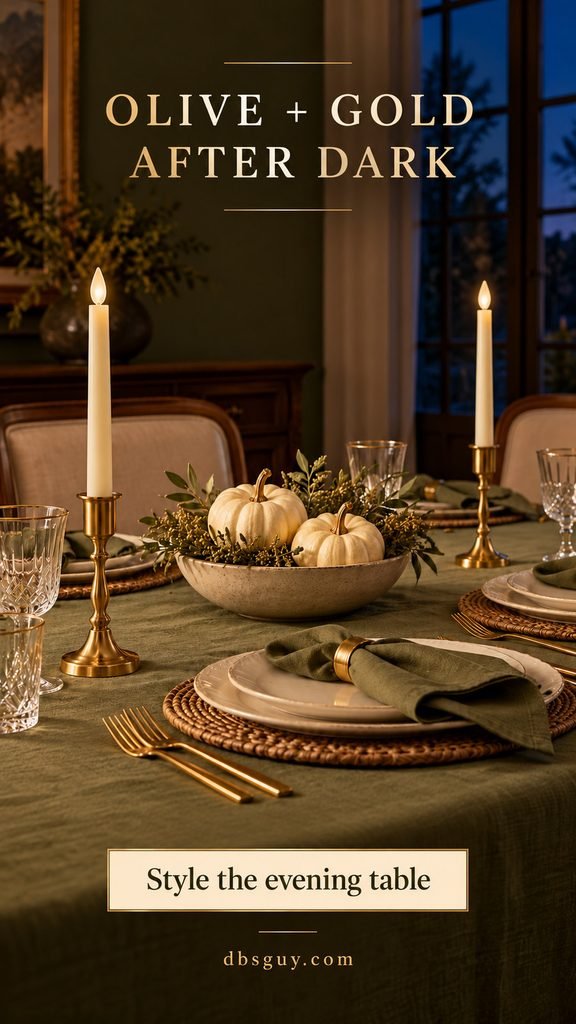
The tapers in this concept are battery-operated. Check that they fit securely in the holders, and try their glow with your dining-room lights at the level you plan to use. Leave enough room light to see the food comfortably. If your flatware is silver, keep it; matching every metal is unnecessary for the arrangement to work.
9. Give Burgundy Flowers a Quiet Olive Background
Use olive in the napkins and let one low bowl of burgundy flowers be the focal point. A few dahlias with smaller chrysanthemums make a fuller-looking cluster without spreading several arrangements along the table. Cream dishes and an oatmeal cloth leave a light edge around the deep colors.
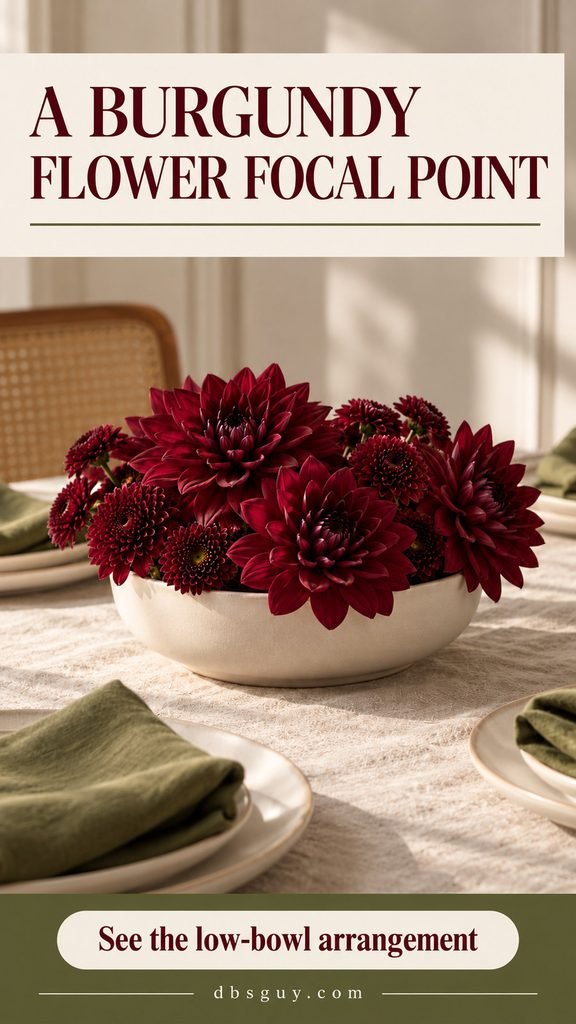
Choose the bowl for its width before buying flowers, then trim the stems to that container. Keep the outer blooms inside a compact footprint so they do not brush glasses or plates. If you prefer the wine tones to lead the whole table, see our 17 Burgundy & Plum Simple Fall Tablescape Ideas.
10. Turn Kraft Place Mats into Gratitude Notes
For an adult Friendsgiving, cut kraft-paper place mats and write “Thankful for” in an exposed corner of each one. Olive napkins and ivory plates give the paper a finished setting. A simple pencil beside each mat invites guests to add a thought while everyone settles in.
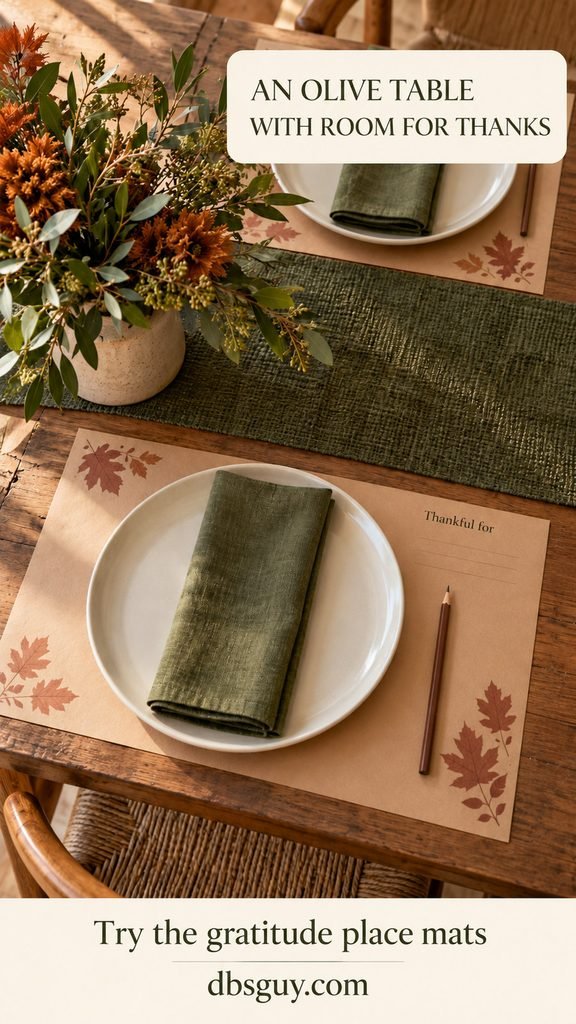
Test one mat with a plate and glass before cutting the rest; the writing area needs to remain uncovered. Add a few drawn or flat paper leaves at the outer corners if you want a fall motif. Paper is decoration, not heat protection, so use proper trivets for hot serving dishes. Guests can share their notes or keep them private.
11. Make the Bread Basket Your Centerpiece
The middle of a dinner table can look welcoming because it contains something useful. Line a low oval bread basket with a clean olive cloth napkin and fill it with rolls. Repeat the green in a narrow runner, then use cream plates and white napkins around it.
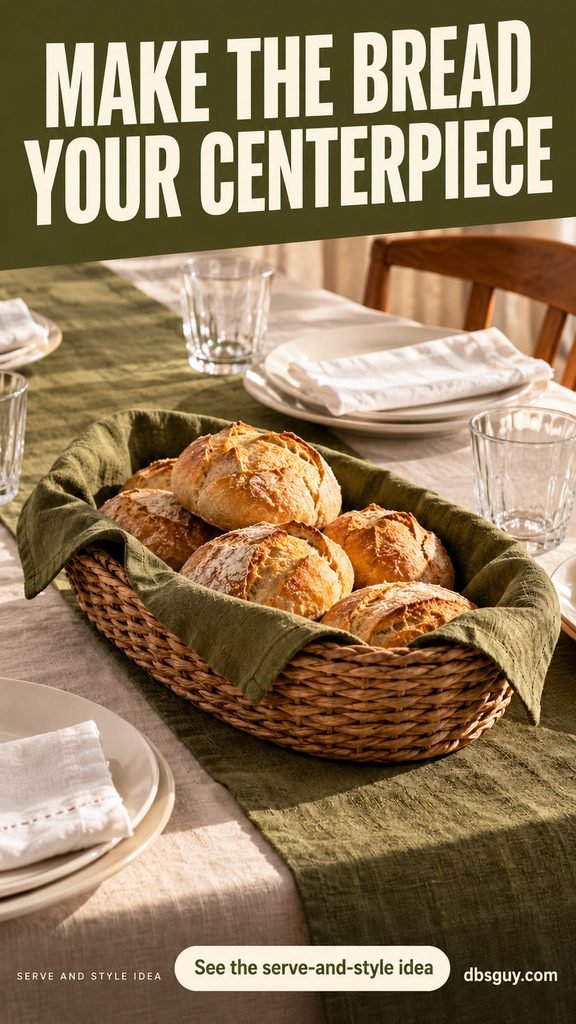
A low basket is easier to pass than a tall decorative display, and it earns its space during the meal. Keep the liner neatly folded inside so nobody catches a long corner when lifting it. Use a clean washable cloth suitable for contact with the bread, and skip decorative greenery inside the basket. Add the rolls shortly before serving.
12. Put Olive Green in the Plates Instead
You do not need green fabric if your dishes already carry the color. Layer an olive salad plate over an ivory dinner plate, then use a white napkin and cream tablecloth. A shallow tan bowl with two small persimmons gives the table a restrained orange accent.
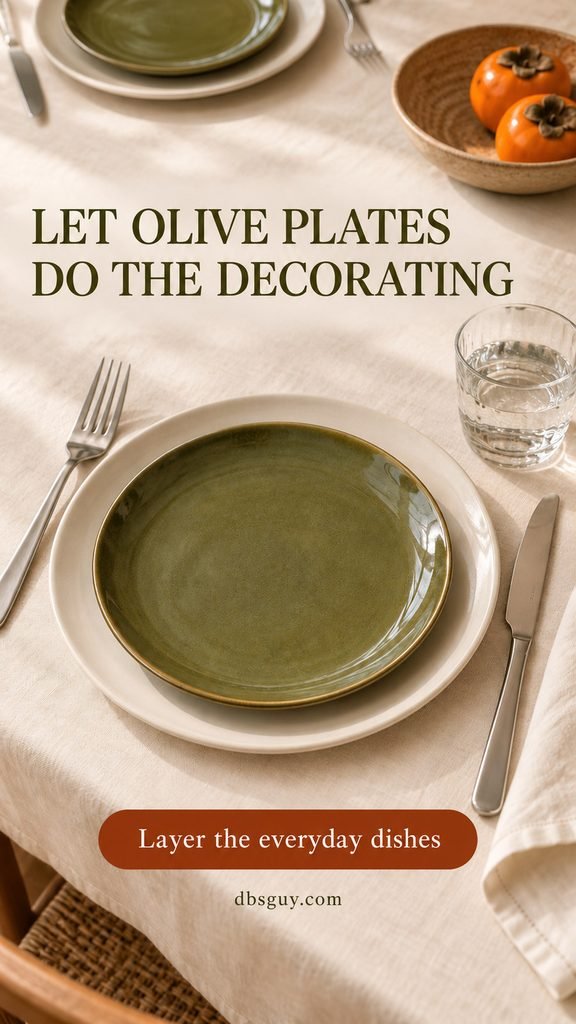
Use the smaller plate only if the menu calls for it; otherwise, an olive dinner plate can stand alone. Check the manufacturer’s care instructions for your dishes and use food-safe dinnerware for eating. With the color already in the glaze, adding green chargers and green glassware can obscure the clean outline that makes this setting appealing.
13. Catch Afternoon Light with Amber Glass
Amber tumblers add a warm note beside olive napkins on a pale wood table. Keep the plates cream and the center spare—a shallow dish of a couple of pears is enough. The glasses become the accent, especially when daylight passes through them.

Check the pairing in your own room before committing to more pieces. Dark amber can look brown under evening lighting, while a lighter tint may show more clearly against the wood. There is no need to buy matching wine glasses: clear stems can sit beside the amber water tumblers. Leave enough separation that guests can pick up either glass comfortably.
14. Fold Olive Napkins into Menu Pockets
A flat menu pocket puts the decorative detail on the plate and frees the center for dinner. Use a square olive cloth napkin and a small cream card. A handwritten menu works as well as a printed one; keep the card short enough to sit securely in the fold.
- Fold the napkin in half to make a rectangle.
- Turn the lower edge upward to make a shallow front flap.
- Fold the left and right ends behind to narrow the pocket, then slide the card behind the front flap.
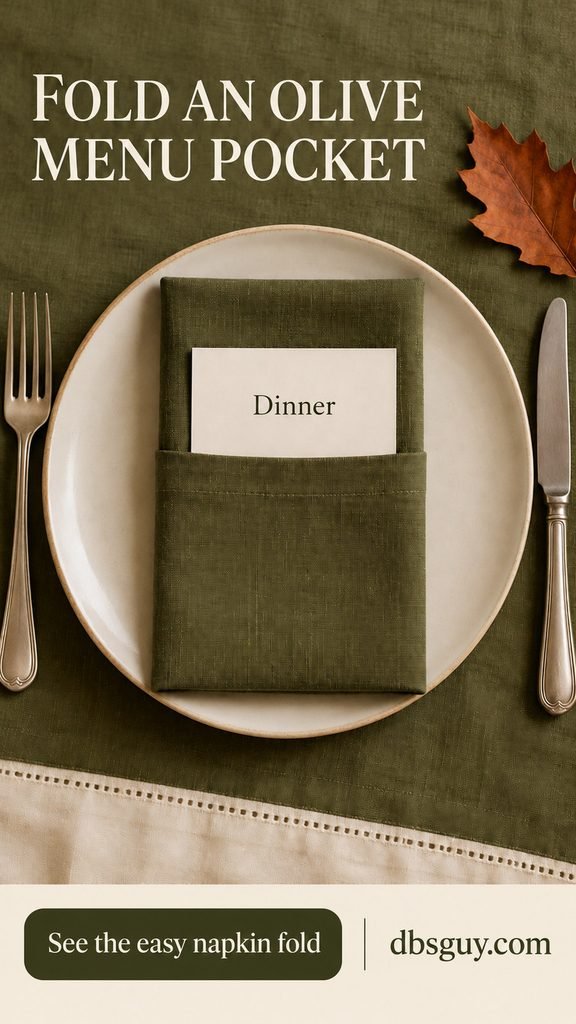
Press a sample fold and check it with your actual card before making the rest. Guests should be able to lift out the menu and unfold the napkin without undoing pins or tight ribbon.
15. Use Olive Ticking Stripes as the Base
A cream cloth with thin olive stripes introduces pattern more quietly than a large plaid. Run the stripes along the length of the table and pair them with solid oatmeal napkins, ivory plates, and clear water glasses. Three russet apples in a low bowl are enough at the center.
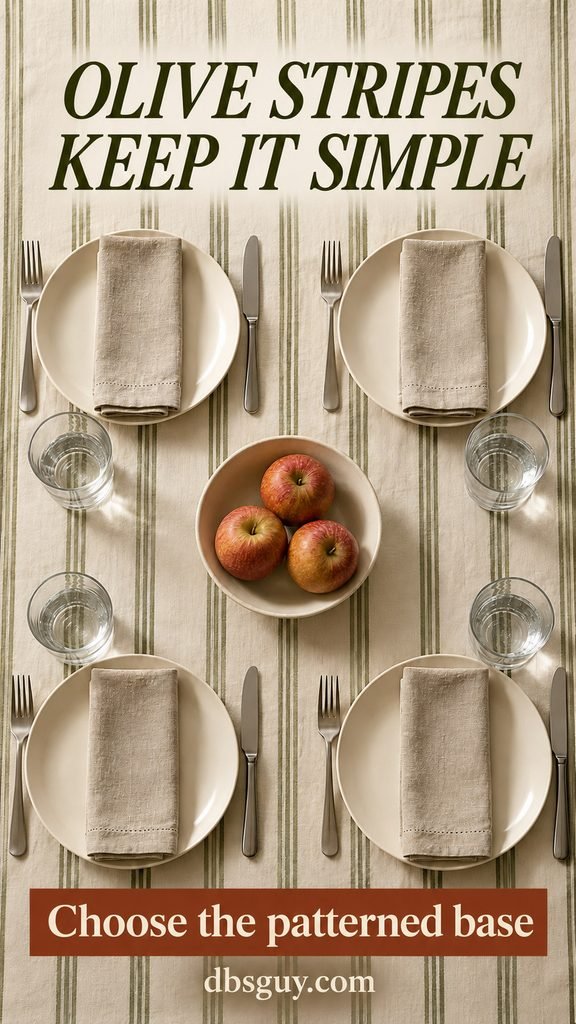
Skip the runner so the cloth remains visible. Align one stripe with the table’s long edge before adding dishes; this makes an unevenly placed cloth easier to spot and straighten. If your existing tablecloth has wider stripes, keep the same simple dishes rather than adding another print. The practical benefit is one patterned layer doing all the work.
16. Set an Olive-and-Rust Soup Supper
Build this table around the meal: cream soup bowls on matching plates, olive washable place mats, and rust cotton napkins beside the spoons. A low bread board in the middle completes a casual fall supper. The warm color of squash soup can supply the brightest autumn accent.
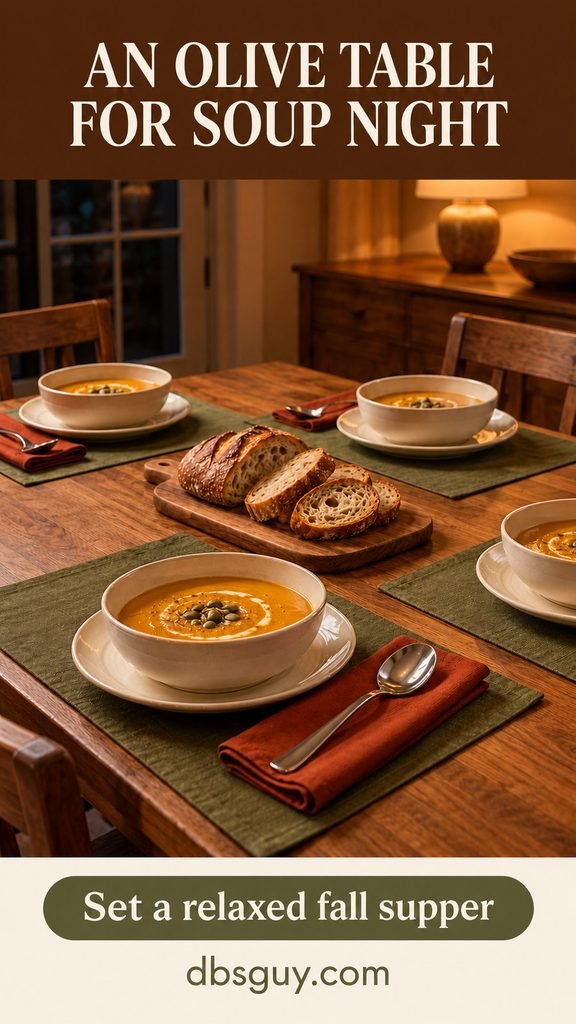
Give each bowl a steady, uncluttered landing area. Fold the napkin beside the plate rather than leaving it underneath a filled hot bowl. Put any hot serving vessel on a proper trivet, and keep the bread board separate from it. You can leave out flowers, pumpkins, and extra plate layers here—the table already has a clear purpose.
17. Keep a Two-Person Fall Table Almost Bare
For a small dinner at a kitchen window, use two ivory plates, two olive napkins, and clear tumblers on a square wood table. Tuck one cream mini pumpkin at a back corner instead of putting a centerpiece between you. The empty middle leaves room for the meal.
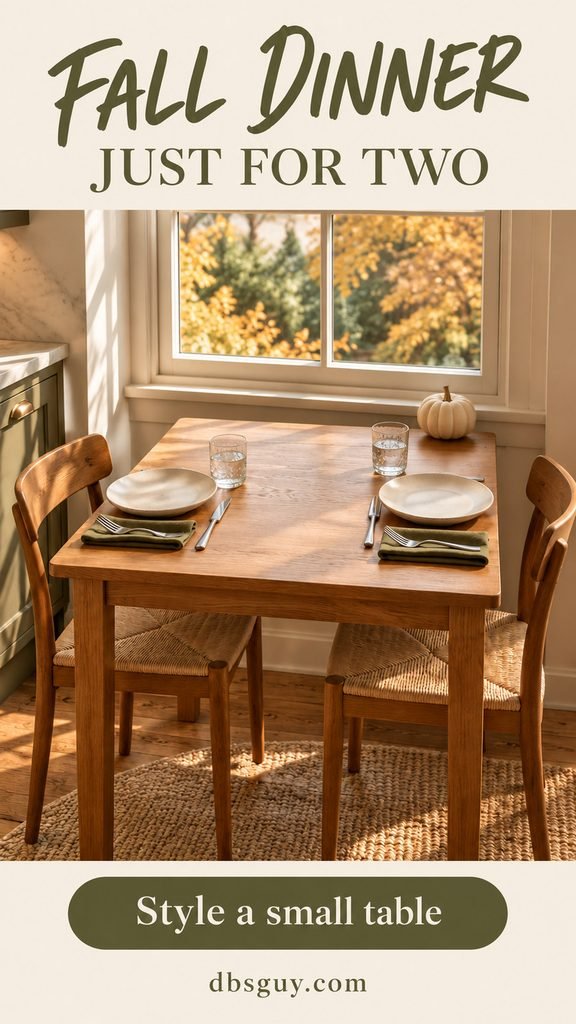
Check where both chairs sit before choosing that corner. The pumpkin should not claim a guest’s elbow space or the spot where you plan to put a serving bowl. If it does, move it to the windowsill. A pair of green napkins can carry this entire look; a runner may be more fabric than a tiny table needs.
18. Use a Compact Olive Setup on a Sheltered Patio
For a fall meal outside, choose sturdy cream dishes, olive cotton place mats, and a heavy low ceramic bowl of white pumpkins. Keep the centerpiece contained rather than scattering lightweight leaves across the table. Tuck napkin edges beneath the plates until guests sit down.
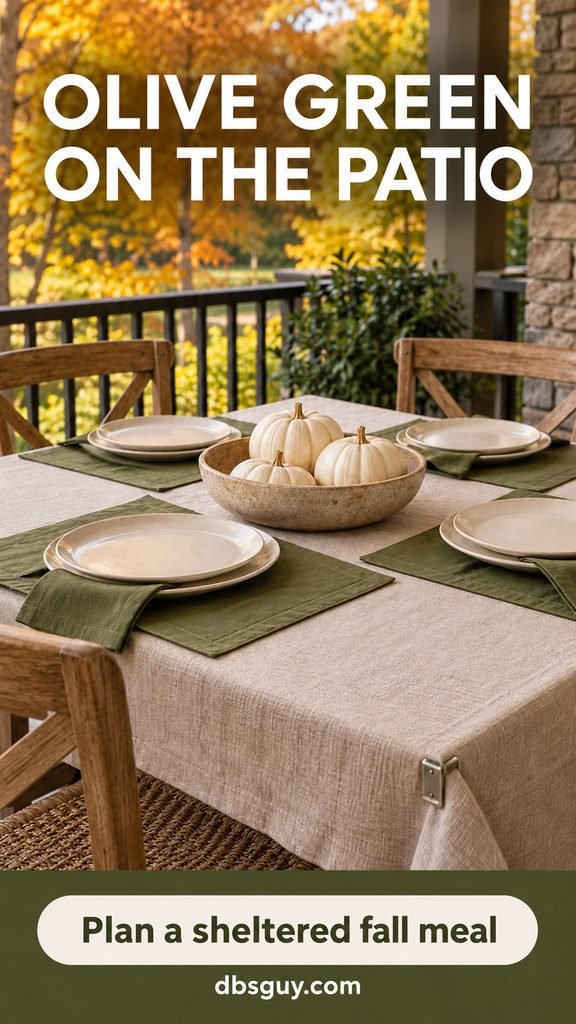
If you use a cloth, secure it underneath with clips that suit your table’s thickness and finish. Test the bowl’s stability before adding the pumpkins, and protect the table beneath it where needed. Choose a sheltered spot and move the meal inside when wind or rain makes dining awkward. This setup has no candles or paper pieces to manage outdoors.
19. Give the Kids Large Paper Pumpkins to Decorate
Use large olive-colored wipe-clean place mats, cream unbreakable plates, and a flat orange paper pumpkin at each seat. Full-size chunky crayons give kids something to draw with before the food arrives. Leave the paper pumpkins blank so the activity can suit different ages.
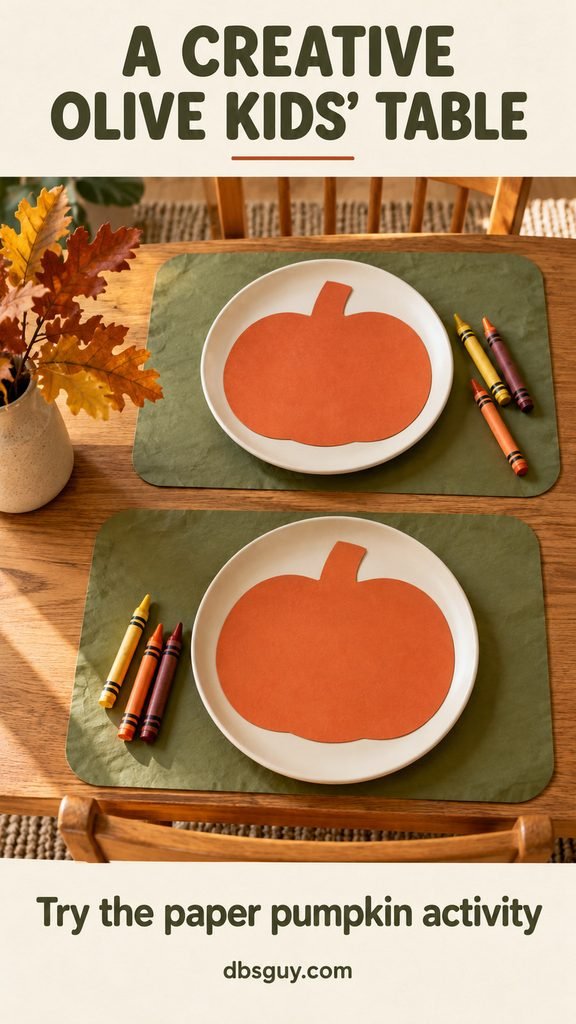
Keep this table free of glass, open flames, and tiny decorative pieces. Choose age-appropriate supplies and supervise the activity; move the paper and crayons aside before serving. For children who can write, the pumpkin can hold a short gratitude note. Younger children can draw instead. A shared olive palette connects their table to the adult one without needing identical dishes.
20. Bring Blue Transferware into an Olive Fall Table
Blue-and-ivory patterned plates do not have to wait for another season. Set them on bare warm wood with solid olive napkins and a low bowl of russet apples. Keeping the fabric plain lets the detailed plate borders remain the feature.
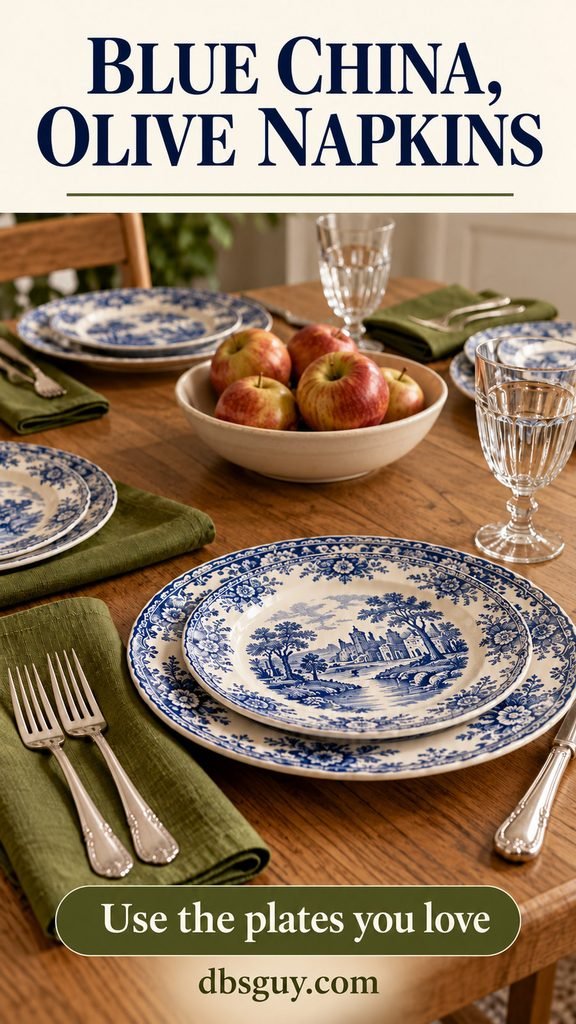
If your pieces come from different sets, repeat one olive napkin at every seat to give them a common frame. Use dinnerware you know is intended for food service; reserve uncertain decorative or antique pieces for display. There is no need to add orange to every place setting. The apples and warm wood provide a quieter fall connection.
21. Group Soft Olive Fabric Pumpkins
For a centerpiece you can pack away after the season, cluster three fabric pumpkins: two olive velvet and one oatmeal linen. Their different textures show clearly against a wood tabletop. Plain cream plates and white napkins keep attention on the soft shapes.
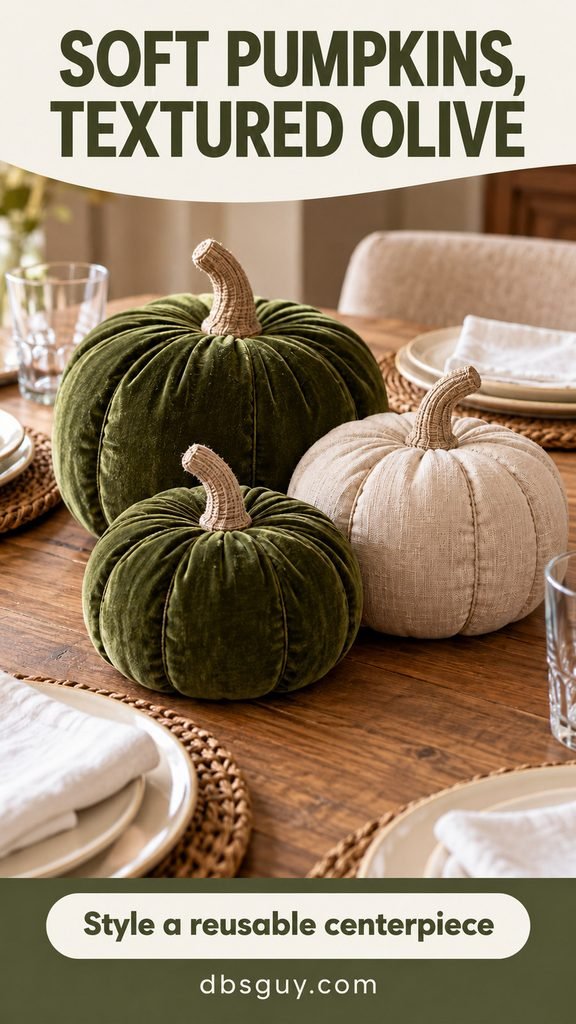
Check the bases so the pumpkins stand without rolling into the place settings. Keep the group together rather than putting a fabric piece on every plate. Remove them before serving if they compete with dishes, and store them clean and dry according to their care instructions. Treat them as decor; sewn stems and trim do not make them suitable toys for young children.
22. Line the Table with Small Culinary Herb Pots
Three compact thyme plants can make a living centerpiece with a softer outline than a large bouquet. Use small terracotta pots, each on a waterproof saucer, with olive place mats and cream dishes. Leave generous gaps so the separate plants do not become a solid hedge.
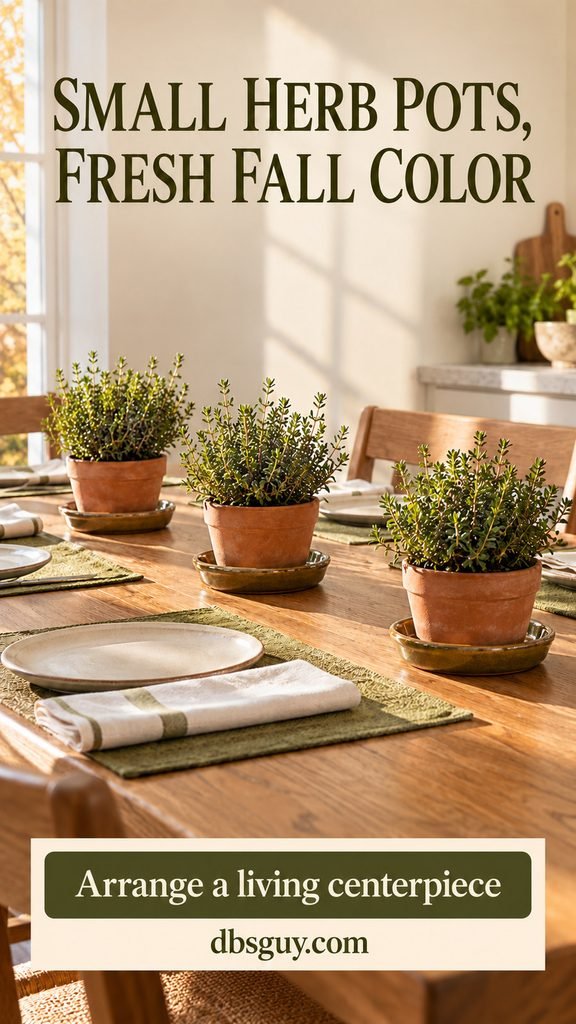
Water and drain the pots away from the dining table, wipe their exteriors, and check that the saucers protect the surface. Keep soil away from food and place settings. The plants can remain decorative; if you plan to snip herbs for the meal, use plants grown for culinary use and wash the harvested herbs. Move the pots to a suitable growing location afterward.
23. Run Olive Linen Across a Family-Style Thanksgiving Table
For a six-person rectangular table, lay three narrow olive runners across the width, each connecting a pair of opposite seats. Use ivory plates and white napkins, then reserve the middle for serving bowls and platters. The repeated green bands supply decoration without a separate centerpiece.
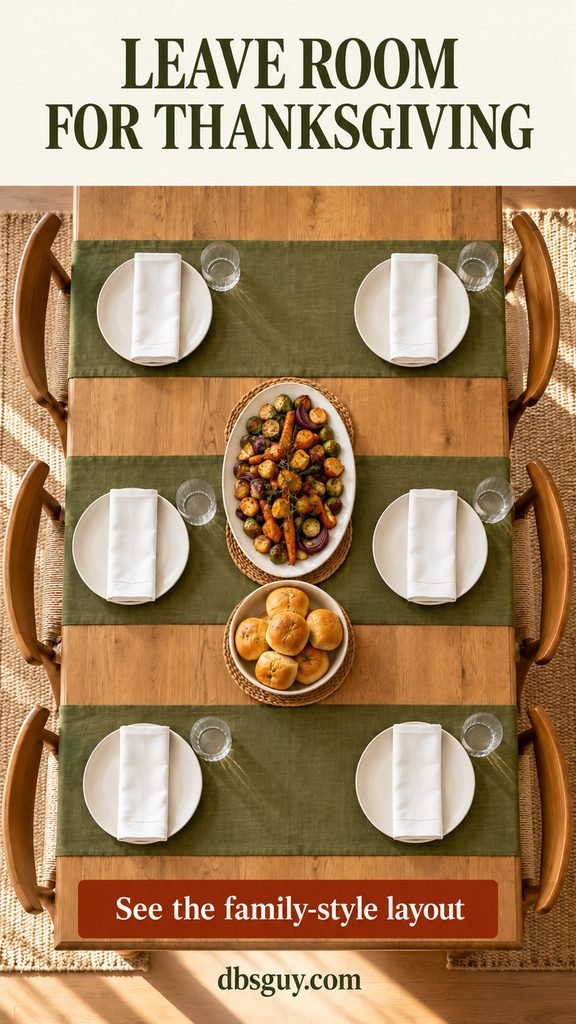
Lay out your empty Thanksgiving serving dishes first, including the trivets they will need. Adjust the runners so glasses and plates sit flat, and leave room to grasp platter handles. This is a useful choice among Thanksgiving tablescape ideas when the food will be passed around. For the rest of the gathering, browse our 27 Fun & Cozy Friendsgiving Ideas Everyone Will Love.
Make the Arrangement Work During Dinner
Before adding more decor, sit in a chair and check three things: can you see the person across from you, pick up your glass without brushing the centerpiece, and pass a serving dish without moving everything else? Remove a piece if any answer is no. A table that looks a little spare before dinner may feel complete once the food arrives.
Set out clean dishes and dry linens in advance if the table can stay undisturbed. Add bread, water-filled vases, and other fresh elements closer to the meal. Keep a clear spot on a counter or sideboard for any centerpiece you decide to move.
The evening concept uses LED tapers. If you substitute real candles, follow the U.S. Fire Administration’s candle safety guidance: choose stable holders, keep candles at least 12 inches from anything that can burn, and extinguish them when leaving the room. When that clearance will not fit beside linens or decorations, keep the flameless option.
Questions About Olive Green Fall Tablescapes
What colors go with olive green for a fall table?
Cream, oatmeal, and warm wood make a useful neutral base. Add rust or terracotta for an earthy table, burgundy for a flower accent, or amber glass for a warmer glow. Choose one accent direction first; you do not need every autumn color in the same arrangement.
How can I make olive green look like fall rather than Christmas?
Use harvest textures and shapes: pears, russet apples, fabric pumpkins, terracotta, or warm woven mats. Keep the greenery restrained. Red berries, evergreen garlands, and ornament-shaped decorations would move the same olive linens toward a Christmas look.
Can I make a simple fall tablescape without buying new dishes?
Yes. Use your current plates and introduce olive through one reusable textile—a set of napkins, a runner, or a bread-basket liner. Choose a centerpiece from something already suitable for the table, such as a clean fruit bowl or a small basket. Do not buy all three textile options just to copy one image.
Do I need both a tablecloth and a runner?
No. A runner can sit on bare wood, and a patterned tablecloth can work alone. Use both only when you like the layered effect and the dishes still sit steadily. For a small table, individual place mats or napkins may give you all the fabric you need.
How much space should I leave for the centerpiece?
Let your actual place settings and serving dishes determine it. Put those on the table first, then use the space that remains for decor. A fixed centerpiece size cannot account for a narrow table, large dinner plates, or a family-style meal. Check both its width and its height from a seated position.