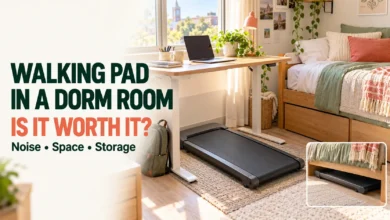
For bedtime stretches in a noisy dorm, try a gentle neck tilt, a seated upper-back reach, a single knee-to-chest stretch, and a supported hamstring stretch. Allow about six minutes after warming up, keep every movement comfortable, and make a plan for the noise before you get into bed.
The stretches give you something quiet and unhurried to do between studying and sleeping. They cannot silence a hallway or guarantee that you will fall asleep. If your roommate is still taking calls at midnight, a specific agreement about sound matters as much as your wind-down routine.
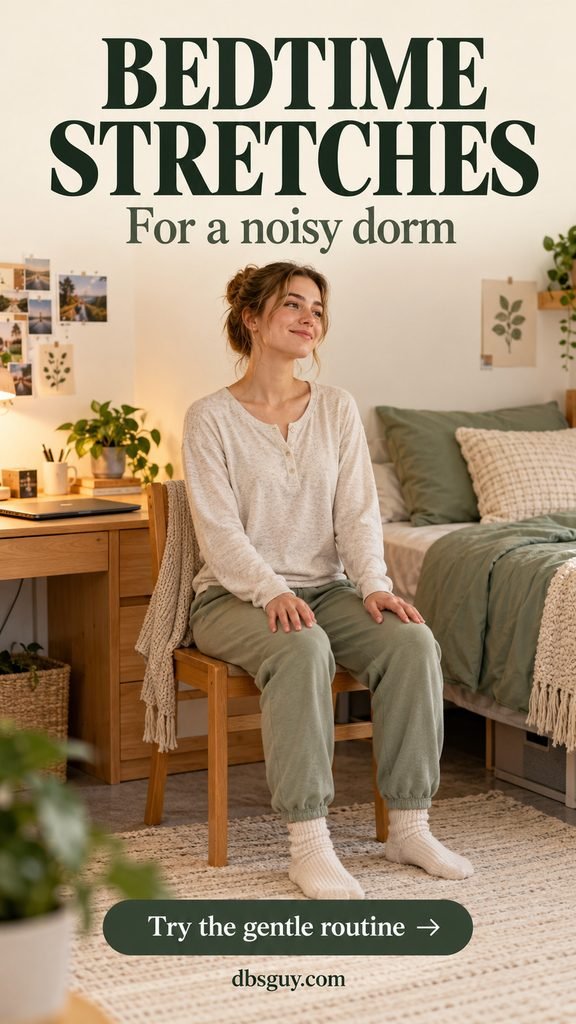
The visuals are AI-generated concepts illustrating the setup and positions. They do not document a tested sleep program. Follow the written cues and your own comfortable range.
Your Bedtime Routine at a Glance
Warm up first with 5–10 minutes of easy walking, using a clear hallway or another suitable space if footsteps would disturb your roommate. Then work through the sequence below. The six-minute estimate covers the stretches, a short rest, and time to change positions; the warm-up is additional.
- Neck tilt: up to 30 seconds on each side.
- Seated upper-back reach: one comfortable hold of about 30 seconds.
- Single knee to chest: up to 30 seconds per leg.
- Supported hamstring stretch: up to 30 seconds per leg.
- Finish: spend about one minute resting and breathing normally.
This is an editorially arranged wind-down sequence for students who can sit comfortably and get down to and up from the floor safely. It is not an individualized rehabilitation plan. Shorten a hold or skip a movement whenever you need to; you do not have to fill the timer.
Set Up Once, Without Waking the Room
Use a sturdy chair without wheels for the first two stretches. For the floor movements, clear enough space to lie down and lift a bent leg without hitting the bed frame or desk. A thin exercise mat can make the surface more comfortable. A small folded towel under your head is optional if it helps you keep your neck comfortable.
Put the mat in place earlier in the evening so you do not have to scrape furniture across the floor at bedtime. Keep bags and charging cords out of the path, and leave enough light on to change positions safely. You can lower the light when you are settled.
Stay with a mild pulling sensation. Keep breathing, do not bounce, and never push through pain. Stop if you notice tingling, numbness, or dizziness. If you have an injury, ongoing pain, recent surgery, or a condition that affects movement, ask your healthcare professional which stretches are appropriate before trying this sequence.
1. Start With a Gentle Neck Tilt
Sit with both feet flat on the floor and your hands resting on your thighs. Let your shoulders settle, then slowly tilt your head so one ear moves toward the shoulder on that side. Keep your face pointing forward.

Stop at a small, comfortable stretch along the opposite side of your neck. Hold for up to 30 seconds, return slowly to the middle, and repeat on the other side. A shorter hold is fine if that feels better.
Your ear does not need to touch your shoulder. Leave your hands on your thighs instead of using one to pull your head farther over. If your shoulder creeps upward to meet your ear, make the tilt smaller.
2. Reach Forward to Stretch Your Upper Back
Stay seated with both feet grounded. Clasp your hands in front of you, then reach them forward at roughly chest height, keeping your elbows soft. Allow your upper back to round gently and your chin to lower a little.

Hold for about 30 seconds while breathing evenly, then release your hands and sit upright again. Look for a mild stretch across the upper back rather than a strong pull through your shoulders.
You only need the space directly in front of the chair, which makes this a useful option when a roommate has a drying rack or laundry basket beside the bed. Avoid reaching so far that you slide forward or feel strain in your lower back.
3. Bring One Knee Toward Your Chest
Lie on your back on the mat with both knees bent and both feet flat. Lift one foot and bring that knee toward your chest. Place both hands behind the thigh, close to the back of the knee, to support the leg.
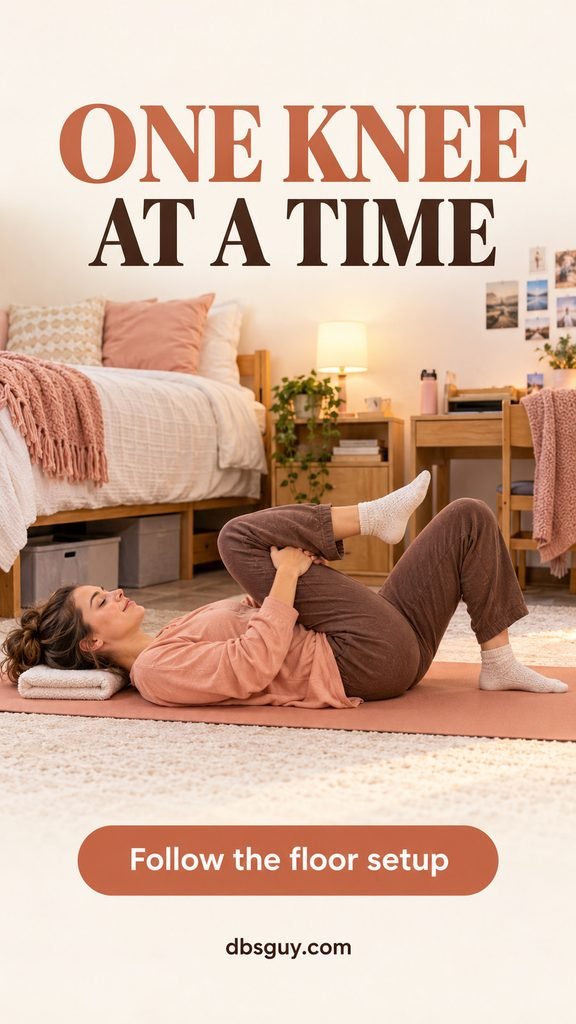
Draw the leg toward you only until the position feels comfortable. Keep your head and shoulders down and the other foot planted. Hold for up to 30 seconds, return the foot to the mat slowly, and switch legs.
Holding behind the thigh avoids pressing directly on the kneecap. You do not need to squeeze the knee against your chest. If you feel pinching at the front of your hip or discomfort in your back, ease out and leave this movement out if it remains uncomfortable.
4. Support Your Thigh for a Hamstring Stretch
From the same lying position, lift one leg and hold behind the middle of the thigh with both hands. Keep the other knee bent with its foot on the floor. With the lifted thigh supported, slowly straighten that knee until you feel a gentle stretch along the back of the thigh.
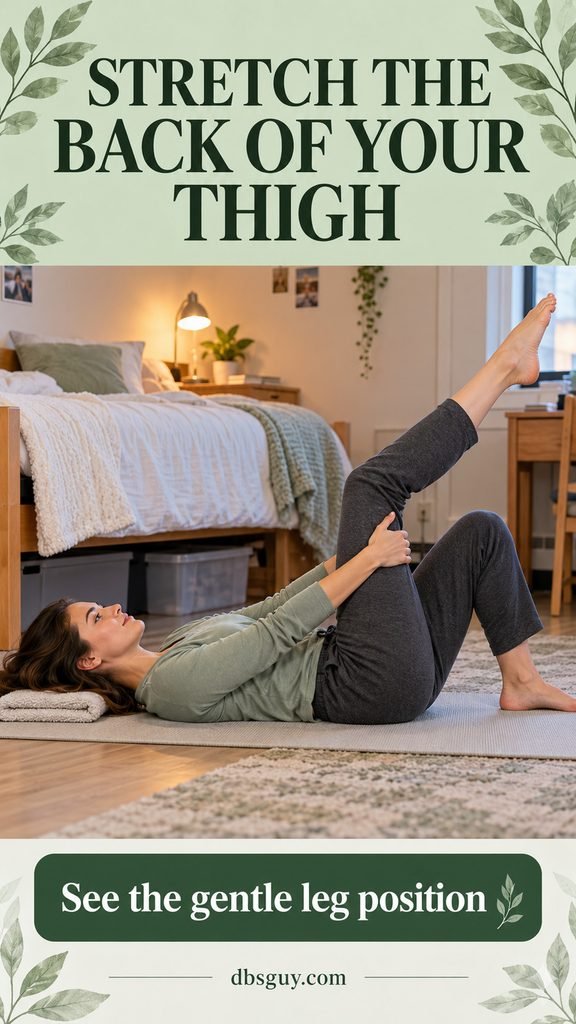
The lifted knee can stay slightly bent. Keep your head on the mat or thin towel, relax your shoulders, and avoid reaching toward your toes. Hold for up to 30 seconds, bend the knee again, lower your foot quietly, and repeat on the other side.
How high the leg goes is less important than staying comfortable. If you have to lift your head or strain to hold your thigh, lower the thigh or skip this stretch. Tingling or an electric sensation is a reason to stop, not a sign to stretch farther.
After lowering both feet, rest for about a minute with your knees bent and your arms relaxed. Let your breathing stay easy; there is no need for breath-holding or a complicated counting pattern. Take your time getting up.
Also read: Dorm Yoga for Beginners: Quiet Flows for Tiny Spaces if you want a separate guide to practicing in a small room.
Make a Plan for the Noise Before Bed
Stretching may be a pleasant part of winding down, but repeated calls, loud videos, and slamming doors need their own response. The National Heart, Lung, and Blood Institute’s healthy sleep guidance recommends quiet time before bed and a sleeping space that is quiet, cool, and dark.

Start with the sound you can actually change. If it is coming from inside the room, bring it up during the day rather than waiting until you are exhausted. A concrete request is easier to act on than “Can you be quieter?”
For example: “I need to be asleep around 11:30 for my morning class. Could we use headphones for videos after 11 and take calls outside the room? I’ll keep my morning routine quiet, too.” Choose times that fit both schedules and check your residence hall’s current quiet-hours rules.
For occasional hallway sound, comfortable earplugs used according to their instructions are one option. If a low, steady background sound feels less distracting to you, discuss that with your roommate before playing it through a speaker. Keep the volume low rather than trying to overpower loud neighbors; neither option guarantees uninterrupted sleep.
Have your alarm arrangement sorted before relying on earplugs, and put your phone aside once the setup is ready. If noise keeps breaking the agreed rules, contact your resident assistant or housing staff for help. You do not need to keep adding stretches to compensate for a problem the building needs to address.
When There Is No Space for the Floor Stretches
Do the two seated movements, then spend a quiet minute resting in the chair. That is a shorter version of the routine. Skip the lying stretches if you cannot get down safely or there is not enough clear floor space; do not improvise them on a top bunk or the edge of a high bed.
If you are already sleepy and getting the mat out would wake you up, you can skip the routine that night. Stretching should not become another task that keeps you from going to bed.
Questions About Stretching Before Sleep
Will these stretches make me fall asleep faster?
There is no guarantee. This specific sequence has not been tested as a sleep treatment. Try it as a comfortable transition away from studying, and notice whether you enjoy it. Being awake afterward does not mean you performed the stretches incorrectly.
What if I still feel wide awake afterward?
Avoid repeating the whole routine to force sleep. If you are lying awake and getting frustrated, get up for a quiet activity in low light, such as reading a paper book, and return to bed when sleepy. In a shared room, use the chair and a small task light rather than turning on the overhead light.
When should I ask for help with sleep?
Contact campus health or your healthcare professional if trouble sleeping keeps returning or affects your daytime functioning, even after you have addressed noise and allowed time for sleep. Mention loud snoring, gasping during sleep, or unusual daytime sleepiness. Persistent sleep problems deserve attention beyond a stretching routine.
Should I stretch again in the morning?
You do not need to repeat this bedtime sequence. If you would like a separate routine that fits before class, use the morning guide below and follow its warm-up and setup instructions.