How to Actually Sleep in a Noisy Dorm (Even When Your Roommate Doesn’t)

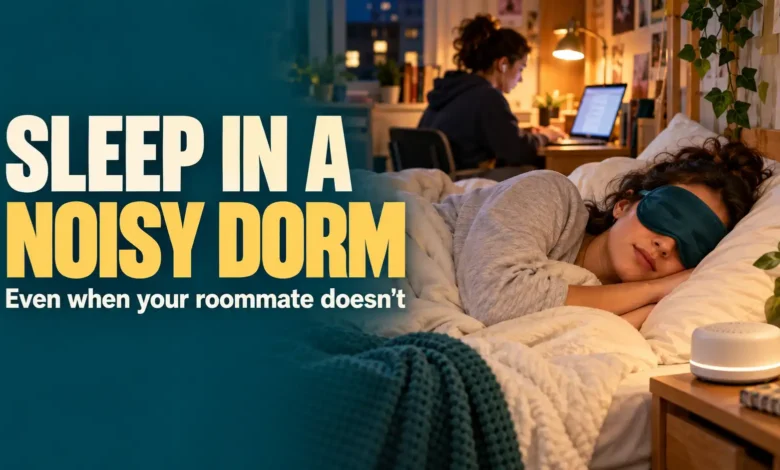
To sleep in a noisy dorm, start by reducing the noise you can control, agree on what happens while one roommate is asleep, and use comfortable earplugs if you need them. A sound machine is optional. You do not need to match your roommate’s bedtime, but you do need a room where staying awake does not mean keeping everyone awake.
Your plan for tonight: Ask for calls or gaming chat to move to a permitted common area, put on an eye mask if light is the problem, and get comfortable earplugs and your alarm ready. If background sound is distracting, turn it down or off. Leave the bigger roommate discussion for a time when you are both awake.
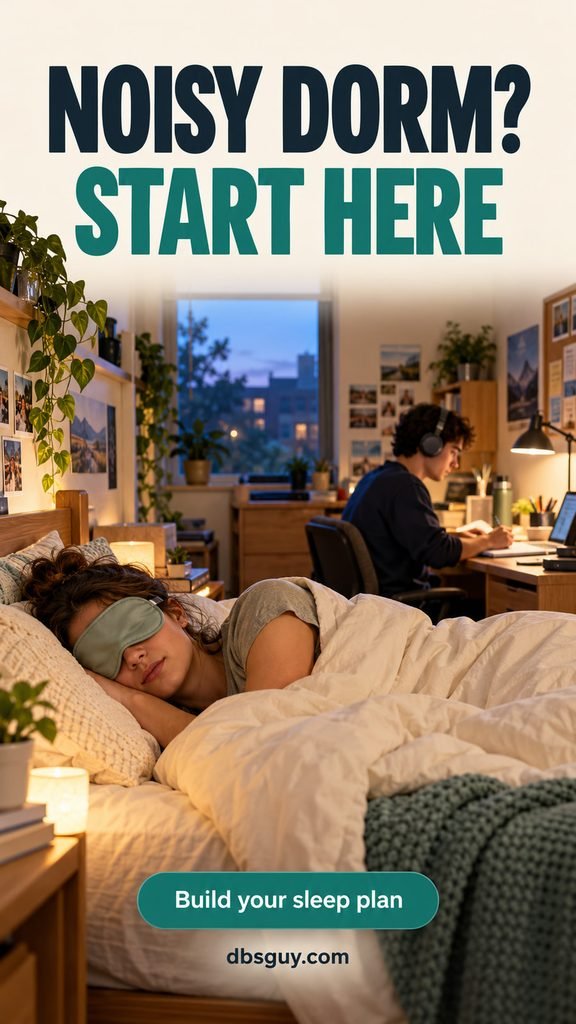
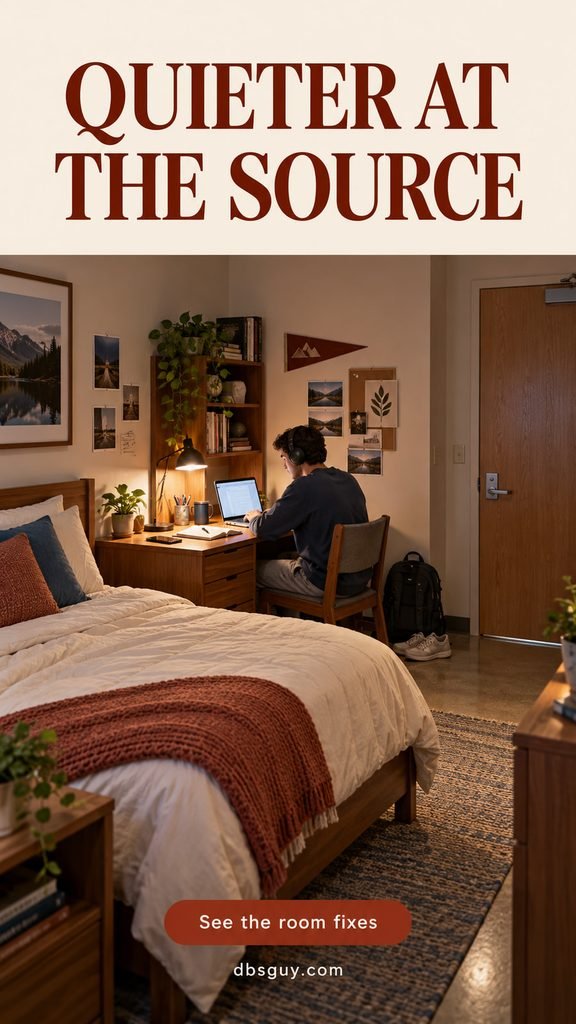
The visuals are AI-generated concepts illustrating room setups and sleep habits, not photographs of tested products or documented results.
1. Find the Noise You Can Actually Change
Spend a minute identifying what keeps interrupting you. Voices in the room, a slamming hall door, and a rattling vent need different responses. Buying another gadget before making that distinction can leave the actual problem untouched.
- Calls, videos, or gaming: Headphones stop the speaker audio, but your roommate’s voice still carries. Ask for voice chat to move to an approved lounge or study area where conversation is allowed.
- Late arrivals and early classes: Pack bags, pick out clothes, and find keys before the other person goes to bed. Agree to use a small task light rather than the overhead light.
- Hallway conversations or repeated door slams: Check your building’s quiet-hours policy and contact the resident assistant on duty when needed. If a door closer bangs or a fixture rattles, submit a maintenance request.
- Music or bass from another room: Ask for the volume or bass to be reduced, or involve residence staff. Avoid trying to overpower it with louder sound beside your own bed.
- Snoring: Treat it as an involuntary sound, not a roommate deliberately ignoring you. Discuss how it affects your sleep during the day. Loud snoring with gasping or pauses in breathing is a reason for that person to speak with a healthcare professional.
For light, try a comfortable eye mask and ask your roommate to point the desk lamp toward their work. If the layout allows, discuss moving your pillow farther from the desk or shared wall. Check housing rules before rearranging furniture or adding anything to doors. Keep exits, vents, sprinklers, and alarms clear; ask maintenance about door gaps rather than sealing them yourself.
2. Make a Roommate Plan That Works After Midnight
“Please be quiet” leaves a lot open to interpretation. Your roommate may think headphones solve everything while you are lying awake listening to their half of a conversation.
Talk during the day, when neither of you is trying to sleep or rushing to class. Describe the sound and its effect, then ask for a specific change.

Try this script: “I’ve been waking up when there are calls in the room after I go to bed. I need to be up at seven. Could we keep calls and gaming chat out of the room after eleven on class nights? Quiet studying with a desk lamp works for me. What do you need when I’m up before you?”
Those times are an example, not a rule for every dorm. Start with your residence hall’s actual policy, then agree on the details your room needs:
- A sleep window: Write down when each person usually needs the room quieter, including early shifts or classes.
- What stays in the room: Decide whether quiet typing and a desk lamp work, and where calls, guests, and voice chat can happen instead.
- A return-home routine: Keep essentials easy to find, avoid overhead lights, and close the door gently without interfering with its latch or closer.
- An alarm agreement: Each person takes responsibility for waking up, gets up promptly, and avoids a long chain of snoozes. A wearable vibration alarm may be an option if it reliably wakes its user.
Put the agreement in a shared note and choose a time to check back. Agree on a neutral reminder, such as “Could you take that call outside the room?” so you do not have to restart the whole discussion every night. The same courtesy applies when you are awake first.
3. Use Earplugs That Fit—and Keep Your Wake-Up Plan
Earplugs reduce sound; they do not create complete silence. Choose a style you can wear comfortably, and follow its instructions. A plug that hurts or presses into your ear when you lie on your side needs a different fit or style, not more force.

For soft foam earplugs, CDC/NIOSH teaches a roll–pull–hold method:
- Roll: With clean hands, roll the foam into a narrow, smooth cylinder.
- Pull: Use the opposite hand to gently lift the top of your ear up and back. Insert the compressed plug according to its directions.
- Hold: Keep a fingertip against the outer end while the foam expands, for the time specified on the package.
If cupping your hands over your ears makes the room substantially quieter, the plugs may not be sealing properly. Refit them according to the instructions. These steps are for foam plugs; do not use them for moldable putty or another design that has different directions.
Keep reusable plugs clean as directed, replace disposable ones as instructed, and do not share them. Stop using a plug if it causes pain or irritation. Ask student health or a hearing professional for help if you have ear symptoms or cannot find a comfortable fit.
Check alarms before the first overnight trial
While awake, lie in your usual position wearing the plugs and test your morning alarm. Add a reliable vibration or accessible alerting option if needed. An awake test checks whether you can notice it; it cannot guarantee you will wake from sleep.
Earplugs can also reduce your awareness of emergency signals. Do not assume a phone alarm test verifies fire-alarm audibility. If that is a concern, ask housing about appropriate alerting equipment and your building’s procedures. Keep your phone and charging equipment on a firm, uncovered surface, away from bedding.
4. Decide Whether Background Sound Helps You
A fan or sound machine may make other noises less noticeable for some people, but “more noise” is not automatically better sleep. A small 2021 study of 10 adults in noisy New York City homes found benefits from white noise. A 2026 laboratory study of 25 adults found that pink noise reduced REM sleep, while earplugs better protected sleep from the environmental noise used in that experiment.
These were different settings and types of sound; neither study tells you exactly what will happen in your dorm. Penn Medicine explains the newer study and its limits. There is no basis here for declaring white, pink, or brown noise the best choice for every student.

If you choose to try background sound, make it a small, reversible experiment:
- Ask your roommate first. Your sleep aid should not become their noise problem.
- Start at the lowest comfortable volume, with the device away from your head. Do not turn it up until every outside sound disappears.
- Choose steady audio without ads, alerts, or abrupt track changes. Set it up before bed rather than browsing playlists under the covers.
- Notice the next morning whether it helped you settle or became another thing to listen to. Reduce it or stop if it bothers you or your sleep feels worse.
If the room is already quiet enough, you can leave the machine off. Background sound is an option, not a required layer of a dorm sleep routine.
5. Know What to Do When You’re Still Awake
You have asked for quiet, adjusted your setup, and now you are listening for the next sound. Give yourself a simple next step instead of repeatedly checking how little time is left before class.
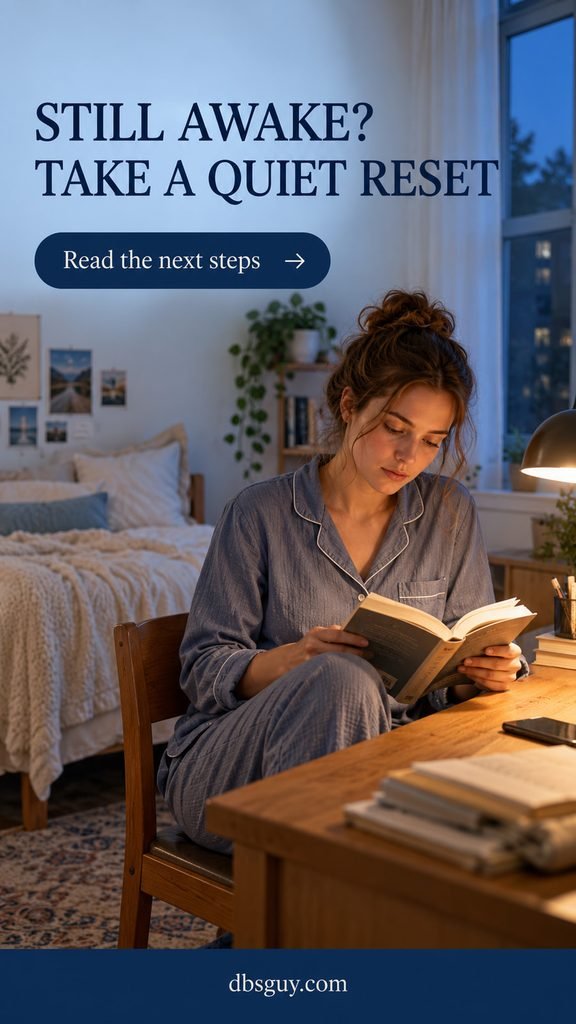
Take a quiet reset
If you are lying awake and growing frustrated, get out of bed when it is safe and practical. Sit in a chair with a dim task light and read something undemanding. Return when you feel sleepy. If you use a common area, choose one where you are allowed to be at that hour. You do not need to watch a timer.
Before future nights, finish the practical jobs—packing, washing up, setting the alarm—before getting into bed. Keep a reasonably consistent wake-up time and leave enough opportunity for sleep. CDC recommends at least seven hours for adults ages 18–60; that is a minimum guideline, not a promise that seven hours will meet your needs.
Caffeine can interfere with sleep for up to eight hours. For an 11 p.m. bedtime, stopping by 3 p.m. is one starting point to consider, with an earlier cutoff if you are sensitive. Avoid using alcohol as a sleep aid. If you nap after a rough night, keep it early and brief rather than taking a long evening nap.
For an optional gentle evening activity, also read: Dorm Yoga for Beginners: Quiet Flows for Tiny Spaces.
Bring in housing or student health when needed
If agreed changes are not happening, contact your RA with a short factual record: the dates, approximate times, type of noise, and what you have already asked for. Request help revising the roommate agreement or mediating the conversation. You do not need to buy more equipment before asking for help.
For ongoing disruptions, ask housing about the room-change process and any available options. Availability and procedures vary. If you feel unsafe addressing the issue yourself, go directly to residence staff.
If sleep problems continue even when the room is quiet, or daytime sleepiness is affecting classes or daily life, contact student health. Ask about evaluation and, when appropriate, cognitive behavioral therapy for insomnia (CBT-I). Do not start borrowing sleep medication or adding supplements just to tolerate a noisy room. If you are too sleepy to drive safely, arrange another way to get where you need to go.
Questions That Come Up in Shared Dorm Rooms
What if my roommate refuses to change anything?
Stop repeating the same late-night argument. Use your residence hall’s reporting or mediation process, and bring the specific agreement you tried to make. Earplugs can be part of your personal setup while staff help address the shared-space problem.
Can I sleep with noise-canceling headphones?
Do not assume ordinary headphones are comfortable for sleeping or will silence voices and sudden sounds. Follow the device’s instructions, consider whether it presses on your ears in your sleeping position, and account for reduced alarm awareness. Avoid compensating by playing louder audio.
Should I take melatonin to sleep through the noise?
Melatonin does not reduce the noise in your room. Discuss persistent sleep trouble and any supplement you are considering with student health rather than treating it as a substitute for workable sleeping conditions.
Tonight, choose the change that fits the disturbance you actually have. Tomorrow, make the shared plan specific enough that neither roommate has to guess what “quiet” means.
Also read: Morning Stretch Routine for Students: 10 Minutes Before Your First Class for a gentle start before leaving for class.