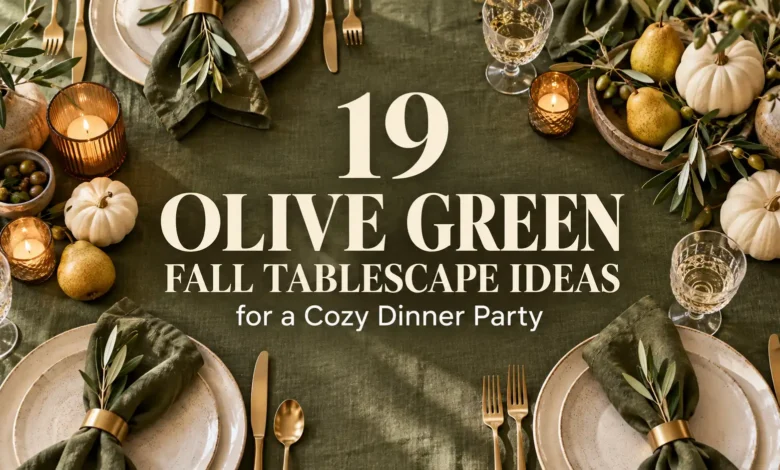
The most useful olive green fall tablescape ideas leave you somewhere to put dinner. Start with the way you plan to serve: a clear center for family-style dishes, a compact arrangement for plated courses, or a buffet that keeps food off the dining table. Then choose the olive layer that ties the setting together.
These 19 dinner-party looks range from copper and cinnamon to soft rose and chocolate brown. Each has a different focal point or hosting advantage, so you can choose one complete direction instead of buying a little of everything.
The visuals are AI-generated styling concepts, not photographs of completed or tested table arrangements.
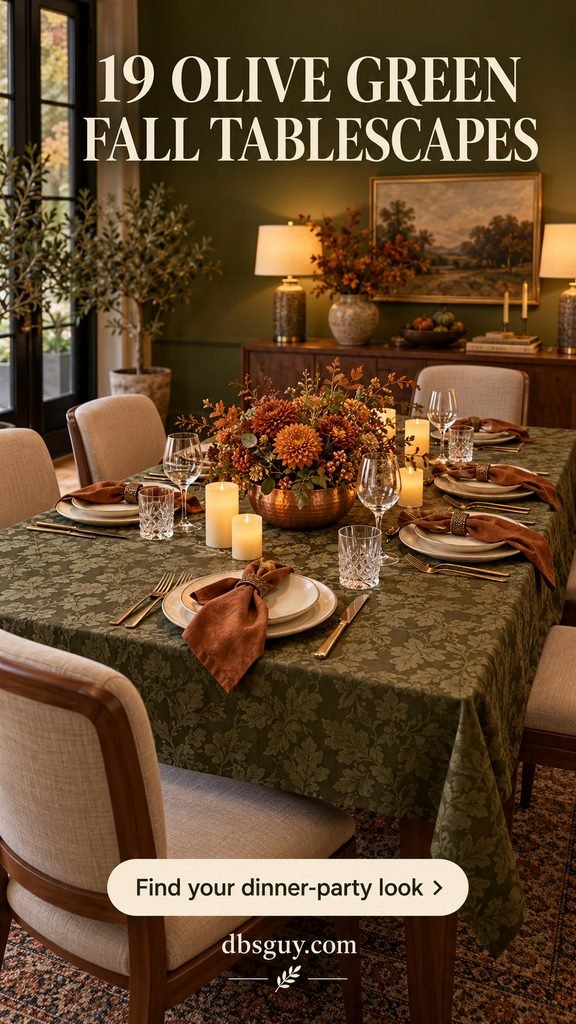
Choose a Look That Fits Your Dinner
- A dressed-up evening: try olive damask in idea 1, copper in idea 2, or sculptural LED candles in idea 13.
- A table without fresh flowers: choose grapes in idea 5, persimmons in idea 6, or leaf place cards in idea 9.
- A meal with lots of serving dishes: look at the end-positioned pumpkins in idea 7, family-style layout in idea 14, or buffet in idea 17.
- A smaller gathering: adapt the oval table in idea 15 or keep the dessert setting in idea 18 especially spare.
Before committing to a shade, put your olive fabric or dish beside the other pieces under your dining-room lights. Yellow-brown olive, gray-green sage, and deep forest green can look quite different together. An exact match is optional; a repeated shade at each seat usually gives the table enough continuity.
For simpler everyday variations, browse our 23 Olive Green Simple Fall Tablescape Ideas. The arrangements below put more attention on the flow of an evening meal.
1. Dress the Whole Table in Olive Damask
A tone-on-tone damask cloth brings pattern into an evening setting without introducing another color. Give it a light outline with ivory plates, then add cognac napkins and clear glasses. The brown fabric keeps the palette warm while the pale dishes remain easy to see.
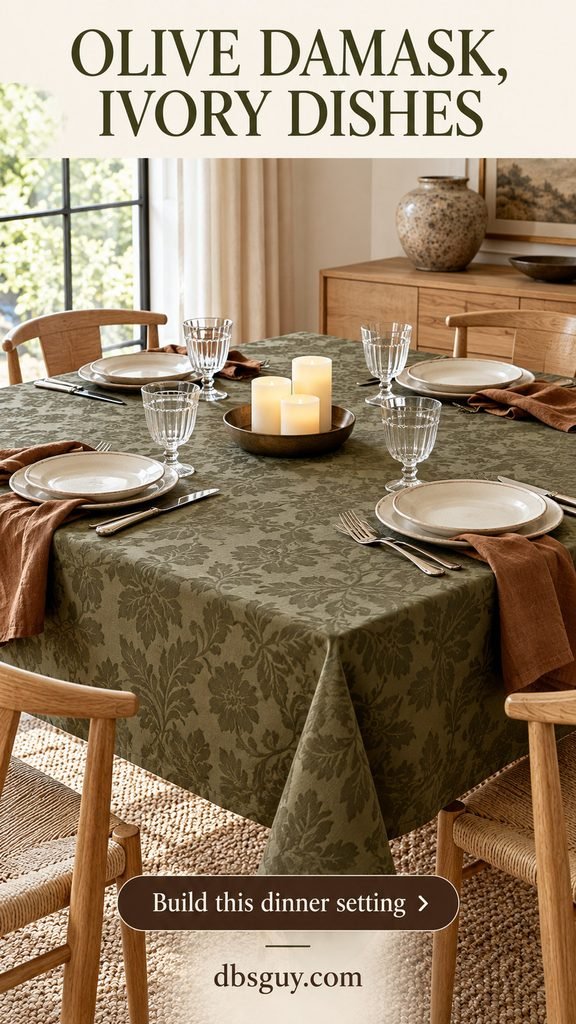
Try this for a plated dinner, when the center can hold a small bronze dish of short LED pillars. Spread the cloth before setting down anything heavy, and check that the drop does not bunch on guests’ laps. If your room already has dark furniture, choose lighter napkins or leave the extra plate layers out.
2. Warm Up Olive Linen with Copper
Use copper-finish vessels as the warm accent against a plain olive cloth. Short cream chrysanthemums and cinnamon napkins make the combination feel autumnal without putting orange pumpkins at every seat. Keep your usual silver flatware; the copper can belong just to the centerpiece.
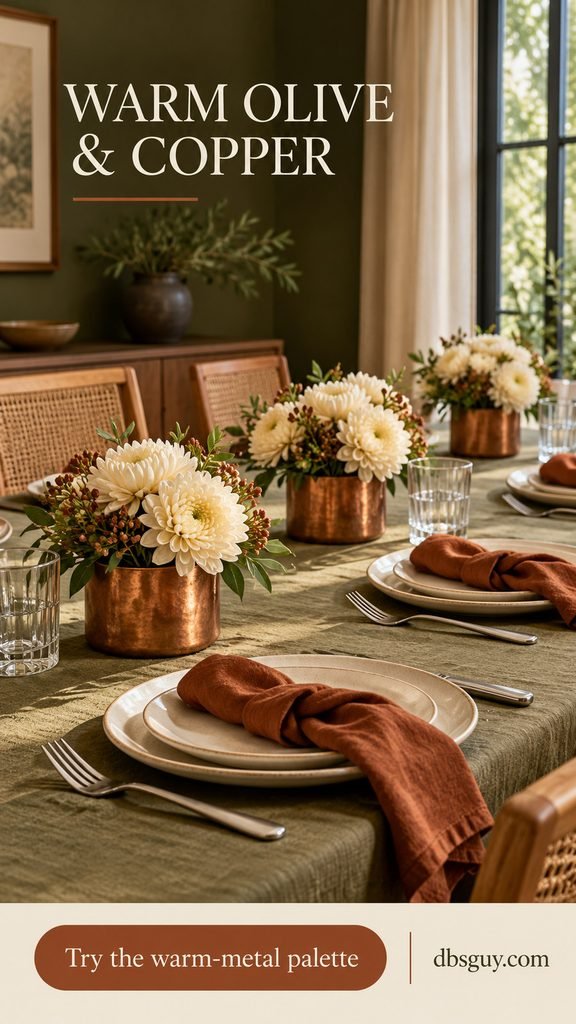
On a longer table, separate the little vessels instead of making one continuous arrangement. Reserve their gaps for bread or a water pitcher. Check that each container holds water without leaking; a watertight insert lets a decorative outer vessel do the visual work.
3. Tie Olive Velvet Bows over a Chocolate Print
A chocolate-and-cream botanical cloth gives this dinner table its pattern. A loose olive velvet bow around each plain beige napkin supplies the green. Keep the dishes simple so the small ribbon detail is still visible.
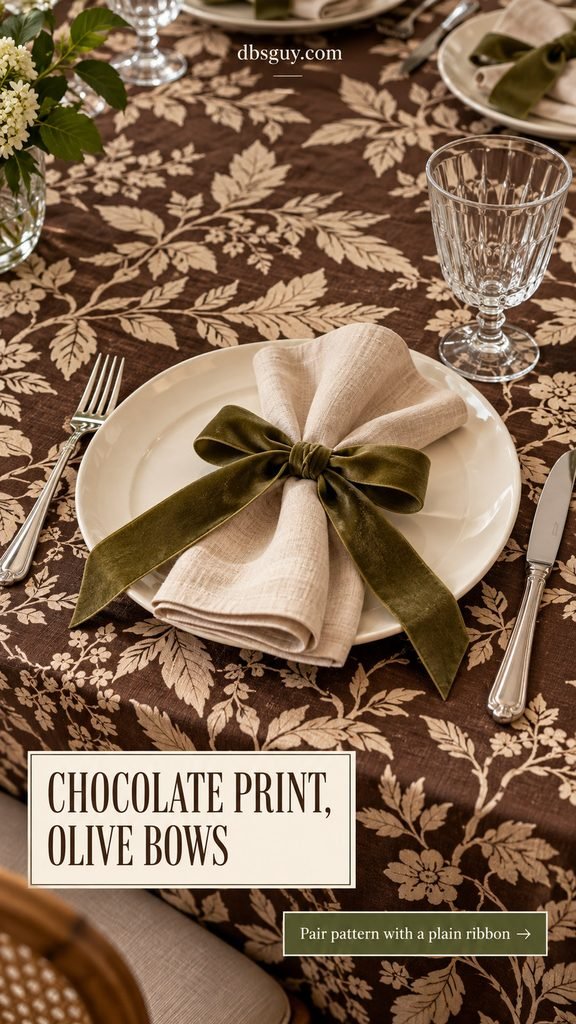
- Gather a plain beige napkin loosely at the middle.
- Wrap the olive ribbon around it and tie a simple bow, leaving enough slack to undo it.
- Test the bow on a plate before cutting the remaining ribbons. The tails should stay inside the setting.
The ribbon can be the only new olive item. Guests simply set it aside before unfolding their napkins.
4. Make Olive Ceramics the Main Color
If you own green dinner plates, give their glaze room to show. Sand-colored linen mats and taupe napkins frame them quietly on a pale wood table. A shallow bowl of whole artichokes adds a sculptural green centerpiece with a different texture.
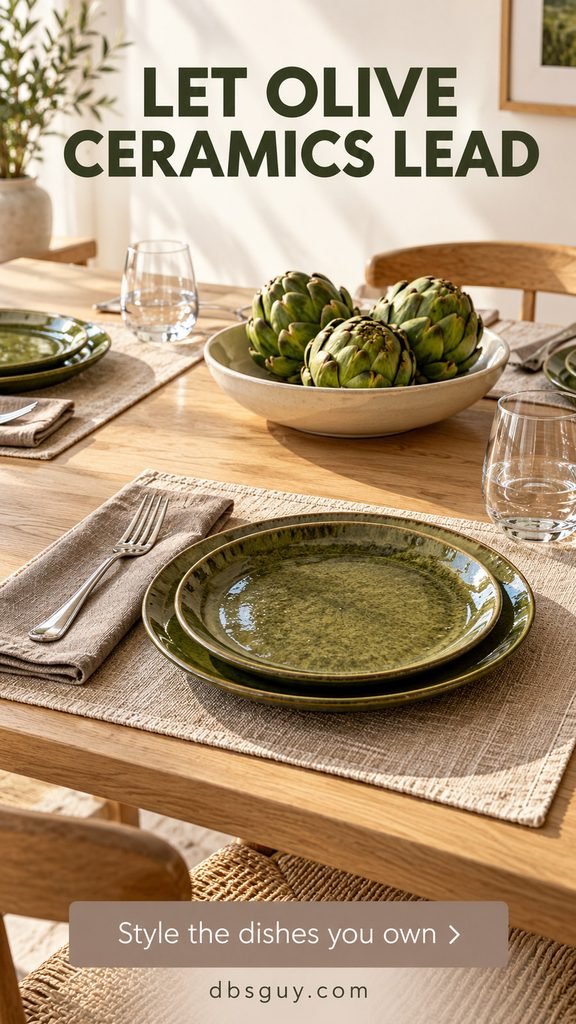
Use the artichokes as a contained display rather than scattering them between place settings. Keep them separate from the plates guests will eat from, and clear the bowl if it occupies the landing spot for dinner. Plain cream serving dishes will fit this scheme without needing a second matching green collection.
5. Fill a Low Compote with Purple Grapes
Dark grapes give an ivory-and-olive table a rich focal point without flowers. Choose a broad, low compote and let the clusters sit inside its outline. Olive jacquard napkins repeat the color at each seat while the light cloth keeps the fruit from disappearing into a dark background.
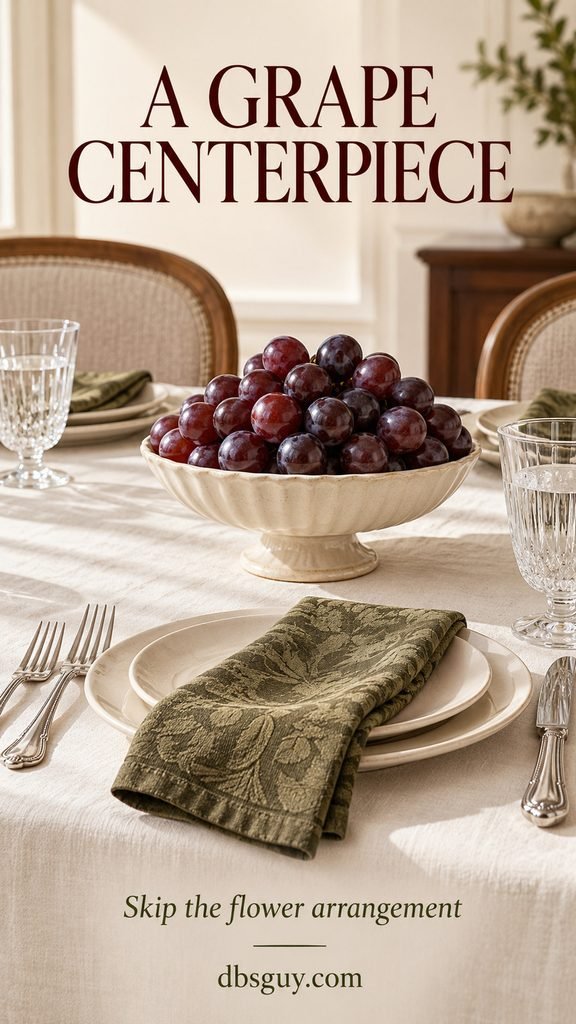
Use a clean, food-safe bowl if you plan to offer the grapes later. Wash the fruit and let it drain before arranging it, and keep it free of florist materials, paint, or decorative sprays. Bring out a separate serving utensil or divide it into bowls when dessert begins.
For a stronger wine-colored palette, see our 17 Burgundy & Plum Simple Fall Tablescape Ideas.
6. Give Persimmons a Charcoal Frame
Put whole orange persimmons in a shallow matte black bowl, then run a narrow olive textile beneath it on a walnut table. Cream plates provide contrast, and charcoal napkins repeat the bowl’s dark edge. The fruit supplies the brightest color in the room.
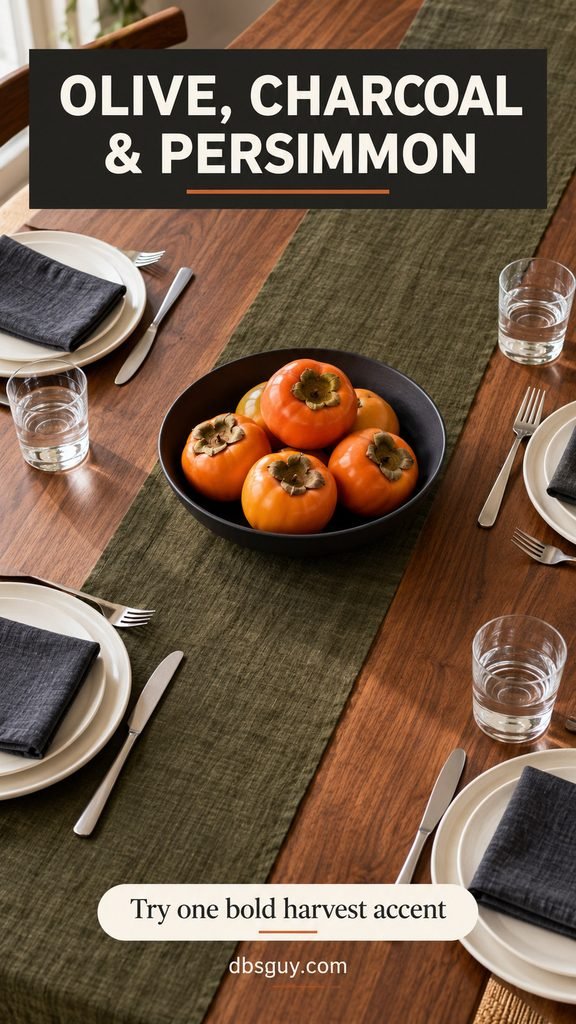
Keep the bowl low and skip a garland around it. This look works best when the walnut remains visible between the settings. If your tabletop is already very dark, switch to a cream bowl rather than adding more small bright decorations to compensate.
7. Move Pumpkin Clusters to the Table Ends
For a rectangular table with guests seated along the long sides, put a pair of small cream pumpkins at each unused short end. Olive mats and oatmeal napkins connect the places, while the middle remains available for platters.
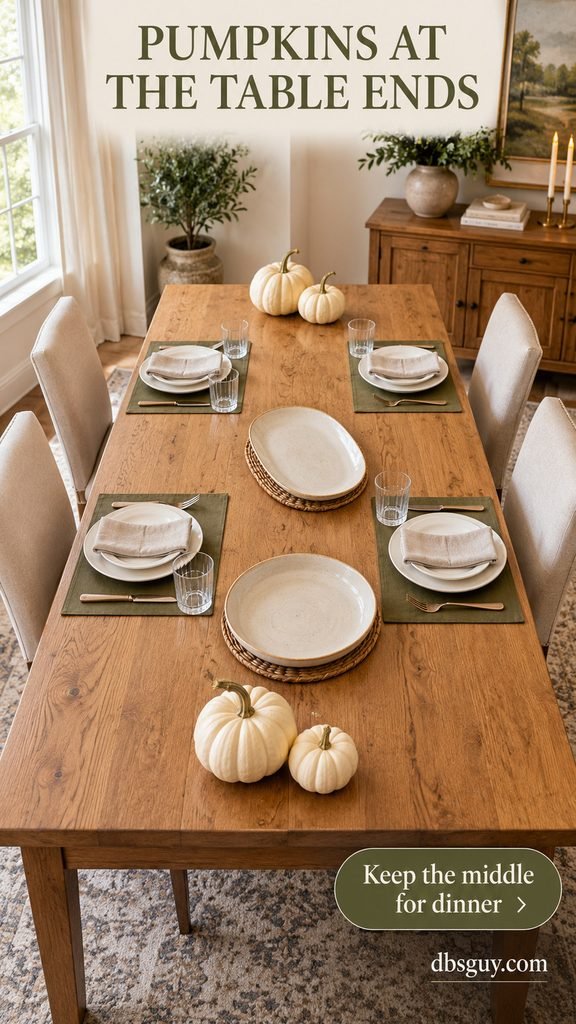
Try the arrangement with the actual serving dishes and their trivets before settling the pumpkins. The end clusters are optional if someone sits there; an occupied place always takes priority. This is one of the more adaptable Thanksgiving tablescape ideas when dinner involves several dishes passed around the table.
8. Keep Marigolds in One Low Bowl
A compact arrangement of orange and golden marigolds gives olive linen a clear fall accent. Use a broad, shallow vessel and trim the flowers for that container rather than starting with a tall bouquet. Cream plates and beige napkins let the flowers remain the focal point.
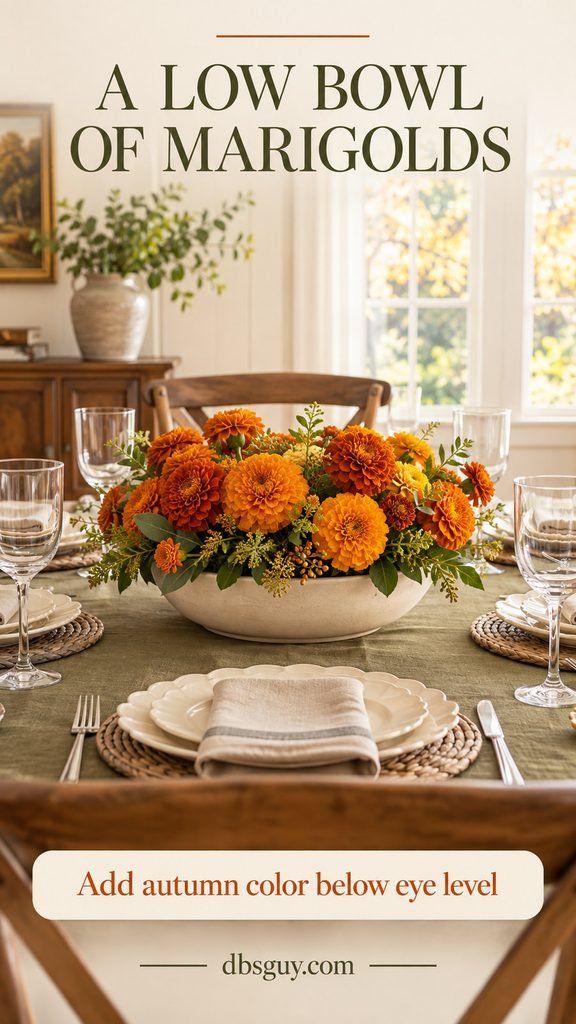
Check the arrangement while seated across from another person. If flower heads interrupt the conversation, shorten the stems or remove some blooms. A bowl with a wider base is also easier to place steadily than a narrow vase on gathered cloth. Keep stems and vase water separate from food service.
9. Give Each Guest a Pressed-Leaf Place Card
Make the seasonal detail personal: attach a flat, dry autumn leaf to the front of an ivory name card and stand it in a small slotted wood block. Position the card above the plate, away from the water glass. Olive napkins bring enough color to the rest of the setting.
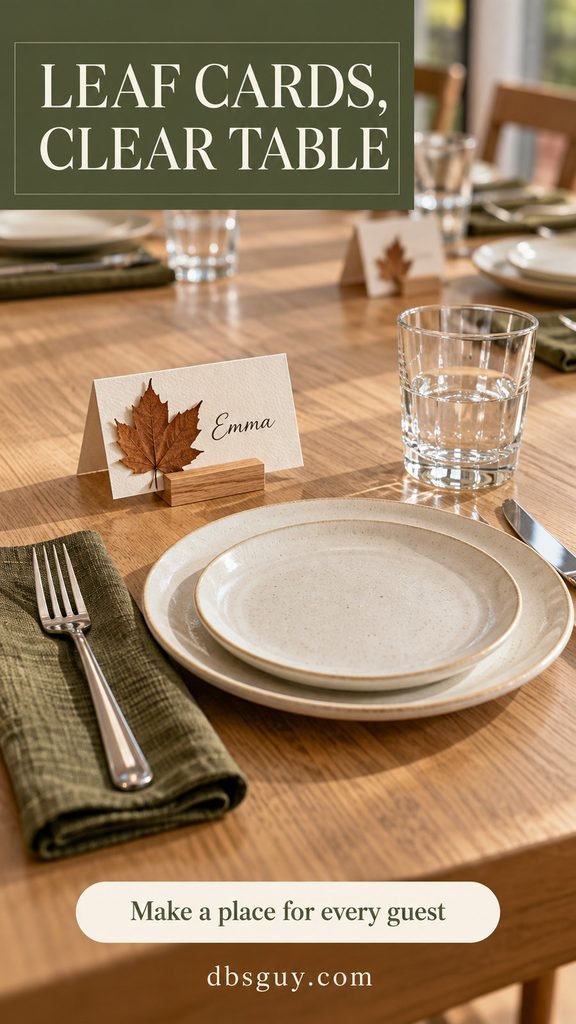
Write names before attaching the leaves, and let any adhesive dry fully away from the dining table. Keep the leaf on the card rather than on an eating surface. For a mixed group of friends, the cards also let you arrange seats before anyone arrives instead of sorting out places over the first course.
10. Let Olive Block Print Replace the Centerpiece
An olive botanical block-print cloth can provide enough detail for the entire table. Set it with oatmeal dishes, solid olive napkins, and clear tumblers. One small cream pumpkin near the edge supplies a seasonal reference without hiding the print.
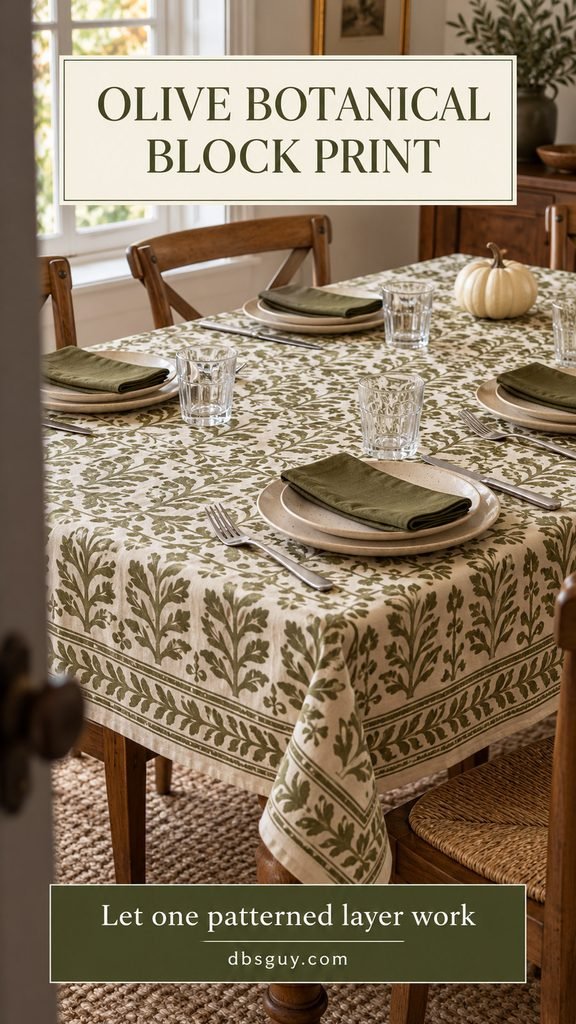
This suits a smaller room where several decorative layers would feel busy. Lay out the plates before choosing the cloth’s final position so the pattern looks balanced in the exposed areas. Avoid a second runner that covers the design you chose. If you already own a patterned cloth, look for an olive shade in it and repeat that shade in the napkins.
11. Pair Olive Glassware with Dusty Rose
Olive water goblets can carry the green when the tablecloth and dishes are ivory. Dusty rose napkins soften the combination, while a few short copper-brown leaf stems supply the autumn note. Keep the stems in a compact cream vase so the glassware has room around it.
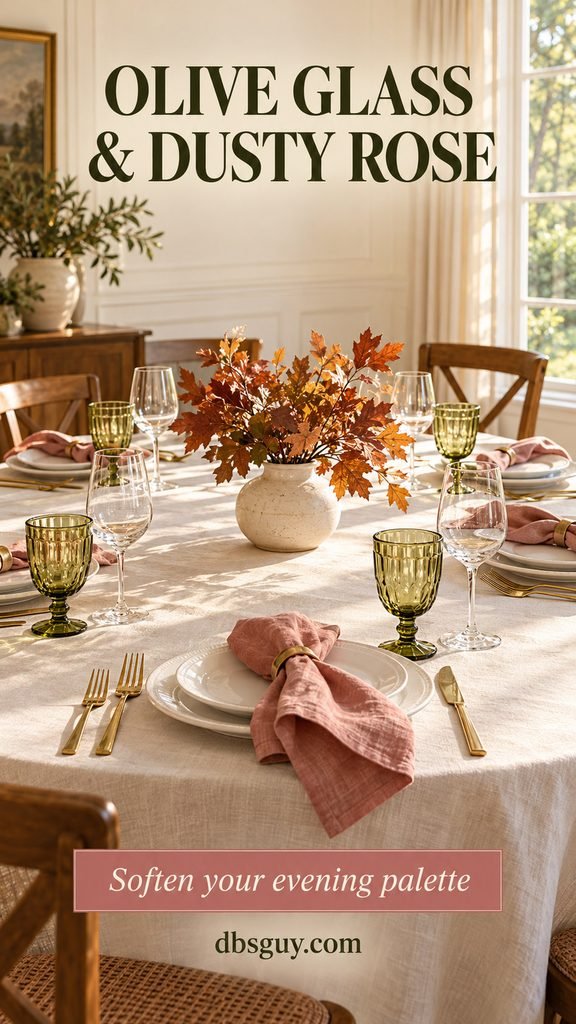
Set a green water glass beside a clear wine glass before laying out the whole table. Their bases need separate, comfortable landing spots. If your goblets are large, use a smaller centerpiece or omit the wine glass when the menu does not call for it. Test the glass color with your evening lighting; a deep tint may read much darker after sunset.
12. Mix Scalloped Olive Mats with Brown Checks
Scalloped placemats make the outline of each setting the decorative feature. Pair olive mats with small chocolate-and-cream gingham napkins over an ivory cloth. Plain cream plates allow both the curved edge and the check to show.
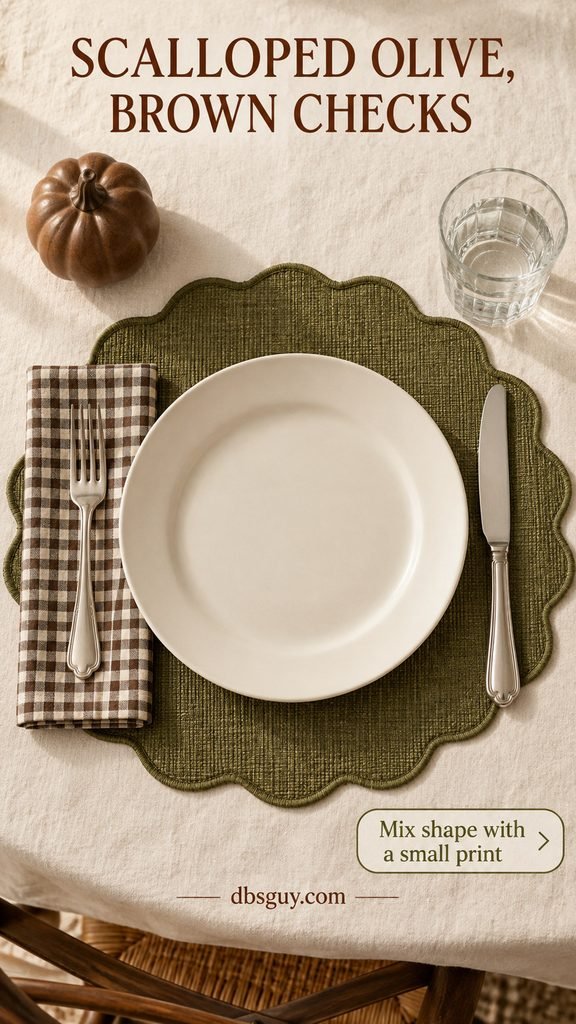
Before buying or borrowing a full set, compare one mat with your dinner plate. If the plate hides nearly all the scallops, the shape will add little to the finished table. A small brown ceramic gourd is enough in the center; you do not need another patterned layer. For more wood-and-neutral combinations, browse our 15 Modern Farmhouse Fall Tablescape Ideas.
13. Group Sculptural LED Pillars on Slate
Three short ivory LED pillars on a charcoal slate tray give an olive runner a defined lighting feature. Vary their heights enough to separate their outlines, but keep the group compact. Cream plates, taupe napkins, and a small copper-brown ceramic pumpkin finish a restrained evening setting.
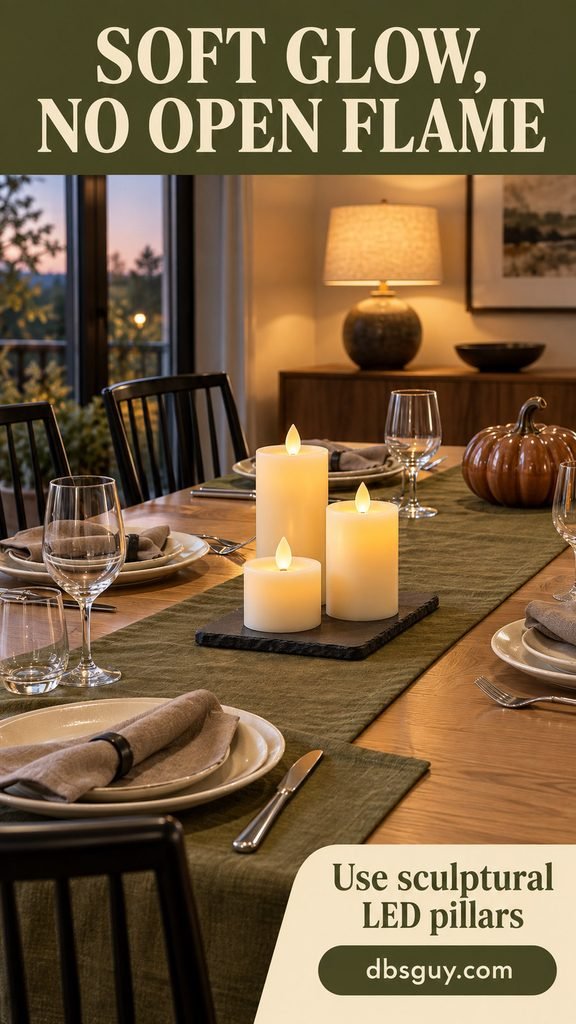
Turn the LEDs on before guests arrive and check that the room still has enough light for eating. All candlelit concepts in this guide use battery-operated lights. If you substitute real candles, follow the National Candle Association’s safety guidance: use stable, heat-resistant supports, keep flames at least 12 inches from anything flammable, and never leave burning candles unattended. A tray does not make nearby cloth or decorations safe around a flame.
14. Build the Table around Family-Style Serving
For a dinner that arrives in shared bowls and platters, decorate the seats rather than the center. Olive linen mats, ivory dishes, and pale napkins create a finished setting on bare wood. The roasted vegetables and salad can supply the seasonal color once dinner is served.
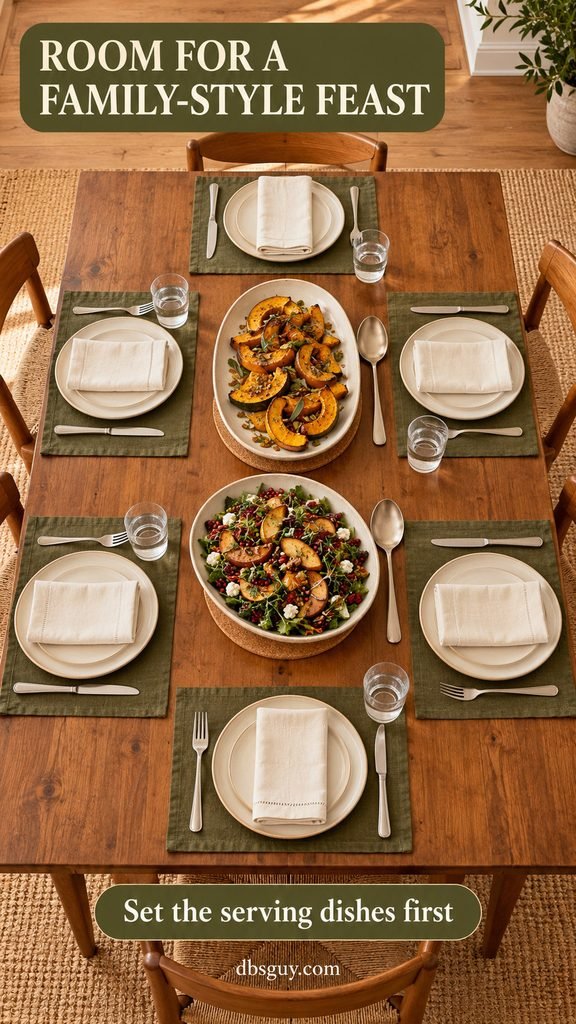
Set out the empty serving pieces before the place settings, and check three things:
- Each hot dish has an appropriate trivet beneath it.
- Someone can grasp the handles without nudging a glass.
- Every shared dish has its serving utensil within reach.
If a platter only fits by crowding a guest, move it to a sideboard. The food will keep changing the center of the table throughout the meal.
15. Use One Rounded End of a Small Oval Table
With four guests seated along the sides of an oval table, one unoccupied rounded end can hold a small tray of two mini pumpkins and a short LED light. Olive napkins repeat the palette at each cream plate. The oval tabletop stays visible without a runner dividing it.
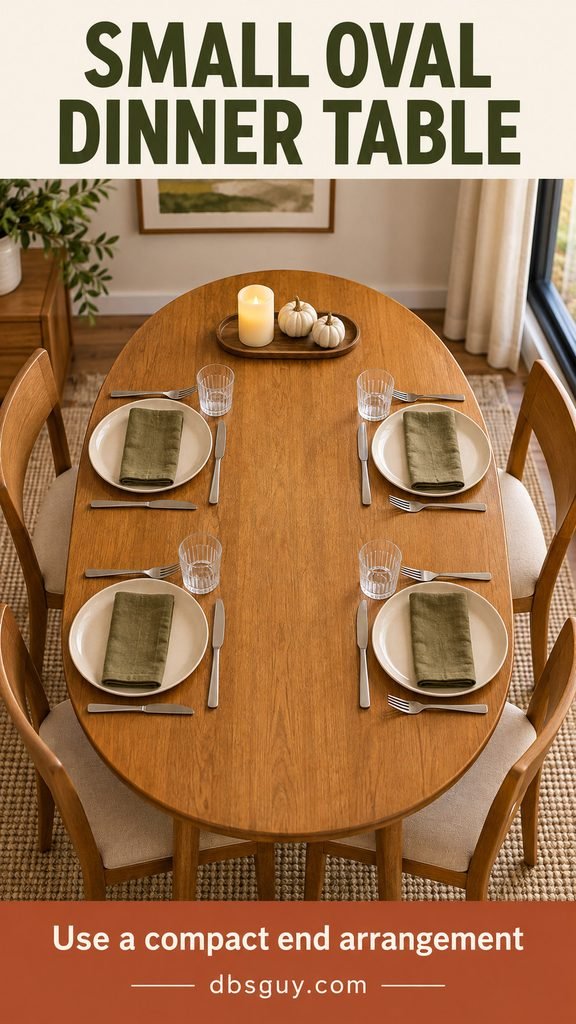
Pull out every chair and sit down before deciding that an end is free. The tray should not claim anyone’s elbow space or obstruct a glass. Keep the arrangement small enough to lift away in one motion if the main course needs the space. This layout depends on the seating arrangement, so move the tray elsewhere when someone sits at that end.
16. Set an Olive Supper on a Sheltered Porch
A plain olive cloth, cream dishes, and beige napkins give a covered porch table a calm base. Glass hurricane lanterns with LED pillars bring the evening glow, and rust plaid throws folded over chair backs add the warm accent.
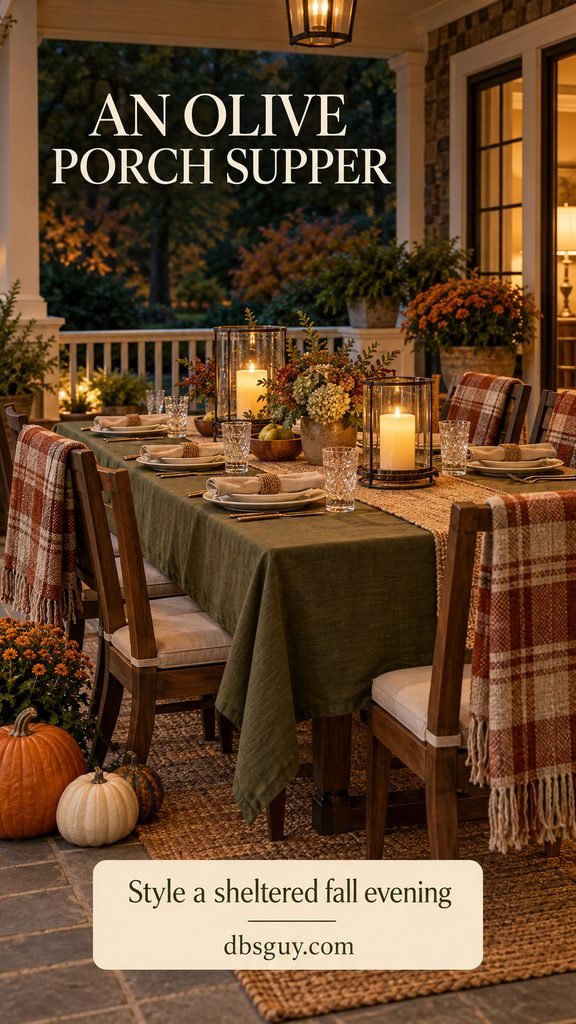
Secure the tablecloth with clips suited to the table, and check the lanterns’ stability before setting out glasses. Use lights suitable for the conditions and follow their care instructions; a glass enclosure does not automatically make an indoor LED candle weatherproof. Keep floor decorations out of the walking route, and have an indoor table available if the evening becomes uncomfortable.
17. Coordinate a Buffet and a Clear Dining Table
For a larger dinner party, carry the olive palette from the seats to a sideboard. Put olive napkin-and-cutlery bundles in a low basket near the food, and repeat olive napkins on the dining table. White dishes and a small cream pumpkin keep the two areas connected.
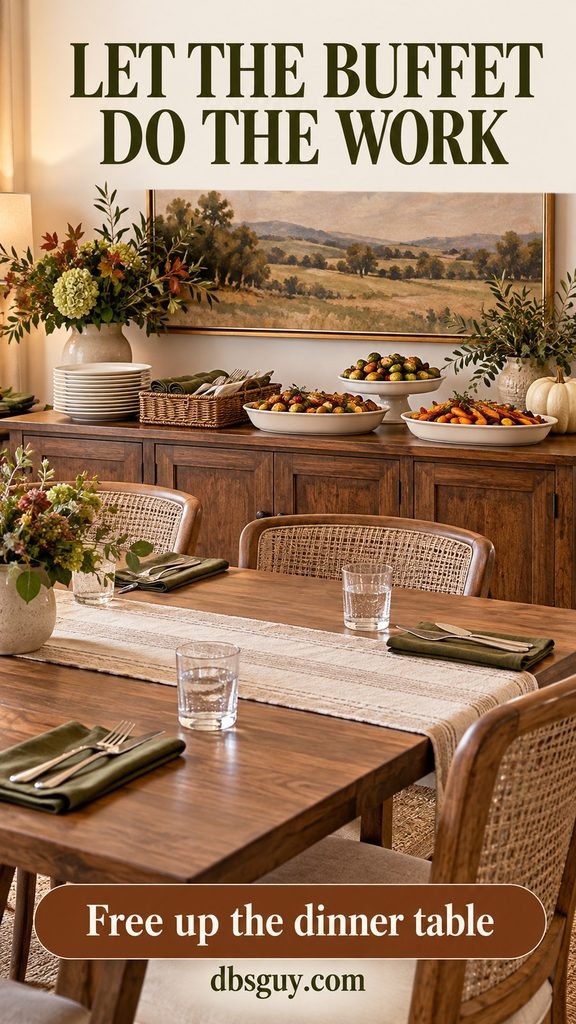
Choose one place for the main dinner plates before guests begin serving; you do not need a plate at every seat and another stack for the same course. Keep serving utensils beside their dishes and leave the furniture’s edge clear enough to pick things up. Use the sideboard for serving, with hot dishes on appropriate protective supports, rather than letting it become another crowded decorative display.
18. Reset the Table for an Olive-Green Dessert Course
A cozy dinner party can change pace after the main course. Clear the large plates and shared dishes, then bring out small olive dessert plates, cream napkins, and coffee cups. A pear tart on a low stand at the table’s end becomes the new focal point.
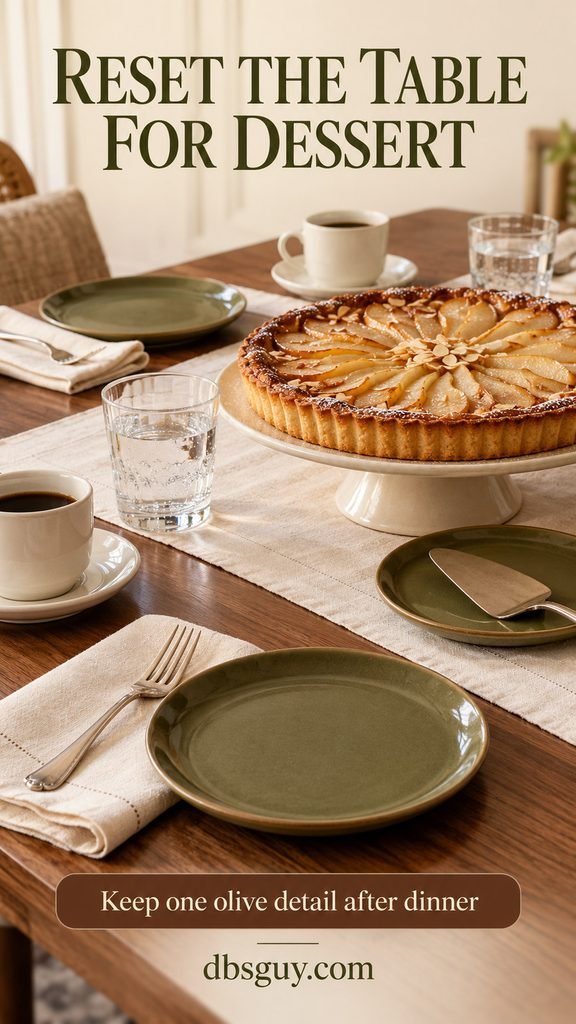
Keep the small plates and clean forks together on a tray before dinner. When the main course is finished:
- Remove dinner plates, shared dishes, and their serving utensils.
- Leave the water glasses, then set out the olive plates and dessert forks.
- Bring over dessert and coffee, giving the tart server its own small resting plate.
A few green side plates are enough for this change of pace; you can use a different color for the main course.
19. Combine Olive Leaves, Burgundy, and Ochre for Thanksgiving
Leaf-shaped olive fabric mats bring the harvest motif to each place. Pair them with ivory plates and burgundy napkins, then use one low bowl of ochre pumpkins and a whole pomegranate as the centerpiece. The three colors are concentrated in clear areas instead of scattered across every object.
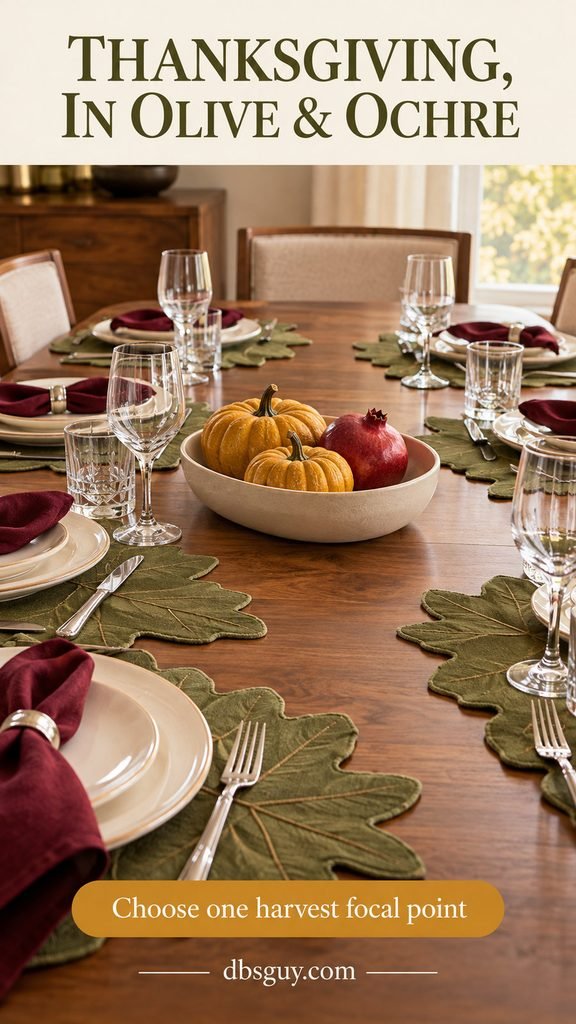
Check that the leaf shapes fit your actual table without overlapping neighboring settings. Keep the harvest bowl small enough to move to a sideboard when the meal arrives. For a fuller Thanksgiving spread, borrow the serving-first approach in idea 14 and let these mats and napkins carry the decoration on their own.
Do a Seated Check before Guests Arrive
Finish one place setting, sit down, and reach for the glass. Look across the table and try lifting the serving dish nearest you. Those three movements reveal a crowded arrangement faster than another photograph from above.
Set only the utensils the meal needs. For a straightforward dinner, place the fork on the left, the knife on the right with its blade toward the plate, and the water glass above the knife. Bring dessert utensils out later if keeping them on the table makes the first course crowded.
For six guests, begin with six usable place settings and the serving pieces the menu requires. Add the chosen decoration after those essentials fit. A linen runner, folded napkin, or decorative tray does not replace a trivet intended to protect the surface from a hot dish.
Frequently Asked Questions
What colors go with olive green for a fall dinner party?
Try ivory and cognac for a quiet evening, cinnamon and copper for more warmth, or burgundy and ochre for a Thanksgiving setting. Dusty rose offers a softer option. Choose one main companion color and let your everyday dishes provide the neutral background.
How can I make an olive table feel cozy without making it dark?
Keep a light surface around the food: ivory plates, an oatmeal cloth, or exposed pale wood. Add soft room lighting alongside any LED candles. If the table looks heavy once the lamps are on, remove a dark layer before adding more decorations.
Can these ideas work without buying an olive tablecloth?
Yes. Use olive ribbon, napkins, mats, glassware, or a few side plates. Pick the item you can repeat most easily and keep the rest of the setting familiar. Ideas 3, 9, 11, and 18 show smaller ways to introduce the color.
What is the simplest centerpiece for a dinner with shared dishes?
Choose one low bowl or compact tray that can move elsewhere before serving. If your table is narrow, skip the center arrangement and put the seasonal detail at each place. Leaf cards and patterned mats can make the setting feel complete while keeping the center useful.
Do I need new fall decorations for 2026?
No. Build around what fits your room and meal rather than replacing pieces for a year label. A different napkin color, a removable ribbon, or a bowl you already own can change the direction. The practical test is whether the arrangement leaves guests comfortable and dinner easy to serve.