
If putting up a Christmas tree means moving the coffee table into the bedroom, your apartment needs a different decorating plan. You can still have greenery, a cozy evening glow, and those little details that make coming home in December feel special.
The most useful places to decorate are often already there: the wall beside the sofa, a frame you look at every day, the front of a closet door, or the pillows on your bed. Give those places a seasonal change and the room can keep its familiar layout.
These 17 small apartment Christmas decor ideas use walls, existing furniture, and everyday textiles to bring in the holiday feeling. Some take almost no surface space; others occupy a small spot you can clear in seconds. Choose one main feature and a few details that suit the way you actually use your home.
Make a Little Room Before You Decorate
Walk through your apartment with the furniture in its normal position. Open the closet, pull out a dining chair, and move between the bed and the bathroom. Those routes are the space you want to protect.
Next, choose your main decorating spot. An empty wall suits a flat tree. An existing sideboard can hold a tabletop tree. A room with very few free surfaces may be better served by window decorations and textile changes.
Measure the available width and depth before buying anything. For a tabletop display, include the decoration’s widest branches, its pot or base, and enough room to reach the objects beside it. For a wall display, check the nearby door swing and the clearance from lamps and heaters. Product height alone will not tell you whether a piece fits.
Keep the palette connected to your furnishings. Forest green and cream work well with warm wood; navy, burgundy, and brass can feel cozy against a neutral sofa. One repeated ribbon color is an easy way to connect a wall decoration with something smaller across the room.
Renters should also check the permitted hanging methods before starting. Removable hooks need the right surface and weight rating, even for a temporary display. 3M’s Command guidance recommends matching the product to the surface and load, following the preparation steps, and waiting the specified time before adding weight. Extra adhesive strips do not automatically increase a product’s capacity.
1. Make a Garland Christmas Tree on a Clear Wall

A flat tree gives you the familiar Christmas silhouette while leaving the floor beneath it open. It is particularly useful in a studio where the living area also has to serve as a dining room or workspace.
Choose a clear wall away from the bed, heaters, and busy doorways. Arrange lightweight faux garland in a widening zigzag: begin with a narrow turn at the top, then make each lower section a little wider until the overall shape reads as a tree. Use supports approved for the wall surface and the total decoration weight; each attachment should carry only the load its instructions allow.
Keep the ornaments small and widely spaced. A few bows tied onto the greenery can provide most of the color, with lightweight shatterproof ornaments adding the detail. An indoor light strand can follow the greenery if its instructions permit that use. Stand back before filling every gap—the tree shape should still be easy to see.
The small-space advantage: The area beneath the tree can stay completely clear. Put gifts in their usual storage spot until you need them, rather than recreating a floor-tree footprint with a pile of packages.
2. Put a Tabletop Tree on Furniture You Already Own

If you love the look of real branches and little ornaments, a tabletop tree can be a lovely compromise. Place it at one end of a dresser, sideboard, or substantial shelf that already belongs in the room.
An approximately 18-inch tree is a starting size to consider, but check its full width against your available surface. The pot or stand should sit entirely on the furniture, with room to reach the drawer or cabinet below. Choose a stable base and move it away from a frequently brushed corner.
A few tiny ribbon bows and matte ornaments are enough to give a small tree its own character. Dusty blue and ivory look soft against light wood; burgundy and antique gold give it a more traditional mood.
Before you buy: Check the packed dimensions too. A tree that fits beautifully in December still needs somewhere sensible to live in January. A compact faux version avoids the water container and care needs of a fresh one.
3. Give an Interior Closet Door a Mini Wreath

An interior closet door offers a tall, visible decorating surface that does not compete with the entry table. A small wreath can make that ordinary part of the apartment feel pleasantly seasonal.
Use a flat, lightweight wreath on a door that opens freely. Keep the greenery well inside the edges of the door, with short ribbon tails that will not reach the handle or hinge area. The attachment needs to suit the finish and the wreath’s weight.
Open and close the door fully after hanging it. A wreath that looks perfect with the door shut may rub against an adjacent wall or interfere with the closet’s usual operation.
Choose the right door: An ordinary interior closet door is the starting point for this idea. Leave fire-rated doors, shared hallway doors, and any door subject to building restrictions alone unless the building explicitly permits the decoration and attachment. The holiday detail should leave access effortless.
4. Swap an Existing Print for Christmas Artwork

Changing the picture inside a frame is one of the simplest ways to make a small room feel different. The display occupies exactly the wall space you were already using.
Try a snowy landscape, a simple evergreen illustration, or a favorite holiday photograph. Choose artwork that echoes a color elsewhere in the apartment rather than adding an entirely new palette. A small red cabin in a winter print can connect beautifully with a red dish towel or ribbon.
Use the frame’s existing mount and check that the frame is secure before rehanging it. Keep the year-round print protected behind the seasonal one only if the frame has room for it without forcing the backing; otherwise store it flat in a suitable folder.
An easy budget option: Make your own simple paper artwork. A cut-paper evergreen on an ivory background can look considered in a frame you already love, without needing a new collection of decorative objects.
5. Add Flat Paper Snowflakes to One Window

A few paper snowflakes bring the winter feeling up to eye level and leave the sill open. Their flat shape is helpful when your window ledge normally holds a plant, or when it is too narrow to use at all.
Choose a fixed pane where the decorations will not interfere with handles, ventilation, blinds, or an emergency escape route. Begin with three snowflakes in slightly different sizes and leave plenty of glass visible between them. White paper looks crisp against an evening sky and does not need another color to make the arrangement feel festive.
Use an attachment intended for the particular glass surface and follow its removal guidance. Look for paper decorations labeled flame-resistant, and keep them away from open flames, heat, and electrical connections, as the CPSC’s decorating guidance advises. The decoration can stay unlit; the room’s ordinary light already makes the shapes readable after dark.
Lightweight, storable paper decor also has a place in current holiday design. IKEA’s 2026 winter collection specifically highlights paper decorations designed to fold away between celebrations. For an apartment, that makes the storage question part of the appeal.
6. Hang Lightweight Ornaments From an Existing Curtain Rod
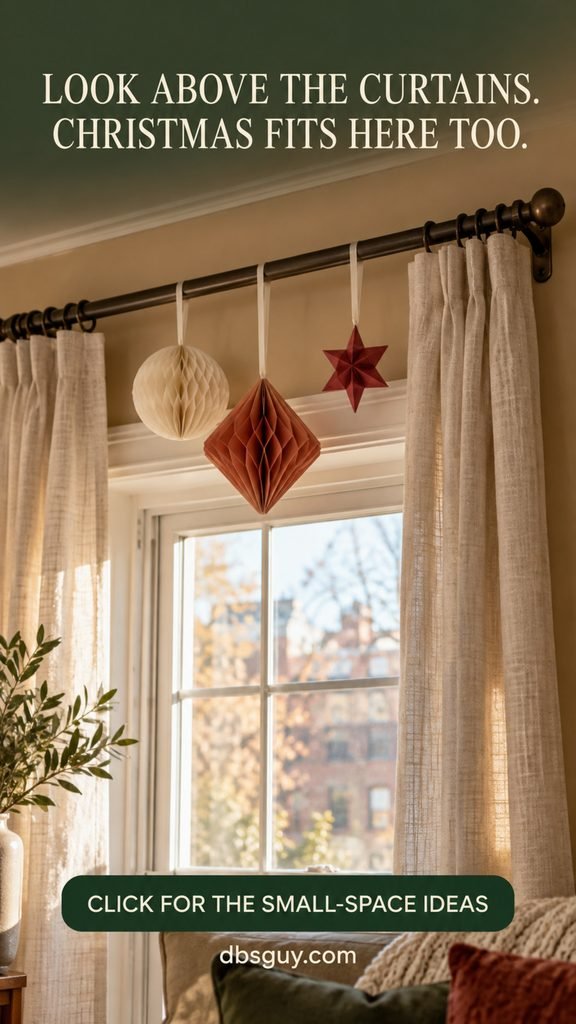
The space above the curtains can carry a small holiday detail while the rest of the room stays familiar. A few paper ornaments hanging on short ribbons give the window a different outline.
Use this idea only when the existing rod and its mounts are securely installed and their approved load permits the added weight. Choose very light paper ornaments, and keep them in a clear section where they will not obstruct the curtain’s movement. A heavy garland or glass ornament collection needs a different support plan.
Hang the ornaments at slightly different heights, with the lowest one still clear of anything it could catch. Cream, dusty red, and a warm terracotta shade look inviting with neutral linen curtains. Keep decorative lights separate from the paper and fabric.
Make the decision simple: If you cannot confirm the rod’s capacity, choose the flat window decoration instead. You can get the seasonal view without changing the load on the window treatment.
7. Give a Bookcase a Shallow Garland Crown

A bookcase already has height and visual presence. A modest line of greenery across its top can give a small living room a festive frame while the shelves continue to hold books and everyday storage.
Start with a bookcase that is stable and anchored as its manufacturer requires. Use lightweight faux garland along the top edge, keeping it shallow enough that the branches stay out of the shelf openings. Secure it appropriately rather than relying on a loose strand balanced at the edge.
A bow at each end can connect the garland to a pillow or another decoration in the room. Step back to judge the shape from your normal seat. You want a readable line of greenery, with the bookcase underneath still clearly doing its everyday job.
A useful stopping point: Leave the shelves themselves as they are. Decorating the top, every shelf, and the floor beside it can turn one compact idea into a much larger project.
8. Hang Stockings on an Existing Peg Rail

You can have stockings even when the apartment has no fireplace. A peg rail in the hallway or bedroom gives them an existing place to hang, and their soft shape can sit close to the wall.
Choose small, empty stockings and use only free pegs. Keep the hooks needed for coats, bags, and keys available. Cream cable knit and soft red fabric look lovely together, especially when another small red accent appears nearby.
Check the rail’s mounting and rated capacity before adding anything. The stockings should hang well above the floor, away from door movement and any place where people brush past them. Keep bulky gifts in another spot until it is time to fill the stockings.
If the rail is already busy: Decorate just one free peg. One stocking with a generous fold at the cuff can feel finished without turning a practical hallway into a crowded display.
9. Add One Bow to a Mirror Corner

A full wreath is not always the right scale for a small mirror. A single velvet bow at an outside corner can introduce Christmas color while leaving most of the reflection clear.
Choose a ribbon shade that suits the room: burgundy for a traditional look, forest green for something quieter, or dusty rose if your furnishings are soft and neutral. Tie the bow first, adjust its loops, and keep the tails short enough to sit within the mirror’s outer outline.
Use a suitable attachment that does not damage the mirror or interfere with its secure mounting. A tiny faux evergreen tip can accompany the bow, but keep the whole accent light. Do not use a loose or leaning mirror as a hanging support.
Why this works in an apartment: The seasonal change stays on the wall. Your key dish, lamp, and landing spot for the day’s mail can remain where they usually are.
10. Build a Narrow Christmas-Card Ribbon Display

The thin strip of wall beside a cabinet can become a surprisingly personal display. One vertical ribbon gives incoming Christmas cards a home without spreading them across the dining table.
Choose a ribbon wide enough to hold small clips and secure it with an attachment suitable for the surface and total display weight. Add a few cards, leaving space between them so their illustrations are easy to see. Shorten the ribbon if the bottom reaches a switch, outlet, or busy corner.
Burgundy cotton ribbon has a traditional feel; cream ribbon makes colorful cards stand out. Begin with two or three favorites and add new arrivals as the month goes on. Leave the ribbon visible between them so the arrangement keeps its simple shape.
For a very narrow gap: Display one column of smaller cards. The point is to enjoy the messages and pictures, not to fit every envelope onto the wall.
11. Trade Your Everyday Dish Towel for a Festive One

A small kitchen may not have room for a cocoa station or a countertop tree. A seasonal dish towel adds Christmas color to something you already use, making it one of the easiest low-footprint changes.
Remove the everyday towel and put a clean festive one in its usual suitable spot. Red-and-cream stripes, a subtle evergreen border, or a small tartan pattern can do the job without a large printed slogan. Choose a fabric that works for your actual kitchen routine.
Keep towels away from heat, cooking flames, and appliance vents. A suitable handle near the sink can be a better location than a place close to the cooktop. Follow the appliance guidance for anything hanging from or near an appliance.
Keep the counter useful: Let the textile provide the holiday detail. The worktop can stay ready for cutting vegetables, making breakfast, or setting down groceries.
12. Use a Few Holiday Magnets on the Fridge

The fridge door is another surface you already have. A small cluster of holiday magnets or illustrated cards can make the kitchen feel included while preserving its preparation space.
First, check that your refrigerator surface is magnetic and that the magnets are suitable for its finish. Use smooth, clean-backed pieces and avoid sliding them across the surface. Keep the display away from handles, hinges, vents, and anything you need to operate.
Choose a small group that shares a color or drawing style. An evergreen illustration, a cardinal, and a simple star can look charming together. Remove old notes from that little display area so the holiday pieces have a clear boundary.
If the fridge is unsuitable: Try the same idea on an existing magnetic noticeboard. The aim is to refresh an available surface, so there is no need to add a new board just for December.
13. Keep the Dining Centerpiece Inside a Small Bowl

On a compact dining table, the size of the centerpiece matters as much as its style. A shallow bowl gives a few ornaments a defined footprint and makes the whole display easy to move.
Set out your usual plates and glasses before choosing the bowl. Its base should fit comfortably in the space that remains, without forcing place settings toward the edge. Put larger shatterproof ornaments in first, then add a few smaller pieces or clean decorative pinecones within the rim.
Ivory and burgundy ornaments look warm in a cream ceramic bowl. A wood bowl pairs beautifully with champagne or deep-green pieces. Keep decorative materials separate from food, and choose a stable bowl that is easy to lift.
At dinner: Move it to a safe existing surface if you need room for serving dishes. The empty center of the table is useful space, and the centerpiece can return when the meal is over.
14. Replace Your Usual Vase Stems With One Evergreen Branch

A vase you already own can become a Christmas detail without adding another object to the room. Change the stems, and the display keeps the same base and the same place on the furniture.
Choose a restrained faux evergreen branch that suits the vase’s height and opening. Turn the branch until its shape reads clearly from the doorway, then trim or bend it as the product permits. Keep it narrow enough that it does not reach into the walking route or compete with a nearby lamp.
One branch can be enough. In a small apartment, the curve of the greenery and the texture of the vase often have more presence than a crowded arrangement of unrelated pieces.
Keep the surface balanced: Return the usual key dish or books to their places before finishing. If the branch gets in the way, shorten the arrangement or choose a smaller stem; the vase should remain easy to live around.
15. Change the Sofa With Covers for Your Existing Pillows

Pillow covers let the sofa join the season while keeping the seating arrangement familiar. Use the inserts you already find comfortable, and change only their covers.
A tartan cover beside a solid velvet one gives you pattern and a quieter companion. Choose colors already present in the room: navy and red against warm ivory, or forest green with a soft cream pattern. The pair can connect to ribbon elsewhere without matching every decoration exactly.
Check the cover dimensions against the inserts before ordering. A cover that is too loose or too tight can change how a pillow sits and feels. Put the pillows back in their normal positions and sit on the sofa before adding anything else.
The January benefit: Empty covers fold flat. Store the off-season covers together in a clean, dry place so you can make the same swap next year without finding space for another set of bulky pillows.
16. Make the Bed Festive With a Foldable Throw

In a studio, the bed is often part of the room’s main view. A seasonal throw can add a generous patch of holiday color without changing the sleeping area’s layout.
Fold it across the foot of the bed, leaving the pillows and most of the bedding as they are. Plaid feels familiar and cozy, but a plain deep-green throw can look just as seasonal against cream sheets. Choose a fabric you enjoy using and can care for according to its label.
Keep the throw clear of the floor and away from heaters. Electrical decorations should stay off the bedding; an ordinary bedside lamp can provide the warm evening atmosphere.
Choose its second use: A throw that also works on the sofa can move with your evening routine. That makes it a useful textile throughout winter, rather than an ornament you need to pack away immediately after Christmas.
17. Turn One Existing Shelf Into a Tiny Glowing Village

A small shelf village can give you the feeling of a Christmas mantel in a room that has no fireplace. Two miniature houses and one little tree are enough to establish the scene.
Use an existing shelf that is securely mounted and rated for the combined weight of everything on it. Leave each piece fully inside the shelf edge, and keep frequently used books or objects easy to reach. Move a year-round decorative object into storage if that is what gives the village its space.
Choose houses designed to use battery-powered LEDs and follow their instructions. Keep battery compartments secure. If a decorative house is intended for a candle, choose a suitable flameless option; the U.S. Consumer Product Safety Commission recommends flameless candles whenever possible.
Give it a simple routine: Switch the display off before leaving home or going to bed. With the glow managed and the shelf kept shallow, the room can feel festive after dark without another object underfoot.
Choose the Ideas That Suit Your Apartment
In a studio with very little free floor space, start with the wall tree, then add a pillow-cover change and one small kitchen detail. The greenery gives you the main Christmas feature; the textiles connect it to the parts of the room you use every day.
If the walls cannot take temporary attachments, a tabletop tree on suitable existing furniture may be a better starting point. Combine it with a dish-towel swap and a folded throw. Those changes can carry a palette through the apartment without a new wall installation.
For a home with almost no spare surface space, begin with seasonal fabric and an artwork swap. Add a small window decoration only where it will not affect normal use or emergency access. A little repetition in color can make these separate details feel connected.
Let the apartment itself decide the final amount. If you have to move a decoration every time you open a cabinet or sit down, adjust that spot before adding more elsewhere.
Plan for the Space the Decorations Need After Christmas
Before buying a bulky piece, picture its storage location. A small apartment can comfortably hold a display in December and still struggle with its box afterward.
Paper snowflakes and artwork can go into a flat folder. Fold clean ribbon gently so the loops can be reshaped next year. Empty pillow covers need only a small amount of dry storage space, while a throw may stay in everyday use throughout winter.
For fragile pieces, use protective packaging appropriate to their material rather than forcing everything into the smallest possible container. Remove batteries when the manufacturer’s storage instructions call for it, and keep related components together. A quick photograph of a display can help you recreate it next year without keeping extra decorations just in case.
Questions About Decorating a Small Apartment for Christmas
How can I decorate for Christmas without a floor tree?
Use a wall-tree outline, a small tabletop tree on existing furniture, or a strong seasonal artwork swap as the main feature. Add one repeated color through fabric or ribbon. The tree shape is an option; a home can also feel festive through familiar textures, greenery, and personal cards.
Which decorations work well when I cannot make new holes?
Textile swaps, existing frames, suitable furniture surfaces, and compatible magnetic displays do not require a new wall mount. Removable adhesive products may be an option for some surfaces, but their instructions and your building’s rules still matter. A no-new-hole approach does not make every attachment suitable for every finish.
How do I keep a small living room from looking crowded?
Give the room one clear focal point, then repeat a color in a few quieter places. Keep the sofa comfortable, the table usable, and the walking route open. Move everyday objects back into position before judging the display; that shows you how much space the decorations can really use.
Can a small apartment still feel traditional and cozy?
Yes. Tartan fabric, velvet ribbon, evergreen shapes, knitted stockings, and warm lighting can carry a traditional Christmas mood at a smaller scale. Choose the materials you enjoy and let them repeat through the room. There is no need for each surface to hold a separate arrangement.
What should I check before adding Christmas lights?
Use lights approved for the intended setting, inspect them for damage, and follow the product’s connection and placement limits. Keep cords away from walking routes and follow the instructions around fabric, paper, and heat. The CPSC’s holiday decorating tips also recommend switching decorative lights off before leaving home or going to bed.
Let Your Apartment Keep Its Everyday Ease
Start with the Christmas detail you will enjoy seeing most. Give it a sensible place, repeat one color nearby, and try the room with its normal routines before adding another piece.
You should still be able to pull out a chair, find your keys, and walk from the sofa to the kitchen with a mug in your hand. When those ordinary moments stay easy, the wreath, the little tree, or the glowing shelf village becomes something you can relax and enjoy all season.