
The simplest way to do Hawaii on a budget is to spend the whole week on Oʻahu, sleep in one modest room, and rent a car only for the days that need it. You can still hike Diamond Head, visit Pearl Harbor, eat in Haleʻiwa, and spend long afternoons by the ocean.
This seven-day itinerary uses Waikīkī as a practical base, with six hotel nights and two consecutive rental-car days. The worked budget is $2,301 for two adults before flights, or about $1,151 per person sharing a room. It is a planning example, not a live quote or a guaranteed trip price. The full breakdown below shows what to replace with your own numbers.
Hawaii is a state with several islands; this route stays entirely on Oʻahu. That choice saves another flight, another check-in, and a large chunk of a short vacation.

The images in this guide are AI-generated travel concepts. They illustrate each day’s mood and activities, rather than document an actual visit or current site conditions.
What seven days in Hawaii can cost without a resort
The example assumes two adults sharing one room, casual meals, groceries for breakfast, mostly free activities, and a compact rental car for Days 4 and 5. All amounts are in U.S. dollars. Your flight times may require a seventh night.
- Room: $1,140. Six nights at an all-in target of $190 per night, including taxes and any mandatory property fees. This is a shopping target; availability at that total depends on your dates.
- Food: $560. Seven days at $80 for two, including groceries, casual meals, snacks, and an allowance for tax and tips. Regular cocktails and several full-service dinners need a larger budget.
- Two car days: $275. A $180 rental allowance including taxes and chosen coverage, plus $35 fuel, $40 for one hotel parking night, and $20 for incidental parking. Replace each with the actual checkout quote; coverage and young-driver charges can change the total substantially.
- Local transit: $64. Two $2 HOLO cards plus $30 of rides per person. Airport transfers are separate below.
- Airport transfers: $100. A round-trip allowance for two sharing a taxi, rideshare, or booked shuttle. Check actual fares, luggage charges, and any tip before choosing.
- Core attraction fees: $12. Diamond Head entry for two nonresidents at $5 each, plus two $1 USS Arizona Memorial reservation fees. This assumes no car parking at either attraction.
- Buffer: $150. Keep it available for price differences, an extra ride, or a weather-related change.
Total: $2,301 for two, excluding airfare. Add your actual round-trip airfare for each traveler, baggage and seat charges, travel insurance if purchased, shopping, and any optional paid experiences. A seventh hotel night at the same target adds $190, making the example $2,491 before flights and any extra meals or transport.
The room is the biggest lever. Finding a $160 all-in room would bring this example to $2,121; a $240 room raises it to $2,601. Every $50 change in the nightly price changes a six-night trip by $300. Compare the complete stay total before deciding that one property is cheaper.
Operator fees and booking rules were checked in October 2026. Hotel, meal, rental-car, and transfer figures above are editorial allowances, not advertised offers. Recheck current rates and access notices before booking.
Set up the week before you book
Choose a useful room instead of paying for a view
Look a few blocks inland in Waikīkī, within a manageable walk of food, bus stops, and the beach. A refrigerator and an included breakfast can be more useful than an ocean-view balcony. Compare a hotel or established, properly authorized visitor accommodation on the final price for your whole stay.
Check mandatory amenity fees, cancellation terms, air-conditioning, luggage storage, and parking. A kitchenette earns its premium only if you will cook enough meals to cover the difference. Do not assume a low-priced residential rental is authorized for short stays.
Use the bus for town days and a car for two excursions
According to TheBus’s published adult fares, a HOLO card costs $2, a two-hour fare is $3, and stored-value rides have a $7.50 daily cap. The seven-day pass is $45 per person. Cash costs $3.25 per boarding and does not include transfers. For this itinerary, stored value may cost less than a weekly pass because two days use a rental car and some days involve little transit.
Pick up the car on Day 4 and return it on Day 5. Check opening hours and the exact return deadline: keeping a car beyond the booked period can trigger another rental day. This plan budgets one hotel parking night. If your pickup and return times require two nights, add the second one.
For airport trips, do not assume a large suitcase is allowed on TheBus. Its published baggage rules require bags to fit on your lap or beneath the seat without obstructing anyone; the listed size limit for a permitted medium bag is 22 × 14 × 9 inches. Check the current rules for your exact luggage and route. The budget above leaves money for separate airport transfers.
Choose dates by the complete trip price
Start by comparing late spring and early fall dates outside school breaks, then check flights and lodging together. Treat these as comparison windows, not guaranteed cheapest months. Holiday weeks and event dates can erase the apparent savings.
Winter can mean impressive North Shore surf and more rain; it does not guarantee suitable swimming. Leave room to swap a beach day with the city day, and check official park notices after severe weather.
Also Read: How To Organize Your Time On Vacation for a practical way to balance reservations with unscheduled time.
Day 1: Arrive, unpack, and ease into Waikīkī
The plan: Airport → your room → groceries → a short beach walk.

Make arrival day deliberately light. After reaching your accommodation, buy breakfast supplies, water, and a few snacks near your base. Choose quantities you will finish: a small carton of yogurt, fruit, bread, or instant oatmeal is useful only if your room has the storage or equipment it needs.
Walk toward Kūhiō Beach and the Duke Kahanamoku statue, then continue as far as your energy allows. A simple takeaway dinner near the shoreline gives you the ocean setting without requiring an oceanfront restaurant bill. Eat perishable food promptly and pack out your trash.
Budget move: Keep the evening to food and your already-budgeted airport transfer. No ticketed activity is needed. If you land late, have dinner near your room and move the walk to another day.
Small detail that helps: Confirm luggage storage before arriving early. Paying for another hotel night just to access a room for a few hours may undo several days of careful meal choices.
Day 2: Hike Diamond Head, then take the afternoon off
The plan: An early reserved hike → a casual lunch → downtime near Kapiʻolani Park and Waikīkī.

Reserve Diamond Head, also called Lēʻahi, for a morning that suits your energy and the forecast. Hawaiʻi State Parks lists a 1.6-mile round-trip summit trail and recommends allowing roughly 1½–2 hours. Parts are steep and uneven, with stairs; it is not an accessible paved promenade.
Nonresident entry is $5 per person, and nonresident vehicle parking is $10. Entry reservations are required even when you arrive without a car. Use the official Diamond Head State Monument page to reach reservations and check current access notices.
Take a suitable bus connection or budget separately for a ride. Allow for the walk from the bus stop to the entrance and trailhead; being dropped outside the crater is not the same as being ready to start the hike. Bring water, sun protection, and shoes with traction.
Afterward, choose lunch near your return route and leave the afternoon open. Kapiʻolani Park and the Waikīkī shoreline make an easy contrast to the morning climb. If a scheduled complimentary cultural activity at Royal Hawaiian Center interests you, check its current calendar and participation rules before walking over.
Budget move: The core entry cost is $10 for two, plus transportation and food. If the hike is unsuitable or reservations are unavailable, substitute a park-and-beach morning rather than buying a tour solely to fill the space.
Day 3: Give Pearl Harbor a full, unhurried morning
The plan: Pearl Harbor Visitor Center → the reserved USS Arizona Memorial program → a quiet afternoon back in town.
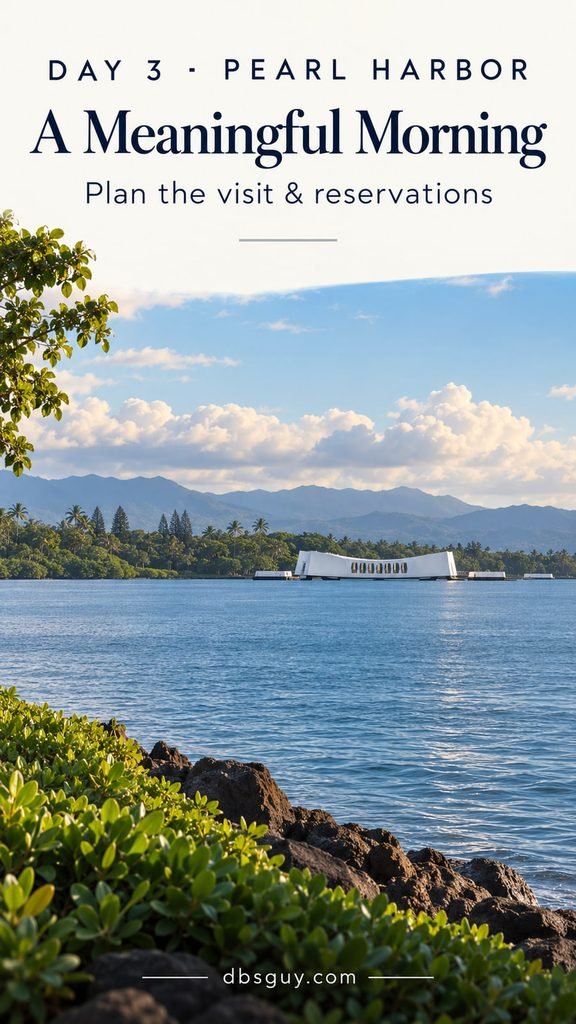
Pearl Harbor deserves more than a quick photo stop. Begin with the visitor center’s exhibits and waterfront areas, and allow enough time before your program to understand the events and people commemorated here. Plan roughly half a day, including the journey from Waikīkī; bus connections can take considerably longer than a direct ride.
The National Park Service charges no entrance fee for Pearl Harbor National Memorial or the visitor center museums and grounds. The USS Arizona Memorial program is free, but its official reservation channel, Recreation.gov, charges $1 per reserved ticket. Reserve ahead; do not build your day around unguaranteed standby access. Weather or operational conditions can interrupt boat service.
The Battleship Missouri, submarine museum, and aviation museum are separate paid attractions. Choose one only if it matters enough to you to expand the budget. You do not need an attraction bundle to visit the national memorial.
Review the NPS security rules before leaving your room. Ordinary backpacks and purses that conceal their contents are restricted; permitted clear bags and specific exceptions are described in the current policy. Carry only what you need. Bag storage costs extra, and leaving valuables in a parked car is a poor substitute.
Budget move: Two reserved USS Arizona tickets total $2 in booking fees. Using transit avoids the currently listed $7 daily parking charge. Keep any paid museum upgrade outside the base budget.
Day 4: Spend a car day on the windward coast
The plan: Rental pickup → Kailua town → Kailua Beach → return to your Waikīkī base.

Collect the car after breakfast, inspect it, and drive to Kailua. Give this side of the island a day instead of combining it with a full North Shore loop. Check live traffic and allow pickup time; a map’s driving estimate does not include paperwork or finding a legal parking space.
Pick up lunch in town before settling near Kailua Beach. This is a good day for reading, a shoreline walk, and a picnic. If you want to swim, ask an on-duty lifeguard about the conditions and stay within your ability. Clear turquoise water can still have strong wind or currents.
There is no need to add a kayak rental, lesson, or guided outing to make the day worthwhile. If an activity is your main reason for coming, book it deliberately and replace another expense rather than treating every extra as incidental.
Budget move: The beach day needs no attraction ticket in this plan; the rental, fuel, food, and any parking are the main costs. Use posted public access and legal parking, and respect nearby homes. Keep belongings out of sight and do not leave valuables in the car.
If weather makes a beach day unappealing, exchange it with Day 6 before collecting the rental when your booking terms allow. A flexible car reservation can be worth more than a small nonrefundable discount.
Day 5: Eat in Haleʻiwa and explore the North Shore
The plan: Waikīkī → Haleʻiwa → one coastal stop → rental return.

Start early enough to enjoy Haleʻiwa before the day becomes a race back to the rental desk. Walk the town, choose a local café or food truck for lunch, and leave space for shave ice if that appeals. Garlic shrimp, a plate lunch, or a vegetarian bowl can be the day’s main food stop; compare posted menus before ordering.
Continue to one coastal stop, such as Waimea Bay or Sunset Beach, when access and parking allow. Choosing one gives you time to stay awhile. Avoid building the day around collecting a photograph at every beach.
Season changes the activity. Hawaiʻi’s tourism authority describes powerful winter surf on this coast, with especially large waves possible in the cooler months. In rough conditions, watch from a safe shore position and follow lifeguards’ directions. Summer can be calmer, but the season alone is never a swimming clearance.
Do not rely on this day for a guaranteed turtle sighting, and give any wildlife you encounter plenty of space. Skip stopping if there is no safe, legal place to park.
Budget move: Choose the food you actually want, then enjoy the coast without adding a paid attraction. Refuel and return the car within the agreed window. Check the branch’s return procedure before the trip, including what happens after closing.
Day 6: Explore Honolulu’s history at walking pace
The plan: Bus to the historic district → exterior landmarks → lunch in Chinatown → flexible afternoon.
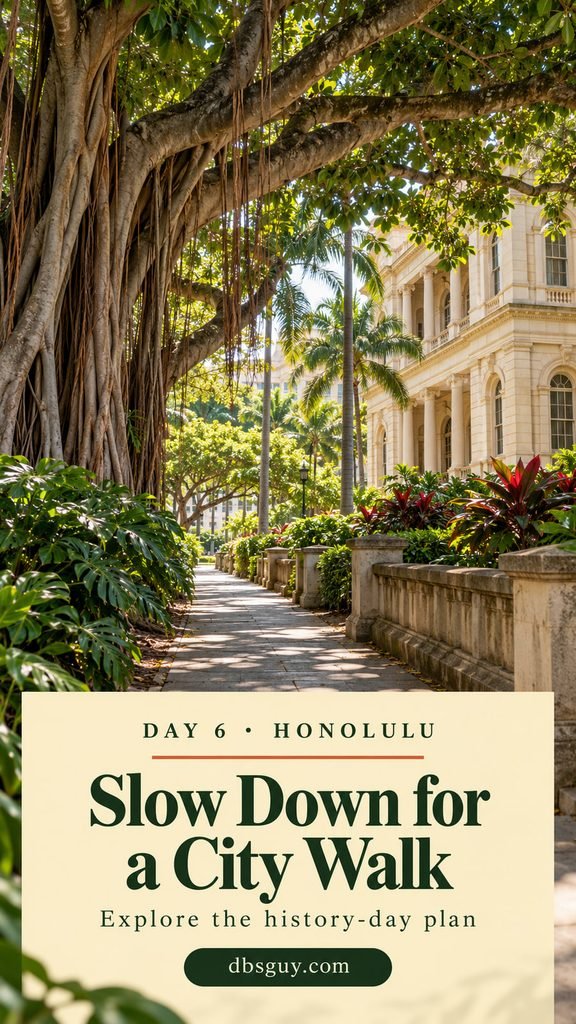
Begin around ʻIolani Palace and the King Kamehameha I statue across South King Street in front of Aliʻiōlani Hale. These places connect a Honolulu visit to the Hawaiian Kingdom and its history. Read the available interpretation and take your time rather than using the district as a backdrop alone.
This budget day focuses on exterior views and public areas where access is permitted. An interior palace visit is a separate ticketed experience with its own schedule and visitor rules. If Hawaiian history is a priority, make that your chosen paid upgrade and check the palace’s current visitor information.
Continue toward Chinatown for lunch during daytime business hours, choosing an open restaurant or market that suits your taste and budget. Keep the afternoon flexible: return to rest, take another shoreline walk, or attend a cultural program whose current schedule you have confirmed.
Budget move: There is no required admission for this exterior walking route. Your spending is food and local transport. This is also the easiest day to move earlier in the week when beach weather changes, although severe weather can affect city plans too.
Day 7: Leave room for one last easy morning
The plan: Breakfast → a nearby walk if time permits → collect luggage → airport.

If you have an afternoon or evening flight, enjoy a final short walk near Waikīkī or Ala Moana Beach Park after breakfast. Choose the option that fits your hotel location and luggage arrangements. An early departure simply means breakfast and the airport; you do not need to force a seventh full sightseeing day.
Ask about checkout, luggage storage, and any shower facilities in advance. A last swim is less appealing when there is no place to change and your wet clothing has to go straight into a carry-on.
Work backward from your airline’s recommended airport arrival time, then add transport time and a traffic buffer. Do not use a distant beach, long hike, or cross-island detour as your departure-day finale.
Budget move: Finish the groceries you bought, keep souvenir spending within a preset limit, and protect the airport-transfer money. Missing a flight is a costly way to squeeze in one more stop.
Keep food spending under control without missing local flavor
The $80 daily allowance for two works best when breakfast is simple and most lunches and dinners are casual. One possible split is $10 for breakfast groceries, $28 for lunch, $32 for dinner, and $10 for snacks or coffee, with tax and any tips fitting inside those limits. These are spending caps to shop against, not menu-price claims.
Mix grocery-store prepared food, small restaurants, and food trucks. A food truck is not automatically cheaper than a restaurant, and a kitchen is not automatically cheaper than takeaway. Compare the actual meal cost, portions, and the groceries you would leave unused.
If a favorite dinner will cost $120 for two, make that choice explicitly. You can add $40 to the day’s budget or rebalance other meals; pretending it still fits an $80 day makes the trip harder to track.
Bring a refillable bottle, a compact day bag, comfortable walking shoes, sun protection, and clothing you can repeat. Buying fewer emergency replacements is a quieter form of travel savings.
Questions to settle before booking
Can you follow this seven-day Hawaii itinerary without a car?
The Honolulu and Waikīkī days are designed around walking and transit. Kailua and the North Shore can involve much longer public-transit journeys, transfers, and fewer convenient stops. For a fully car-free week, choose one of those excursions, check the current outbound and return service, and use the other day near your base. Do not assume a bus version takes the same time as the driving route.
Is $1,000 per person enough for a week in Hawaii?
It is below this article’s worked example of about $1,151 per person before flights. A cheaper room, shared lodging with more travelers, or removing the rental car may lower the total, but the actual quotes must support it. Including mainland airfare in a $1,000 total would require substantially different assumptions.
What changes if you are traveling solo or with children?
A solo traveler cannot simply halve the couple’s total: a private room and rental car may cost nearly the same for one person. Families need their own room-capacity, meal, ticket, and transport calculations, including any child-seat costs. This is a two-adult budget, not a universal per-person package.
What should you reserve first?
Compare flights with a refundable room option before committing to either. Then arrange the attractions you care about most, particularly Diamond Head and the USS Arizona program, and book the two car days around their availability. Recheck official schedules, access notices, and weather before travel.
Does “without the resort prices” mean skipping every special experience?
No. It means choosing where the money goes. If a surf lesson, palace tour, or memorable dinner is the reason you want to visit, budget for it. The savings come from removing expenses that add little to your week: an unused car, a costly view from a room you barely occupy, and extra island transfers.
Also Read
If you like trips built around walkable bases and fewer rental-car costs, explore 9 Easy Weekend Getaways From U.S. Cities Where You Don’t Need a Car for another travel plan.