A fall table starts to look elegant when the pieces have room to show: a few pumpkins against textured linen, a low bowl of flowers, or a neatly tied napkin beside a clear glass. You can get there with everyday dishes and one deliberate seasonal detail.
These 15 simple fall tablescapes give you different ways to do that. Choose the arrangement that fits how you serve dinner, then borrow its main detail. The serving space matters as much as the centerpiece.
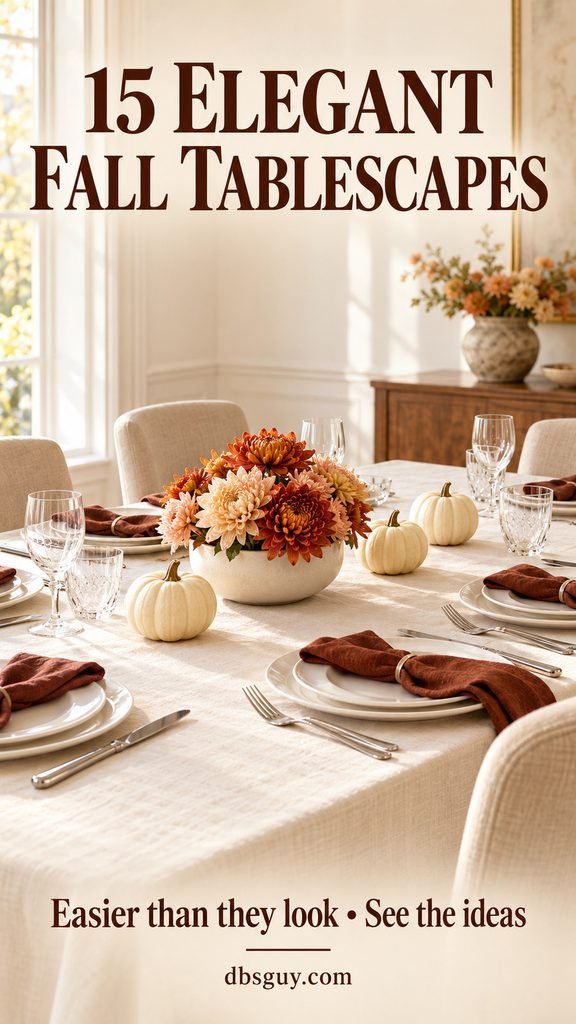
The visuals are AI-generated styling concepts. They illustrate the arrangements and do not document completed or tested table setups.
Find a Look That Fits Your Dinner
- Fewest pieces: start with the three pumpkins in idea 1 or the pear platter in idea 6.
- Food served at the table: choose paper-leaf place cards in idea 4, background branches in idea 12, or cross-runners in idea 13.
- A small round table: try the single-pumpkin arrangement in idea 9.
- A dressier evening: use the flameless candle group in idea 7 or give your existing china the warm accents in idea 8.
Before adding decorations, put out one complete place setting and the empty serving dishes you expect to use. For the basic layout, place the fork on the left, the knife on the right with its blade facing the plate, and the drinking glass above the knife. Add other pieces only when the menu needs them. Then see what space is actually left.
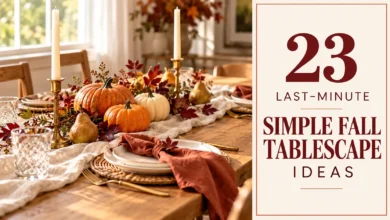
1. Space Three Cream Pumpkins Along a Linen Runner
For a quiet, neutral table, use three small cream pumpkins, a flax-colored runner, white dishes, and ivory napkins. The pumpkin ribs and linen weave provide the detail, so you can skip loose leaves, garlands, and extra ornaments.
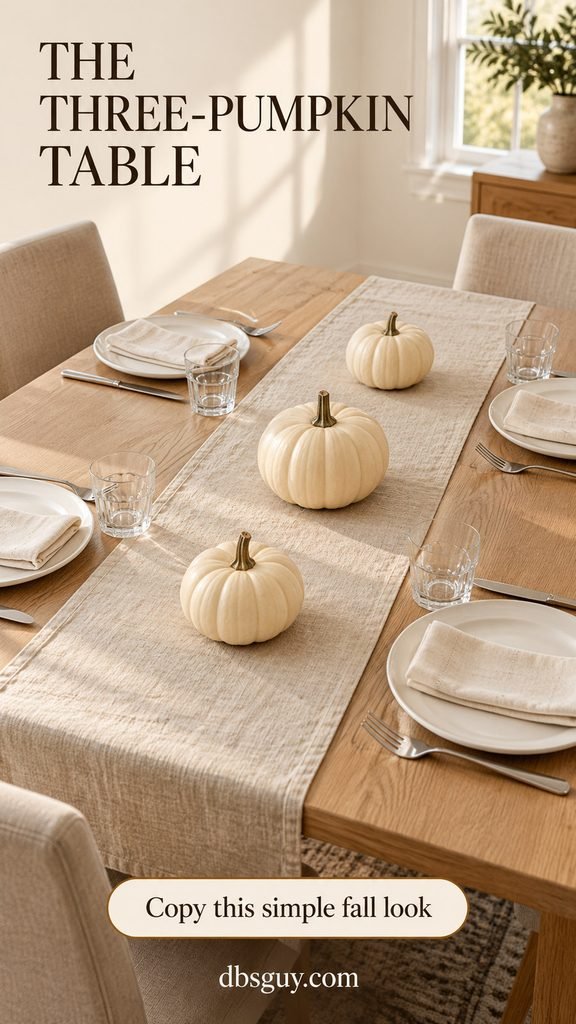
Lay the runner flat and set the largest pumpkin near the middle, with a smaller one toward each end. Adjust the gaps around the serving dishes rather than spacing everything by eye first. Clean and dry real pumpkins before bringing them to the table; use a suitable protective layer if your finish needs it.
A ceramic pumpkin works too. Keep the pieces small enough to lift away individually when a platter arrives. That flexibility is what makes this more useful than a densely packed pumpkin display.
2. Turn One Bouquet into a Low Bowl Arrangement
A shallow cream bowl filled with rust and peach chrysanthemums makes a full-looking focal point without a tall vase. A terracotta runner repeats the warmer flowers; oatmeal napkins keep the surrounding settings soft.
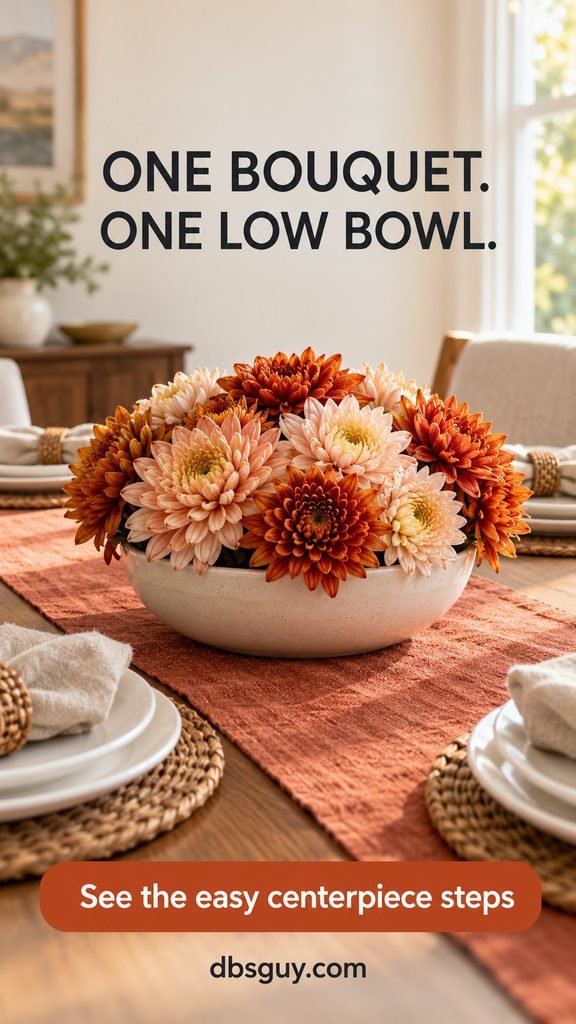
Choose a watertight bowl with a relatively narrow opening. Set a small jar of water inside if a wide bowl will not support the stems. Remove leaves that would sit underwater, then cut the flowers gradually so their heads rest just above the rim. Turn the bowl as you work, filling visible gaps instead of building height.
Set the finished arrangement down and check it from a chair. If flowers hide the person opposite you or spread into the glasses, shorten the stems or use a smaller vessel. You can get the same effect with fewer blooms in a small bowl; the container does not have to be large.
3. Give Individual Flowers Their Own Bud Vases
Five short clear vases, each with a single rust or blush flower, create a lighter alternative to a full bouquet. This suits a rectangular table where one solid centerpiece would take up the best serving space.
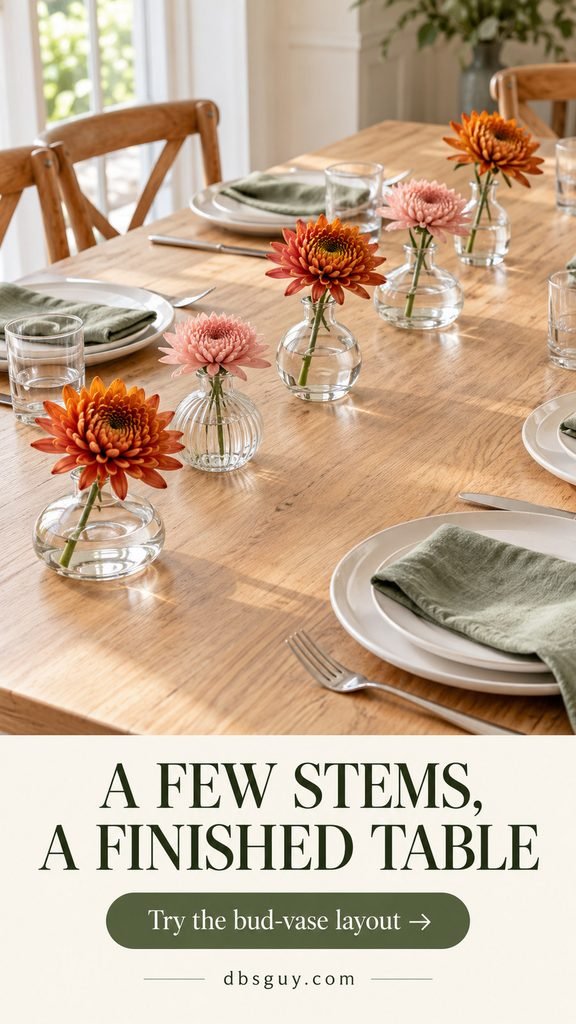
Use containers with steady bases and narrow mouths. Add water, remove submerged leaves, and trim each stem to its vase. Arrange them in a loose line with a slight stagger, keeping every bloom clear of the plates. Sage napkins give the orange and pink flowers a gentle background.
The number is adjustable: three vases may fit your table better than the five shown. Leave a deliberate gap for bread or a serving bowl. If reaching across feels awkward, move a vase rather than making guests work around it.
4. Let Paper-Leaf Place Cards Decorate Each Seat
Put the fall detail on the plate when the center needs to stay available for dinner. Terracotta cardstock leaves on folded ivory napkins give each seat a clear seasonal accent and make assigned seating easy to read.
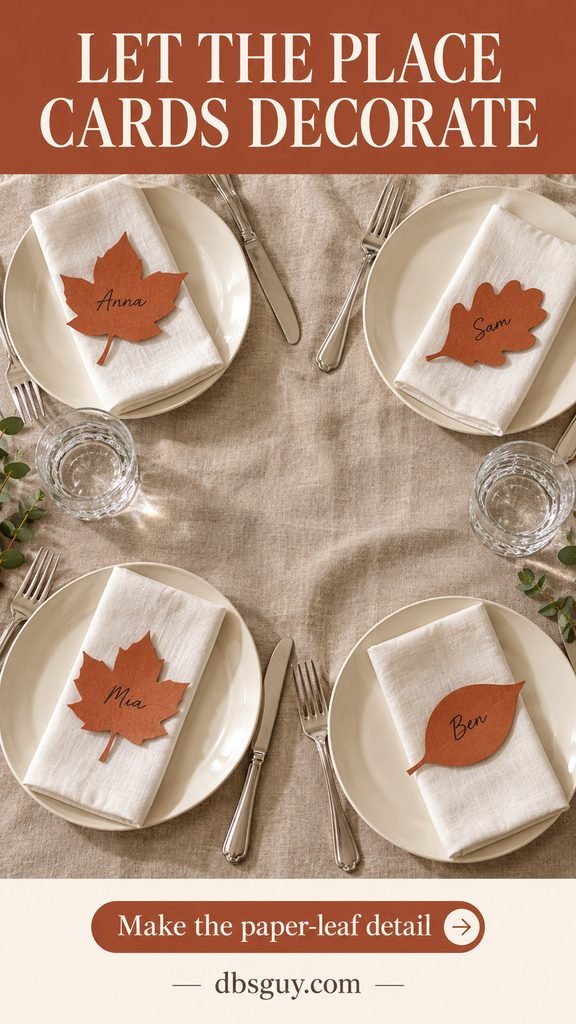
Draw one simple leaf shape, cut it out, and use it as a pattern for the remaining cards. Write the names before placing the leaves on clean, dry napkins. A rounded leaf is quicker to cut than a detailed maple shape; mixing a few silhouettes, as shown, keeps the result relaxed.
Keep the writing large and the cards flat. Guests should be able to lift the card and napkin away together before eating. The center needs no further decoration, which makes this one of the easiest Thanksgiving tablescape ideas to adapt for a crowded meal.
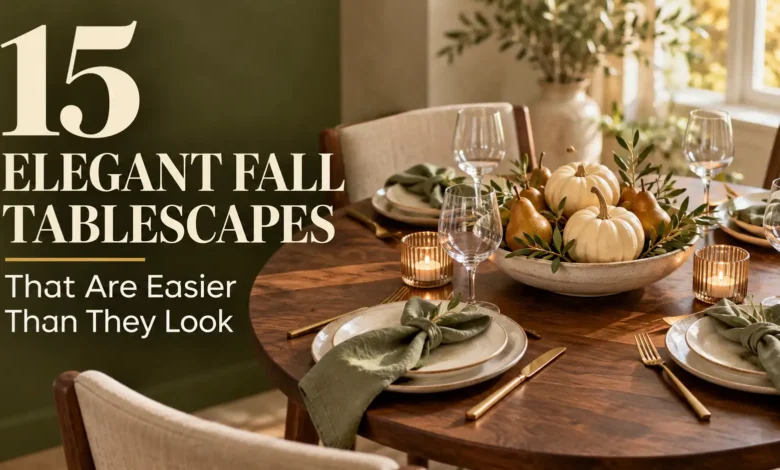
5. Finish Sage Napkins with Olive Velvet Ribbon
A narrow velvet bow can dress up plain cloth napkins without an elaborate fold. Pair soft sage fabric with darker olive ribbon so the bow remains visible, then repeat the same finish at each seat.
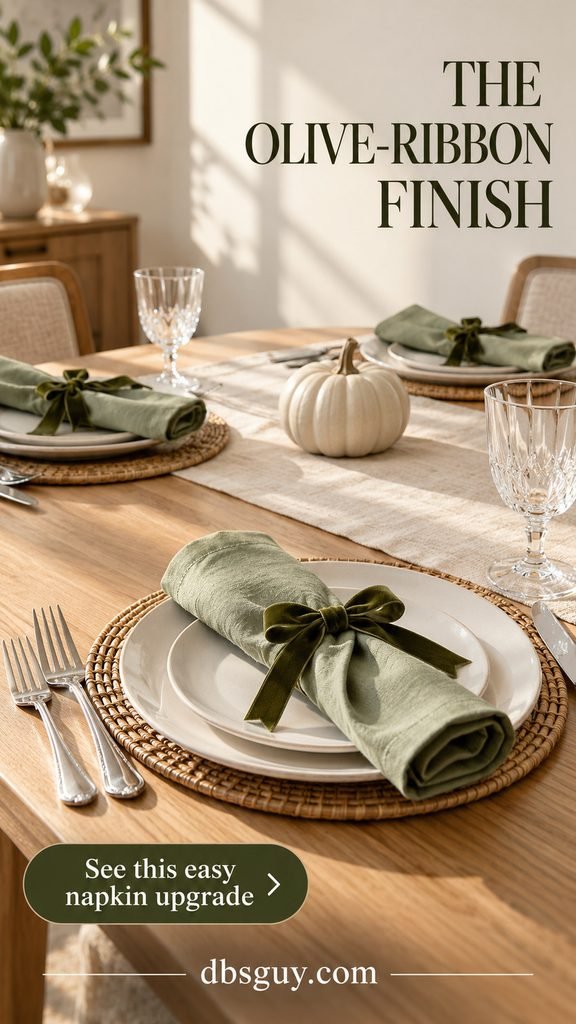
Loosely roll or fold one napkin and tie a sample bow before cutting all the ribbon lengths. Leave enough slack for a guest to slide the ribbon off. Trim the tails so they stay on the plate instead of trailing into the glassware.
The woven mats and small cream pumpkin shown are optional supporting details; the ribbon is the upgrade. If your plates already have decorative rims, leave more of that edge exposed. For more ways to carry this palette through a meal, browse 23 Olive Green Simple Fall Tablescape Ideas.
6. Arrange Three Pears on a Shallow Platter
Three golden-brown pears on a cream oval platter can stand in for flowers. Mustard napkins bring out the fruit’s warm color, while the low arrangement leaves a clear view across the table.
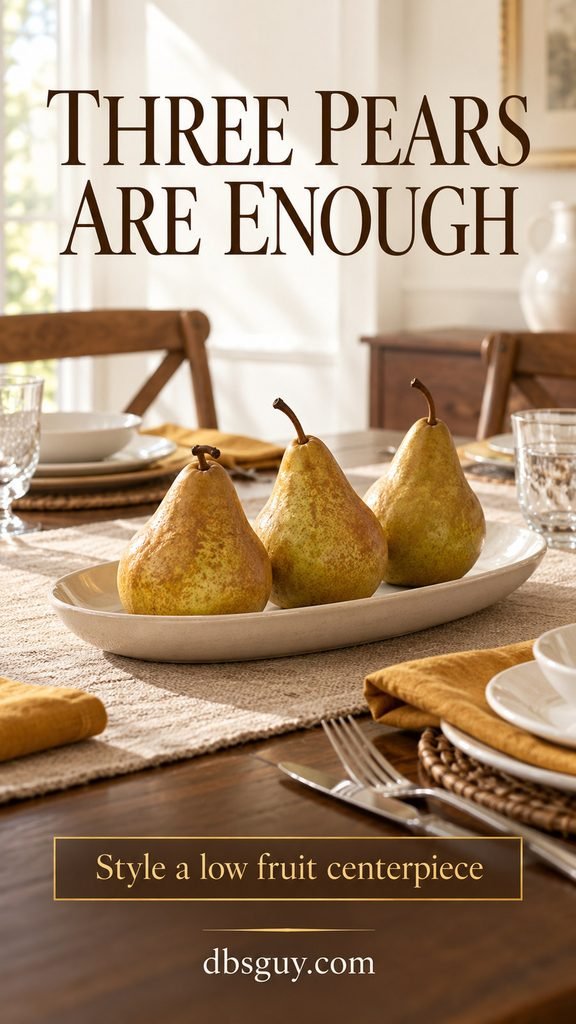
Choose pears that sit steadily and arrange them in one layer. An oval platter gives each piece an outline; a deep bowl would hide much of the fruit. Set it on a plain runner or an uncluttered patch of the tabletop.
If you intend to eat the pears, use a clean, food-safe platter and leave them free of paint, glitter, and floral products. Check them again before dinner and replace any damaged fruit. This is a useful option when you want fall centerpiece ideas that require no stem cutting or arranging equipment.
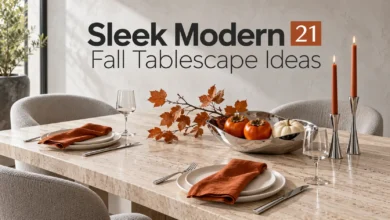
7. Group Three Flameless Pillars for an Evening Table
Ivory battery-operated pillar candles in clear cylinders stand out against charcoal linen. Three slightly different heights make one compact group, with no flowers or pumpkins needed around it.
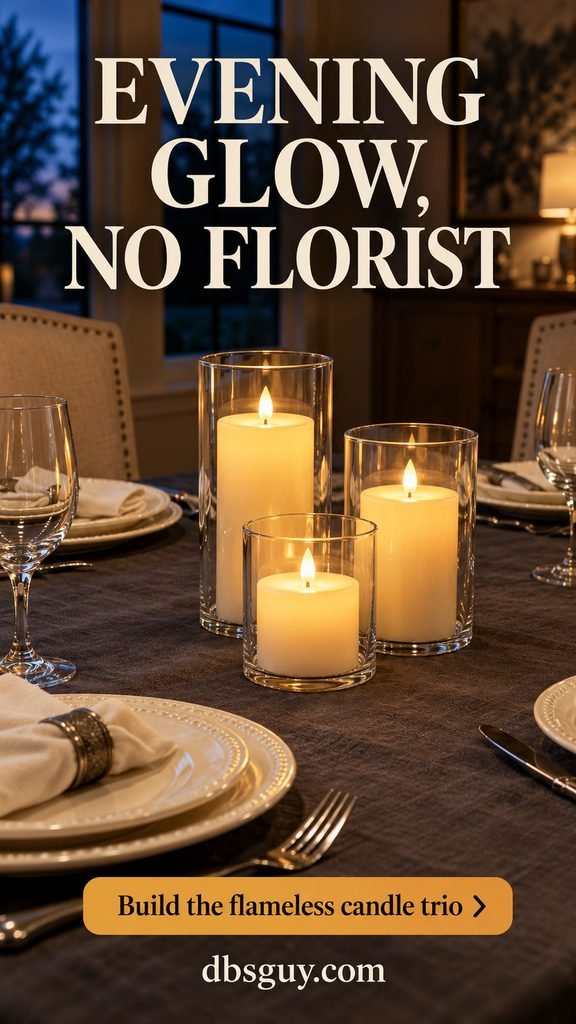
Check that each candle fits comfortably inside its cylinder and can be switched on without dismantling the display. Keep the highest piece below your seated sightline. Ivory napkins and plates give the dark cloth a readable contrast, and ordinary clear glasses keep the arrangement simple.
Use flameless candles for this close grouping. The National Fire Protection Association’s candle guidance recommends battery-operated alternatives; burning candles need at least 12 inches of clearance from anything combustible. Leave enough room lighting to see dinner comfortably, even with the centerpiece glowing.
8. Warm Up Blue-and-White China with Terracotta
If you own blue-and-white plates, give them a fall setting with solid terracotta napkins and two small orange pumpkins. The warm fabric and pumpkins change the season without asking you to replace the dishes.
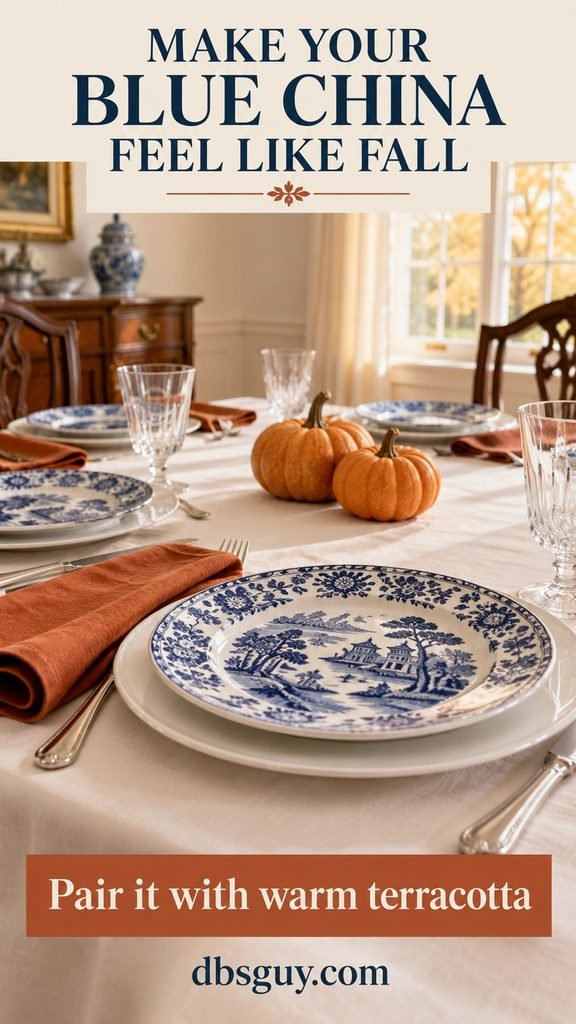
Use a plain white cloth to give the china’s pattern a clean edge. A patterned salad plate over a simple dinner plate works when you are serving a first course; otherwise, use the patterned plate that suits the meal. Keep the napkins solid so the design stays easy to see.
Place the pumpkins together in one compact spot rather than beside every glass. Silver flatware is enough here. Adding another strong pattern or a second metallic finish would create more decisions without making the table easier to use.
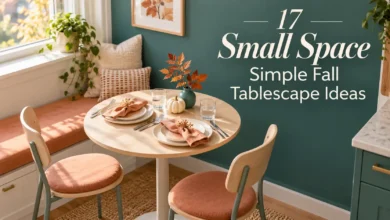
9. Center One Ribbed Pumpkin on a Small Round Table
One modest cream pumpkin on a round woven mat gives a four-person table a fall focal point. Sage napkins and white plates keep the whole arrangement light, with the wood surface left visible.
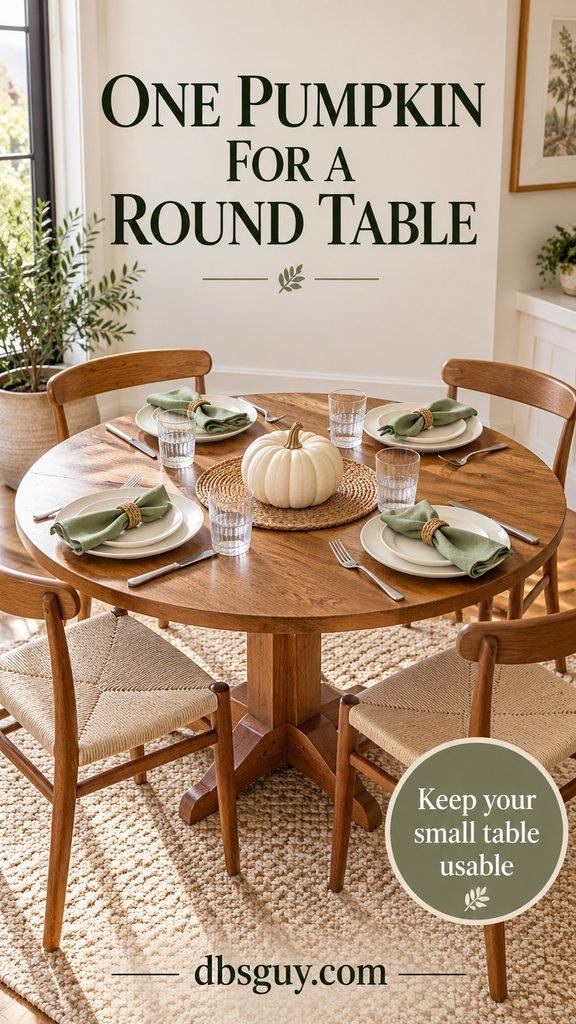
Set all four places before choosing the pumpkin. Its footprint should fit comfortably inside the remaining center, with space for hands to reach across. The little mat marks that footprint and adds texture without a full tablecloth or long runner.
If serving bowls need the same spot, put the pumpkin on a nearby shelf during the meal. A round table does not require a centerpiece to stay in place all evening. Choose a smaller pumpkin rather than squeezing the plates closer to the edge.
10. Make a Botanical Tablecloth the Main Feature
A cream cloth with cranberry and brown botanical motifs supplies both pattern and fall color. With that much detail already on the surface, plain white plates and solid cranberry napkins are enough.
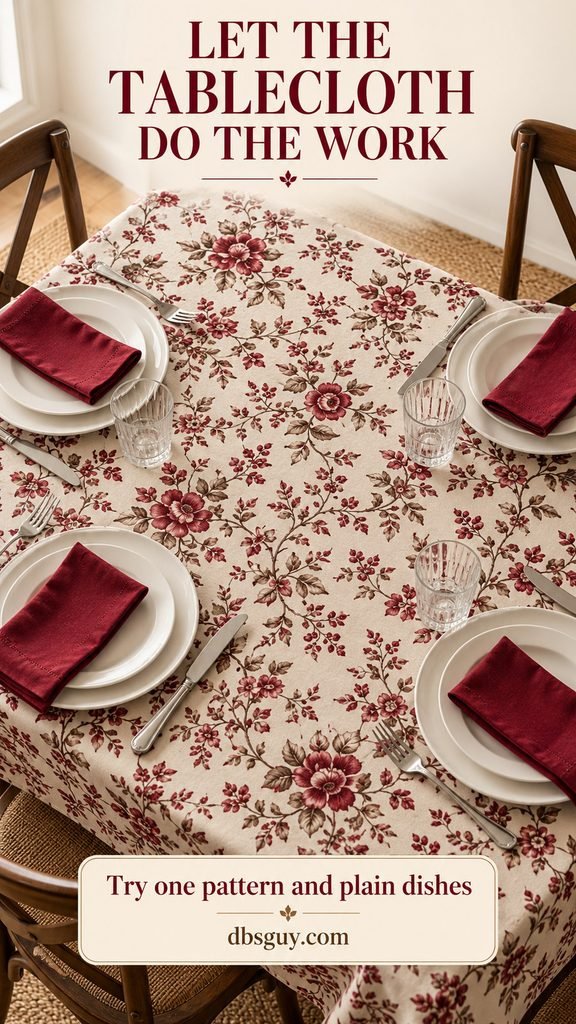
Smooth the cloth before setting the table, then check how much pattern remains visible around a dinner plate. If large chargers cover most of it, leave them off. Fold the napkins into simple rectangles and repeat them consistently so the patterned background feels orderly.
Keep the middle empty for serving. This arrangement works particularly well when you like decorative fabrics but do not want to maintain flowers, buy pumpkins, or build a centerpiece. Let the cloth remain the one busy element.
11. Bring Different Ivory Plates Together with Brown Linen
Different plate edges can look collected when their color is similar. Set fluted, scalloped, and plain ivory plates against a chestnut cloth, then use the same oatmeal napkin and clear glass at every place.
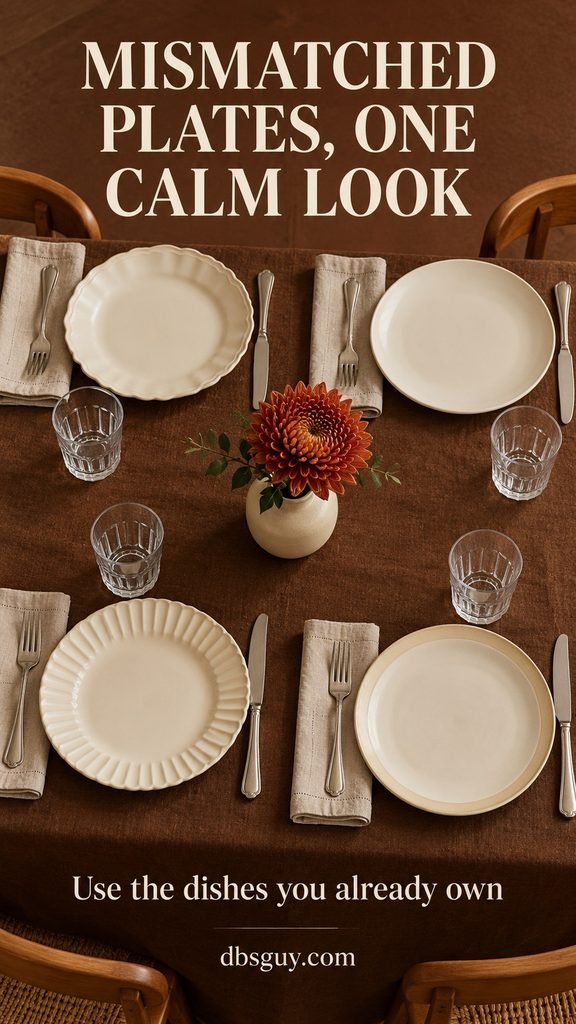
Lay the dishes side by side first. Choose pieces close enough in size to serve the same course, and look for a shared warm ivory tone. You do not need matching rim shapes. Repeated napkins give the differences a consistent frame.
One short cream vase with a rust-colored bloom is plenty in the center. This is a good way to make a small collection of dishes work for guests without buying a complete seasonal set. Leave out any piece whose size makes the place setting awkward.
12. Put Autumn Branches on the Console Instead
A vase of golden fall branches can set the mood for the whole dining room while the table stays available for food. Place it on a console against the wall, then carry a little of its warmth onto the table through russet napkins.
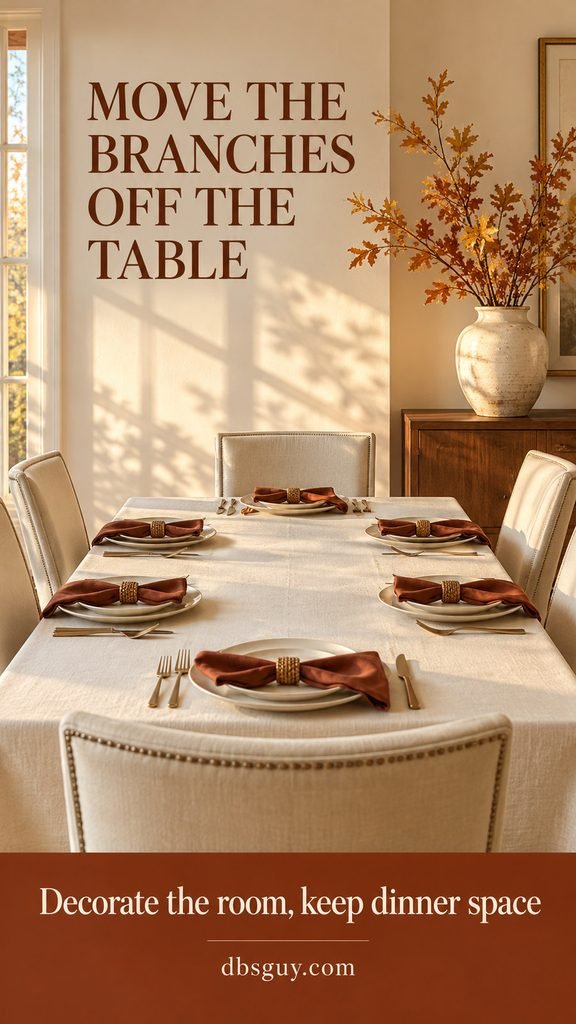
Use a heavy, stable vessel and keep the arrangement within the console’s footprint. Position it where guests will not brush it on their way to a chair. Faux branches are a practical choice if you want to assemble the display ahead without tending leaves or vase water.
Leave the dining table’s center clear. This is especially useful for a long Thanksgiving meal with shared dishes: you get height and a seasonal backdrop without asking anyone to peer through branches at dinner.
13. Run Two Linen Strips Across the Table
On a rectangular table with two seats on each long side, two crosswise runners can connect the opposite place settings. Oatmeal linen against walnut makes a strong, simple pattern; rust napkins supply the fall color.
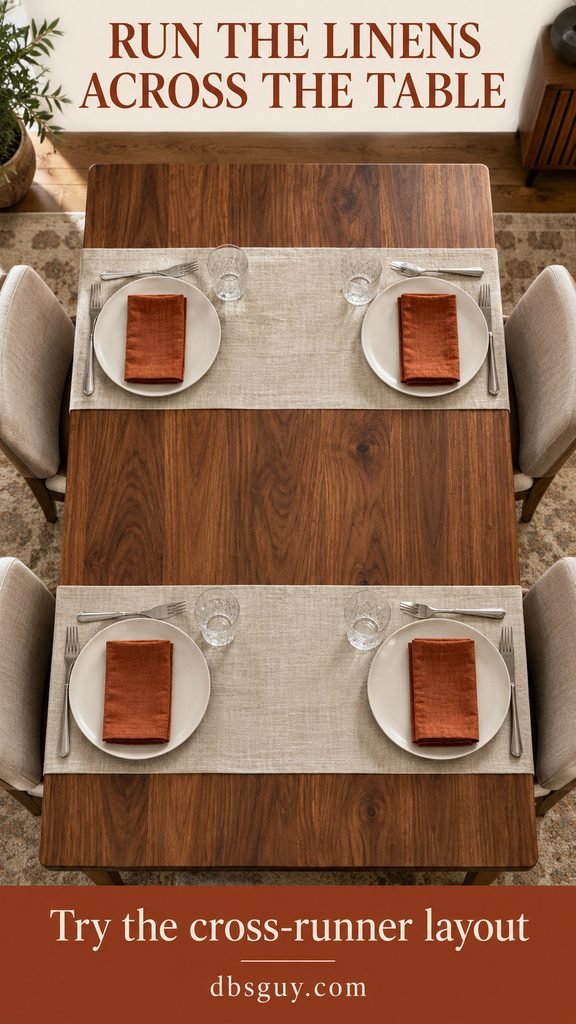
Place the chairs first, then center one runner on each opposing pair. The strips travel across the table’s short dimension, leaving a visible band of wood between them. Fold long edges under if necessary to keep the fabric within each pair’s space.
Skip the centerpiece and put serving dishes where they fit naturally. Fabric is decoration, so use proper trivets beneath hot dishes. If your table has end seats, test their settings before committing to this layout; individual placemats may fit those places more easily.
14. Line Up Three Small Rosemary Pots
Three compact rosemary plants bring green structure to a table without a cut-flower arrangement. Taupe pots, cream dishes, and sand-colored napkins give the leaves a restrained background; sage glasses can repeat the green if you already own them.
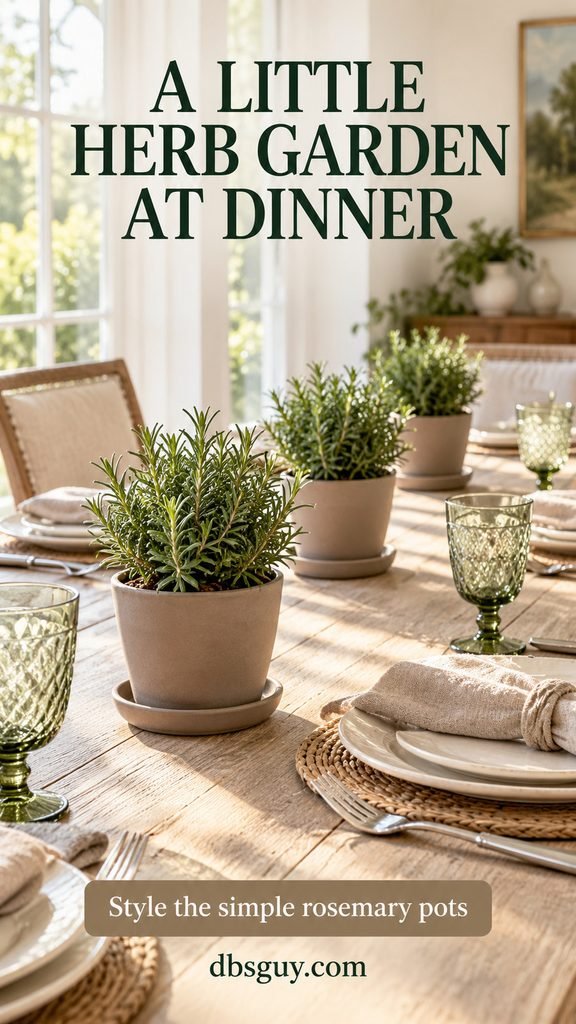
Use a saucer beneath each pot and wipe the outside before placing it on the table. Water and let the pots drain elsewhere, then return them with their saucers dry. Space them around the serving area instead of crowding all three together.
Keep the plants low enough to see over and the soil away from dishes. If their aroma feels strong beside the food, move one or more to a windowsill. The pots are decorative here; nothing needs to be clipped onto a plate.
15. Let a Bread Board Earn the Center Spot
A low board with a small loaf, a few slices, two red apples, and a butter dish can be both the focal point and part of dinner. Tobacco-colored napkins and an ivory cloth make the food’s warm colors feel deliberate.
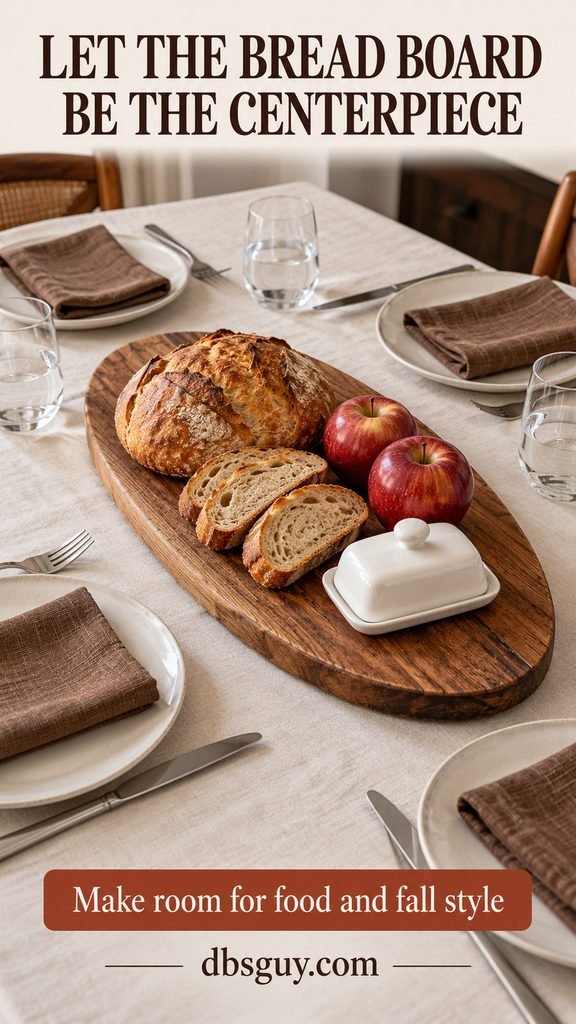
Use a clean board intended for food, and prepare the bread shortly before serving. Keep apples whole and washed, with no decorative treatments. Put the butter in its own small dish and provide a serving knife; the board should function as food service rather than a display nobody can touch.
Skip greenery and ornaments among the food. If the board is too large to pass comfortably, leave it centrally accessible and transfer portions with serving utensils. For a bigger meal, the same arrangement can sit on the buffet and free the table completely.
Make the Setup Work Before Guests Arrive
Do one seated check with the actual dishes in place. Can you see across the table, lift a glass without touching the decor, and set down the largest serving bowl? Remove or relocate whatever gets in the way. A centerpiece that photographs well still needs to work from a chair.
Fold napkins, cut place cards, and position clean, dry dishes ahead if the table will remain undisturbed. Check fresh flowers and fruit on the day, refill vase water as needed, and test candle batteries before guests arrive. Add bread when you are ready to serve it.
Questions About Simple Fall Tablescapes
What makes a fall table look elegant without buying more decor?
Start by repeating something you already have: the same napkin fold, a shared dish color, or one type of glass. Choose a single feature to notice first, then leave visible space around it. Well-arranged everyday pieces are easier to use than several competing decorations.
How tall should the centerpiece be?
Judge it from a seat rather than relying on one height measurement. The vessel, flowers, and spread all matter. For these simple arrangements, keep the whole group low enough to see the person opposite you. Move taller branches to a console, as in idea 12.
Can I make an elegant fall table without pumpkins?
Yes. Choose the low flower bowl, individual stems, pear platter, flameless candles, botanical cloth, rosemary pots, or bread board. Rust, cranberry, mustard, and warm brown can give the setting a fall feeling through fabric and food instead.
What should I do when Thanksgiving serving dishes fill the table?
Use the place cards or ribbon detail at each seat and keep the middle available for food. Background branches also work well. If you love a centerpiece, choose a small one and decide where it will go before the serving platters arrive.