Start with one lively detail: a striped chair, a rounded side table, or a scalloped mirror. Keep the furniture you already enjoy, repeat the accent color once, and leave the surrounding surfaces quiet. That is the most approachable way to bring FunHaus into a home you actually use.
These six looks translate the trend into everyday rooms. Choose the one that solves a real decorating problem—an empty corner, a bland entry, or a table that needs personality—rather than buying a little of everything.
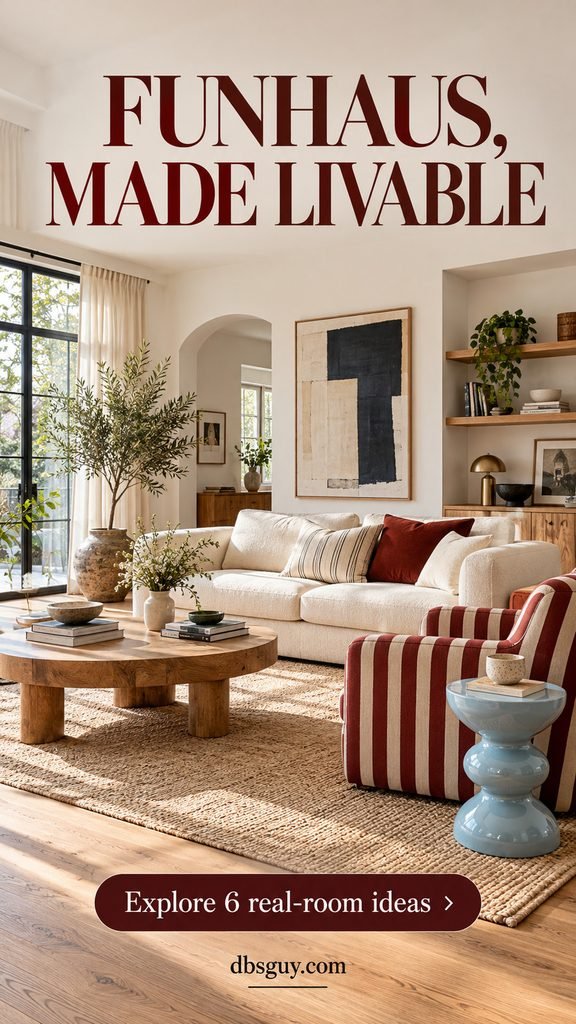
The visuals in this guide are AI-generated design concepts, not photographs of completed rooms.
What FunHaus means—and what to borrow
Pinterest’s FunHaus forecast centers on circus-influenced interiors: strong stripes, unusual forms, and playful character. It is a forecast and a decorating direction, not a requirement to turn every surface into a spectacle. “Wildest” is our description of its expressive mood, not a measured ranking of Pinterest trends.
The approach here is an editorial translation: keep the room’s biggest surfaces comfortable to look at, choose one clear focal point, and repeat a color where it helps the room feel connected. You can borrow the shapes without bright colors, or the stripes without literal circus imagery.
Six ways to make the look work at home
1. Give the living room one stripe statement

A striped armchair is a useful starting point because it gives the pattern a defined boundary. In this look, oxblood and cream stripes sit beside a plain cream sofa; warm wood keeps the room from feeling like a stage set. The stripe is the feature, so the rug and curtains can stay solid.
Before choosing upholstery, bring a fabric sample home and look at it next to the sofa in daylight and lamplight. For a softer effect, use a muted red rather than a bright primary red. Broad stripes read clearly from across a room; a smaller stripe can suit a cushion if you want less visual weight.
If a chair is outside your budget, use one striped cushion on your existing seating and repeat its red in a small ceramic bowl. Avoid adding a striped rug at the same time: you want to know whether you enjoy living with the first pattern before expanding it. For the seating foundation, our guide to sofa designs for living rooms can help you compare shapes that suit your layout.
2. Let a sculptural side table carry the fun
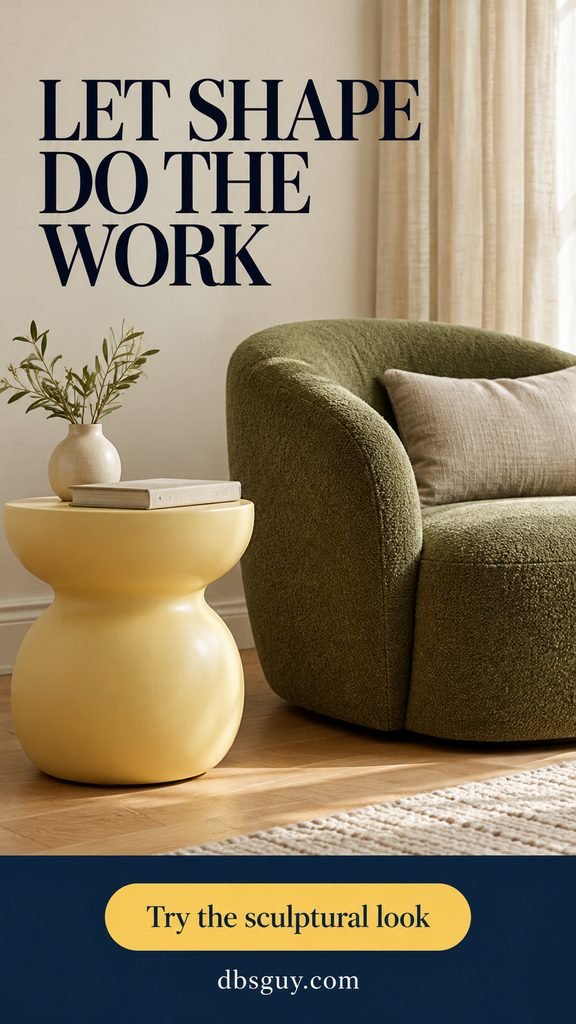
FunHaus can work without stripes. A rounded pedestal table gives a familiar corner an unexpected silhouette, especially beside a straightforward upholstered chair. The butter-yellow table here brings lightness to olive seating, cream walls, and linen curtains.
Choose the piece for its job first. The top should comfortably hold the things you actually set down, and the base should feel stable when you use it. A table near the height of the chair arm is a sensible starting point; check it from a seated position before committing.
Keep the rest of the corner tactile and simple. A book and an ordinary cup will do more for the room than a collection of novelty objects. If space is tight, tape out the table’s footprint so it does not steal your walking path. Our small-space reading nook ideas offer more ways to fit a usable chair, light, and landing surface together.
3. Add a scalloped mirror to a practical entry

An entry is a good place to try a decorative outline because you see it often without sitting opposite it all evening. A pale blue scalloped mirror over a walnut console has enough personality to finish the wall. One burgundy vase adds contrast; the console still has space for everyday arrivals.
Look for a frame with a gentle wave if you want the effect to feel grown-up. A heavily frilled mirror, tassels, and a busy wallpaper all in the same small entry would compete. Here, the plain wall gives the outline room to be noticed.
Measure the mirror and console together before shopping. The frame should look balanced above the furniture rather than squeeze against a doorway. Follow the mirror’s mounting instructions and use fixings appropriate for its weight and your wall. In a rental where mounting is restricted, try the scalloped outline on a lightweight tray instead and keep your existing mirror.
4. Soften the trend for a bedroom
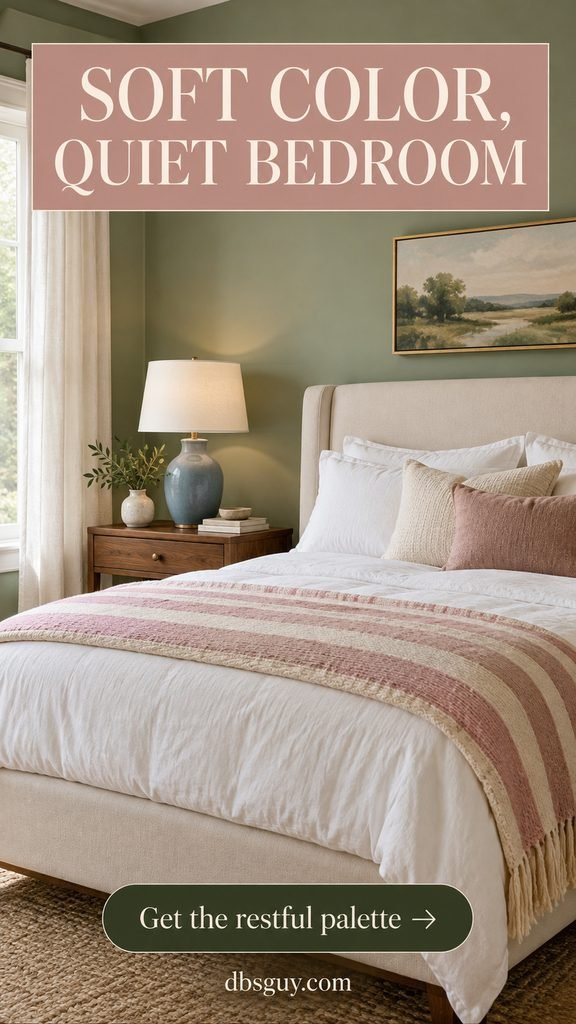
You do not need a tented ceiling to make a bedroom feel playful. This version uses sage walls, an ivory headboard, white bedding, and a dusty pink striped throw at the foot of the bed. A solid dusty blue lamp adds a second soft color without another print.
Let the bedding you sleep under stay plain if that is what you prefer. The throw is easy to fold away, replace, or move to a chair, so it is a gentler experiment than patterned wallpaper behind the bed. Choose its fabric for your climate and washing routine, not just the photograph.
If you are repainting, sample the sage on more than one wall before deciding; the same shade can look different beside the window and in the darker corner. If painting is not an option, retain your wall color and borrow only the throw-and-lamp combination. For more foundation palettes, see our sage green bedroom ideas.
5. Make one curious artwork the focal point
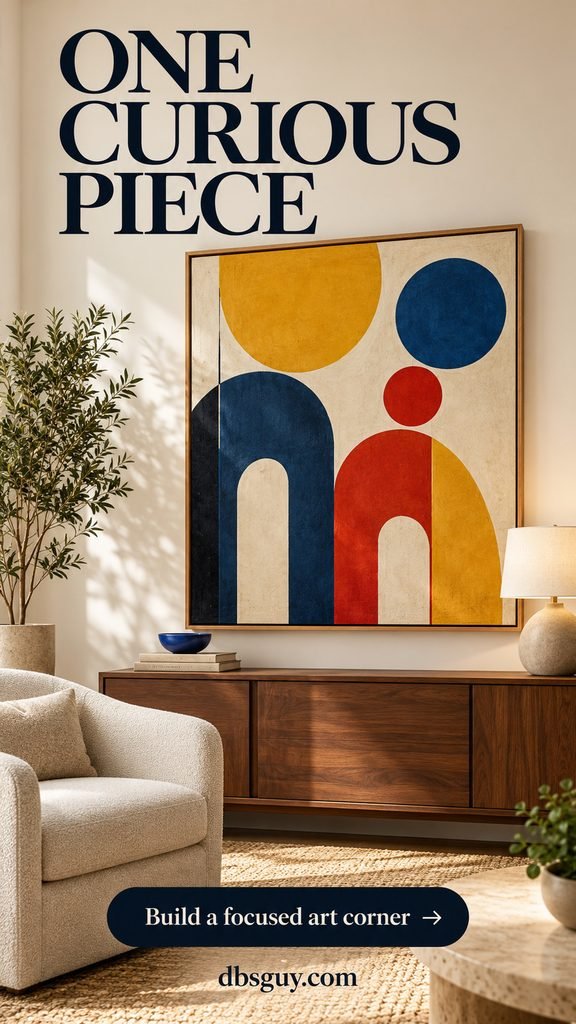
A single large artwork can introduce the trend’s humor through color and shape. This concept uses abstract circles and arches in red, yellow, and blue, framed above a walnut console. It suggests a carnival’s graphic energy without requiring literal clown imagery or a circus poster.
Pick a piece you would still enjoy if the trend name disappeared. Repeat one of its colors in a small bowl, then let the other colors remain in the art. The oatmeal chair and warm white wall provide an easy background.
Use paper cut to the frame’s dimensions to check the size and position before making holes. Stand in the doorway as well as beside the console: the art should make sense from the room’s normal viewing points. If you already have a gallery wall, edit the objects below it before adding more art. An empty patch of console is useful space, not a styling failure.
6. Try FunHaus at the table before changing the room
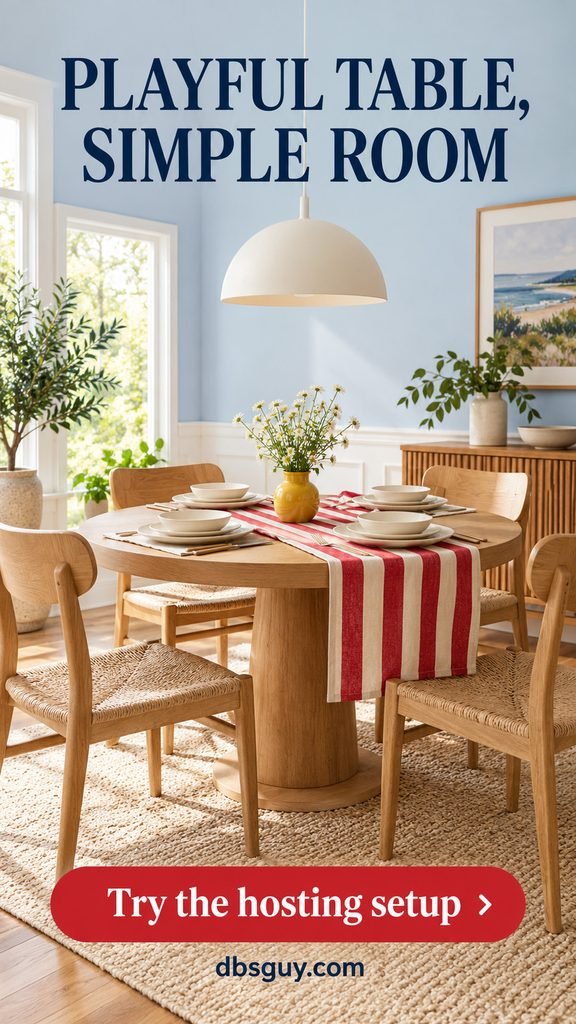
A dining table offers an easy trial run. Lay a red and cream striped runner across a round oak table, use plain cream dishes, and add a small yellow vase. Pale blue walls and natural wood chairs keep the scene relaxed. The pattern lives on something you can remove after dinner.
Measure the runner against your table rather than choosing by a styled photo. Keep the overhang where it will not bunch in someone’s lap, and leave enough room for plates and serving dishes. On a small table, a compact vase is more practical than a sprawling centerpiece.
For fall gatherings in the USA, deepen the red toward burgundy and use the same plain dishes you already own. For holiday meals, remove the everyday centerpiece before adding seasonal decorations; building a second display on top can make the table awkward to use. This look does not require themed tableware, matching striped chairs, or a new dining set.
Before you buy anything
Take a photo of the room as it is, then identify the area that needs attention. Pick one of the six approaches above for that area. Keep your existing sofa, bed, or dining table unless it genuinely fails your needs.
- Start with the least commitment: a runner, cushion, throw, or artwork you already like.
- Check daily use: open doors, pull out chairs, and walk through the space before deciding on a new furniture footprint.
- Compare color in the room: use fabric and paint samples alongside your floor, curtains, and upholstery.
- Pause before adding more: live with the first change and see whether the room needs another accent or simply less clutter.
A trend purchase earns its place when it is comfortable, useful, and enjoyable on an ordinary Tuesday. You do not have to commit to the whole aesthetic for one striped chair to make sense.
FunHaus decorating questions
Is FunHaus the same as dopamine decor?
They overlap in their love of joyful color and personal expression. FunHaus has a more specific circus-influenced vocabulary: stripes, theatrical curves, and a little visual humor. Dopamine decor is a broader label, so a colorful room does not automatically read as FunHaus.
Can it work in a small apartment or rental?
Yes—as a styling approach. A runner, throw, or freestanding side table lets you try it without altering walls. Check your lease before painting or mounting anything. Keep decorative pieces out of routes you use every day; the room should still function at its actual size.
Do I need red and white stripes?
No. Oxblood and cream are a softer option, while dusty pink stripes work in the bedroom shown here. You can also skip the stripe entirely and use the yellow sculptural table or blue scalloped mirror. The connection is the playful design language, not one compulsory color combination.
How do I stop it from feeling like a themed party?
Choose a focal point with a clear purpose and give it a plain background. If you already have a strong print, introduce interest through a solid-colored shape rather than another pattern. Keep enough open surface for the things you actually do in the room.
Will it still look good after 2027?
No forecast can guarantee a trend’s lifespan. Buy the stripe, shape, or artwork because it suits your room and taste. Removable textiles make experimenting easier, while good proportions and useful furniture remain worthwhile beyond the trend name.