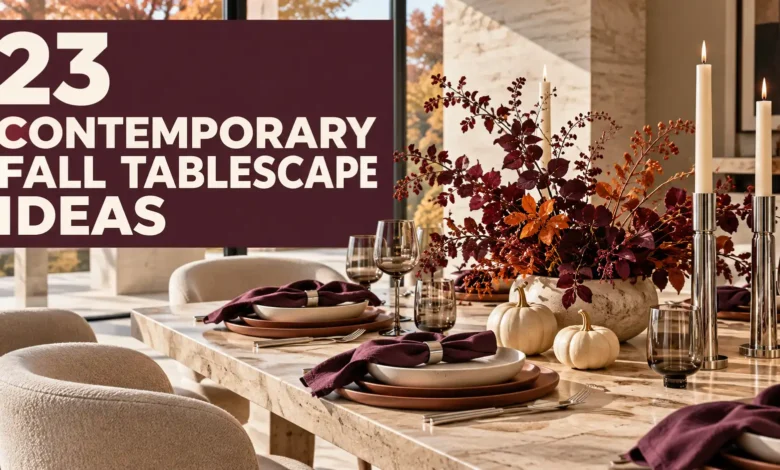
Contemporary fall tablescape ideas can start with a softer curve, an unexpected color pairing, or one useful object with a strong shape. Think rust linen winding across oak, cobalt glasses beside orange persimmons, or a simple dinner menu treated like a small art print.
The 23 looks below give you different ways to make that choice. Some change only a napkin or plate; others build the whole table around a textile, centerpiece, or serving arrangement. Use your existing dishes wherever they suit the idea, and choose one main feature before adding accessories.
The images are AI-generated styling concepts created to illustrate these ideas.
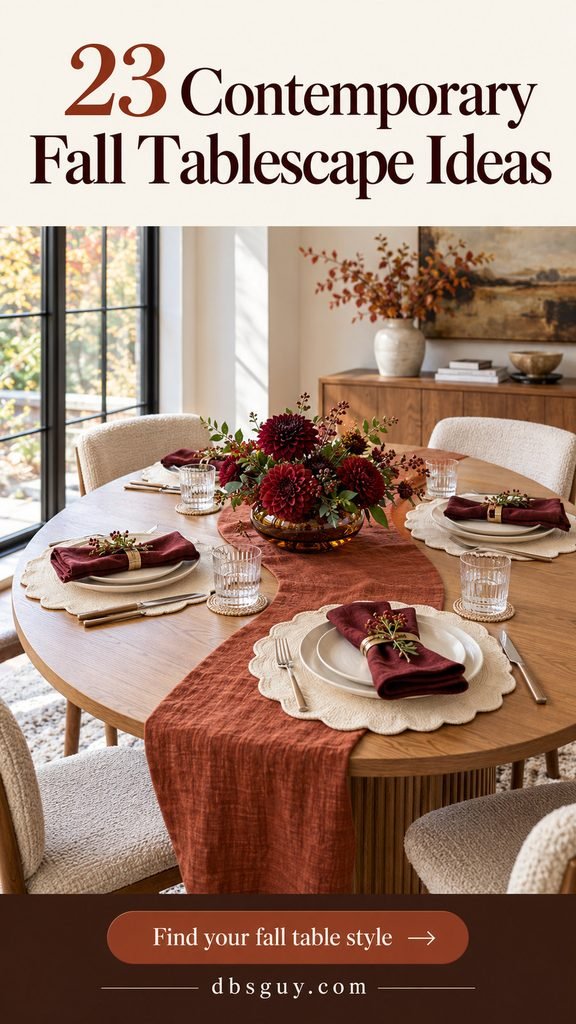
Choose the Detail You Want to Change
- Keep your dishes: start with the runner, paper cards, or napkin details in ideas 1, 8, 12, and 17.
- Bring in more color: try cobalt and orange in idea 5, plum and butter yellow in idea 7, or graduated napkins in idea 20.
- Make the centerpiece the feature: look at the loop vase, asymmetric flowers, or pumpkin curve in ideas 9, 10, and 13.
- Plan around the meal: use the shared serving dishes, soup bowls, or brunch pitcher in ideas 18, 19, and 23.
Before choosing sizes, set out one complete place with the glass and utensils the meal needs. Then put your largest empty serving dish where you expect to use it. The remaining space tells you more than a centerpiece photo does.
1. Soften a Straight Table with a Curved Rust Runner
Lay a narrow rust runner along a rectangular table, then gently pull its middle sideways to create a shallow S. Smooth the fabric near each place setting while leaving a little relaxed movement through the center. The curve breaks up the straight table edges without covering all the wood.
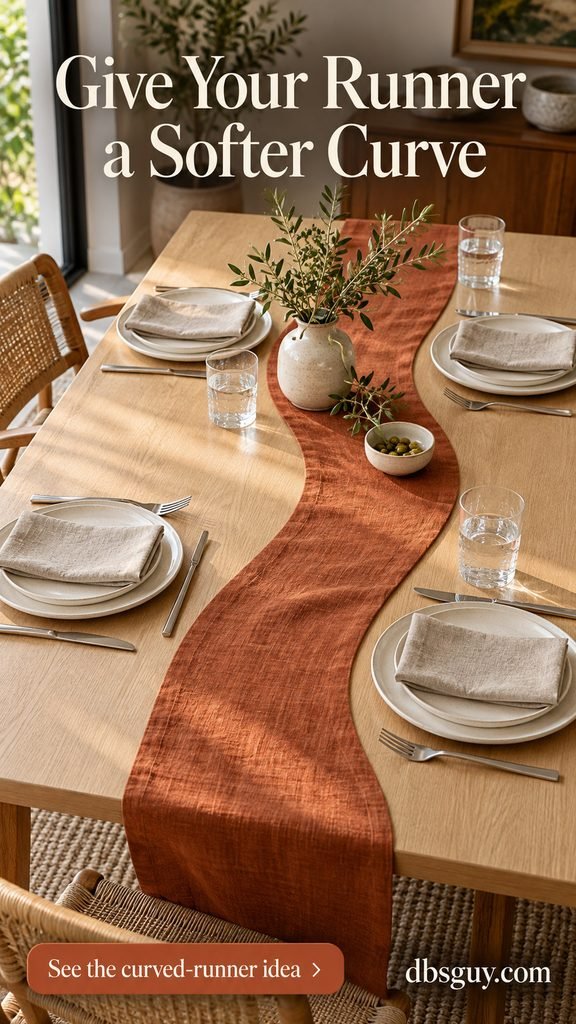
Keep plates and glasses on level surfaces beside the gathered fabric. A small cream vase or bowl can sit in a wider part of the curve, but the runner already supplies the main seasonal gesture. If yours is too short to drape over the ends, let it finish on the tabletop rather than stretching it flat.
2. Divide the Table into Two Warm Color Blocks
Start with an ivory tablecloth and cover one lengthwise half with a flat ocher textile. Line up the inner edge with the table’s center so the two colors meet in one clean seam. Repeat ivory dishes and napkins across both halves; the changing background creates the contrast.
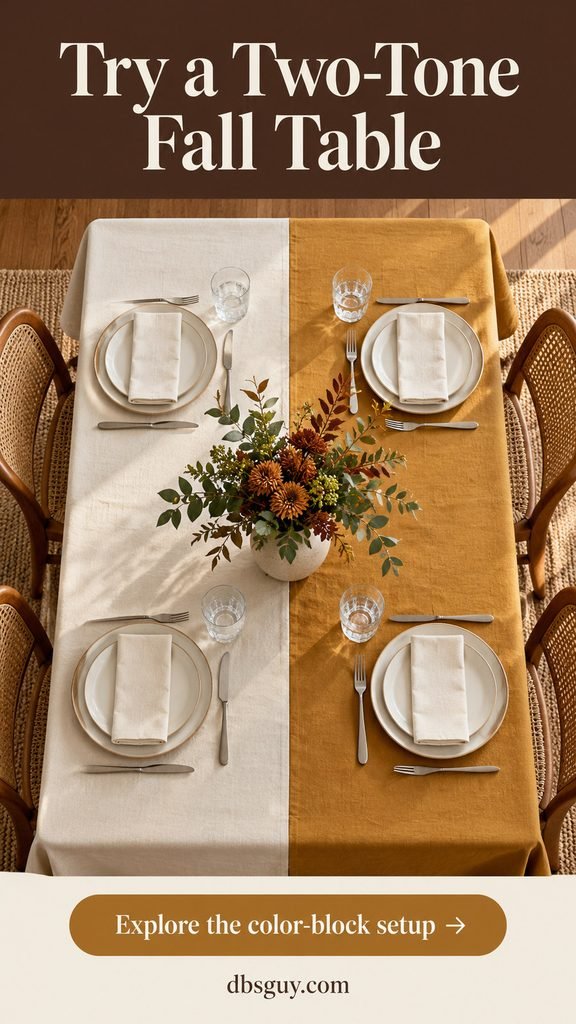
Try the overlap with empty glasses before guests arrive. Fold thick hems away from their bases, and secure any hanging fabric that pulls out of position. Keep the center simple: a modest floral arrangement, as pictured, works for a dinner served from the kitchen. For family-style serving, let the food occupy that seam instead.
3. Let Wide Chocolate Stripes Do the Decorating
Choose a cloth with broad espresso and ivory stripes, then keep the plates solid. Rust napkins warm up the dark lines without introducing another large pattern. Running the stripes along the table’s length gives the setting a clear visual direction.
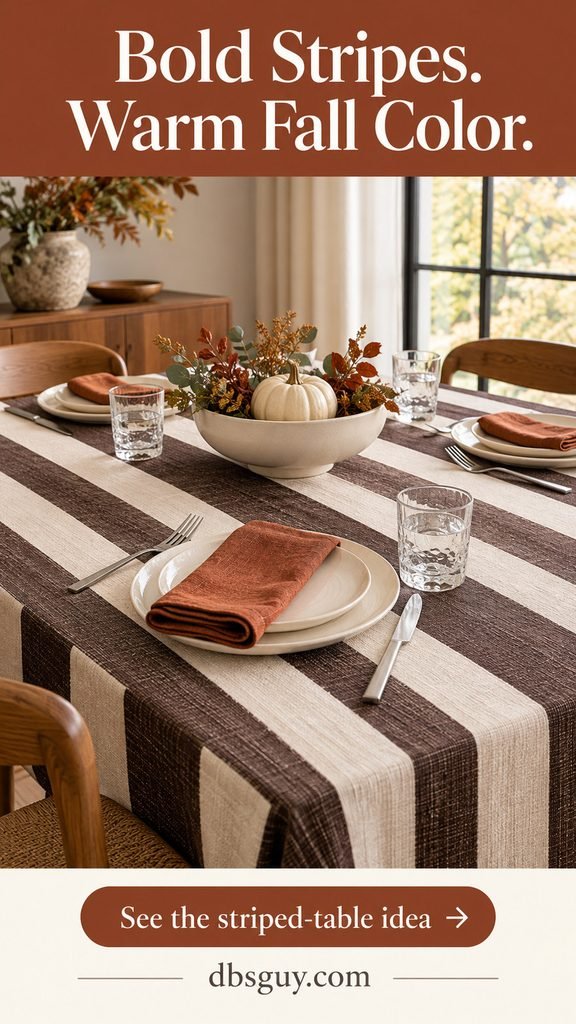
A low bowl of pale pumpkins can provide a small seasonal accent; keep any flowers close to the bowl so the cloth remains visible. Skip a second runner on top. If you already own a striped cloth in another neutral combination, use it first and adjust the napkin color to suit.
4. Frame Plain Plates with Scalloped Cinnamon Mats
Scalloped placemats introduce a rounded outline without requiring decorative dinnerware. Choose solid cinnamon or warm brown mats, and set a smaller ivory plate in the middle so the shaped edge remains visible all around.
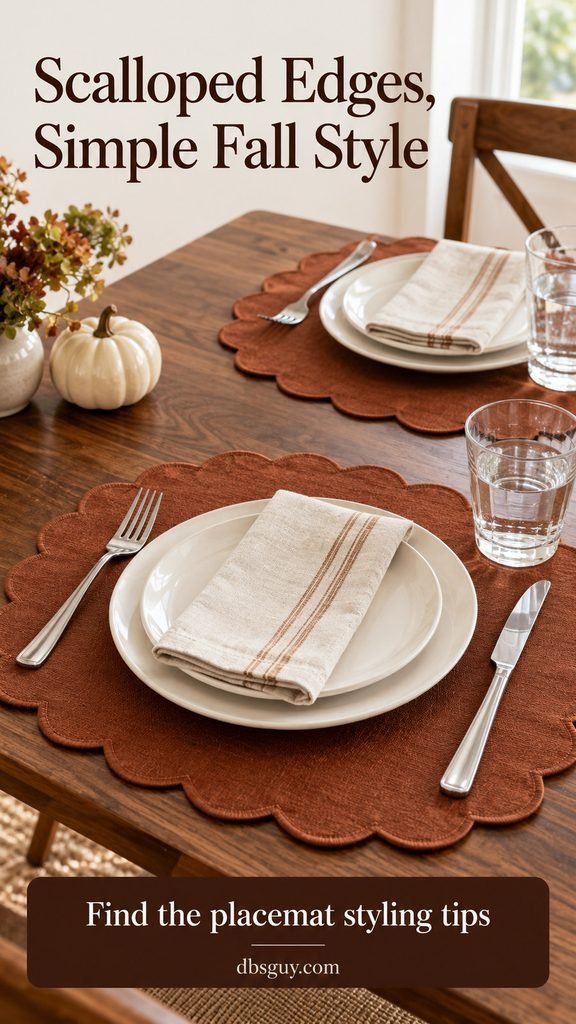
Check the mat’s full footprint, including its scallops, against the neighboring setting. If the edges overlap, remove a layer or use a smaller mat. A cream napkin keeps the outline easy to notice; a fine stripe is quiet enough if that is what you own. On a busy wood grain, keep other tabletop details especially restrained.
Also Read: 15 Neutral White Simple Fall Tablescape Ideas
5. Pair Cobalt Glasses with Orange Persimmons
Give each setting one cobalt water glass and put whole persimmons on a shallow cream platter. The fruit supplies an unmistakable fall color, while the blue glass makes the arrangement feel less expected. Ivory dishes and napkins give both colors room.
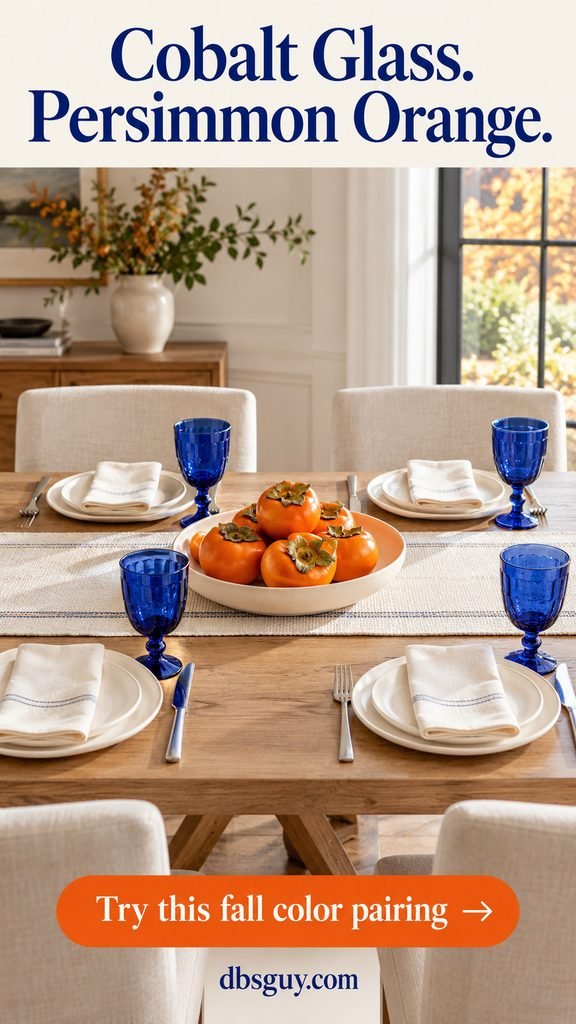
Keep the persimmons in a low mound rather than a tall stack. If you have only two blue glasses, use this idea for a dinner for two instead of buying a full set. Whole orange mini pumpkins can take the fruit’s place, although their shape creates a more literal seasonal look. Keep the blue concentrated in the glassware.
6. Put Burgundy Dahlias in a Low Amber Bowl
Use a squat amber glass bowl for short-cut burgundy dahlias. Let the flower heads sit close to the rim so the transparent base remains part of the arrangement. Chocolate napkins connect the dark blooms to the place settings without making everything the same color.
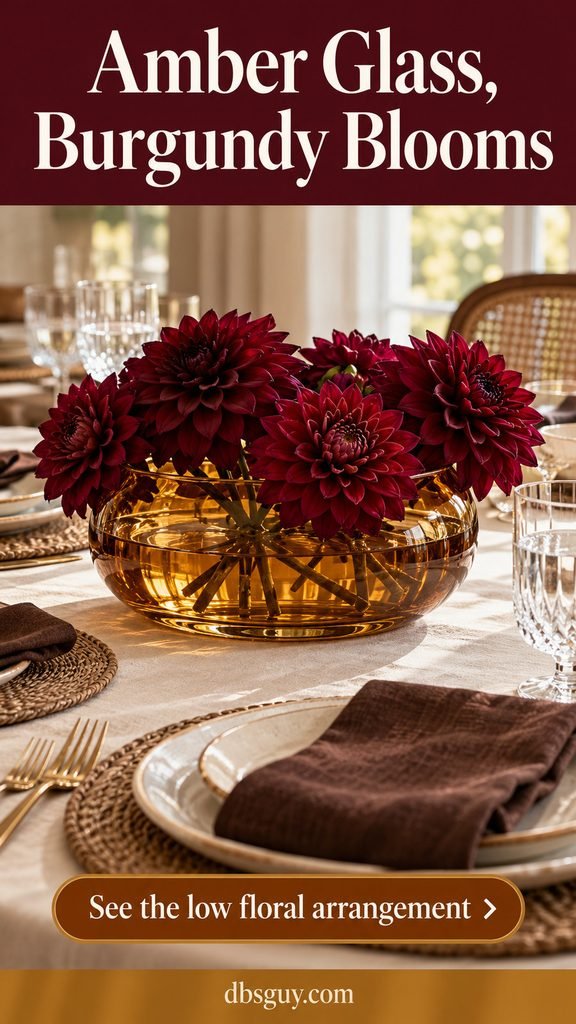
Check that the vessel is watertight, remove leaves that would sit below the water, and add clean water. If the stems spread too far, use a floral tape grid across the opening to help position them. Keep the bowl low enough to see over while seated. A narrower bowl is a better adjustment than adding more flowers to fill an oversized one.
7. Brighten Plum Dinnerware with Butter-Yellow Napkins
Deep aubergine plates give soft yellow napkins a clear outline. Set them against oatmeal linen with clear glasses and uncomplicated stainless flatware. One small ivory pumpkin is enough to connect the color pairing to fall.
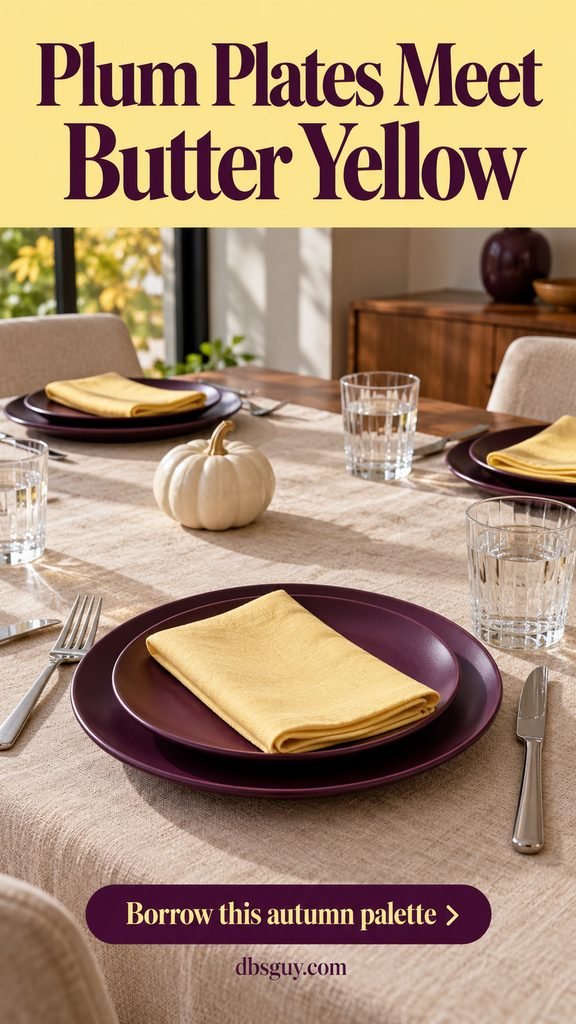
If you want to try the combination without replacing your dinner plates, use plum salad plates on a neutral base. Keep the yellow in the napkins rather than adding yellow flowers, candles, and glassware too. This version works well when the table is visible from another room: the repeated pale rectangles remain easy to read against the dark dishes.
8. Make Pleated Paper Place Cards
A small rust paper fan turns a guest’s name into a sculptural detail. Place one on a flat napkin at each seat, then leave space above the plate for guests to move it when dinner begins.
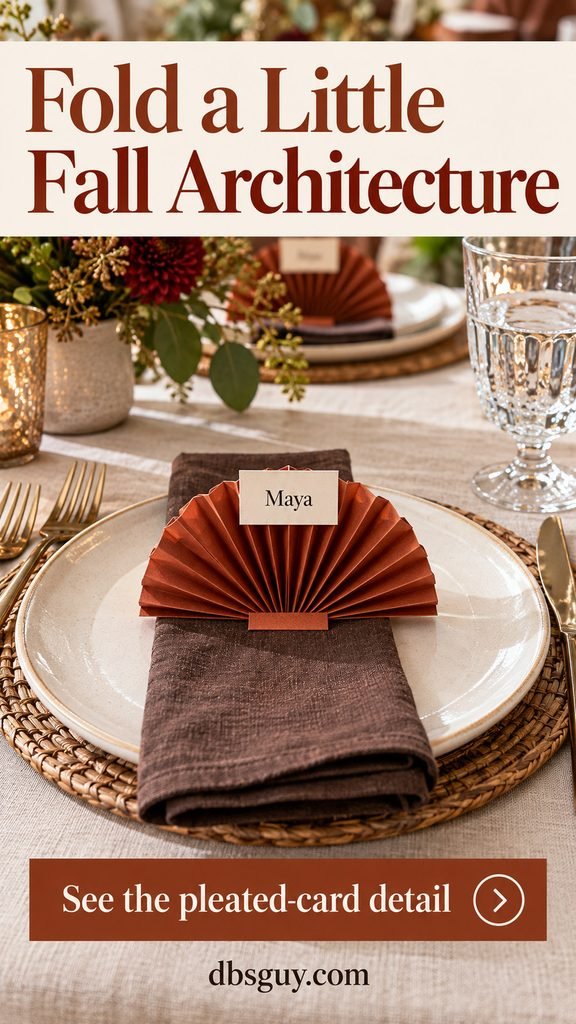
- Accordion-fold a rectangle of cardstock into evenly sized pleats.
- Fold the pleated strip in half and join the two inner edges with double-sided tape to open a semicircle.
- Attach the pinched bottom to a small folded cardstock foot, then add a cream name tab near the top.
Make one sample before preparing the full set. If it tips, widen the foot or reduce the fan’s size. Keep the names readable and the paper clear of food; you do not need a matching paper garland.
Also Read: 23 Last-Minute Simple Fall Tablescape Ideas
9. Use a Loop Vase as the Main Shape
A low ceramic loop vase gives the table a sculptural focal point before you add a flower. Choose warm terracotta and keep the opening through the middle visible. A few short rust chrysanthemums in its neck are enough to establish the season.
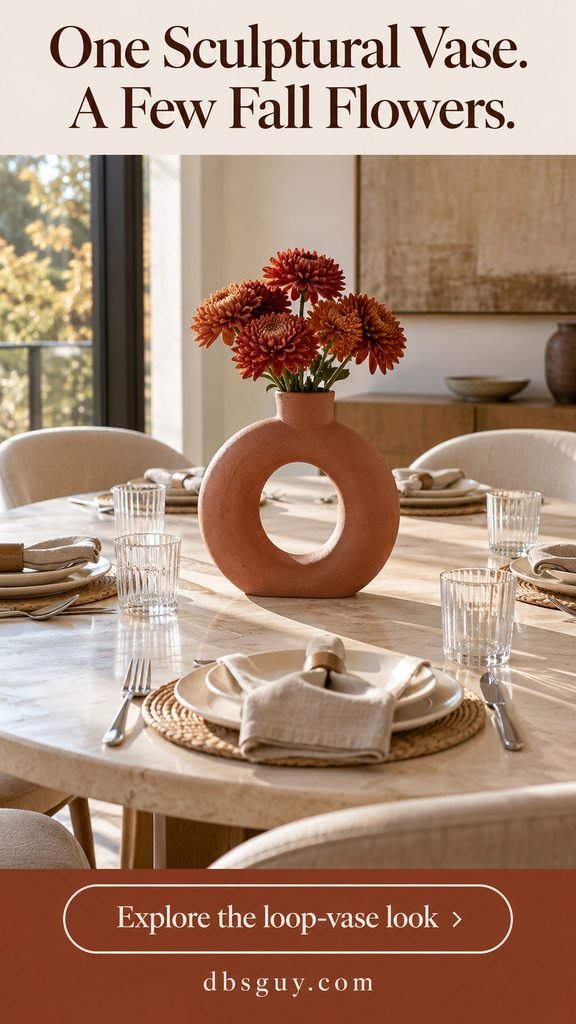
Look at the vase from both sides of the table: the flowers should complement the ring rather than hide it. Some decorative vessels are not watertight, so check before adding fresh stems. Use faux flowers if yours is intended only for dry display. Plain napkins and dishes allow the unusual silhouette to stand on its own.
10. Arrange Flowers Low and Off Center
In a shallow cream bowl, mass several short burgundy blooms toward one side and let a slim copper-colored leafy stem extend low toward the other. The open space between the shapes gives the arrangement movement. This suits a table where you want flowers without a round, tightly packed bouquet.
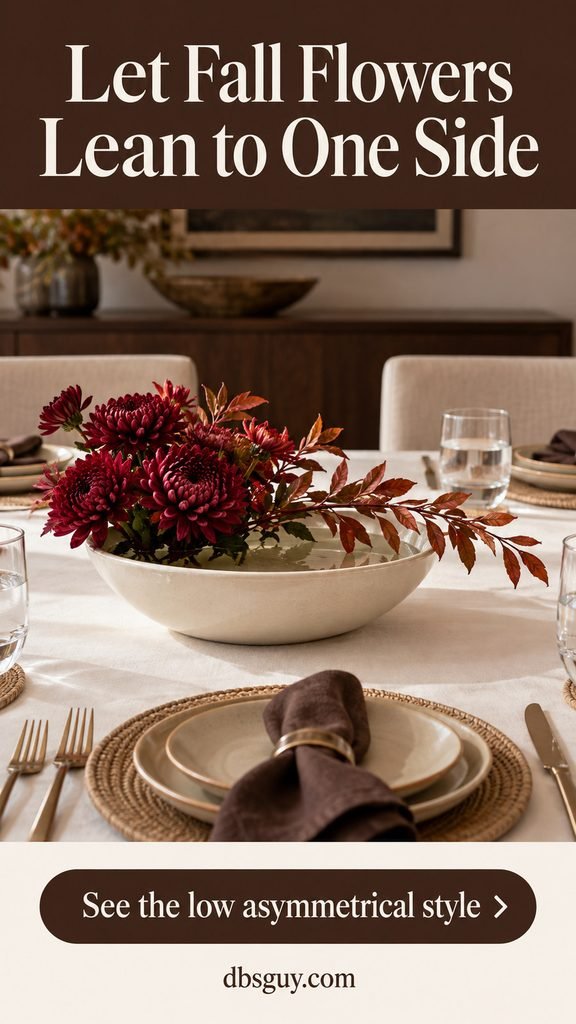
Use a flower frog made for the vessel and secure it according to its instructions, keeping any pins inside the bowl and away from children. Add water for fresh stems. Check the branch’s reach as well as its height: it should stay clear of glasses and neighboring plates. Turn the bowl until the arrangement works from opposing seats.
11. Set Pomegranates in a Narrow Trough
A single row of whole pomegranates gives a long table a crisp red line. Choose a narrow, shallow trough and keep the fruit in one layer so each rounded shape remains visible. Cream linen and burgundy napkins echo the fruit without surrounding it with foliage.
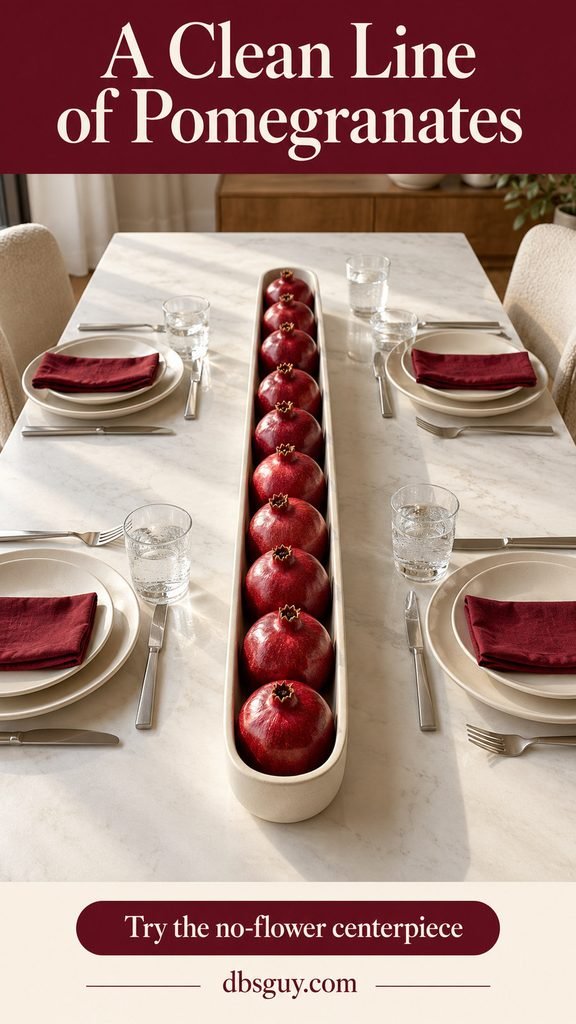
Use a food-safe serving vessel if you plan to eat the fruit, and keep it away from paint, glue, or floral treatments. Match the trough’s length to the space available, not to the full table. A long version suits a meal served from the kitchen or sideboard; shorten the row when shared dishes need the center.
12. Flatten a Rust Napkin into a Fan
For simple fall tablescapes with a more dressed-up place setting, turn the napkin itself into the detail. A low rust fan spreads across an ivory plate and leaves the middle of the table available.
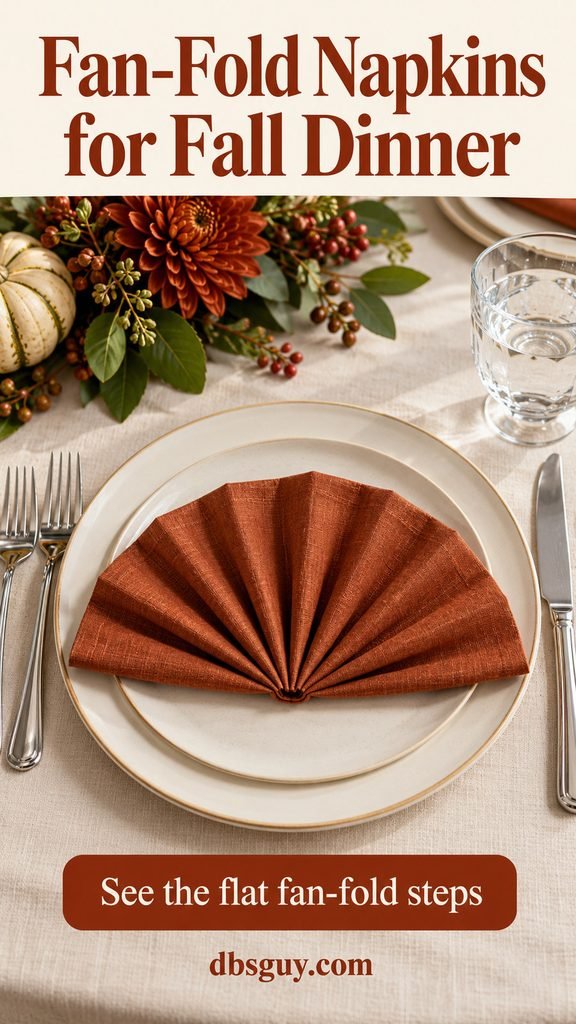
- Press a cloth napkin flat and fold it into a rectangle.
- Accordion-fold from one short end, keeping the pleats even.
- Pinch one end, tuck its tip underneath, and spread the opposite end into a flat semicircle on the plate.
Practice with one napkin first. Thick linen may need wider pleats; a softer fabric may relax before guests arrive. If the fan will not stay tidy, make a smaller fan rather than propping it up with decorative objects.
13. Trace a Small Pumpkin Curve on a Round Table
Arrange three small ceramic pumpkins in a short, gentle curve just off the middle of a round table. Choose ivory, pale peach, and terracotta to give the group a gradual color change. The slight arc softens the arrangement while leaving some of the center visible.
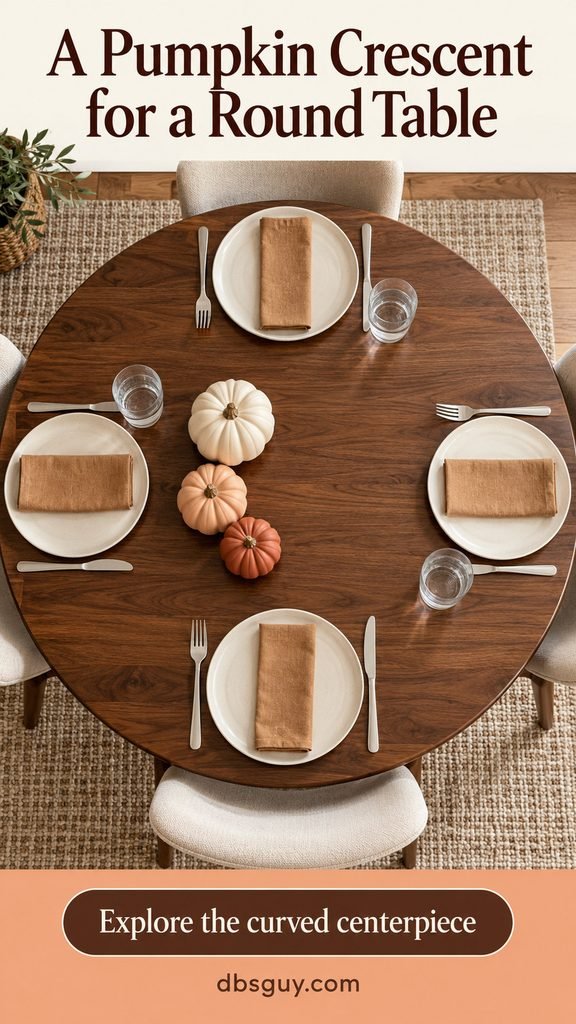
Turn each pumpkin until its base sits securely, and keep the group compact enough for the surrounding plates. Decorative ceramic pieces need no painting or carving, so this is useful when you want to reuse the same objects next fall. If three pieces crowd the table, keep the smallest one and carry the warm colors into the napkins.
14. Light Dinner with a Small Cordless Lamp
A rust mushroom lamp gives an evening table a rounded shape and a pool of warm light. Use one compact cordless model with a stable base, then keep the plates pale and the napkins chocolate brown. Its shade becomes the decorative feature.

Charge the lamp before setting the table and test its lowest useful brightness after dark. You should still be able to see the food and the person opposite. Follow the lamp’s instructions, keep it away from spills, and leave access to shared dishes. Choose a model rated for outdoor use if you take this idea outside; an indoor lamp is not automatically suitable for a patio.
Also Read: 17 Small Space Simple Fall Tablescape Ideas
15. Reflect Cranberry Linen in Steel Chargers
Set ivory plates on polished stainless chargers over an espresso cloth, then lay cranberry napkins across the plates. The exposed metal rims pick up light and frame the darker fabric. Clear glassware lets the reflective circles remain the main finish.
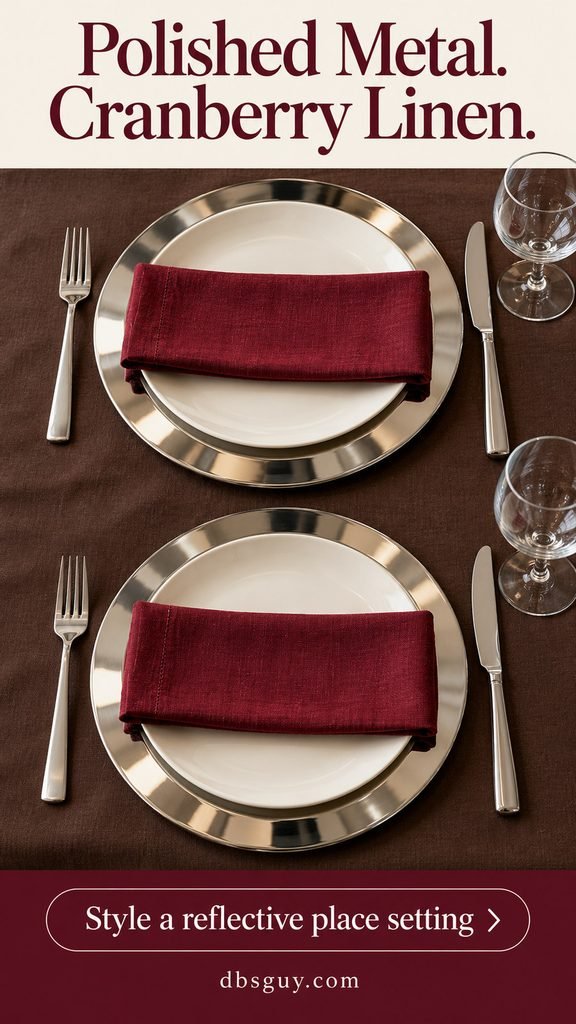
Check the charger size with the full place setting before committing to every seat. A broad rim can crowd flatware on a small table. Treat chargers as decorative underplates unless their maker identifies them as suitable for direct food contact, and remove them when they interfere with serving. If you already have another simple silver-toned charger, use that rather than mixing several metallic finishes.
16. Treat the Menu Like a Small Graphic Print
Use a cream menu card with a large burgundy numeral and a few short lines of dark text. Rest it on a chocolate napkin over a plain plate. The oversized type gives the setting an artful detail without adding another object to the center.
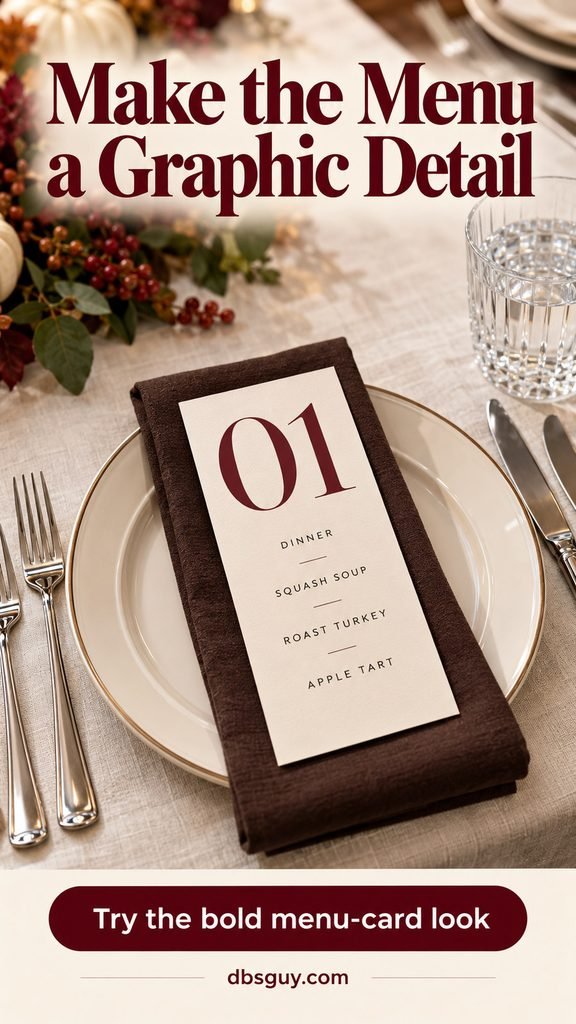
For a seated Thanksgiving meal, print only the courses you will actually serve. The numeral can identify a seat; use a guest’s initial instead if numbering feels too formal. Make one paper sample and check that it fits comfortably within the plate. Guests should be able to lift the card away without unpacking ribbons, clips, or layers of decoration.
17. Add a Cinnamon Running-Stitch Border to Linen
Give plain flax napkins a small handmade detail with widely spaced cinnamon running stitches near the edge. The dashed border is enough decoration against an ivory plate. It works especially well when you like quiet color but want the fabric to feel more personal.
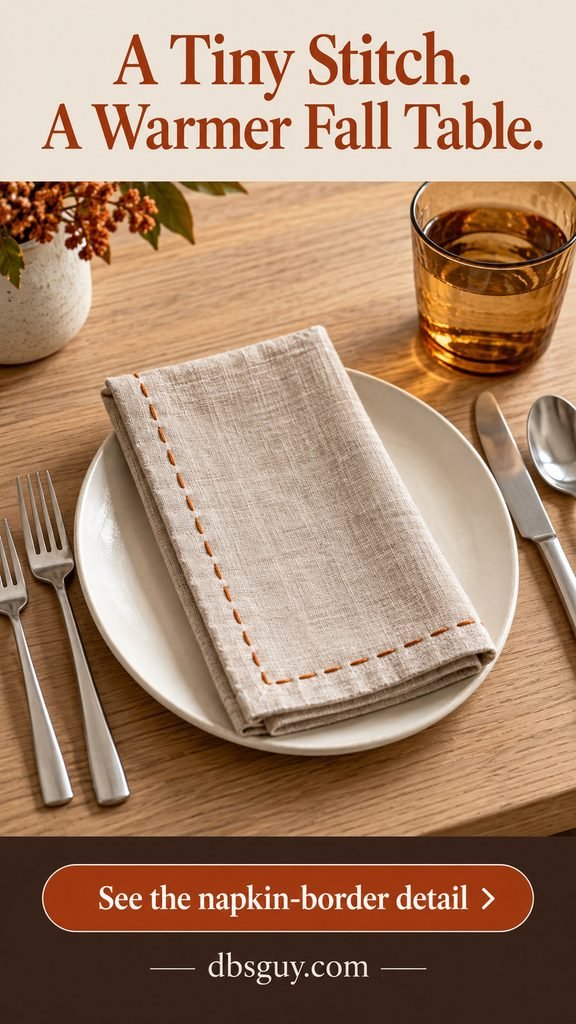
Try a short sample with thread suitable for the napkin’s fabric and care instructions. Use small, even stitches, secure the ends, and trim loose threads before laundering as directed. Complete the stitching before the day of the gathering. If sewing is not part of your plan, use an existing napkin with a contrast border and keep the same restrained setting.
18. Make Shared Serving Dishes the Repeated Shape
Arrange low square or rectangular serving bowls in a tidy line, with a little space between them. White bowls holding roasted squash, green vegetables, and rolls give the table both structure and color. Plain round dinner plates soften the straight-sided bowls; cinnamon napkins connect the food to the setting.
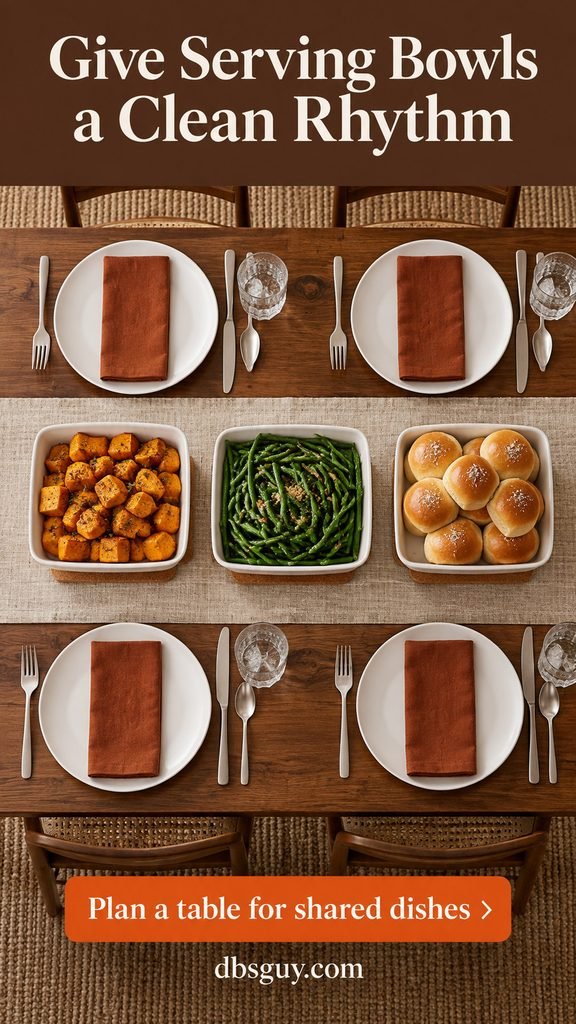
Lay out the empty bowls first and test whether people can reach them without leaning over another plate. Use suitable trivets for hot serving pieces, and leave a landing spot for utensils. This arrangement is for a small shared meal, not every Thanksgiving dish at once. Keep refills nearby instead of filling the entire table with oversized containers.
19. Build a Soup Supper Around Ocher Bowls
Ocher soup bowls can make a weeknight fall meal feel considered without a separate centerpiece. Set each bowl on an ivory underplate, add a forest-green napkin, and let the orange soup provide another warm layer. Put the soup spoon to the right.

Choose bowls intended for the food temperature you will serve, and ladle the soup shortly before everyone sits down. Keep a bread plate or basket within easy reach rather than decorating the empty center. You can use the same idea with a different fall soup; the point is the warm bowl color and simple place setting, not a particular recipe.
20. Graduate the Napkin Colors Along the Table
For six seats, use three related napkin colors in pairs: dusty peach, cinnamon, and burgundy. Place the peach pair opposite each other at one end, cinnamon in the middle, and burgundy at the far end. Keep the plates, glasses, and napkin folds consistent so the progression is easy to see.
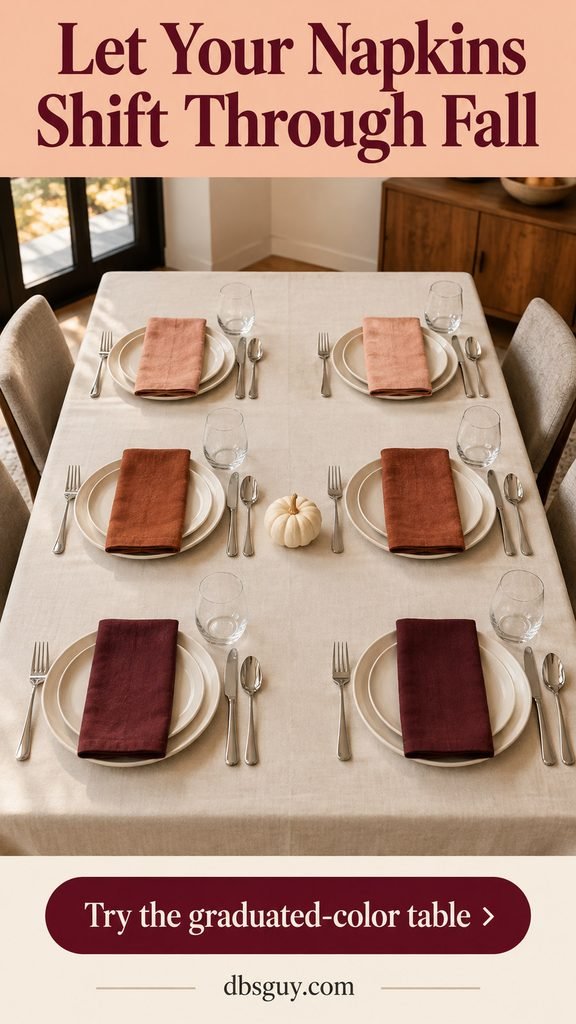
Lay out all six napkins in daylight before setting the table. The middle color should bridge the lighter and darker ones; if it looks unrelated, swap it for a closer shade. This is a good way to combine small napkin sets. With four seats, a simple light-to-dark pair still gives the table a deliberate rhythm.
Also Read: 17 Burgundy & Plum Simple Fall Tablescape Ideas
21. Choose a Cloth with Abstract Leaf Outlines
A cream cloth with large chocolate leaf outlines and a few solid terracotta shapes brings in fall through drawing rather than loose foliage. Use plain dishes and solid napkins so the printed spaces between them remain visible.
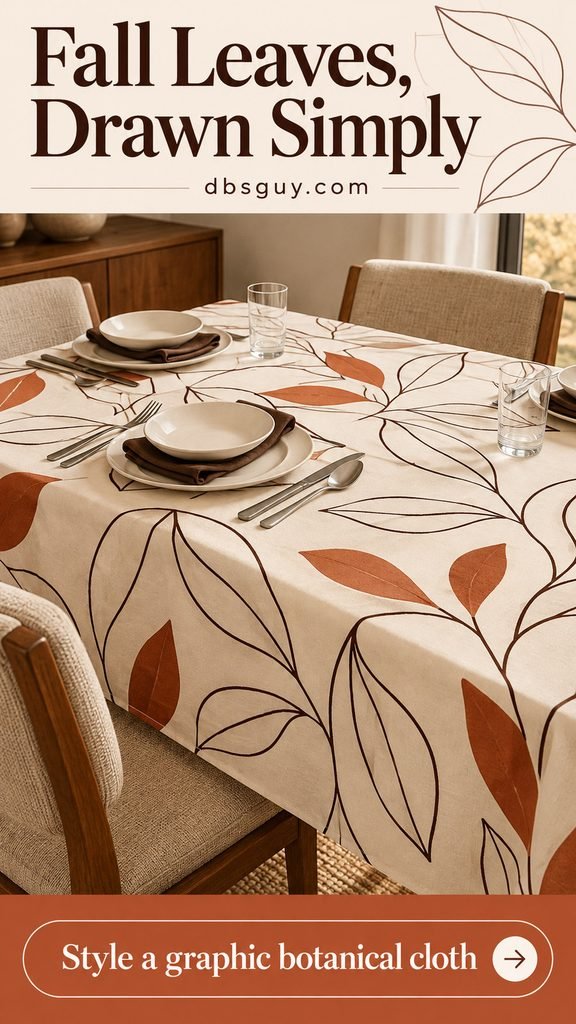
Look at the scale of the pattern before adding other layers. If a dinner plate hides most of one leaf, that is fine as long as parts of the design still show around the table. Skip patterned chargers and a dense centerpiece. The cloth works for lunch as well as dinner, and you can change its mood with cream napkins for a lighter setting or brown for more contrast.
22. Layer One Brushstroke Plate over Everyday Dinnerware
Use a rust-and-ivory salad plate with loose abstract brushwork on top of a plain ivory dinner plate. This gives each seat a small piece of pattern while allowing you to keep the larger dishes you use all year. Put a solid cinnamon napkin to the left so the painted-looking surface stays visible.
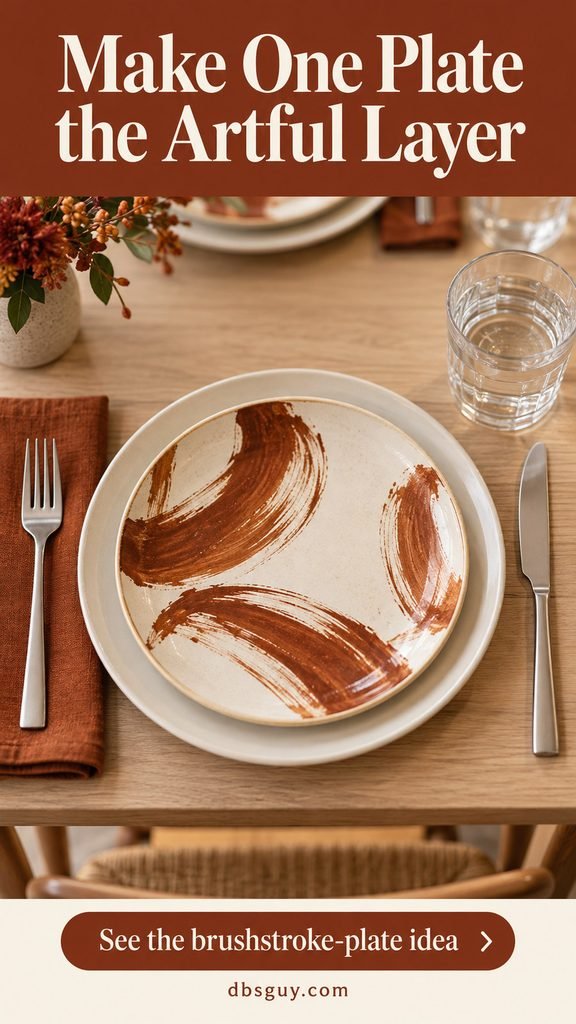
Choose finished dinnerware sold for food use; this idea does not require painting your own eating surface. Keep the plates similar in scale and repeat the same small plate around the table if possible. A pair is enough for a two-person dinner, where a large centerpiece would distract from the detail.
23. Anchor Fall Brunch with a Terracotta-Colored Pitcher
A low, broad pitcher can be the useful focal point of a cream-and-olive brunch table. Choose glazed ceramic intended for beverages, set it on a coaster, and pair it with amber tumblers. The terracotta color supplies warmth while the green napkins keep the place settings distinct.
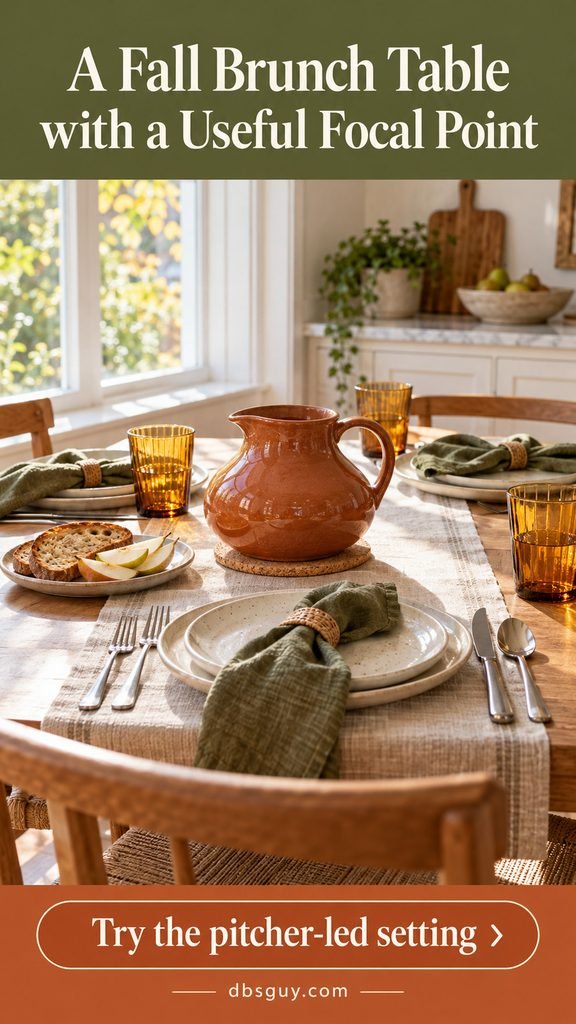
Fill the pitcher with water and leave enough clear space around its handle to lift it comfortably. If it feels heavy when full, fill it less and refill from the kitchen. Toast, pears, or whatever you are serving can provide the remaining detail. This is an easy direction when you want a fall table without flowers or decorative pumpkins.
Make the Styled Table Comfortable to Use
Once your chosen detail is in place, sit down and check the table from each seat. Move any branch, shade, or arrangement that hides the person opposite. Lift the largest serving dish and put it down again; the route should feel easy before the dish is full.
For a straightforward dinner setting, place the fork on the left, the knife on the right with its cutting edge toward the plate, and the water glass above the knife. Set out additional utensils for the courses you are serving. Paper cards and folded napkins can start on a plate, then move aside when guests begin eating.
If you add candles to any of these looks, flameless ones are the easier choice beside paper and textiles. For burning candles, follow NFPA’s candle safety guidance: use sturdy, heat-resistant holders, keep candles at least 12 inches from anything that can burn, and extinguish them before leaving the room.
Frequently Asked Questions
What makes a fall tablescape feel contemporary?
For these looks, it is a clear design choice: an expressive shape, a graphic pattern, an unexpected color pairing, or a useful object given space. A scalloped mat or bold menu card can establish that direction without changing every dish. Keep the surrounding layers simple enough for the feature to remain visible.
Can I use these Thanksgiving tablescape ideas with everyday plates?
Yes. Begin with the textiles, paper cards, glassware, or napkin folds rather than the ideas that depend on special dinnerware. For a full Thanksgiving meal, choose a compact accent at each seat or plan a separate serving area before adding a long centerpiece.
Which ideas work without a tablecloth?
The curved runner, scalloped mats, pumpkin curve, stitched napkins, and brushstroke plates all work with an exposed tabletop. Check that decorative objects have clean, dry bases, and use coasters or protective pads suitable for your table’s finish where needed. Hot serving dishes still need appropriate trivets.
How do I make a contemporary fall table on a small budget?
Change one layer you can repeat. Try the paper place cards, a different fold for napkins you own, or a warm runner arranged in a curve. Use the images to identify the main move rather than treating every photographed accessory as a shopping list.
How much decoration belongs on a small dining table?
Start with the places people need to eat, then test the serving pieces. If there is little room left, put the design in the napkins, mats, or plates and leave the center available. A table can feel finished through repetition at the seats without a separate centerpiece.