
Start with a pair of bottoms you already like, a top you can wear on its own, and one layer you can take off between classes. That is enough to build a useful spring college outfit. You do not need 13 separate shopping lists to get 13 different looks.
These combinations cover cool mornings, warm afternoons, library days, and a casual presentation. Each includes a way to use what you own and a practical check before you buy anything. Keep the colors as inspiration, then adjust the fit, coverage, and layers to your campus and forecast.

The images are AI-generated styling concepts. They illustrate outfit combinations, not specific products, real students, or wear-tested results.
Choose Your Spending Limit Before Choosing a Look
“Any budget” starts with a no-purchase option. The amounts below are example spending caps for a refresh, not verified store prices or promises that a complete outfit costs that amount. Use a lower limit if that fits your situation.
- $0: Pick the look closest to your closet. Keep your current shoes and school bag; change the pairing, tuck, or top layer.
- Up to $25: Look for one missing piece secondhand or on sale. Keep the cap for the whole purchase, including tax and any shipping. Leave it if the fit or condition is wrong.
- Up to $75: Fix the most useful gap first, such as everyday trousers or a light jacket. Do not divide the money among accessories before checking what you actually need.
- More room to spend: Prioritize fit, comfortable walking shoes, or a layer you will use repeatedly. A higher budget does not require more outfits.
Before buying, name three outfits the piece would make with clothes you own. Check the garment’s care instructions, too. A care routine you cannot manage in your dorm is part of the cost, even when the purchase price looks good.
1. A Striped Shirt, White Tee, and Straight-Leg Jeans

Start with the jeans you reach for on laundry day, a white tee, and an unbuttoned blue striped shirt. The stripes give the outfit a focal point; the tee lets you take the shirt off without rebuilding the look. Add your everyday sneakers and the bag that actually holds your class materials.
A shirt that falls below the waistband works well worn open. If the sleeves bunch beneath your backpack straps, roll them once or twice rather than pushing them into a thick cuff.
Keep it within budget: Use a solid button-down, an old flannel, or a shirt borrowed with permission. You do not need the exact stripe. If you are buying one missing piece, check the shoulder fit and whether the buttons close comfortably before considering the color.
2. A Butter-Yellow Cardigan With Dark Wide-Leg Jeans

For a spring outfit that still uses your darker jeans, add a butter-yellow cardigan over a white tank. The contrast keeps the colors clear, while the open front shows the waistband of the wide-leg jeans. White sneakers tie the top and bottom together.
Choose a cardigan you can comfortably bend your elbows in over the base layer. A fitted tee can replace the tank if you want more coverage. On a cool morning, button the cardigan; in a warm classroom, fold it into your bag.
First purchase, if needed: The cardigan, provided you already like your jeans. Cream, light blue, or a color you wear often can do the same job. Check secondhand knits for underarm pilling, stretched cuffs, and missing buttons so a low price does not become a repair project.
3. A Gray Sweatshirt With a Sage Midi Skirt

Give the sweatshirt from your usual jeans outfit a new partner: a fluid sage midi skirt. Gray keeps the combination quiet, and sneakers make it easy to wear to a lecture or library session. A sweatshirt ending around the hip leaves more of the skirt visible than a long, bulky hoodie.
Before leaving, sit down, take a long step, and climb a stair. The waistband should stay comfortable and the skirt should allow your normal stride. If the top swallows the waist, try a small front tuck only if the fabric sits comfortably; a shorter sweatshirt is another option.
Save the purchase: An existing jersey or woven skirt can stand in for sage. Keep your sweatshirt and shoes, then change just the bottom. Skip a delicate skirt whose care needs do not fit your laundry routine.
4. A Black Jersey Midi Dress and Denim Jacket

A black jersey midi dress is useful when matching separates feels like one decision too many. Wear it with an open denim jacket and off-white sneakers. The jacket adds shape across the shoulders, while the plain dress keeps the outfit easy to repeat.
Check a close-fitting dress in daylight and while seated. You want enough room through the hips to move, and a slit that stays within your comfort level. If you bike to class, choose a different outfit when the skirt would interfere with pedaling.
Use what you have: A plain cotton dress and an open overshirt give a similar result. If you already own a denim jacket, do not replace it for a particular wash. Put any available budget toward a dress you can sit and walk in comfortably.
5. A Windbreaker, Leggings, and Your Usual Trainers
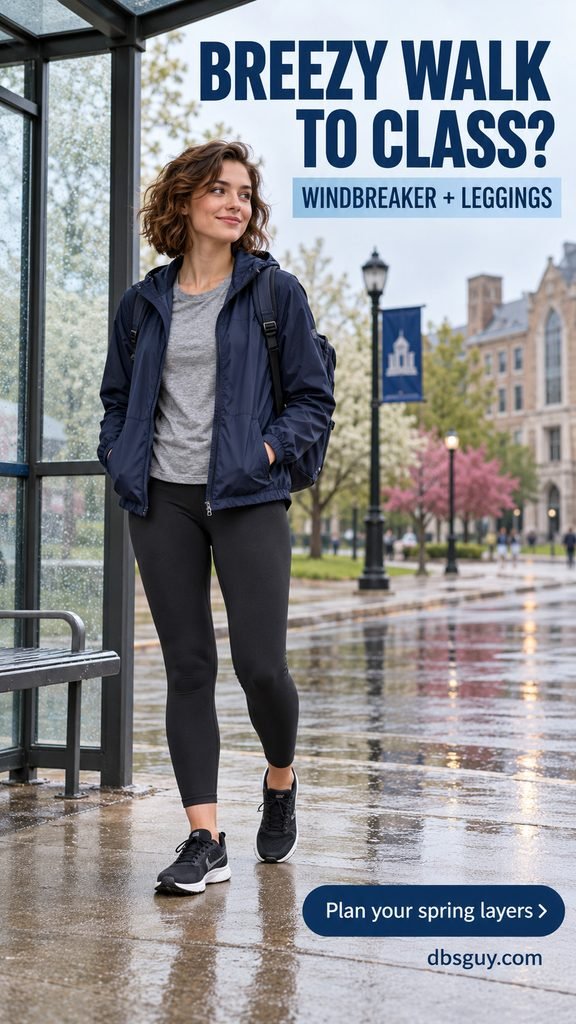
For a breezy walk or a bus commute, pair a navy windbreaker with a gray tee, black leggings, and trainers. The outfit leaves room for a backpack and gives you an outer layer you can unzip indoors. An existing zip jacket works if wind protection is not needed.
A windbreaker is not automatically a rain jacket. For a wet forecast, check the garment’s stated protection and bring the rain gear you normally rely on. Keep leggings thick enough for your preferred coverage, and check them while bending in good light.
Spend where the gap is: Keep the activewear and shoes you already use. If your outerwear is the weak point, prioritize a jacket suited to your actual commute over buying a matching set. Choose footwear you know works on your route, especially when surfaces are wet.
6. A Lavender Tee With Olive Cargo Pants

Olive cargo pants already have plenty of detail, so a plain lavender tee is enough on top. An open gray zip hoodie adds warmth without covering the color combination. Keep the hem of the pants clear of the ground with the shoes you will actually wear.
The important fit check is at the seat and thigh: sit, bend, and make sure the side pockets do not pull open. Cargo pockets are handy for small items, but a full phone-and-key load on each side can change how the trousers hang.
Budget swap: Keep your existing utility pants, chinos, or relaxed khakis. A tee in pink, white, or pale blue can bring the same lighter feel. Buy cargos only if you want that fit and pocket layout, rather than because the photograph uses them.
7. A White Button-Down With Navy Pull-On Trousers

When you want something a little sharper than jeans for office hours or a campus job, try a white button-down and navy pull-on trousers. A relaxed leg and comfortable waistband keep the outfit suitable for sitting through class. Black loafers finish it neatly; your clean everyday sneakers are an easy alternative.
Tuck the shirt if it stays comfortable when you sit. Otherwise, leave a shorter shirt untucked. For more coverage, use a longer opaque shirt and the sleeve length you prefer. The photo’s neutral headscarf is one way to keep the colors simple.
What to look for: Opaque fabric, pockets that lie flat, and a waistband that does not twist. If you are refreshing only one item, choose the trousers when they would also work with your tees and sweaters.
8. A Chambray Shirt and Cream Bermuda Shorts

For a warm afternoon, tuck a chambray shirt into cream Bermuda shorts and add canvas sneakers. The longer short length changes the proportions from a typical tee-and-denim-shorts outfit. A tan belt is optional; use one only if you like the detail or need the fit adjustment.
Try the shorts while seated before choosing them for a long lecture. The waistband and hems should not dig into your stomach or thighs. Check light-colored fabric in daylight, too. A loose shirt with sleeves rolled neatly gives you some flexibility as the day warms up.
Avoid an unnecessary buy: A blue cotton shirt can replace chambray, and tan or navy shorts can replace cream. If your campus is still cold, save this combination for later in the semester rather than forcing it into the forecast.
9. A Sweater Vest, White Tee, and Denim Midi Skirt

A cocoa sweater vest over a white tee brings a little library-day polish to a charcoal denim midi skirt. Choose a finer knit if you want a layer that will fit easily into your bag. Sneakers keep the heavier denim from making the outfit feel too formal.
With a denim midi, check the walking opening as carefully as the waistband. Take your usual stride and try a stair; a narrow skirt can feel restrictive even when it fits at the waist. An A-line cut or a comfortable slit can give you more room.
Thrift selectively: The vest is the piece to look for if you already own a tee and skirt. Check the neckline and armholes over your actual base layer. If you have no suitable skirt, use your existing dark jeans rather than buying two pieces for one look.
10. An Oatmeal Matching Set You Can Split Up

A matching short-sleeve shirt and loose pants create an outfit with very little coordination. Oatmeal works with brown sandals or the white sneakers used throughout this list. This is a warm-day option; add your existing jacket if the morning calls for one.
The extra value comes from separating the pieces: wear the shirt over the white tee and jeans from look 1, then pair the pants with the lavender tee from look 6. Those are styling options, not a reason to buy more coordinating items.
Check before paying: Make sure both halves fit independently and that the fabric is opaque in daylight. A linen-like texture does not confirm linen fiber content or a particular care method. Read the labels. If the set only works together, two separates you already own in similar tones may serve you better.
11. A Navy Polo With a White Pleated Skort

If you like preppy campus outfits, try a navy polo with a white pleated skort, crew socks, and sneakers. The collar and pleats provide the detail, so the rest can stay simple. A polo you already own does not need a particular logo or brand to work here.
Look at the skort’s inner shorts as well as the outside. Check whether they ride up, whether the waistband stays comfortable, and whether you like the coverage when seated. Choose a longer skirt or shorts if those feel better for your day.
Keep the cost down: Start with the sporty bottom you have and add a collared top. You do not need a new backpack, tennis shoes, and accessories to complete the idea. Save this lighter combination for weather that suits it.
12. A Beige Blazer With a Tee and Charcoal Trousers

For a class presentation with a relaxed dress expectation, layer a beige blazer over a white crewneck tee and charcoal trousers. Black loafers and a practical laptop bag keep it straightforward. Check the assignment or event instructions first; a tee may be too casual for an interview or a formal presentation.
When trying a blazer, reach forward as if typing and lift your arms. The shoulders should allow movement without pulling across the upper back. Sleeves that cover your hands or major shoulder alterations can make a secondhand bargain less useful.
One-event solution: Borrow a suitable blazer if you can, or use a campus career closet if your school offers one. With a larger clothing budget, prioritize fit in a jacket you will wear again. You can reuse the loafers and white top from other looks.
13. A Green Floral Midi Dress With a Cream Cardigan
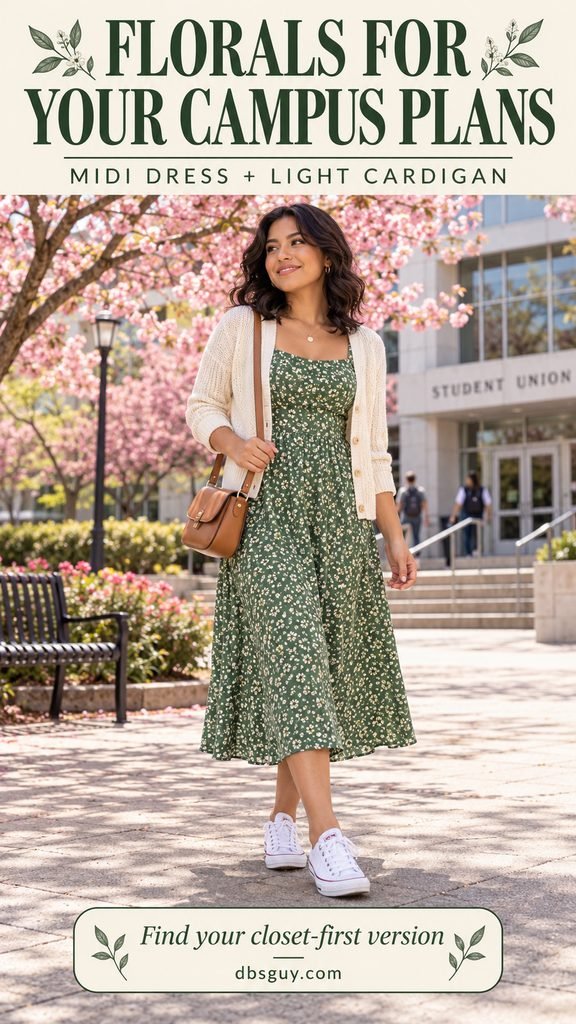
For a club social, casual campus event, or coffee after class, pair a green floral midi dress with a cream cardigan and canvas sneakers. The print supplies the interest, so there is no need for a separate occasion bag or special shoes. Choose your usual school bag when you still have books to carry.
A cardigan ending around the high hip lets the dress’s waist remain visible. If yours is longer, leave it open and check that the layers hang comfortably. Make sure the dress neckline stays where you want it when you bend or reach.
Closet-first version: Use any printed dress you enjoy, including one you usually save for weekends. A solid dress also works with the same cardigan. If you want a change without a purchase, switch the denim jacket from look 4 for a softer knit you already own.
Make a Small Rotation From Your Favorites
Choose three looks you can make mostly from your own clothes. For example, the striped-shirt outfit, the cardigan-and-jeans outfit, and the dress-and-denim-jacket outfit give you different shapes while repeating a white base layer and sneakers. Keep your existing school bag across all three.
Lay them out with the actual shoes and layers you will wear. Sit down, reach for your bag, and check the hems. Then photograph the combinations on your phone so you can get dressed without starting over each morning. Repeat pieces as often as you like; change the combination when you want variety.
Choosing an outfit for a first club meeting? Once it is set out, use How to Join Clubs in College: Find Your People Freshman Year to plan which meeting to try and how to follow up.
Spring College Outfit Questions
What if spring is still cold where I go to college?
Start with the jeans, cargo, or trouser outfits, add a warmer base layer if needed, and keep wearing your winter coat when the forecast calls for it. These are styling ideas, not temperature ratings. Bare legs and light knits can wait.
What should I buy first on a tight budget?
Identify the item that keeps several existing outfits from working. If your shoes are comfortable and your jeans fit, a versatile shirt or removable layer may be enough. If nothing is missing, save the money. You do not need to purchase a spring color to dress for spring.
Can these outfits work for labs, studios, or campus jobs?
Check the requirements for that specific class or workplace. A skirt, sandals, loose sleeves, or exposed legs may not meet its rules. Choose the permitted clothing first, then use a similar color combination or layer where appropriate.
How can I adjust the looks for more coverage?
Use a tee in place of a tank, longer shorts or a longer skirt, and an opaque shirt with sleeves you prefer. Keep enough room for the layers underneath. Try the outfit while sitting and reaching so the coverage works through your day, rather than only while standing in front of a mirror.
For tomorrow, choose the outfit that needs the fewest changes. Set out its layer, shoes, and class bag tonight. You can build the next combination after you know what you actually enjoy wearing.
Also Read
- Spring Outfit Ideas – Keep Calm and Chiffon — more ways to combine light layers and spring pieces.
- First Week of College: The Freshman Survival Guide (Orientation to First Friday) — plan the campus routines your outfits need to support.
- Freshman Year: The Complete Survival Guide — organize the rest of your first-year essentials.