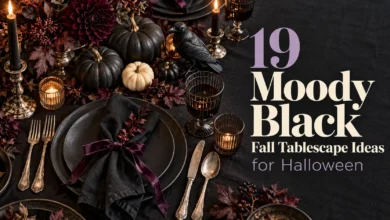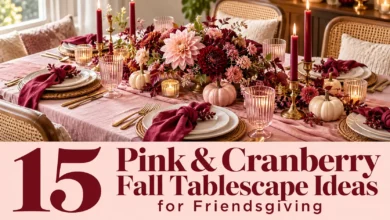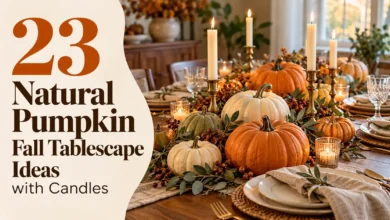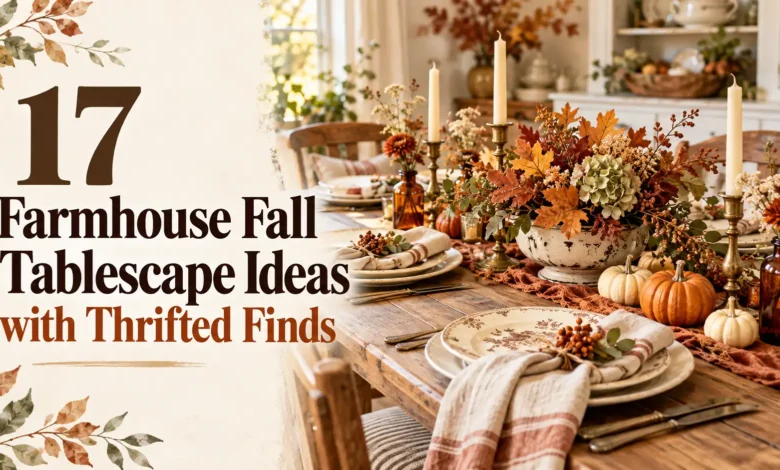
A secondhand tablecloth, a little brass holder, or an orphaned serving dish can give a fall table its starting point. Choose the find you like, then let its color, shape, or texture guide the pieces you already own.
These 17 farmhouse fall tablescape ideas show what to look for and how to give each find a useful job. You’ll find low centerpieces, details that stay at each seat, and serving setups that keep the dining table open. Pick one direction; you don’t need to collect everything here.
The images are AI-generated styling concepts. They illustrate placement and color rather than document real thrift purchases, tested arrangements, or specific products.
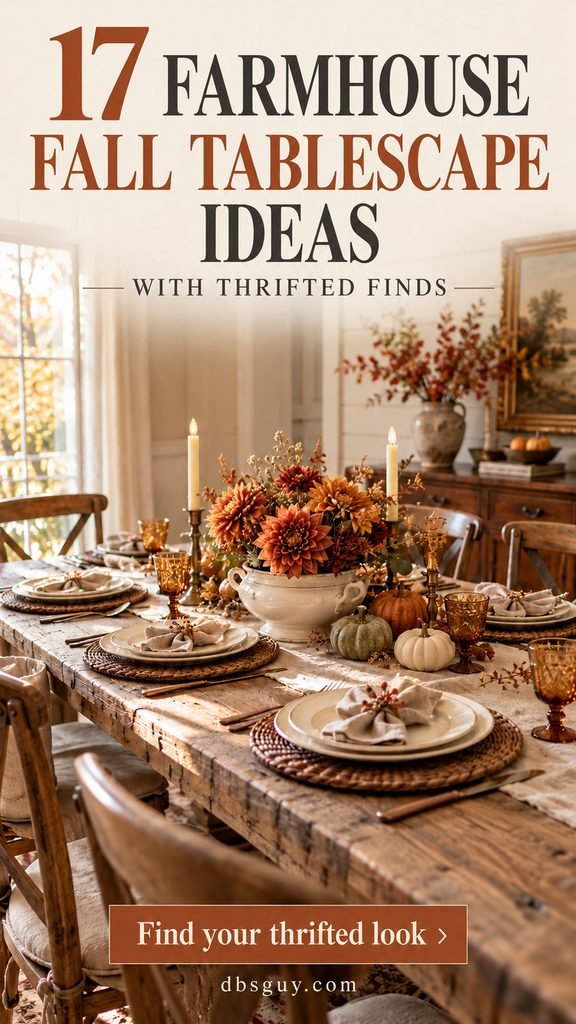
Choose Your Thrifted Starting Point
Before heading out, photograph your dishes and measure the space left after you set the table. Include the glasses and serving bowls you actually use. A beautiful basket that fills that entire gap will still be in the way at dinner.
- For one noticeable purchase: start with the tureen in idea 1 or the patterned cloth in idea 17.
- For a crowded Thanksgiving table: use the chair throws in idea 4, napkin rings in idea 6, or embroidered linens in idea 12.
- For a table you clear every day: try the handled tray in idea 8.
- For buffet service: borrow the crock station in idea 10 and the separate dessert setup in idea 16.
At the store, check the whole piece: the underside of a plate, the seams of a napkin, the basket base, and the joints of a stand. Decide whether you can clean it using its care instructions. Price in missing batteries, repairs, or an inner container before deciding it’s a bargain.
Give Unknown Vintage Dishes a Decorative Role
For food and drinks, use dishes you can identify as suitable for food use. NYC Health advises against using antique, worn, or uncertain-origin ceramic ware for food and also flags some brass and silver-plated tableware. Attractive glaze or a familiar pattern doesn’t establish food safety.
Here, uncertain old pieces hold faux flowers, fabric pumpkins, or other decorations. A vintage plate can sit beneath a separate food-safe dinner plate; an old stand can support a separate food-safe pie dish. Keep food off the vintage surface. Leave damaged, flaking, or sharp-edged pieces behind.
1. Turn a Lidless Tureen into a Fall Flower Bowl
A tureen with a missing lid can still have a good decorative shape. Look for a squat bowl with sound handles and feet, then use it for a gathered arrangement of faux rust dahlias, soft peach flowers, and olive-colored leaves.
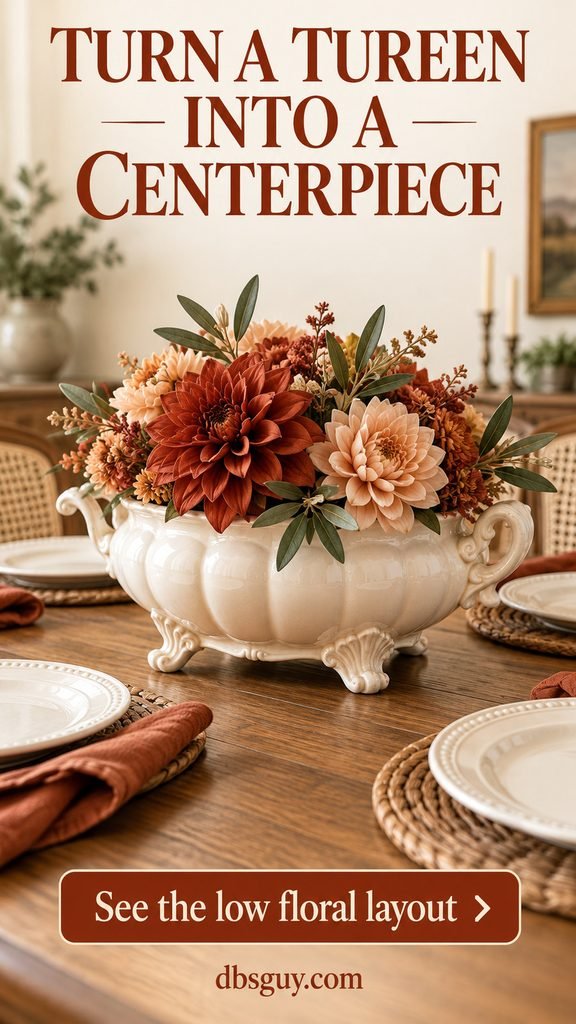
Build the shape from the rim outward. Shorten or bend the artificial stems so the largest flowers sit close to the opening, and tuck smaller stems into the gaps. Keep the handles visible; they’re part of what makes this different from an ordinary vase.
Set it between simple ivory dishes and clay-colored napkins. Sit down before calling it finished, and shorten anything that hides the person opposite you. If the bowl needs internal support, use a removable insert that fits without forcing the sides. This is a decorative flower bowl, even if its original purpose was serving soup.
2. Use Brown Transferware as Decorative Chargers
Finding six identical vintage plates can turn an enjoyable browse into a long search. For this setting, collect brown-and-white patterned plates with similar outer diameters, then repeat the same plain food-safe dinner plate on top of each one.
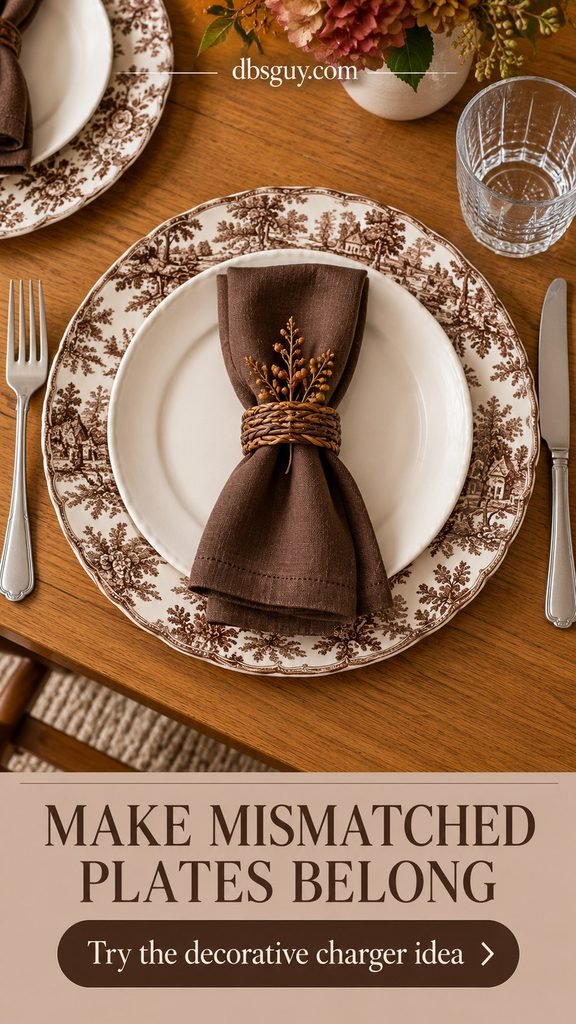
The exposed patterned rims connect the settings even when the scenes or borders differ. Take your dinner-plate measurement with you: the lower plate needs to be wide enough for its pattern to show, and the two pieces must nest without rocking.
Chocolate napkins bring the brown inward, while clear glasses keep the pattern easy to see. Treat the lower plates as decorative chargers and keep food on the separate upper dishes. Skip a candidate whose raised center makes the stack unstable; a matching color won’t solve that problem.
3. Fold a Damask Tablecloth into a Narrow Runner
A secondhand ivory damask cloth can supply texture without covering the whole table. Fold it lengthwise into a flat band, starting around 12 inches wide, then adjust it to the gap between your place settings.
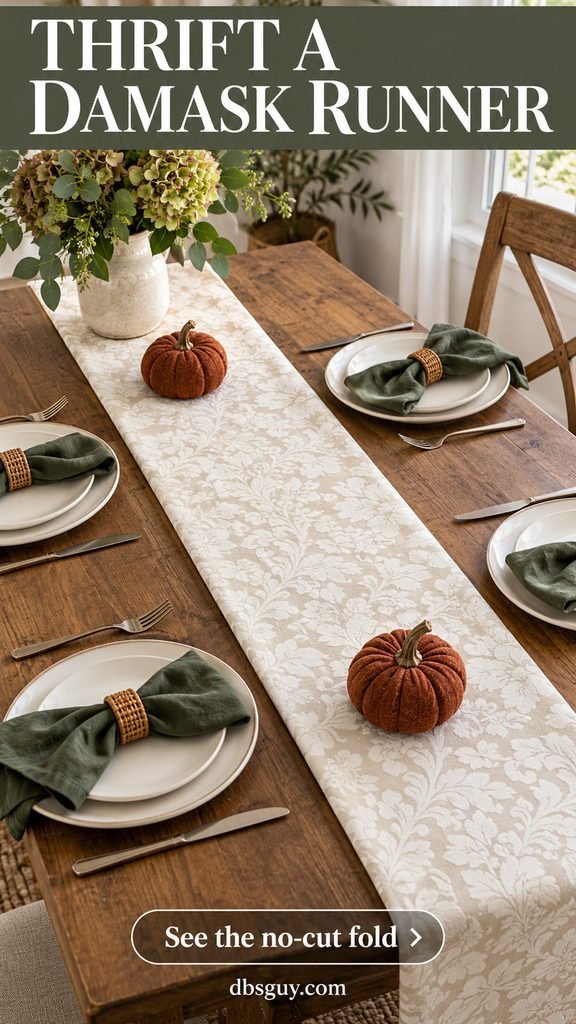
Press the folds according to the fabric’s care label and put the final opening underneath. Keep glasses and serving bowls off thick folded edges. If the cloth creates a bulky ridge, choose a thinner piece rather than trying to balance dishes on it.
Deep sage napkins and a pair of rust fabric pumpkins give the pale woven pattern some contrast. The flower arrangement pictured at the far end is optional; leave it off a table with a diner at that end. Check the cloth fully unfolded before buying, since a fold can hide a stain but won’t repair weakened fabric.
Also read: 15 Modern Farmhouse Fall Tablescape Ideas for more ways to balance rustic texture with simple dishes.
4. Put the Plaid on the Chairs
When serving bowls need the center of the table, let the chairs carry the seasonal pattern. Two small thrifted plaid throws in rust, mustard, and cream can warm up a plain wood dining set without adding another tabletop object.
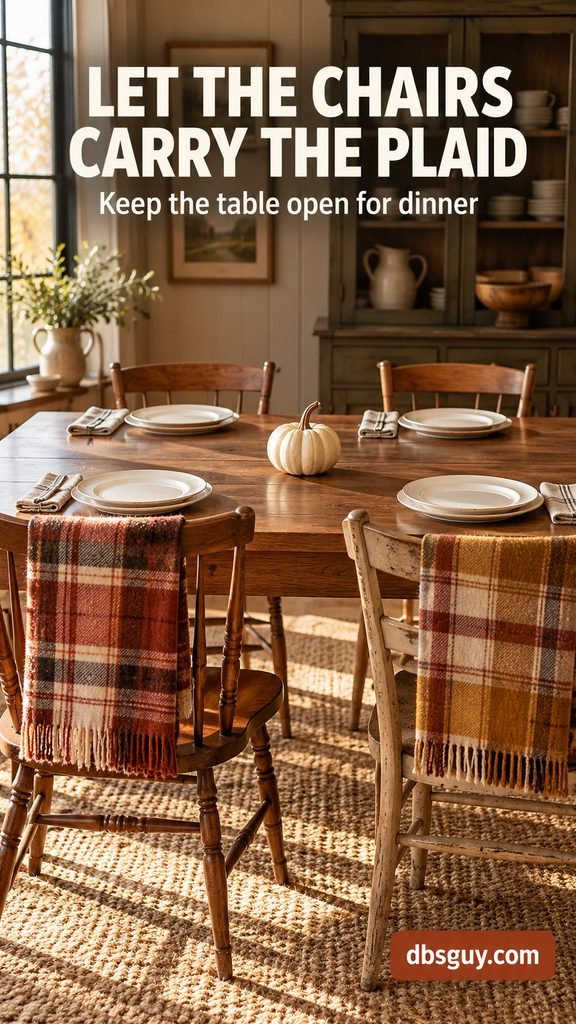
Fold each throw into a narrow rectangle and drape it over a chair back, keeping the seat clear. Check that fringe stays away from the floor, chair joints, and anything guests could catch while sitting down. Small throws are easier to manage here than heavy blankets.
Keep the settings neutral and use one cream pumpkin if the center has room. Inspect textiles for holes, odors, and care labels before purchasing, then clean them appropriately before use. You can dress just two visible chairs; this idea doesn’t require a matching throw for every guest.
5. Fill a Low Basket with Three Fabric Pumpkins
A shallow basket gives soft pumpkins a defined home. Search for an oblong, handle-free shape with a level base, then arrange a sage, cream, and dusty-orange fabric pumpkin inside it.
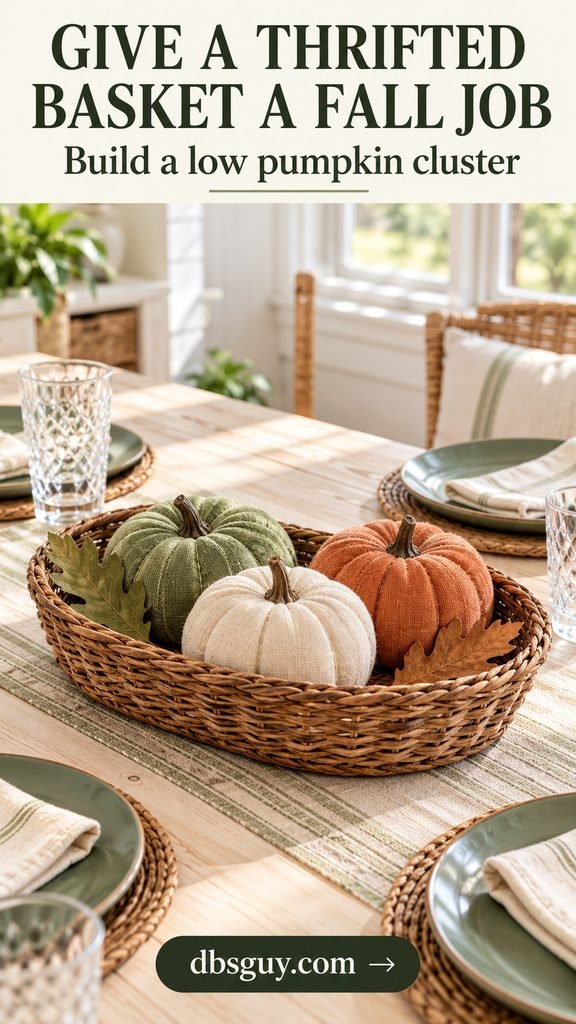
Start with the largest pumpkin toward the back and nestle the smaller ones beside it. Tuck a couple of faux oak leaves inside the rim. Keeping the leaves contained makes the basket easier to move and leaves the surrounding table usable.
Muted green dishes repeat one pumpkin color without making every object match. Measure the basket’s outside width, including its rim, and try it between your actual settings. A basket with high sides or an arching handle will create a different, more obstructive silhouette. Check the weave for loose ends that could snag napkins or scratch the tabletop.
6. Slip Wooden Curtain Rings onto Napkins
Plain wooden curtain rings can become a repeated detail at every seat. Choose smooth, intact rings without hooks, clips, or exposed hardware, and compare the opening with the thickness of your napkin before buying a bagful.
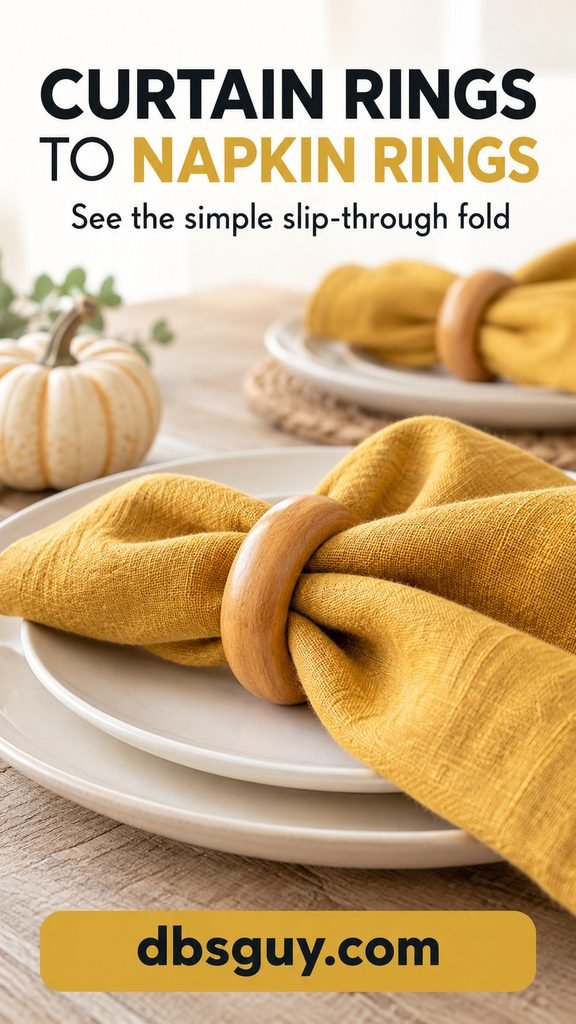
Lay a mustard napkin flat, gather its middle loosely, and pull that gathered section through the ring. Spread the two ends into a relaxed bow shape on the plate. The ring should hold the fold while sliding off easily.
Look for a sound finish that won’t rub off or catch the cloth. Clean the rings appropriately for their material and let them dry fully. If a ring needs stripping, sanding, or repairs, count that work before choosing it. A simple, ready-to-use find makes more sense for a quick table refresh.
7. Pair Different Brass Holders with Matching LED Tapers
Two brass holders can look related through their finish even when their stems differ. Choose broad, steady bases and use matching ivory LED tapers to give them one consistent outline above the metal.
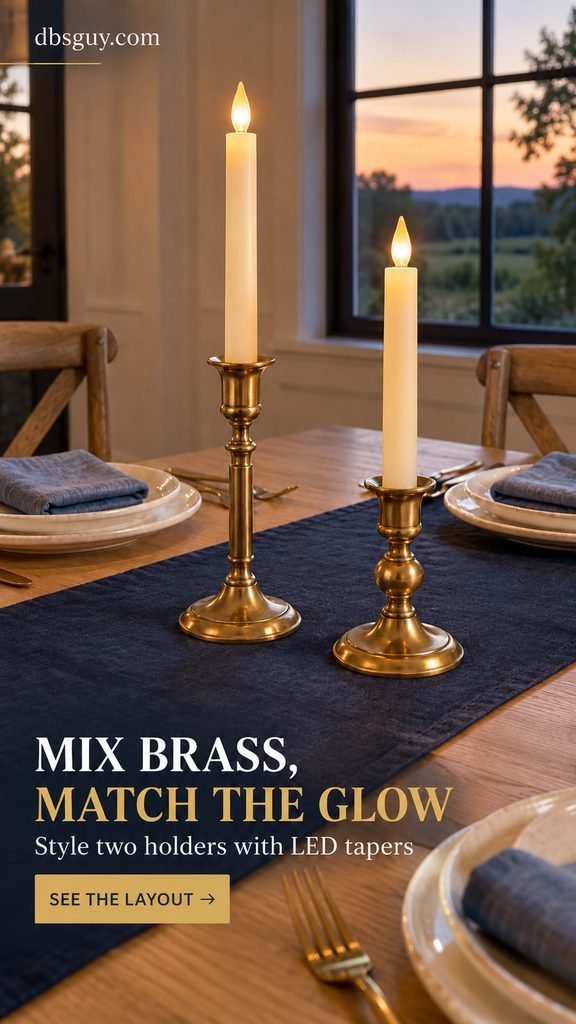
Bring the taper’s base measurement with you, or check the holder against the candle manufacturer’s stated fit. The candles should sit securely without leaning. Place the holders slightly apart on a flat navy runner, with clear space around each base.
Blue napkins and ivory dishes let the brass provide the warm accent. Check the LEDs at the lighting level you’ll use for dinner, and keep the room bright enough to see the meal. Use battery candles for this arrangement; a thrifted decorative holder should not be assumed suitable for an open flame.
8. Make a Silver-Tray Centerpiece You Can Lift Away
A handled tray is useful when the same table hosts dinner, homework, and everything in between. An old silver-plated tray can hold a rust fabric pumpkin, a smaller cream one, and a short LED light in a clear holder.
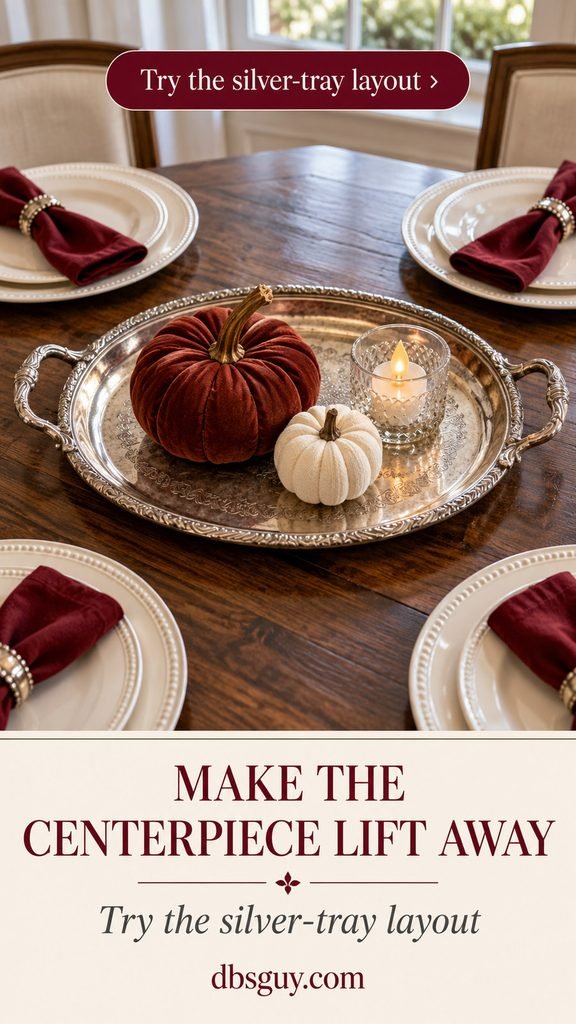
Arrange everything inside the rim, leaving both handles free. Test the loaded tray over the tabletop before carrying it elsewhere. Loose feet, weak handles, or a bowed base matter more here than how polished the metal looks.
Cranberry napkins pick up the richer pumpkin color. Keep the tray decorative, and use suitable protection beneath it if your table finish needs it. Before guests arrive, choose its second home—a sideboard or console with room for the whole tray—so clearing the center takes one deliberate move.
Also read: 17 Small Space Simple Fall Tablescape Ideas for more layouts that make serving room a priority.
9. Put Little LED Lights in Milk Glass
Small milk-glass vessels offer a different kind of evening detail from tall brass holders. Their white texture shows up in daylight, while a battery tealight supplies a little light above the opening after dusk.
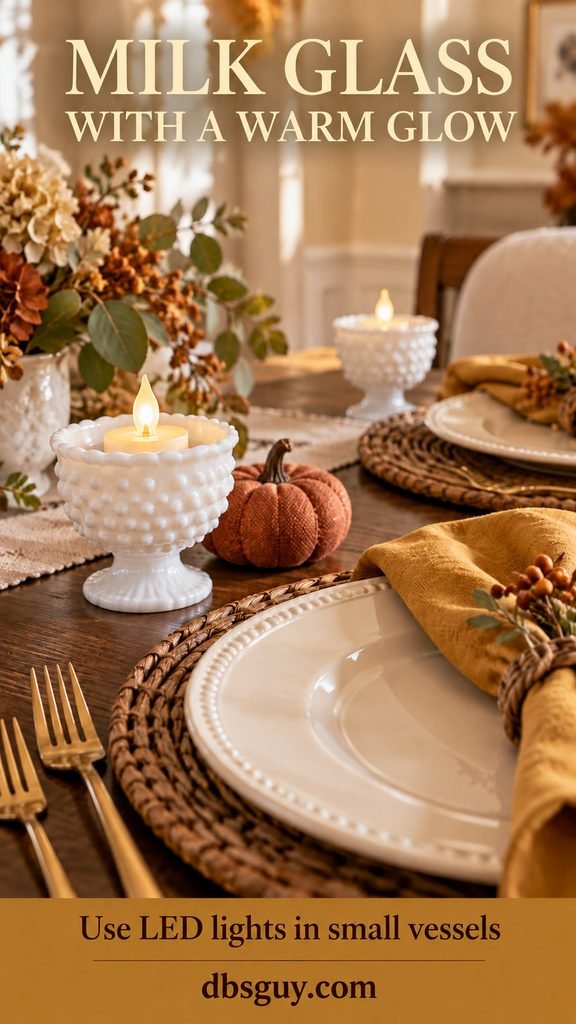
Choose squat pieces with broad feet and openings wide enough to accept a self-contained LED light. Check the opening against the light’s diameter; don’t force a tight fit. The molded tip should remain visible, and the light should be easy to remove for its switch or battery compartment.
Place a vessel beyond the plate rather than crowding the fork or glass. Gold napkins and a little terracotta fabric pumpkin keep the white glass from disappearing among pale dishes. Start with a pair for the table and add more only if the settings have space. Use LEDs throughout this look.
10. Give a Stoneware Crock a Buffet Job
A sturdy crock can organize a serving station while contributing the earthy color a farmhouse table needs. Use it as a decorative outer container for a separate clean glass jar that holds your clean flatware.
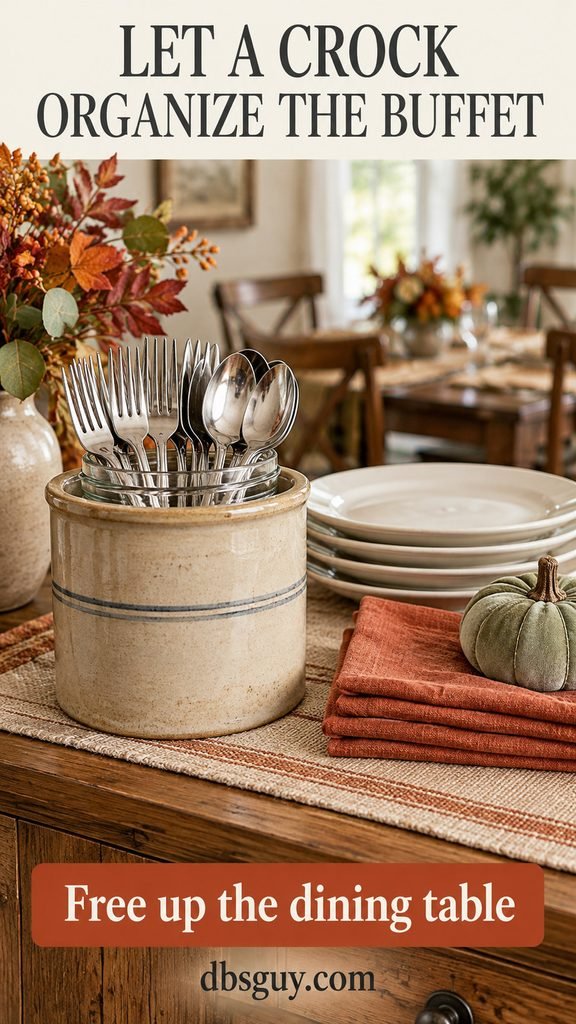
Find the insert first, then check that it fits inside without scraping or wedging against the crock. Its rim should sit above the old ceramic rim, keeping utensils contained by the clean inner glass. Lift the insert out for washing.
On the sideboard, arrange dinner plates first, then napkins and cutlery where guests can collect them after serving themselves. Leave room to set down a plate. Rust linens and one small sage pumpkin are enough decoration for this working area. A tall crock that buries the utensils will be frustrating to use, however attractive its glaze.
11. Display Faux Pears in a Glass Compote
A low footed compote gives a small arrangement a little lift. For a two-person fall table, place three artificial pears in ochre and cinnamon tones in the bowl, keeping them nestled inside its rim.
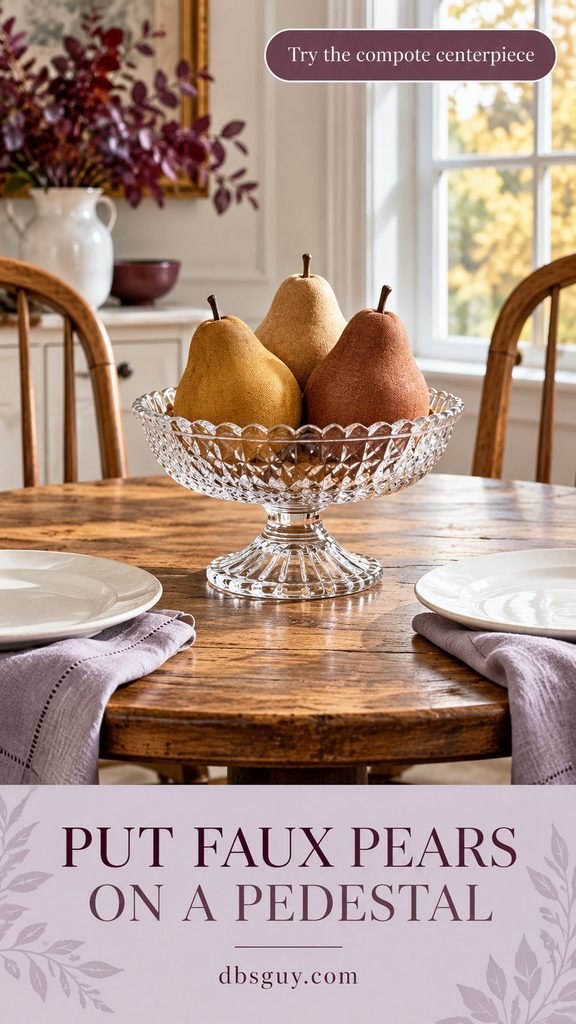
Use faux fruit when the old glassware’s food-use history is uncertain. That also lets you keep the display assembled between meals. Choose a broad foot, inspect the stem and bowl for damage, and test the piece on the table before adding the pears.
Pale plum napkins soften the warm fruit colors. Check the view from both chairs: a pedestal raises the arrangement, so the bowl and its contents should remain compact. Skip stacked fruit or extra risers. If the compote occupies the space your meal needs, move it to the windowsill before serving.
12. Collect Embroidered Napkins with One Shared Color
Mixed napkins can feel considered when one feature repeats. Look for ivory cloth with small rust or brown embroidered motifs, even if one corner has flowers and another has leaves.
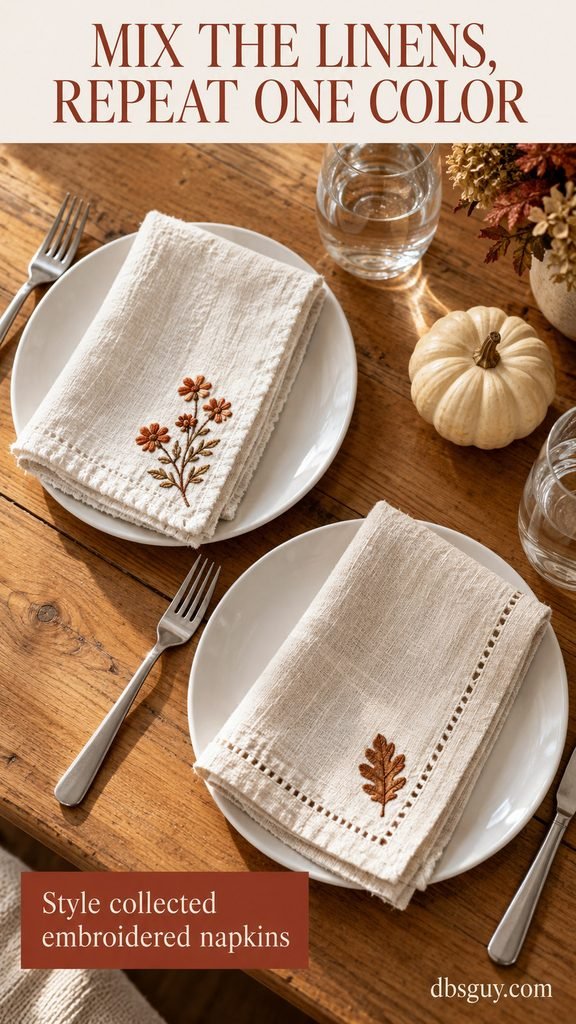
Choose pieces large enough to function as napkins, rather than buying tiny decorative handkerchiefs for the job. Unfold them in the store, inspect the hems and stitching, and check how they can be cleaned. Delicate threadwork may need more care than your usual dinner linens.
Fold each napkin so the stitched corner faces upward on a plain plate. Let the embroidery supply the detail; a bulky ring can cover the very thing you bought it for. If you find only two suitable pieces, use them for a breakfast table instead of rushing to buy a mismatched set you don’t like.
Also read: 19 Budget-Friendly Fall Tablescapes Under $30 for decorating plans with clear spending allowances.
13. Turn Tiny Frames into Fall Place Cards
Small freestanding frames make a useful thrift-store hunt when you’re planning assigned seats. A mix of wood and aged brass can work if the frames are similar in scale and the paper inserts share the same design.
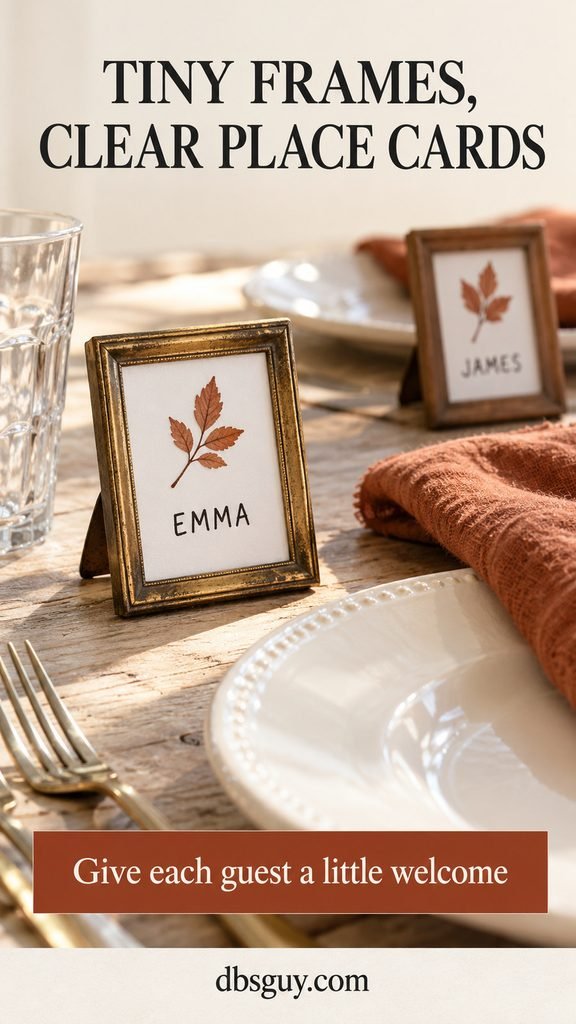
Start with frames around 3 by 4 inches, then check how much table space their easel backs need. Cut ivory cardstock to each opening, write a name in dark lettering, and add a small drawn or printed rust leaf above it.
Stand the frames beyond the plates, outside the space guests need for utensils and glasses. Check that every backing closes securely and that no glass edge is exposed. You don’t need to repaint the frames to make them coordinate: repeating the paper, lettering, and leaf is the simpler way to connect them.
14. Layer a Striped Tea Towel beneath a Bread Basket
A red-and-cream tea towel brings farmhouse pattern to a fall breakfast without covering the table. Fold a clean thrifted towel beneath a shallow bread basket so a stripe shows on either side.
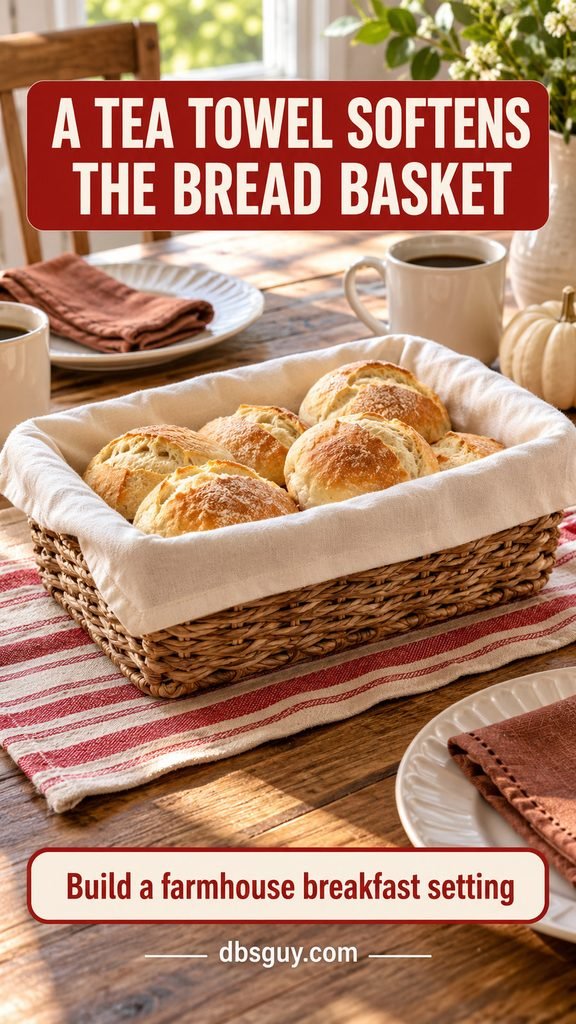
Line the basket separately with a fresh, clean cotton napkin suitable for contact with the bread. In this setup, the older striped towel is the decorative layer underneath; the bread rests on the clean inner liner. Inspect the basket for splinters and make sure the liner covers its inside.
Use everyday white plates and mugs, cinnamon napkins, and one small pumpkin away from the bread. Choose a towel whose care needs suit regular cleaning. If it has a fragile painted design or lingering odor, leave it behind rather than making it the foundation of a breakfast setting.
15. Lay a Small Mirror beneath LED Pillars
A low framed mirror can give a spare centerpiece more presence through reflection. Choose a small oval mirror that rests flat, with intact glass and a secure frame, then add two short battery LED pillars and one rust fabric pumpkin.
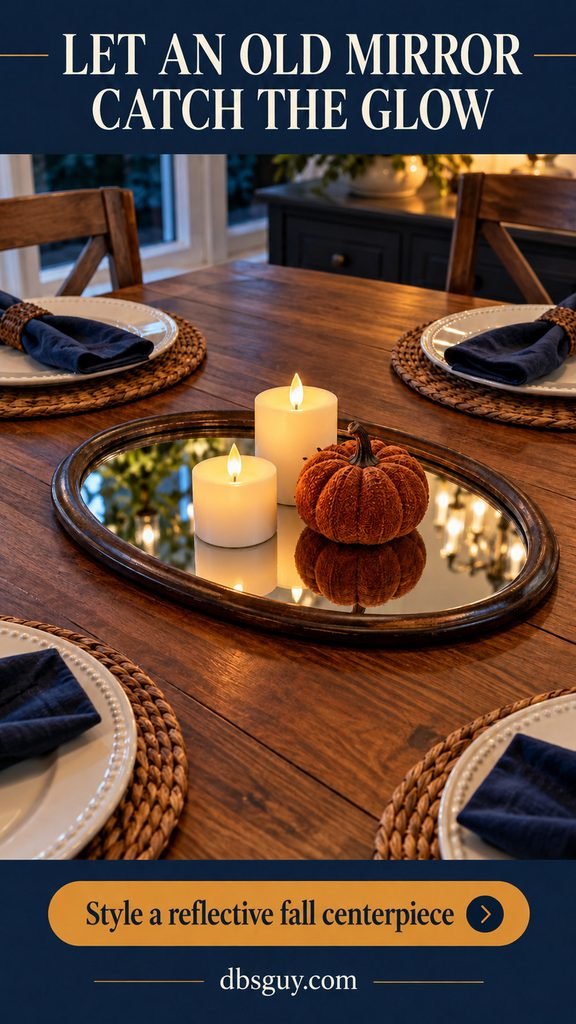
Check the back before buying. An easel, protruding hardware, or an uneven frame may stop it from lying steadily on the table. Protect the wood with suitable soft pads beneath the frame, and test that the candles stay level.
Keep this display low and contained. Navy napkins add contrast without introducing another reflective surface. View the mirror from the chairs with the room lights on; change its position if it reflects an unpleasant bright light toward a guest. This arrangement uses LEDs, including beside the fabric pumpkin.
16. Use a Cake Stand for a Separate Pie Station
A thrifted cake stand can help move dessert away from a crowded dining table. Choose a low stand with a broad foot, and put the pie in its own food-safe dish on top.
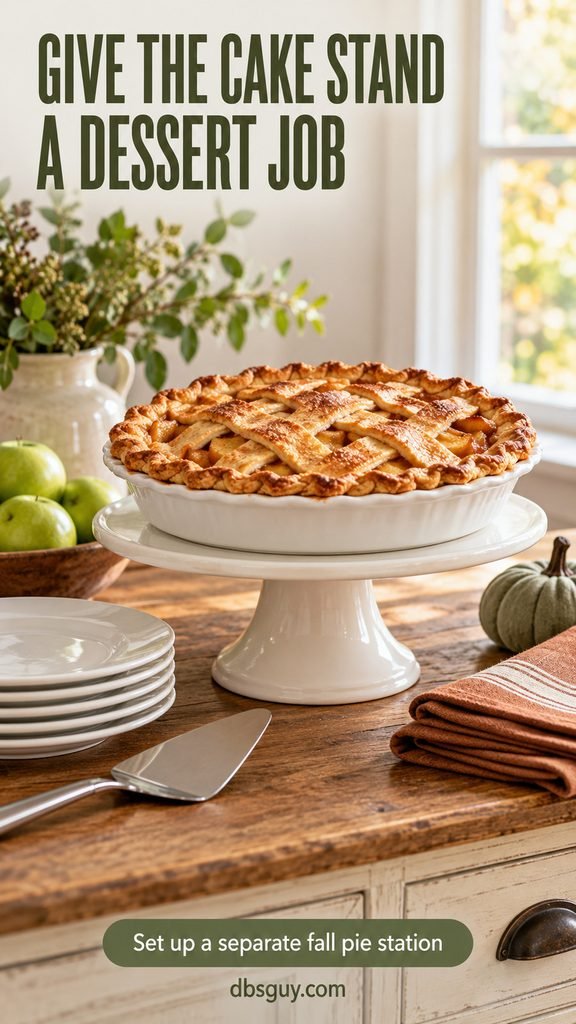
The pie dish should sit completely and securely on the stand’s top, without sliding or an awkward overhang. Treat the old stand as decorative support, keeping food on the separate dish. Test the empty combination before loading it, and let hot bakeware cool on an appropriate heat-safe surface first.
Set dessert plates, a pie server, and cinnamon napkins beside it on the sideboard. Leave space to set a plate down and cut comfortably. If the raised arrangement wobbles when you imitate a serving motion, serve the pie from the counter instead. Stability matters once someone starts cutting.
17. Let a Patterned Tablecloth Set the Whole Palette
A blue-and-cream floral cloth can make the largest visual change with one find. Add plain ivory dishes, cinnamon napkins, and a single terracotta pumpkin, letting the fabric carry the pattern across the whole table.
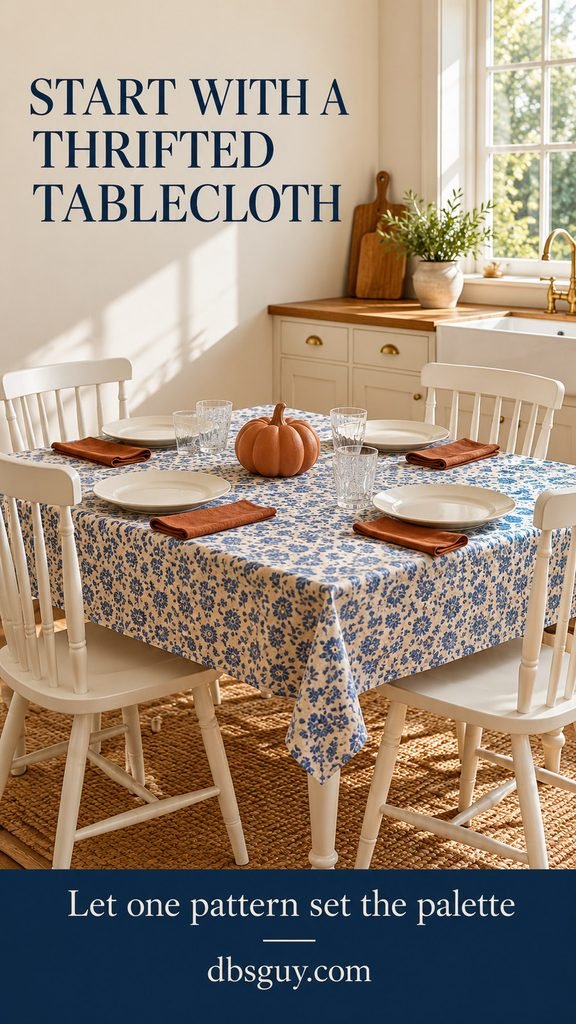
Measure your tabletop before shopping. For an everyday starting point, a roughly 6-to-10-inch drop on each side can be manageable; check it against your chairs and guests’ laps. To calculate the cloth size, add twice your chosen drop to both the table’s length and width. A 36-by-48-inch table with an 8-inch drop needs a cloth about 52 by 64 inches.
Inspect the center as carefully as the edges, since the visible eating area is where wear will show. A floral cloth doesn’t need a second patterned runner or ornate chargers. Its blue print and the warm napkins already give the setting a clear direction.
Make Your Finds Work Together
Build one complete place setting before decorating the rest. If your anchor has a busy pattern, repeat plain plates. If it has a strong texture, such as wicker or hobnail glass, give it some clear tabletop around it. Pull one color from the find into the napkins, then stop and put the empty serving dishes in place.
For Thanksgiving tablescape ideas that suit family-style serving, prioritize the flat details and chair throws. For a buffet meal, the crock and dessert station can carry the farmhouse character while people have more room at their seats. The meal decides how much decoration fits.
Questions about Thrifted Fall Tablescapes
What should I buy first if I’m starting from scratch?
Start with your existing food-safe dishes and one thrifted anchor that fits the table: a cloth, a basket, or a decorative vessel. Decide its job before buying accessories. A single useful find is easier to build around than a cart of unrelated fall decorations.
How do I make mismatched finds look coordinated?
Repeat something you can control. Use the same plain dinner plates over different decorative chargers, the same paper inserts in different frames, or the same LED tapers in different holders. Let the thrifted shapes vary while one repeated feature connects them.
Can I serve food on vintage china or metal trays?
Age, appearance, and a clean surface don’t establish food safety. Keep uncertain pieces decorative and use identifiable food-safe plates, drinkware, and serving dishes for the meal. Cleaning an old piece doesn’t establish that its materials are suitable for food use.
How do I keep a thrifted tablescape affordable?
Set a total before shopping and include any insert, batteries, cleaning needs, or repairs. Buy for the table size and guest count you actually have. If one find requires several extra purchases to work, choose another idea or borrow the missing piece.
Which ideas work best for simple fall tablescapes?
Try the folded damask runner, wooden napkin rings, or embroidered napkins. Each makes a visible change without assembling a large centerpiece. Use one of them with your everyday dishes, then reserve the remaining space for dinner.
Before your next thrift trip, take one table measurement and one photo of your dishes. Look for the piece that fills a specific gap—a textile layer, a small light, or a way to organize serving—and leave room for the people and food that will use the table.