A music career usually dies the way a fire goes out — slowly, by degrees, one disappointing album at a time. But sometimes it ends like a light switch. One song gets released, and everything that artist built simply stops working.
Sometimes the song is the problem. Sometimes it is the video, a guest verse, or a feud the song poured petrol on. All eleven of these are documented in chart positions, dropped deals, and careers that never recovered. (For the industry habits that run underneath stories like these, see my piece on open secrets entertainment insiders know.)
1. Katy Perry — “Woman’s World” (2024)
Perry’s big comeback single arrived after two underperforming albums, and it was supposed to reset everything. Instead, the conversation fixed immediately on its credits: the song was co-produced by Dr. Luke, the producer Kesha had sued years earlier with allegations he denied; the two settled in 2023. For a song marketed as a female-empowerment anthem, that credit line became the story — and not in a way Perry’s team could control.
The video’s attempt at satire landed badly with many viewers, the single underperformed for an artist of her stature, and the comeback never gained the momentum it needed. A career can survive weak albums; a relaunch that becomes a controversy is much harder to outrun.
2. Keri Hilson — the “Turnin Me On” Remix (2009)
Hilson was a rising R&B star and an established songwriter when a leaked remix of her hit “Turnin Me On” surfaced with a guest verse widely interpreted as taking shots at Beyoncé and Ciara. The backlash from Beyoncé’s fanbase was immediate, organised, and — unusually — permanent.
Hilson’s career stalled, she stepped away from music for years, and only returned with an album in 2025. She has since said the verse was written by someone else and that she didn’t want to record it — a sixteen-year footnote to a career that one leaked remix effectively froze.
3. B.o.B — “Flatline” (2016)
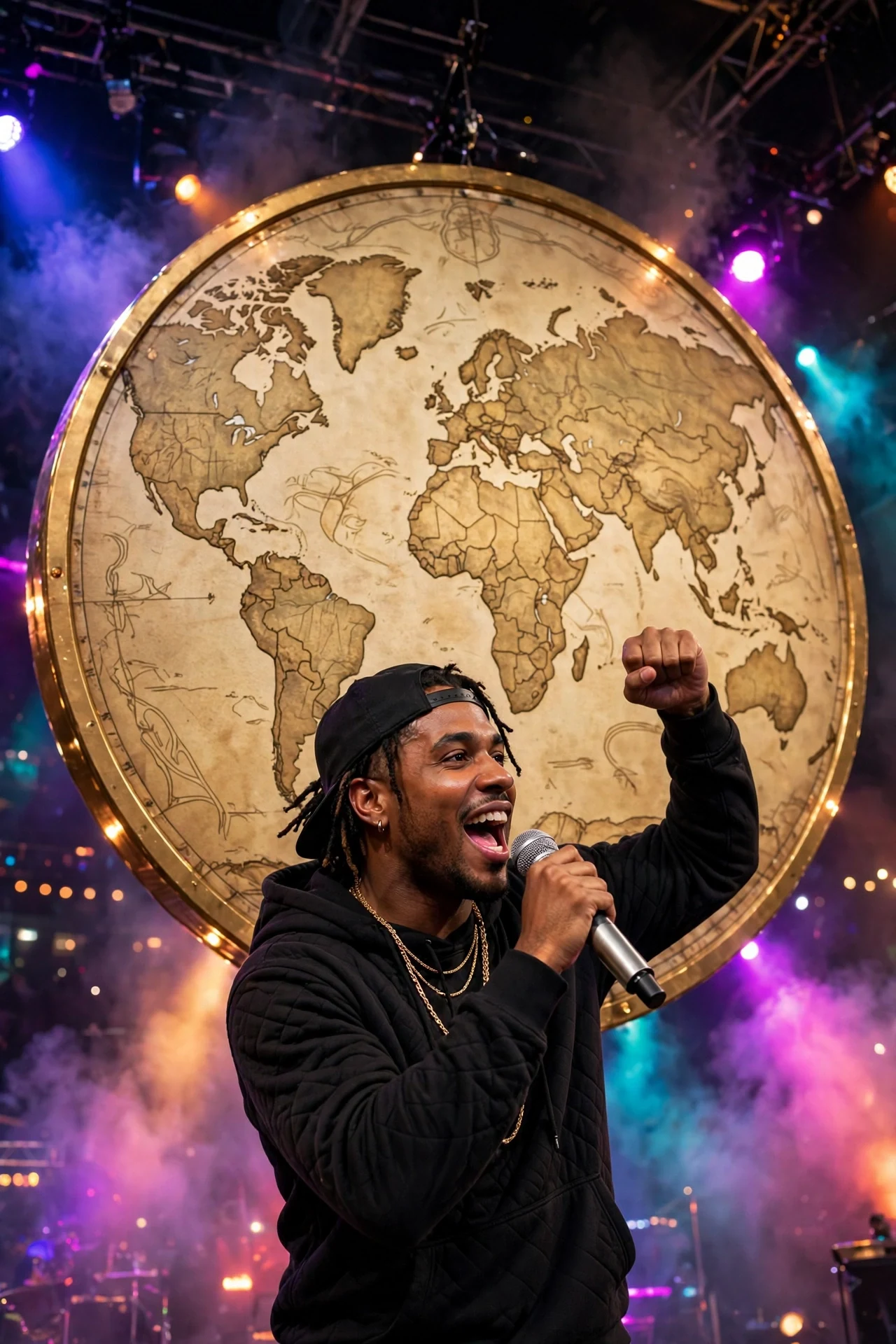
B.o.B had genuine pop-rap hits when he began publicly insisting the Earth is flat. In 2016 he released “Flatline”, a diss track aimed at astrophysicist Neil deGrasse Tyson, who had answered his claims. The following year he launched a crowdfunding campaign to send satellites up to, in his framing, find the curve of the Earth.
Whatever the songs were like stopped mattering. His subsequent albums failed to chart, and his name became permanently attached to the flat-Earth story rather than to “Airplanes” or “Nothin’ on You”. Some publicity really is bad publicity.
4. Kevin Federline — “PopoZão” (2005)

Federline, a former backup dancer, was famous as Britney Spears’ husband when he launched a rap career with the single “PopoZão” in 2005. The critical and public response was not mixed — it was a pile-on. The song became a byword for celebrity vanity projects.
His debut album, Playing With Fire, followed in 2006 and earned a 15 out of 100 on Metacritic, among the lowest scores the site has recorded. There was never a second album. The first single had told the market everything it intended to hear.
5. Billy Squier — “Rock Me Tonite” (1984)
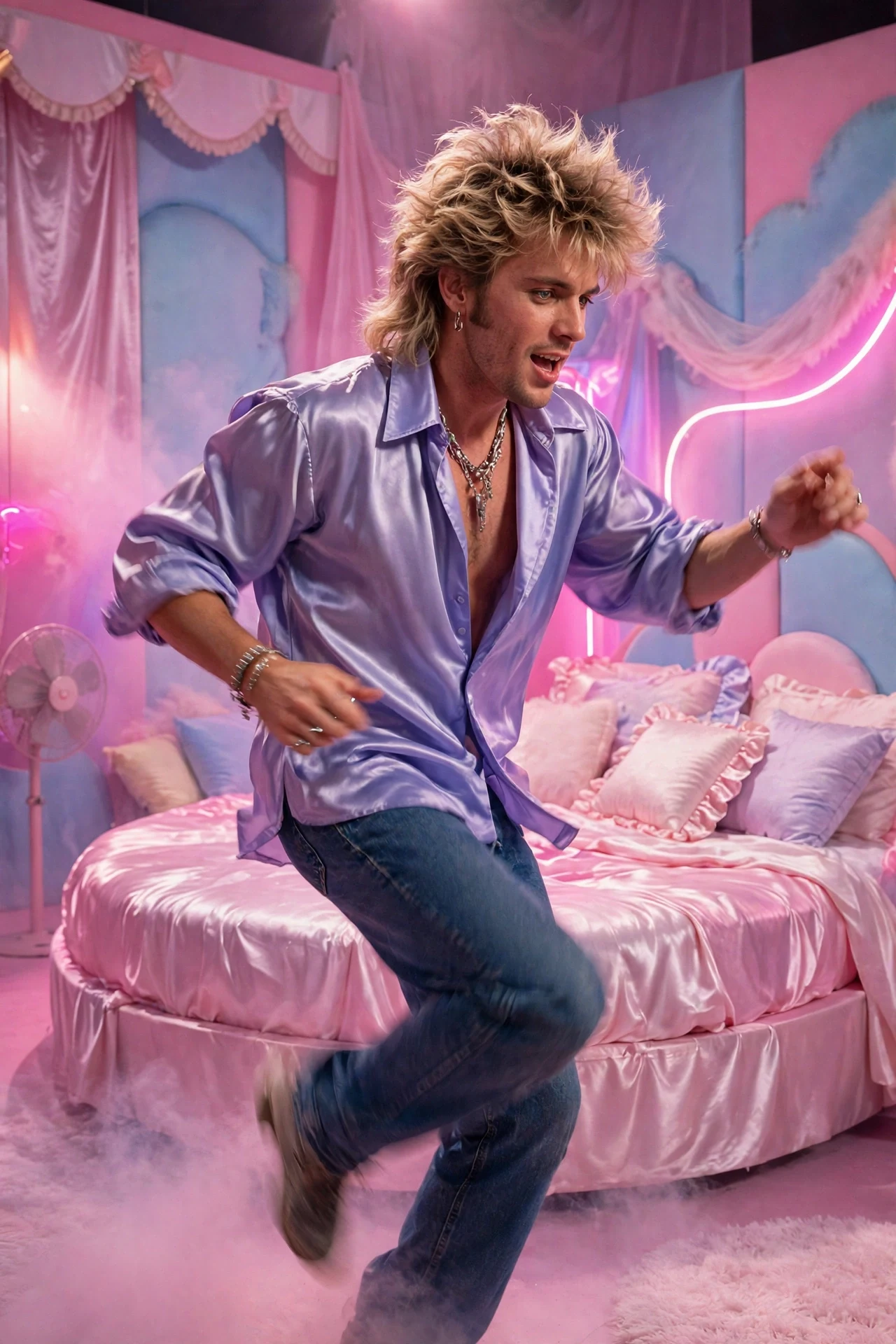
This is the list’s purest case of a video killing what a song could not. “Rock Me Tonite” was a hit — it reached No. 15 — but its music video, choreographed by Kenny Ortega, showed the arena rocker dancing around a pastel bedroom in a way that horrified his hard-rock audience almost overnight.
Squier has said his tours went from sold-out arenas to half-empty rooms, and he fired his management over the clip. MTV was new enough that nobody yet understood a three-minute video could rewrite an artist’s entire image — Squier learned it so the rest of the industry could watch.
6. Rick Ross — His Verse on “U.O.E.N.O.” (2013)

Ross appeared as a guest on Rocko’s “U.O.E.N.O.” with a line that was widely condemned as describing drugging a woman’s drink without her knowledge. A petition gathered tens of thousands of signatures, radio stations dropped the song, and the pressure moved from critics to commerce.
Reebok ended its partnership with Ross, dropping him as the face of its Classics line despite his apology, and Rocko replaced Ross’s verse on the track itself. Guest verses are usually disposable; this one cost an endorsement empire and permanently changed how brands vetted the artists they signed.
7. Robin Thicke — the Paula Album (2014)
Thicke was coming off “Blurred Lines”, one of the biggest singles of the decade, when his marriage to Paula Patton ended. His response was an entire album named Paula, built around winning her back, led by the single “Get Her Back”.
The public read the grand romantic gesture as uncomfortable rather than moving. The album sold roughly 24,000 copies in its first US week — a fraction of its predecessor — and Thicke never returned to anything like his 2013 commercial peak. A breakup album is a classic move; a breakup album as a public campaign is a much riskier one.
8. Redfoo — “Literally I Can’t” (2014)

Redfoo, one half of LMFAO, featured on Play-N-Skillz’s “Literally I Can’t”, a party track whose song and video were widely condemned as misogynistic — the premise being a woman repeatedly saying no while the men party on. A petition called for his removal as a judge on The X Factor Australia.
His solo career never recovered from the association, and LMFAO’s enormous early-2010s momentum dissipated with it. Redfoo eventually pivoted away from music entirely, reinventing himself on the professional tennis circuit — a fine second act, but an unmistakable sign the first one had closed.
9. Avril Lavigne — “Hello Kitty” (2014)

Lavigne’s Japan-inspired single “Hello Kitty”, from her self-titled album, came with a Tokyo-filmed video featuring expressionless Japanese backup dancers — and Western critics accused it of trading in stereotypes. The argument ran for weeks, with the odd footnote that reaction in Japan itself was reported to be considerably more relaxed.
The single peaked at No. 75 on the Hot 100, and it stands as the last era in which a Lavigne single troubled the chart at all. The controversy, fairly or not, became the closing chapter of her run as a pop hitmaker.
10. Van Halen — “Humans Being” (1996)
Here the song was less a bomb than a detonator. Van Halen recorded “Humans Being” for the Twister soundtrack amid deep tensions with singer Sammy Hagar — disputes over the sessions, the band’s direction, and a parallel greatest-hits project. Hagar was out of the band within the year.
His replacement, Gary Cherone, fronted Van Halen III (1998), which debuted at No. 4 — breaking the band’s streak of No. 1 albums — was poorly received, and ended the Cherone era by 1999. A soundtrack single didn’t write those tensions, but it was the job that brought them to a head.
11. Willa Ford — “Did Ya’ Understand That” (2001)

Ford’s is the list’s tragedy of timing rather than quality. Her second single, “Did Ya’ Understand That”, was released on September 11, 2001 — the day of the attacks. Music promotion across America stopped dead, her label was in turmoil, and the single’s moment simply evaporated.
Ford has been clear-eyed about it in later years: the timing did not single-handedly ruin her career, but the machinery that makes a second single work vanished at exactly the wrong week. She walked away from music, and built a durable second career in acting and interior design instead.
The pattern across all eleven is how rarely the music alone is the murder weapon. A credit line, a leaked verse, a choreographed dance, a calendar date — the song is usually just where the fuse reached the powder. Careers built over decades turn out to rest on the public’s permission, and permission can be withdrawn in the length of one track.