
The Christmas pieces you reach for every year usually have something in common: familiar color, a pleasing texture, or a memory attached. An evergreen wreath, a plaid blanket, and a few treasured ornaments can make a home feel festive before you buy anything new.
These 18 classic Christmas decor ideas give those favorites a place to shine. Each look includes practical styling details, from choosing ribbon for your front door to arranging a village without surrendering an entire tabletop.
For an easy starting point: choose one main display, repeat one accent color in two other places, and leave your everyday furniture room to work. You can use three ideas from this list and still have a beautifully decorated home.

The visuals in this guide are AI-generated styling concepts, created to help you picture the ideas in your own home.
1. Decorate an Evergreen Tree in Red and Gold
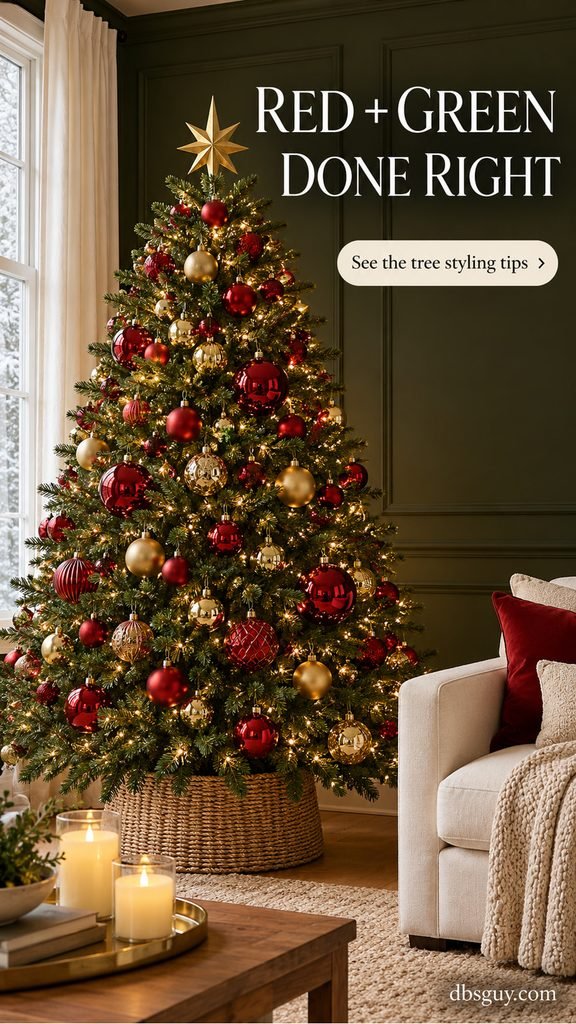
A green tree with red ornaments, a little gold, and warm white lights gives you a traditional Christmas palette in one clear focal point. The greenery matters as much as the decorations, so leave pockets of branches visible.
Add the lights first. Place larger ornaments on sturdy branches at different heights, then distribute smaller pieces between them. A mix of matte and reflective finishes creates interest without adding another color. Finish with a star you can secure according to the tree and topper instructions.
If your ornament box is wonderfully mismatched, keep the sentimental pieces. Repeat a handful of plain red balls around them to give the collection a visual thread. Use suitable shatter-resistant decorations on reachable branches in busy family spaces.
2. Hang an Evergreen Wreath with a Velvet Bow

A full green wreath and one soft red bow can carry the whole front entrance. Fir-style needles, flatter cedar-like sprays, and a few pinecones give the wreath depth before any ornaments go on.
Measure the door panel rather than buying by habit. For example, a 24-inch wreath centered on a 36-inch-wide door leaves about 6 inches on each side; check the handle, viewing hole, and any storm-door clearance too. A narrower door may need a smaller wreath.
Use ribbon intended for the exposure if the door gets wind or rain. Indoor velvet belongs in a protected location unless its label says otherwise. Hang the wreath with hardware suited to its weight and the door material, then check that the entrance opens normally.
Also read: 17 Small Front Porch Christmas Decor Ideas That Make a Big First Impression.
3. Give the Mantel a Soft Evergreen Garland
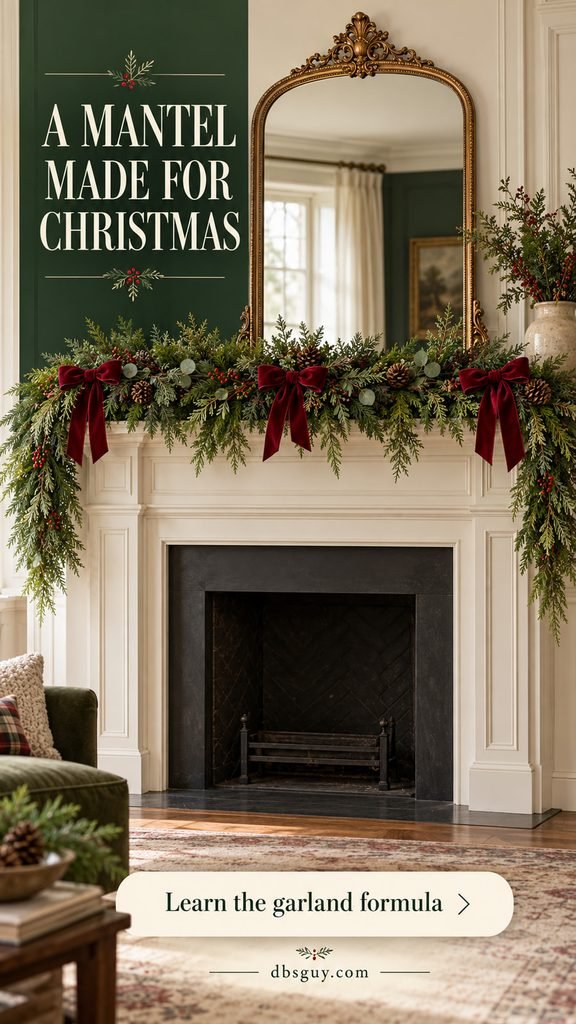
Let a garland follow the mantel’s shape, with a gentle drop at the outer ends. A mirror or artwork above it supplies height; a few small ribbon bows provide color. This arrangement works especially well when you want the greenery to be the main event.
Before hanging, run a piece of string along the exact route, including the drops, and measure it. Open compressed artificial branches on a protected surface, then position the garland with suitable supports before adding the bows.
The image shows an unused fireplace. For an operating fireplace, follow its required clearances and keep combustible decor away from the opening and hot surfaces. If the planned drape cannot meet those clearances, put the same arrangement on a console instead.
Also read: How to Make Christmas Garland Look Fuller: 9 Easy Styling Tricks.
4. Hang Knit Stockings on a Peg Rail
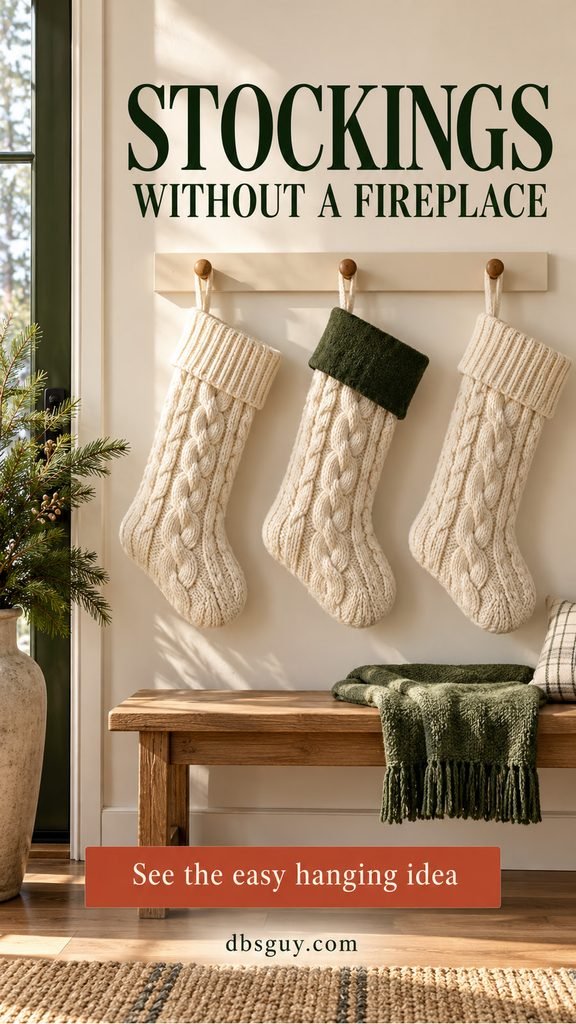
No fireplace? Give stockings their own wall. An existing peg rail above an entry bench or along a hallway makes the familiar shapes part of the room without needing a mantel.
Ivory cable knit looks soft against white paint and wood. Choose stockings with a shared color or cuff detail, then vary the knit texture or length slightly if you prefer a collected look. Space them so their outlines remain visible.
Use a securely installed rail with suitable capacity. Filled stockings are much heavier than empty ones, so treat these as decorative until you have checked the rail, pegs, and hanging loops. For Christmas morning, heavy gifts can wait in baskets underneath or somewhere else convenient.
5. Put Flameless Taper Candles in the Window
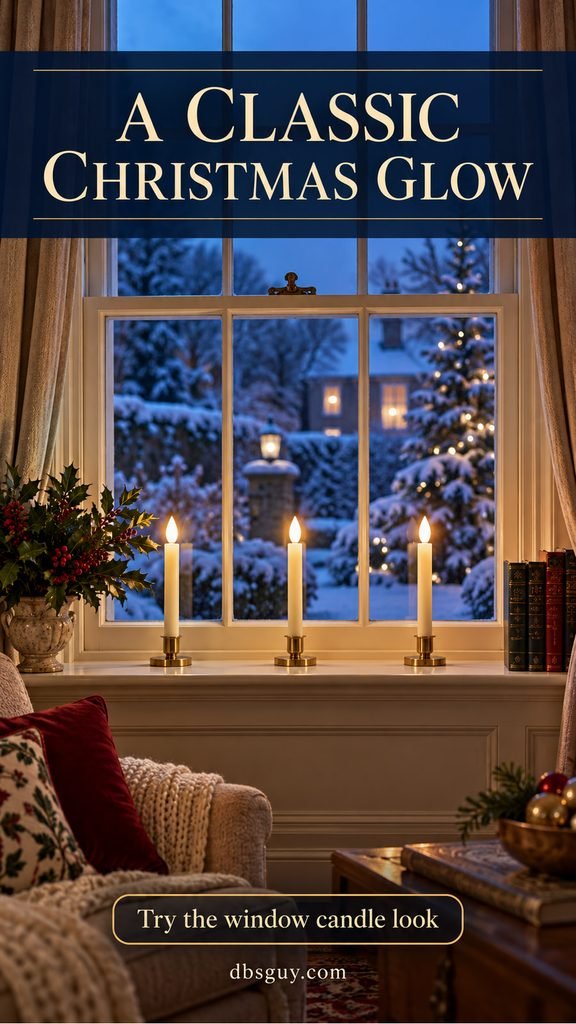
A small row of window candles looks lovely from the sofa and from outside after dark. Ivory battery-operated tapers in simple brass-style bases suit traditional trim without needing a wreath or another layer of greenery.
Start with one candle in a narrow window or a balanced group in a broader one. Choose stable bases that fit fully on the sill, and test the glow at dusk before committing to the arrangement. Matching the light color matters more than matching every base exactly.
Keep latches, opening panes, curtains, and any emergency escape route clear. Use the candles only where their manufacturer permits, and keep battery controls accessible. Flameless light gives this look its warmth without putting a burning candle near the window treatment.
Also read: 17 Indoor Christmas Window Decor Ideas That Glow Beautifully After Dark.
6. Add One Good Tartan Throw to the Sofa

A red, green, and navy plaid blanket makes a neutral sofa feel ready for Christmas. It also gives you a color reference for the rest of the room: borrow its green for a solid cushion or its red for ribbon elsewhere.
Let the throw fall over one arm with enough fabric available to actually use. One plaid pillow can echo it; a plain cushion beside it gives the pattern breathing room. You do not need tartan curtains, a matching rug, and a patterned tablecloth to complete the effect.
Check the throw against your upholstery in daylight. If the room already has several patterns, use the blanket on a quieter armchair or choose a darker, lower-contrast plaid.
Also read: 19 Ralph Lauren–Inspired Christmas Decor Ideas for a Cozy, Classic Living Room.
7. Group Brass Candlesticks with Ivory LED Tapers
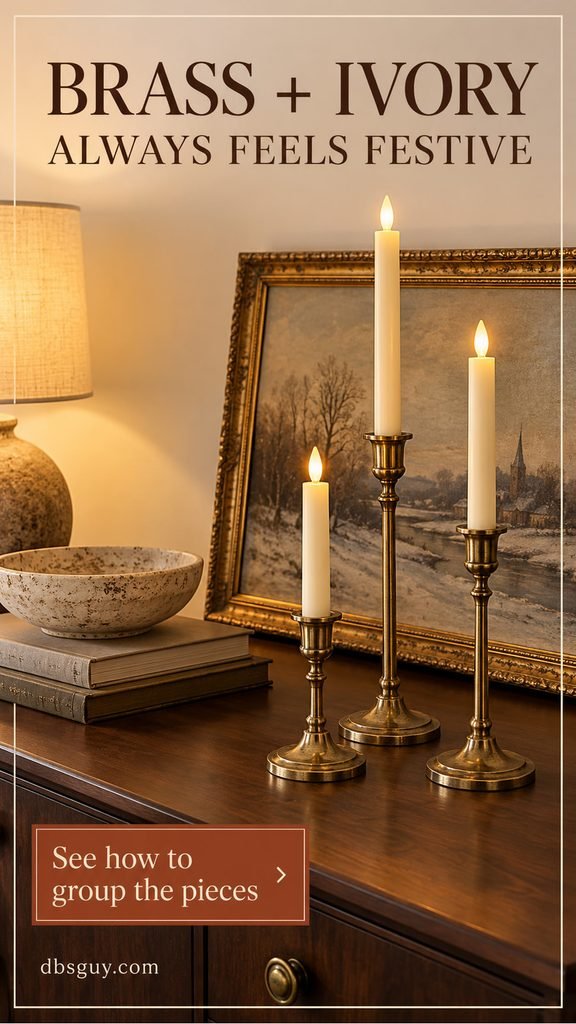
Brass brings a warm highlight to a sideboard even when the Christmas lights are off. Three candlesticks with different heights create a pleasing outline, and ivory tapers keep the arrangement easy to pair with existing art.
Use pieces with similar warmth rather than trying to match every finish. A softly aged holder can sit beside a cleaner one if their shapes feel balanced. Leave visible tabletop between the bases so the group reads clearly.
Flameless LED tapers make the pictured look practical for an evening display. Check that each candle fits its holder securely; a taper that leans or wobbles needs a different holder. Let the brass and light do the decorating instead of packing the bases with extra objects.
8. Tie an Evergreen Swag to the Stair Newel

A small swag at the bottom of the stairs offers a classic welcome with much less greenery than a full banister garland. Give the bundle a tapered shape, add a rich ribbon, and finish with a pair of antique-style bells if you like their patina.
Arrange the greenery on a table first, with the longest stems forming the lower point. Secure the stems together, then attach the finished piece to the outward-facing side of a suitable newel using fixings that protect the finish and hold the full weight.
Keep the handrail easy to grip and every step clear. Ribbon tails should end above the stair treads. In a narrow staircase, a smaller swag on a nearby wall may be the better fit.
9. Fill a Bowl with Vintage-Style Ornaments
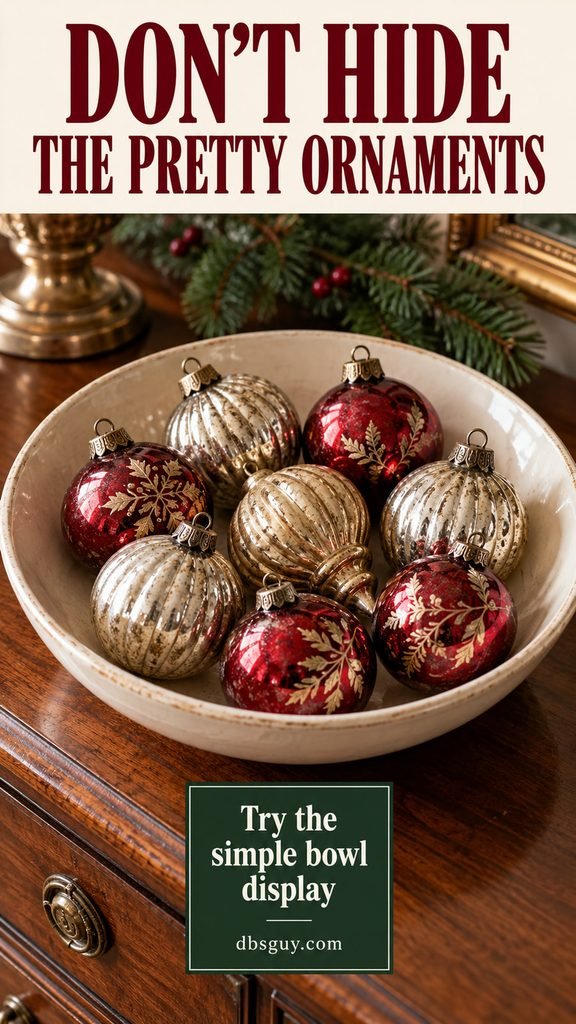
Those beautiful ornaments do not all have to hang on the tree. A shallow bowl lets you enjoy their painted details, faded silver, and unusual shapes at close range.
Use a low ceramic bowl with a smooth interior on a sideboard or another stable surface. Arrange a modest single layer, turning the prettiest details toward the room. Red, silver, and soft gold work together because the finishes vary while the palette stays familiar.
Delicate keepsakes deserve a gentle resting place and a location away from busy edges. If the bowl will sit within easy reach of children or pets, use suitable shatter-resistant ornaments instead. Keep a separate dish for food so decorative pieces never get mixed into snacks.
10. Give a Ceramic Christmas Village One Shelf
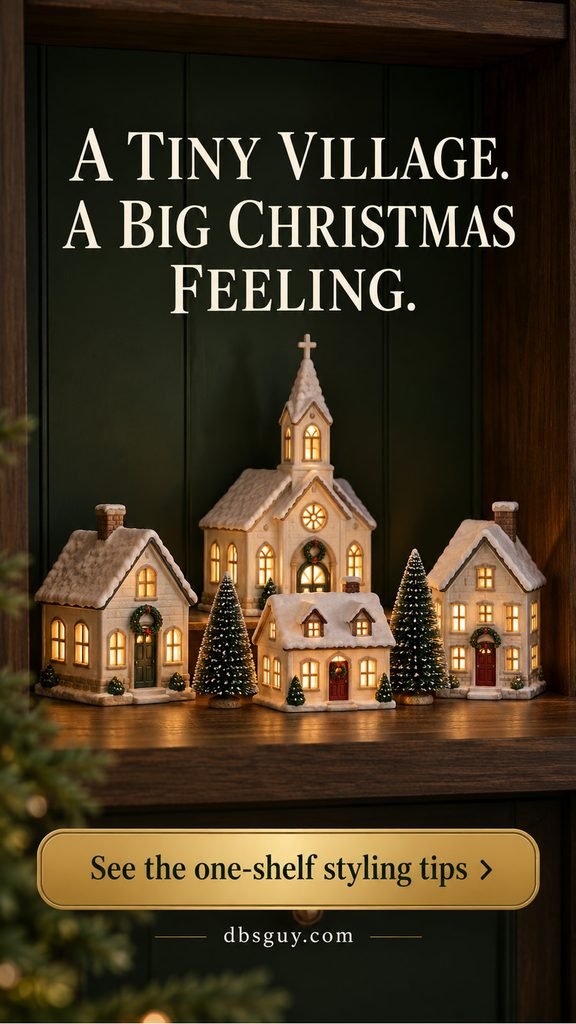
A little village feels most charming when you can see the individual buildings. Choose a dedicated shelf or console section, then arrange three to five houses with space between them. A few bottlebrush trees can suggest streets without covering every inch.
Put the tallest building toward the back and let the smaller houses sit forward. A plain surface often looks cleaner than a thick blanket of artificial snow, especially if your collection already has plenty of detail.
For illuminated buildings, use their specified lighting components and leave the controls accessible. Hide cords neatly behind the display without pinching them or routing them across a walkway. If you have a large collection, rotate the houses you display instead of squeezing them all onto one shelf.
Also read: 21 Vintage Christmas Decor Ideas That Bring Back the Magic of Childhood.
11. Dress a Window with Cut-Paper Snowflakes
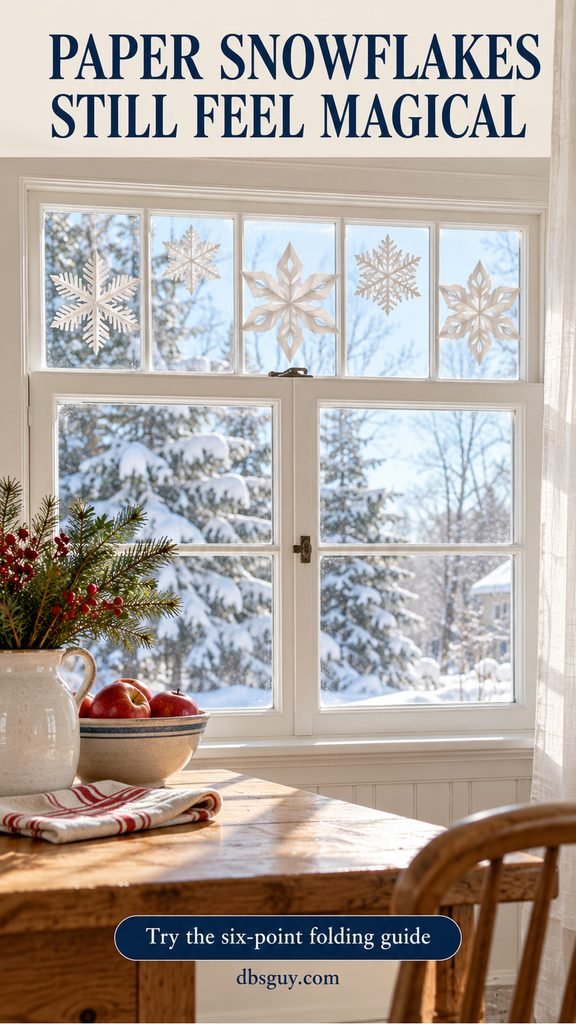
White paper snowflakes bring a handmade detail to a window without introducing another color. A few larger shapes usually read more clearly across the room than dozens of tiny ones.
For a six-point design, start with a square of thin paper. Fold it diagonally into a triangle, fold again, then fold that triangle into thirds so the edges overlap evenly. Trim the uneven tips, cut small shapes from the folded edges while leaving connecting paper, and unfold carefully.
Make a trial snowflake before cutting your favorite paper. Arrange the finished pieces on a fixed pane using a removable product appropriate for the glass. Leave the view, handles, and opening sections usable, and keep the paper away from heat.
Also read: 13 DIY Paper Christmas Decorations That Look Surprisingly Expensive.
12. String Dried Oranges Across a Sideboard
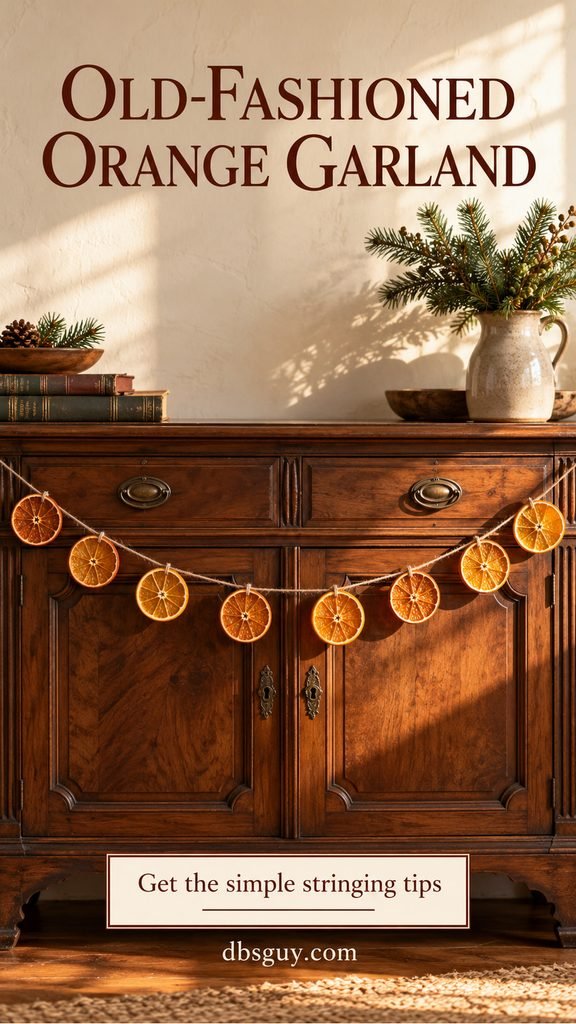
The amber color of dried orange slices looks beautiful against dark wood, cream walls, and natural greenery. A simple unlit strand has enough character to stand on its own across the front of a sideboard.
Use purchased dried slices or slices that have been thoroughly dried and cooled. Thread them onto plain cotton string through small holes near the rind, spacing them so each round remains visible. Tie the ends to suitable supports and adjust the curve before trimming the string.
Keep the strand clear of drawers and cabinet doors, and away from damp areas. This is decorative material, not a serving display. Inspect it during the season; discard any slices that become soft or show mold. Store only completely dry pieces, and replace them when their condition calls for it.
13. Make a Low Red-Flower Centerpiece
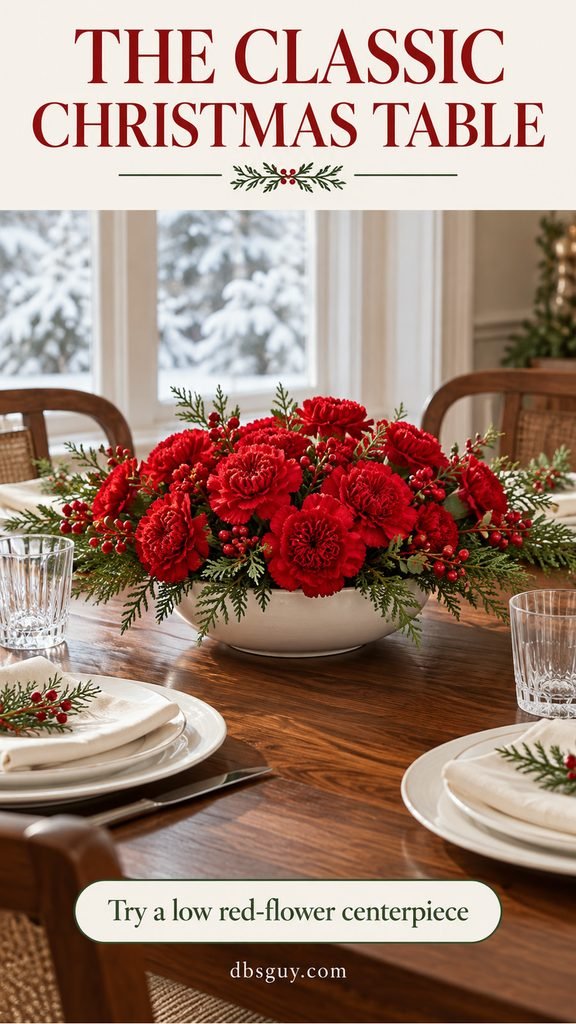
Red flowers in a low white bowl give the dining table a traditional Christmas focal point while leaving room for conversation. Carnations are one option for the ruffled look shown here; choose flowers you enjoy rather than trying to recreate an exact arrangement.
Set a small watertight vase inside the decorative bowl if the bowl itself is not suitable for water. Build a loose mound with stems cut to varied lengths, keeping foliage out of the water. Place a few simple sprigs around the outside only if they fit comfortably.
Before guests arrive, sit in the chairs facing one another. If the arrangement hides someone’s face or competes with serving dishes, lower it or move it to the sideboard. Follow the flowers’ care instructions and protect the tabletop from moisture.
14. Display a Pair of Traditional Nutcrackers
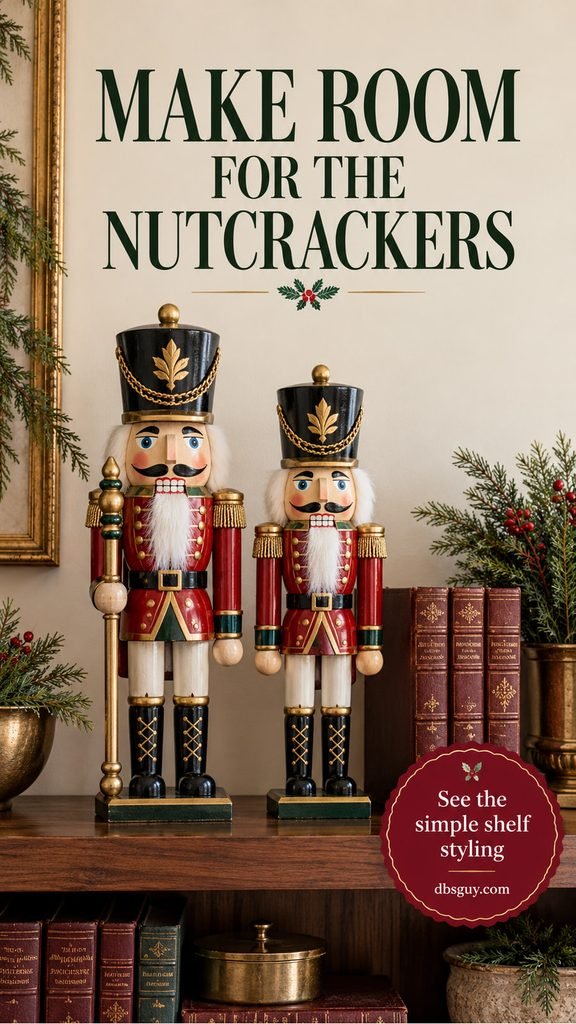
Two painted nutcrackers can make a bookcase feel festive without redecorating every shelf. Red coats, black boots, and gold details look at home beside old books and warm wood.
Give them a single shelf with enough height above their hats. They can stand together at one end or frame a small group of books, provided the books have their own support. Slightly different heights add character while a shared palette keeps the pair connected.
Avoid balancing tall figures on precarious stacks. Place them on stable bases where the shelf is deep enough for the whole footprint. Most decorative nutcrackers are display pieces; do not assume the moving jaw makes one suitable for cracking nuts.
15. Finish the Tree Base with a Skirt and Coordinated Gifts

The base of the tree deserves the same care as the branches. A soft quilted or fabric tree skirt gives the stand a finished edge, while a few wrapped boxes bring color down to floor level.
Choose a skirt that covers the stand comfortably without reaching into the walking route. For a real tree, keep watering access easy. Wrap gifts in two papers you already like—perhaps plain kraft and red plaid—then repeat one ribbon color to connect them.
Vary the box sizes so the arrangement feels relaxed. Keep electrical connections, switches, and watering points uncovered. If you are displaying empty decorative boxes, keep them separate from the actual gifts so they are easy to identify later.
16. Set Out a Simple Nativity Scene
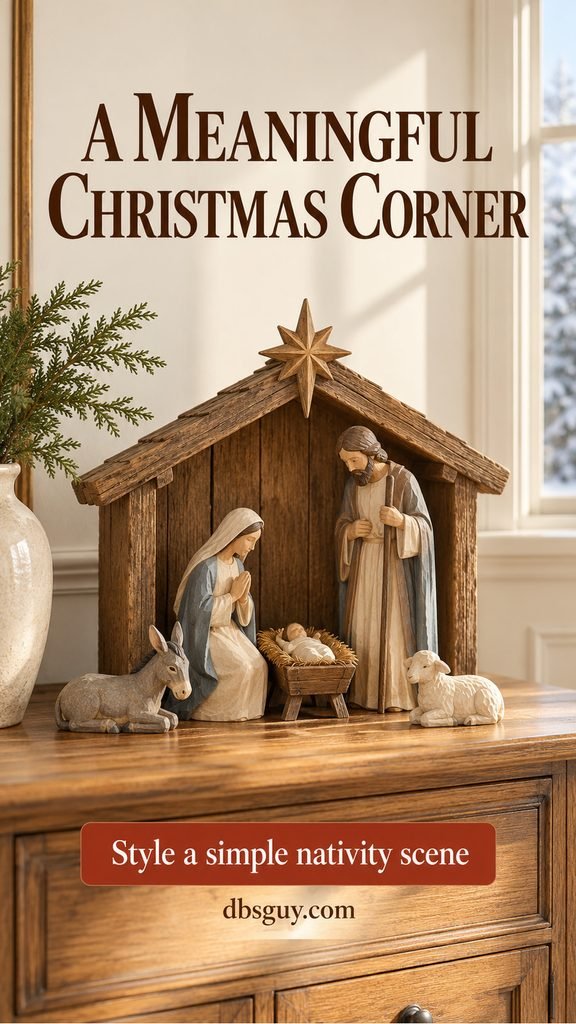
For households that celebrate the religious meaning of Christmas, a nativity can be the most meaningful display in the room. A wood stable and a small group of figures need very little extra decoration.
Choose a quiet shelf or console section where the figures are easy to see. Set the stable first, arrange the central figures, and leave open space around the scene. Natural wood, ivory, and softly painted details work well beside everyday furniture.
Let your own tradition guide which figures appear and when. A decorative set may contain fragile pieces or small parts, so place it accordingly; choose a separate age-appropriate set if children will handle the figures. A simple backdrop keeps attention on the scene itself.
17. Fill an Existing Porch Urn with Winter Greenery

An empty planter can become a classic Christmas feature with upright evergreen branches, trailing greenery, pinecones, and a little red. The container you already use in other seasons helps the arrangement belong to the house.
Start with a stable outdoor container and a suitable weighted insert. Establish height with upright branches at the back, fill the middle with fuller stems, and let a few soft tips spill over the rim. Faux red berry stems can supply the color without relying on fresh fruit.
Use materials intended for your weather exposure, secure them against wind, and keep the door swing and path clear. On a small landing, one well-proportioned urn may fit better than a pair. Check the width of the foliage as well as the pot.
18. Hang a Paper-Envelope Advent Calendar
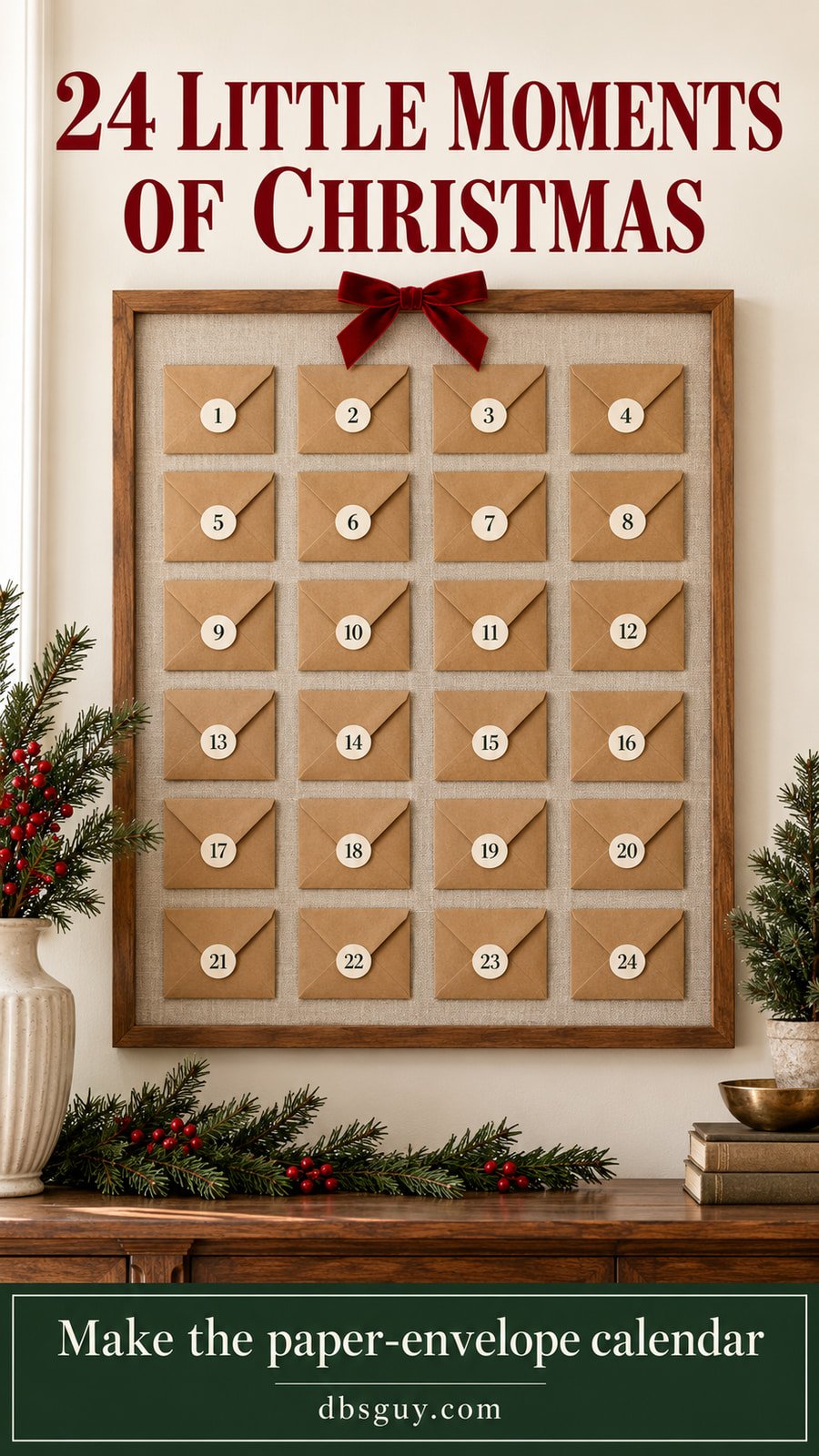
A paper Advent calendar gives a plain wall a festive rhythm and creates a small ritual to enjoy through December. Kraft envelopes, simple numbers, and a wood frame feel at home with traditional decorations.
Arrange 24 lightweight envelopes in four columns and six rows on a sturdy backing. Number them 1 through 24 and attach them securely, leaving the flaps usable. Fill them with paper notes: a favorite carol, a kind gesture, a Christmas story to read, or a family activity.
Hang the completed calendar from suitable fixings before adding anything heavier. Paper slips keep it light and avoid the bulk of tiny gifts. Measure the envelope layout on the table first so the last row has as much breathing room as the first.
Make the Looks Work Together
Pick the display you will see most often and start there. A tree can anchor a living room, a wreath can carry a small entrance, and a tabletop arrangement can give an apartment its main Christmas detail.
Then repeat a few materials rather than adding a new theme in every corner. Red ribbon on a wreath can echo a tartan throw; brass candleholders can pick up the gold on the tree. Keep the room’s existing wood, upholstery, and wall color visible so the seasonal pieces feel settled.
If you are buying only a little: bring out the decorations you own first. Make a short list of what would solve a visible gap—perhaps ribbon that connects two displays or a suitable base for a window candle. Photograph the finished arrangement for next year.
A Few Practical Checks Before You Switch on the Lights
Use lighting rated for its location, replace sets with damaged cords or loose connections, and follow the manufacturer’s limits for connecting strands. Turn off decorative lights before leaving home or going to bed. Keep exits clear and decor away from heat.
For a real Christmas tree, check the stand’s water daily and keep the tree at least 3 feet from heat sources. Use flameless candles for the looks shown here. The National Fire Protection Association’s winter holiday safety guidance is a useful reference as you set everything up.
Questions About Classic Christmas Decorating
What Christmas colors feel the most classic?
Red and evergreen are an easy starting point. Ivory softens them, and gold or brass supplies a warm highlight. You can also choose green and ivory with a little brass if you prefer less red. Use your furniture and favorite ornaments to decide which version fits.
How can I make classic Christmas decor feel current?
Give each display room to show its shape. A clear wreath outline, a few well-spaced ornaments, and a simple flower arrangement can feel fresh without replacing familiar pieces. Edit accessories that compete for the same surface before shopping for more.
Can I mix family ornaments with a coordinated theme?
Yes. Place the meaningful ornaments where you can enjoy them, then repeat a simple color or finish around them. Plain red balls, cream ribbon, or warm white lights can connect a mixed collection while leaving its personality intact.
When should I start decorating for Christmas?
Choose a date that suits your household. For a Thanksgiving-to-Christmas schedule, sort decorations and test lights beforehand, then add the main displays when you are ready. Fresh greenery and flowers need care suited to the product and conditions, so time those purchases around when you want them looking their best.
What should I decorate first in a small home?
Start with one spot that already has a clear purpose and enough room: the front door, an existing shelf, or a compact tree corner. A wreath, a throw, and one small tabletop display can carry the palette without taking over useful floor space.