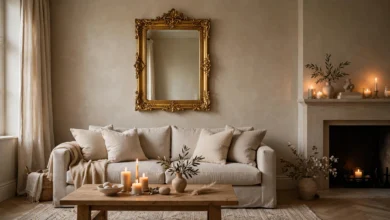
A green dorm room can start with a sage quilt, a leafy print, and the wood furniture your school already provides. You do not need painted walls or a room full of plants. The most useful approach is to choose where green will do the most work: on the bed, around your desk, or in the storage you need anyway.
These 13 green dorm room ideas range from soft sage and cream to deeper forest tones, with options for shared rooms and spaces that get little daylight. Pick one main direction first; then borrow a smaller detail from another idea.
The images are AI-generated styling concepts, not photographs of completed student rooms. Adapt each setup to your room dimensions and housing rules.
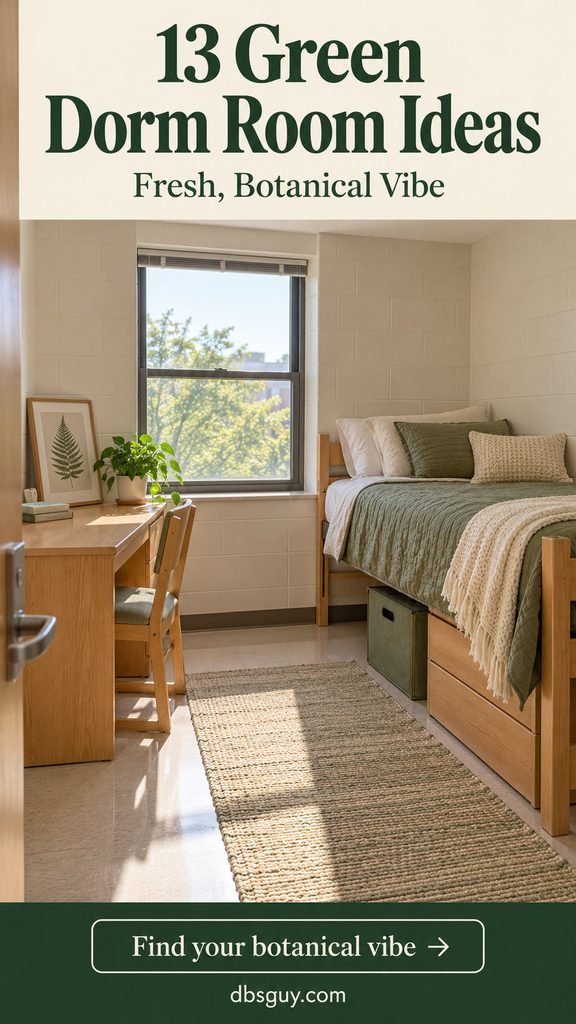
Before You Buy: Check the Room, Then Pick Your Green
Confirm your mattress size, measure the spaces beside and beneath your bed, and check which furniture must stay. Buy bedding for the assigned mattress rather than assuming every dorm has the same size. For storage, measure the opening a box must pass through as well as the space it will occupy.
Read your own housing guide before buying wall decor. For example, Spelman’s decorating guidance prohibits several products marketed as removable, including peel-and-stick wallpaper and adhesive mounting strips. Another school may allow different methods. A product label does not override your dorm’s policy.
For the palette, hold your green fabric beside the room’s wall and furniture colors. Sage is an easy starting point with cream; olive gives honey-colored wood a warmer, earthier look; forest green adds deeper contrast. Those are styling choices, so choose the version you enjoy seeing in your actual room light.
1. Start With Sage Bedding and a Cream Fold-Back

If you want the room to look coordinated after one purchase, make the bed your starting point. A solid sage quilt or comforter covers enough space to establish the color scheme while leaving the walls alone. Fold cream sheets over the top so the bed has a visible light edge.
Add a darker moss lumbar pillow if the bedding needs contrast. Check the pillow arrangement against how you actually sleep: decorative cushions should have a place to go at night. If you already own neutral bedding, reverse the formula and add a sage blanket across the foot instead of replacing the whole set.
What to keep simple: Let texture provide the detail. A quilted cover and smooth sheets give this look enough variation without several competing prints.
For more sage-and-cream color inspiration, borrow the palette while keeping dorm restrictions in mind. Also read: 30 Sage Green Bedroom Ideas for a Calming Retreat.
2. Warm Up Honey Oak With Olive and Terracotta
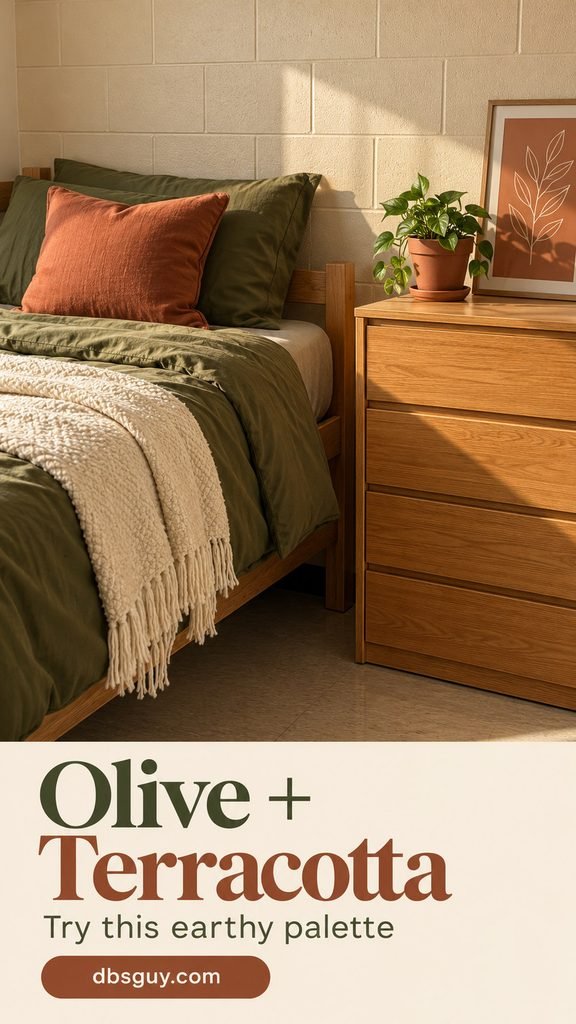
Work with the orange or golden undertone of standard dorm furniture by pairing it with olive rather than trying to hide every wooden surface. Use olive on the bed, cream in a throw, and terracotta in one cushion or a small desk accessory.
Repeat the terracotta once elsewhere, such as in the plant pot shown here, so the warm accent feels connected to the room. You do not need matching terracotta bedding, curtains, and rugs. Leaving the larger supporting pieces neutral gives the olive room to stand out.
If your furniture is very dark, try a lighter olive fabric and more cream. Take a fabric swatch or a clear photo of your bedding when you shop; earthy greens can look unexpectedly brown beside one another.
3. Give Your Study Corner a Forest Green Palette

For a botanical room with a more academic feel, concentrate the deeper green around your desk. A forest green mat, sturdy bookends, and a fern illustration make a useful starting group. A brass-colored task lamp adds a warmer finish beside the dark green.
Choose the mat after laying out your laptop and an open notebook. A mat that fits the desk but leaves no comfortable writing position is the wrong size for your setup. Keep the artwork at the back on a secure tabletop stand, and use the bookends to hold books you actually reach for.
You can leave the bed mostly cream with this direction. The desk becomes the green focal point, which suits a room where your roommate prefers a different bedding palette.
If your desk also handles gaming, plan the equipment footprint before adding accessories. Also read: Small Gaming Setup Ideas: A Pro Battlestation in Any Corner.
4. Build a Botanical Gallery on Your Dresser

A tabletop gallery is a useful answer when hanging anything on the wall is restricted. Choose two botanical prints with a shared background color, then use a taller frame behind a smaller one. The difference in height gives the arrangement shape without filling the dresser with tiny objects.
Use frames with reliable easel backs, and keep every base fully supported. Leave enough room in front for whatever you do there each day, whether that is getting ready or sorting laundry. If you bump the dresser often, one small frame is more practical than a layered display.
Simple leaf studies work especially well because you can repeat their green in a tray or notebook. Skip a live plant here if this is a dark corner; the art already supplies the botanical detail.
5. Give One Real Plant the Best Available Light

If your housing rules allow live plants, begin with one that fits the light you have. Pothos is an option for lower-light conditions, but low light still means usable light; a windowless corner is not a substitute. Check the plant’s care label against the daylight at its intended spot before buying it.
A stable dresser beside a window can be easier to manage than a narrow sill. Keep the window free to open and maintain access to blinds, vents, and any required exit route. Choose a compact plant rather than long stems that will soon reach your bedding or keyboard.
Use a pot with drainage and a watertight saucer or outer container. Let excess water drain after watering, then empty collected water before returning it to the furniture. Inspect the leaves for pests before bringing the plant into your room, and arrange care before a long school break.
6. Use a Faux Fern Where Daylight Falls Short

For the darker side of a shared room, use a faux fern or a framed leaf illustration rather than placing a real plant where it cannot get enough light. This also suits students who travel often or simply do not want plant care on their weekly list.
Look for varied leaf sizes and a pot that feels proportionate to the foliage. A small, convincing plant on the desk is easier to style than several oversized plastic vines. Turn it until the most obvious molded seams face away from the room, then keep it clear of your work area.
Dust the foliage as part of normal cleaning. You can carry the green through a pot and one print, leaving the rest of the corner uncluttered. A warm white lamp completes the evening look; it does not need to act as a grow light.
7. Let a Leaf-Print Duvet Be the Main Pattern
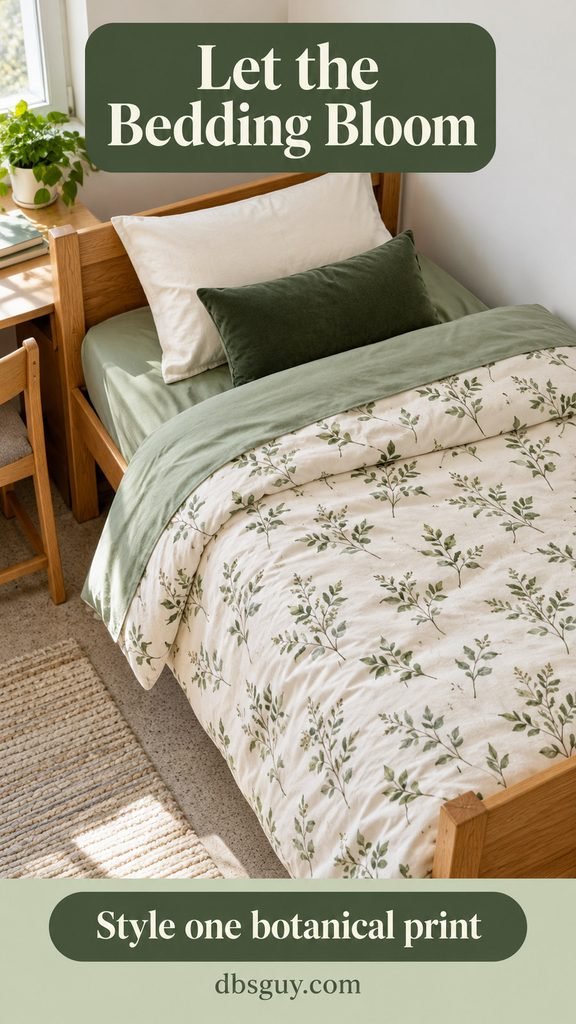
If solid bedding feels too plain, choose an ivory duvet with small green sprigs or fern motifs. It gives you a botanical theme even when you have no room for plants. Use the green in the print to choose your sheets rather than trying to match a separately chosen shade afterward.
Keep the surrounding pieces solid: sage sheets, an ivory sleeping pillow, and perhaps one darker green cushion. A patterned duvet already brings several shapes into a narrow bed area. Adding unrelated patterned pillows can make the arrangement feel busier than you intended.
Before ordering, look at both a close-up and a full-bed image of the fabric. A leaf design that looks delicate in a small product thumbnail may be much larger when spread across your mattress.
8. Bring Green Down to a Small, Flat-Lying Rug
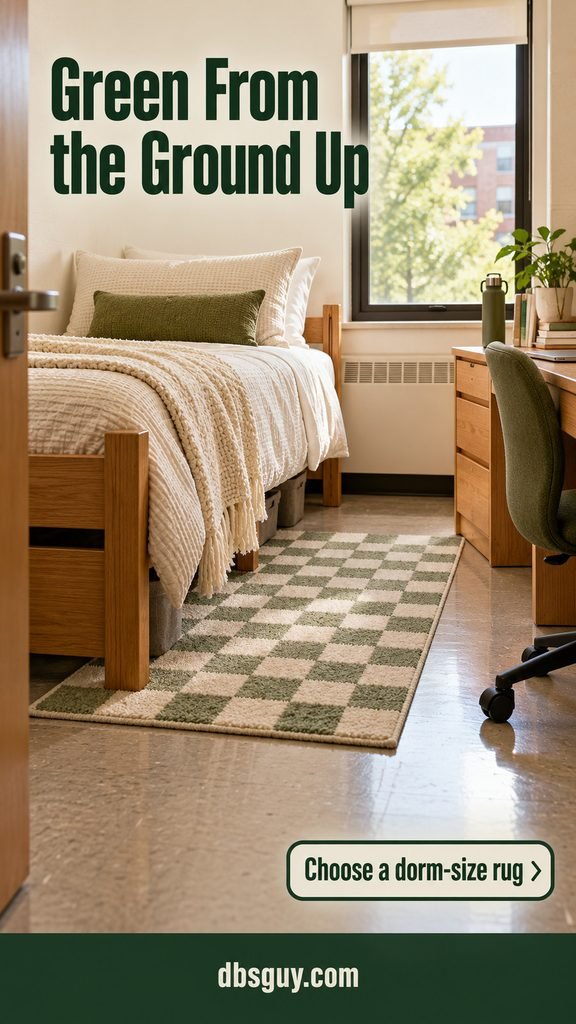
A green-and-cream rug is useful when you want to keep the bedding you already own. The color moves to the floor, and a small repeat in a pillow or desk accessory links it back to the furniture.
Measure with the door open and your desk chair pulled back. Choose the rug around those movements, not just the gap visible in an empty-room photo. A low-pile option with secure edges is generally easier to fit beside a chair and under a bed edge than a bulky shag style.
Use an appropriate non-slip backing or pad for your flooring and housing rules. Keep the rug flat, avoid covering vents, and leave the doorway clear. If no size fits without bunching or catching, put the green in bedding instead.
Keeping some floor space clear also gives you room for a study break. Also read: Dorm Yoga for Beginners: Quiet Flows for Tiny Spaces.
9. Make Olive Storage Boxes Part of the Decor

Let the containers you need carry some of the color scheme. Two olive under-bed boxes can look more coordinated than a row of unrelated bags, and a sage paper organizer brings a lighter version of the color up to the desk.
Measure under the bed’s lowest rail and account for legs or supports that interrupt the opening. Handles, lids, and wheels can add more height or width than you expect. Check that a box can slide out without moving a dresser or blocking your roommate’s side.
Group items by how often you use them. Spare linens can go farther back; shoes or workout gear need easier access. Leave frequently used items in the most reachable box rather than buying extra decorative baskets that have no clear job.
10. Soften Sage With a Small Dusty Pink Accent
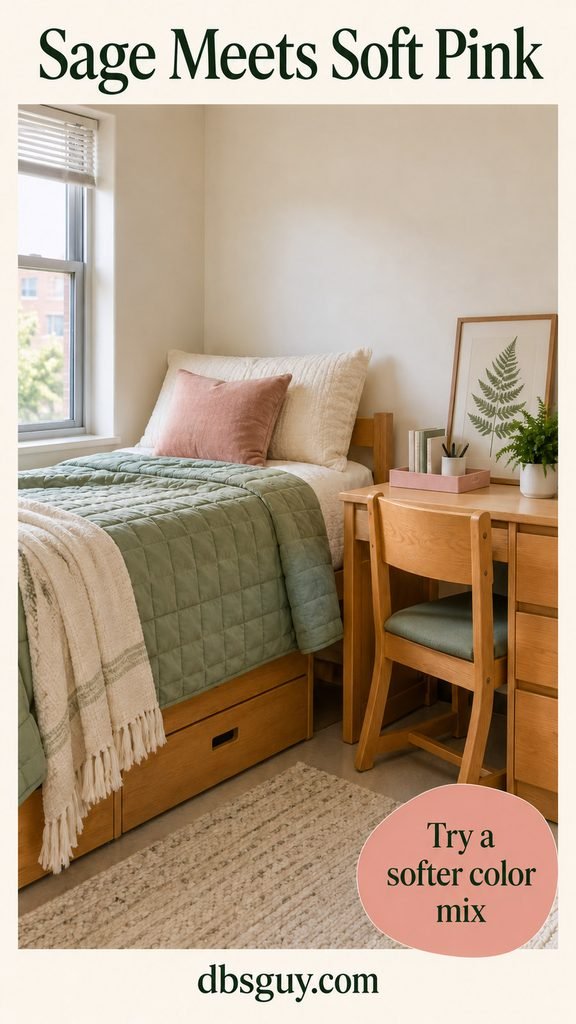
Sage and dusty pink work well when you want the green room to feel a little softer. Let sage remain the main color on the bed, use cream around it, and introduce pink in one cushion or a small desk tray.
Choose a muted rose rather than assuming every pink will work with every green. A very bright pink makes a different kind of room, while a cool grayish sage can make a warm peach accent look stronger than expected. Compare the actual fabrics together before committing to larger pieces.
If you are decorating on a tight budget, a removable cushion cover is enough to try the combination. Keep the botanical art mostly green and ivory so the pink reads as a deliberate accent rather than a second theme competing for space.
11. Choose a Green Lamp That Actually Lights Your Work

A green task lamp gives the room a botanical color cue while doing an everyday job. Look for a stable base and a shade you can aim at your notebook. The finish can be sage, olive, or forest green; the light itself can remain white.
Try the lamp in your normal writing position before settling the rest of the desk. Place it so your writing hand does not cast an awkward shadow across the page, and adjust the shade if it reflects in your screen. Keep the base outside the area you need for an open book.
Route the cord behind the desk using a method your housing rules permit. Do not weave cords through faux foliage or drape fabric over the shade. In a shared room, a downward-facing task light also gives you more control over where the light lands.
12. Coordinate a Shared Room Without Buying Identical Sets
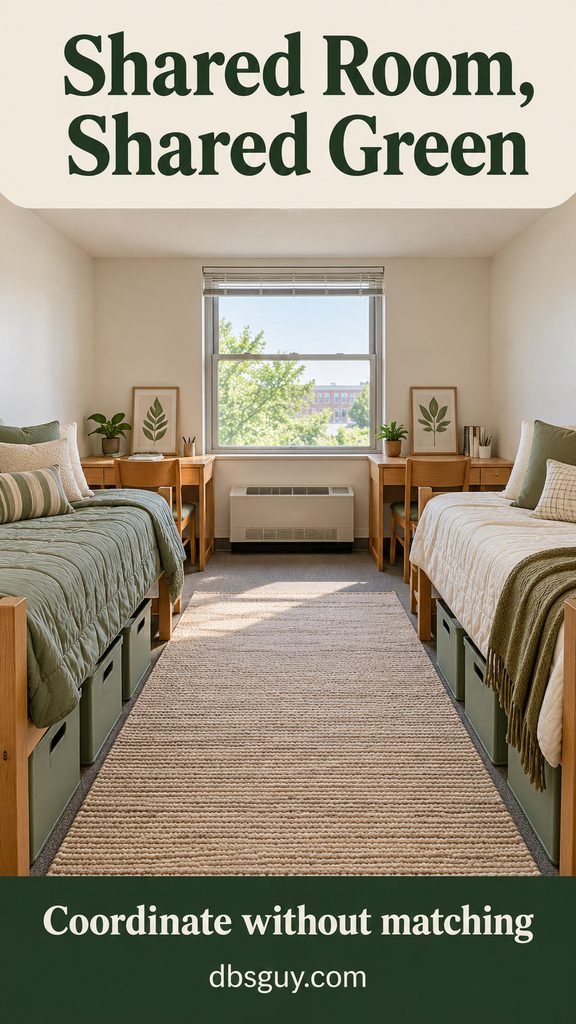
For two roommates, agree on one shared green and one neutral before buying anything for common areas. One bed can have a sage quilt while the other uses cream bedding with an olive throw. The room still feels connected when both sides repeat a green storage bin or similar botanical artwork.
Discuss shared purchases by item: rug, cleaning supplies, lighting, and anything that occupies floor space. Decide who owns each piece and where it will go. That prevents a coordinated shopping list from turning into duplicate furniture on move-in day.
Keep your own desk and bed details personal. Matching everything is optional; a clear aisle and enough room to open drawers matter more. Check the layout with both desk chairs pulled out before adding another basket or bedside table.
13. Turn Your Existing Bed Into a Botanical Reading Nook
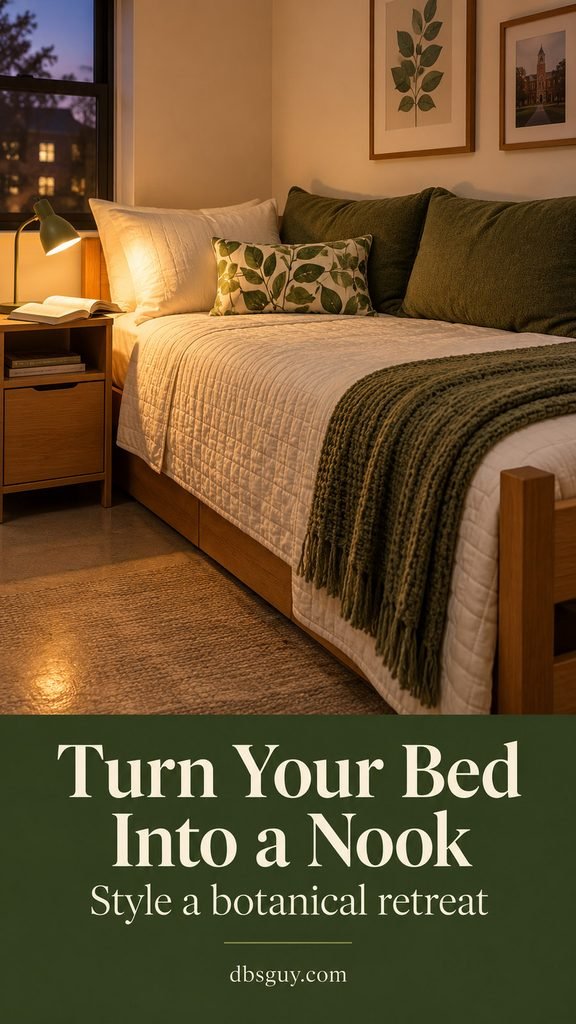
If your room cannot fit another chair, style the long side of your bed as an occasional reading spot. Two supportive green cushions against the wall, neutral bedding, and one small leaf-print pillow give the bed a daybed feel.
Keep a reading lamp and your current book on an existing bedside surface. Position the light where you can reach its switch comfortably, with the cord away from the bedding. You do not need a tray full of decor on the mattress; leaving it clear makes the space easier to use.
Choose cushions that can move into a storage box or to the foot of the bed at night. If your assigned bed is lofted, keep the required guardrail and access clear; use the bedding colors without trying to turn a raised sleeping area into a lounge.
For a future apartment or a room with more space, explore additional reading-corner layouts. Also read: 28 Cozy Reading Nook Ideas for Small Spaces in 2026.
What to Buy First for a Green Dorm Room
Start with the largest piece you actually need. If you need bedding, choose that green first. If your bedding is already sorted, choose a useful desk piece or storage box instead. Add a botanical print after you know where it can stand or hang under your school’s rules.
Bring the basics, live in the layout for a few days, and then decide whether the room needs another accent. The spot you imagined for a plant might turn out to be the only convenient place to charge your laptop.
Green Dorm Room FAQs
Can I get a botanical look without real plants?
Yes. Leaf-print bedding, botanical artwork, and one well-chosen faux plant can carry the theme. Repeat a green from the print in an item you use, such as a lamp or storage box, rather than filling every spare surface with artificial greenery.
Which green works with beige dorm walls?
Sage with cream is a good starting combination if you prefer a lighter look. Olive and terracotta work with a warmer palette; forest green gives stronger contrast. Check a swatch beside your wall and wood furniture, since their undertones affect the result.
Is peel-and-stick wallpaper a good dorm shortcut?
Only consider it if your housing policy explicitly allows it on the intended surface. Some colleges prohibit removable wallpaper and adhesive strips. Bedding, freestanding frames, and colored storage give you other ways to add green without attaching anything to the building.
What if my dorm gets very little sunlight?
Use faux greenery or botanical art unless you can provide suitable light for a real plant. A plant described as low-light still needs light. If you want to add a grow light, check the electrical rules and discuss its location and schedule with your roommate first.
How do I keep a green dorm room from feeling crowded?
Give green one main job, such as the bedding or desk palette, then repeat it in a few useful details. Keep the door, window access, drawer fronts, and chair movement clear. Remove an accessory if you have to move it every time you study or get ready.
Choose the idea that solves your room’s biggest need first. A bed you like, a usable desk, and a clear floor give the botanical details a place to work.