19 Ralph Lauren–Inspired Christmas Decor Ideas for a Cozy, Classic Living Room


Sometimes the Christmas tree looks lovely, but the rest of the living room still feels like an ordinary Tuesday. The missing connection may be as small as a tartan pillow, a darker ribbon on the wreath, or a lamp that makes the seating area feel inviting after sunset.
A Ralph Lauren–inspired Christmas living room brings those details together. The appeal is in the mix: familiar patterns, rich fabric, warm wood, greenery, and pieces that seem to have a life beyond this one December.
These 19 Ralph Lauren–inspired Christmas decor ideas give you practical ways to create that cozy, classic feeling. Start with the furniture and decorations you already enjoy, then choose the ideas that help them belong together. A few thoughtful changes can carry the look across the room.
What Gives This Christmas Style Its Character?
Ralph Lauren’s own holiday style guide brings together tartan, textured greenery, collected ornaments, and warm lighting. The useful takeaway for an everyday living room is how those materials complement one another.
For this room, let one plaid set the direction. Pull a deep red, green, or navy from its pattern, then repeat that color in a solid fabric or ribbon elsewhere. Wood and quieter cream pieces give the eye somewhere to rest.
Choose a main feature too. It might be the tree, the sofa, or a decorated console. See that feature from the doorway before deciding what the other surfaces need. The room will feel more connected when the smaller details support something you already love.
1. Build the Room Around Deep Red, Forest Green, and Navy

A clear color plan makes even a mixed collection of decorations feel considered. Deep red, forest green, and navy are useful starting points because you can repeat them through ribbon, fabric, ornaments, and the furniture itself.
Begin with the color already taking up the most space. If you own a navy sofa, let it provide the blue and bring in forest-green greenery and a red plaid accent. With an ivory sofa, a green velvet pillow and a red-and-navy tartan cushion can establish the same direction.
Keep the larger neutral areas visible. Your cream curtains, wood floor, and plain wall can balance the darker details, so there is no need to repaint for the season.
Try this first: Put the intended pillow, ribbon, and one ornament together beside the sofa in daylight. If one shade looks too bright or too purple against the others, change that small piece before decorating the whole tree. Check them again with the evening lamps on.
2. Tuck Tartan Ribbon Into the Tree in Loose Sections

Tartan gives a tree a recognizable traditional detail, but the branches still need room to show. Separate ribbon sections are an approachable way to add the pattern without committing to a long spiral.
Choose ribbon wide enough for its checks to be readable at normal viewing distance. On a medium tree, a two- to three-foot section is a starting length to experiment with. Make one sample before cutting the rest of the spool.
Nestle one end into a supported branch, form a relaxed outward loop, then tuck the other end back into the greenery. Follow the tree and ribbon instructions for securing it. Arrange the next section a little lower and to the opposite side, stepping back between additions.
A helpful adjustment: If the ribbon is taking over, reduce the number of sections. Let the tree’s silhouette guide their placement, and keep fabric clear of electrical connections. Finish with the ornaments after the ribbon has found its shape.
3. Mix Matte Red Ornaments With Soft Gold and Glass

A tree can feel richer when its ornaments reflect light in different ways. Matte deep-red balls provide quiet color, softly aged gold adds warmth, and a few clear or ribbed-glass pieces catch the glow.
Start with the ornaments you already have. Sort them by finish, then place a small group of each type on the tree before opening another box. Spread the quieter matte pieces through the branches; use reflective pieces where they can pick up the light without forming one shiny patch.
Keep ornaments at different depths. A securely hung piece just inside the greenery gives the tree dimension, while another near the branch tip keeps its outline interesting.
Make it suit your household: Shatterproof versions can give you the same mix of finishes. In homes with young children, follow the CPSC’s advice on breakable decorations and small removable parts, and keep unsuitable ornaments out of reach. Meaningful family ornaments can join the palette even when they introduce an extra color.
4. Give the Tree a Tailored Tartan Skirt

The base is easy to overlook once the upper branches are decorated. A tartan skirt can connect the tree to the room’s textiles and give the stand a more finished appearance.
Measure the stand and the space around it before choosing a skirt. It should cover the base comfortably while staying out of the walking route. Use the lowest branches as a visual guide, then check the actual floor clearance rather than relying only on the product’s diameter.
Smooth the fabric into a simple circle with soft folds. Too much material gathered in one spot can make the base feel bulky. If tartan already appears prominently in the tree ribbon, choose a related, quieter skirt or a plain one instead.
For a fresh tree: Keep the stand’s water access easy to reach and check it regularly. The CPSC recommends keeping live Christmas trees watered. A beautiful skirt should make daily care straightforward.
5. Pair Plaid Pillows With Solid Velvet

The sofa is often the largest surface you see from the doorway. Changing a couple of pillow covers can carry the Christmas palette into that everyday view.
Try one tartan cover beside a solid burgundy or forest-green velvet cover. The plaid gives you several colors to work with; the solid companion repeats one of them without adding another busy pattern.
Tartan and velvet are also paired in Ralph Lauren’s own holiday textiles. You can use that material combination as a starting point when choosing covers for inserts you already own.
Check the dimensions and care labels before ordering. Put the finished pillows back where you normally use them, then sit down. Their everyday comfort matters as much as their appearance in a photograph.
Keep the sofa welcoming: Begin with the normal number of cushions. If you have to clear a pile before anyone can sit, simplify the arrangement. Two good fabric choices can be enough.
6. Drape a Wool Throw Over a Leather Chair

A leather chair already brings warmth and texture to the room. A wool or wool-blend throw can soften its outline and introduce the holiday pattern without hiding the upholstery.
Fold the throw loosely along its length, then drape it over the back and one arm. Leave some leather visible so the materials can work together. A red-and-navy tartan looks warm against cognac leather; deep green or a quieter plaid can work beautifully with darker brown.
Choose a throw you will actually reach for on a cold evening. Check its care instructions and whether its weight feels comfortable for the person using the chair.
Style it for everyday use: Keep the seat clear, the fabric off the floor, and the side table reachable. Try pulling the throw onto your lap and putting it back once. A relaxed fold that is easy to recreate will suit a lived-in Christmas room better than an arrangement that needs constant fixing.
7. Layer Two Greenery Textures on an Unused Mantel

Pine-shaped needles and softer cedar-shaped sprays can give a mantel more depth than one repeated texture. Faux greenery is a practical option when you want to arrange the display once and enjoy it throughout the season.
Place the fuller strand along the mantel first. Add a lighter strand in shorter sections, turning the sprays outward so the different shapes remain visible. Keep enough of the mantel edge showing that the greenery has a clear boundary.
Use supports suitable for the surface and total load, and check that the display stays secure. One burgundy ribbon detail can connect it to the tree or sofa; the greenery can provide most of the interest.
Choose the location carefully: This arrangement belongs on a mantel kept unused while the decorations are in place. The CPSC advises removing all greens and other decorations from the fireplace area before lighting a fire. For a fireplace you use regularly, create the greenery display on a suitable console elsewhere, away from heat.
8. Hang a Small Set of Tartan Stockings

Stockings are a lovely place to repeat the room’s main plaid. A small set with simple cream or velvet cuffs can look traditional while still feeling personal.
Use existing secure hooks or a suitable wall-mounted peg rail near the living-room entry. This gives the stockings a place even when the home has no fireplace, or when its fireplace is in regular use.
Check the mounting, capacity, and position before hanging them. Start with empty stockings and keep them away from doors, switches, heaters, and furniture people need to reach. A pair with different initials or subtle cuff details can feel more personal than a larger matching set.
When it is time to fill them: Recheck the support against the added weight, or set the filled stockings out somewhere suitable for opening. Until then, their fabric and shape can do the decorating. Keep the hooks needed for everyday coats and bags available.
9. Finish an Evergreen Wreath With One Velvet Bow

A simple wreath can hold its own in a room with a patterned tree or sofa. One velvet bow gives it a focal point and repeats a color already present elsewhere.
Tie the bow separately, shaping the loops before attaching it to the wreath. Burgundy has a warm traditional feel; navy gives a quieter finish; forest green keeps the change subtle. Choose enough ribbon for the loops to read from across the room, then shorten the tails to suit the wreath.
Hang it from a support appropriate for the surface and its complete weight. Above a cabinet, check that the wreath does not interfere with artwork, lamps, or the way the cabinet is used.
Let the materials show: Begin with greenery and ribbon alone. Look at the wreath from the doorway before adding ornaments or berries. If the shape and bow already feel balanced, it is ready.
10. Use Brass Candlesticks With Flameless Tapers

Brass and ivory can give an evening display a gentle glow, especially against darker wood. Flameless tapers make this a useful option for a room decorated with ribbon, greenery, and plenty of fabric.
Choose holders with stable bases and LED tapers designed to fit them securely. A small group of different heights can look collected, but similar candle colors help the group feel connected. Set the holders on a level surface where sleeves, pets, and passing hands are unlikely to catch them.
The U.S. Consumer Product Safety Commission recommends flameless candles whenever possible. Follow the candle instructions, including secure battery compartments and any placement limits.
Check the glow before arranging the room around it: Turn the tapers on beside your usual lamp. Warm ivory light tends to suit this palette; a strongly orange or cool-white effect may change how the brass and surrounding fabric look. Choose the effect you enjoy seeing in your actual room.
11. Create the Evening Glow With Shaded Lamps
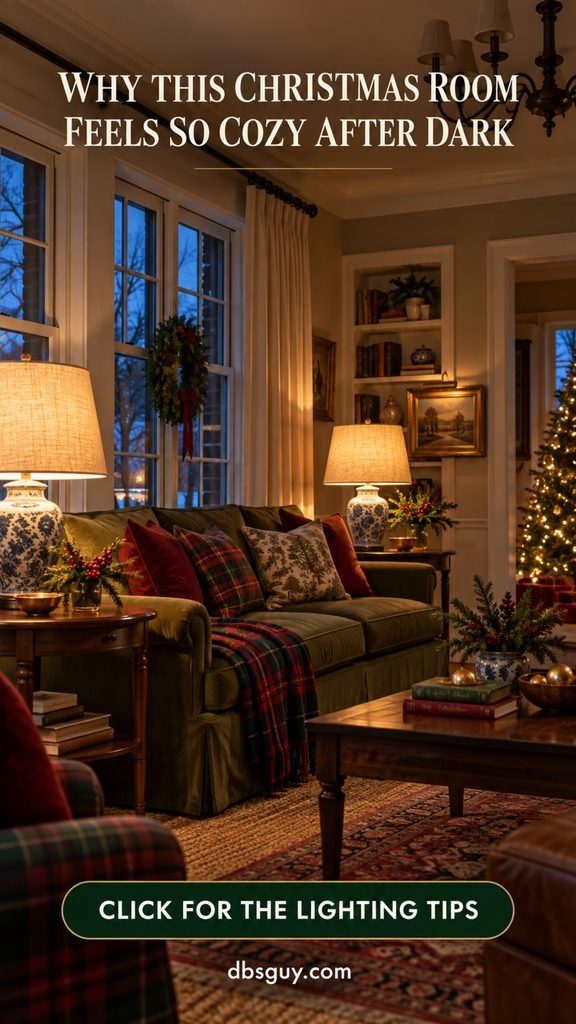
The room’s mood often changes more through lighting than through another decoration. Shaded lamps put light around the seating area, where people read, talk, and settle in for the evening.
Turn on your usual lamps before choosing additional Christmas lights. Notice whether the sofa, side tables, and favorite chair feel comfortable to use. A lamp at each end of a longer sofa can give the area balance; a smaller room may need only one good pool of light beside the seat you use most.
Choose compatible bulbs and follow each lamp’s wattage and dimmer requirements. If the tree looks cool blue beside a warm lamp, reconsider the light colors before adding more strands. Keep enough general light for safe movement.
Give the room an evening test: Sit down, then walk to the doorway. Look for glare, dark routes, and visible cords. The CPSC’s decorating guidance also recommends turning decorative lights off before leaving home or going to bed.
12. Set a Wood Tray on the Coffee Table

A wood tray brings a warm material into the center of the room and gives the table’s useful objects a clear home. It can be part of the Christmas look without becoming a display you have to dismantle to put down a cup.
Choose a tray that leaves some tabletop visible around it. Walnut, medium oak, and a darker stained finish can all work with this palette; use the finish that looks comfortable beside your existing furniture.
Arrange the objects you actually need first. Two mugs on coasters, a folded tartan napkin, or a small holiday card can make a simple afternoon setup feel seasonal. Leave room to lift each piece without brushing against another.
Keep it easy to move: A tray with suitable handles can clear the table in one trip when a board game or a plate of snacks arrives. Avoid tall arrangements that interrupt conversation across the sofa. The wood, the fabric, and a familiar mug already have plenty of character.
13. Add a Small Cluster of Aged-Look Brass Bells

Bells can provide a little metallic detail in a room full of softer greenery and fabric. A small cluster is especially effective when it has one clear place to belong.
Try two or three decorative bells beside a bookcase or tied into a modest greenery accent. Choose a finish that works with your existing hardware. Warm brass looks comfortable beside dark wood; an aged-look surface gives a quieter reflection than a highly polished one.
Check the bells’ weight and use a support appropriate for the total load. Keep ribbon tails short and small detachable pieces out of reach where needed. A decorative cluster should not be something people bump into while taking books from a shelf.
Keep the finish you chose: Clean according to the maker’s guidance. If you bought the piece for its softer aged appearance, aggressive polishing may change the very detail you liked. Let one cluster provide the accent before deciding that every garland needs bells.
14. Style a Short Stack of Books With a Leather Accent

Books give a living room a layer that belongs there year-round. A small leather box or tray beside them can add texture while keeping a useful purpose.
Begin with two sturdy books you enjoy, or already use in the room. Choose a stable arrangement on an existing cabinet or side table, keeping the total height modest. Stand the leather piece beside the books or place it on top only if it sits securely and does not damage their covers.
The combination of leather and brass also appears in Ralph Lauren’s leather accessory collection. A simple unbranded box with a warm metal clasp can bring that material pairing into your own room.
Make it earn its place: Use the box for something suitable, such as spare coasters or small everyday accessories. Keep frequently read books easy to remove. The seasonal greenery nearby can change in January while the books and leather piece stay useful.
15. Bring in One Framed Winter Landscape

A winter landscape can give a patterned room a quieter focal point. Snow, bare branches, a country lane, or a small red barn can carry the season without adding another three-dimensional object.
If you already own a suitable frame, check the print dimensions and backing before changing its contents. Choose an image whose colors relate to the room. A restrained red detail can echo the ribbon, while dark branches connect to the wood furniture.
Use a print or photograph you have permission to reproduce. Your own winter photograph can be just as meaningful as a purchased landscape. A dark wood frame often sits comfortably beside classic furnishings; an existing brass or black frame may also work well.
Look at the scale from your seat: The picture should be readable from the sofa without taking over the wall. Keep the frame securely mounted, and protect the year-round artwork in suitable storage if you are swapping it temporarily.
16. Gather Pinecones in a Simple Wood Bowl
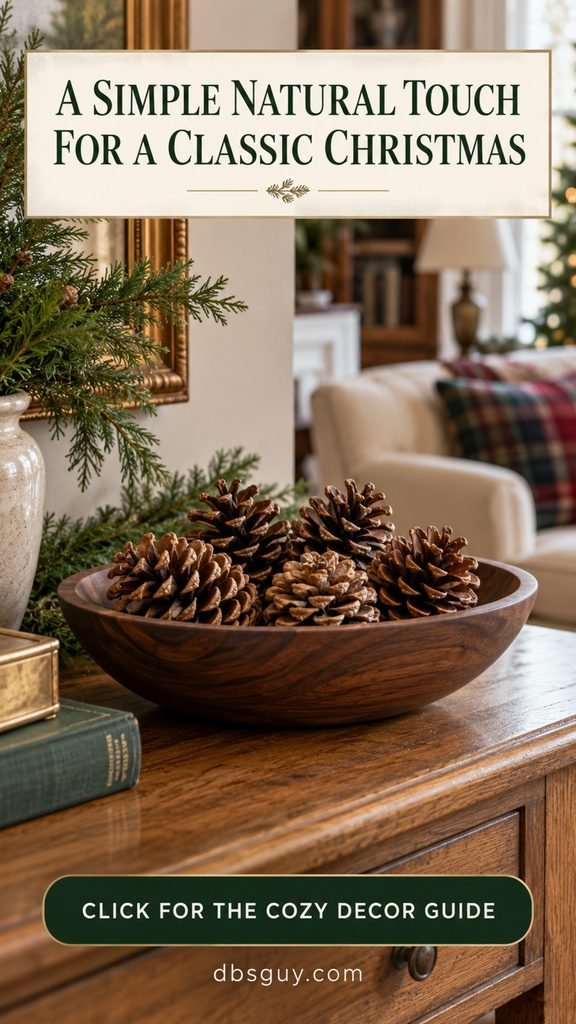
A few pinecones introduce a natural texture that works well beside plaid and velvet. Their irregular shapes can make a small arrangement feel relaxed while the bowl keeps its footprint defined.
Use clean, dry pinecones prepared for indoor decoration. Choose a shallow wood bowl and arrange the larger pieces first, turning some so their scales are visible. Stop while the contents remain comfortably inside the rim.
Place the bowl on a suitable existing console or side table, away from heat and any place where it would be confused with a serving dish. Keep small or sharp decorative pieces out of reach where that matters for your household.
Let the texture do the work: There is no need to add glitter, ribbon, and ornaments to the same bowl. Look at the pinecones against the grain of the wood. That simple material combination can balance the more polished brass and glass elsewhere in the room.
17. Give Family Photos a Place in the Holiday Display

The most memorable Christmas detail may already be in a drawer. A photograph from a snowy trip, a childhood Christmas, or a gathering with someone you miss can give the room a story that matching ornaments cannot provide on their own.
Choose one or two photographs that you enjoy seeing. Use frames you already own, checking that their stands are secure before placing them on a console or bookcase. Different finishes can work together when the frames have a similar scale.
Keep nearby decorations modest. One small greenery accent can make the area feel seasonal while leaving the photographs easy to see. Protect valuable originals from moisture, heat, and strong direct light; a display copy may be a better choice.
Make room for your own tradition: A child’s holiday drawing or a handwritten card can share this spot. The display should reflect the people who live here, including the pieces whose colors do not follow the rest of the plan.
18. Add One Equestrian Accent to an Existing Shelf

A horse-shaped bookend, a small sculpture, or a favorite riding photograph can introduce an equestrian note to a classic room. One piece gives you a clear detail to work around.
Choose something that suits the shelf’s size and the objects already there. A compact bronze-toned horse beside dark books can look warm and grounded. Keep its base fully supported and follow the shelf’s load limits.
A small greenery accent nearby can connect the arrangement to Christmas. Leave the horse’s shape visible and the books accessible rather than filling the surrounding space with more figures.
Choose it because you like it: A personally meaningful riding photograph can be a better choice than buying a decorative object just to complete an aesthetic. If equestrian details do not appeal to you, let a favorite landscape, clock, or family keepsake provide the collected character instead.
19. Wrap a Few Gifts in Plaid and Plain Paper

Wrapped gifts can carry the room’s colors into the space beside the tree. Start with the actual presents you are ready to give, then choose a small group that can sit comfortably within the tree area.
Try one tartan package with a plain forest-green package and a kraft-paper one. Repeat the same burgundy or navy ribbon across them to create a connection without needing identical paper on every box.
Keep the arrangement below the lowest branches and out of the walking route. Choose ribbon lengths that stay with the package, and leave tree-water access clear if you have a fresh tree. A few presents are enough to establish the detail.
Leave room for real Christmas: Gifts from other people can join the group in their own wrapping. After opening them, clear the discarded paper and packaging promptly and keep it away from fireplaces and heat. The display can look lovely while remaining easy to use.
Choose a Starting Point That Suits Your Living Room
A room with light walls and an ivory sofa can begin with tartan ribbon on the tree, one velvet pillow, and a wood tray. Those three changes introduce pattern, depth, and a natural material without asking the furniture to do anything different.
In a darker room with leather seating, begin with a wool throw, warm lamp light, and one simple wreath. The existing wood and leather already provide much of the atmosphere, so let the holiday details connect to them.
For a living room with no fireplace, use the tree as the main feature and give a console one focused arrangement. A pair of stockings on suitable existing hooks and a couple of meaningful photographs can provide the traditional details you would otherwise place near a mantel.
Start with one combination, live with it for an evening, and make adjustments from your normal seats. If a color or object feels unrelated, try moving it to a more suitable place before buying another decoration to match it.
Spend Where the Change Will Be Most Visible
Set the budget before browsing. Take out your existing decorations, then choose the one gap that would make the room feel more connected.
If the tree and sofa feel unrelated, ribbon or a pillow cover may provide the missing color. If the room feels flat after dark, review the existing lamps and bulb choices first. If every surface looks busy, clear one display area and arrange the pieces you already have within it.
When considering a secondhand purchase, favor simple decorative pieces whose condition you can inspect. Check chipped edges, loose hardware, and stability. For secondhand electrical items, check the model against CPSC recalls and have concerns addressed before use. A useful bargain still needs to suit your room and its intended purpose.
Questions About Ralph Lauren–Inspired Christmas Decor
Do I need to buy Ralph Lauren products to create this look?
You can begin with the materials, patterns, and objects you already own. Tartan, velvet, wood, greenery, and warm lighting provide a useful direction. Choose individual pieces for their color, comfort, quality, and fit with your room; the article’s ideas work with suitable items from different sources.
Can I use this style with a gray or modern sofa?
Yes. Put your chosen plaid and solid fabric beside the sofa before committing to them. A deep red or navy can work with many gray tones, while wood and warmer lighting can soften the overall view. Let the sofa keep its shape and add the seasonal details through removable textiles and nearby objects.
How much plaid should I use in one living room?
Begin with one prominent plaid element and repeat it in one smaller place. A tree ribbon and a pillow can be enough. Then look at the room from the doorway. If several patterns compete for attention, replace one with a solid color already present in the plaid. This is a starting method you can adjust to your taste.
Can silver work with this Christmas color palette?
Silver can sit comfortably with red, green, and navy, especially when it is already part of your frames or lighting. Use it as a familiar finish in the room and repeat it thoughtfully. You can also mix a little silver with warm brass, keeping the number of separate metallic details manageable.
What is the easiest way to get the look in a small room?
Choose one useful textile change, one clear main feature, and one lighting adjustment. For example, a tartan pillow, a simple wreath, and a shaded lamp can establish the feeling while the table and walking route remain usable. Check the storage needs before adding a bulky tree or another large decoration.
Make the Room Feel Like Your Christmas
Begin with the detail you most want to enjoy: the patterned tree, a soft throw on the chair, or a familiar photograph beside the evening lamp. Let the other choices support that starting point.
The finished living room should still welcome ordinary moments. Someone can set down a mug, reach a favorite book, or curl up under the throw without clearing a display first. When the colors feel connected and the personal pieces remain visible, the room has the warmth that makes a classic Christmas worth coming home to.