Some Christmas decorations do more than make a room look festive. A colored light on a green branch, a little ceramic tree on the sideboard, or a stocking with slightly uneven stitches can bring an entire December back into focus.
That is the appeal of vintage Christmas decor: familiar shapes, warm color, and objects that feel as though they belong to a story. You do not need a house full of antiques to create it. A few treasured pieces, thoughtful reproductions, and simple handmade details can give a modern home that same welcoming feeling.
These 21 vintage Christmas decor ideas cover trees, shelves, a kitchen hutch, a reading corner, and small displays you can fit into almost any room. Some suit a bright midcentury look; others feel traditional, homemade, or quietly sentimental. Choose the ones that connect with your memories. Christmas did not look the same in every household, and your decorating does not need to imitate someone else’s childhood.
Here, “vintage-inspired” means the look and feeling of earlier holiday decorating. It does not mean every pictured object is an authenticated antique. Modern reproductions are especially useful when you want an old-fashioned style in something sturdy, replaceable, or designed for today’s electrical use.
Start with One Memory, Then Choose Your Colors
Before buying anything, think of one detail you want to bring back. Was it a bright tree with colored lights? A row of little houses? Red stockings? A simple wooden nativity?
Make that detail your starting point. Then choose two main colors and one small accent. This gives very different objects something in common without making the room feel overly coordinated.
| The feeling you want | A simple palette | A useful starting piece |
|---|---|---|
| Traditional and homey | Pine green, red, cream | Velvet bows or stitched stockings |
| Bright and retro | Silver, teal, pink | A small unlit silver tree |
| Soft and storybook-like | Cream, pale blue, dusty pink | A miniature village |
| Warm and collected | Red, dark wood, brass | Reindeer, bells, or a favorite keepsake |
Use these as starting combinations, rather than shopping lists. Your existing wall color, sofa, and wood furniture can do some of the work. If you already have a blue room, for example, cream village houses and a small red accent may be all it needs.
The most useful first step is to bring out your decorations and group them on a table. Keep the pieces that suit the feeling you chose. Put the rest aside for another room or another year.
1. Bring Back Jewel-Toned Glass-Style Ornaments

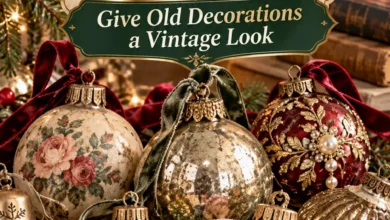
Striped baubles, ribbed drops, and ornaments with recessed reflector shapes bring variety to a tree without needing an elaborate theme. Their different surfaces catch the room’s light in different ways, which is part of their old-fashioned appeal.
Choose three colors to repeat, such as teal, pink, and gold. Put larger ornaments a little farther inside sturdy branches, then use smaller pieces near the outer tips. Leave enough space that an ornament can turn slightly without knocking its neighbor.
You can search for vintage-style reflector ornaments or Shiny Brite-style ornaments when looking for this appearance. Those descriptions are style clues, not proof of a piece’s age, maker, or value. Reproductions and shatter-resistant versions can give you a similar color story.
If you are displaying genuine old glass, handle each piece individually and inspect its cap and hanging loop before use. The Canadian Conservation Institute’s glass and ceramics guidance explains that painted decoration can be vulnerable to handling and abrasion. Support a fragile ornament from underneath rather than carrying it by a loose cap. A beloved piece that cannot hang securely can have its own protected display instead.
2. Give a Ceramic Christmas Tree Its Own Spotlight
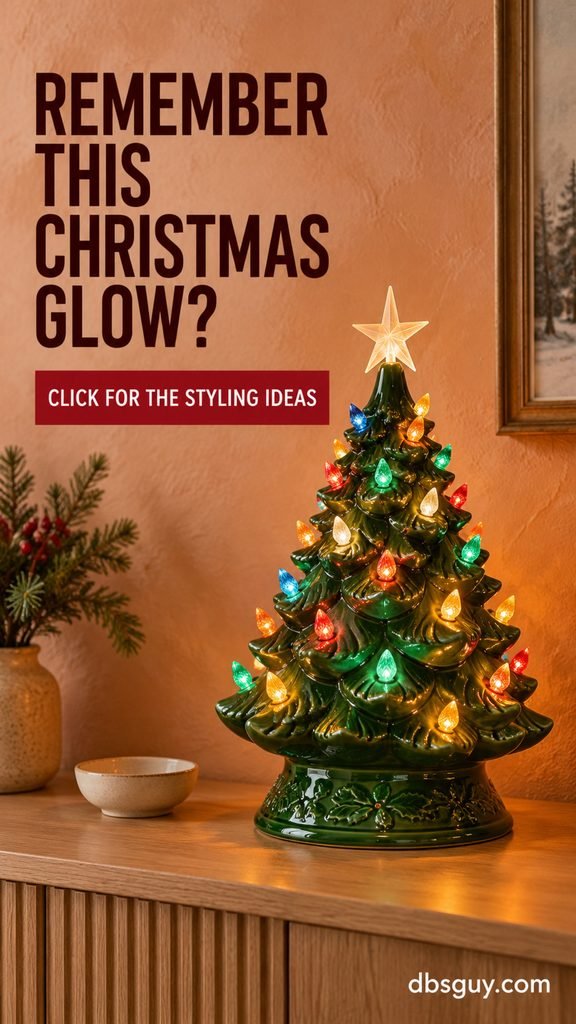
A ceramic tree with colorful light tips is a complete little display by itself. Putting it between several other decorations often hides the very detail that makes it appealing.
Try it on a sideboard, a wide shelf, or the end of a console where you can see its whole outline. Leave clear wall space behind it. One small dish or a short stack of plain books nearby is enough; the tree should remain the center of attention.
For a practical version of this idea, choose a modern, purpose-made LED ceramic tree and follow its instructions. Position it on a stable surface, keep any required ventilation clear, and route its cord where it will not be pulled.
An inherited electrical tree deserves a different decision. If its wiring, socket, or condition is uncertain, display it unplugged until a qualified repair professional has assessed it. Do not improvise a light fitting inside an old ceramic shell.
Want the feeling without the purchase? Give an existing unlit ceramic tree the same uncluttered placement and let a separate room lamp illuminate the scene.
3. Re-Create Popcorn Garland with Cream and Red Wood Beads
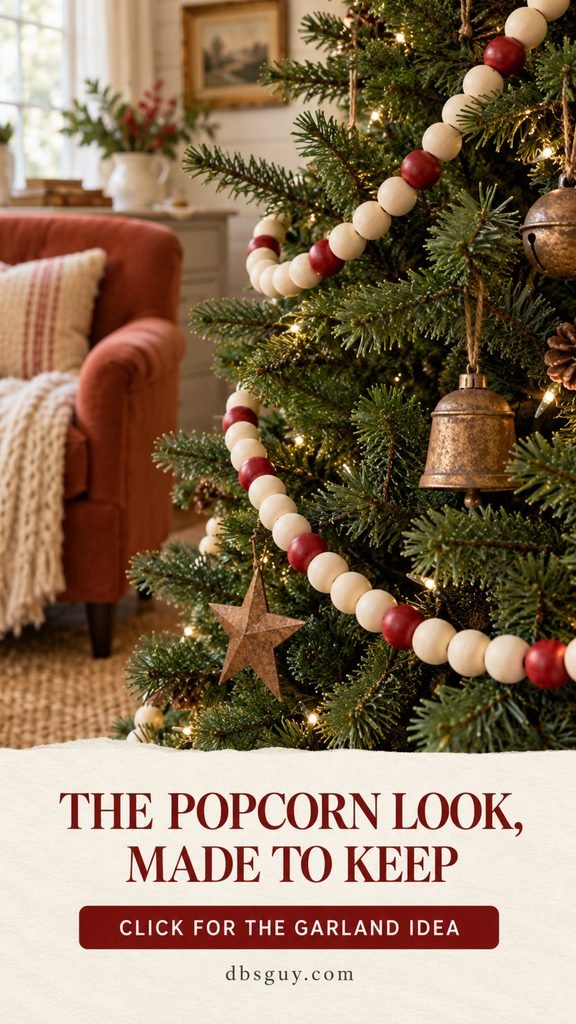
Popcorn-and-cranberry garland has a wonderfully homemade appearance. Cream and red wood beads offer a reusable way to echo it without keeping fresh food on the tree.
Start with mostly cream beads, then add a red bead at intervals. An occasional cluster of two or three red beads looks less mechanical than a perfectly identical pattern. Matte beads will feel softer and more traditional than shiny plastic ones.
Use a cord suitable for your beads, secure the ends, and test a short section before making the full length. Drape the finished garland in shallow loops on strong green branches. Let a few loops sit deeper in the tree so it feels integrated with the ornaments.
This also works on a small tabletop green tree if you scale the beads down. Avoid pulling the strand tight across branch tips; the gentle curve is what gives the arrangement its charm.
Because it is a strand of small parts, keep it beyond the reach of young children and pets. In a busy family room, a high display tree or a similar cream-and-red ribbon garland may suit your home better.
4. Tie Soft Red Velvet Bows onto Green Branches
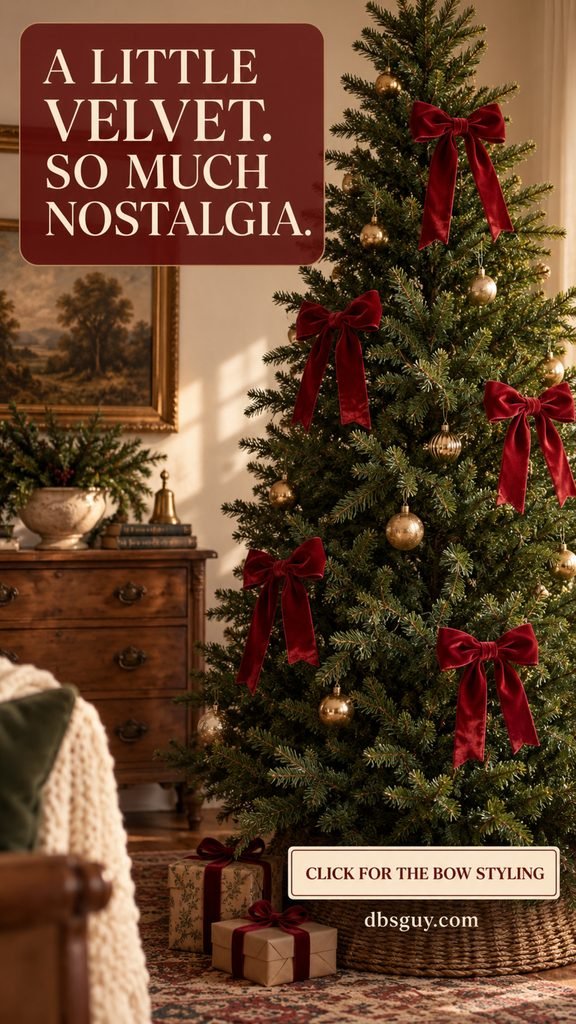
Red velvet is an easy way to make ordinary greenery feel familiar and festive. Its soft surface adds warmth even when the rest of the tree is fairly simple.
Choose ribbon that bends easily. Tie one trial bow, then hold it against a branch before cutting the rest. Small loops and modest tails usually sit more naturally than oversized, stiff bows.
Start with a few bows at different heights. Step back, look for an empty area, and add another only if the tree needs it. You want the red to travel around the tree rather than form a straight row.
A restrained combination is particularly appealing: green branches, velvet bows, and a handful of gold or cream ornaments. If your ornament collection is already colorful, use fewer bows so they act as connecting accents.
For a no-new-purchase option, reuse soft ribbon from past gifts. Pieces do not have to be exactly the same shade of red. Slight variation can feel collected, provided the bows have a similar size and shape.
5. Let a Patchwork Tree Skirt Add the Handmade Feeling

The base of a tree can look surprisingly bare after you have finished the branches. A patchwork skirt gives it a sense of care and makes the whole arrangement feel more settled in the room.
Look for cotton patches, a quilted finish, or a simple check pattern that repeats two of your tree colors. A red, cream, and muted green skirt works with many traditional ornament collections.
Spread it around the stand, then smooth the outer edge so it lies flat. It should cover the stand without reaching into a walking route. Keep access to a real tree’s water reservoir practical.
A washable, newly made skirt is useful in a household where packages, pets, or muddy shoes may brush the edge. A fragile family quilt is better enjoyed over a chair or on a protected display surface than cut into a tree skirt.
You can also arrange a suitable everyday quilt around the base without altering it, if its condition and placement allow. Fold excess fabric neatly, avoid bunching it around electrical connections, and keep the finished outline simple.
6. Style an Unlit Silver Tabletop Tree
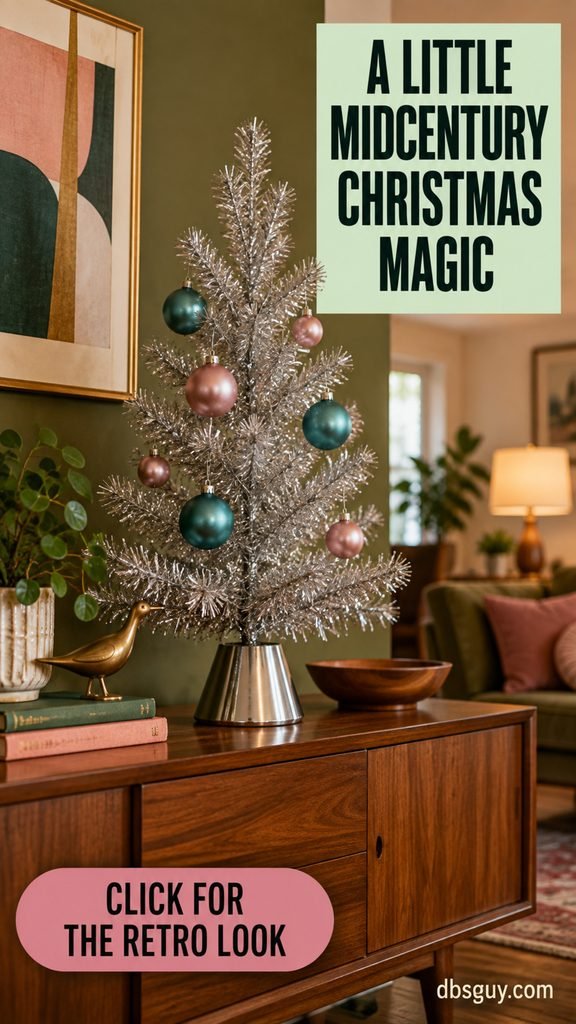
A little silver tree brings a bright midcentury feeling to a room, especially beside warm wood furniture. It does not need to be a large tree to make an impression.
Choose a tabletop version and keep the decorations light: a few pink and teal baubles, or a small group of one favorite color. Place it where daylight or a separate room lamp catches the metallic branches.
The important part of this idea is unlit. The U.S. Consumer Product Safety Commission’s holiday decorating guidance says never to use electric lights on a metallic tree. That applies to the styling here: leave electric light strings off the branches and use separate room lighting.
A clear stretch of console or sideboard helps the silhouette stand out. If you surround it with too many shiny accessories, the room loses the effect of that one sparkling shape.
For a small home, this can be your main nostalgic statement. Repeat one of its ornament colors in a cushion or wrapped gift nearby, and the rest of the room can stay quiet.
7. Choose Multicolor Lights for an Old-School Tree Glow

If your strongest Christmas memory is a brightly lit tree, multicolor lights may bring the feeling back more effectively than another box of ornaments.
Use a modern light set marked for the intended indoor use on a compatible green tree, with a label from a recognized independent safety testing laboratory. Look for clear individual red, green, blue, and amber tones if you prefer a familiar look over color-changing effects.
Before decorating, test the set and check its condition. Then place some lights a little deeper among the branches and others toward the front. Step back periodically so you can spot an overly bright patch or a dark corner.
Keep the ornament palette simple at first. Cream, gold, red, or wood decorations let the colored light become part of the design rather than competing with it.
Follow the light manufacturer’s connection limits. The U.S. Fire Administration’s holiday guidance also recommends checking for frayed or pinched wires. Turn decorative lights off before going to bed or leaving home.
The nostalgic effect comes from the color and placement. It does not depend on using old electrical equipment.
8. Build a Bottle-Brush Forest in a Small Spot

A group of bottle-brush trees gives you the feeling of a whole Christmas scene in a space no bigger than a shelf.
Choose trees with noticeably different heights. Three or five make an easy starting group, but use what you have. Place the tallest slightly behind the others and lift a shorter tree on a low wooden riser if its shape is disappearing.
For a soft vintage-inspired display, mix cream, pale green, and blush. For a brighter look, use deeper greens with one red tree. A limited palette helps the texture remain the interesting part.
Leave a little visible shelf between the trees. It makes each silhouette easier to appreciate and keeps the arrangement from looking like a store rack.
You do not need scattered glitter or artificial snow to finish it. A pale shelf, a cloth runner, or one small wooden house can suggest a winter scene with less cleanup.
This is a good idea for a narrow bookcase, a bedroom dresser, or a console where you want decoration without giving up the entire surface.
9. Create a Putz-Style Village with a Storybook Look
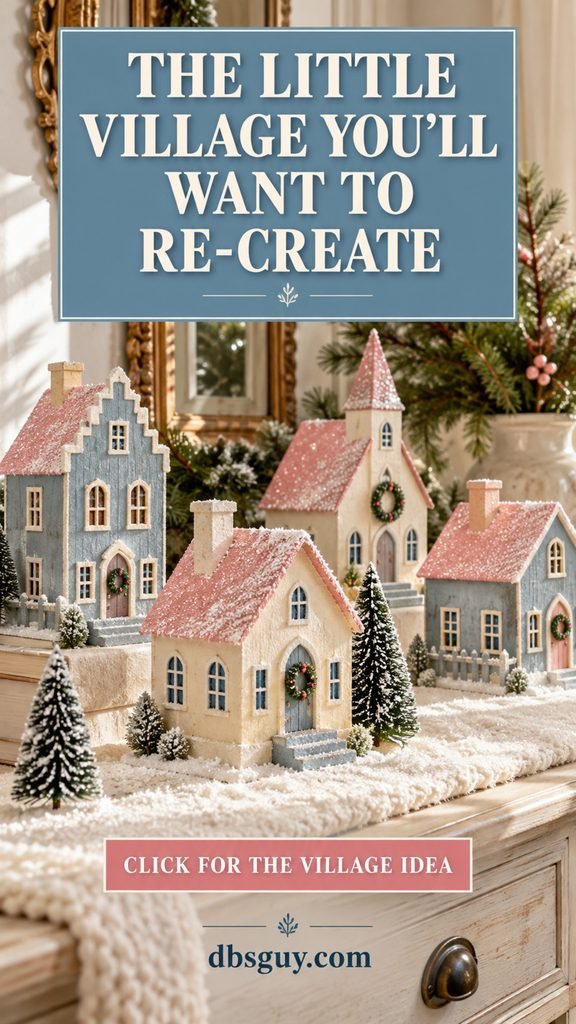
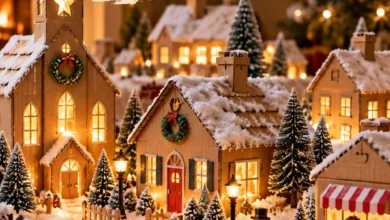
Miniature houses make a room feel as though a little Christmas story is happening inside it. A Putz-style village, with small dimensional houses and soft winter colors, is especially suited to that feeling.
Choose a few reproduction houses with a shared palette rather than trying to build a large collection immediately. Cream walls, pastel roofs, and modest snowy details work well together even when the houses are different shapes.
Use a cream wool runner or folded fabric as the base. Arrange the houses at slightly different angles, leaving space between them. A couple of miniature trees give the village a setting without overcrowding it.
For the version shown here, keep the houses unlit. If you prefer a lighted village, use houses manufactured for that purpose with their specified lighting; do not tuck loose bulbs into old cardboard buildings.
Give the display one boundary, such as a console top or a shelf. When the houses spread across several surfaces, they can lose the sense of being one small place.
A short village is easier to enjoy, rearrange, and store than a scene that fills every available inch.
10. Gather a Small Collection of Santa Figurines

Santa figures often look best as a group because the differences between them become part of the appeal. A painted wooden Santa, a simple felt figure, and a ceramic version can sit together without matching perfectly.
Start with three favorites. Arrange them on a bookshelf or high console with the tallest toward the back. A low riser under a smaller figure helps you see its face and shape.
Repeat one color in the background or surrounding objects. Red and cream figures against a dark green shelf, for example, feel connected even when their materials differ.
Keep other decorations minimal. You do not need a garland, a village, and a tray of ornaments on the same shelf. The little figures already supply plenty of character.
For breakable pieces, a stable enclosed cabinet may be a better home than the edge of a busy surface. Do not build a tall stack of books just to achieve a particular height.
If you only have one Santa you love, let it stand alone. A collection can grow over time; it does not need to be completed in one season.
11. Add a Quiet Pair of Brass Reindeer

Brass-colored reindeer bring a warm glow that suits dark wood, cream walls, and traditional greenery. They are a useful choice when you want vintage character without a very colorful display.
Place one taller figure with one lower figure, or choose a single reindeer with an interesting silhouette. Set them far enough apart that their legs and antlers do not visually merge.
A small evergreen sprig or a plain runner is enough around them. Keeping the surface mostly clear lets their shapes do the decorating.
If you are shopping, search terms such as “brass reindeer figurine” or “vintage-style metal deer” can help you find the appearance. A seller’s description is not a guarantee of metal type or age, so check the listing details and condition.
For an inherited piece, avoid aggressive polishing simply to make it match something new. Plated finishes, coatings, and natural surface changes need different treatment. If the material is uncertain, leave cleaning beyond gentle dust removal to informed advice.
The easiest styling decision is often to let the metal look as it is and repeat its warm tone elsewhere in a small bell or frame.
12. Display Reproductions of Old Christmas Cards
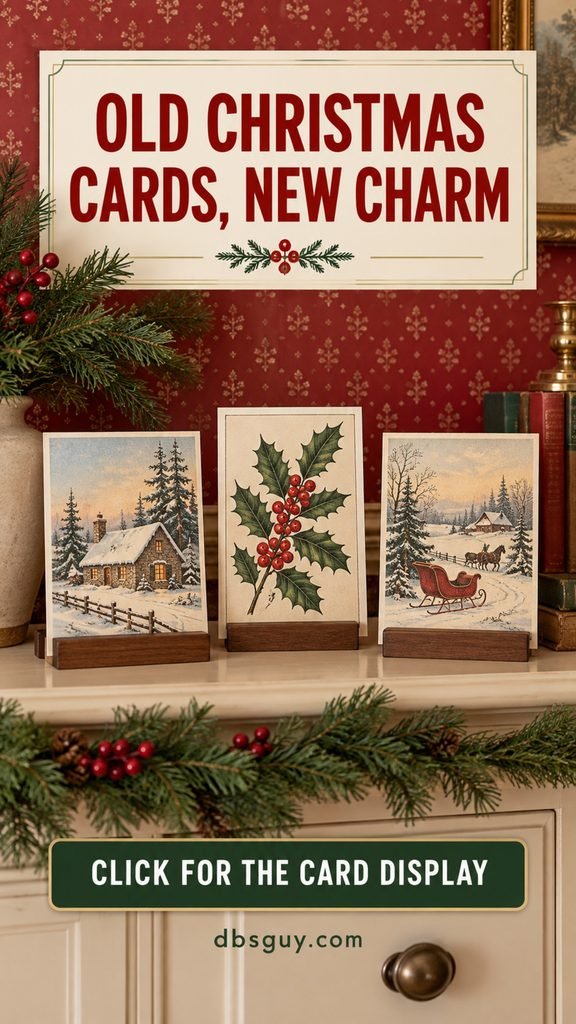
Christmas cards can add nostalgia through illustration, color, and handwriting. They are especially effective in a small space where a large collection of ornaments would feel crowded.
For an open display, use reproductions or copies rather than irreplaceable originals. Stand three cards on a shelf using small holders, or place a favorite design in a frame. Keep the overall group to a similar size or palette.
A snowy cottage, a simple holly illustration, and a winter landscape can work together even if they come from different designs. Leave enough empty wall behind them that the artwork remains easy to see.
If you want ideas from historical collections, the Library of Congress’s holiday card feature points readers toward collection materials and card-making inspiration. Check the rights information on any specific item before using its artwork.
The personal version is just as lovely: copy the front of a family card and display the copy alongside a small note about the year. Keep the original protected rather than attaching it to a garland with tape.
13. Hang Felt or Needlepoint Stockings on a Peg Rail

Stitched stockings bring texture and individuality to a room. Some are beautifully detailed; others are simple felt shapes with a star or a patch of holly. Both can feel wonderfully homey.
A wooden peg rail is a useful place to show them. It gives the display a clear line and keeps the stockings away from a working fireplace.
Before hanging anything, make sure the rail is securely installed for the load you intend to use. A stocking that is empty for decoration has different weight from one filled with gifts.
Mix stockings through a shared color rather than an identical design. Red, green, and cream can connect needlepoint, felt, and quilted pieces. Vary the texture, but keep the spacing comfortable.
For a fragile family stocking, check the hanging loop and seams. If the fabric cannot support its own weight safely, use a supported display instead of stretching it from the loop.
A small home only needs one or two stockings to get the effect. They can hang above a console, beside a reading chair, or along a quiet hall wall where you will notice them daily.
14. Turn Santa Mugs and Holiday Tins into a Decorative Display
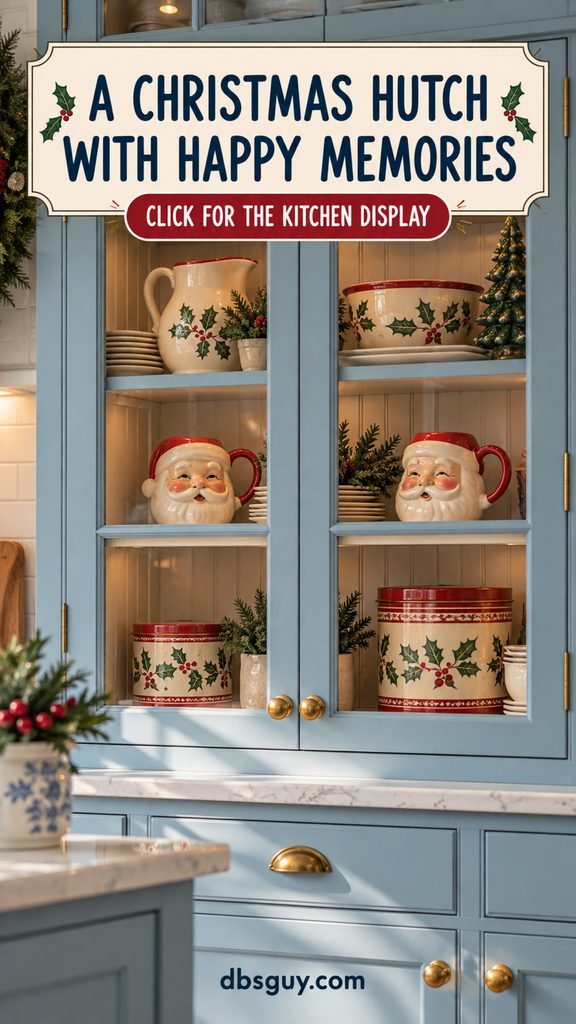
A Santa mug or patterned holiday tin can make a kitchen feel festive without taking over the counter. An enclosed hutch or upper display shelf gives these objects a place while keeping preparation space usable.
Group empty pieces by color. Two red-and-cream mugs and one patterned tin are enough for a compact arrangement. Put taller tins behind lower mugs so you can see the different shapes.
Treat unknown vintage tableware as decoration. The FDA’s guidance on lead-glazed pottery explains why some antique, damaged, or poorly characterized ceramic ware can present a food-use concern. Appearance alone does not establish food safety.
Use modern tableware verified for food use when serving cocoa, cookies, or snacks. Your nostalgic mugs can remain empty in the display.
Avoid turning an old tin into food storage simply because its exterior looks clean. A decorative role is enough, and it avoids putting fresh food against an uncertain lining.
This is also a useful way to enjoy a small inherited collection. You can see it through the cabinet doors, while the everyday kitchen continues to work normally.
15. Make a Christmas Storybook Reading Corner
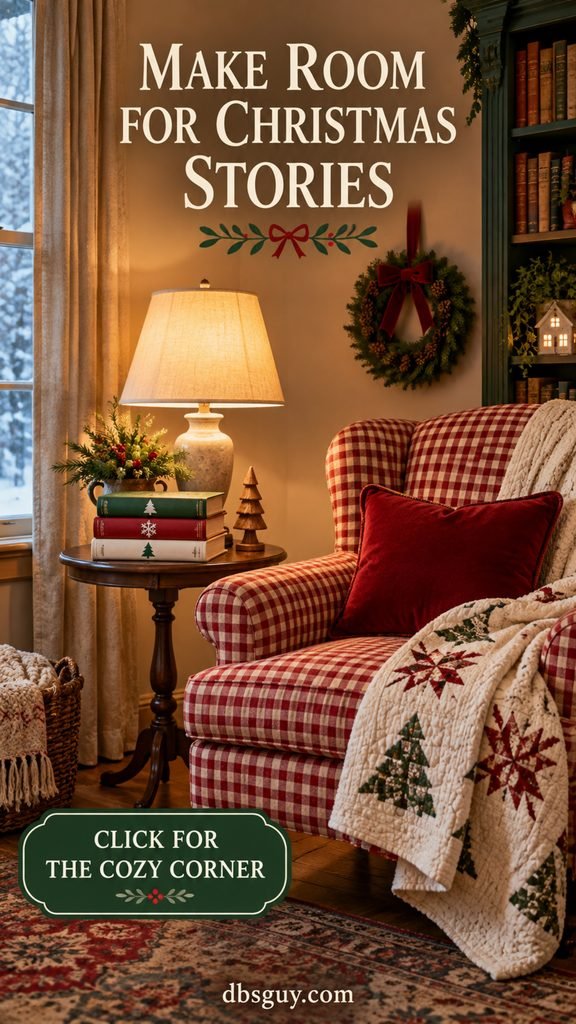
Some of the strongest holiday memories are attached to a routine rather than an ornament. A Christmas storybook corner gives your decorating a purpose you can return to throughout December.
Start with a comfortable chair, a good reading light, and two or three books. Add a quilt or a soft throw. A small wreath or a red check cushion can make the corner feel seasonal without covering every surface.
Use readable modern editions for regular family reading. A delicate old book with loose pages or a damaged binding may be better kept protected than placed in a daily-use stack.
Keep the side table useful: room for the books and perhaps a current, food-safe mug. If you cannot put anything down comfortably, remove a decoration.
The book selection should suit the people who actually use the corner. Picture books, a familiar seasonal story, or a collection of winter poems can all work.
You do not need to buy a special chair or a new collection. Moving a favorite book and throw beside an existing lamp can turn an ordinary corner into a small December ritual.
16. Bring Back a Reusable Fabric Advent Calendar
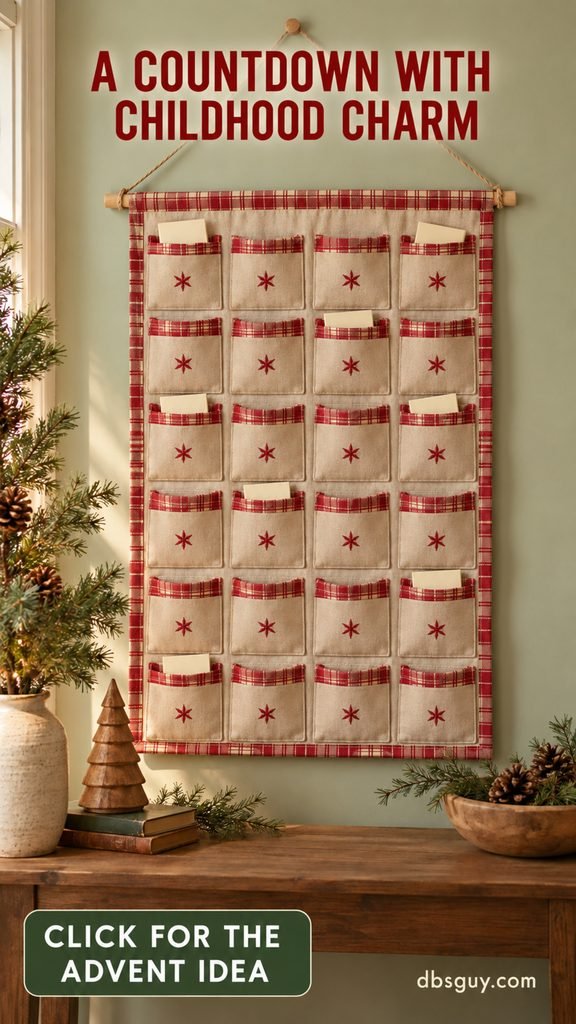
A fabric advent calendar adds a handmade element to a wall and gives the room something that changes each day. It can be as decorative or as simple as you prefer.
For a December 1–24 countdown, choose a calendar with 24 usable pockets. Check that you can reach them comfortably and that the hanging support suits the finished weight.
Red trim on cream linen, small stitched stars, or a check pattern feels at home with traditional Christmas decor. Let the calendar occupy its own patch of wall rather than hiding it behind garland.
Fill the pockets with activities that fit your household: read a story, call someone you miss, choose a holiday song, make a paper decoration, or take an evening walk to look at lights. You can repeat easy favorites rather than invent 24 elaborate plans.
If children will use it, choose contents appropriate for their ages. Written prompts can be a useful alternative to small objects.
The charm is in a manageable routine. A calendar that asks for a complicated project every night can quickly feel like another task on the December list.
17. Wrap Gifts in Retro Patterns and Simple Ribbon

Wrapped gifts can be part of the decorating long before they are opened. A few familiar patterns under the tree add color and make the lower half of the display feel finished.
Pick two main colors and vary the pattern. Red stripes, green checks, and cream paper with small stars make a cheerful combination. Plain paper helps break up the patterned pieces.
Use simple ribbon that repeats across the packages. Cream cotton, red fabric ribbon, or a soft green tie can connect different papers without needing elaborate bows.
Try one package first. Look at it beside your tree skirt and ornaments. If it adds a completely new color to an already busy tree, simplify the next few gifts.
This is an easy place to use leftover wrapping paper. Place the strongest patterns on smaller packages and use plain paper on larger boxes to keep the arrangement balanced.
There is no need for loose glitter, complicated tags, or fragile embellishments. A neatly folded package with a familiar print can have plenty of Christmas character.
18. Use a Wooden Toy Train as a Nostalgic Accent

A small train brings movement and playfulness into a display, even when it is sitting still. It is especially appealing near a tree or a little wooden house.
For decorating, a short train on a compact piece of track can sit on a console or a sturdy shelf. Leave space around it so the locomotive and carriages read as one clear shape.
A red, green, and natural wood train fits a traditional palette. If your room already has plenty of color, choose a simpler wooden version and let the shape supply the nostalgia.
Use a modern toy suitable for the intended users if children will handle it. An unknown old collectible belongs in a decorative display rather than automatically becoming a plaything.
For a display-only piece, choose a position appropriate to its small parts and condition. A train with loose wheels or fragile details should not sit on a reachable edge.
You do not need a powered track or a large layout. A short scene is easier to place, easier to store, and still has that lovely sense of a Christmas toy waiting to be noticed.
19. Tie Brass Bells with One Rich Ribbon
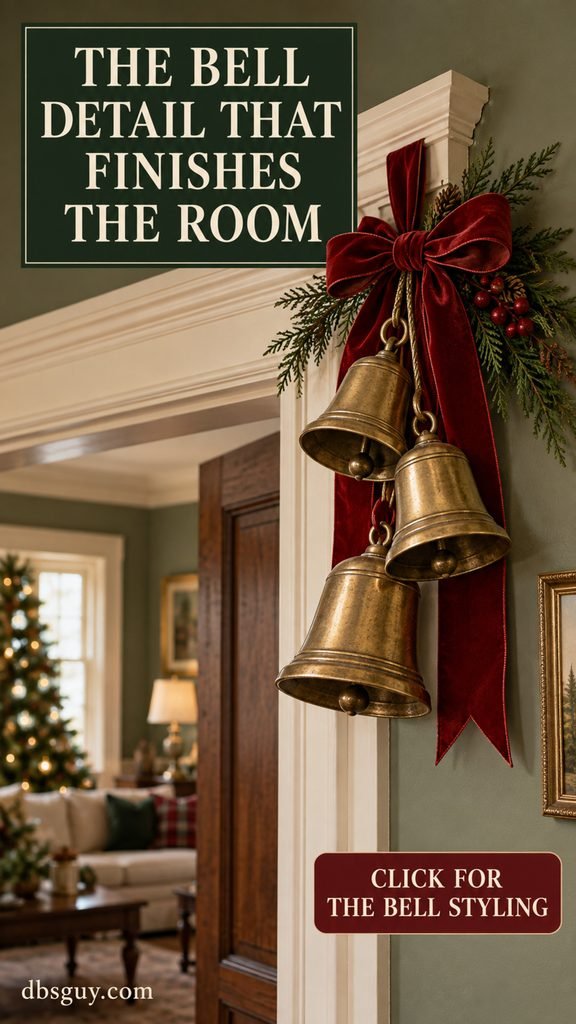
Bells are a small finishing detail that can connect a room without adding another large decoration. Their shape works particularly well beside greenery, wood, and soft ribbon.
Tie a small group with one generous red or green bow. Keep the ribbon tails proportionate to the bells, so the whole arrangement reads as one accent.
Try it high beside an interior doorway, on a strong wall hook, or at the center of a suitable unlit greenery arrangement. Use a secure fastening that can support the bells’ actual weight.
Avoid hanging them low in a passage or from a handle that people need to use. The nicest-looking placement should also leave the doorway comfortable to move through.
Brass-colored bells can repeat the warmth of reindeer or frames elsewhere in the room. They do not have to be real antique bells to make the scheme feel connected.
If the surrounding decorations are already busy, use only one bell and a plain ribbon. A single well-placed detail often feels more deliberate than a cluster squeezed into the last available space.
20. Give a Meaningful Nativity or Keepsake Its Own Place

If a nativity is part of your Christmas tradition, let it have a clear place where its figures and meaning are easy to appreciate. The same approach works for another family keepsake that matters to your holiday.
Choose a stable shelf or sideboard. Arrange the figures within the available space and leave enough room around them to show their outlines.
A simple fabric runner can provide a quiet base. Avoid surrounding the display with unrelated ornaments just because the shelf has spare room. A meaningful object does not need many accessories.
Keep small or fragile pieces in a location that suits your household. If the set includes a loose cradle or delicate figure, check that it is supported and will not be brushed when someone reaches for something nearby.
For a family heirloom, retain its existing finish unless you have reliable advice on care. Painting, gluing, or polishing it to match a new palette may be difficult to undo.
You can bring the display into the rest of the room by repeating one color or material, such as natural wood or cream fabric, without changing the keepsake itself.
21. Finish with a Family Christmas Memory Corner
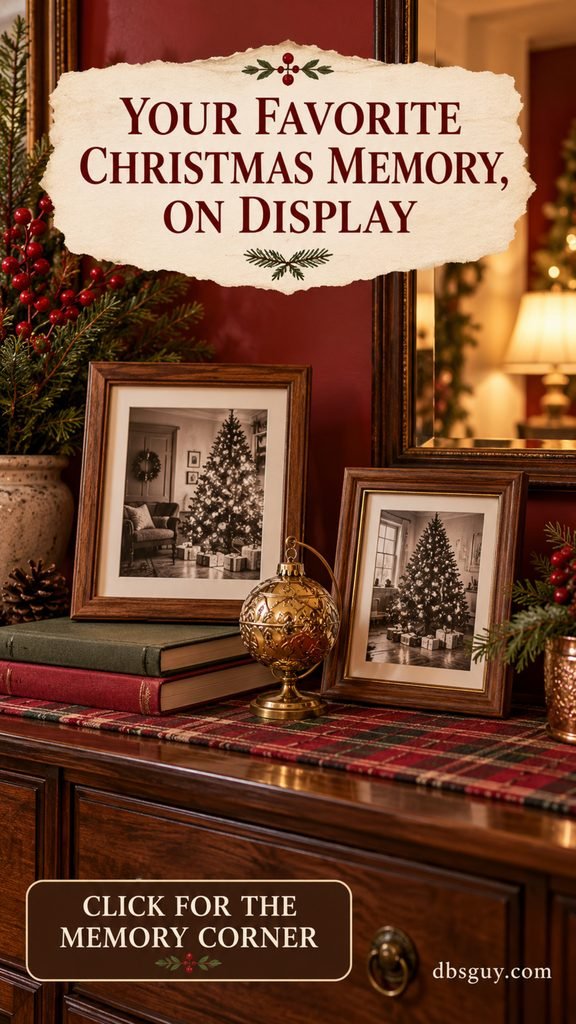
A pair of holiday photos can make vintage-inspired decor feel personal in a way that purchased objects cannot. The setting does not have to be elaborate: two frames, one small ornament, and a little space to pause are enough.
Use copies for the open display. Keep original prints in appropriate storage, especially if they are old or irreplaceable. The Library of Congress’s photograph care guidance advises avoiding adhesive contact with photographs and protecting them from excessive light and unsuitable storage conditions.
Choose images that mean something to you: a childhood tree, a family gathering, a snowy December street, or the first Christmas in a particular home. They do not need to be professionally composed.
Place the frames at slightly different heights and keep the ornament separate on a stable support. Avoid leaning a fragile bauble against the glass where it could roll.
A quiet spot away from direct window light works well. Add a short note to the back of the display copy with the year or the memory you want to preserve.
This is the idea that makes the whole room feel like your Christmas, rather than a collection of attractive holiday objects.
Make Different Pieces Feel Like One Room
Vintage-inspired decor can become cluttered when every surface has a separate theme. You can keep the character and still give the room a clear flow.
Choose one main display, such as the tree, and one supporting display, such as a village or a Santa shelf. Add a smaller detail where it helps: bells near the doorway, a stocking beside the chair, or a few wrapped gifts beneath the tree.
Repeat colors and materials instead of repeating every object. Red ribbon on a tree and on a bell cluster creates a connection. Warm wood in a toy train and photo frames does the same job.
Then check the room from its entrance. If several items compete for your attention at once, move one group to another room or put it away. Leave space where you need to set down a drink, open a cabinet, read, or walk.
For a small apartment, choose one vertical feature and one compact surface display. Stockings on a peg rail plus a ceramic tree on a sideboard can give you plenty of Christmas feeling while keeping the floor clear.
Shop for the Feeling, Then Check the Condition
You can build this look with objects you already own, secondhand finds, handmade details, and reproductions. Begin at home before opening a shopping tab.
Write down the feature you want: colored reflector shapes, soft velvet, stitched fabric, or a little village. That is more useful than a vague goal of buying “vintage Christmas.”
For a secondhand piece, check its dimensions, material, missing parts, cracks, loose fittings, and condition of the finish. Ask for clear photographs of the base, back, and any maker’s marks when those details matter.
Do not pay an antique premium on the strength of a nostalgic shape alone. A modern reproduction can be an excellent decorating choice, but it should be described honestly.
For electrical decorations, choose new equipment or obtain a qualified assessment of an inherited item before use. For pieces that will touch food, confirm suitability rather than relying on appearance. For children’s play, use age-appropriate modern toys.
You can also decide that a damaged sentimental object is best enjoyed in a protected display. Its value to your home may come from the memory, not from using it exactly as it was used years ago.
Pack the Keepsakes So Next Christmas Starts Well
Take a photograph of your favorite arrangements before putting them away. It helps you remember which small groupings worked, without committing you to repeating the whole room.
Keep fragile glass pieces separated and supported in a suitable compartmented box. Do not let painted surfaces rub together or trap ornaments beneath heavier decorations. Closed storage can also reduce dust and handling; the Canadian Conservation Institute’s care guidance explains why both matter for vulnerable objects.
Store cards and original photographs in appropriate protective enclosures. For photos, look for sleeves or envelopes that have passed the Photographic Activity Test, often abbreviated as PAT. Avoid sticking tape directly onto a print or using adhesive album pages as a shortcut.
Let textiles dry completely before packing. Fold stockings and fabric calendars gently, keeping their hanging loops from being pulled. Keep everyday decorative paper houses separate from heavy ceramic figures.
Choose a dry indoor storage area with relatively stable conditions where possible. Label boxes by what they contain, such as “fragile glass ornaments” or “village houses,” rather than relying on a general Christmas label.
Packing a small collection carefully makes it easier to enjoy it for years. It also reduces the temptation to replace an entire display because a few pieces were crushed or tangled.
Questions About Vintage Christmas Decor
Can I get a vintage look without buying antiques?
Yes. Look for familiar materials, shapes, and colors: velvet ribbon, quilted fabric, reflector-style ornaments, colored lights, and miniature trees. A reproduction can give you the appearance without the fragility, price, or uncertainty of an older object. Pair a few of these with something personal, such as a copied family photo or a stocking you already own.
How do I keep vintage Christmas decor from looking cluttered?
Give each group a clear boundary and leave useful empty space around it. Keep a village on one shelf, a Santa collection together, and a tree palette fairly consistent. If the room feels crowded, remove an entire small group before adjusting every individual piece. The eye often needs fewer focal points, rather than a completely different decorating style.
Can vintage-inspired decor work in a modern living room?
It can work particularly well when you use a small number of strong pieces. A ceramic tree on a simple sideboard, red velvet bows on a green tree, or brass reindeer beside plain greenery gives a modern room warmth. Let the furniture remain part of the scene instead of covering it with layers of accessories.
Should I use my grandparents’ old Christmas lights?
Their appearance alone cannot tell you whether they are suitable for use. For the nostalgic lighting effect, a modern indoor light set is the straightforward option. Keep an inherited set unplugged unless a qualified professional has assessed its condition and suitability. You can preserve the memory of the old lights without depending on the original wiring.
Are old Santa mugs safe for hot chocolate?
Do not assume an unknown vintage ceramic mug is food-safe. Its age, glaze, decoration, damage, and intended purpose may affect suitability. Keep uncertain pieces in a decorative display and serve drinks in modern tableware verified for food use. The old mug can still contribute to the room without being used as a drinking vessel.
What is the easiest vintage Christmas idea for a small space?
Start with a ceramic tree, a short bottle-brush forest, or two copied Christmas photos beside one ornament. Each creates a complete little scene on a small surface. Choose the version that means something to you, leave space around it, and repeat one of its colors in a stocking or ribbon elsewhere.
Bring Back the Feeling You Want to Remember
You do not have to decorate every room or collect every kind of vintage Christmas object. Start with the piece that makes you pause: a colorful ornament, a stitched stocking, a little tree, or a photo of a Christmas you loved.
Give it a good place, add one or two details that belong with it, and let the room stay comfortable to live in. The most inviting Christmas decor leaves room for the things the season is meant to hold—stories, visits, quiet evenings, and familiar routines.
Over time, those small choices become part of your own holiday memories. That is how a few decorations can bring back the magic of childhood while making space for the Christmas you are creating now.