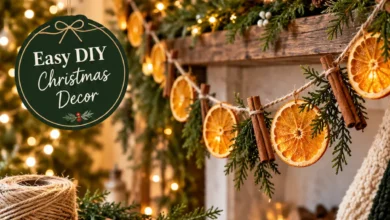
Your summer flowers are gone, the porch feels a little bare, and those empty pots are still sitting beside the door. Before you carry them into storage, picture them filled with fresh greenery, pale birch logs, or a few red berries. The containers you already own might be the easiest place to start your Christmas decorating.
The best outdoor Christmas planter ideas give each pot a clear shape and one detail worth noticing. A tall branch adds height. Cedar softens a hard rim. A handful of ornaments brings color close to the door. You can create a welcoming entrance without filling every corner of the yard.
These 17 ideas include compact porch pots, generous urns, rustic boxes, contemporary bowls, and a reusable option for warm December weather. Each has a practical recipe and a way to adjust it. Most use cut branches arranged as seasonal decorations; they are not living container gardens, and the stems are not expected to take root.
Before You Fill a Pot, Choose Its Place
Set the empty container where you want it to stay, then open the door fully and walk past with a grocery bag. That little test tells you more than a picture does. Leave room for visitors, deliveries, handrails, and the path you will clear after snow.
Look at the pot from the sidewalk, too. A tiny ornament can disappear from there, while one pale log or a group of red stems remains visible. Decide whether you want the arrangement to greet someone at the door or stand out from the street. You may need a different focal point for each.
Choose a container labeled for your outdoor conditions, including freezing weather where relevant. Penn State Extension advises protecting pottery and terracotta from freezing temperatures and keeping drainage holes in outdoor plastic or metal pots. Check the manufacturer’s guidance for your actual container; a stone-look finish does not tell you whether it tolerates winter.
Pick one main accent before shopping: birch, red stems, pinecones, berries, ornaments, or a star. Then choose greens to support it. You will have an easier time creating a complete arrangement when every item has a job.
A Simple Base for Christmas Porch Pots
You do not need all 17 recipes. Choose one that suits your porch and gather a suitable pot, workable potting mix, pruners, your greenery, and the accent material. Use garden picks or a firm internal support when an accessory needs more hold than its own stem provides.
If the pot held annual flowers, cut away their dead top growth. Sound leftover potting mix can support decorative stems. Remove diseased material rather than incorporating it into a new display. For an empty pot, use an inner nursery container with drainage and enough depth to seat your chosen stems. Keep it steady inside the outer planter.
Assemble the display before the mix freezes. Put the main upright material in first, test that it stands firmly, then add shorter greens around it. Finish with softer branches near the rim and your accent. Do not use a shallow layer of loose filler to hold heavy logs or tall branches. Reduce their size or add a proper internal brace.
Fir, pine, spruce, cedar, juniper, and magnolia offer different textures. Illinois Extension identifies several evergreen materials suitable for seasonal cut arrangements. Garden-center bundles are useful if you do not have suitable plants of your own.
For a first attempt, try a roughly 14- to 18-inch-wide pot (36–46 cm). That is a starting size, not a rule. Lay your greens beside it before inserting them so you can judge coverage. Branch length, fullness, pot depth, and the amount of open space you want will determine how much you need.
1. Birch-Log Urn with a Soft Evergreen Collar
Pale birch bark makes a beautiful focal point against a dark urn. It gives an ordinary porch pot a strong outline, even before you add color. Keep the logs modest and let the greenery make the arrangement feel generous.
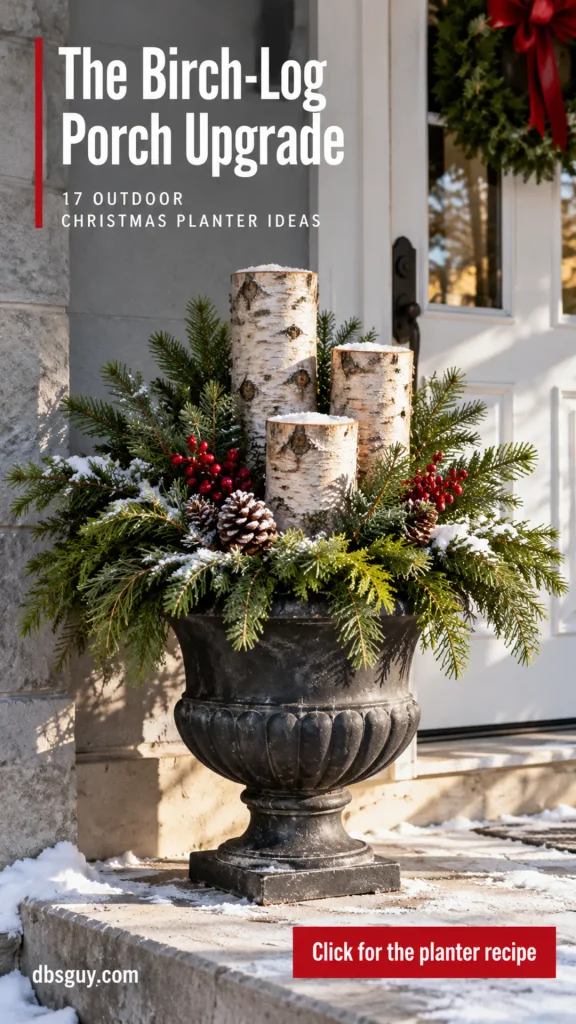
Gather: a stable winter-suitable urn, three short birch logs or convincing outdoor-rated replicas, fir, soft pine, and a small red accent if you want one.
Arrange the logs at different heights, with the tallest toward the back. Seat them firmly in a deep, steady insert; heavy pieces may need a brace secured to the insert. Test each one before adding foliage. Build a broad fir collar around the logs, then angle a few pine sprays outward to soften the edge.
The light bark should stay visible from the front. If the greenery hides most of it, lower the front branches rather than adding still more height. Two small berry picks or a restrained bow can echo a red door decoration without taking over.
Make it work for your home: use one short log in a smaller pot. For a windy entrance, choose lightweight replicas and a lower profile. The effect comes from the pale bark against dark greens; it does not depend on towering timber.
2. Red Dogwood Stems in a Slim Modern Planter
A narrow planter can look intentional rather than squeezed into a corner. Red dogwood stems draw the eye upward, while a restrained evergreen base keeps the arrangement from becoming bulky.
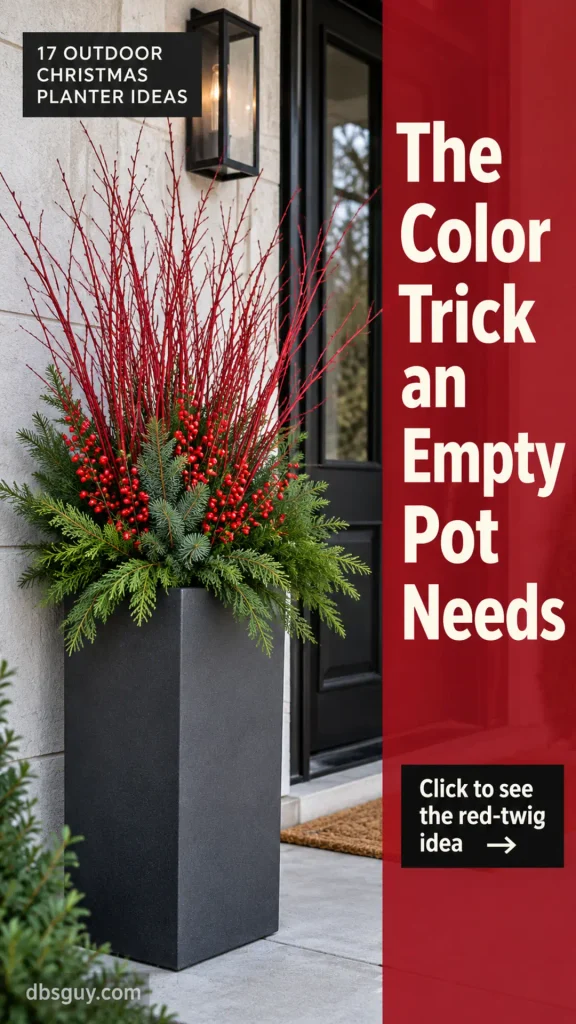
Gather: a slim, stable outdoor planter, a small bundle of cut red dogwood stems, and fir or another locally available cut evergreen.
Start with the longest stems just behind the center, then fan shorter ones to either side. Turn them as you place them so their natural forks create an interesting outline. Insert them deeply enough to stay firm and keep the upper spread out of the door’s swing.
Add short evergreen pieces around the base, leaving the red stems exposed. The red branches are the color feature here; you do not need to fill every gap with ornaments. A black or graphite pot helps the stems read clearly against pale siding.
A useful adjustment: for a light-colored front door, let the branch color do the work. Against dark brick, a few outdoor berry picks can make the lower half more visible. If your pot is easily tipped, reduce the branch height and add suitable weight inside the container without blocking drainage.
3. Magnolia Leaves with Warm Copper Accents
Magnolia brings a detail that photographs beautifully: glossy green leaf fronts and soft brown backs in the same arrangement. Copper accents repeat that warmth and suit brick, stained wood, and cream-painted entrances.
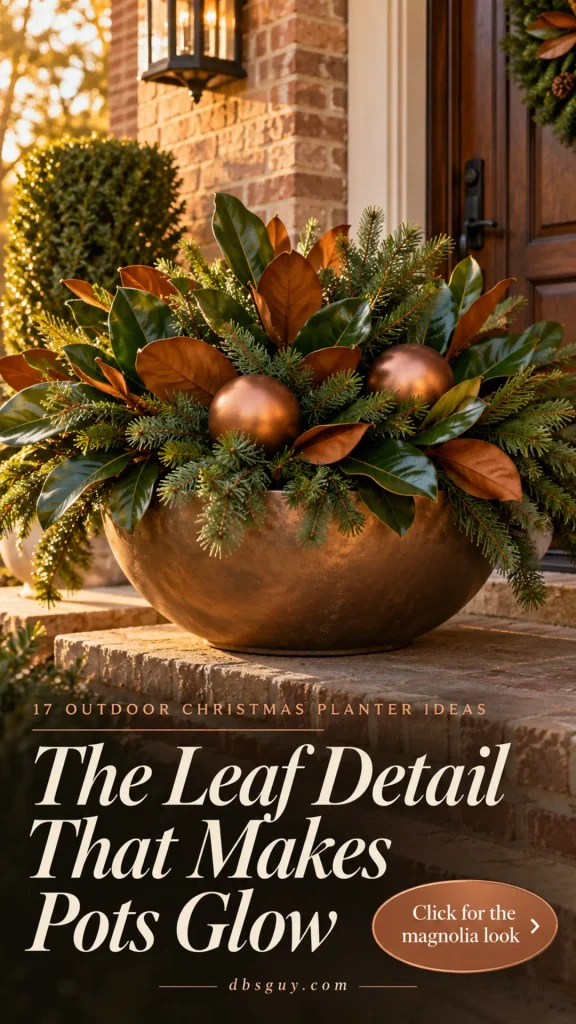
Gather: a broad outdoor bowl, cut magnolia branches, short fir pieces, and a few outdoor-rated matte copper ornaments on secure picks.
Place the fir first to establish a low, rounded shape. Add magnolia branches in small groups, turning some leaves to reveal their brown undersides. Keep their stems supported in the mix; the leaves should look naturally layered rather than individually pasted around the rim.
Nestle the copper ornaments among the leaves, slightly off-center. Three small accents are a useful starting point, but use fewer if the bowl is compact. Avoid a ring of identical baubles around the edge, which can flatten the arrangement’s shape.
For a calmer version: leave out the ornaments and use the leaf backs as the warm accent. In harsh weather, monitor fresh magnolia rather than assuming it will remain perfect. Outdoor-rated faux magnolia can carry the look where fresh leaves are difficult to source or maintain.
4. Oversized Pinecones in a Rustic Half-Barrel
A barrel already brings plenty of texture. A few large pinecones make the arrangement feel complete without adding ribbons, lights, and several competing colors. This is a lovely direction for a cabin entrance or a wood-sided porch.
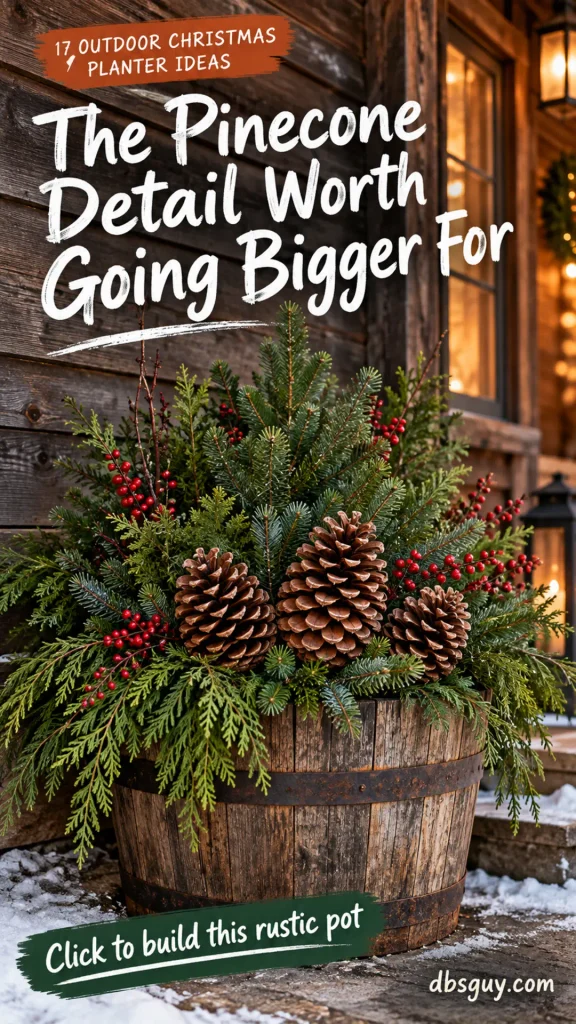
Gather: a sound outdoor half-barrel, a drainable insert if needed, mixed cut greens, and several large clean pinecones.
Create a fir center and a softer cedar edge. Put your largest cone near the front, with smaller ones slightly behind or to the side. Hold cones on sturdy garden picks using securely fastened wire around their bases; tuck the wire out of sight and avoid leaving sharp ends exposed.
Check the arrangement from standing height. The cones should be visible above the front greenery rather than buried in it. You can achieve the same focal point with a tight cluster of ordinary-sized cones if oversized ones are unavailable.
Keep the spending focused: reuse the barrel and put your budget into the freshest greens or the cone feature. Position a heavy finished barrel before filling it. If your porch stays wet, inspect the wood and insert rather than treating every decorative wooden vessel as suitable for prolonged exposure.
5. Twin Berry Pots for a Classic Christmas Entrance
Two matching pots can make a plain doorway feel dressed for the season. The secret is repeating the overall shape and color, not trying to make every individual branch perfectly identical.
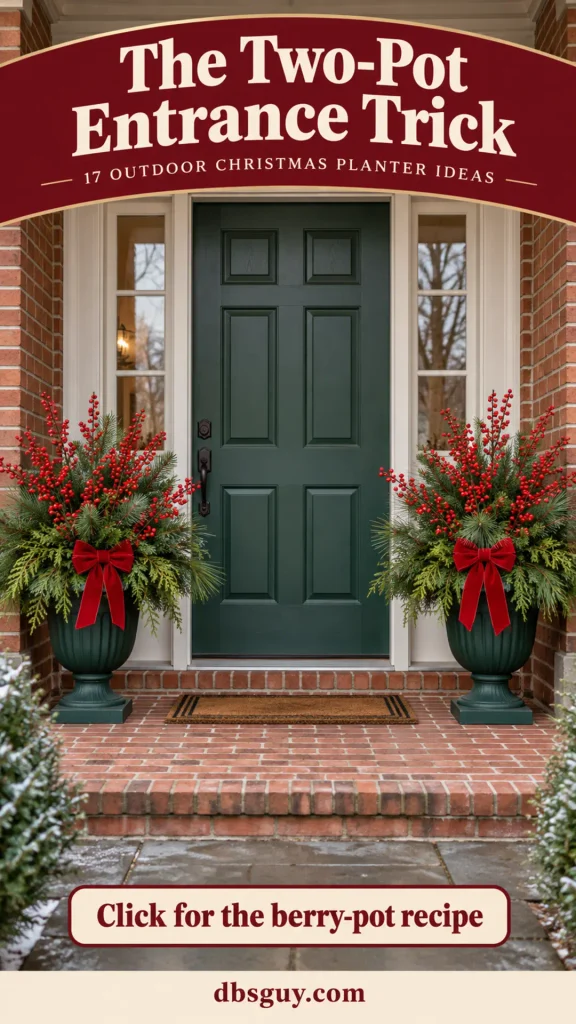
Gather: two similar outdoor containers, cut fir and pine, red berry stems or outdoor-rated artificial berry picks, and optional matching bows.
Divide the greens and accent stems between the pots before you begin. Build both bases to about the same width and height, then add berries where they will show against the greenery. Step back after finishing each layer so one pot does not quietly become much fuller than the other.
If using real berries, identify the plant and check whether it is appropriate where children or pets can reach it. Artificial picks should be labeled for outdoor use; some indoor berries soften or lose their coating in wet weather.
For an uneven porch: matching containers can sit at different distances from the door if that keeps the route clear. If two pots crowd the entrance, make one generous berry pot instead and repeat its red accent in the wreath. A comfortable doorway matters more than symmetry.
6. Ornament Clusters in a Cheerful Galvanized Bucket
Those extra ornaments do not have to stay in a storage box. A bucket of greens with a small cluster of bright baubles can bring a playful Christmas feeling to a modest porch.
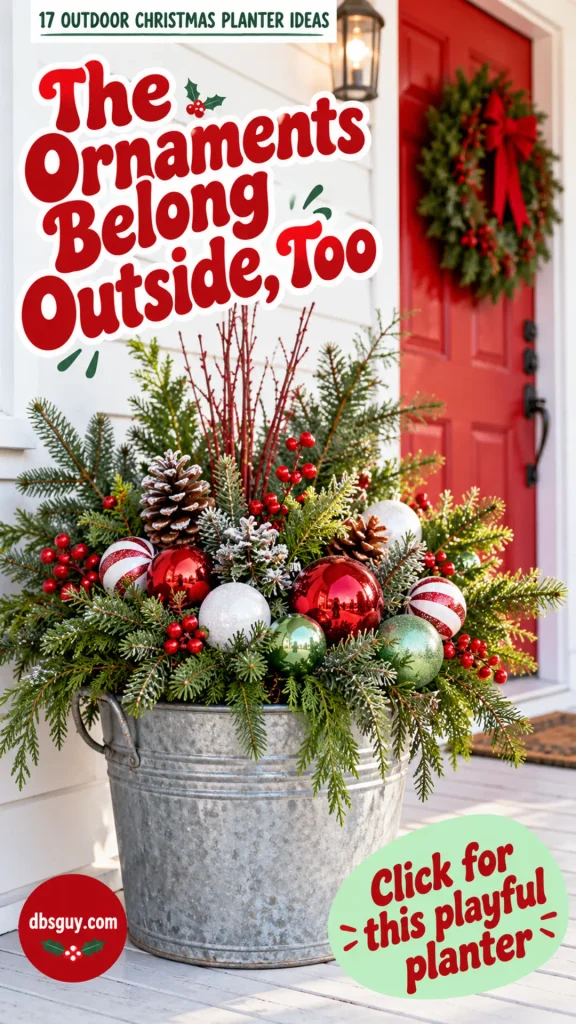
Gather: a stable metal bucket suitable for your outdoor conditions, a drainable inner pot, fir branches, and shatter-resistant ornaments specifically suitable for outdoor display.
Check drainage in both the insert and the outer vessel. Build a compact green mound, then secure ornaments to garden picks or sturdy branches with weather-suitable ties. Place them in little groups near the front rim, where their round shapes will be easy to see.
Choose two or three colors that already appear near your door. Red, white, and mint make a cheerful combination; red and gold feel more traditional. A few patterned ornaments can be fun, but leave enough plain ones to keep the arrangement readable.
Use what suits the location: a light bucket needs a stable position and appropriate internal weight. Keep it on a level surface rather than a narrow stair tread. Protect the finish according to the product instructions, and leave cherished indoor glass ornaments indoors.
7. A Warm-White Lighted Branch Planter
A planter can become the prettiest part of the entrance after sunset. Small lights following a few bare branches create a delicate glow, with greenery underneath to give the arrangement shape during the day.
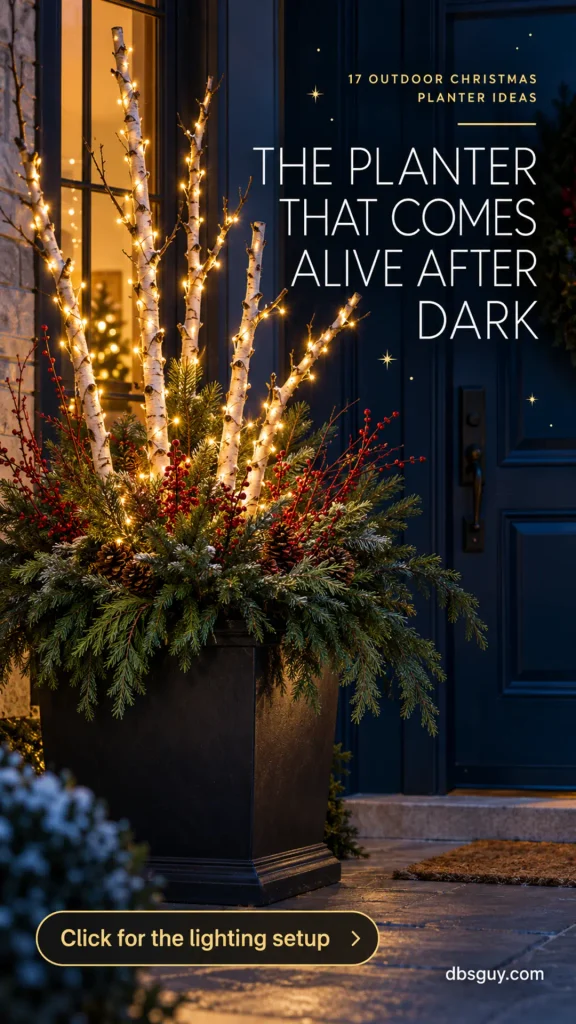
Gather: a broad, steady outdoor pot, several modest bare branches, fir, and a light set whose lights, power supply, and controls are rated for the intended outdoor location.
Secure the branches first. Loosely guide the lights along their contours instead of pulling a tight web across the whole pot. Follow the light manufacturer’s mounting guidance and keep connections and battery compartments out of the potting mix and standing water. Route the supply toward the wall, clear of the walking path.
For plug-in lighting, the U.S. Consumer Product Safety Commission recommends outdoor-rated lights and GFCI protection. Inspect the set for damage and follow its connection limits.
No convenient outlet? choose an outdoor-rated battery set and place its compartment as directed. Check the arrangement after dark before adding another strand. A few visible points of light often show the branch shape more clearly than a dense tangle.
8. A Low Evergreen Bowl for a Narrow Porch
On a small porch, the most welcoming decoration may be the one that leaves space around it. A low bowl adds holiday texture near the door while keeping the upper half of a tight entrance open.
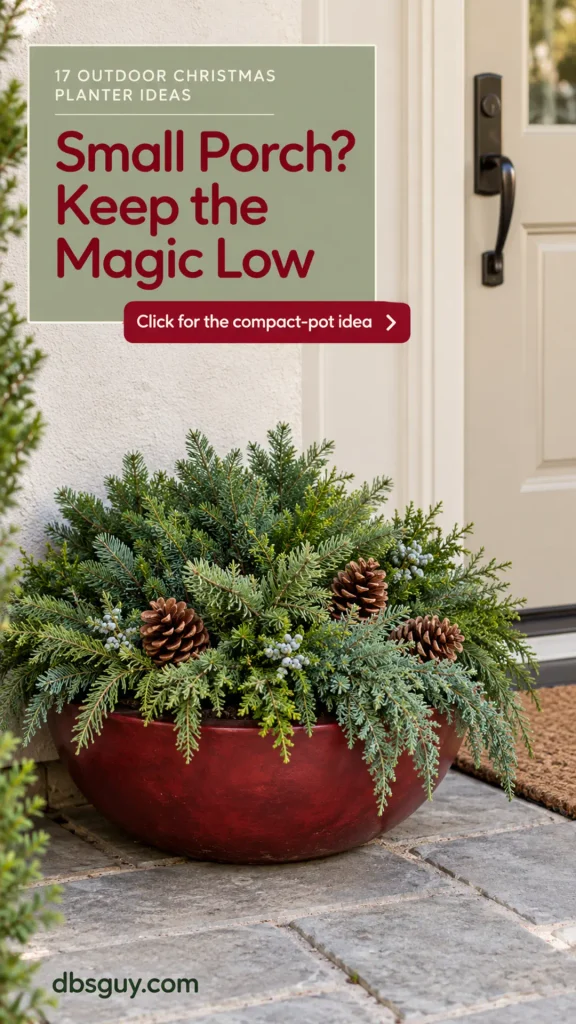
Gather: a wide, low winter-suitable bowl, short fir or juniper pieces, pinecones, and an optional red accent.
Fill a suitably deep, drainable insert and arrange short greens outward from the center. Keep the back slightly fuller if the bowl sits against a wall. Leave the front edge gentle rather than letting branches project into the route people use.
A red bowl supplies color before you add anything else. With a neutral container, use a small group of berries or a short bow instead. Look at the bowl from above as well as from the street: visitors on a small landing will usually see the top of it.
Keep the location practical: place it beside the wall or another protected edge where it is clearly visible. A low container can become a trip obstacle in the wrong spot. If there is no spare floor space, reserve this shape for a roomy raised porch surface designed to hold it securely.
9. A Tall Planter with Cascading Cedar
When a tall pot feels too rigid, change the edge. Cedar sweeping over the rim gives it a softer outline and draws attention to the greenery rather than the height of the container.
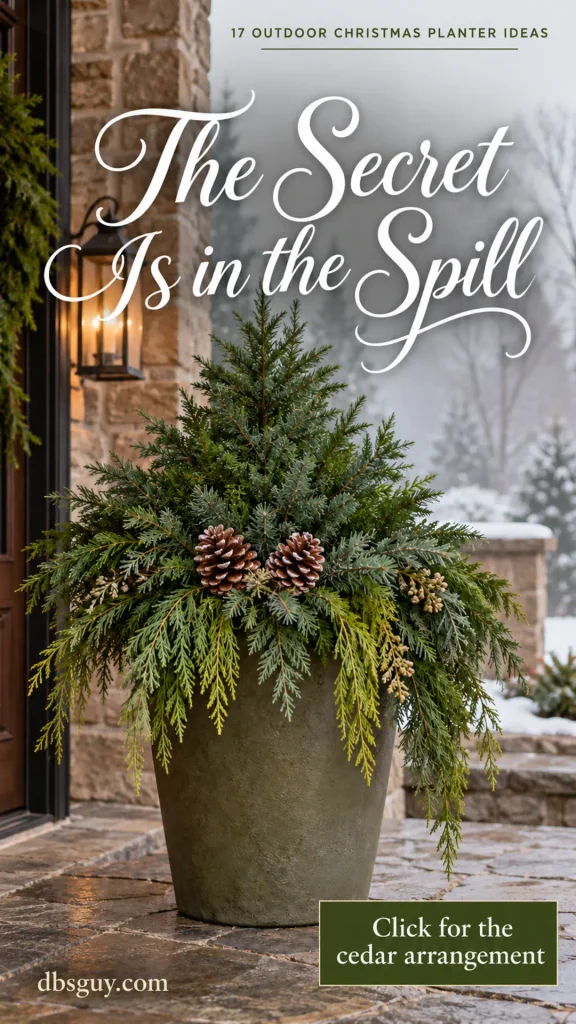
Gather: a stable tall outdoor planter, a supported insert near the rim, short upright fir, cedar sprays, and a small pinecone accent.
Use a purpose-made shelf or another firm support inside the container to hold the insert at a workable height. Do not balance it on loose scraps. Keep any needed weight lower down, and maintain drainage through the whole setup.
Arrange fir in the middle, then angle cedar around the perimeter so the sprays sweep outward and downward. Turn each piece until its natural direction looks relaxed. Leave the ends above the ground and out of door hardware or nearby handrails.
A simple editing trick: view the pot from both sides. If all the greenery hangs toward the camera, add a little coverage to the back and sides. For a narrow porch, use shorter cedar pieces; you can keep the soft edge without creating a broad skirt across the walkway.
10. A Long Trough with Three Repeating Greenery Bundles
A long container can look patchy when every section uses a different accent. Repeating three small bundles gives it a rhythm, especially beside a broad porch wall or beneath a low window.
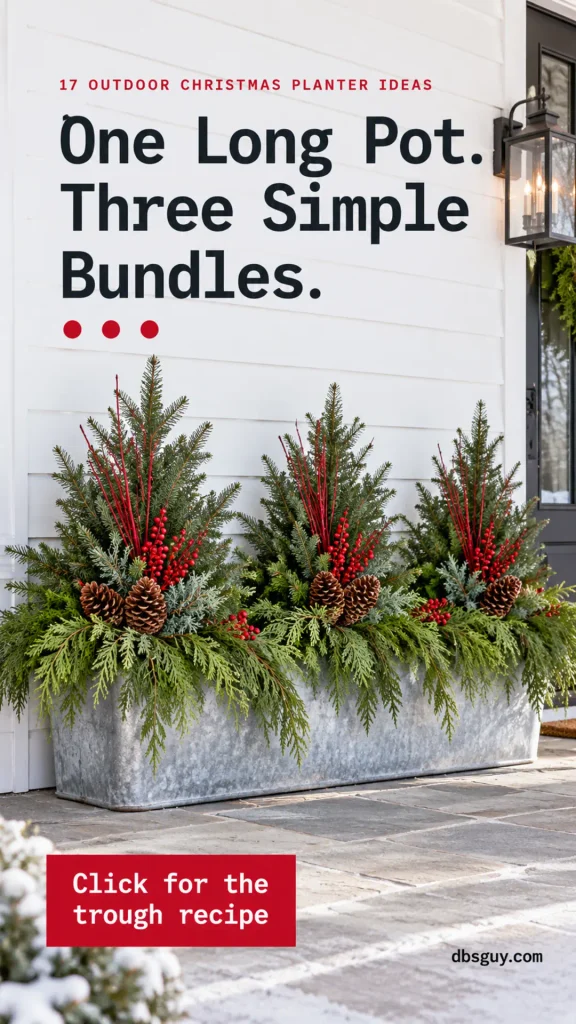
Gather: a long outdoor trough, drainable inserts or a suitable continuous planting compartment, fir, cedar, and one repeated accent such as red stems.
Set the trough in place first and check its weight support. Mark three roughly even positions, then create a small upright fir group at each. Keep their heights similar, allowing the natural branches to vary slightly. Link the groups with a lower layer of cedar along the rim.
Add the same accent to each bundle. If one receives a red twig and the next gets an oversized bow, the repetition becomes harder to see. Keep the center of each group visible rather than burying all three beneath a single dense mound.
Scale it down: use two bundles in a short rectangular box, or three very compact ones. Place a heavy trough on a surface intended to support it. This ground-level recipe does not require mounting a filled container on a railing or window ledge.
11. Dried Hydrangeas and Cream Accents
Dried hydrangea heads bring a softness that cones and branches cannot quite match. Their papery texture looks especially lovely in a quiet corner with ivory paint, pale stone, and a little sheltered light.
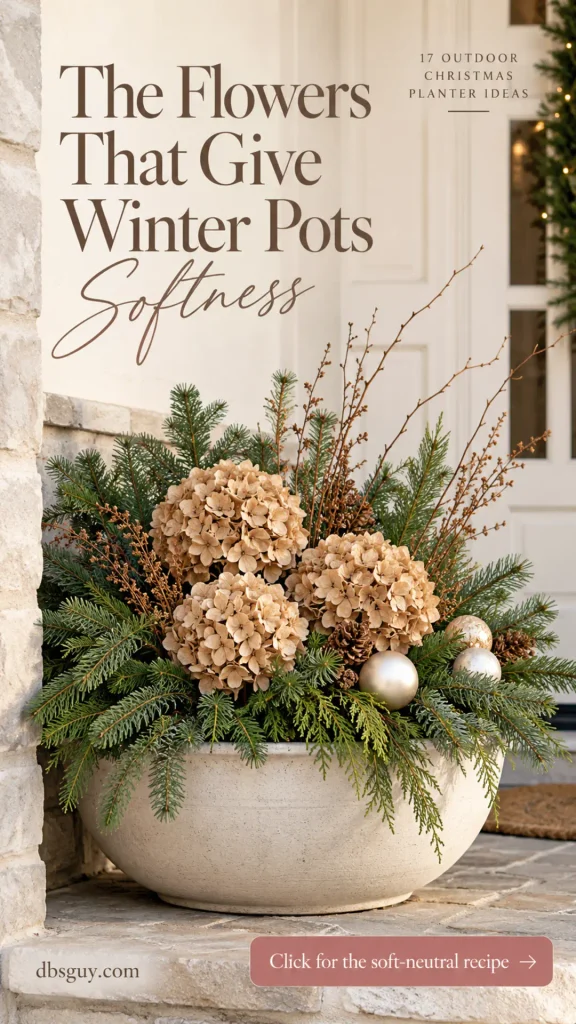
Gather: a pale outdoor bowl, a few sound dried hydrangea heads with stems, fir, and optional cream outdoor ornaments.
Make a low fir base, then place the flower heads in a loose triangle rather than a straight line. Support each stem well; an extension pick can help with a short stem. Tuck a little greenery between the heads so they feel part of the arrangement rather than perched on top.
Use cream accents sparingly. The dried blooms already provide the contrast. A neutral pot lets their tan color show, while a dark container makes the pale heads stand out more strongly.
Choose the spot carefully: dried flowers are delicate decorations, not weatherproof components. Give this recipe a sheltered location and expect to replace damaged heads. On an exposed porch, substitute outdoor-rated hydrangea-style picks or choose the pinecone recipe for a sturdier-looking texture.
12. Blue-Green Juniper with Silver Details
You can make a planter feel festive without using red. Muted blue-green foliage with a little silver creates a quieter Christmas look that suits gray houses, dark doors, and contemporary containers.
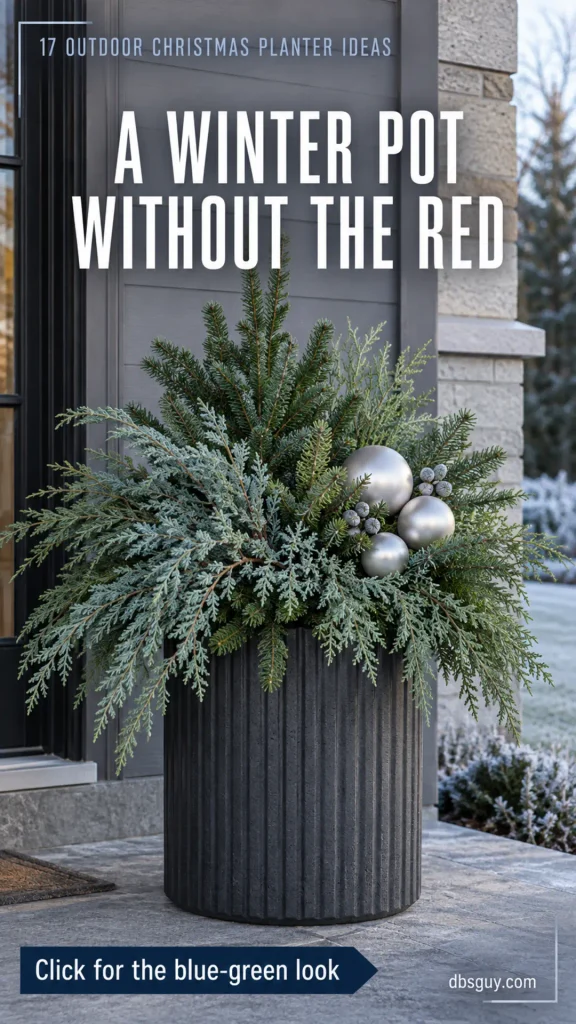
Gather: a dark outdoor planter, cut juniper with the foliage color you like, darker fir, and a small group of matte silver outdoor ornaments.
Let the juniper supply most of the visible color. Add fir beneath and between it to give the arrangement depth. Compare the branches before buying: different junipers vary in texture and color, so a plant name alone will not guarantee the blue tone in a photograph.
Place the silver details toward one side near the front. Matte finishes let the foliage remain prominent; reflective pieces create a brighter, busier effect. Keep the pot itself simple so its pattern does not compete with the branches.
Stretch the seasonal use: remove the ornaments after Christmas and keep any greenery that still looks good. You do not need artificial snow to communicate winter. If you use flocked accents, check their outdoor instructions rather than assuming the coating can handle rain or wet snow.
13. A Plaid-Trimmed Wooden Planter Box
A plaid bow can make a basic box feel coordinated with the rest of a farmhouse porch. The arrangement works best when the greenery stays simple and the fabric supplies the pattern.
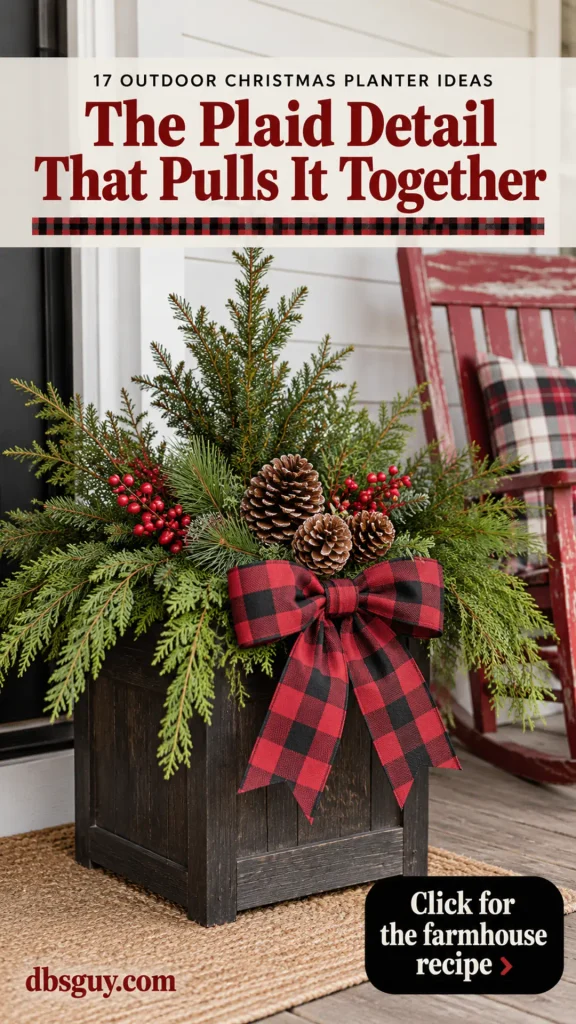
Gather: an exterior-suitable wood planter box, a drainable liner or inner pot, fir, pinecones, and ribbon intended for your outdoor exposure.
Check that water can leave both layers. Build the greenery in the insert, keeping the front low enough that the box and bow remain visible. Attach the bow to the front rim or an appropriate fixing point rather than trying to support it on soft foliage alone.
Trim the tails so they stay clear of the ground and do not obstruct drainage. Red-and-black buffalo plaid suits a bold Christmas porch; a smaller tartan pattern feels quieter. Repeating the ribbon elsewhere is optional—one patterned feature can be enough.
Before buying a whole roll: make a sample bow with ribbon you already have to judge its scale. If the box is sheltered, you may have more fabric options, but check suitability and inspect it after wet weather. Untreated indoor crates need protection and appropriate liners rather than automatic outdoor use.
14. A Woven-Look Planter for a Cozy Covered Porch
Basket texture brings warmth to an entrance, especially against plain cream paint. A woven-look resin planter can give you that visual softness with an outer container designed for outdoor display.
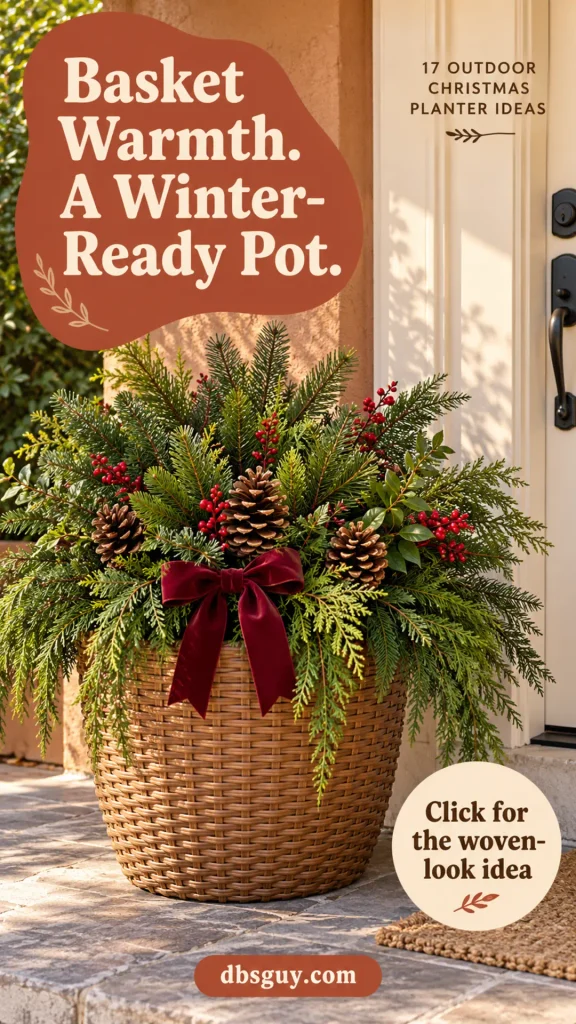
Gather: a woven-texture outdoor planter, a steady inner pot, fir, cedar, pinecones, and a short burgundy ribbon accent if you want one.
Read the actual container label; the woven appearance does not establish its weather resistance. Check its drainage arrangement, then place the inner pot so it cannot rock or tip. Build a low green mound and let a few cedar sprays soften the rim.
Keep the pinecones close to the front and use the bow as a small finishing detail. Honey-brown basket texture already adds color, so you can leave out metallic ornaments. A protected porch corner helps this quieter palette stay noticeable.
Already own a real basket? reserve it for a location and duration appropriate to its material. An inner liner can contain potting mix but does not make the basket itself weatherproof. A winter-suitable resin version is the more straightforward choice for a display that will face regular outdoor exposure.
15. A Star-Topped Evergreen Pot
Sometimes one recognizable shape does all the decorating. A small star above a compact evergreen silhouette gives a pot a Christmas-tree feeling without needing a full tree beside the door.
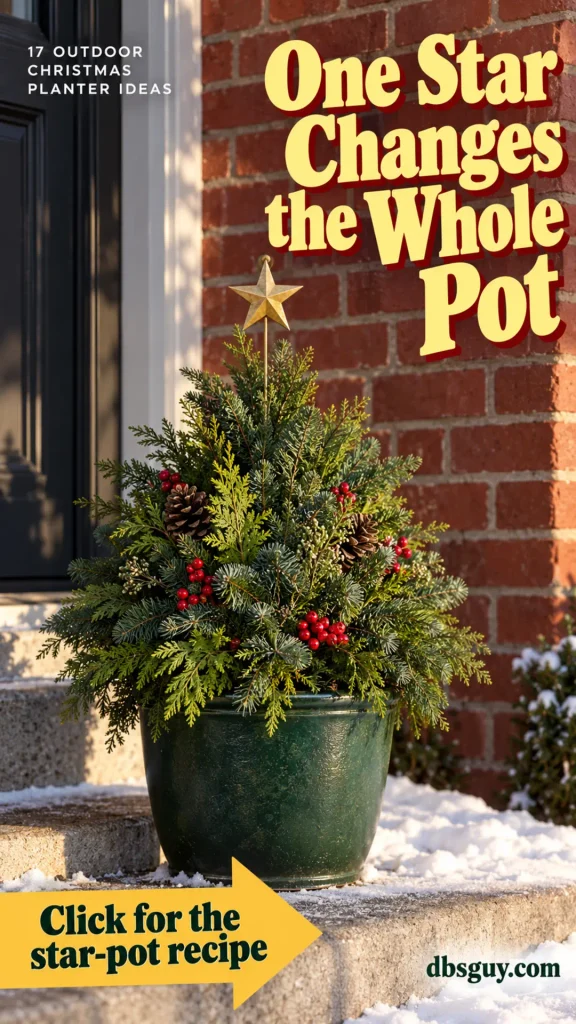
Gather: a steady outdoor pot, cut fir branches of several lengths, and a lightweight outdoor star on a garden pick.
Place the longest fir pieces toward the center, then angle shorter pieces around them to create a loose cone. Aim for a natural silhouette rather than trimming every branch into a perfect triangle. The base should stay broad enough to make the top feel balanced.
Insert the star’s pick firmly into the support beneath the greens. It should rise only a little above the foliage. A large topper can act like a sail in wind, so choose its size for the pot and location rather than copying an indoor tree topper.
Keep it easy: leave the arrangement unlit and let the star supply the focus. A small brass or dark-red shape is enough. Remember that this is a decorative cut-branch recipe; if you choose a living conifer instead, its watering, cold protection, and future planting need a separate plan.
16. An Airy Asymmetrical Branch Arrangement
If your favorite Christmas decorations feel calm, leave room for the branches to show. An off-center stem with a small cluster of greenery can look considered without filling the entire container with foliage.
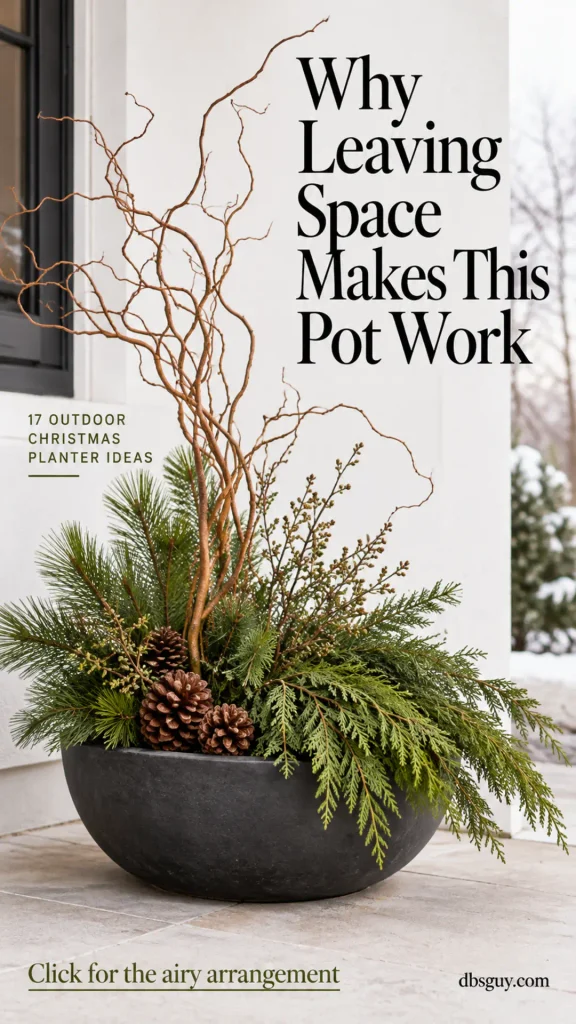
Gather: a broad stable bowl, one or two interesting modest-sized willow or other bare branches, cedar, and a pair of pinecones.
Start with the bare branch slightly to one side. Seat it firmly and let its natural curve guide the composition. Add a low group of cedar on the opposite side, keeping enough open space to see the line of the branch against the wall.
Place the cones near the center to connect the two parts. Then stop and look from the doorway. If you immediately want to add more, try removing one busy sprig first. Open space is part of this design, not a gap that automatically needs filling.
Make the background help: thin brown branches show well against a pale wall. Against dark siding, use a lighter branch or change the position. Keep the branch’s spread comfortably within the available space and check that an off-center arrangement has not made the container unstable.
17. A Reusable Faux-Greenery Planter for Mild Winters
A sunny December porch can still have a rich evergreen look. If fresh-cut branches dry too quickly in your location, an outdoor-rated faux arrangement offers a reusable way to get the shape and color you want.
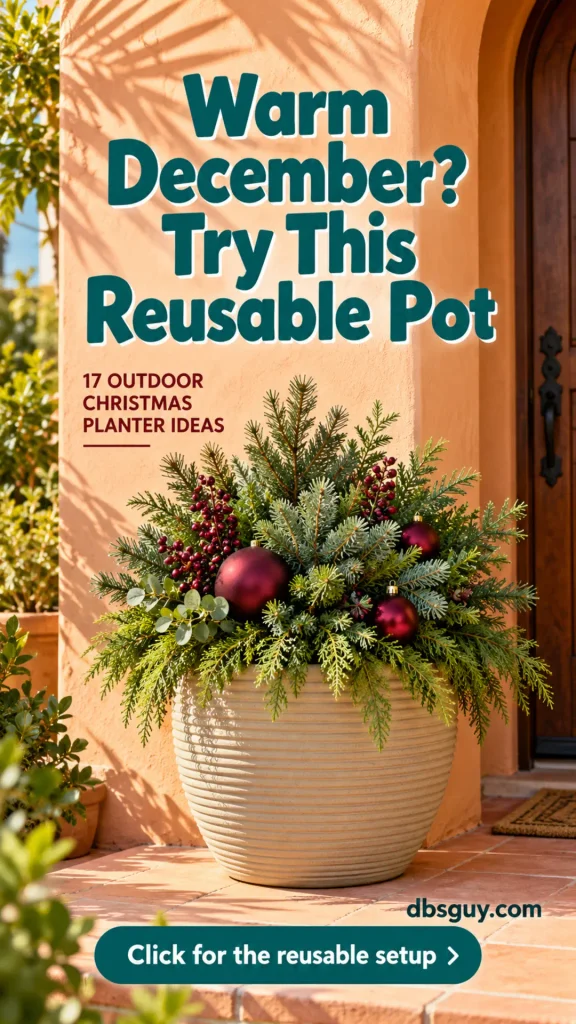
Gather: a stable outdoor pot, realistic faux fir and cedar labeled for outdoor exposure, suitable ornament picks, and a firm reusable insert or support.
Combine two foliage textures rather than relying on one flat spray. Shape the fir into the main mound, then angle cedar around the rim. Secure the stems in the insert using a method suitable for the materials; faux branches need mechanical support and do not need watering.
Add a few burgundy or muted red ornaments near the front. On warm stucco or a sunlit porch, natural greens and restrained color can feel festive without snow effects. Tuck the artificial stem joins below the foliage line for a cleaner finish.
Plan for reuse: outdoor-rated does not mean immune to fading or damage. Follow care instructions, inspect the stems through the season, and clean and dry reusable pieces before storage. Photograph the finished arrangement so next year’s setup starts with a clear reference.
How to Keep Fresh Christmas Planters Looking Good
Fresh greens behave differently on a shaded Minnesota porch and a sunny California entrance. Cool weather can help a cut arrangement hold its appearance, but wind, sun, species, and starting freshness all affect the result. Avoid promising yourself a fixed number of weeks.
For cut greens supported in potting mix, check moisture when the mix is unfrozen and water as needed, allowing excess to drain. Do not pour water onto an already frozen pot or let a decorative outer vessel collect it. University of Minnesota Extension notes that porch pots may need watering during prolonged above-freezing weather and that shade can help in warm spells.
Inspect your arrangement after strong wind, rain, or snow. Check the container’s position, branch support, ribbon, and any electrical components. Replace a tired front sprig instead of automatically rebuilding everything. If an accessory repeatedly falls over, shorten it or change the support.
Keep another small bundle of fresh greens available only if you have a suitable cool storage spot. It can be useful for refreshing the visible front edge before guests arrive. Faux accessories can extend the visual color, but they do not stop fresh branches from drying.
Questions That Make Christmas Planters Easier
What should I put in the bottom of an outdoor Christmas planter?
Give the stems a deep enough, firm support and give the container drainage. Existing sound potting mix or a stable nursery insert often works for a decorative arrangement. In a tall outer pot, use a secure support for the insert and place any needed weight lower down. Avoid filling the bottom with loose scraps and expecting a shallow top layer to hold heavy materials.
Which greenery should I choose?
Start with what is fresh and available locally. Fir can build a defined center, pine adds softer needles, and cedar offers a draping edge. Magnolia, juniper, and decorative branches change the color and texture. If gathering from plants you own, identify them first and follow suitable pruning advice. Illinois Extension recommends retaining live foliage and distributing cuts rather than heavily stripping a plant.
Can I make a Christmas planter without floral foam?
Yes. These recipes can use firmly seated stems in suitable potting mix or a properly supported insert. Accessories may need garden picks, ties, or a brace. The test is simple: each component should stay secure before you hide its support with greenery. Heavy logs and tall decorations need more than loose mix at the surface.
Will cut branches grow roots in the pot?
Do not count on it. These are decorative seasonal arrangements, not propagation instructions. Remove spent cut materials when the display is finished. A rooted tree or shrub is a different purchase with species-specific care needs; choose it with advice appropriate to your local climate and intended long-term use.
Can I leave the arrangement out after Christmas?
Keep the components that remain sound and suitable for the conditions. Remove ornaments, bows, or other distinctly Christmas accents, then reassess the shape. Birch, pinecones, and plain greenery can become a simple winter display. Discard dried or damaged material and follow the storage instructions for reusable pieces.
Start with the Pot You Already Have
A welcoming Christmas planter begins with a shape that fits your entrance and one detail you love. Choose the low bowl if space is tight, birch if you want a clear focal point, or a small lighted arrangement if your porch is most visible after dark.
Build the main shape, step back, and adjust before adding the final accent. When the pot fits the space and the materials work together, you can let it be finished. An ordinary container with thoughtful greenery is already a lovely way to welcome someone home for Christmas.