
Brown cookie shapes, a little white “icing,” and warm lights are enough to make a Christmas tree feel like a holiday bake shop. Start with one gingerbread ornament shape you love, choose a ribbon that suits your room, and repeat both from the upper branches to the base. The result can be playful, quiet, handmade, or wonderfully nostalgic.
These 15 gingerbread Christmas tree ideas include full living-room trees, a cocoa-corner miniature, simple ornament crafts, and a sweet entryway display. Each look comes with a practical way to recreate it. For an easy starting point, choose red velvet for a traditional room, oatmeal linen for a neutral space, or small wooden cookie ornaments when you want to make the details yourself.
The images are AI-generated decorating concepts, created to illustrate the colors, materials, and arrangements described below. The cookie and candy decorations shown are intended as nonedible ornaments.

1. Pair Gingerbread Ornaments With Red Velvet Bows

A green tree, brown gingerbread people, and generous red velvet bows make a particularly inviting combination. The velvet adds depth; the white icing-style details keep the cookie shapes easy to spot among the branches. This look works beautifully with dark wood furniture, plaid pillows, or a traditional living room.
Choose two or three cookie shapes, such as people, houses, and stars. Hang the larger pieces on sturdy middle and lower branches, then distribute smaller ornaments higher up. Add a few cream baubles between them to give the eye a place to rest.
Use a red bow at the top and repeat smaller bows in an uneven triangle down the front. Let some tails fall freely, but move any tail that covers a favorite ornament. A red skirt connects the base to the ribbon without requiring more decorations.
Try this adjustment: If your tree already has many red ornaments, use fewer bows and let the gingerbread pieces provide the new detail.
2. Create an Oatmeal-and-Ivory Gingerbread Tree

For a softer gingerbread theme, build around oatmeal linen, ivory, and warm caramel brown. A full green tree supplies the contrast, so the palette stays readable even without bright accents. This is a comfortable choice for a beige living room or a home with lots of natural textures.
Use broad linen-look ribbon in short, rounded loops rather than wrapping a tight band around the tree. Tuck and secure each piece to a branch inside the foliage. Keep the loop shallow enough that nearby cookie houses and stars remain visible.
Mix matte ivory balls with a smaller number of ribbed or fabric-covered ornaments. Put the cookie shapes near the outer branches and the plain balls slightly deeper inside. The change in depth gives a neutral tree more interest than simply adding extra shades of brown.
A knitted skirt finishes the look. If the arrangement feels flat, bring in one darker cocoa ornament before adding metallic pieces.
Also Read: How to Put Ribbon on a Christmas Tree: 7 Beautiful Styles for Beginners.
3. Mix Gingerbread With Peppermint Stripes on a Flocked Tree

White-tipped branches make red-and-white peppermint decorations stand out, while brown gingerbread people keep the tree connected to the bakery theme. The combination has a cheerful candy-shop feeling that suits a breakfast nook or a bright family room.
Start with lightweight candy-cane ornaments and round peppermint discs. Space the largest shapes around the tree first, turning some candy canes slightly so they do not all lean in the same direction. Place gingerbread people in the gaps where their brown centers show clearly against the flocking.
One striped ribbon can tie the whole design together. Use it for a bow topper and a few tucked accents, leaving plenty of branches exposed. A white skirt makes the bottom feel snowy without adding loose artificial snow to the floor.
Keep the scale manageable: Oversized candy shapes suit a full tree. On a smaller tree, switch to miniature versions so the branches remain visible.
4. Style a Blush Bakery Tree With Long-Tailed Bows
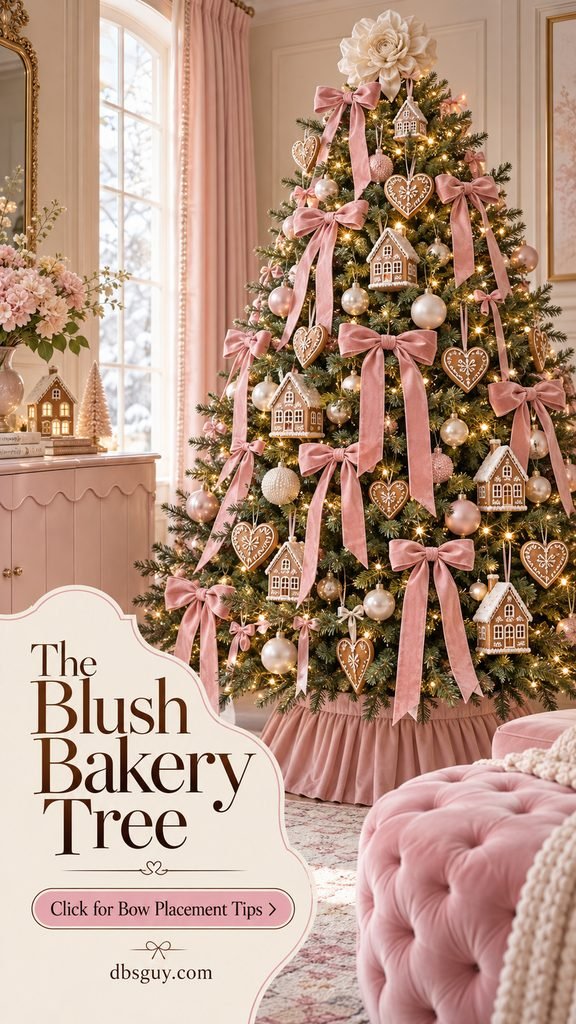
Blush velvet, ivory spheres, and gingerbread hearts give this tree a gentle patisserie mood. The brown ornaments prevent the pink palette from becoming too sugary, while small house shapes add detail you can notice up close.
Tie your bows before placing them. Begin with one near the upper third, then add others across the middle and lower branches at different heights. Leave the tails relatively narrow and guide them through open spaces instead of laying them over the ornament faces.
Use fewer large baubles here; the bows already occupy a lot of visual space. A lightweight ivory fabric rosette at the top provides a quiet finish, and a blush skirt echoes the ribbon below.
If your room has no pink furnishings, repeat blush in just one cushion or a small arrangement beside the tree. That small connection helps the display feel settled in the room.
Also Read: 21 Christmas Tree Bow Ideas That Turn Simple Ribbon Into a Statement.
5. Bring Sage Gingham Into a Cottage Kitchen Corner
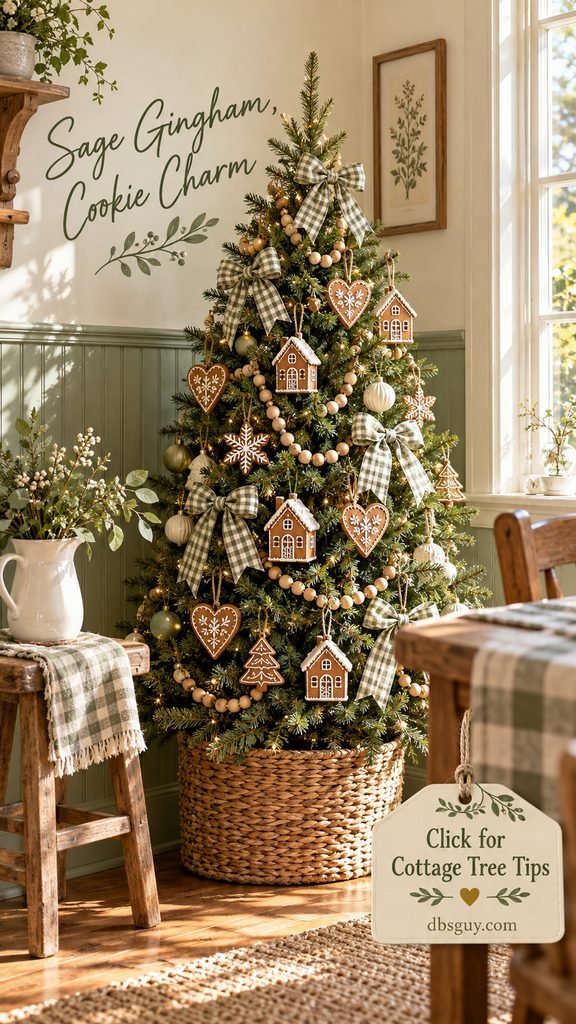
A little kitchen tree can look festive without taking over the place where you cook. Set a compact floor tree in a dining corner, then dress it with sage-and-ivory gingham bows, cookie hearts, and gingerbread houses. The green checks feel relaxed alongside painted cabinets, old wood, and everyday white dishes.
Choose ribbon with a small check so the pattern is visible on modest bows. Add short swags of wooden beads between them, securing each end to a sturdy branch. Hang houses where the white windows and rooflines will face into the room.
A woven basket can conceal the original stand if it fits without compromising stability. Keep the tree out of the route to chairs and cabinets, and leave it away from the cooking area.
For a small finishing touch, place a gingham towel or napkin nearby. You do not need to cover the entire kitchen in gingerbread accessories.
Also Read: 15 Christmas Kitchen Decor Ideas That Keep Your Counters Clear.
6. Let Simple Cookie Silhouettes Lead a Nordic-Style Tree
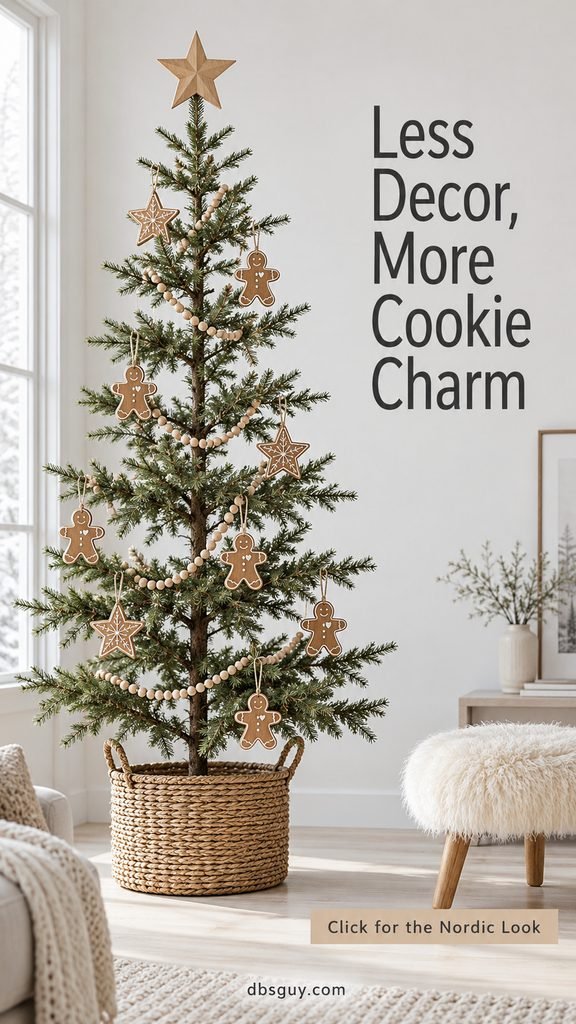
An open, sparse tree turns each ornament into a clear little shape. Flat gingerbread people and stars, simple white outlines, and wooden beads are enough for this Nordic-inspired arrangement. The spaces between the branches are part of its appeal.
Choose thin wooden cookie ornaments with restrained decoration. Use short flax-colored ties to hang them facing forward, then place a few slightly farther back to avoid a flat row along the outline.
Add the bead garland in loose arcs. If it pulls a branch downward, shorten the section or move the attachment closer to the trunk. Finish with a lightweight wooden star and a basket around the stand.
Skip broad ribbon for this version. If the tree seems empty, first change the spacing of the pieces you already have. A sparse tree can lose its character surprisingly quickly when every gap receives another ornament.
7. Build a Gingerbread Village Around the Tree Base
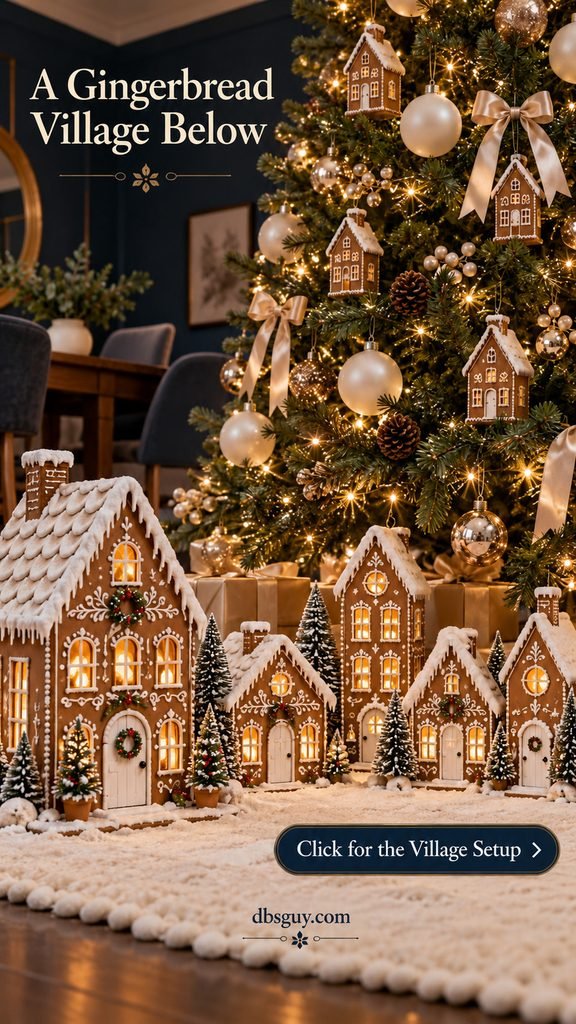
Let the sweetest detail happen at floor level: a small gingerbread village beneath the branches. Freestanding cookie-style cottages create a scene that feels different from a standard tree skirt, especially when you repeat a few house ornaments above.
Use three to five decorative houses with a mix of heights. Place the tallest toward the back and arrange the smaller ones in a shallow arc across the front. A cream textile mat suggests snow while keeping the surface easier to tidy than loose filler.
Leave the tree stand accessible. If you have a real tree, keep the water reservoir and watering route clear; protect the house bases from spills. Keep the village inside the tree’s existing footprint so it does not spread into a walkway.
Warm battery lights can illuminate houses designed for them. Position battery compartments where you can reach them, and keep cords behind the buildings. The houses should sit securely on the floor rather than balancing on gift boxes or the tree stand.
8. Make a Tabletop Gingerbread Tree for a Cocoa Corner
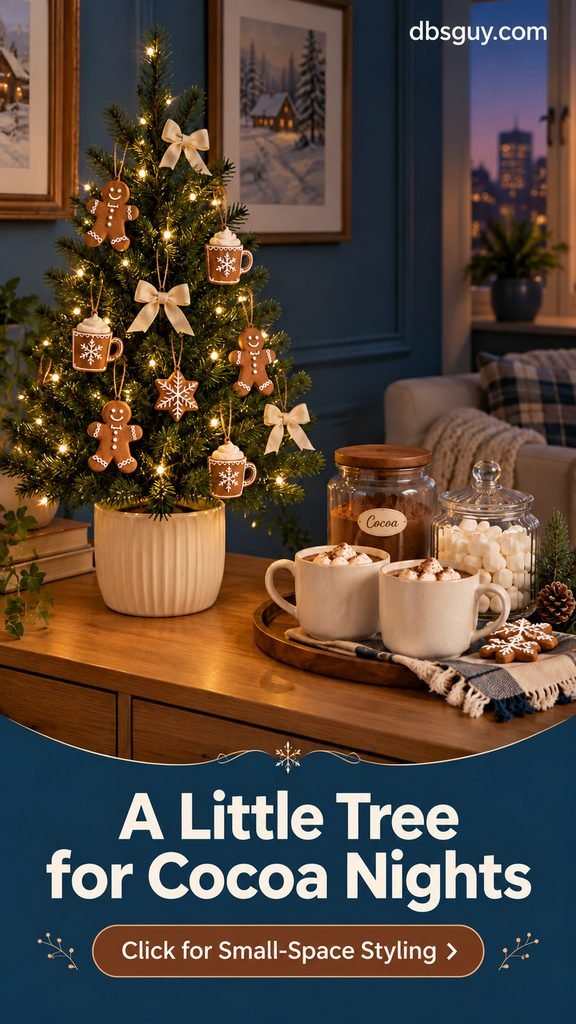
A roughly 18- to 30-inch tree can give a sideboard or dining-room cabinet a holiday purpose. Tiny cookie people, gingerbread-style mug ornaments, and ivory bows make it feel especially at home beside a cocoa tray.
Choose decorations that fit the branches. For many tabletop trees, ornaments around 1 to 2 inches tall are a useful starting point; hold one against the tree before buying a full set. Use just a few repeated shapes so the miniature arrangement remains easy to read.
Keep the original stable base, even if you conceal it inside a ceramic planter. Place mugs and lidded ingredient jars on a separate tray with room to lift everything comfortably. Route the tree-light cable away from drinks and the table edge.
Leave an open patch of tabletop for setting down a cup. That small piece of usable space makes a cocoa corner much more welcoming than a surface packed with decorations.
Also Read: 17 Small Christmas Tree Decorating Ideas That Won’t Take Over Your Living Room.
9. Add Mini Baking Tools for a Holiday Bake-Shop Tree
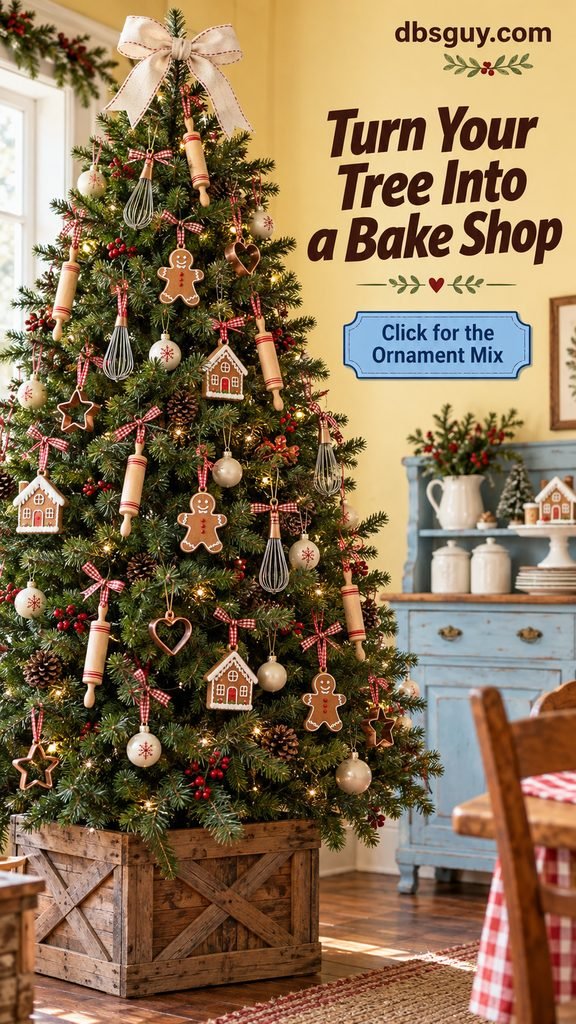
Mini rolling pins, tiny whisks, and little cookie cutters turn the tree into a bake-shop display. Gingerbread people and houses still provide the main theme; the tools add a detail that makes you look twice.
Use pieces made as lightweight ornaments, and check how they hang before placing them. A tiny rolling pin can sit vertically, while a heart-shaped cutter provides an open shape beside a solid cookie ornament. Keep any pointed or sharp pieces out of the arrangement.
Thin red-and-cream gingham ties connect the mixed materials. Spread the tools around the tree rather than grouping every whisk together. Fill remaining spaces with small cream balls and a few modest bows.
A rustic crate can conceal a stand when its dimensions suit the tree. Keep the crate level and the stand secure. A full-size kitchen utensil usually adds unnecessary weight and awkward scale, so check the miniature options first.
10. Sew Soft Felt Gingerbread Ornaments

Felt creates a softer kind of gingerbread tree. Brown cookie people with embroidered faces, white stitching, and cream yarn loops look lovely beside ivory hearts and little gingham bows. The fabric texture gives the ornaments personality even when the colors are simple.
Gather: brown and ivory craft felt, paper for a template, embroidery floss, a needle, scissors, and cotton cord or yarn for hanging.
- Draw a simple gingerbread person or house about 3 to 4 inches tall. Cut two matching felt pieces for each ornament.
- Embroider the face, windows, or icing lines onto the front piece before joining the layers. Use stitched dots for buttons.
- Place the pieces together and secure a short hanging loop between them at the top.
- Sew around the edge with blanket stitch. Keep the ornament flat, or add a small amount of filling before closing the final gap.
Use the same outline stitch on the people and houses so different shapes feel related. Begin with one sample to check its size on your tree. Handmade ornaments will vary a little; that variation suits this cozy look.
11. Paint Wooden Cookie Ornaments With a White Paint Pen
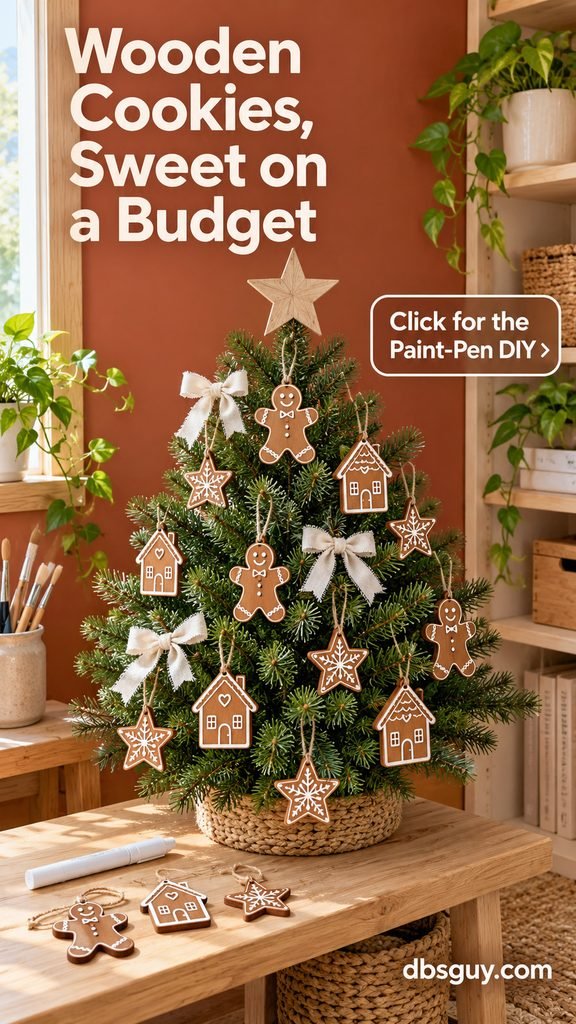
Flat wooden blanks are an approachable way to build a coordinated gingerbread collection. The illustrated tree uses warm brown people, houses, and stars with fine white decoration, simple twine loops, and small ivory fabric ties.
Gather: predrilled wooden ornament blanks, brown acrylic craft paint, a white paint pen, a small brush, and twine.
- Choose blanks with smooth edges and an existing hanging hole. Paint the faces and edges brown, following the paint’s drying instructions.
- Test the white pen on a scrap or the back of one ornament. Draw a thin border first.
- Add just a few details: windows on a house, a smile on a person, or short snowflake lines on a star.
- Allow the decoration to dry as directed, then thread a short twine loop through the hole.
Repeat your simplest design before attempting intricate ones. Buying fewer ornament shapes and using the same paint colors can help you control both the work and the spending; compare the total cost of materials with a ready-made set.
Also Read: 21 Budget Christmas Tree Decorating Ideas That Make Affordable Ornaments Look Expensive.
12. String a Kraft-Paper Cookie Garland
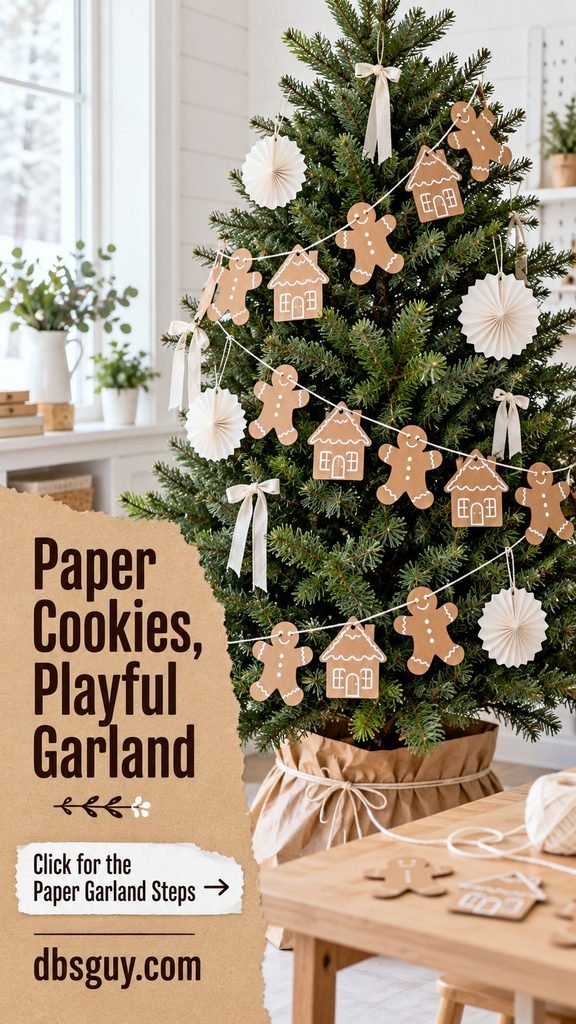
A paper garland changes the arrangement as well as the material. Instead of hanging every cookie separately, connect flat gingerbread people and houses in gentle swags. A few white paper rosettes add a different shape while keeping the tree light and simple.
Gather: brown kraft cardstock, a white marker, scissors, a small hole punch, and thin cotton cord.
- Cut cookie shapes about 3 inches tall. Leave enough card near the top for two small holes.
- Draw white icing-style outlines and let the ink dry. Punch one hole near each upper side.
- Thread the cord through both holes so each shape faces outward. Leave a little space between shapes.
- Make several short garland sections. Attach their ends to branches and adjust the slack into shallow arcs.
Short sections are easier to untangle and position than one long strand. Keep the card clear of light bulbs and use lights according to their instructions. Store the finished garland flat with its cord loosely arranged so the paper does not bend.
Also Read: 13 DIY Paper Christmas Decorations That Look Surprisingly Expensive.
13. Add Pastel Gumdrops for a Playful Candy Tree
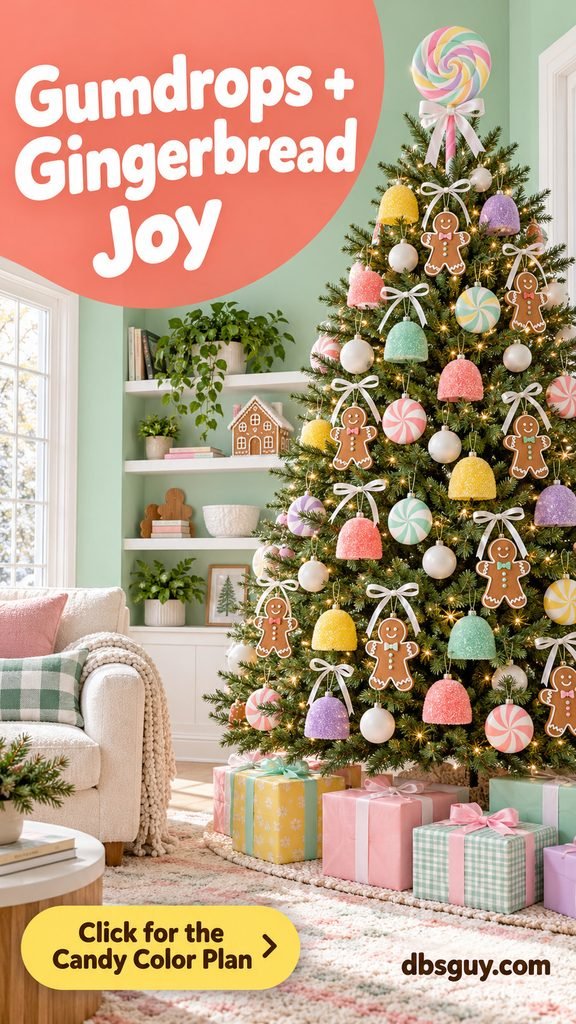
Faux gumdrops bring a rounded, colorful shape to the branches. Mint, lilac, lemon yellow, and coral pink look cheerful around brown gingerbread people, especially when white balls and little bows separate the brighter pieces.
Choose a small group of candy colors and repeat them throughout the tree. Hang the largest dome-shaped ornaments first, then add cookie people where their white details are easy to see. Move one color if it starts forming a large patch in a single corner.
A lightweight pastel lollipop topper carries the candy theme upward. Check its attachment on the actual tree before decorating the rest; a top branch that bends needs a lighter topper or a different support method allowed by the tree’s instructions.
For family decorating, let children choose positions while an adult handles hooks, lights, and higher branches. Treat all candy-look ornaments as decorations, and keep loose small parts out of reach of young children and pets.
14. Give Gingerbread a Copper-and-Amber Evening Glow
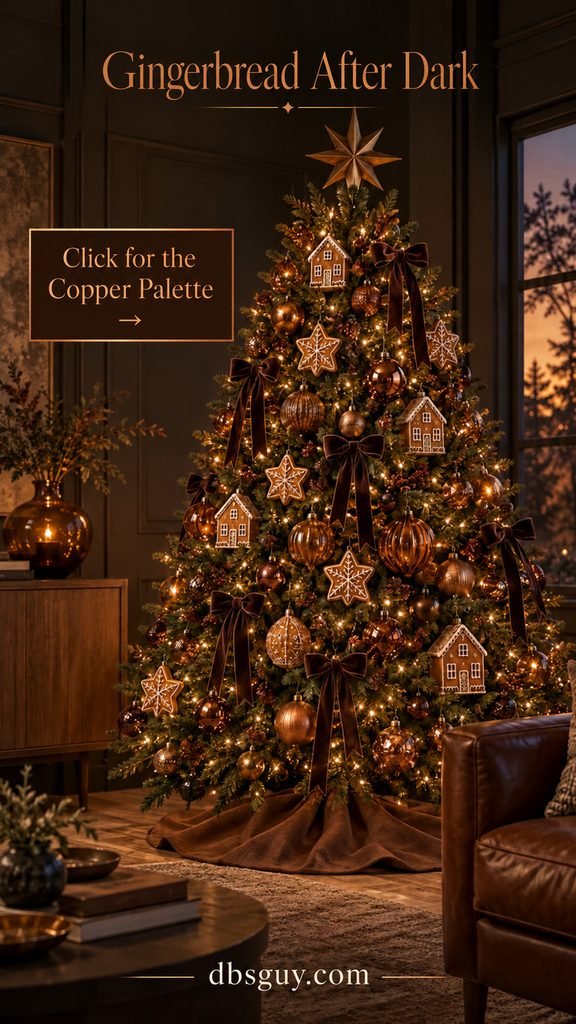
Gingerbread can look beautifully grown-up beside copper baubles, amber glass-look ornaments, and chocolate velvet. Warm lights make the brown cookie houses and stars feel at home in a darker room.
Let the metallic pieces vary in finish. A few ribbed copper ornaments can sit beside smooth amber spheres, while matte gingerbread shapes break up the shine. Position the darkest velvet ties near lights so they remain visible against the green branches.
Use a bronze-colored star and a plain brown linen skirt to keep the edges of the arrangement calm. Step back with the room lighting set as you usually use it in the evening. If the cookies disappear, move them toward brighter branch tips or choose pieces with clearer white outlines.
On a tree within reach of children or pets, shatter-resistant ornaments can provide the same color direction. Check each material rather than assuming a metallic finish means an ornament is unbreakable.
15. Wrap a Slim Entryway Tree With a Sweet Ribbon Spiral
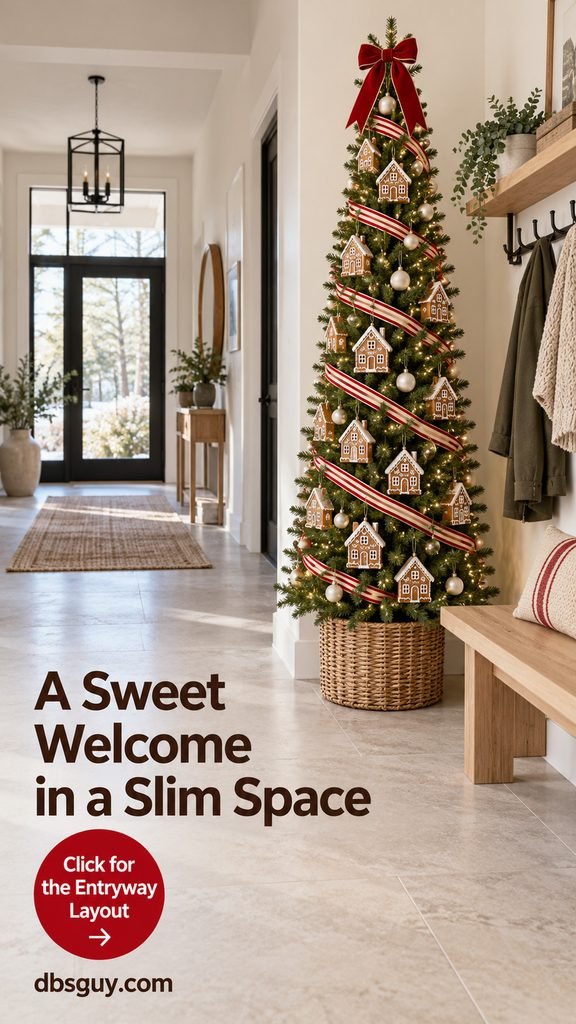
A narrow tree makes a lovely welcome when you have a usable corner near the front door. Small gingerbread houses, a few ivory balls, and a thin red-and-ivory ribbon spiral provide plenty of character within a compact outline.
Measure the corner using the tree’s widest branch span, including the stand or basket. Check the door swing, coat access, and walking route before decorating. A slim tree still needs enough room around it to be practical.
Secure the ribbon near the top, then guide it down in a loose spiral with space between the turns. Keep the ribbon close to the foliage and stop wherever the next loop would cover a house ornament. Finish with a modest red bow and a basket that fits around the original stable stand.
Keep gifts and freestanding decorations elsewhere if they would narrow the passage. The open floor beside the tree is what makes this entryway arrangement work.
How to Pull Your Gingerbread Tree Together
Choose one of the looks above before buying more ornaments. Lay out the decorations you already own, then decide which two or three pieces will create the theme. For a traditional tree, that might be gingerbread people, red velvet bows, and cream balls. For a handmade version, it could be painted cookie shapes, ivory ties, and a simple wooden star.
- Set up the tree and check the lights. Shape the branches and place the tree where its full footprint fits.
- Try one ribbon section. Adjust its width and loop size before cutting the rest of the roll.
- Spread out the largest themed ornaments. Give the upper, middle, and lower areas a recognizable gingerbread detail.
- Add smaller supporting pieces. Fill selected gaps with balls, ties, or the garland from your chosen look.
- Check the view from the doorway. Move pieces that hide behind ribbon or disappear against the branches.
Decorate the visible sides first if the tree sits in a corner. You can use the back for simpler pieces while keeping the overall arrangement balanced. Take a quick phone photo before calling it finished; the smaller view makes a crowded patch easier to notice.
For an early seasonal display, nonedible ornaments let you keep the gingerbread look without relying on cookies to remain presentable. If you choose a real tree, its condition and care should determine how long it stays up.
A Few Practical Checks Before You Switch on the Lights
The U.S. Fire Administration’s holiday fire-safety guidance recommends inspecting light strands, following the manufacturer’s connection limits, watering a real Christmas tree daily, and keeping the tree at least 3 feet from heat sources. Keep exits clear as well. Paper, felt, wooden ornaments, and ribbons belong away from flames and heat; a gingerbread theme does not change those basics.
Keep heavier ornaments on branches that can support them, conceal the stand without changing its stability, and route cables where they will not be pulled or tripped over. For a tabletop display, keep drinks separate from the lights and their power source.
Gingerbread Christmas Tree Questions
Do I need real gingerbread cookies for this theme?
No. Felt, painted wood, paper, and manufactured cookie-look ornaments all create a recognizable gingerbread tree. The white icing-style decoration and warm brown color do much of the work. If you hang real cookies, treat the display separately from food intended for eating; this decorating guide does not establish a safe edible-storage period.
What colors go well with gingerbread ornaments?
Ivory makes the white icing details feel connected to the rest of the tree. Red adds a traditional holiday accent; sage gives a cottage feeling; blush creates a softer bakery look. Copper and amber suit an evening palette. Start with brown, ivory, and one accent, then add another color only if the arrangement needs it.
How many gingerbread ornaments should I buy?
There is no single count that fits every tree. Branch density, ornament size, ribbon coverage, and the number of visible sides all matter. Hang one sample, mark the other places where you want a cookie shape, and count those positions. Begin with that count and add supporting ornaments after the theme is visible.
Can I reuse gingerbread ornaments next Christmas?
Nonedible ornaments may be reusable if their materials and condition allow it. Follow any care instructions, check hanging loops before packing, and cushion pieces with raised details. Store paper flat and keep felt and wood clean and dry. Homemade decorations do not have a guaranteed lifespan.
What is the easiest look to start with?
If you already own a green tree and cream baubles, add a small collection of gingerbread shapes and one ribbon color. Red velvet gives the traditional look in idea 1; ivory fabric ties and painted wooden shapes lead toward idea 11. Make one corner or tabletop version first if you want a smaller decorating project.