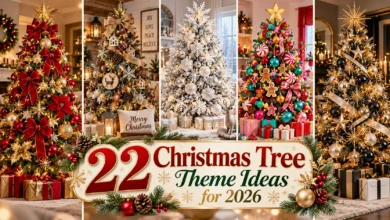
A blue Christmas tree can feel snowy and delicate, bright and playful, or warm enough for a room full of velvet and wood. The easiest starting point is one blue shade, one supporting color, and a texture you want to repeat. Ice blue with pearl white creates a soft winter look; aqua with sandy linen feels coastal; navy with aged gold brings a richer glow.
These 18 blue Christmas tree ideas include the colors, branch treatments, ribbon choices, and placement details that make each look work. Most use an ordinary green, white, or flocked tree. Only one calls for blue artificial foliage, so you can usually begin with the tree you already own.
The images are AI-generated styling concepts, created to illustrate each palette and arrangement.

1. Soften a Flocked Tree With Icy Blue and Pearl White
Very pale blue is lovely when you want the room to feel light without making the tree entirely white. Here, snowy branches, pearl-finish ornaments, and little satin bows give the display a soft, layered surface. The color stays quiet, but the different finishes keep it interesting.
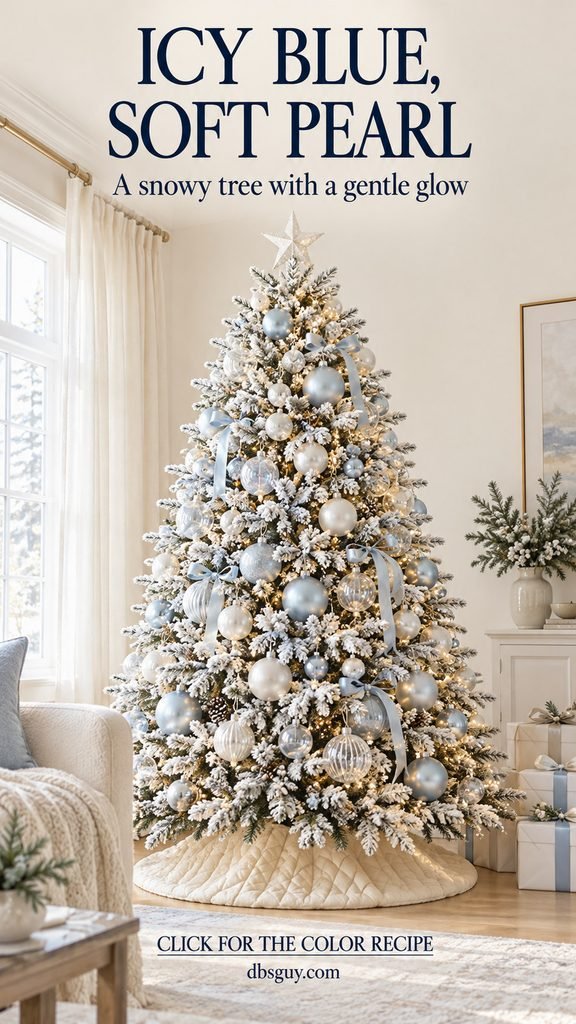
Start with matte ice-blue spheres and pearl-white baubles, then add a few clear or ribbed pieces. Place some pale blue ornaments toward the outside of the branches so they remain visible against the flocking. Let white fill the spaces between them.
Narrow satin ribbon works well as small bows with relaxed tails. Finish with a light star and a cream skirt. If the blue disappears when you step back, introduce a handful of slightly stronger pale-blue ornaments before adding more sparkle. Warm white lighting is a good option for an ivory room; check your actual ornaments under the lights first.
2. Pair Powder Blue With Blush Bows
Powder blue and blush pink make a gentle, playful Christmas palette. A white tree gives both colors room to show, while repeated white ornaments keep the pink from taking over. This look suits a soft living room, a guest room, or a second tree where you want something a little lighter.
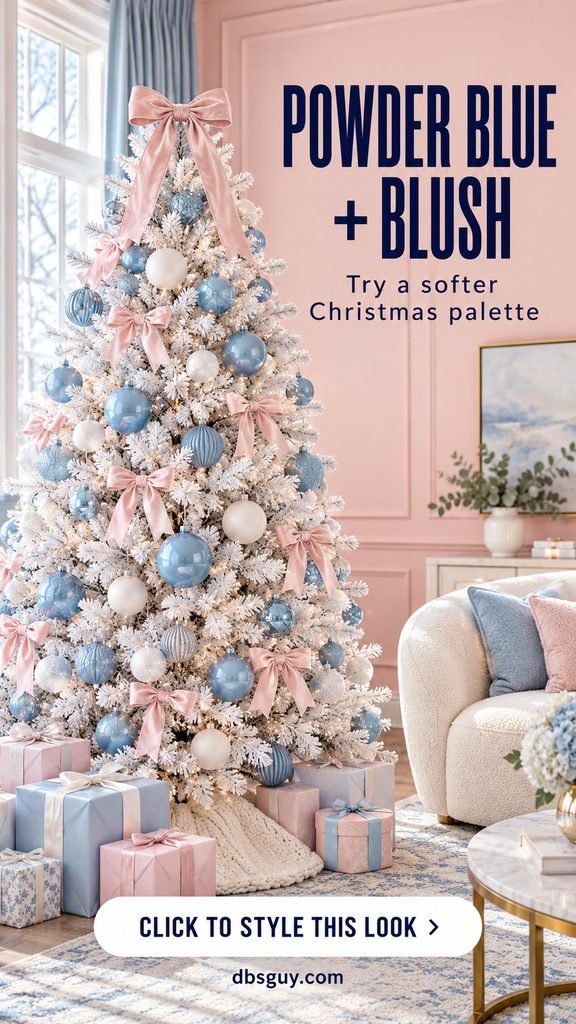
Use blue for most of the round ornaments and blush for the bows. That division makes shopping and placement easier: the blue supplies the main color, while pink adds little accents throughout the tree. A blush bow topper connects the smaller bows below.
Keep the lower bows away from nearby baubles so their tails do not hide them. Pale blue wrapping paper and one or two pink packages can carry the palette to the base. If your existing tree is green, you can still use this combination; add enough white ornaments to separate the pastels from the dark foliage.
3. Add Silver Sparkle and Clear Icicles to Ice Blue
This icy blue and silver Christmas tree gets its character from long, hanging shapes. Clear icicles, pointed finials, and silver stars create a different silhouette from a tree decorated only with round baubles. Light flocking adds a snowy edge while leaving the green branches visible.
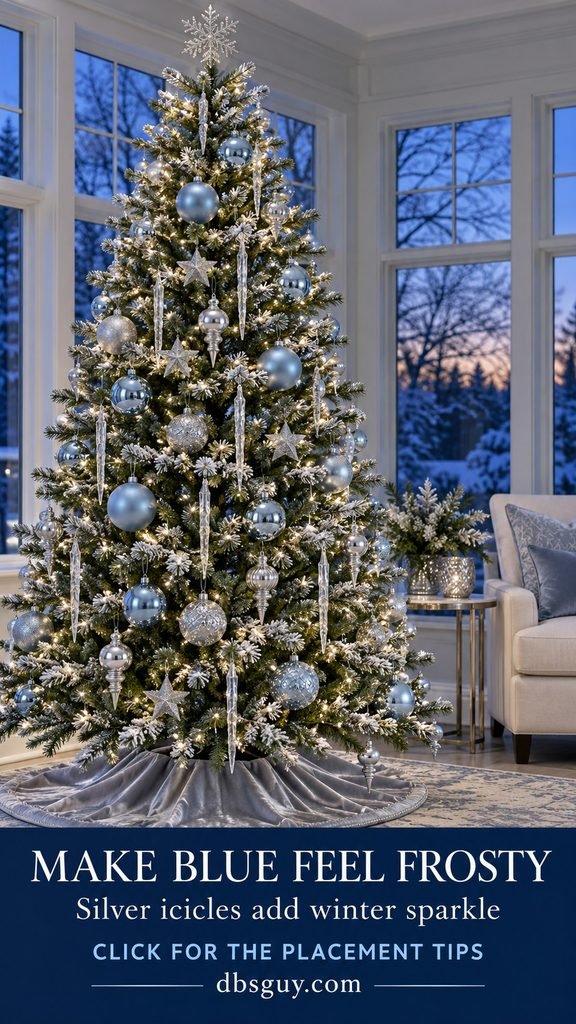
Hang the longest icicles where there is an open pocket beneath the branch. They should fall freely instead of resting on the foliage below. Spread them across different heights, then use blue spheres and smaller silver ornaments to connect the spaces between them.
A silver snowflake topper and gray skirt finish the winter palette without introducing another color. Test the lights with your decorations: cool white can emphasize the frosty effect, while warm white gives clear ornaments a softer glow, as in the concept image. If the tree starts to look crowded, remove a few hanging pieces rather than shortening every icicle into the same shape.
4. Keep a Pale Blue Paper-Star Tree Airy
An open-branched tree can make a few well-chosen ornaments feel special. Pale blue folded stars, flat cream stars, and a small group of matte baubles are enough for this calm, Scandinavian-inspired look. The visible spaces are part of the design.
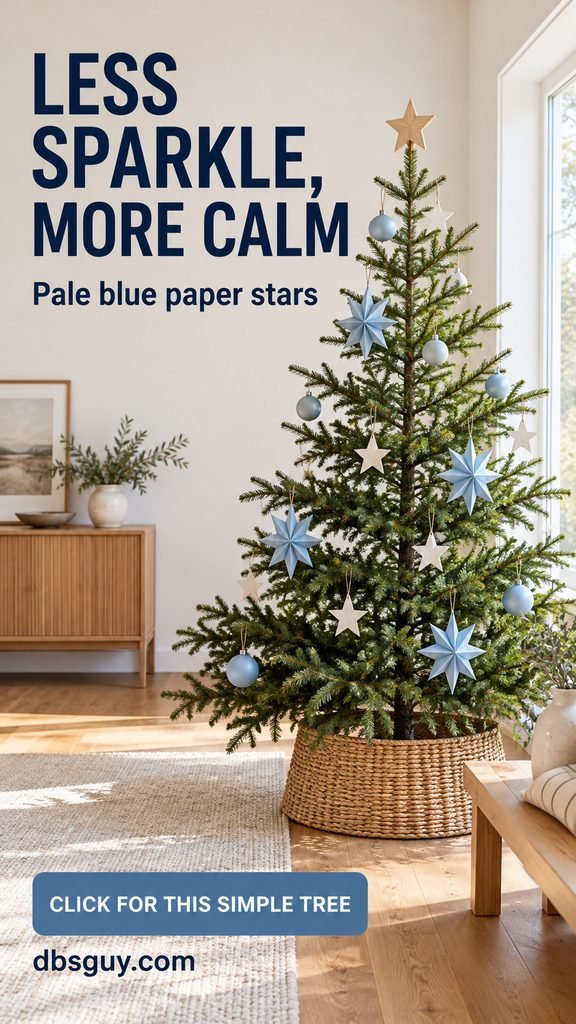
Choose an intentionally airy tree, or work with the natural spacing of the tree you have. Hang the larger paper stars first, turning their faces toward the room. Leave clear space around the points, then add smaller cream stars and blue baubles where the tree needs balance.
Keep this version unlit, as shown, and let daylight reveal the folded paper. A wooden star topper and woven collar repeat the natural textures nearby. You do not need ribbon, glitter, and a second garland to make it feel finished. If one side seems empty, move a star before buying more ornaments.
5. Warm Up Dusty Blue With Linen and Pinecones
Dusty blue has a gray softness that sits comfortably beside linen upholstery, oak furniture, and warm beige walls. On a green tree, it works especially well with brown pinecones and simple wooden stars. The result feels textured and relaxed.
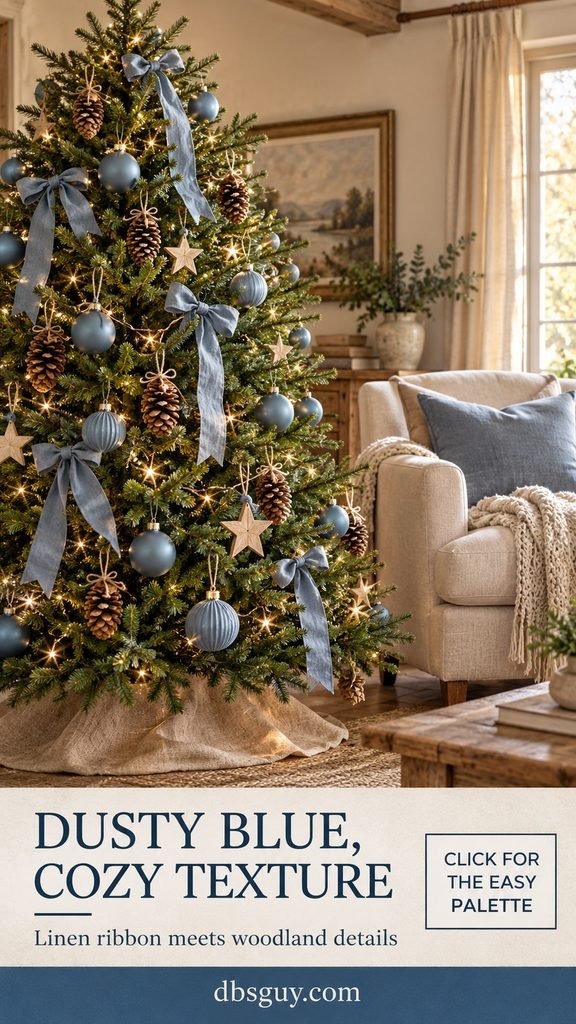
Look for matte dusty-blue baubles and linen or linen-look ribbon in a similar shade. Tie the ribbon into soft bows, allowing the tails to follow the branches. Repeat a few hanging pinecone ornaments between the bows; plain wooden stars bring another shape without a shiny metallic finish.
Try a 1- to 2-inch ribbon for modest bows, then hold one finished bow beside an ornament to judge the scale. A smaller tree may need narrower ribbon. Use ornament-grade pinecones with secure loops, and hang them on branches that can support them. If your blue starts to read almost gray, add a few slightly clearer blue pieces while keeping the surrounding textures neutral.
6. Build a Coastal Tree With Aqua and Sea-Glass Details
A coastal blue Christmas tree feels most convincing when the textures matter as much as the color. Aqua baubles, frosted translucent ornaments, ivory shell shapes, and sandy ribbon suggest the shore without turning the room into a beach-themed display.
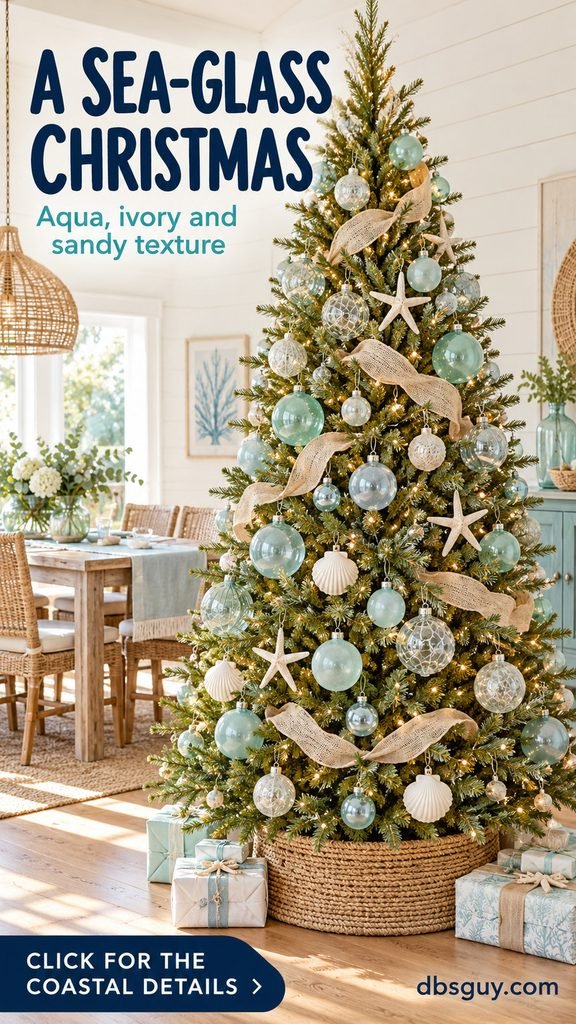
Use a green tree and start with aqua or pale blue ornaments you already own. Add a small selection of lightweight shell and starfish ornaments. Put those recognizable shapes on the outer branches, where their outlines can be appreciated, and keep plain spheres farther inside.
Loose sand-colored ribbon and a woven collar connect the cool colors with warm furniture. You can repeat the aqua in a table runner or one wrapped gift rather than adding nautical details everywhere. If your ornaments are more turquoise than blue, bring in pale blue and clear pieces to soften the mix. A few coastal accents are enough; there is no need for fishing nets or heavy rope.
7. Use Blue-and-White Porcelain-Inspired Patterns
White ornaments with cobalt floral or vine patterns give a blue tree a collected, decorative quality. Solid blue baubles and petite white bows keep the patterned pieces from competing with one another. It is a lovely option beside blue-and-white dishes or a favorite ginger jar.
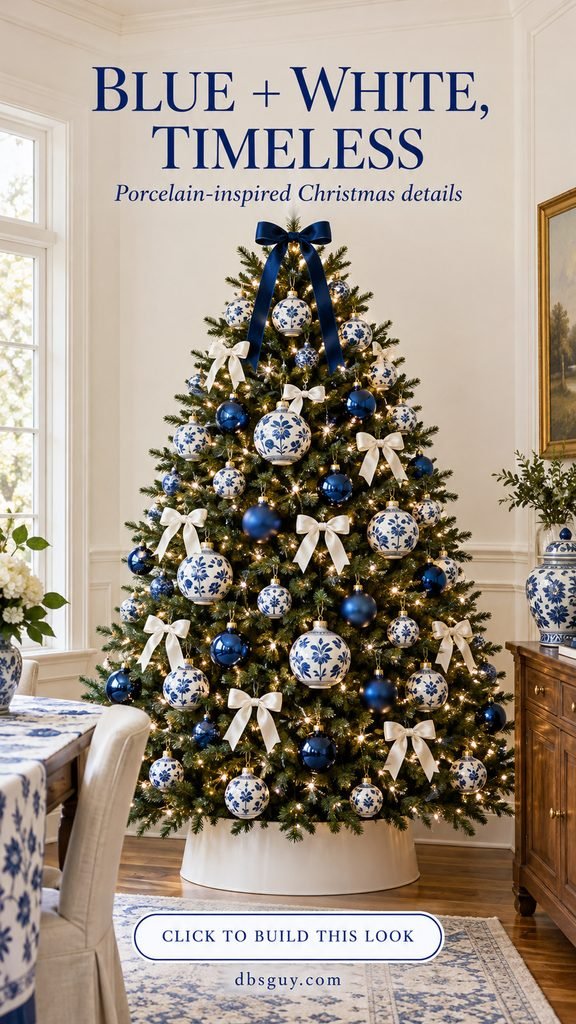
Choose lightweight porcelain-look ornaments made for hanging rather than treating household ceramics as tree decorations. Set the patterned pieces at different heights and branch depths, with their clearest motifs facing outward. Fill nearby spaces with simple blue spheres or small white bows.
A blue ribbon topper ties the color together, while a plain white collar lets the patterns remain the focus. You can create the effect with a handful of special ornaments among an existing collection. If the tree looks too busy, simplify the ribbon before removing the patterned pieces that give this look its personality.
Also read: 23 Vintage Christmas Tree Decorating Ideas That Bring Back Childhood Christmas
8. Give Periwinkle a Little Lilac Shimmer
Periwinkle sits between blue and violet, making it an easy bridge to a small amount of lilac. On a white tree, the combination feels dreamy rather than dark. White snowflakes and clear iridescent drops add shape while keeping the palette soft.
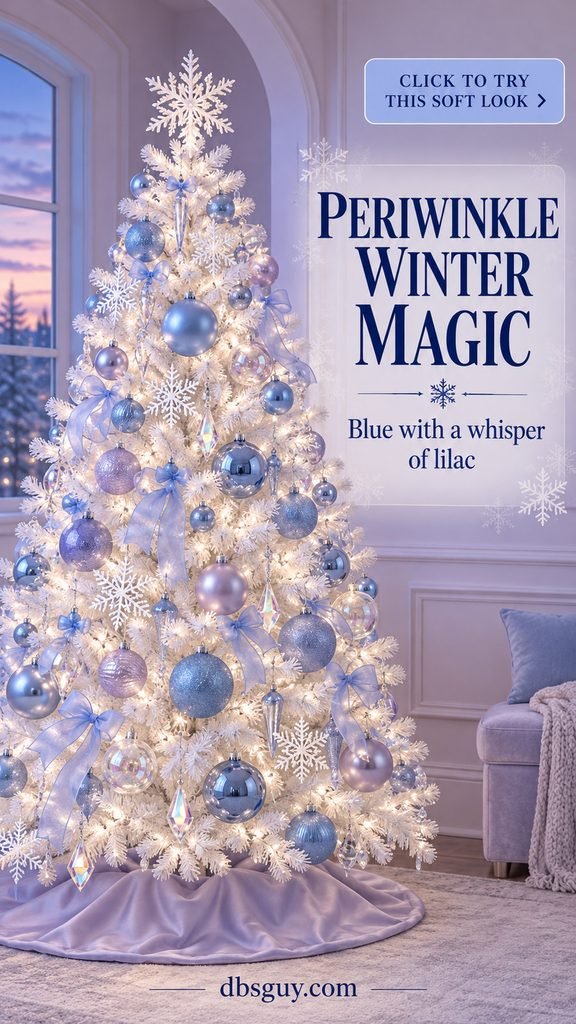
Make the blue ornaments your main group, then use lilac as an accent. Compare the pieces together before hanging them: some periwinkle ornaments look much more purple under evening light. A mix of smooth, ribbed, and lightly shimmering finishes helps the colors feel layered.
Use small periwinkle bows or short organza accents, leaving space around the hanging drops. A white snowflake topper repeats the ornaments below. If the tree begins to read as purple, replace a few lilac pieces with clearer medium-blue ones. Keep the skirt pale and the nearby textiles quiet so the subtle color differences remain visible.
9. Arrange Blue Ornaments in a Top-to-Bottom Ombre
An ombre Christmas tree gives a mixed collection of blue ornaments a clear purpose. The palest blue sits at the top, medium shades fill the middle, and navy anchors the bottom. White branches make the transitions particularly easy to see.
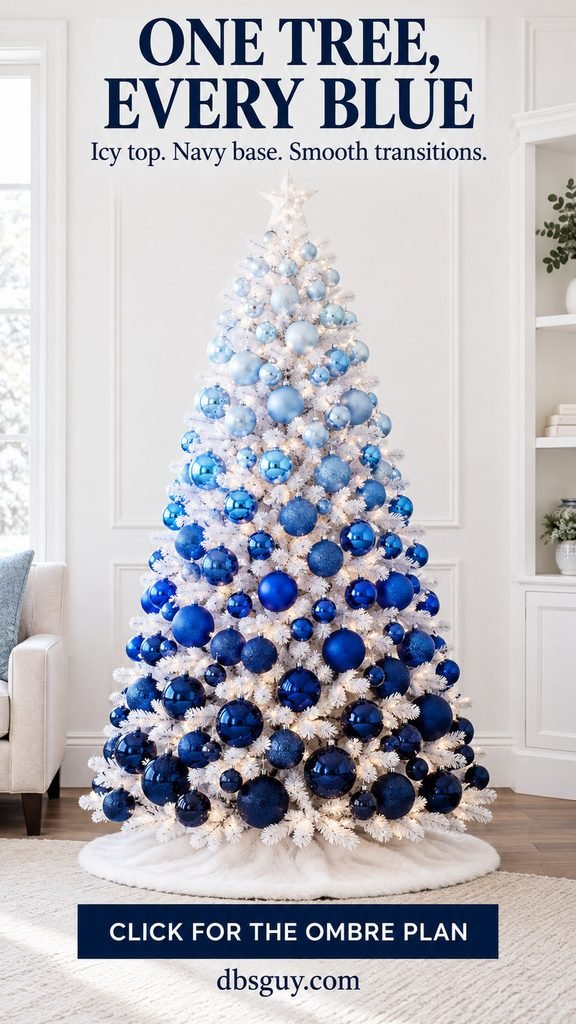
Sort your baubles into five approximate groups: ice blue, sky blue, medium blue, cobalt, and navy. Lay them out in order before decorating. The lower part of a full tree has more branch space, so reserve more of the darker ornaments for that area.
Begin with a few pieces in each zone, then place neighboring shades together at the boundaries. That small overlap creates a gradual transition instead of five rigid stripes. Carry the color order around the visible sides. Use a simple white topper and skirt, and skip ribbon that cuts across the gradient. If you only have three shades, pale blue, medium blue, and navy can still create a readable progression.
10. Let Blue Artificial Foliage Be the Main Feature
This is the one look where the tree itself is blue. A purpose-made artificial tree with saturated blue foliage supplies so much color that the decorations can stay simple. Clear ornaments, pearl-white baubles, and little silver stars leave the unusual branches easy to see.
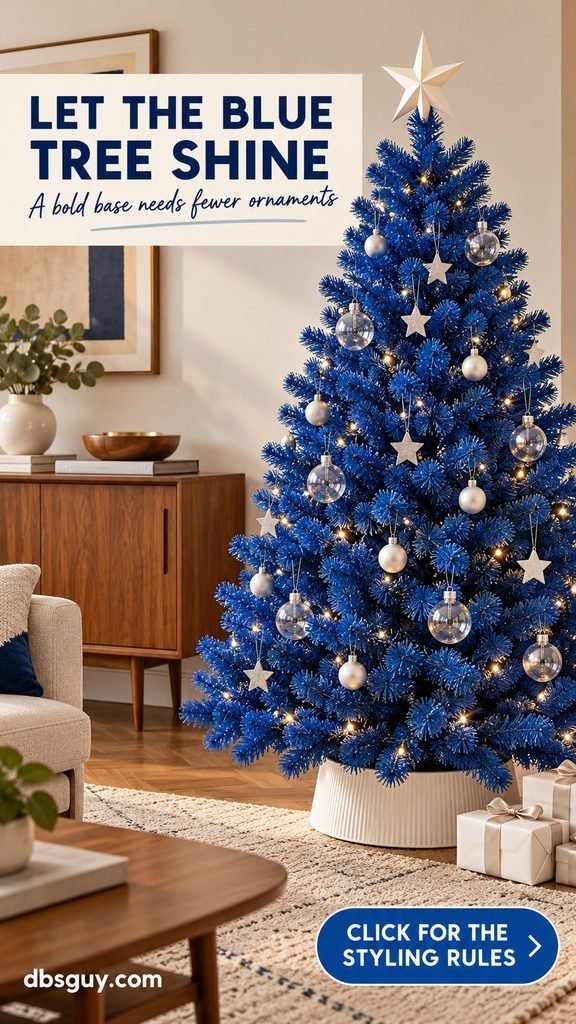
If you already own a blue tree, try a small sample of ornaments before planning a full ribbon display. White creates a clear contrast, while transparent pieces let the branch color show through. A modest white star and a compact white collar finish the display.
Choose a tree manufactured in the color you want, and follow its lighting and setup instructions. Do not spray-paint a prelit tree to copy the effect. Check the materials as well as the color: metallic foil trees require different care from ordinary plastic artificial foliage. This concept uses blue plastic foliage. If you prefer to keep your green tree, the other blue ornament palettes offer plenty of options.
11. Try Cobalt Gingham on a Tabletop Tree
A little tree can carry a strong pattern beautifully. Cobalt-and-white gingham bows give this tabletop version a cheerful, familiar character, while small blue and white baubles keep the arrangement easy to read. It works well on a broad cabinet or sturdy sideboard.
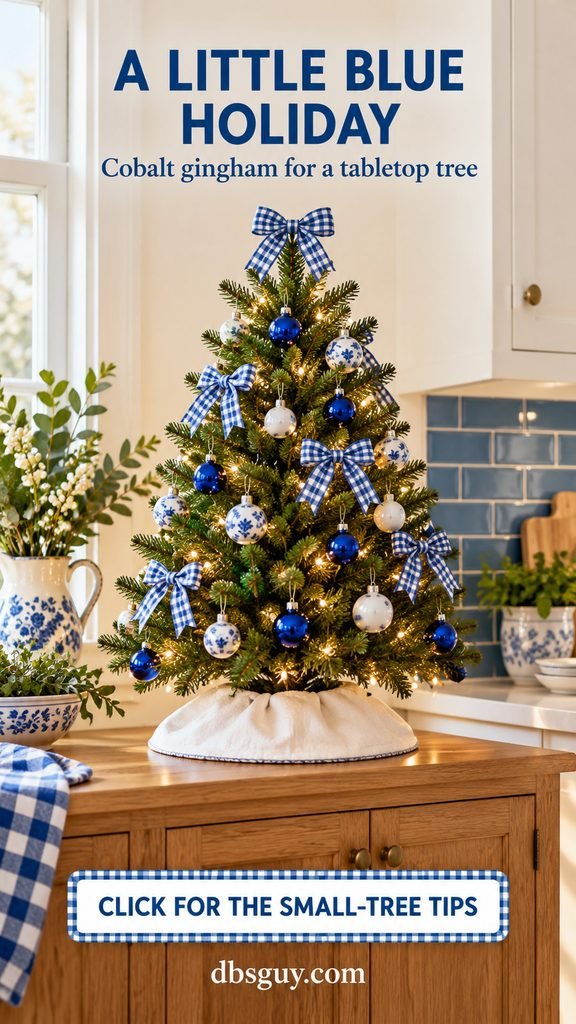
Use narrow ribbon for the small bows and keep the tails short enough to clear the ornaments below. A matching bow at the top repeats the pattern without adding a tall topper. Plain baubles do most of the filling; a few patterned blue-and-white pieces are optional.
Measure the whole display, including the stand and the bow above the tree. The furniture should support the entire stand, with the tree set back from the edge. Keep the little skirt close to the base so it does not spill into the working area. If the bows look oversized, make one smaller sample before cutting the rest of the ribbon.
Also read: 17 Small Christmas Tree Decorating Ideas That Won’t Take Over Your Living Room
12. Make Royal Blue Stand Out Against White Branches
Royal blue creates a bolder blue and silver Christmas tree than the icy pastel version. On a white tree, the saturated baubles become clear spots of color, while reflective silver ornaments add another finish. This is a good choice when you want the tree to show up from across the room.
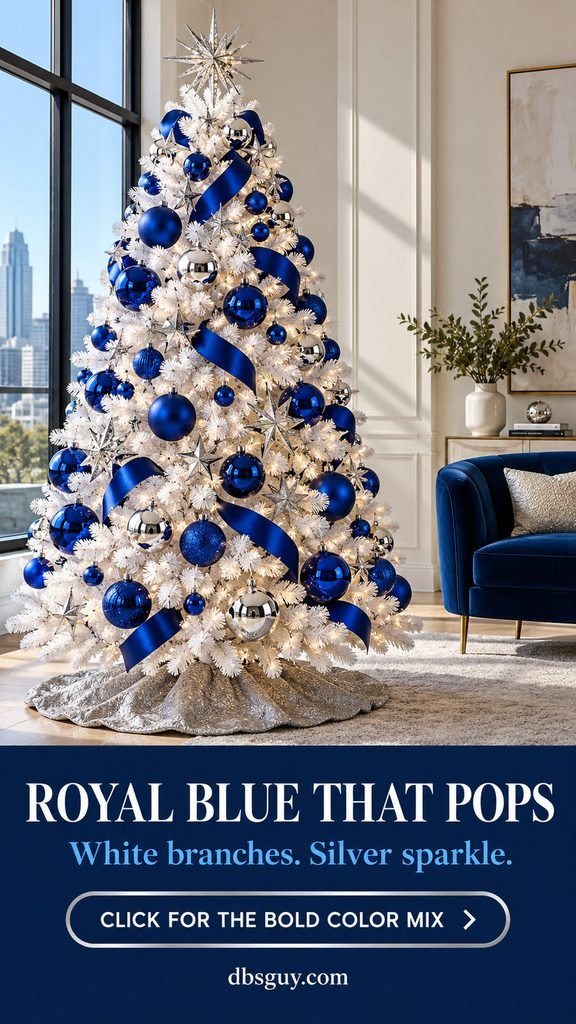
Begin with royal-blue ornaments in a few sizes, then distribute silver pieces between them. Use some matte blue baubles as well as glossy ones so the tree is not entirely reflective. A silver starburst topper can repeat the smaller silver stars below.
Royal-blue satin ribbon looks strong against white foliage, so keep the tucks spaced apart. Let the fabric form relaxed curves instead of wrapping every branch tier in a solid band. A gray or silver skirt completes the palette. If the white disappears beneath the decorations, move a few blue ornaments farther apart and allow the branches to become part of the design again.
13. Layer Teal, Sapphire, and Emerald for Jewel-Tone Depth
For a richer blue Christmas tree, bring sapphire into a family of teal and emerald. The colors share enough depth to feel connected, while small antique-gold accents give the arrangement a warm outline. Dark green foliage supports the jewel palette.
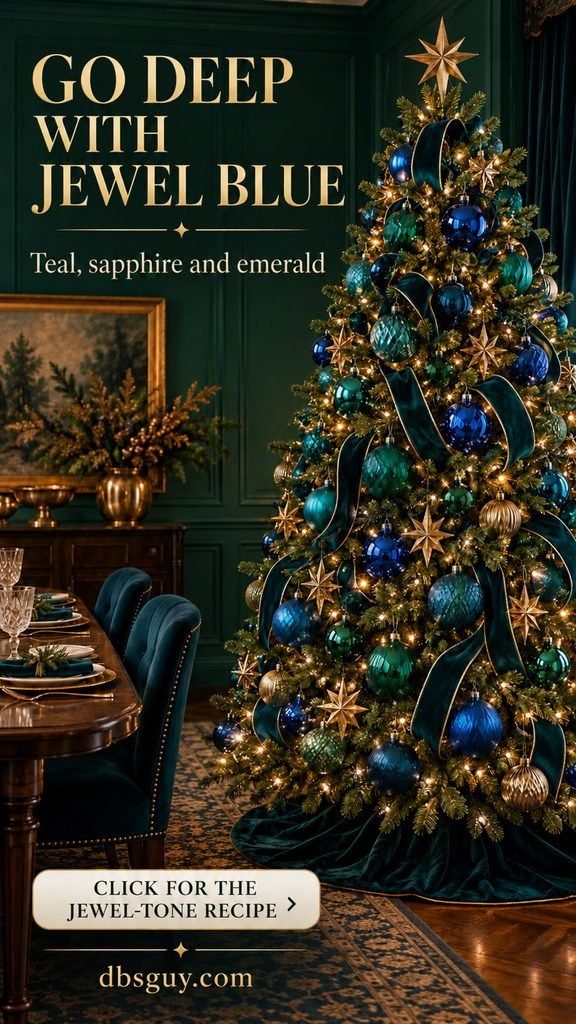
Use teal and sapphire as the main ornament colors, with emerald repeating the greenery. Keep the gold to smaller stars, a few baubles, or the edge of a dark teal ribbon. That restraint lets the blue shades remain the main feature.
Place glossy sapphire ornaments where they can catch room light, and turn the ribbon loops so their velvet surface is visible. In a dark room, a few medium-tone teal pieces can help the tree read clearly during the day. You do not need peacock feathers to create a peacock-inspired palette; the color combination does the work. Step back with both the tree lights on and off before adding more dark ornaments.
14. Combine Navy Plaid With Cream and Brass Bells
Navy plaid brings a tailored, cozy feel to a green Christmas tree. Cream ornaments and little brass-colored bells keep the dark ribbon from disappearing into the branches. The look suits wood furniture, bookcases, leather seating, and other warm textures.
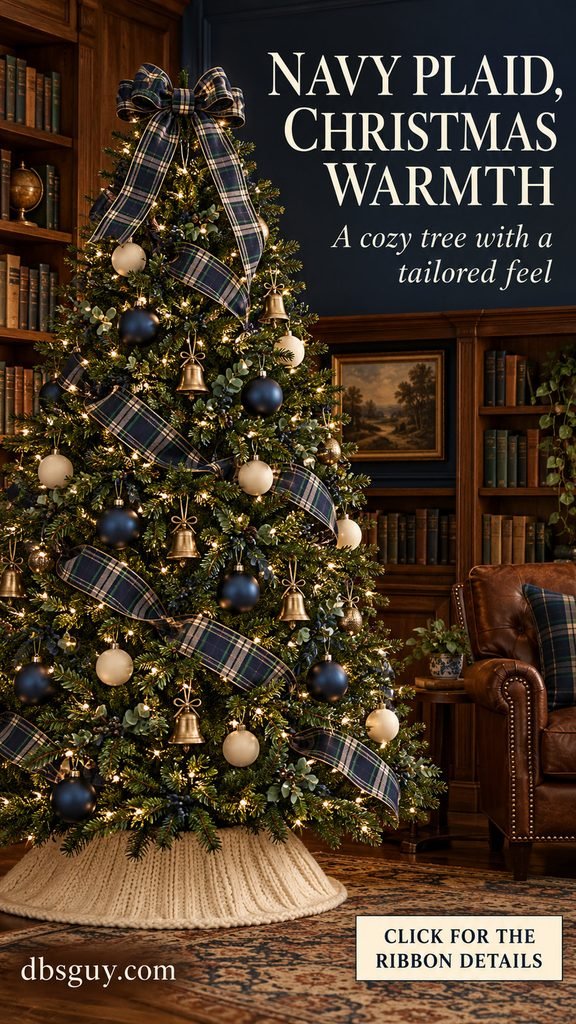
Choose one navy tartan or plaid with a cream line that remains visible when the ribbon folds. Arrange a few diagonal tucks, then repeat the fabric in a bow topper. Add plain navy baubles, cream spheres, and lightweight bell ornaments in the remaining spaces.
Keep other patterns quiet. If the plaid has green, cream, and muted gold within it, you already have a useful supporting palette. There is little need for another patterned garland. Wired ribbon can help the tucks hold their shape; secure it to suitable branches with decoration ties. Keep the curves relaxed so they show the pattern instead of becoming tight folded bundles.
Also read: 19 Ralph Lauren Inspired Christmas Tree Ideas for a Cozy Plaid Holiday
15. Pair Navy Velvet With Antique Gold
Navy and gold is the warmest formal option in this collection. The deep velvet gives the ribbon a soft surface, while aged gold ornaments bring light to the surrounding branches. Mixing matte and glossy navy baubles keeps the blue from becoming one flat dark patch.
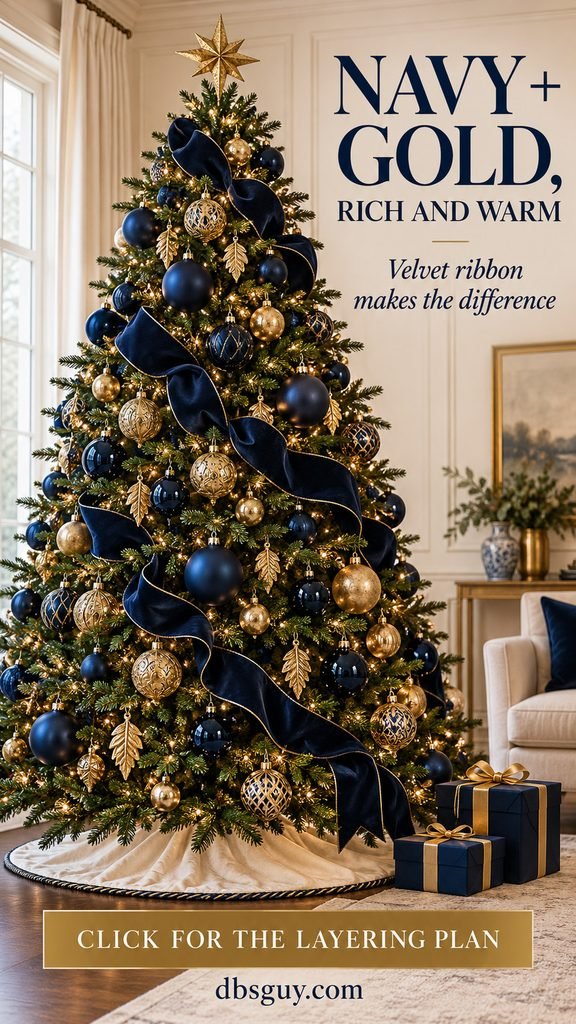
Place the main ribbon after checking the lights and before adding most of the smaller ornaments. Try 2- to 3-inch wired velvet ribbon on a full-size tree, then adjust to your tree’s width. Form broad but separated curves and tuck the ends into supported branch pockets.
Hang gold pieces beside some of the navy baubles rather than gathering all the gold along the outer edge. A gold star topper and ivory skirt give the display a finished frame. If the navy looks nearly black, move a few blue ornaments forward where room light reaches them. You can also introduce a small number of lighter blue pieces without replacing the whole collection.
Also read: How to Put Ribbon on a Christmas Tree: 7 Beautiful Styles for Beginners
16. Switch Gold for Copper Beside Navy Blue
Copper gives navy a different kind of warmth. Its reddish metallic finish connects naturally with rust upholstery, warm plaster, and wood floors. On a green tree, navy bows and copper spheres create a modern palette without needing a large ribbon cascade.
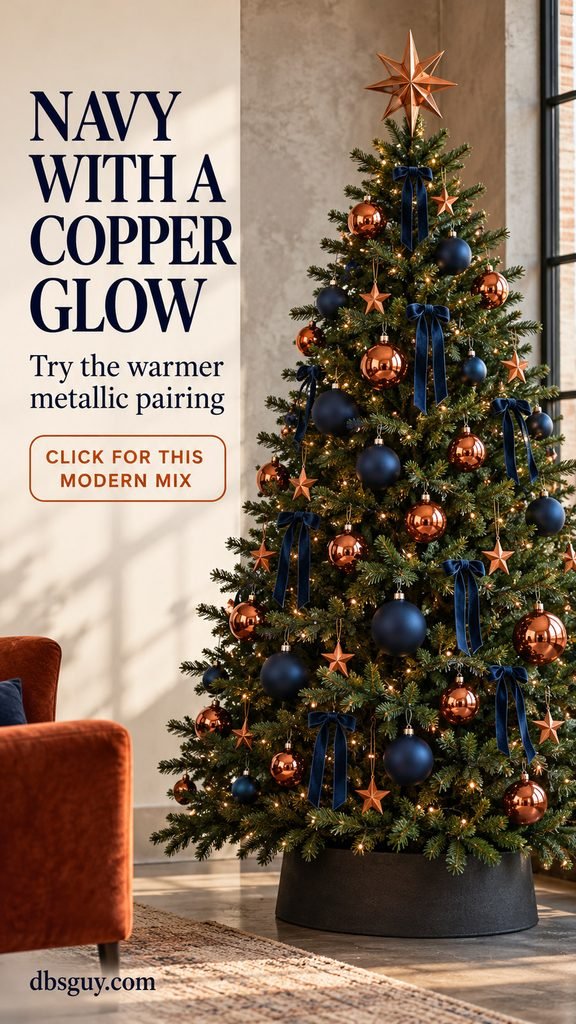
Choose copper-colored ornaments that visibly lean orange or red rather than yellow gold. Repeat that finish in a few small stars or a geometric topper. Use matte navy baubles nearby so the reflective copper has something quieter beside it.
Small navy bows connect the blue ornaments at different heights. Leave enough open greenery around the copper pieces to appreciate their outlines. A charcoal or simple neutral collar works well at the base. If the room already contains strong rust accents, keep those colors in the surrounding furniture and let the tree stay mainly navy, copper, and green.
17. Create a Midnight Tree With Moons and Stars
Midnight blue, little crescent moons, and warm gold stars turn a tree into a gentle night-sky theme. A few pearl-white ornaments help the shapes remain visible. This look is especially pretty in a reading corner or beside a deep blue wall.
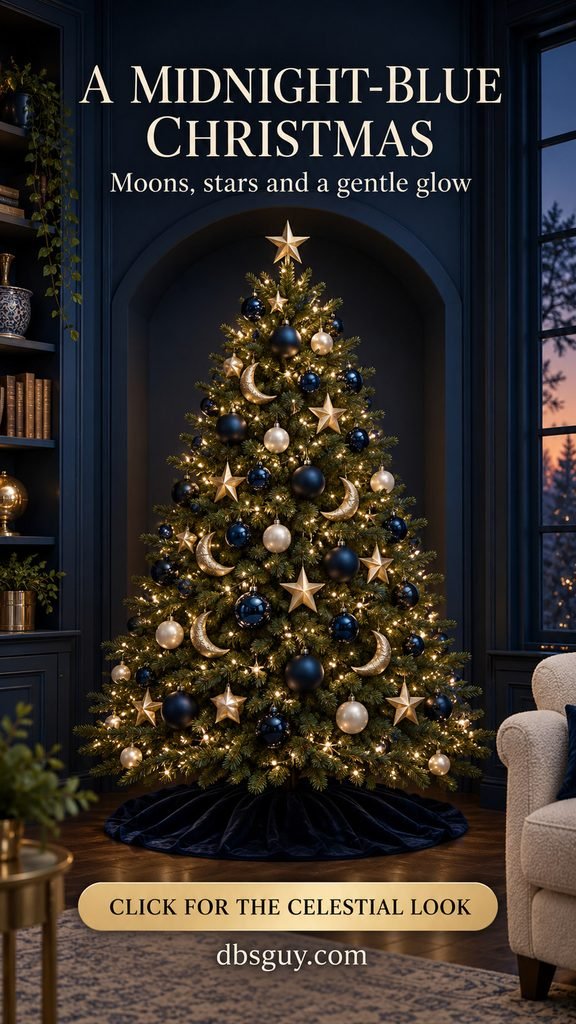
Start with a small collection of lightweight moon and star ornaments, then fill between them with plain navy baubles. Face flat stars toward the room and hang crescents where their curved silhouette has open space around it. Keep their loops short enough that they do not turn into the foliage below.
Use white lights rather than a strong blue wash if you want to see the ornament colors clearly. Warm white points of light complement the gold details in this concept. A navy skirt keeps the base quiet. If you want to simplify the theme, reduce the number of plain baubles before crowding the moons and stars together.
18. Finish a Slim Tree With Navy Velvet Bows
A tree dotted with navy velvet bows can feel complete without a large ornament collection. Here, the slender green silhouette stays visible, small lights add a gentle glow, and a few matte navy baubles repeat the fabric color. It is a lovely restrained option for an entryway.
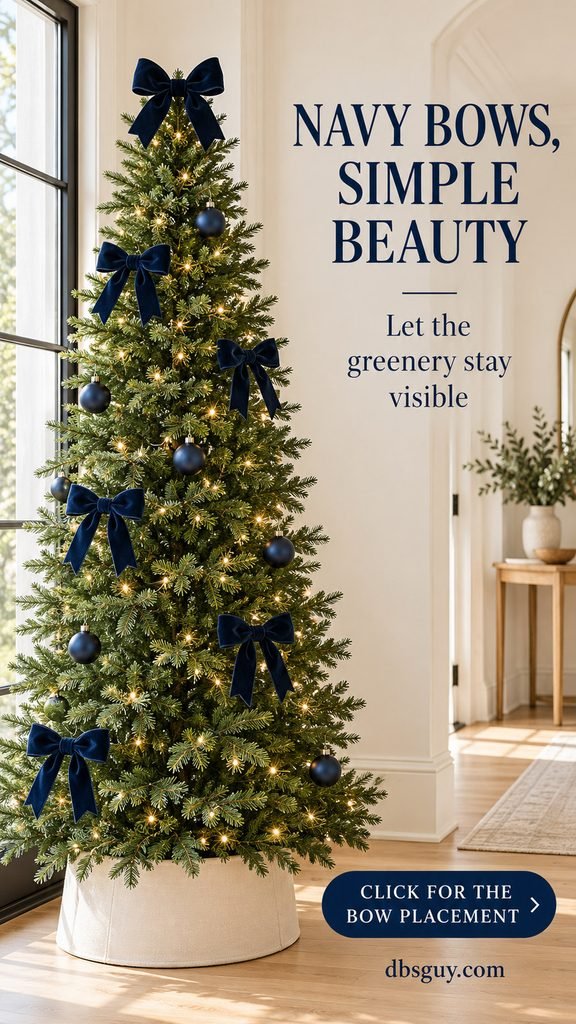
Make one bow and hold it against the tree before preparing the rest. Keep the loops proportionate to their branch pocket and trim the tails so they finish neatly above the decoration below. Place the bows at staggered heights instead of lining them up in horizontal rows.
Use a slightly larger matching bow at the top, with a secure attachment suited to the tree. A simple cream collar gives the base a quiet finish. Include the stand, collar, bows, and nearby furniture when checking the walking space. If the display looks too dark, let more greenery show around each bow rather than adding another metallic color.
Also read: 21 Christmas Tree Bow Ideas That Turn Simple Ribbon Into a Statement
How to Pull Your Blue Christmas Tree Together
Choose the idea that works with your room and your existing ornaments, then build one small sample on the tree. A few baubles, one ribbon tuck or bow, and the actual lights will tell you more than a shopping cart full of separate pieces.
- Choose the base thoughtfully. Green branches give pale ornaments contrast. White branches make cobalt and navy clear. Flocking adds another white texture, so very pale blue may need a slightly stronger blue companion.
- Pick one main texture. Velvet, linen, paper, patterned ornaments, or clear icicles can give the tree its character. Keep the supporting decorations simpler.
- Plan the light color before buying more ornaments. Compare a sample in daylight and with the tree lights on. Blue, silver, and white can look noticeably different after dark.
- Place the pieces that need space first. Long icicles, wide stars, and meaningful ornaments need suitable branch pockets. Work the ribbon around them when necessary.
- Finish the base without hiding the tree. A skirt or collar and a small group of coordinated packages are enough. Keep the stand accessible and the walking route clear.
For the setup itself, follow the tree and light manufacturers’ instructions. The U.S. Fire Administration’s holiday fire-safety guidance recommends checking light strands for damaged wires, following the instructions for connected strands, watering a cut Christmas tree daily, and keeping trees at least 3 feet from heat sources with exits unobstructed. Turn the tree lights off before leaving home or going to bed.
Blue Christmas Tree Questions
What colors go well with a blue Christmas tree?
For a soft look, try pearl white, cream, blush, or lilac. Silver suits an icy or high-contrast palette; gold and copper add warmer metallic finishes. Aqua works well with sandy neutrals, while navy can connect with cream plaid or jewel-tone teal. Pick the combination that repeats something already present in your room.
Should a blue Christmas tree have warm white or cool white lights?
Either can work. Warm white is a useful starting point with navy, gold, copper, and natural textures. Cool white can suit blue-and-silver winter palettes. There is no need to change a compatible prelit tree just to follow a color rule. Test your actual ornaments under its lights and choose the decoration finish accordingly.
Can I decorate a regular green Christmas tree in blue?
Yes. Use repeated blue ornaments and ribbon to establish the palette, then add one supporting finish such as white, silver, or gold. Navy pieces usually show better on visible outer branches than deep inside the foliage. You do not need to replace your tree with a blue one.
How can I make blue ornaments show up on a white tree?
Use a mix of pale and medium blue rather than relying entirely on almost-white ornaments. Cobalt or royal blue creates stronger contrast. If you prefer pastels, add texture with ribbed baubles, satin bows, or folded stars, and leave some white branch tips visible around the blue pieces.
How many blue ornaments should I buy?
There is no single useful number for every tree. Height, width, branch spacing, ornament size, and how full you want the display all matter. Decorate a small section with the pieces you own, step back, and use that sample to judge what is missing. A ribbon-led or paper-star tree may need far fewer baubles than a dense blue-and-gold arrangement.
How can I try a blue theme on a smaller budget?
Sort your existing ornaments by color and finish first. White, clear, silver, or gold pieces may already supply the supporting palette. Add blue through a ribbon you can repeat in bows, or make a small unlit paper-star display. Start with the visible front and sides, then add more only where the arrangement needs balance.
Also read: 21 Budget Christmas Tree Decorating Ideas That Make Affordable Ornaments Look Expensive