
A red Christmas tree feels pulled together when the decorations have a clear direction: one main shade of red, a small supporting palette, and enough space to see the branches. The easiest starting points are ruby red with muted gold, red bows on a simple green tree, or red and ivory for a softer room.
These 15 red Christmas tree ideas include both green trees decorated in red and artificial trees with red branches. Each look has its own materials, placement advice, and one adjustment that keeps the finished tree from feeling crowded. Choose the one that suits your room and the decorations you already own.

The images are AI-generated styling concepts, created to illustrate the decorating ideas rather than document real homes.
1. Ruby red and antique gold with room to breathe
This is the familiar Christmas palette with a little more restraint. Ruby-red balls carry the color, while a smaller collection of muted gold finials catches the light. It fits cream walls, warm wood furniture, and rooms that already have brass accents.
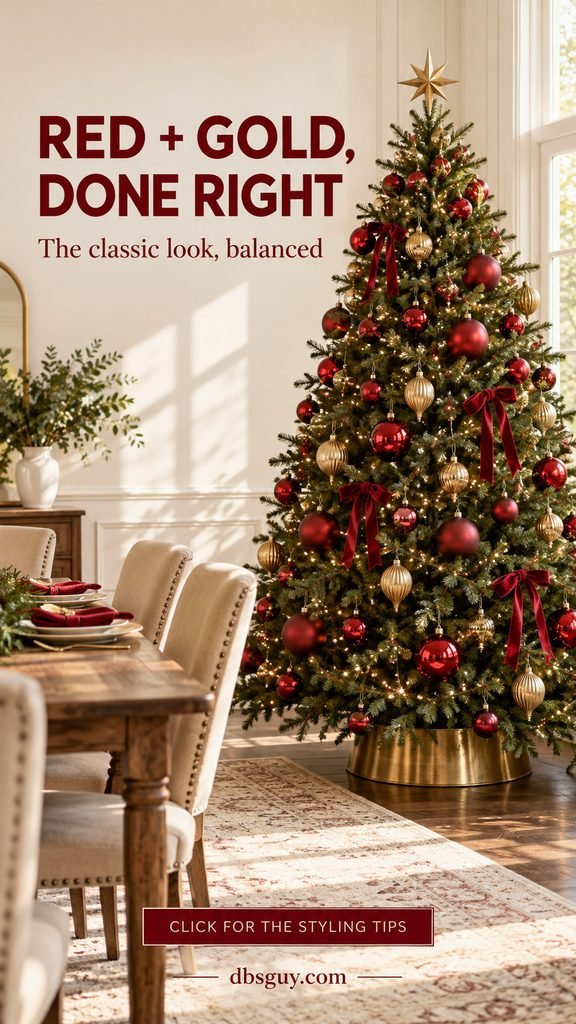
Start with red ornaments in two or three sizes. Mix matte and glossy finishes, then add a few ribbed gold drops. As a decorating starting point, try roughly two red ornaments for each gold one; adjust by eye rather than treating the ratio as a rule. Set some large balls deeper in the branches and hang lighter drops nearer the tips.
A few red ribbon accents and a plain gold star finish the look. If the tree feels too shiny, remove some gold before adding anything else. A simple metal collar gives the base a neat outline without introducing another pattern.
2. An airy tree dressed only in red velvet bows
You can make red the whole theme without buying a single new bauble. On a tree with open branch spacing, small velvet bows give each branch its own little moment. The greenery and lights become part of the design.

Try ribbon about ½–1 inch wide for the smaller bows. Tie one sample first, then check it on the tree before cutting the rest. Let the tails vary slightly, and place the bows at different heights so they do not form straight horizontal rows. One larger bow at the top is enough of a focal point.
Keep the stand securely inside a basket-style cover and leave the rest uncomplicated. If the bows disappear into a dense tree, move them toward the branch tips or use a slightly wider ribbon. For more ways to shape the fabric, see How to Put Ribbon on a Christmas Tree: 7 Beautiful Styles for Beginners.
3. Burgundy velvet and brass in a darker room
Wine red has a different mood from bright scarlet. Against walnut shelves, brown leather, or a deep wall color, it creates a quieter, richer tree. Brass details help the darker ornaments remain visible after sunset.
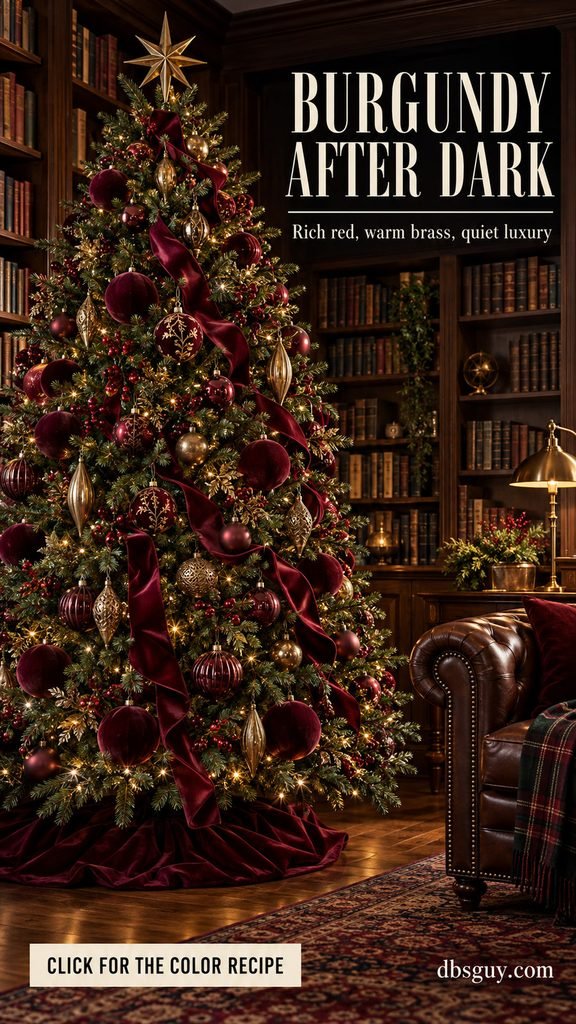
Use burgundy velvet balls, a handful of glossy oxblood ornaments, and slender antique-brass drops. Run wide burgundy ribbon down the tree in loose folds, securing the pinched sections to sturdy branches with the fasteners hidden. Keep the fabric clear of light sockets and cords.
The adjustment to watch is contrast. If everything looks like one dark shape, shift a few brass ornaments outward and move a lamp so the room has some ambient light. You do not need more glitter. A burgundy skirt continues the color at the floor; our 21 Burgundy and Gold Christmas Tree Ideas That Feel Rich and Inviting offer more variations on this palette.
4. Red wooden beads and ivory paper stars
For a light, handmade feeling, let ivory stars do the decorative work and use red as the connecting thread. This looks especially at home beside pale oak, linen curtains, and simple white walls.
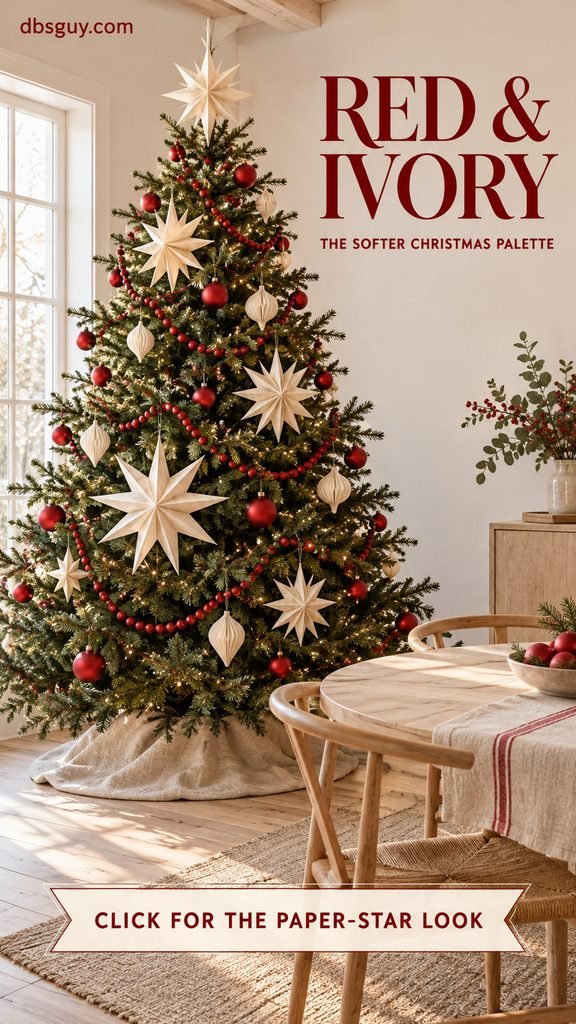
Hang folded paper stars in a few sizes, then add a red wooden-bead garland in shallow, relaxed swags. Smaller matte red balls can fill the spaces where the bead strand is less visible. Choose creamy ivory paper if the room has warm neutrals, or a cleaner white if the walls and furniture lean cooler.
A paper star should hang freely rather than press flat against the greenery. Move its attachment point outward when necessary. Keep folds crisp and use a plain fabric skirt at the base. If the tree starts feeling busy, remove some small ornaments so the stars remain the shapes you notice first.
5. Ruby ornaments on a white tree with silver accents
A white artificial tree makes each red ornament stand out immediately. Adding a little silver gives the pairing a crisp finish that suits pale gray furniture, mirrored details, and modern rooms.

Use ruby-red balls as the main decorations, then introduce slim silver icicles or finials. Their narrow shapes keep the white branches visible. A small silver star and a matte white collar can finish the tree without another layer of ribbon.
Test a handful of ornaments before filling the tree. White foliage reflects the room’s lighting, so red may read differently beside a cool window than under evening lamps. In this concept, warm white lights soften the contrast. If your tree feels harsh, simplify the shiny silver accents and give the red ornaments a little more space instead of adding a third strong color.
6. Tartan ribbon with red balls and wooden stars
A plaid tree brings pattern into the room without needing a collection of novelty ornaments. Red-and-green tartan works well with leather chairs, baskets, and wood paneling, but it can also warm up a plain apartment corner.

Choose one tartan and repeat it in the topper and ribbon folds. Wired ribbon around 2½ inches wide is a useful size to test on a medium or full tree. Place the ribbon before the smaller ornaments, allowing each fold to turn into the branches rather than wrapping it tightly around the outside.
Then add plain red balls, wooden stars, and a small amount of bronze. The print already supplies detail, so extra striped ribbon or patterned baubles can compete with it. Repeat the tartan once elsewhere, perhaps on a gift or cushion. For related room styling, explore 19 Ralph Lauren–Inspired Christmas Tree Ideas for a Cozy Plaid Holiday.
7. A peppermint tree with a tightly edited palette
Playful does not have to mean crowded. A peppermint tree can feel cheerful and orderly when the ornaments stay red and white and the shapes remain easy to recognize.
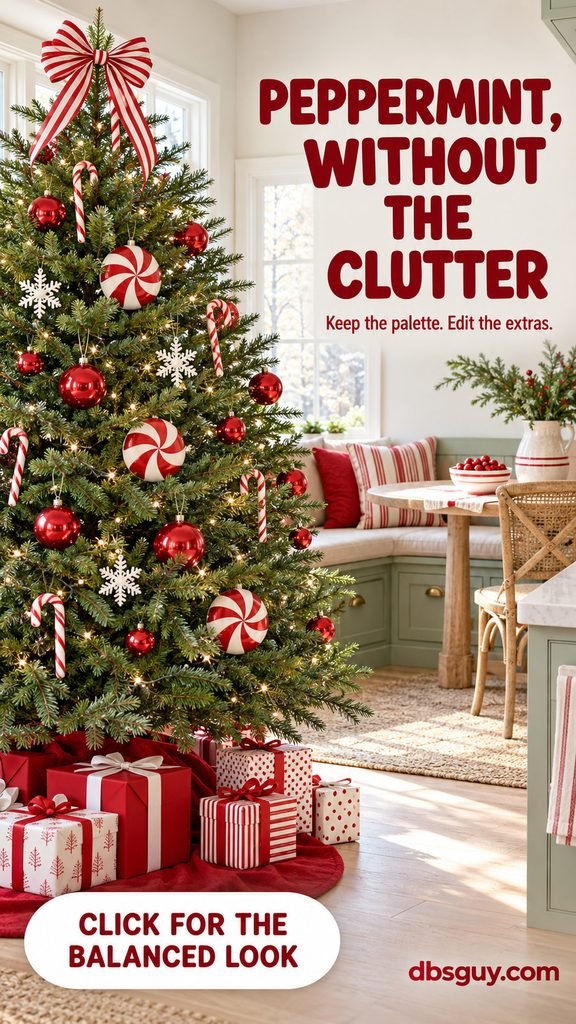
Combine striped candy-cane ornaments, red balls, and simple white snowflakes. Keep oversized peppermint discs to a few focal spots rather than putting one on every branch. A striped bow topper can tie the theme together; use a plain red skirt so the base does not add another busy surface.
Spread the striped pieces around the tree, then fill the gaps with solid colors. If the pattern seems to take over, remove some striped decorations first. This look is a good place for family favorites, too: choose the red-and-white ones from your collection and let their different shapes add personality within the limited palette.
8. Red berries and pinecones for a woodland tree
This version gets its red from small berry clusters rather than big shiny ornaments. Brown pinecones, soft greenery, and a woven base give it a relaxed, outdoorsy character.
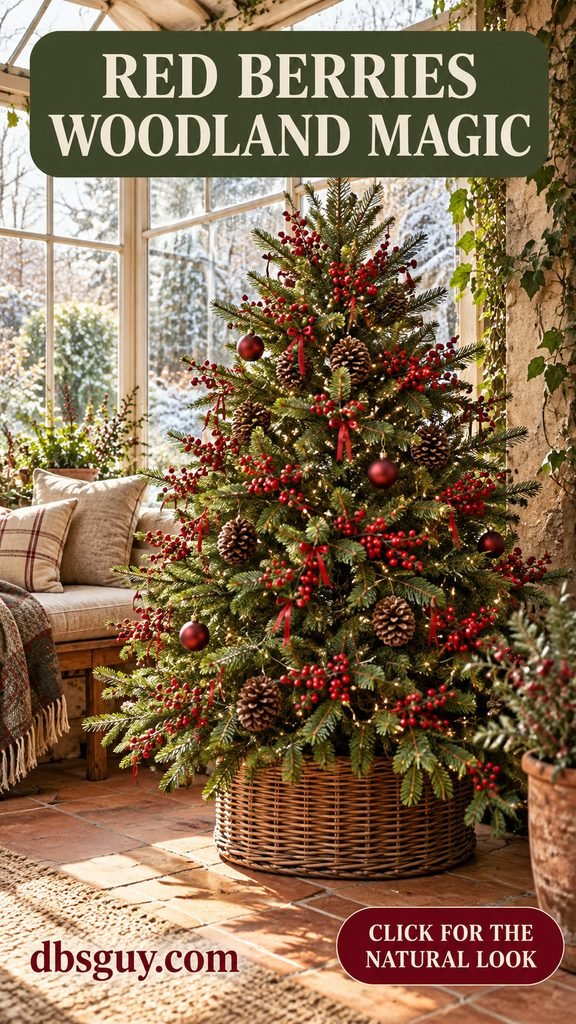
Choose faux berry picks with a flexible stem and a finish that resembles natural berries. Tuck the stems into the branches so the clusters sit at different depths. Hang pinecones nearby, then add a few matte red balls if the color needs more presence. Use secure attachments rather than balancing loose decorations on the needles.
The important styling adjustment is direction: let the berry clusters follow the branches instead of projecting like a ring of spokes. A narrow red ribbon can appear in a few small ties. Leave out the wide metallic garland and let the branch texture show through. This is especially useful when your existing decorations already include wood and woven materials.
9. Vintage red glass with slender silver icicles
A vintage-inspired red tree feels collected when the ornaments have different silhouettes. Rounded balls, pointed finials, and small reflector-style pieces give your eye more to explore than a matching box of baubles.

Gather red ornaments with compatible tones, then add slender silver icicles between them. Hang the longest drops where they have room beneath the branch. Set one or two favorites at eye level and place heavier pieces closer to a sturdy branch junction, using attachments suited to their weight.
Keep the ribbon light or skip it, so the ornament shapes stay visible. New vintage-style pieces can create the same mood; genuine old glass is not a requirement. If your collection is fragile, display the most delicate pieces where they are less likely to be bumped. The goal is a thoughtful collection, not identical spacing.
10. Red poinsettias arranged in a loose diagonal sweep
Large faux poinsettias can give a tree a clear focal path. Instead of distributing flowers in a rigid grid, arrange them in an uneven diagonal from the upper branches toward the wider lower section.

Test one flower against your tree before ordering or making a full set. The bloom should nestle into the greenery without hiding an entire section. Use rich red fabric flowers, smaller matte red balls, and a few champagne ornaments. Secure each stem or clip to a sturdy branch.
Start the diagonal with fewer flowers near the top and let the spacing broaden lower down. It should feel like a gentle movement through the tree, with green breaks along the way. If the outline starts looking lumpy, tuck a bloom farther inward or remove it. Keep the topper modest so it does not compete with the floral arrangement.
11. Red and navy with a tailored ribbon finish
If your living room already has navy furniture, use it as the tree’s supporting color. Red brings the Christmas feeling, while navy makes the decorations connect to the room.

Begin with matte and glossy red ornaments, then add fewer navy balls and narrow navy ribbon accents. A subtle red-edged or striped grosgrain ribbon gives the look a tailored detail. Add only a small amount of brass if the navy needs definition against the green branches.
Keep the red pieces nearer the visible edges and some navy pieces farther inside. That helps the darker color support the tree rather than disappear into it. An ivory skirt brightens the floor area. If the whole tree reads too dark, try ivory ribbon in a few places before buying more ornaments. One repeated fabric detail on a nearby chair is enough to connect the scene.
12. A red ombré that moves from scarlet to wine
This idea uses placement, rather than extra colors, to create the design. Bright scarlet ornaments begin near the top, ruby fills the middle, and deeper wine red gathers toward the base.
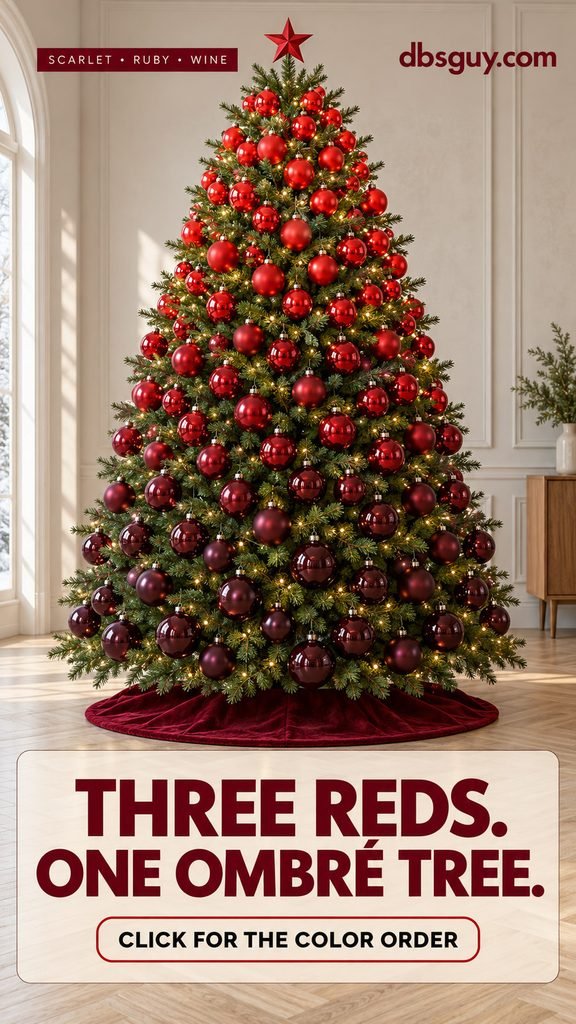
Sort your ornaments into three red families before decorating. Keep the sizes and finishes reasonably similar across the groups so the color change is the main feature. Hang a few ornaments from the next shade in each transition area; a slight overlap makes the gradient softer than three hard stripes.
A small red topper and a plain burgundy skirt let the ombré continue from top to bottom. Leave out a contrasting ribbon that would cut across the color bands. Step back from the doorway to judge the effect, then move any obvious outliers. This is a practical way to use several shades of red that never looked quite right mixed randomly.
13. A slim red-accented tree with fewer, larger ornaments
A narrow tree can still have presence. A small selection of larger red ornaments makes the color easy to see without filling every branch with miniature decorations.
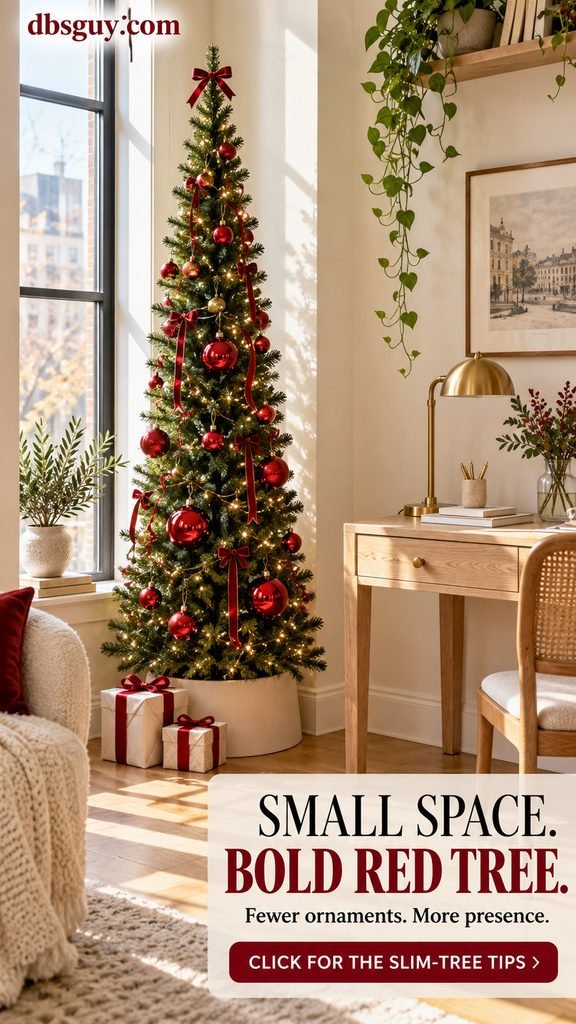
Choose a slim tree whose actual base width fits the corner, then test a few medium-to-large red balls against its branch spacing. Keep the largest pieces toward the middle and lower sections, hanging them closer to sturdy branch junctions where needed. Use smaller red ornaments near the top and a narrow ribbon accent that follows the tree’s vertical shape.
Leave the outline clean. Bulky floral sprays and a broad topper can make a slim tree feel wider than the space allows. A compact collar and a few neatly placed gifts finish the floor area. Our 17 Small Christmas Tree Decorating Ideas That Won’t Take Over Your Living Room offer more ways to work with limited space.
14. An actual red tree with quiet champagne ornaments
If you mean a Christmas tree with red branches, let the foliage provide most of the drama. A crimson artificial tree paired with a small collection of champagne ornaments looks deliberate because the supporting decorations stay quiet.
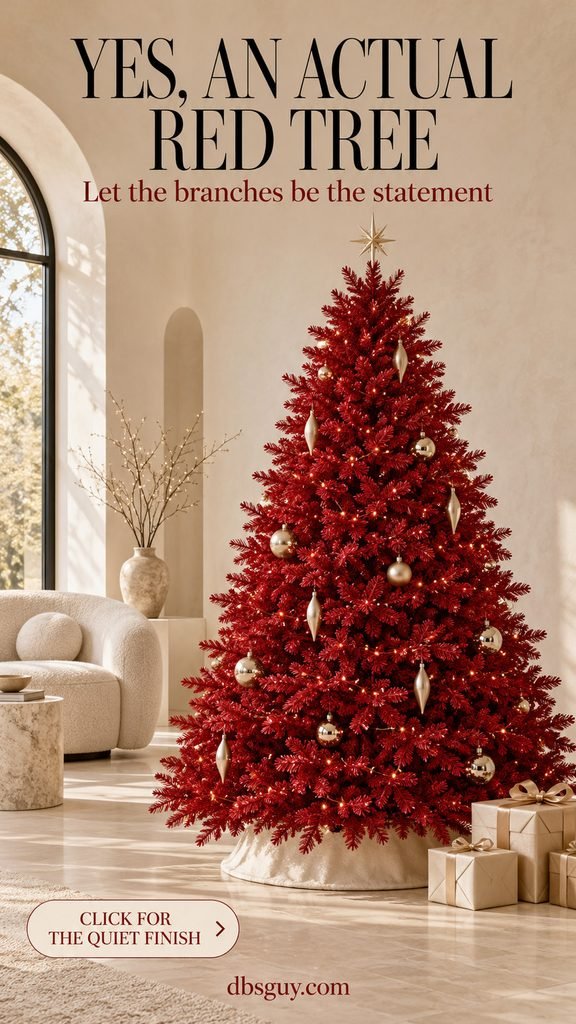
Use soft champagne balls and a few simple drops, with a restrained star topper. Choose finishes that show clearly against the red needles; brushed or softly reflective surfaces are useful options to test. Keep the stand cover neutral and the surrounding gifts simple.
Before adding extra lights, check the tree manufacturer’s instructions and the lighting already supplied. Place the tree against a pale wall when possible so the shape remains visible. If the scene feels overwhelming, clear the decorations beside the tree first. You may not need to change the tree at all. This look works best when it is the room’s obvious focal point.
15. A tabletop red tree with small ivory ornaments
A miniature red-branch tree is an easy way to try the color in a dining nook or on a sideboard. Its small scale makes the red feel like a decorative accent rather than a whole-room commitment.
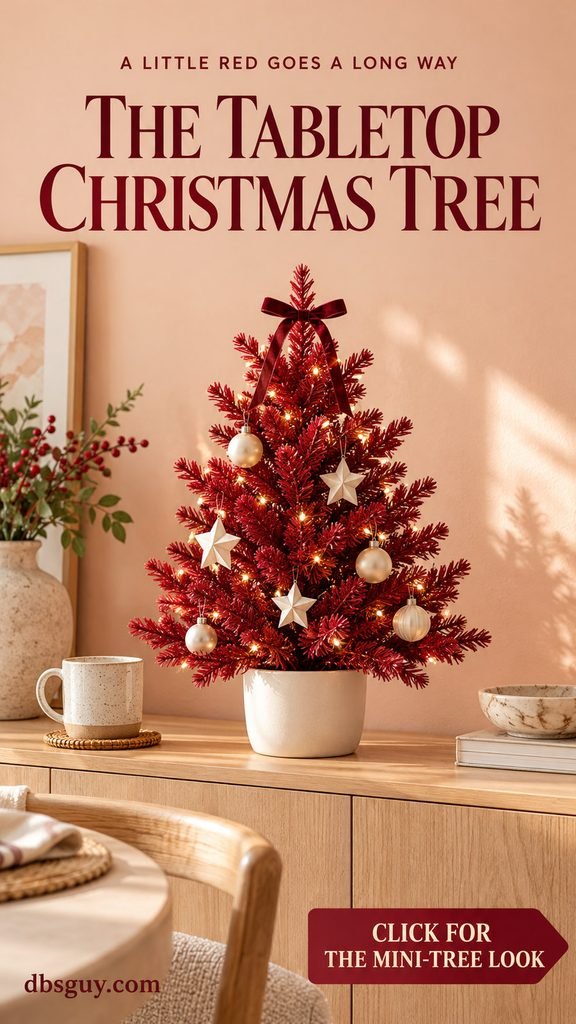
Use a purpose-made tabletop tree with a stable stand. Set the stand inside a suitable decorative container without weakening its support. Add lightweight ivory paper stars or small cream balls, then finish with one narrow wine-red bow. Leave several red branch tips bare so the foliage remains the main feature.
Keep the ornaments proportional: if a star hides half the tree, choose a smaller one. A plain ceramic vessel and a little clear space around the tree make a stronger display than a crowded arrangement of seasonal objects. Check the view from a seated position as well as standing up, especially if the sideboard is close to your dining table.
How to pull your red tree together
Start by choosing the look closest to your existing room. A cream-and-brass living room is an easy match for ruby and antique gold; a pale oak room may suit red beads and paper stars. Shop your ornament boxes before choosing new accents. Repeating a ribbon or finish can connect pieces that came from different sets.
- Prepare the branches and check the lights. Shape an artificial tree according to its instructions, or work with a real tree’s natural spacing. Check the overall silhouette before decorating.
- Place the main feature. Add wide ribbon, a flower sweep, or your most important ornaments first. This gives the smaller pieces a clear place to go.
- Distribute the red. Check the upper, middle, and lower sections from your usual viewing spot. Move pieces to soften empty patches or crowded clusters.
- Finish the base. Use a skirt or collar that suits the palette and leaves the stand accessible when necessary.
- Do a final edit. View the tree with its lights on and off. Remove anything that distracts from the feature you chose.
For setup, follow the U.S. Fire Administration’s holiday fire safety guidance: keep the tree at least 3 feet from heat sources and clear of exits, water a real tree daily, replace light strands with frayed or pinched wires, and follow the manufacturer’s limit for connected light strands. Use electric lights rather than lit candles on the tree.
Frequently asked questions about red Christmas trees
What colors go with red on a Christmas tree?
Muted gold gives red a traditional, warm finish. Ivory makes it softer, silver looks crisp, and navy creates a tailored palette. Burgundy can work alongside brighter reds when the tones are placed deliberately. Start with the combination that relates to your room, then test a few decorations on the actual branches.
How do I keep a red tree from looking too busy?
Choose one main feature and let the other decorations support it. If the ribbon is patterned, keep most ornaments plain. If the ornaments have interesting vintage shapes, use less ribbon. Visible greenery, a quiet base, and some variation in ornament depth can make the arrangement easier to read.
Can I mix different shades of red?
Yes. Ruby and wine red can create depth, while scarlet and darker reds can form an ombré. Check the shades together under your room’s lighting before decorating. If one orange-red or pink-red piece looks disconnected, move it into a small intentional group or leave it for another display.
Do I need red branches to create a red Christmas tree?
No. Most of these looks use a green tree with red ornaments, ribbon, berries, or flowers. A white tree also shows red clearly. Choose actual red foliage when you want a bold focal point, or try a tabletop red tree first if you prefer a smaller accent.