Want a quieter island trip? Start with Monhegan for a Maine coastal break, Saba for Caribbean hiking and diving, Silba for a walking-scale Adriatic stay, or Atiu for caves and birdlife in the South Pacific. The 23 choices below help you match the scenery to a journey you would actually enjoy.
A quick reality check: these islands are not unknown, and many are home to established communities. Here, “forgotten” means easily overlooked when travelers default to the most familiar island names. You may still encounter busy weekends, seasonal visitors, and limited rooms. The goal is a thoughtful island escape, not a promise of solitude.
Which Kind of Island Trip Are You Looking For?
- A U.S. coastal trip: Monhegan for art and cliffs, Isle au Haut for Acadia hiking, or Sapelo for an arranged nature-and-history visit.
- A warm beach stay: Little Corn, Carriacou, or Marie-Galante. Compare the full travel day, not only the nightly room rate.
- Walking with dramatic scenery: Saba, Flores, La Gomera, El Hierro, Inishbofin, or Eigg.
- A slower European island base: Lastovo, Silba, Tilos, or Agathonisi. Ferry frequency and seasonal openings matter.
- A journey worth a longer itinerary: Foula, Ojika, Rodrigues, Home Island, or Atiu. Flatey and Ulko-Tammio can also work as carefully arranged island outings.
The stay lengths and suggested planning windows below are editorial starting points, not required minimums or weather guarantees. Confirm current transport, accommodation, park access, and conditions before booking.
If you are still deciding between an island and a mainland escape, compare these with our 13 Underrated Places in the USA to Visit Before Everyone Else Finds Them.
Visual note: all images in this guide are AI-generated concepts inspired by each island’s character. They illustrate the mood and terrain, not exact viewpoints, current facilities, or documented on-site conditions.
1. Monhegan Island, Maine, USA — Art Studios and Atlantic Cliffs
Monhegan makes sense if your ideal island day includes a sketchbook, a harbor bench, and a walk with salt spray in the air. This working fishing community and longstanding artists’ colony offers a different kind of escape from a sandy resort island. Browse village galleries before exploring the island’s wooded paths and rocky coast.

Getting there: Take the passenger ferry from Port Clyde; seasonal services also operate from other Maine ports. Book against the actual sailing calendar rather than assuming every departure point runs year-round.
Consider a summer day trip or two nights for a less hurried visit. Summer brings visitors here, so “hidden” does not mean empty. Monhegan Associates manages the Wildlands trails; buy its trail map and choose a route that fits your ability. Uneven footing and exposed cliffs deserve more attention than the photo angle.
Small adjustment: Keep gallery time and a coastal walk on the same day, but leave a generous margin before your return boat. Pack water, a light layer, and shoes with grip.
2. Isle au Haut, Maine, USA — A Quieter Side of Acadia
Choose Isle au Haut for the hiking rather than the shopping. Part of this inhabited island belongs to Acadia National Park, where evergreen woods and granite shores create an outing that feels separate from the busy Mount Desert Island circuit. It is a good match for walkers comfortable with rough terrain and limited services.
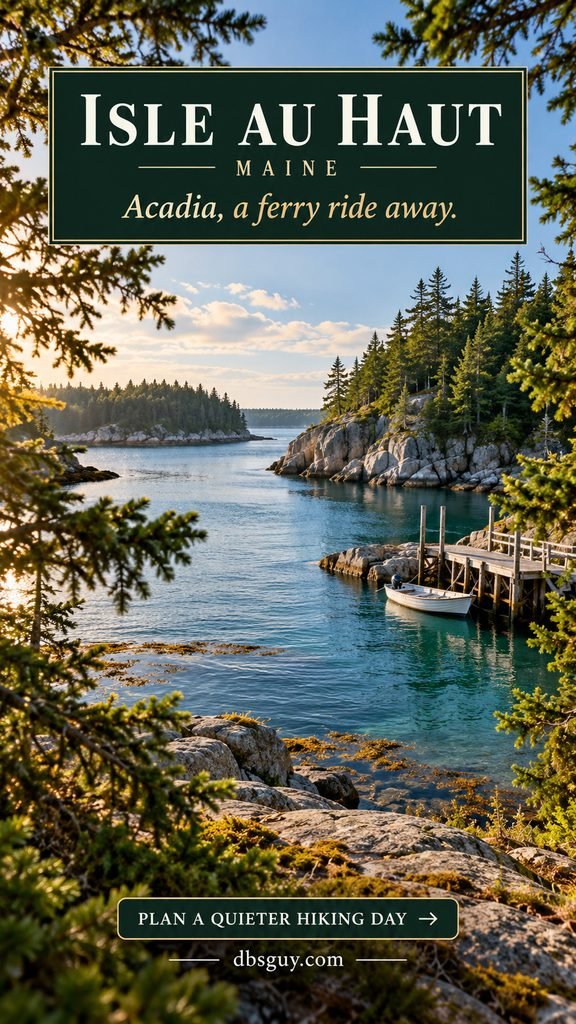
The passenger-only mailboat leaves Stonington for Town Landing. Its seasonal Duck Harbor stop is particularly useful for park visitors, but it is not available on every sailing throughout the year. Check both the stop and the return departure before choosing your hike.
Planning window: Summer into early fall is a practical starting point when researching Duck Harbor service. A day trip works if your selected trail fits the boat schedule. An overnight camping trip requires an advance Duck Harbor reservation; it is not a place to arrive expecting an open campsite.
If the boat only stops at Town Landing, reaching Duck Harbor involves a substantial walk. Bring food and water instead of treating the island like a serviced national park visitor hub.
3. Sapelo Island, Georgia, USA — Coastal Nature With Living History
Sapelo deserves a visit that goes beyond a beach photograph. Its maritime landscape is intertwined with the living Gullah Geechee heritage of the Hog Hammock community. A thoughtfully arranged visit can connect the island’s dunes, marshes, and history without treating residents’ homes as tourist attractions.

Arrange access first: The mainland visitor center and ferry dock are in Meridian, near Darien. Visitors generally arrive through an authorized tour or as invited guests; do not assume a ferry ticket permits unrestricted independent sightseeing.
A guided day is a sensible introduction. Ask the reserve or your local guide which ecological and cultural stops are included, then confirm the boat arrangements. Spring or fall is worth considering for a walking-focused visit; check the forecast and current tour availability.
For a deeper stay, make arrangements with a resident host or authorized provider before traveling. Follow your guide’s direction around community spaces, request permission for portraits, and support local businesses where available. The island’s appeal comes from its people as well as its shoreline.
Also Read: 9 Easy Weekend Getaways From U.S. Cities Where You Don’t Need a Car — useful if a simpler domestic trip fits your schedule better.
4. Little Corn Island, Nicaragua — A Beach Stay Without the Road Trip
Little Corn suits travelers who want the everyday rhythm of walking between a guesthouse, a beach, and a small restaurant. Its pedestrian scale is the attraction: the journey changes from getting around by car to following footpaths beneath palms. Diving and snorkeling can add activity, but slow mornings are reason enough to stay.

Access: Travelers commonly fly from Managua to Big Corn Island, then take a small passenger boat to Little Corn. The sea crossing depends on conditions. Leave room for a night on Big Corn before an onward flight rather than stacking both connections tightly.
Allow roughly three to five nights on Little Corn as an itinerary suggestion. Ask your host about the best seasonal conditions for the activities you want, boat availability, cash needs, and electricity arrangements. A lightweight bag is easier to carry on sandy paths than a large rolling suitcase.
Before committing, review the current U.S. travel guidance for Nicaragua. A relaxed island atmosphere does not replace a country-level risk assessment or a workable return plan.
5. Saba, Caribbean Netherlands — Cloud Forest Instead of Beach Clubs
Saba is the choice for someone who hears “Caribbean” and thinks of a mountain trail or a dive boat. The island rises sharply from the sea, with white houses and red roofs tucked into its green slopes. Long sandy beaches are not its defining feature; hiking, village life, and diving are.

Use St. Maarten as the main connection point, then compare the available regional flights and ferries. Neither option makes weather irrelevant. Plan a transfer buffer, especially when returning to an international flight.
Make it your kind of trip: Spend around three nights if you want both a hiking day and time with a dive operator. Ask the Saba Conservation Foundation about current trail conditions and choose routes for your fitness level. Steep, wet paths are a different proposition from a flat beach walk.
For a winter or spring escape from the U.S., check availability early rather than assuming quieter islands have unlimited rooms. A small guesthouse and fewer daily activities often fit Saba better than a packed resort-style itinerary.
6. Carriacou, Grenada — Reef Country at a Gentler Pace
Carriacou offers a smaller-scale companion to Grenada’s main island. Fishing boats, beach time, and boat-based excursions shape the experience, while the island’s cultural traditions give a stay more depth than a sequence of swim stops. Choose it when you want to spend several days in one place rather than race through an archipelago.
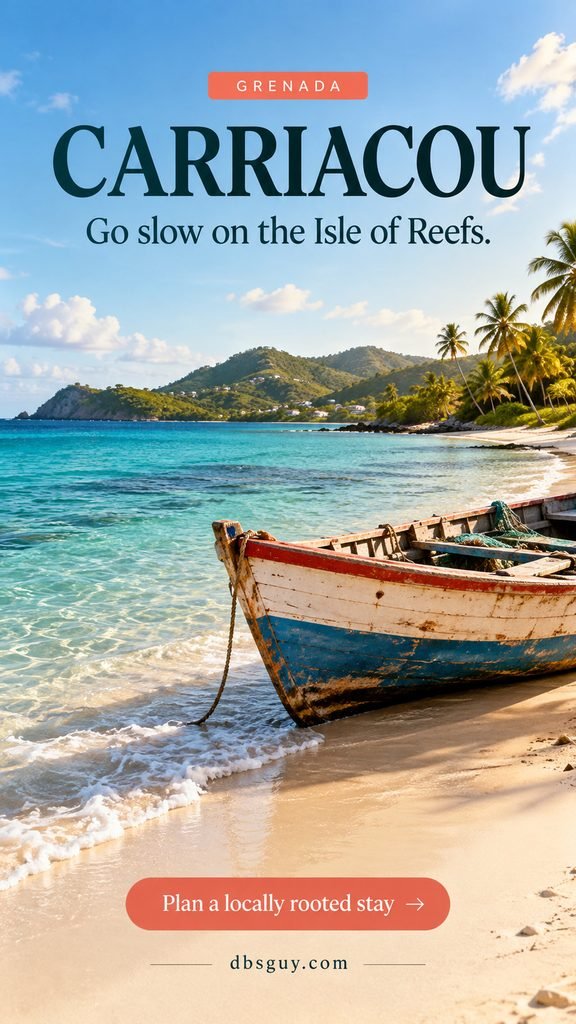
Getting there: Check the current ferry connections from Grenada and any operating regional air service. Book the route that is actually available for your dates; published journey times and old timetables should not drive a tight onward connection.
January through May falls within the dry-season window described by Grenada’s tourism authority. Three or four nights is a reasonable starting point for beach days and a locally operated excursion.
Carriacou was severely affected by Hurricane Beryl in 2024. Confirm directly with your accommodation and activity provider which services are operating now. Spend with local hosts and guides, and avoid assuming every older hotel listing reflects current conditions. Ask a skipper about sea conditions and reef protection before booking an outing.
7. Marie-Galante, Guadeloupe — Broad Beaches and Rural Island Days
Marie-Galante feels different from a dramatic volcanic island. Its low-lying landscape, sugarcane heritage, beaches, and distilleries invite a gentler circuit. This is a strong choice for travelers who would enjoy an unhurried lunch as much as another swim stop.

Start in Guadeloupe and check passenger ferry options to Marie-Galante. Pointe-à-Pitre is a useful gateway, but arrival ports and available departures vary by operator and season. Decide how you will move around the island before picking accommodation; beaches and rural sights are spread out.
A workable stay: Two or three nights gives you more breathing room than a ferry-to-ferry day trip. Research winter and spring dates for a warm-weather escape, then check marine forecasts and your host’s advice.
If visiting a distillery is part of the plan, arrange a driver or separate it from driving. Combine a beach morning with one heritage stop rather than trying to see every corner. French is useful here; a few courteous phrases make ordinary interactions easier.
8. Flores, Azores, Portugal — Waterfalls, Crater Lakes, and Weather Windows
Flores belongs on the shortlist for travelers drawn to green cliffs and water rather than sun loungers. In the western Azores, waterfalls, volcanic lakes, and coastal villages offer the kind of scenery that rewards staying long enough to wait for a break in the clouds.

Access: Research flights into the Azores followed by a scheduled inter-island flight to Flores. Do not assume there is a convenient boat connection from every other island. Rental cars and small accommodations can be limited, so coordinate them with your flights.
Consider three or four nights in late spring, summer, or early fall. These are planning suggestions, not a promise of dry weather. Keep a lake-viewpoint outing interchangeable with a coastal village afternoon.
Poço da Alagoinha and the Fajã Grande area are useful places to research. The official Azores Trails site lists closures on some Flores routes, so verify the specific trail immediately before setting out. A stunning photo on an old itinerary does not establish that the path is open today.
9. La Gomera, Canary Islands, Spain — Forest Walks Above the Sea
La Gomera offers a compelling answer to “What if my island trip were mostly about walking?” Garajonay National Park’s laurel forest brings moss, shade, and cloud-filtered light, while the island’s ravines and coastal settlements create a completely different setting below.

Many travelers connect through Tenerife and take a ferry from Los Cristianos to San Sebastián de La Gomera. Arrange transport beyond the port: winding roads and elevation changes make map distances deceptive.
How to pace it: Around four nights allows a forest day, a village day, and a less structured coastal day. Spring or fall is worth researching for a walking trip. Bring a rain layer and warmer clothing for the forest even when the coast feels mild.
Choose marked routes that suit your ability and check park conditions. La Gomera already receives visitors, including day-trippers. An overnight stay and a thoughtful base choice can create a quieter experience without pretending the island is undiscovered.
10. El Hierro, Canary Islands, Spain — Lava Coasts and a Diving Base
El Hierro is a good fit for travelers who prefer volcanic character to a conventional beach scene. Basalt shores, upland views, and the diving community around La Restinga make a varied stay possible without constantly changing hotels.

Check regional flights and ferries from the other Canary Islands for your exact dates. Tenerife’s Los Cristianos port is an important ferry gateway. Once on El Hierro, a rental car can make dispersed viewpoints easier to reach, although buses and taxis are also options.
Choose a base by activity: La Restinga is useful for a diving-focused visit; a different location may suit a broader driving itinerary. Allow roughly three or four nights and build water activities around conditions and the operator’s recommendations.
For a U.S. winter escape, research the island’s generally mild setting, but remember that the ocean is still the ocean. Natural pools and rocky entry points are not automatically safe in rough seas. Respect closures and use local guidance rather than judging water by its color.
11. Lastovo, Croatia — Pine-Framed Bays and Long Evenings
Lastovo rewards a traveler willing to make the journey part of the trip. Within the protected Lastovo archipelago, wooded hills, sheltered bays, and stone settlements offer an Adriatic stay with a different tempo from a fast island-hopping itinerary.
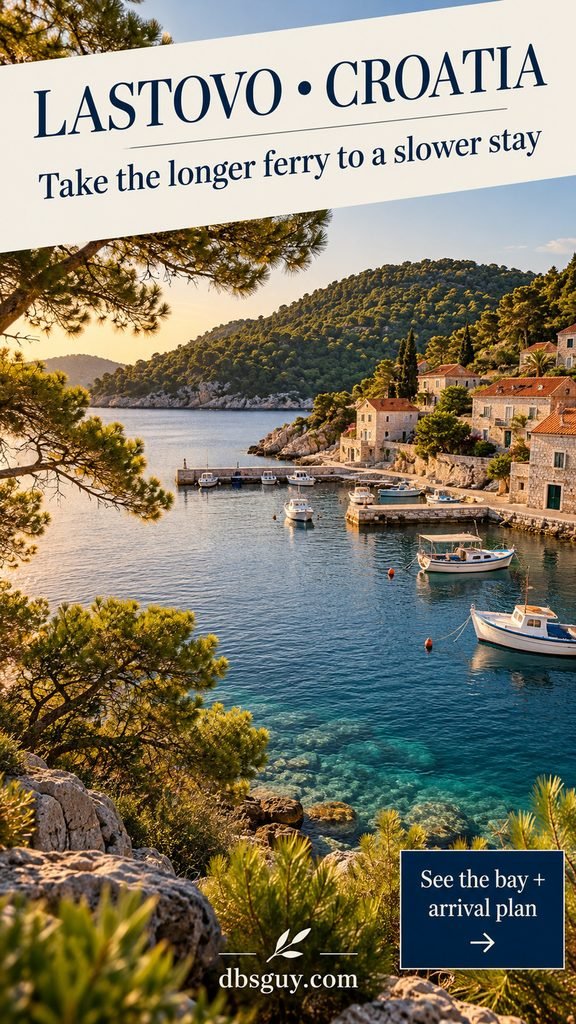
Arrival: Research the Split–Vela Luka–Ubli connection and check the current operator’s schedule. Ubli is the arrival port, not the same place as Lastovo town. Arrange your onward transfer to your accommodation rather than discovering the distance at the dock.
Three or four nights gives you time for a bay, a village walk, and a locally organized outing. Consider June or September if you want to avoid the height of the summer holiday rush, while confirming which services remain open.
Keep at least one evening unscheduled for the night sky. If boating, ask about nature-park fees and anchoring rules. On land, choose accommodation for the view and access you actually want; a hillside village room and a waterfront stay create different days.
12. Silba, Croatia — A Small Adriatic Island Best Explored on Foot
Silba is appealing precisely because a normal vacation car does not come with you. Village lanes lead toward swimming spots, and the small scale encourages settling into one base instead of chasing a long sightseeing checklist. Couples and families who enjoy walking can make that simplicity the whole point.

Look for passenger boat or catamaran connections from Zadar and verify the departure terminal for the service you choose. Silba restricts vehicles; do not book a rental car expecting to use it there.
Pack for the last stretch: Ask your host how far the accommodation is from the landing and whether help with luggage is available. Two or three nights can work well, provided you have checked the return sailing.
June or September is worth considering, though peak-season visitors can make this small island lively. The Zadar Tourist Board also notes seasonal bicycle restrictions, so do not build the trip around bike rental without checking. Comfortable walking shoes and a manageable bag are more useful than ambitious transport plans.
13. Tilos, Greece — Walking Paths, Pebbled Bays, and a Simple Base
Tilos is an inviting choice for a Greek island trip with fewer moving parts. Livadia offers the main port and a practical base, while Megalo Chorio and the island’s walking routes bring variety beyond the waterfront. Think relaxed meals and manageable outings rather than a party-island itinerary.

Getting there: Research ferries through Rhodes or other connected Dodecanese islands. Tilos does not have its own commercial airport, so a flight to a nearby hub is only part of the journey.
Consider three or four nights in late spring or September. In warmer months, move longer walks to the cooler part of the day and carry water. Choose a base near Livadia if easy access to the port and everyday services matters most.
Pebbled beaches may call for water shoes, depending on your chosen spot. Ask locally about route conditions and transport before setting off for a more distant beach. Even a modest island can require more planning than its size suggests.
14. Agathonisi, Greece — A Harbor Stay With Very Little Rush
Agathonisi suits someone who wants less to do on purpose. Around the small harbor of Agios Georgios, fishing boats, simple island accommodation, and nearby swimming spots set the scale. Come for a few quiet days, not for a dense roster of attractions or late-night entertainment.
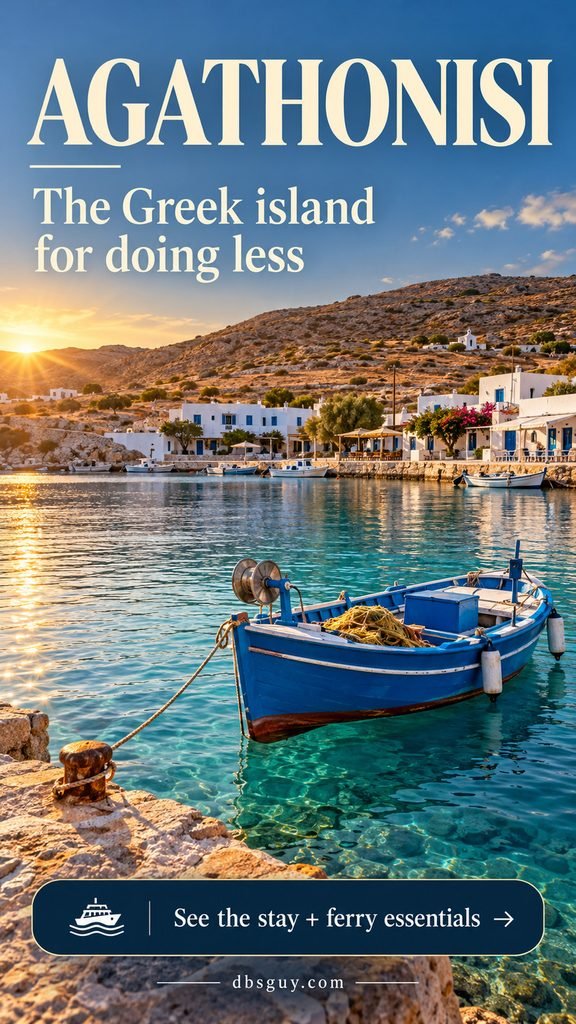
Research the current regional ferry network, including connections through Samos or Leros where available. Choose the accommodation and ferry together: a short distance on the map does not mean frequent daily service.
Keep the plan modest: Two or three nights is a useful starting point, adjusted to the sailing calendar. Ask your host about meals, grocery options, transfers, and how to reach the beach you have in mind. Reserve before arriving rather than assuming there will be many spare rooms.
Early summer or September may suit a quieter Greek itinerary, but shoulder-season services need checking. Bring sun protection, walking shoes, and patience with small-island logistics. The reward is time to repeat a favorite swim instead of collecting another destination.
For comfortable clothing ideas that can work for ferry days and village walks, browse 30 Sun-Soaked Greek Islands Summer Outfits for 2026, then adapt the layers and shoes to your season and activity.
15. Inishbofin, Ireland — Atlantic Walks Off the Connemara Coast
Inishbofin is a lovely addition to an Ireland itinerary when you want an island chapter without turning the entire trip into an expedition. Coastal loop walks, beaches, and a small harbor village offer enough variety for a full day, while an overnight stay lets the pace soften after day visitors leave.
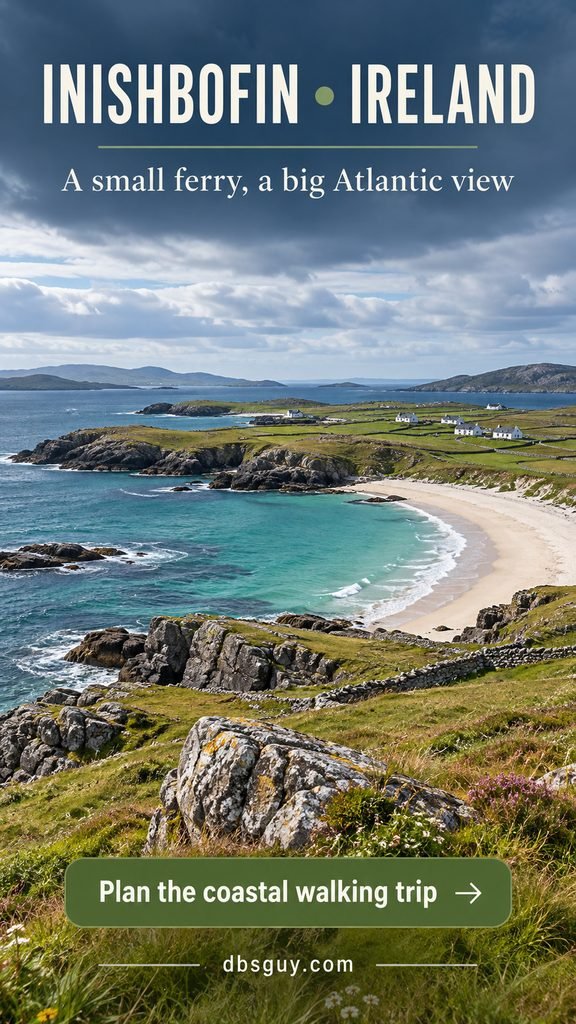
Access: Take the ferry from Cleggan in Connemara. Check the seasonal timetable and parking or onward transport before leaving your mainland base.
One or two nights is an appealing option during late spring or summer. Choose an official walking loop for your time and ability; the Westquarter route is among the established choices. Take a rain layer even when the morning looks bright.
The island’s narrow roads are not designed for a flood of visitor vehicles. Ask your accommodation about arrival transfers and plan around walking. If your Ireland route is already full, trim a mainland stop instead of squeezing the island between two long drives.
16. Isle of Eigg, Scotland — Community Life and a Walking Holiday
Eigg’s appeal is as much about the community as the scenery. This community-owned Scottish island offers beach walks, wildlife, local businesses, and a chance to learn how a small place sustains itself. It is especially rewarding for travelers who want to stay and participate in ordinary island life.

Look at CalMac sailings from Mallaig and seasonal passenger options from Arisaig. Check how the timetable works for your arrival and departure, then book accommodation.
Stay a little longer: Two or three nights allows a walking day and a lower-key day. Eigg’s own visitor guidance highlights May and June for birds and spring flowers. Other seasons have their appeal, but sunshine is never guaranteed.
Most visitors cannot bring a car; exceptions include approved categories such as residents and Blue Badge holders. Ask your host about luggage transfers and how to reach your room. Buy supplies locally where possible, follow trail advice, and choose accommodation for the walking routes you want rather than just the prettiest listing.
17. Foula, Shetland, Scotland — A Remote Choice for Flexible Travelers
Foula is for travelers who can give weather the final say. Treeless hills, dramatic cliffs, crofting life, and seabirds make it an extraordinary idea for a remote trip. Limited services and transport mean it should be planned as a deliberate stay, not casually added to the end of a busy schedule.

The key logistical detail: The regular passenger ferry leaves from Walls on Shetland Mainland, but it is not a same-day ferry outing. Flights from Tingwall and separately arranged excursions provide other possibilities; confirm the current options.
Let the available transport determine your stay length and leave several flexible days in the wider Shetland itinerary. Summer is a sensible research window for long daylight and bird interest, without any guarantee of easy crossings.
Book lodging, discuss food supplies with your host, and arrange a local ranger or guide for challenging terrain. Do not plan to shop for everything after arrival. Keep away from cliff edges and follow seasonal bird-protection advice. If fixed dates are essential, a less remote island is the better fit.
18. Flatey, Breiðafjörður, Iceland — A Small Village Between Ferry Legs
Choose the Flatey in Breiðafjörður for a compact island pause within an Iceland road trip. Colorful timber houses, a small church, sea views, and birdlife give you a setting that feels very different from a day spent driving between large waterfalls.

The Baldur ferry route connects Stykkishólmur and Brjánslækur with a Flatey stop. Consult the operator for the exact seasonal service and stopover arrangements. Visitors explore the island without their car; if continuing across the bay, coordinate what happens to the vehicle with the ferry company.
Best planning approach: Research June through August for a short visit or one overnight stay. Summer services make this easier than assuming the same experience is available year-round.
The ferry operator states that no restaurant or café is open on Flatey from September through May. Bring food when appropriate, and verify lodging arrangements separately. Stick to permitted paths near nesting birds and remember that village houses are homes, not open-air exhibits.
19. Ulko-Tammio, Finland — Granite Shores and a Deliberate Digital Break
Ulko-Tammio offers an island outing built around nature rather than a resort stay. In the Gulf of Finland National Park, rocky shores, forest paths, and wartime remains create a different kind of Baltic experience. Its promoted “offline island” idea is an invitation to put the phone away, not a claim that you will have no signal.
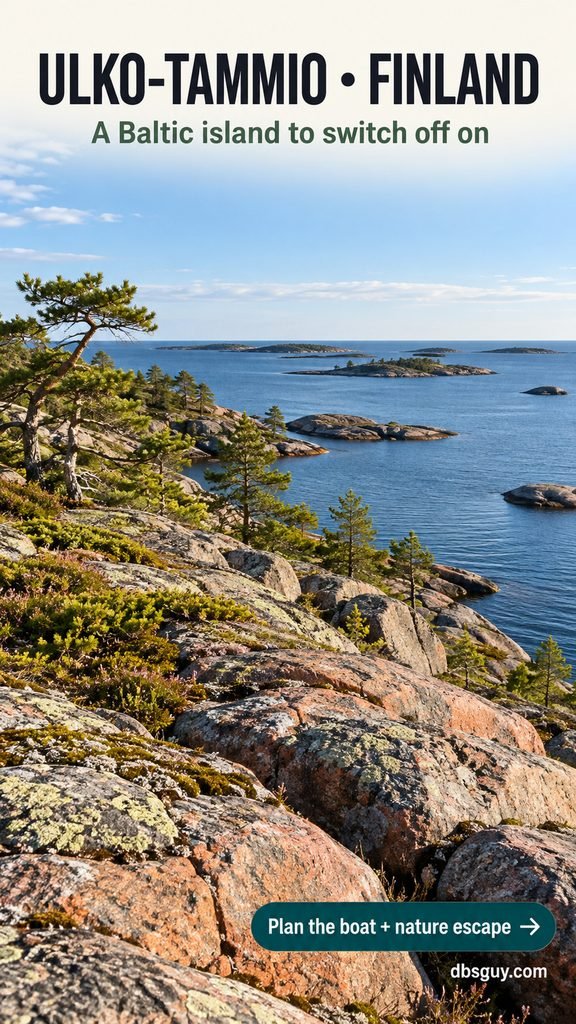
Get the boat arranged first: Look for a seasonal excursion, water taxi, or suitable private-boat access through the Hamina–Kotka region. Departure points and services vary. Do not assume there is a frequent public ferry simply because it is a national park destination.
Summer is the most practical starting point for a day visit. Bring your own food, water, and outdoor layers, and ask the provider how long you will have ashore.
For overnight camping, check designated areas, park rules, and your return transport before leaving the mainland. National park restrictions apply; general assumptions about Finland’s outdoor access rights do not replace the site’s rules. Use shoes with traction on uneven rock.
20. Ojika Island, Japan — Village Lanes and a Cycling Stay
Ojika gives a Japan itinerary a small-island chapter: harbor streets, traditional houses, and an everyday landscape that invites exploration by bicycle or on foot. It suits travelers interested in village life and a slower stay rather than a checklist of famous city sights.

Access: The local tourism office lists ferry and high-speed boat connections from Sasebo, along with other routes. Reach Sasebo first, then check the exact vessel and sailing calendar. The tourism office is in the island ferry terminal and can help with practical arrangements.
Two or three nights allows a village walk and a cycling day without rushing. Research spring or fall dates for outdoor exploring, while checking seasonal weather and any storm-related transport disruption.
Reserve a guesthouse, homestay, or traditional-house stay before arrival. Ask about meals, bicycle availability, hills, and how to reach your lodging. Pack lightly and treat residential lanes as lived-in spaces: photograph architecture thoughtfully and avoid peering into private homes.
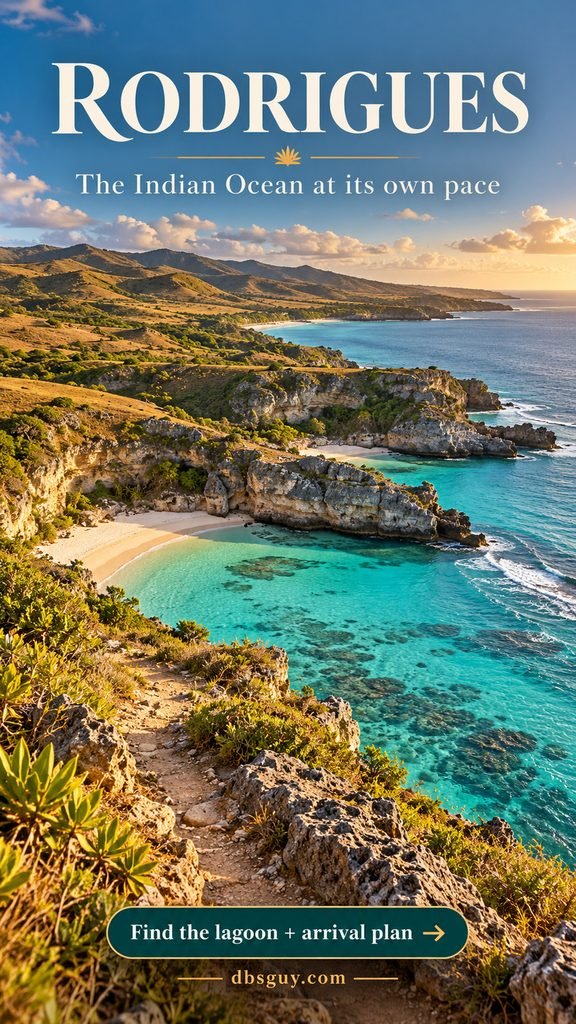
21. Rodrigues, Mauritius — Lagoon Days Beyond the Main Island
Rodrigues is worth considering when you want an Indian Ocean trip with village markets, coastal walking, and time by a broad lagoon. It is a separate island within the Republic of Mauritius, with a distinct local rhythm; it is not a beach you can casually reach by driving from a resort on the main island.
Most international travelers connect through Mauritius and take a domestic flight to Rodrigues. Check flight availability alongside your accommodation, then allow space before the long-haul journey home.
Give it room: Around four or five nights makes the additional flight more worthwhile. May through October is a useful research window if you prefer the cooler part of the year, but trade winds may affect the activities you want. Discuss seasonality with a local operator.
For coastal walking, research the route toward Trou d’Argent with local advice on conditions and access. For lagoon outings, choose a qualified local provider rather than assuming pale water means easy independent swimming. Southern-summer cyclone risk deserves attention when picking dates.
22. Home Island, Cocos (Keeling) Islands, Australia — Lagoon Views and Cocos Malay Culture
Home Island adds a cultural dimension to the remote Cocos (Keeling) Islands. Coconut palms and lagoon views are the backdrop, but the Cocos Malay community, food, and local history are central to a meaningful visit. This is a living island, not an empty tropical prop.

Journey structure: Research flights from Perth to the Cocos (Keeling) Islands, arriving on West Island, then use the local ferry to Home Island. West Island contains much of the visitor accommodation. An atoll holiday of several nights can include a Home Island day visit or a separately arranged stay.
The local tourism association lists regular ferry service, with day-of-week limitations. Recheck the timetable and transport to the West Island departure point rather than assuming you can walk from your lodging to every sailing.
Join a locally led cultural experience, ask about dress expectations, and request permission before photographing people. Book accommodation and transport early; a remote flight does not guarantee abundant rooms. Ask providers about wind, tides, and swimming conditions for your chosen dates.
23. Atiu, Cook Islands — Forest, Limestone Caves, and Birdlife
Atiu is the Cook Islands choice for someone happy to look beyond the classic lagoon holiday. Forest, raised coral limestone, cave visits, and birdlife give it a different personality from Rarotonga or Aitutaki. The best trip here is built around local knowledge rather than self-guided wandering into unfamiliar terrain.

Connect through Rarotonga and check Air Rarotonga’s current Atiu flights. The service is not something to assume runs daily. Book the room and the inter-island flights as one practical plan, especially if the available schedule determines how long you stay.
What to arrange: Research a locally guided Anatakitaki Cave outing and birdwatching with your host. The cave is associated with the native kopeka bird; a guide can help you understand the habitat while avoiding disturbance.
Allow roughly three nights if the flight calendar permits. May through October is a useful starting point for researching the drier season, but conditions still vary. Pack enclosed shoes, ask what gear the guide supplies, and leave a buffer in Rarotonga before your international departure.
How to Plan a Hidden Island Trip Without Overcomplicating It
Book the bottleneck before the extras
On a small island, the bottleneck may be the only suitable room, a campsite reservation, or a sailing that does not run daily. Check accommodation and transport together before buying nonrefundable long-haul tickets. Then arrange the arrival transfer, meals, and one activity that matters most to you.
Protect the journey home
Put a buffer night at the mainland or regional hub before a major flight when possible. A small boat or island flight can be disrupted by weather, and separate bookings may not protect your onward connection. Foula and the more remote Pacific or Indian Ocean choices deserve especially generous flexibility.
Budget for the entire chain of travel
A modest guesthouse does not automatically make the trip cheap. Add the regional flight or ferry, a hub overnight, baggage limits, transfers, meals, and a local guide where needed. Compare that full cost against the number of usable island days. Sometimes staying longer makes more sense than adding another island.
Choose the season for your activity
For a U.S. summer vacation, Maine and the northern European islands are useful places to start researching. For a U.S. winter escape, consider the Caribbean and Canary Islands, while checking your specific destination’s conditions. Mediterranean shoulder seasons can reduce peak-summer pressure, but boats and restaurants may also operate less often. In the Southern Hemisphere, remember that U.S. winter coincides with summer and, in some regions, cyclone season.
Be a welcome guest
Stay on permitted paths, respect private property, avoid disturbing nesting birds, and use local guides for unfamiliar caves, offshore water, or difficult terrain. Ask before photographing residents. Spend with community businesses and bring reusable essentials without assuming you can refill or buy everything everywhere.
U.S. travelers should review the U.S. Department of State’s current travel advisories before choosing an international destination. Then confirm entry requirements and transport details for the exact country or territory and your own passport.
Questions to Ask Before You Book
Are these islands really undiscovered?
No. They are known to residents and many travelers, and several have well-established tourism. “Hidden islands” is a travel-inspiration description here, not a measured ranking of visitor numbers. A less familiar name can offer a different experience without guaranteeing an empty beach.
Which ones are the simplest to add to a U.S. trip?
The Maine options and Sapelo avoid an international flight for travelers already in the U.S. Simplicity still depends on your starting point. Monhegan is a straightforward boat-based coastal idea; Isle au Haut needs careful hiking and ferry coordination; Sapelo requires arranged visitor access.
Which islands are best if I want to leave the car behind?
Little Corn and Silba suit a walking-scale stay. Eigg restricts visitor vehicles, and Flatey is explored without bringing your car ashore. Confirm luggage help and distances to accommodation, especially if mobility or carrying bags is a concern. Vehicle restrictions do not automatically mean accessible terrain.
Can I turn one of these into a day trip?
Some can work well that way: Monhegan, an arranged Sapelo visit, Flatey, Ulko-Tammio, or Home Island from a West Island base. Isle au Haut also works for suitable ferry-and-trail combinations. The regular Foula ferry is a notable exception to assuming a same-day return. Always check the exact sailing pattern.
Does a quieter island mean a cheaper island?
Not necessarily. Limited rooms, regional flights, and imported supplies can increase the cost. Pick for the experience, then compare a complete budget. If travel time or cost is tight, a domestic coastal outing may offer more useful vacation time than a distant island connection.
How do I avoid arriving when everything is closed?
Contact your accommodation before booking and ask three concrete questions: Is the return transport operating on my dates? Where will I eat? Which activities or trails are actually available? This matters particularly outside summer in northern Europe and outside peak operating periods on small Mediterranean islands.
Choose One Island You Can Enjoy Slowly
Pick the experience first: a walking day on Monhegan, forest time on La Gomera, an easy village rhythm on Silba, or a guided cave outing on Atiu. Then give that island enough space in the itinerary. The best discovery may be the place you stop trying to rush through.