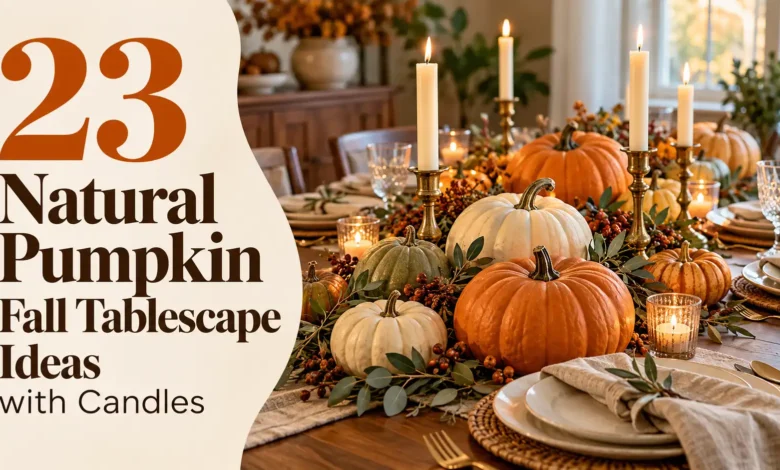
Start with pumpkins small enough to leave room for dinner, then put the candlelight where it helps you see their shapes. A narrow row works on a long table; a compact tray suits a round one. If you serve family-style, break the decorations into clusters with space for platters between them.
These 23 fall tablescape ideas use real pumpkins in their natural colors, from familiar orange to creamy white and soft green. You can borrow a layout, a color combination, or one useful detail without replacing your dishes. The candles in every concept are battery-operated, so the close arrangements can stay close.
The visuals are AI-generated styling concepts. They show the arrangements described here rather than photographs of completed or tested table settings.

Choose the Pumpkins, Then Make Room for Dinner
Put out the plates, glasses, and empty serving dishes first. That reveals how much room the centerpiece actually has. Choose pumpkins that sit flat, check the undersides for soft spots or moisture, and protect the tabletop with a washable tray or saucer where needed. Keep the stems attached and carry pumpkins by their bodies.
For the simplest fall tablescapes, begin with three to five small pumpkins and two or three LED candles, then remove anything that crowds a plate. Those quantities are a styling starting point, not a shopping requirement. Sit in a dining chair before finishing: you should be able to see the person opposite and reach your glass without brushing the decor.
Use battery-operated candles beside linens, foliage, wheat, paper, or tightly grouped pumpkins. If you substitute burning candles, follow the U.S. Fire Administration’s candle guidance: use stable holders, keep candles at least 12 inches from anything that burns, and put them out when leaving the room. A glass sleeve does not remove that clearance requirement. Keep the LED version when the space will not accommodate it.
1. Run a Single Pumpkin Row Down a Long Table
A single row gives a rectangular table a clear center without spreading decorations toward the plates. Lay a flat oatmeal runner along the grain of the table, then alternate mini orange pumpkins with ivory LED tapers in brass holders. Leave wood visible on both sides of the runner.
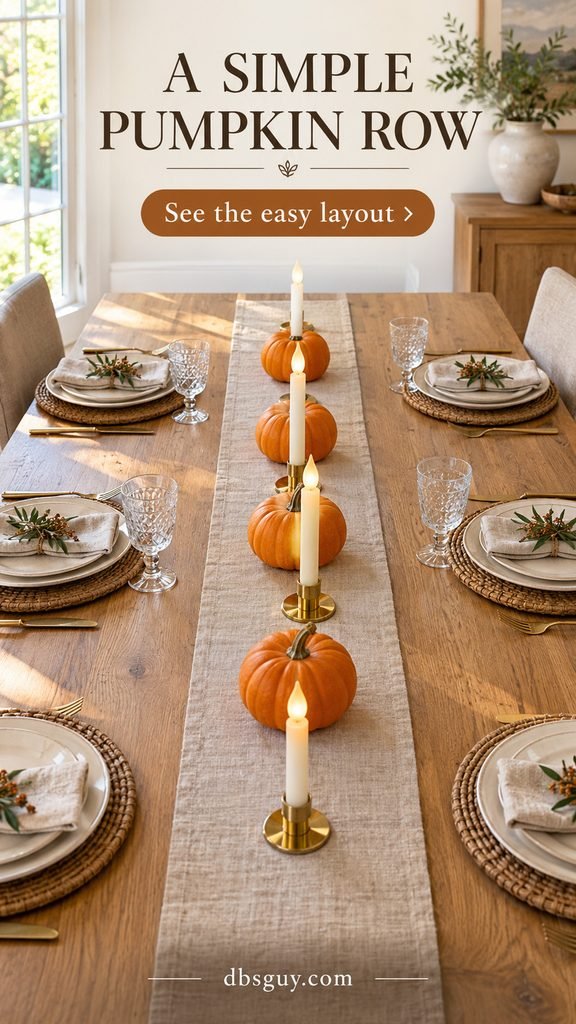
Choose pumpkins with similar footprints so one oversized specimen does not push a candle into a place setting. Start the row at the middle and work toward the ends; stop before the head settings become cramped. If you need a central platter, remove one pumpkin-and-candle pair rather than squeezing the whole row tighter.
2. Center a Round Table with a Small Woven Tray
On a round table, a circular centerpiece echoes the tabletop and gives each seat a similar view. Group three ivory mini pumpkins and two LED pillars on one low woven tray. Sage napkins add color without competing with the soft pumpkin tones.
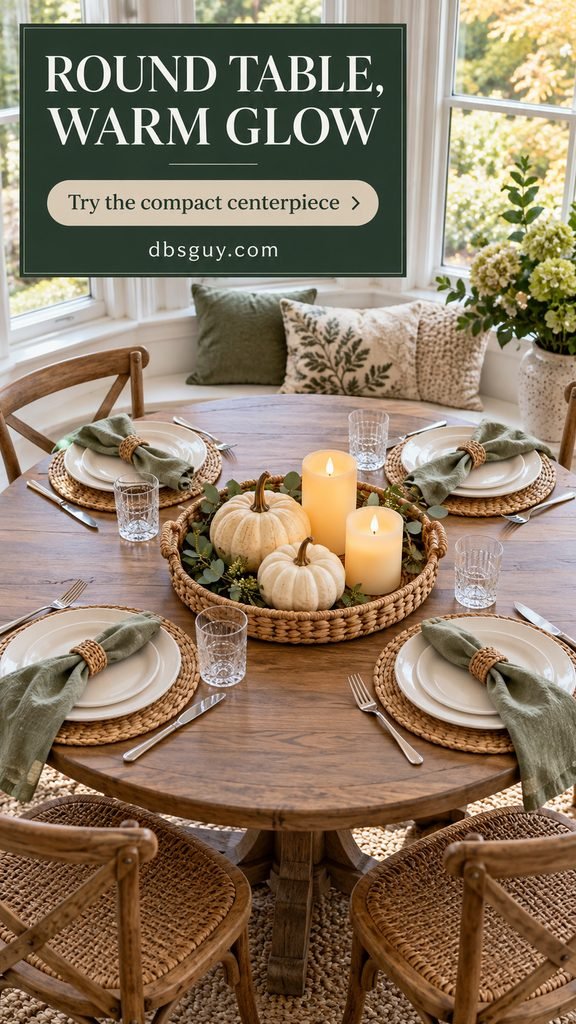
Set the tray down after the glasses are in place. If it touches their bases, use a smaller tray or fewer pumpkins. Keep the tallest pillar near the middle of the group and the pumpkins near its edge so their shapes remain visible. The tray should leave a usable ring of space around it for everyone’s dishes.
3. Fill a Shallow Dough Bowl with Pumpkins and Small Lights
An elongated wooden dough bowl brings the centerpiece together as one object. Choose a shallow bowl whose rim sits below most of the pumpkins. Nestle small orange and pale green pumpkins loosely inside, then use the gaps for LED votives in clear glass.

Skip filler if the bowl already looks full. You should see the individual stems and enough of the wood to understand the shape of the vessel. Keep the glass votives upright on the bowl’s flat interior; if they wobble against the curved sides, move them alongside the bowl. Taupe linen and plain stoneware let the worn wood carry the texture.
4. Give One Heirloom Pumpkin the Whole Centerpiece
A broad, deeply ribbed pumpkin can do the work of a much larger arrangement. Choose a squat peach or pale orange specimen and place it on a low white oval platter. One short LED pillar on either side adds light without hiding the pumpkin’s outline.
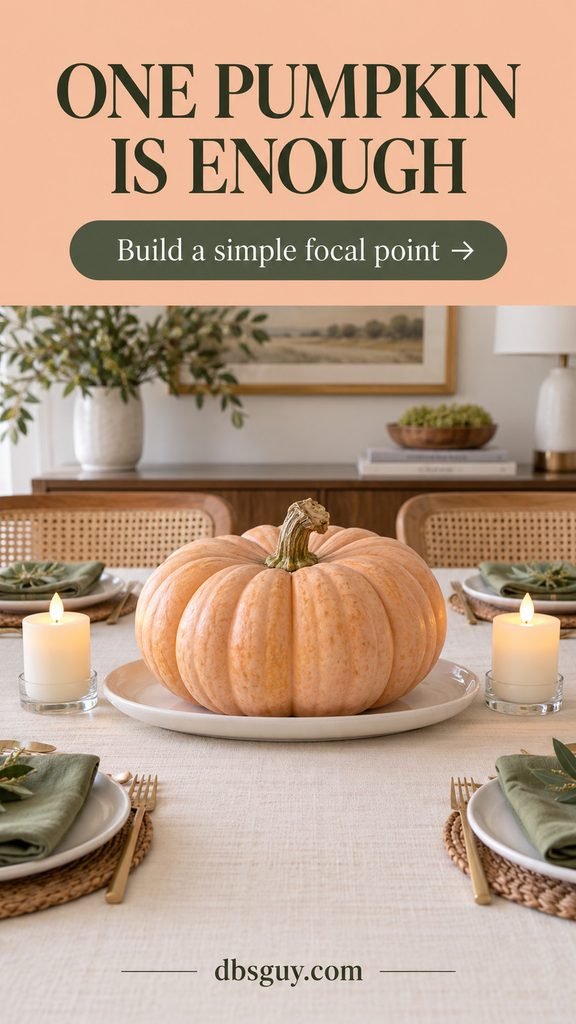
Check its height from a seated position before building the rest of the setting around it. This works best when the pumpkin has an interesting shape but stays below your view across the table. Let green napkins supply the second color. If dinner needs that platter, put the pumpkin on another washable base at the start rather than moving it during the meal.
5. Break the Centerpiece into Three Serving-Friendly Islands
For a family-style meal, reserve the serving spaces before adding decorations. On a longer table, make three small islands, each with a few mini pumpkins and one low LED candle. Leave gaps between them large enough for the actual bowls and platters you plan to use.
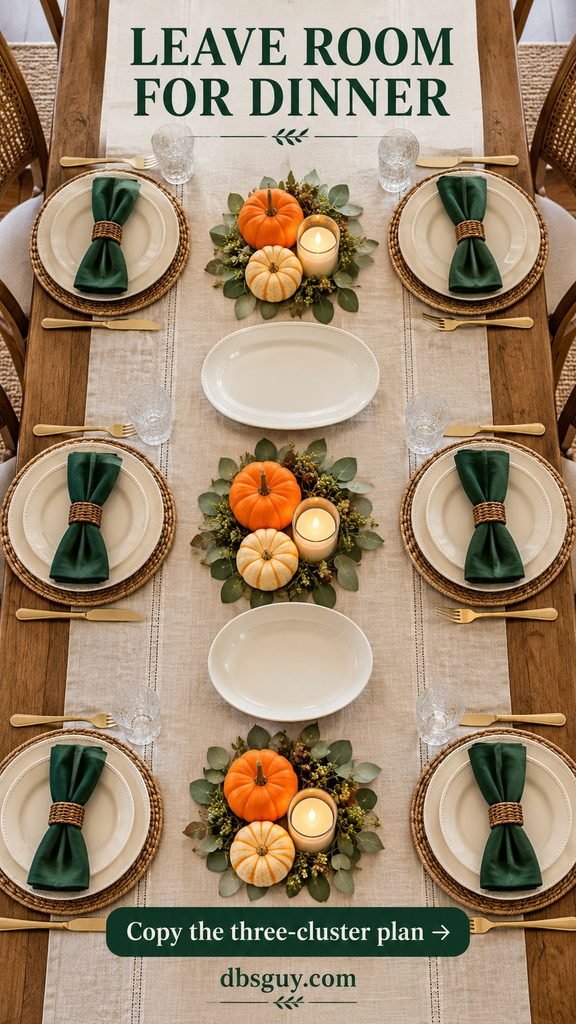
The empty dishes in the concept show those landing spots. Test the layout with your own serving pieces, including their handles. A casserole can need more room than its base suggests. This is one of the more useful Thanksgiving tablescape ideas when food will stay on the dining table: the decorative rhythm remains, but guests do not have to pass dishes over pumpkins.
6. Turn Mini Pumpkins into Place Cards
Give each guest a small natural pumpkin with a name card tied gently around the stem. Set it beside the plate, where the name can be read as someone approaches the table. A cream card and fine cotton string keep the detail simple.

This spreads the seasonal color around the table, so the center needs only a few low LED votives. Pick pumpkins that fit the available space beside each setting; do not sacrifice the water glass’s spot. If you photograph a pumpkin on a plate before guests arrive, move it beside the plate before serving. Leave room for the name without using a long trailing ribbon.
7. Pair Ivory Pumpkins with Blue-and-White China
If you own patterned blue china, let it lead. A pale blue cloth, ivory pumpkins, and silver holders for LED tapers connect the dishes to fall without adding another busy pattern. Arrange the pumpkins in a low line so the blue rims still stand out. The pictured version includes a little white floral detail; keep it below the pumpkins or omit it if your china already feels busy.

Plain napkins are useful here: dark blue gives definition, while white makes the table lighter. Keep floral fabric and patterned chargers out of the mix if they obscure the china. For another way to work existing dishes into a seasonal palette, see our 23 Olive Green Simple Fall Tablescape Ideas.
8. Let Naturally Green Pumpkins Set the Palette
Soft green pumpkins make an easy bridge between the garden and the dining room. Use three in slightly different sizes, with short olive sprigs laid loosely between them. Low gray saucers holding LED tea lights keep the light close to the pumpkins’ textured sides.
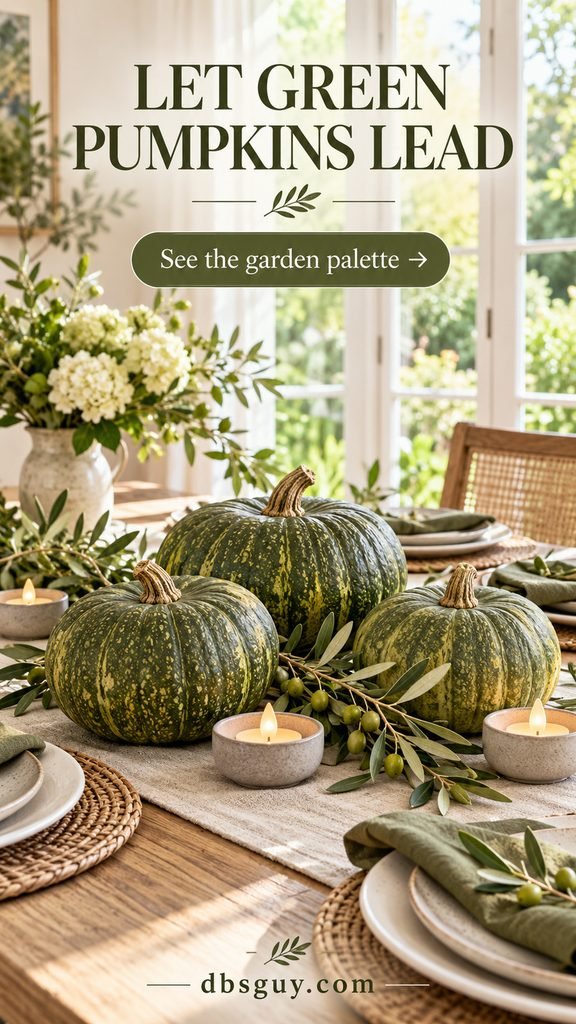
Choose the pumpkins by the color you can actually find rather than chasing a particular variety name. Cream plates and olive napkins support the green without making every piece match. Keep cut stems away from plate rims and leave small breaks in the foliage; those gaps make it easier to lift a pumpkin or remove a wilting sprig without disturbing the whole arrangement.
9. Make Orange Pumpkins Stand Out Against Navy
Navy linen gives familiar orange pumpkins a stronger outline. Keep the pumpkins low, add short ivory LED pillars in copper holders, and use white plates to leave a bright edge around the food. Amber water glasses pick up the warm tones without adding more orange decor.

Try the setting under the room lighting you will use for dinner. A dark cloth needs enough overhead or side light for guests to see their plates; the LED glow is an accent. If you like a deeper evening palette, our 23 Moody Black Simple Fall Tablescape Ideas offer other ways to balance light dishes with dark linen.
10. Layer Pale Pumpkins into Terracotta Bowls
For a warm table without a mass of orange, use pale peach and ivory pumpkins in two shallow terracotta bowls. The clay supplies the stronger color. Place LED tapers in terracotta holders between the bowls, then repeat a softer peach tone in the napkins.

Choose bowls low enough to reveal the pumpkin bodies instead of just their stems. Two small pumpkins per bowl are a useful starting point, but leave room around them rather than wedging them in. Set the bowls directly on a protected, flat tabletop and keep the taper holders clear of their rims. This suits a relaxed dinner with plain white dishes.
11. Build an Orchard Centerpiece with Whole Pears
Two small orange pumpkins and a few whole pears make a low harvest arrangement on a cream platter. Choose pears with a mix of green and brown skin so the fruit softens the orange. Set amber LED votives alongside the platter rather than crowding them among the produce.
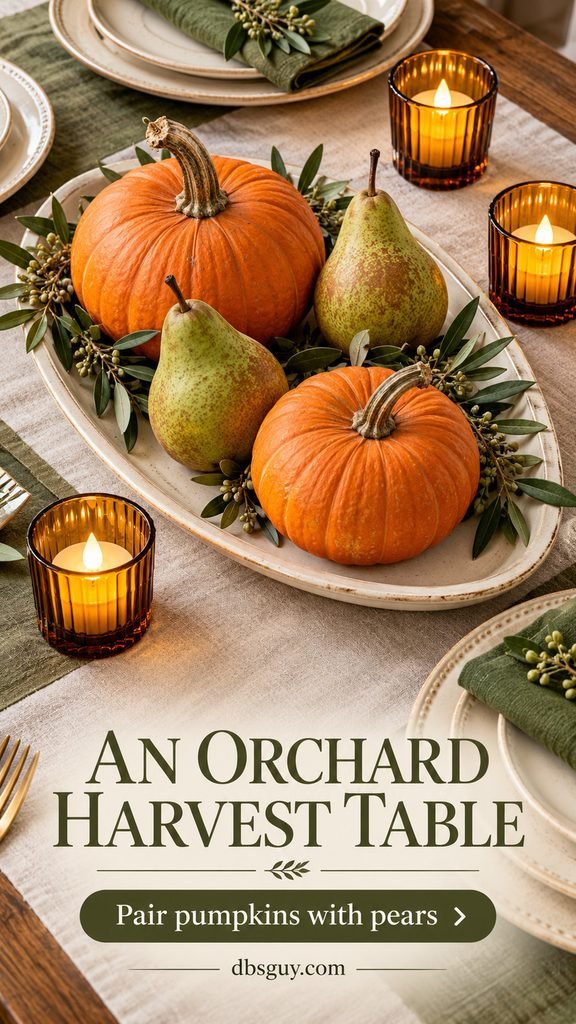
Use firm, clean fruit and assemble the display close to the meal. Leave the pears whole so there are no exposed cut surfaces on the table. Afterward, separate the fruit from the pumpkins and check its condition before deciding how to use it. With oatmeal linen and green napkins, this feels seasonal without needing flowers or a garland.
12. Add One Low Bowl of Burgundy Dahlias
Give the flowers one defined spot: a low bowl between two cream pumpkins. Burgundy dahlias add depth against the pale rinds, while a pair of brass holders with LED tapers brings in a slim vertical line. Blush napkins soften the transition to white plates.

Use a watertight bowl and trim the stems so the flowers stay in a compact mound. Check the arrangement from both sides; broad blooms can hide a pumpkin even when the vase itself is small. Keep the bowl separate from the pumpkins so you can refresh the water. For more wine-colored combinations, browse 17 Burgundy & Plum Simple Fall Tablescape Ideas.
13. Use a Small Wheat Pitcher as the Upright Accent
A few short wheat stalks in a squat stoneware pitcher add a different texture beside mini orange pumpkins. Put two LED pillars in amber glass to one side and leave the rest of the wood bare. The upright stems give the group height without requiring more pumpkins.
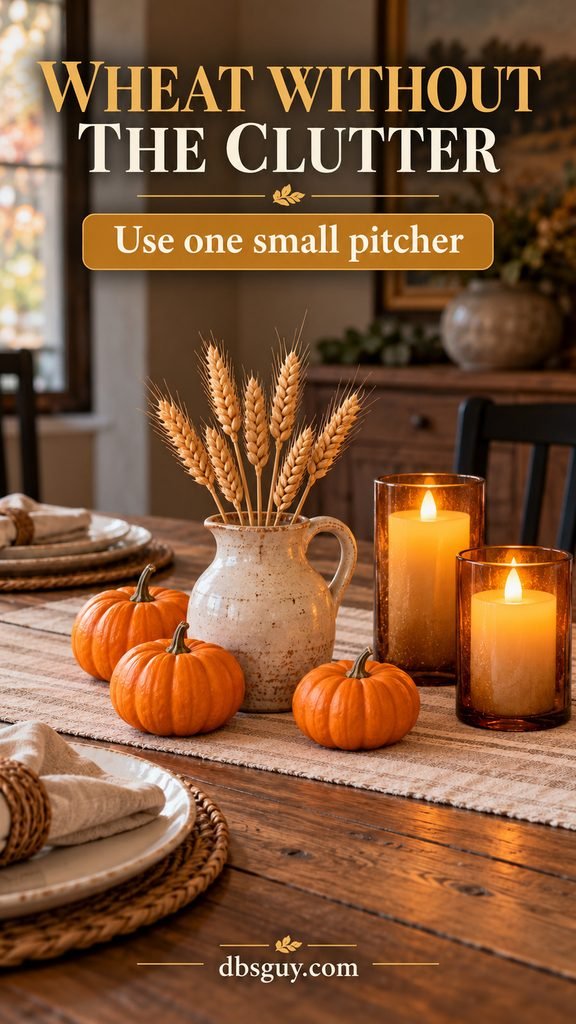
Cut the wheat for the pitcher you have, rather than buying a large bunch and trying to fit it all. Remove loose pieces before setting the table and keep stalks inside the pitcher’s footprint. Use LED candles throughout this arrangement, including any lights added later; dried wheat belongs away from an open flame.
14. Make a Woodland Group Around One Low Lantern
Use one low black lantern as the anchor, then group small orange and green pumpkins near its base. A few clean, dry pinecones add woodland texture against a brown linen runner. The lantern’s straight edges keep the natural shapes from looking like a loose pile.

Choose the lantern for its height as well as its width: a tall roof can block conversation. Put a battery-operated pillar inside and keep the surrounding pinecones sparse enough to lift individually. Skip loose moss and bark fragments on a dining surface. For a related wood-and-linen approach, see 15 Modern Farmhouse Fall Tablescape Ideas.
15. Bring Fall to a Coastal Table with Ivory Pumpkins
Keep the pale blue napkins and white dishes you already use, then add ivory pumpkins on a low seagrass tray. One smooth piece of driftwood gives the arrangement a weathered texture. Sky-blue LED pillars in clear holders repeat the linen color.
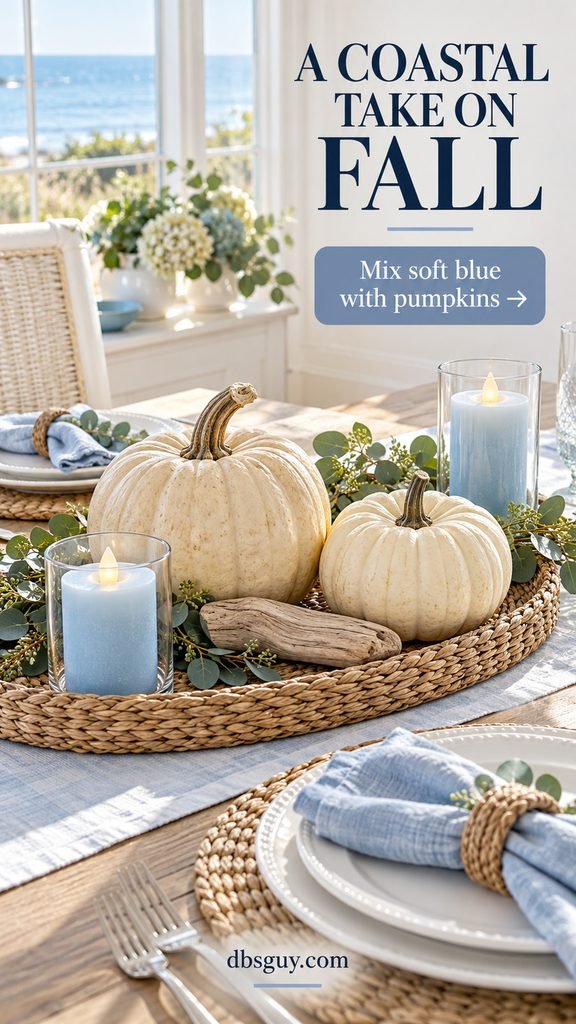
Choose a small, clean driftwood piece that rests flat and has no sharp ends projecting toward a setting. Leave space around it so the tray still reads as a pumpkin centerpiece. This is a good way to make a light room feel seasonal without introducing rust-colored fabric or covering the table with leaves. The candle color is optional; ivory works with the same palette.
16. Set a Gingham Pumpkin Table for Brunch
Small tan-and-cream checks make a casual base for a fall breakfast. Add two mini orange pumpkins, two low LED votives, white mugs, and rust napkins. The pumpkins give the pattern a seasonal purpose without needing formal dinnerware.

Keep a clear landing spot for the coffee pot and its heat-safe base. Mugs, breakfast plates, and a shared dish can fill a small table quickly, so place them before the pumpkins. Low lights are useful here because taller tapers can get in the way when someone passes a jug. Daylight will do most of the work; the candle glow is a small finishing detail.
17. Use Lanterns for a Covered-Porch Supper
For a porch meal, group natural orange and green pumpkins along a flat woven runner and use two squat lanterns for the light. Weighty mugs and plain white plates keep the setting relaxed. At dusk, the lanterns define the table without requiring tall decorations.
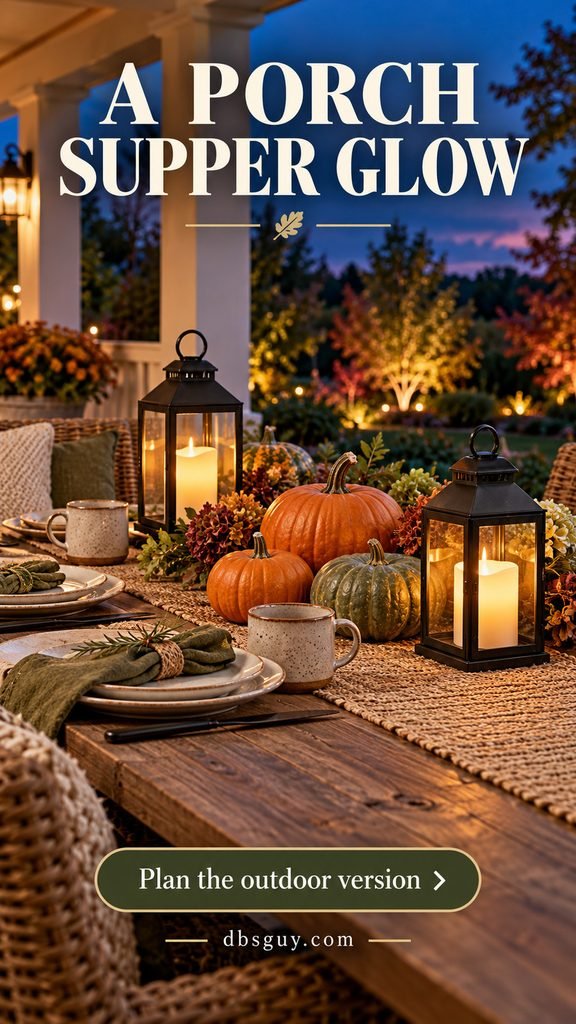
Use battery-operated candles rated by their manufacturer for the conditions they will encounter. A covered porch can still be damp, and an indoor wax-bodied LED candle may not suit a hot afternoon. Bring the lights and linens inside after the meal unless their care instructions allow otherwise. Keep the runner’s ends from lifting in a breeze and provide enough room lighting to serve food comfortably.
18. Scale the Centerpiece Down for a Table for Two
A tiny bistro table only needs one mini pumpkin and two amber LED votives. Set them in the gap between two white plates over a flat sage cloth. The repeated glass color makes the small group look considered without adding more objects.
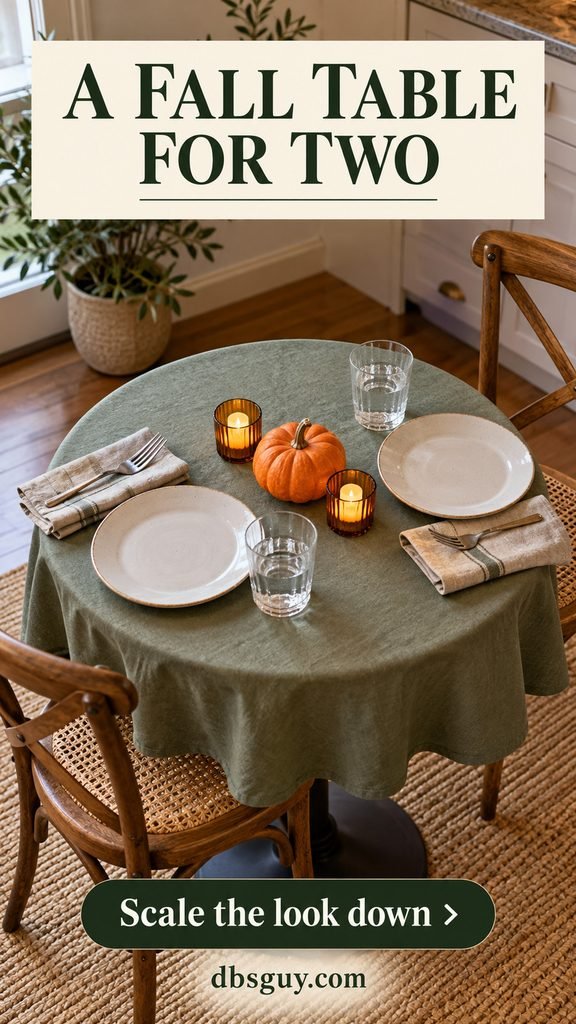
Put both full place settings out before selecting the pumpkin. If a large plate leaves no room, choose a smaller pumpkin rather than pushing a glass toward the edge. Keep shared food on a nearby counter or side table when the center cannot hold it. The arrangement still gives you candlelight and a clear fall detail, even when there is no room for a runner.
19. Shape an Off-Center Crescent on an Oval Table
An oval table does not need a centerpiece filling its entire length. Arrange mini pumpkins, short olive sprigs, and low LED tea lights in a loose crescent on one half of the center. Leave the other half open for a serving platter.
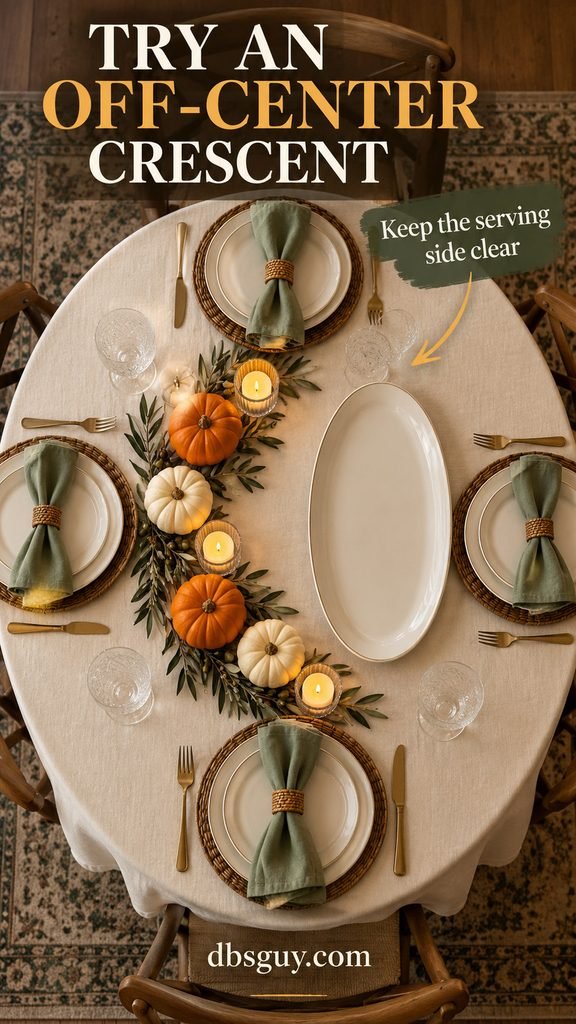
Build the curve from a seated view as well as from above. Its ends should turn inward rather than pointing into someone’s plate. Keep the sprigs short enough to move with the pumpkin group when you clear the table. If the meal requires more serving space, remove the outermost pumpkin first; extending the crescent around the platter would make it harder to lift.
20. Skip the Runner and Show the Pumpkin Shapes
On a walnut table, try three natural pumpkins with different profiles: one squat green, one round orange, and one small ivory. Add two LED tapers in silver holders with broad bases. With no runner or foliage, the pumpkin shapes and wood grain become the main details.

Give each object breathing room rather than making a tight pyramid. From one chair, all three pumpkin bodies should be visible. Check the undersides and use discreet protective saucers where needed; skipping fabric does not mean placing damp produce directly on a finished surface. Plain white plates and undyed napkins are enough to complete the setting.
21. Build an All-White Table Through Texture
Creamy white pumpkins, white linen, and white dishes can share a palette without looking identical. Use the pumpkins’ matte ribbing against clear ribbed glass LED votives. A scalloped plate edge or a visible linen weave adds another quiet layer.
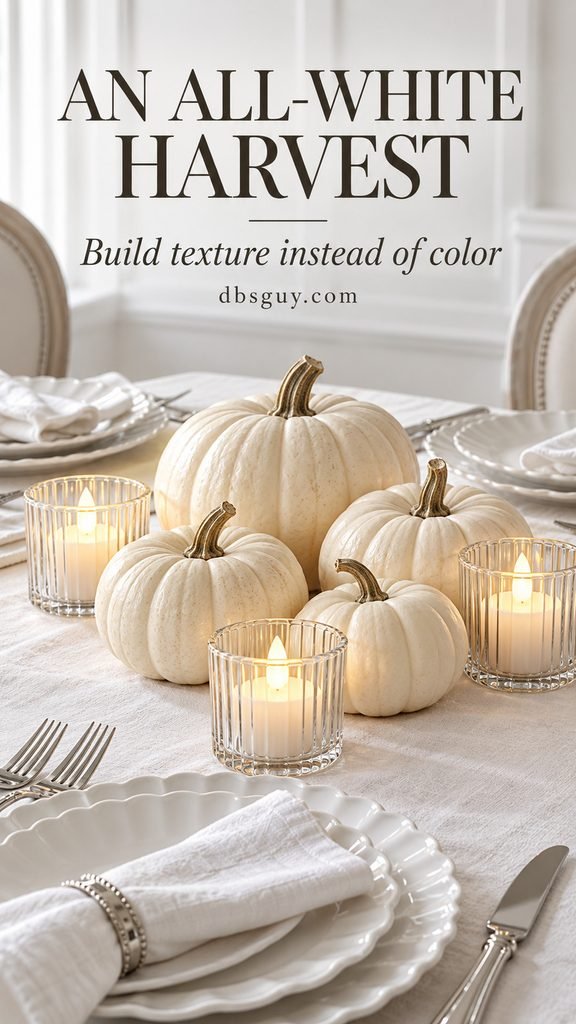
Keep the pumpkin group low and let warm light separate it from the cloth. Naturally white pumpkins often vary in tone; choose a mix that looks comfortable with your dishes instead of trying to match every shade. Silver flatware gives the place settings a clean outline. If you want a broader neutral direction, our 15 Neutral White Simple Fall Tablescape Ideas offer more variations.
22. Frame a Buffet Instead of Filling Its Center
If the dining table is full, move the pumpkin display to the buffet. Put small pumpkin groups at the front corners and LED lanterns at the back ends. Leave the middle for the serving dishes, with the plates where guests begin the line.

Test the reach to the farthest dish before adding food. A lantern should not sit between a guest and a hot handle, and a pumpkin should not narrow the space needed to set down a plate. The concept uses empty dishes to make the serving area visible. At home, build around your menu and use proper trivets beneath hot vessels; a linen runner is decoration, not heat protection.
23. Make a Natural Pumpkin Lantern with an LED Tea Light
For a centerpiece that glows from within, hollow one real orange pumpkin and cut a few simple round openings. Put a battery-operated tea light inside, then set the pumpkin on a washable ceramic tray with its lid alongside it. Two intact ivory minis finish the group.

An adult should do the cutting on a stable work surface with suitable tools, following their safety instructions. Make the access opening large enough to remove the light easily, and do not force a tool through tough rind. Assemble the carved version close to the gathering and check it for leaks or softening. Use only an LED light inside; keep a lit candle out of this arrangement.
A Few Checks Before Guests Sit Down
Carry the empty serving dishes through the room and set them in their planned spots. Move a chair, lift a water glass, and pass a platter across the table. Those small checks reveal crowding that an overhead photo can hide.
Switch on the LED candles before dinner to check their batteries and color. Keep the room light bright enough to see the food, and have a nearby landing spot for any centerpiece you decide to move. For natural pumpkin care, keep intact pumpkins dry and in a cool place between displays, and inspect their undersides before putting them back on furniture.
Questions About Natural Pumpkin Tablescapes
How many pumpkins do I need for a fall table?
For a first attempt, try three to five small pumpkins on a table set for four to six, then adjust after the serving dishes are in place. A table for two may need only one mini. Pumpkin diameter and the way you serve dinner matter more than a fixed count.
Can I use real candles with these pumpkin arrangements?
The close arrangements shown here use LED candles. Burning candles need stable holders, clear space from anything combustible, and supervision. If the required clearance does not fit around linen, foliage, paper, or other decorations, keep the battery-operated version rather than trying to make a glass holder solve the spacing problem.
Do natural pumpkins have to be orange?
No. Real pumpkins come in naturally pale, green, and peach-toned colors as well as orange. Shop by the rind color and shape you can find locally; the ideas here do not depend on a specific cultivar being available. Leave the rinds unpainted if you want the natural finish shown.
How long will real pumpkins last on the table?
There is no reliable display-life promise for every pumpkin. Variety, condition, temperature, and whether it has been cut all matter. Start with sound pumpkins, keep them dry, and check for soft spots, mold, or leakage. Treat the carved lantern as a short-term display and remove any pumpkin that begins to deteriorate.
How do I keep a pumpkin centerpiece from crowding Thanksgiving dinner?
Reserve spaces for the empty serving pieces first. Use separate little clusters, an off-center arrangement, or a compact tray that can move to a sideboard. If you serve from a buffet, the dining table can hold a longer display; if food stays on the table, make the centerpiece smaller.
Do I need to buy new fall decorations for 2026?
Start with the dishes, trays, lanterns, and napkins you already own. For this look, natural pumpkins provide the seasonal shape, and LED candles provide the light. Choose an arrangement that fits those pieces rather than buying a complete matching collection for the year.