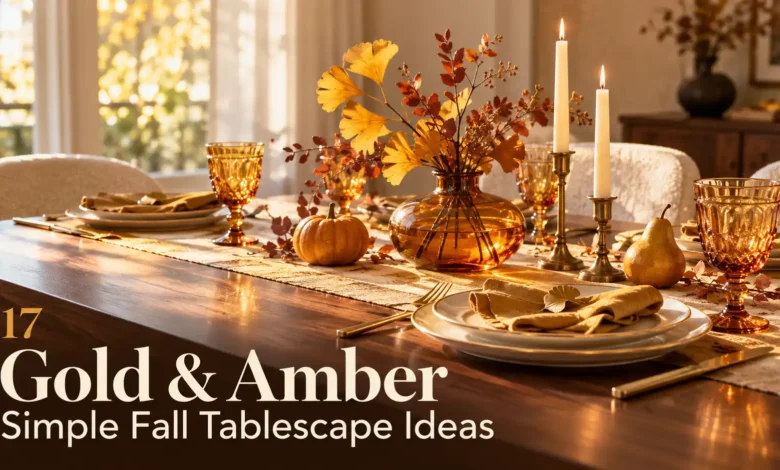
Amber glass gives a fall table its honey-colored glow; gold adds a little shine. Put those two accents against white dishes, pale linen, or warm wood, and you have a useful starting point for dinner without replacing everything in your cabinet.
These simple fall tablescapes take that pairing in 17 different directions, from a few colored glasses to a centerpiece you can move when the Thanksgiving food arrives. Choose the detail you want to notice first, then let the other pieces support it. You do not need a gold runner, gold plates, gold flatware, and gold decorations all at once.
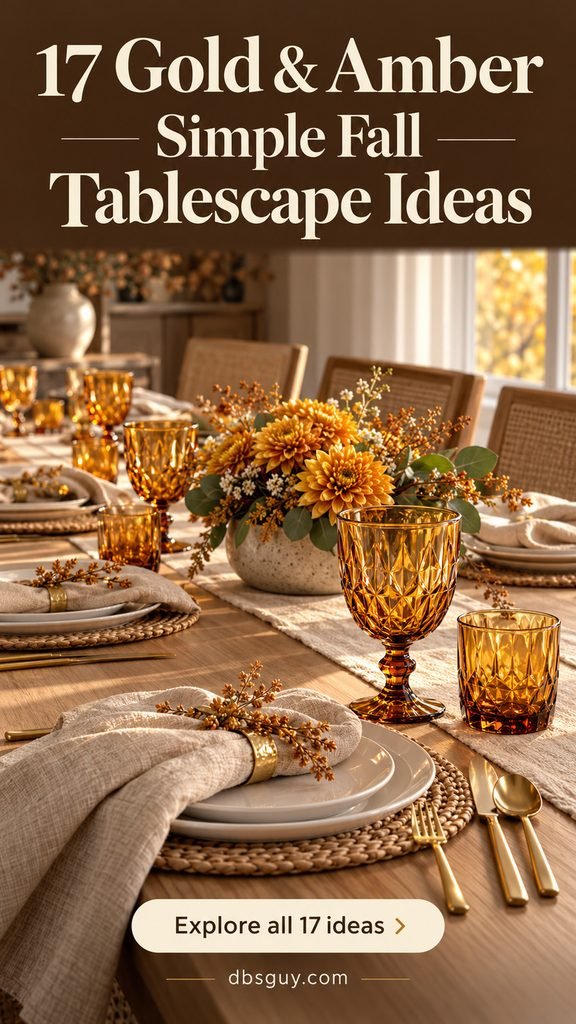
The images in this guide are AI-generated styling concepts. They illustrate the ideas rather than document completed or tested table setups.
Choose One Starting Point
- For the smallest change: make your drinking glasses the accent in idea 1.
- For a project at each seat: try the paper leaves in idea 9 or velvet ribbon in idea 10.
- For a compact table: use the single glass pumpkin in idea 5 or the two-person brunch in idea 15.
- For Thanksgiving with serving dishes on the table: keep the center open with idea 11, or use the removable tray in idea 17.
Choose amber for a translucent brown-orange color and gold for either a metallic finish or a mustard-colored textile. They do different jobs. If your amber glasses are dark, give them a light background. If your gold fabric has a sheen, keep the dishes plain so the surface does not become a wall of reflections. Check the combination under the light you will actually use for the meal.
1. Let Amber Glasses Carry an Otherwise White Table
Keep the white cloth, white napkins, and everyday ivory plates. Add an amber water glass at each seat and a restrained gold detail, such as flatware or a plain napkin ring. The warm glass becomes easy to notice because the rest of the setting is quiet.
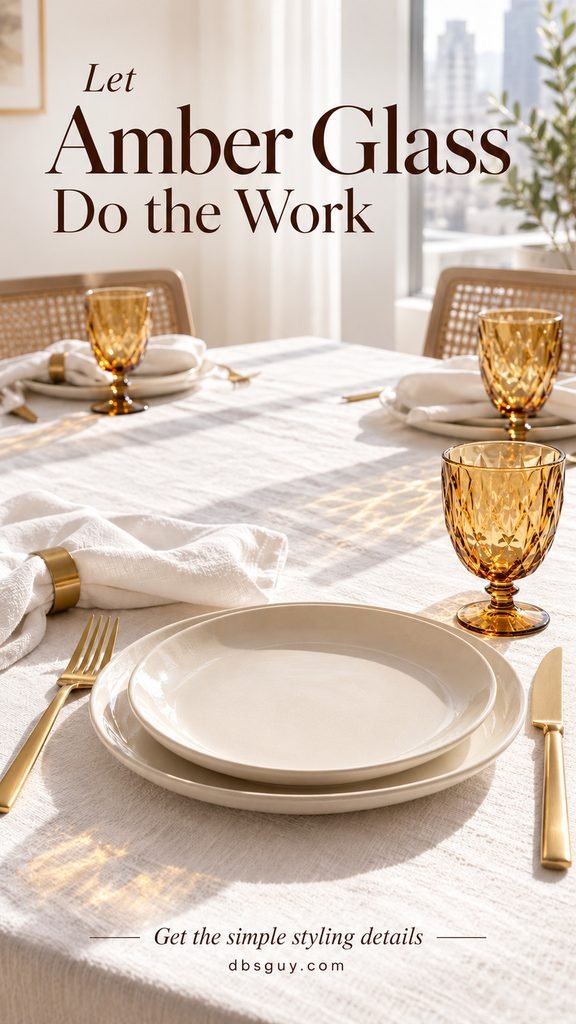
You can leave the center empty, especially when the meal needs several serving bowls. Put each glass above and to the right of its plate, where it can be reached without moving the napkin. If you already own clear glasses, try amber at a two-person dinner before buying enough for a larger gathering.
2. Use a Soft Gold Runner as the Main Decorative Layer
A woven champagne-gold runner gives a pale table a long band of warmth. Pair it with oatmeal stoneware, ivory napkins, and plain amber tumblers. Look for visible woven texture and a soft metallic sheen if you want a dressier finish; skip loose glitter near the dining surface.
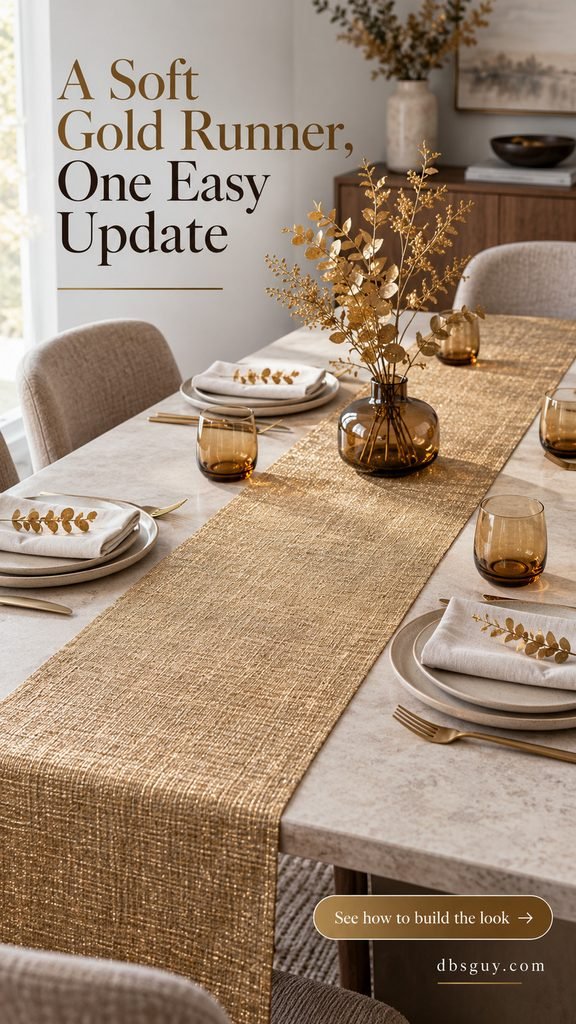
Lay the runner flat before setting out dishes. A short amber vase with a few fine golden stems is enough to finish it. View those stems from a chair and trim any that interrupt the person opposite you. On a narrow table, fold the runner lengthwise rather than letting it creep underneath every plate.
3. Spread Golden Blooms Across Three Amber Bottles
Three short amber bottles turn a few flowers into a visible line of color. Use one golden chrysanthemum bloom in each, with the flower heads sitting close enough to the bottle mouths to keep the arrangement compact. Flax napkins and cream dishes let the glass and petals stand out.
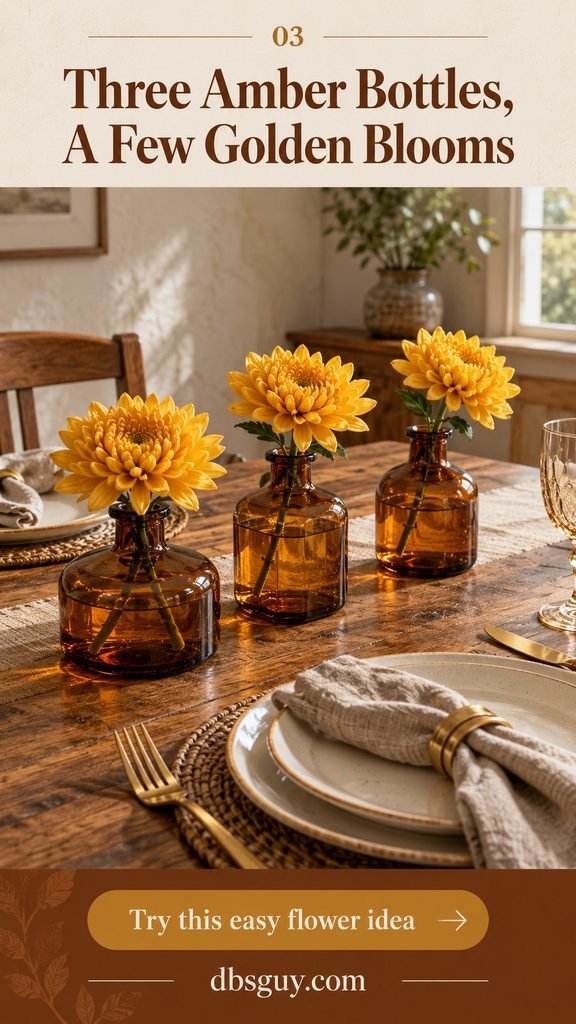
Wash the bottles, remove their labels, and check the rims before adding water. Strip off leaves that would sit below the waterline, then cut each stem to suit its bottle. Leave useful gaps for a bread basket or small serving dish rather than placing the bottles at rigid intervals. Broad-bottomed bottles are easier to accommodate than tall, narrow ones that wobble when the table is bumped.
4. Make a Low Bowl of Golden Pears the Centerpiece
Yellow-gold pears bring a softer harvest color than bright orange pumpkins. Arrange a few whole pears in a low cream bowl, then repeat their warmth with amber glasses, butterscotch napkins, and a little brushed gold at the place settings. An oval bowl follows a rectangular table without requiring a long arrangement.
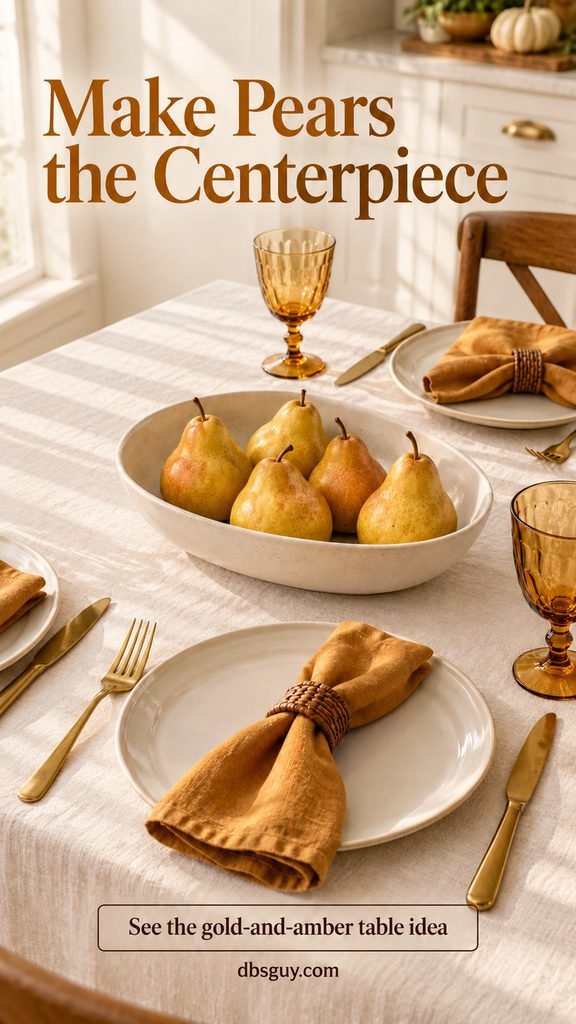
Build a shallow group with the fruit resting securely inside the rim. Avoid stacking pears into a centerpiece that becomes awkward to move. If you plan to eat the fruit later, use a clean food-safe bowl and keep it free of paint, glitter, and floral products. The bowl can move to the kitchen counter when the serving platter needs its spot.
5. Give a Round Table One Ribbed Amber Glass Pumpkin
Let one decorative amber glass pumpkin mark the season. Center it on a small round wood table, with ivory plates and sand-colored napkins around it. A brass-colored stem or small gold napkin rings add the metallic note without competing with the pumpkin’s ribbed surface.
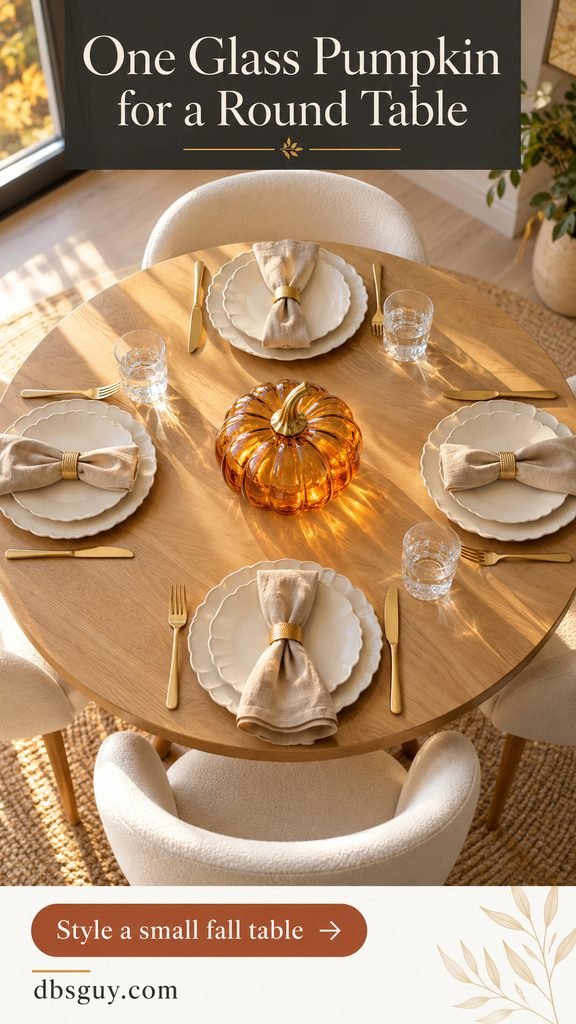
Choose the size after placing the dishes and glasses, not before. The pumpkin should fit inside the remaining space without forcing anyone’s plate toward the edge. Skip a tray if it makes the centerpiece too wide. When the table needs to hold a large shared dish, move the pumpkin to a nearby shelf; the amber-and-gold palette can remain in the settings.
6. Pair Brown Gingham with Amber Tumblers
Brown-and-cream gingham makes gold and amber feel relaxed enough for a kitchen supper. Use the pattern on the tablecloth, then keep the plates plain. Caramel napkins and amber tumblers pick up the darker checks, while simple gold flatware adds a small polished detail.
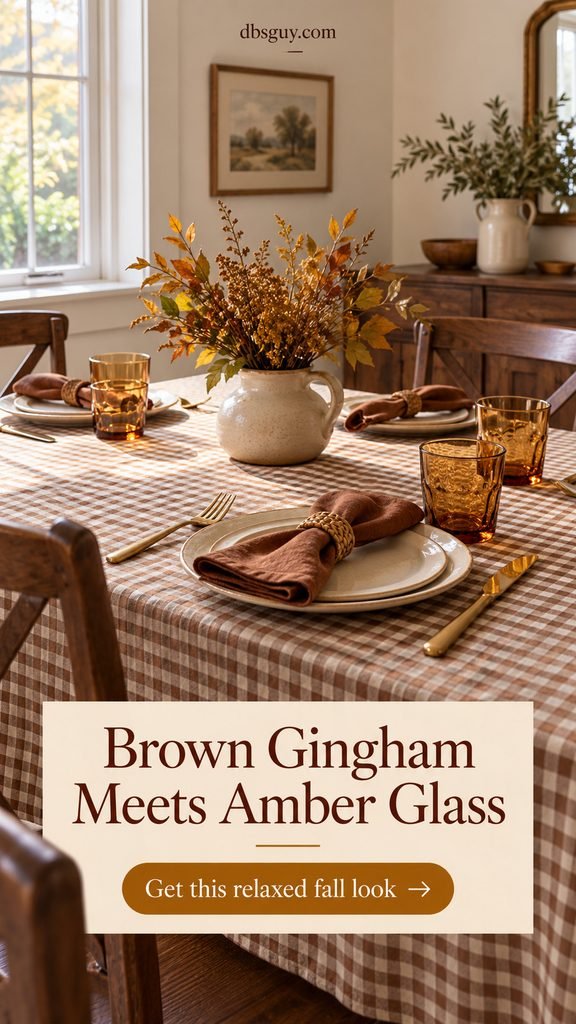
A short cream jug with a few ochre stems gives the eye somewhere to settle. Keep any other patterns out of the place settings so the checks remain clear. Before buying a cloth, check its measurements against your table and chairs; a generous drop can look lovely but should not bunch in someone’s lap. Plain brown placemats can give you a smaller version of the same palette.
7. Put Gold and Amber Against Charcoal Linen
Charcoal gives amber glass a deeper evening look. Keep ivory dinner plates between the dark cloth and the food, then add gold utensils and a small amber bowl-vase of golden marigolds. The pale dishes are useful here: without them, the dark textile and brown glass can merge into one heavy surface.
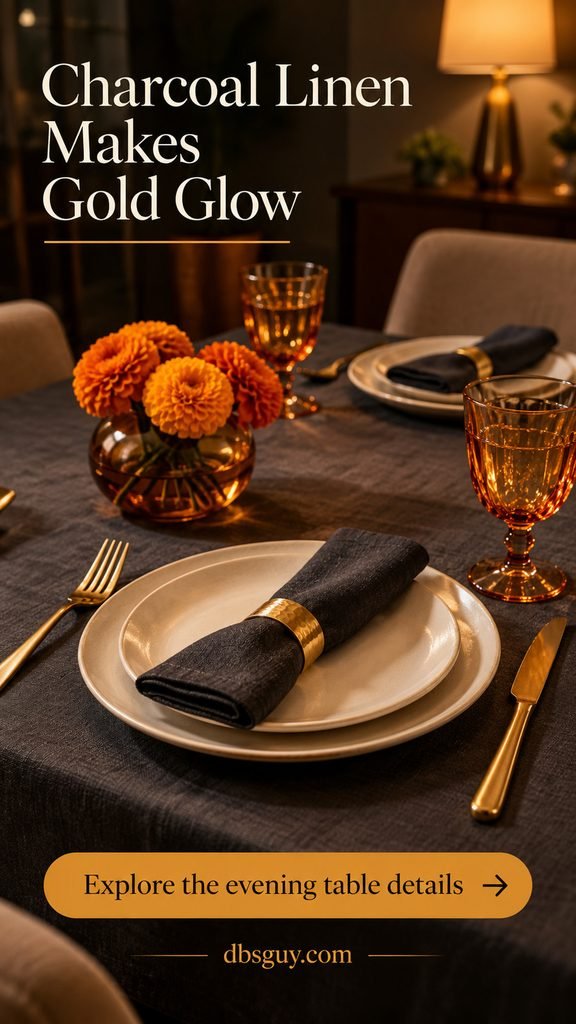
Set this table with the room lights at dinner level before deciding whether to add anything else. If the amber disappears, increase the surrounding light rather than adding more reflective decorations. A compact flower group is enough. For more fall tablescape ideas in a deeper palette, browse our burgundy and plum tablescape guide.
8. Leave Walnut Bare and Add Caramel Linen
If your table has beautiful walnut grain, let it become part of the fall palette. Place cream dishes directly on the wood, fold caramel napkins neatly, and add amber tumblers with brass-colored flatware. This works especially well with rounded wood chairs and simple, undecorated plates.
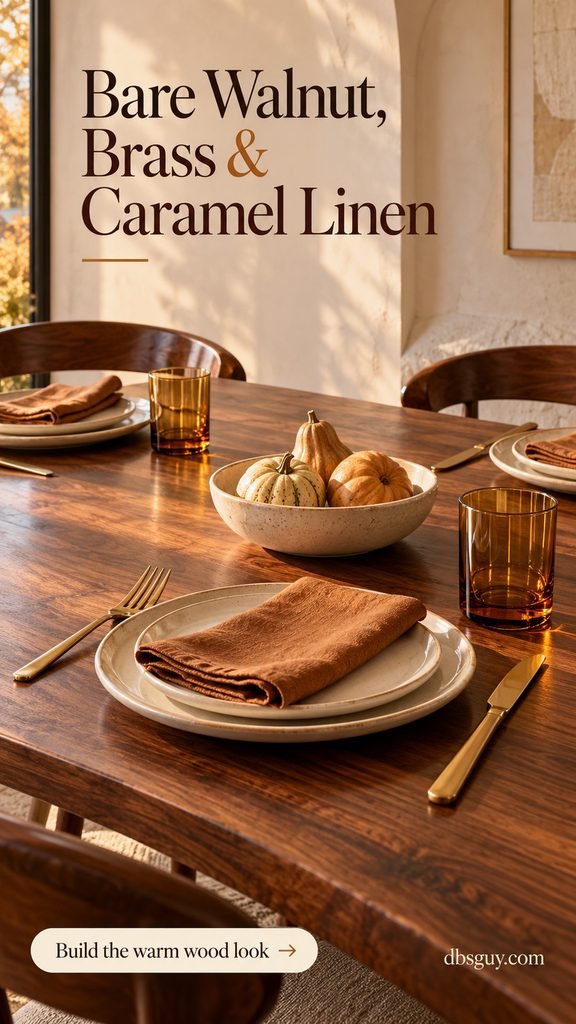
A small cream bowl of natural tan gourds introduces an autumn shape without hiding the surface. Keep the bowl low and protect the tabletop underneath it. Use your usual heat protection for hot dishes and a finish-appropriate barrier beneath anything damp; a bare-table look still needs practical surface care. If your dinnerware has rough bases, add thin neutral placemats and leave plenty of wood visible between them.
9. Turn Gold Paper Oak Leaves into Place Cards
Let each place setting provide the decoration. Use an embossed gold paper craft leaf, or cut a simple oak-leaf shape from gold cardstock, write the guest’s name in a dark marker, and rest it on a folded ivory napkin. Amber glasses connect the little paper details across the table, leaving the center free.
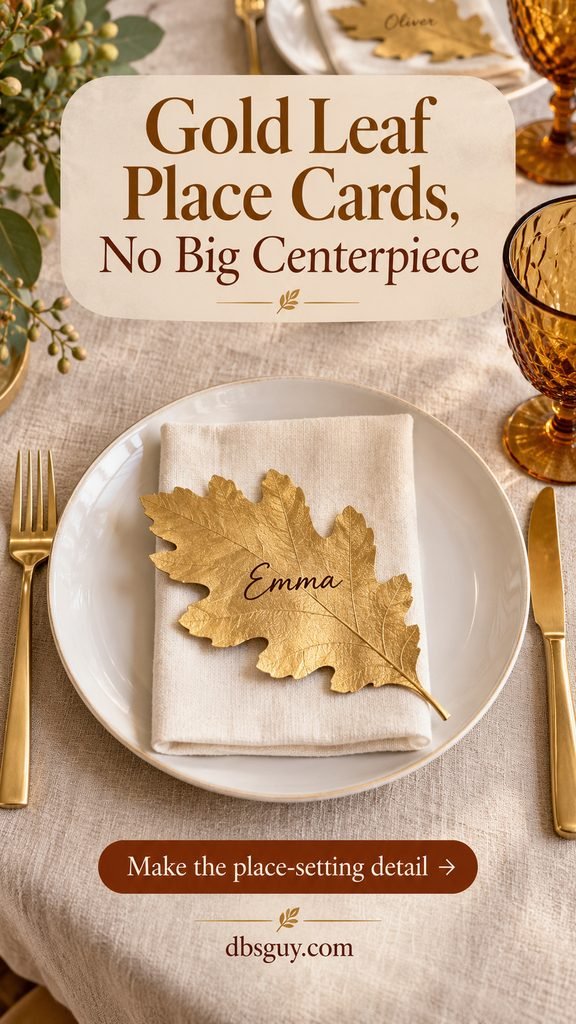
Make one test leaf before cutting the whole set. Choose a shape broad enough for the longest name, and let the marker dry fully so it does not transfer to the napkin. If metallic cardstock resists the ink, use a compatible pen or add a small cream name label. Lift the card away before eating; the paper is a decorative place marker rather than a food-contact liner.
10. Tie Ivory Napkins with Amber Velvet Ribbon
Amber velvet adds color through texture rather than another centerpiece. Fold an ivory napkin into a loose rectangle, wrap a narrow ribbon around the middle, and tie a small bow. A fine gold rim on the plate or a single gold utensil detail finishes the pairing.
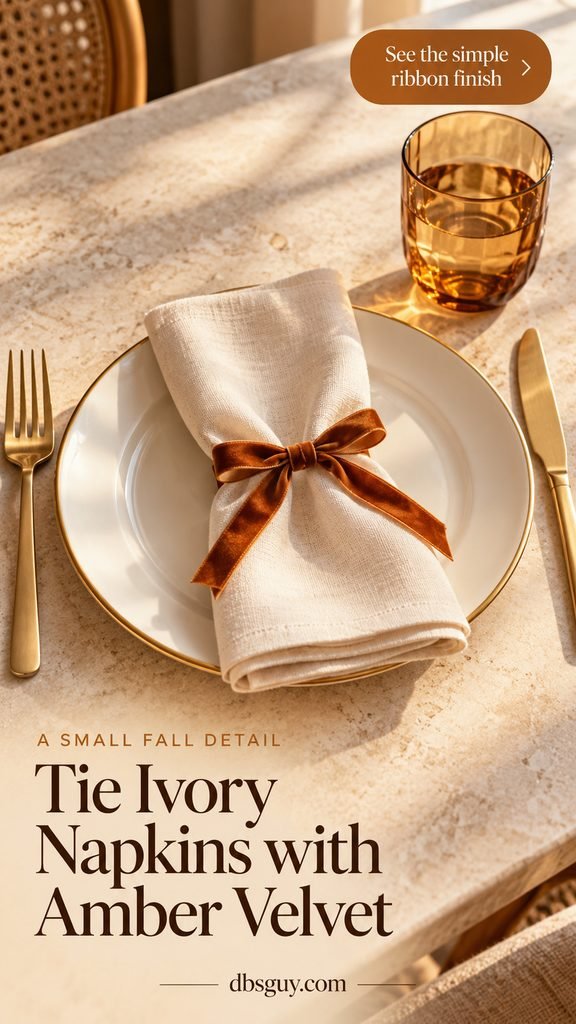
Cut one trial length, tie it around your actual folded napkin, and use that piece as the guide for the rest. Keep the tails on the plate so guests can pick up the napkin easily. Leave enough slack to slide the ribbon off without a struggle. Choose clean ribbon that does not shed, and keep the meal itself on the plate rather than using the bow as a wrapper for food.
11. Move a Golden Wheat Arrangement to an Unused End
A wheat arrangement does not have to sit between the guests. Put a compact fan of golden dried wheat in a heavy pottery vase at an unused short end of a rectangular table. Amber glasses and gold utensils carry the palette through the occupied seats while the middle stays ready for dinner.
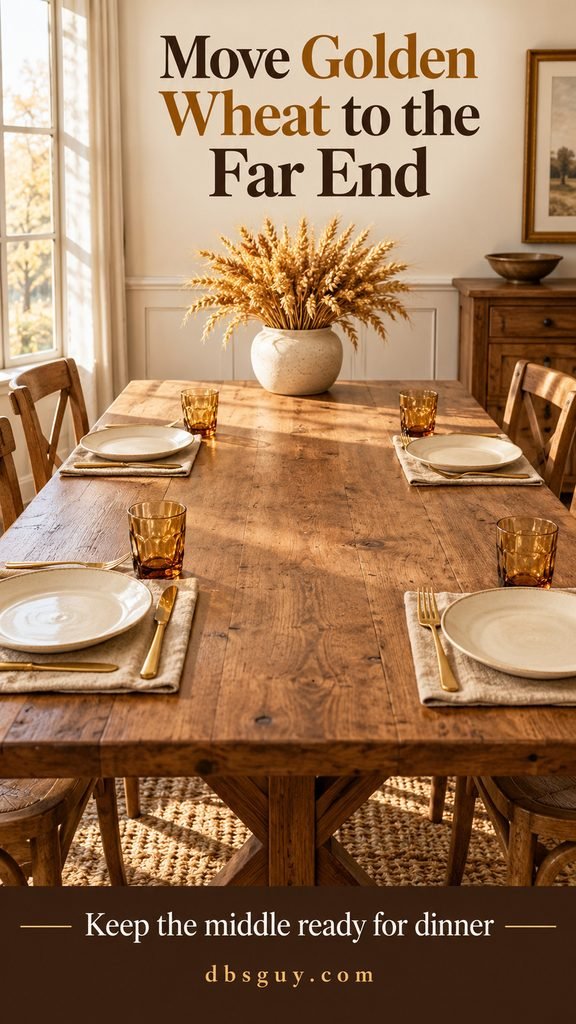
This layout works only when that end is not someone’s place setting. Place the vase beyond the eating area, keep loose stems from reaching into dishes, and move it to a sideboard if all seats are needed. Dried wheat provides the harvest shape on its own; it does not need candles tucked around it. For a larger gathering, plan the serving area first using our Friendsgiving ideas.
12. Arrange Golden Mums in a Low Bowl
For a flower-focused table, use one low bowl of golden chrysanthemums. Keep the flower heads close to the rim so the arrangement spreads outward rather than upward. Honey napkins, amber tumblers, and plain ivory plates repeat the color without adding more flowers.
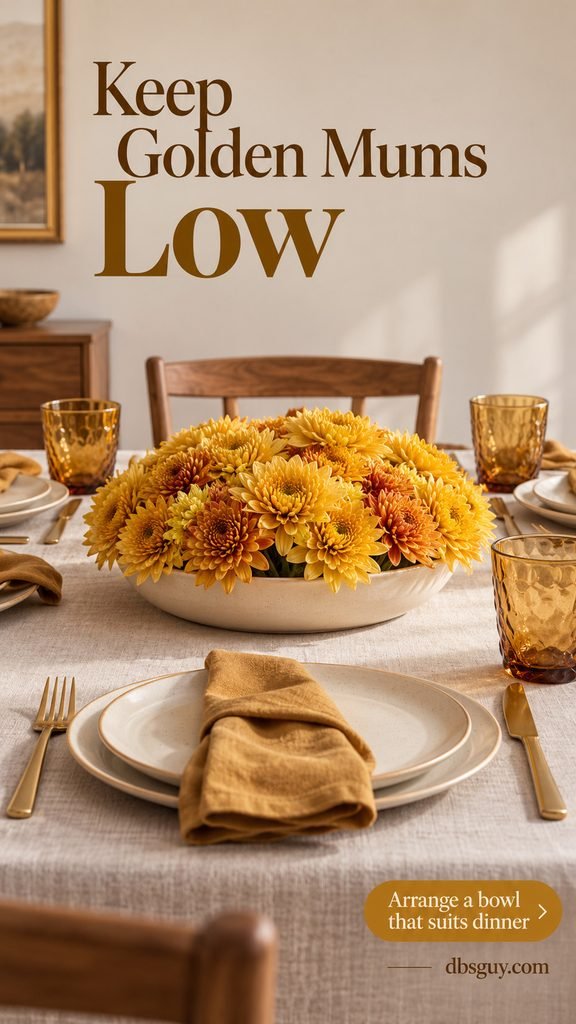
Choose the bowl before cutting stems, then add water and build a compact group with overlapping blooms. A narrower inner vase can help support the stems inside a wider decorative bowl. Check the water level before the meal and sit opposite the arrangement to judge its height. Among fall centerpiece ideas, this suits a table that has room for one central bowl; if yours needs several serving dishes, the separate bottles in idea 3 are easier to reposition.
13. Lay a Flat Runner of Golden Leaves
A narrow line of artificial gold leaf sprigs gives a long table an autumn outline without a vase. Lay the sprigs flat on an ivory cloth, overlap a few stems, and leave small gaps so the arrangement does not turn into a dense garland. Amber glasses provide the softer color alongside the metallic leaves.
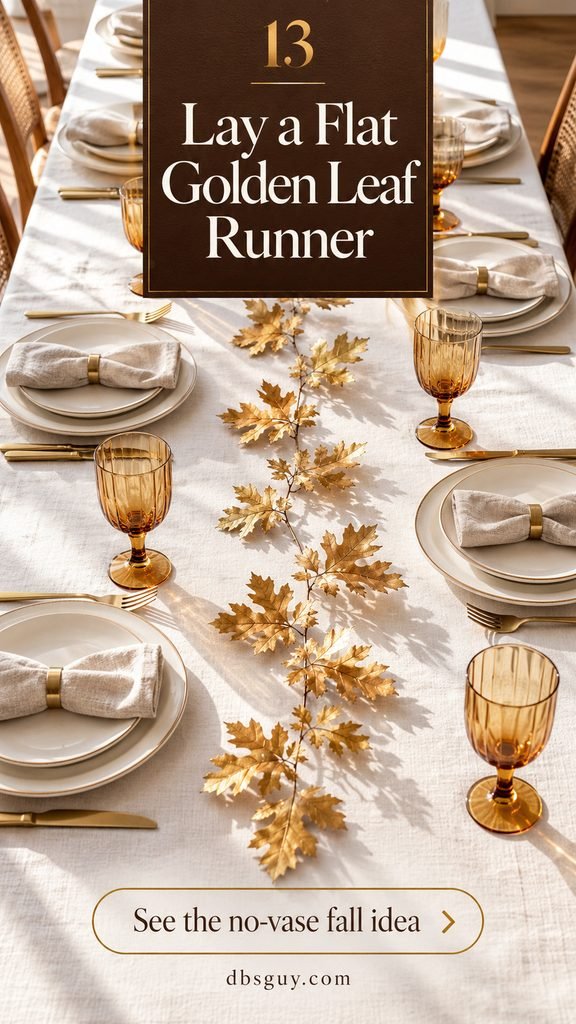
Keep leaf tips inside the center strip, away from plates and the spots reserved for serving bowls. Use finished, non-shedding sprigs; loose glitter will make this harder to manage. If the leaves snag the linen or shift every time someone reaches across, shorten the line to a compact group. Choose battery lighting elsewhere in the room rather than introducing open flames beside the artificial foliage.
14. Use One Small Brass Lamp for an Evening Table
A compact cordless brass lamp can be the table’s main decorative object. Pair it with amber glasses, caramel napkins, and white dishes on a plain light cloth. Its warm pool of light gives the glass depth, while the brass shade supplies the gold finish.
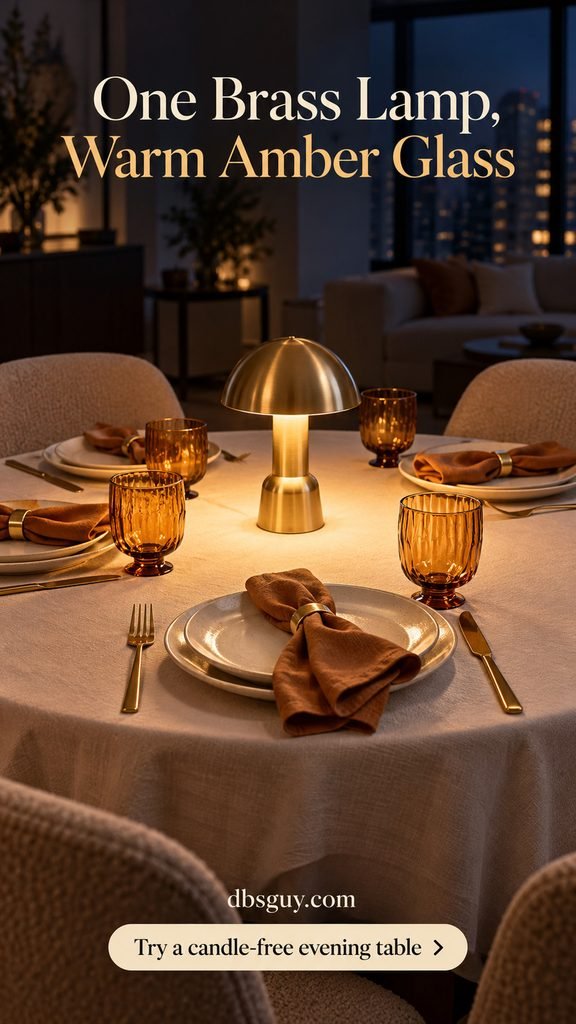
Choose a lamp intended for tabletop use and follow its charging and placement instructions. Set it down with the serving dishes before dinner: the base should not consume the space you need for food, and the shade should not shine into seated guests’ eyes. Keep the room’s normal lighting on at a comfortable level. If the lamp feels bulky, move it to a sideboard and let it light the nearby table from there.
15. Scale Gold and Amber Down to Brunch for Two
A small autumn table can get its color from the things you will actually use. Set two ivory plates on a honey-striped cloth, add amber juice glasses, and put an amber carafe in the middle. Gold utensils give the light breakfast setting a little shine. There is no separate centerpiece to work around.

Keep the carafe small enough to lift comfortably and leave space to set it down after pouring. If your table is especially narrow, skip bread plates and serve pastries on the main plates. A striped napkin can replace the tablecloth if you want to use what you already own. This is a useful way to try the palette before adapting it to a bigger fall dinner.
16. Make Mixed Glassware Work with Matching Gold Napkins
You do not need a full matching set of amber glasses. Alternate amber and clear glasses around the table, then repeat the same mustard-gold napkin at every place. Matching ivory plates give the settings another shared detail. Ordinary silver flatware can stay; the textile already supplies the gold color.
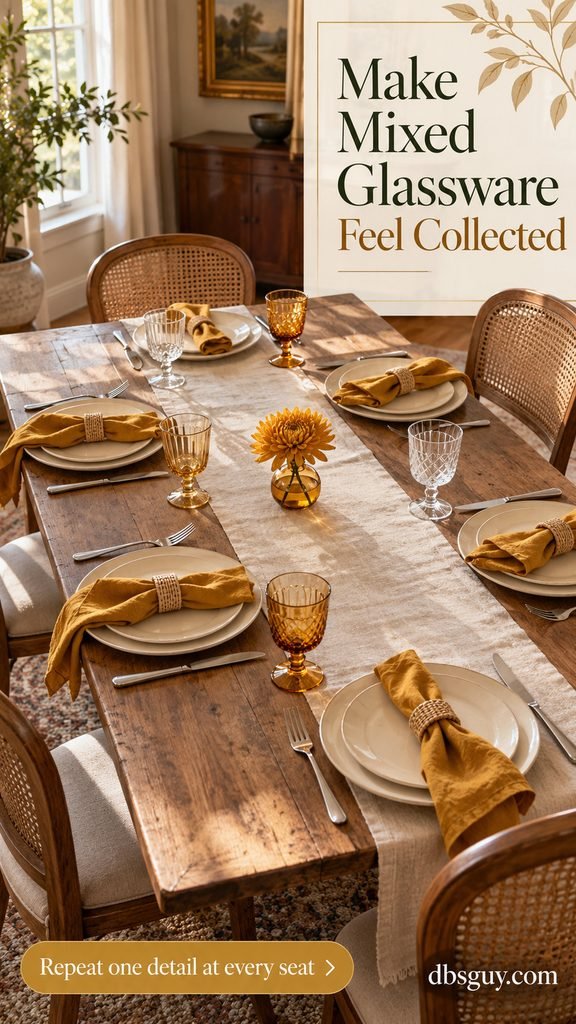
Arrange the mixed glasses deliberately before guests arrive instead of grouping all the amber at one end. Keep their sizes practical for the drinks you will serve, and check older pieces for chips. One tiny amber vase with a golden bloom is enough in the center. This approach makes a partial collection useful without turning the meal into a hunt for exact replacements.
17. Contain the Centerpiece on a Brass Tray You Can Lift Away
For a Thanksgiving table that will fill with food, build the decoration on a handled tray. Place two small ochre pumpkins beside three short amber votive holders fitted with battery-operated tealights. The brass tray supplies the gold and keeps the pieces together when the centerpiece needs to move.
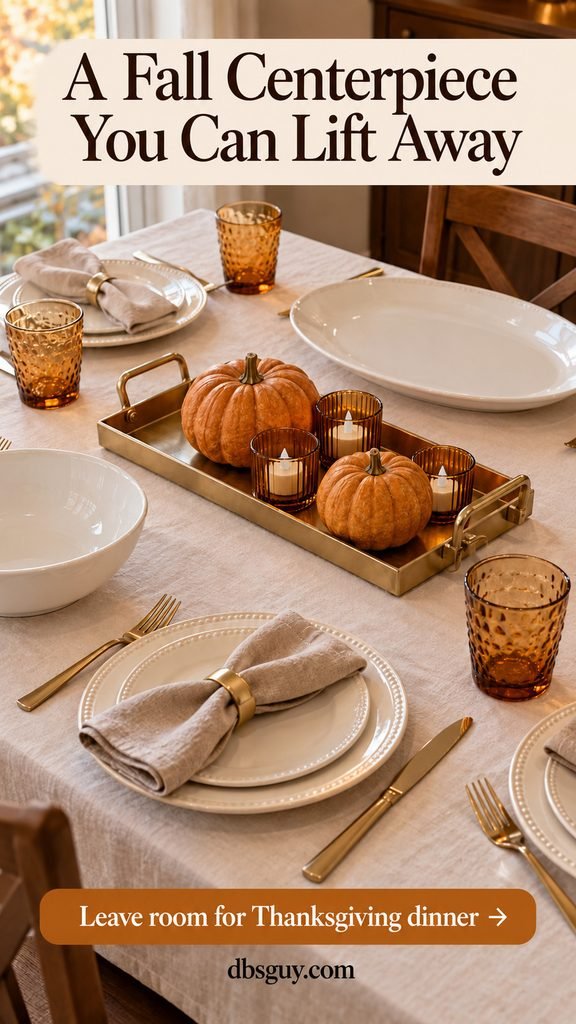
Test the arrangement with the lights off first. Each holder should sit flat, the pumpkins should stay inside the tray, and both handles should remain clear. Lift the finished tray before guests arrive to check its weight and balance, then decide where it will go during dinner. Keep a heat-safe spot ready for the serving dishes that will replace it. For other palettes, see our Thanksgiving tablescape looks.
Make the Table Work When Dinner Arrives
- Set the meal out in miniature first. Place the dinner plates, glasses, and the empty serving bowls you expect to use. The space between them tells you how much decorating room you have.
- Choose one main feature from the ideas above. A gold runner can support a small vase; a full flower bowl usually does not need a leaf runner and a tray of pumpkins beside it.
- Sit down and reach across. Move anything that blocks faces, catches a sleeve, or makes a serving dish difficult to pass. For a family-style Thanksgiving meal, reduce the decoration before reducing the space for eating.
Choose Lighting That Fits the Materials
The lighted tray in this guide uses battery-operated tealights. NFPA recommends flameless candles as a safer option. If you use real candles instead, follow its candle safety guidance: keep them at least 12 inches from anything that can burn, use sturdy heat-resistant holders, and extinguish them before leaving the room. A glass holder does not remove the need for clearance. Choose flameless lights when paper leaves, ribbon, or dried stems make that space impractical.
Questions About Gold & Amber Simple Fall Tablescapes
What if I only own silver flatware?
Use it. Gold can appear in mustard napkins, a woven runner, a brass-colored tray, or paper place cards. Repeat one of those details where it will be visible and let the silver utensils remain a useful neutral. Idea 16 shows this approach.
How do I stop a gold-and-amber table from looking too yellow?
Give the warm colors some breathing room with ivory, pale gray, charcoal, or visible wood. Keep at least one large surface quiet, such as the cloth or the dinner plates. Compare the fabrics and glass under your dinner lighting; a very yellow bulb can make several different warm tones look almost identical.
Which idea leaves the most room for Thanksgiving food?
The glassware-focused setting in idea 1 leaves the center open. Paper place cards and ribbon-tied napkins also keep the decoration at each seat. If you want a centerpiece before dinner, use idea 17 and move the tray before bringing the food to the table.
Can I set the table the day before?
You can arrange clean, dry dishes, folded napkins, and nonperishable decorations ahead if the table will remain undisturbed. Add or check fresh flowers and fruit on the day of the meal, refill vase water, and check lamp charges or candle batteries. Recheck the layout once the actual serving dishes are chosen.
Do amber glasses have to match the gold accents exactly?
No. Amber is a glass color; metallic gold is a reflective finish. A honey-brown glass can work with a muted brass tone without being the same shade. Put the pieces together on your chosen cloth before committing to more accessories, and keep the combination that looks clear in your room.