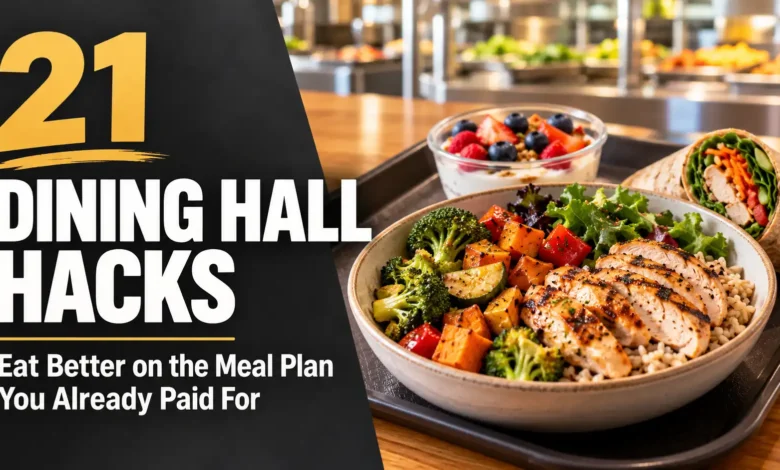
Before you place another delivery order, check what your meal plan can do for your next meal. Rice from the hot line, beans from the salad bar, and salsa from the condiment station can become a lunch you actually want. The useful dining hall hacks start with the food—and access—you already have.
Start with a rice-and-bean burrito bowl when the entrées look unappealing, or put cooked eggs and spinach in a toasted bagel for breakfast. If classes keep making you miss lunch, fix the timing first. These 21 ideas cover better combinations, less meal-plan waste, and the practical limits that matter on campus.
The images are AI-generated concepts illustrating the ideas, not photographs of tested meals or a particular campus. Food combinations are assembly suggestions; menus, portion rules, and included benefits vary by school.
A Few Rules Before You Remix the Stations
Check that each station and ingredient is included in your plan. Assemble food on your own plate; leave serving utensils at their original stations. Use shared appliances only as posted, and ask staff before requesting anything outside the normal service. For allergies or celiac disease, work out a dining plan with staff before mixing foods from shared stations.
There is no shopping list here. If a suggested ingredient is missing, use the swap or choose another combination. At a pay-by-weight or à la carte location, additions can change the price, so check the total before treating a remix as included.
1. Find Out What Your Swipe Actually Covers
Open your school’s current meal-plan page and keep a short note with these details:

- Which dining halls and stations your plan covers.
- Entry limits and when swipes reset or expire.
- Whether retail meal exchanges are included.
- Guest-meal rules; a friend’s plan is not automatically transferable.
- Takeaway rules, approved containers, and any fees or return requirements.
For takeaway, ask, “Does taking a meal out replace eating inside on the same swipe?” Some programs allow one or the other. This quick check can uncover an option you already paid for without relying on a roommate’s outdated advice.
2. Read the Menu Before Choosing a Dining Hall
If your plan covers multiple locations, check their menus before walking to the closest one. Look for ingredients you can use, not just the featured entrée: a hall serving roasted vegetables and rice might suit you better than one advertising a special dessert.
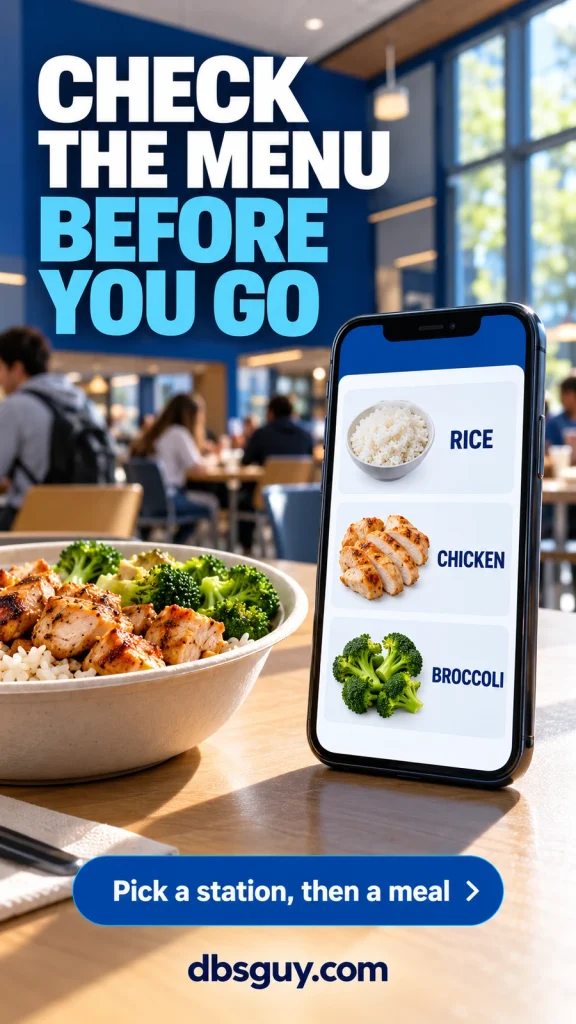
Bookmark the official menu and check station hours as well as building hours. An open dining room does not guarantee the grill is serving. Pick a first choice and one backup in case an item runs out. Menus can change, so treat the screen as a planning aid and confirm the actual options when you arrive.
3. Put Lunch in the Gap Between Classes
Compare dining hours with the two days when your class or work schedule is hardest. Give yourself a realistic window for the walk, the line, and eating. “Lunch sometime after lab” is easy to miss when the station closes before lab ends.
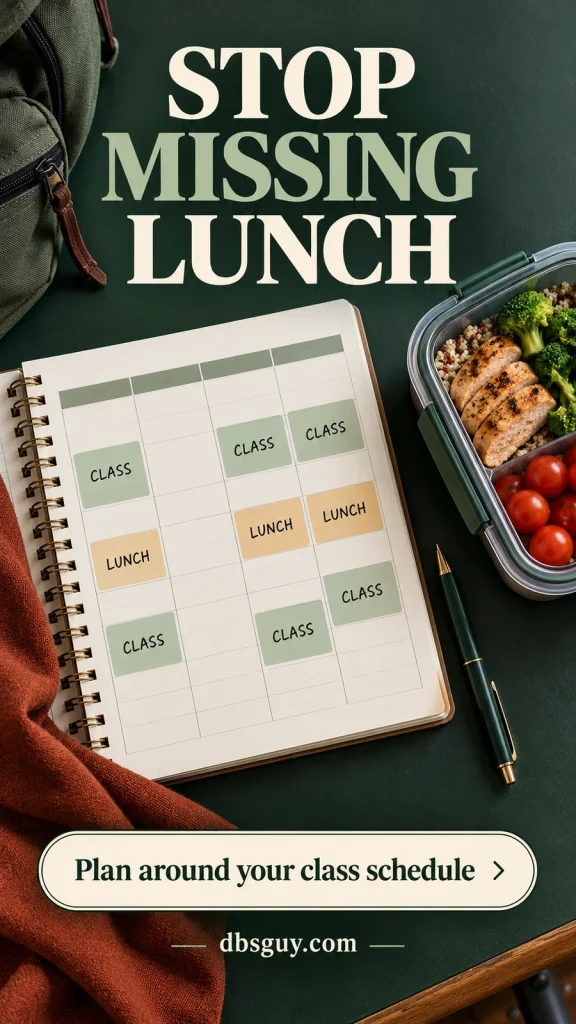
If there is no workable gap, ask about included grab-and-go meals, advance ordering, or a permitted takeaway option. Check ordering deadlines and where pickup happens. A meal you can collect before class is only useful if you can eat it promptly or keep it safely cold. Set one reminder for the order or pickup, rather than hoping to remember when the day gets busy.
4. Use Protein + Starch + Produce as Your Starting Point
When the choices feel overwhelming, build from three parts: a protein food, a starch or grain, and some fruit or vegetables. Chicken, rice, and broccoli work; so do beans, a baked potato, and carrots. Choose whole-grain bread or brown rice when you enjoy them and they are available.

This is a practical assembly shortcut, not a prescribed portion plan. Take amounts that fit your appetite and needs, and add more food if you are still hungry. It also gives you a way to repair an incomplete plate: if you have noodles and sauce, look for beans, tofu, chicken, or vegetables before starting a second unrelated entrée.
5. Build an Egg-and-Spinach Breakfast Bagel
Split and toast a bagel at the bread station, then add a serving of fully cooked scrambled eggs, cooked spinach, and a slice of cheese. Put the spinach under the eggs so it stays inside the sandwich instead of sliding out on the first bite.

No spinach today? Use a tomato slice, or eat fruit alongside it. If the bagel is too much bread for your appetite, make an open-faced version or use ordinary toast. Assemble it after toasting, and skip an extra trip through shared equipment unless that use is explicitly allowed. This makes the breakfast line useful even when the premade sandwiches are gone.
6. Give Plain Oatmeal a Creamy, Crunchy Finish
Take cooked oatmeal, add a spoonful of plain yogurt, and top it with sliced banana or the fruit being served. Finish with cinnamon and a small scattering of seeds or granola, if those ingredients fit your dietary needs.
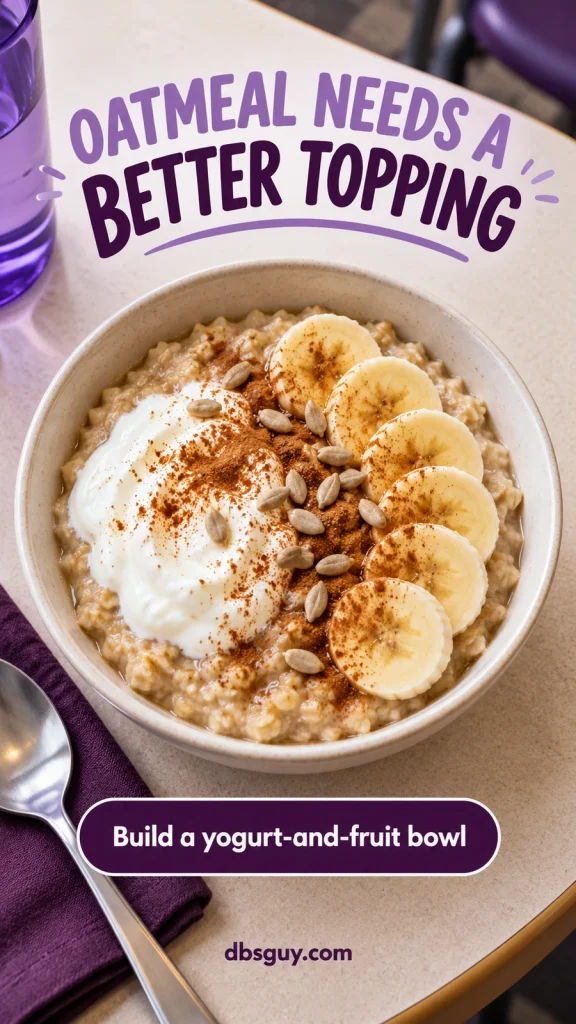
Keep the yogurt on top if you like the contrast between warm oats and cool yogurt; stir it in for a creamier bowl. Taste before adding syrup, especially with flavored yogurt or sweetened granola. If yogurt is unavailable, use a splash of milk or a suitable alternative from the breakfast station. Start with a smaller amount of crunchy topping so it does not turn into a dry cereal bowl.
7. Turn a Side Salad Into the Main Meal
A bowl of lettuce and cucumber may leave you looking for another lunch. Add chickpeas or another ready-to-eat bean, a scoop of cooked rice or another grain, and vegetables with some crunch. Carrots and cucumbers work well without needing another cooking step.
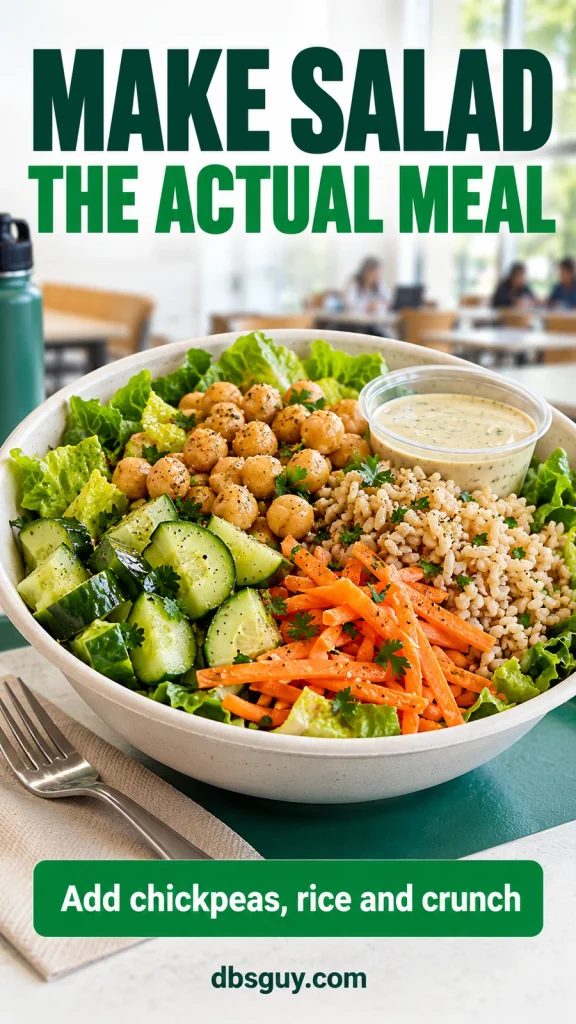
Put the grains and beans in first, then add the greens so you can mix without spilling. Take dressing in a small cup and add it gradually. If the salad bar has neither beans nor grains, pair the salad with an included sandwich instead. At a pay-by-weight bar, check the price: a larger bowl can cost more than a fixed-price meal.
8. Assemble a Burrito Bowl Across Stations
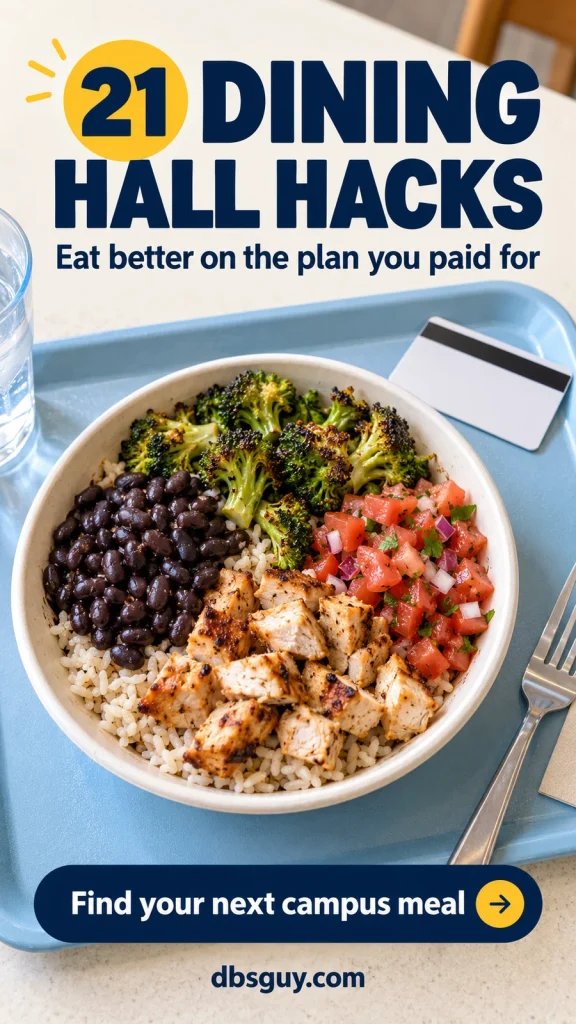
Start with cooked rice, add black or pinto beans, and pile on cooked peppers, lettuce, and salsa. Finish with a little shredded cheese and a squeeze of lime if they are offered. The beans can be the protein; chicken is an optional addition, not a requirement.
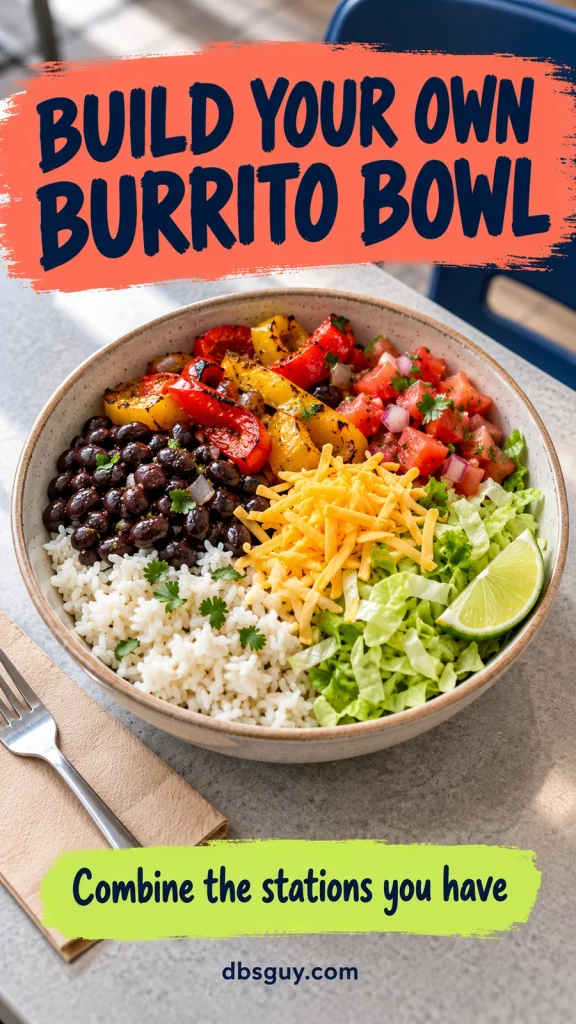
Use a bowl with room to stir, and drain watery toppings before adding them. Keep salsa near the top so the rice does not become soupy. No rice? Make the same combination over a baked potato or inside an included tortilla. You do not need to buy avocado, chips, or a bottled sauce to make this lunch work.
9. Make the Baked Potato the Center of Dinner
Split a cooked baked potato, fluff the inside with a fork, and add cooked broccoli, black beans, and a little cheddar. Put the beans and broccoli into the opening before the cheese so the toppings stay on the potato rather than falling around the plate.

If beans are unavailable, use an included serving of chili or cooked chicken. Check the chili ingredients if you need a vegetarian option. Salsa is a useful finish when the potato seems dry. Choose a regular or sweet potato according to the menu and your taste; the point is to build a meal around something you might otherwise overlook as a side.
10. Give the Pasta Bar Vegetables and a Protein
Take cooked pasta with marinara, then add cooked broccoli and sliced cooked chicken from an included station. Toss on your plate while everything is warm. White beans are another option when chicken is unavailable or you want a meatless meal.

Start with less sauce than you think you need and add more if the vegetables make the bowl feel dry. For softer vegetables, choose the cooked vegetable station rather than expecting hot pasta to cook raw salad-bar broccoli. Use the hot line’s ready-to-eat foods; this remix should not require cooking ingredients yourself or asking staff to put outside ingredients into shared equipment.
11. Pair Lentil Soup With Toast and a Crisp Side
On soup days, look for lentil, bean, or another substantial soup and pair it with toast and a cucumber-tomato salad. You get a warm lunch without having to find a separate featured entrée you like.

If the only option is a light broth, add an included egg, cheese, or hummus sandwich on the side instead of assuming a small cup of soup will be enough. Ask about the broth and other ingredients if you eat vegetarian or have allergies. Keep the toast separate until you are ready to dip it; dropping it into the soup at the start makes it soggy before you finish.
12. Roll a Hummus Wrap That Holds Together
Spread a thin layer of hummus over the middle of an included tortilla. Add a few spoonfuls of chickpeas, lettuce, shredded carrots, and cucumber. Leave a border around the edges, fold in the sides, then roll from the bottom.
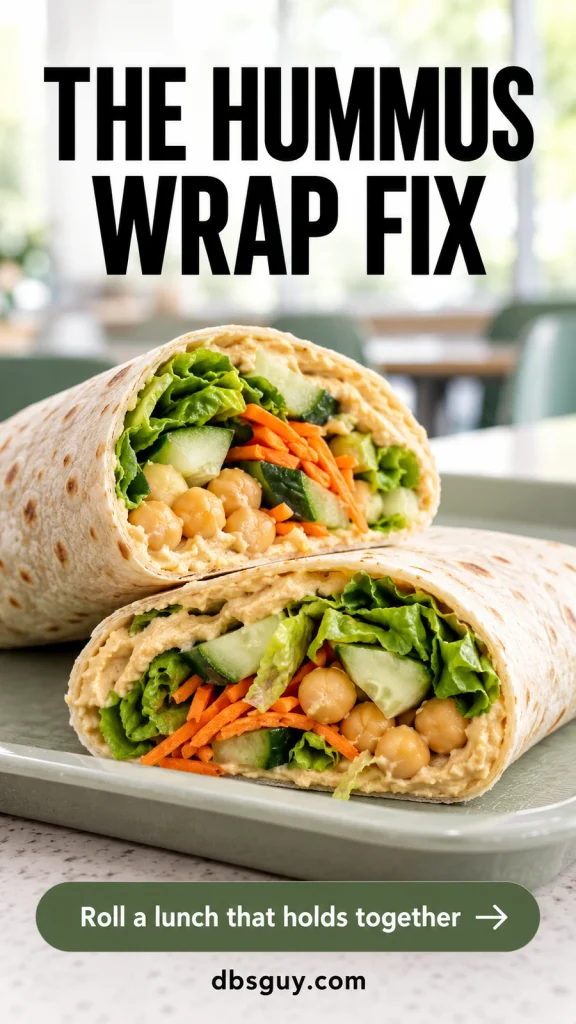
Drain the chickpeas and shake excess water from the vegetables first. A wrap that is overfilled or wet is harder to eat between classes. If tortillas are not available, put the same filling between bread or make a bowl with toast alongside. Hummus often contains sesame, and wraps can contain wheat; use the dining team’s ingredient information rather than guessing from appearance.
13. Use Peanut Butter and Banana to Rescue Plain Toast
Toast bread, spread on peanut butter, and add sliced banana. A little cinnamon changes the flavor without needing another condiment. Make one slice for a snack or pair a couple of slices with yogurt or milk when that suits your appetite.

If peanuts are unsuitable, ask whether a seed butter or another appropriate spread is offered. A substitute spread does not make a shared toaster or station safe for someone with an allergy; use the arrangement agreed with dining staff. Spread toppings after toasting, and use the station’s designated utensils. The same combination also works on an untoasted bagel when the toaster line is long.
14. Fix a Deli Sandwich With Better Layering
Build a turkey-and-cheese sandwich with lettuce and tomato, then add mustard to taste. Place dry lettuce against the bread and keep wet tomato slices toward the middle. Shake water off the lettuce and let the tomato slices drain so the sandwich holds its texture.

Skip an ingredient you do not like rather than stacking everything the deli offers. Add an apple or another side if you want more food. If you are collecting a permitted takeaway meal, choose the components you will enjoy cold and keep it refrigerated until eating. Toasting or pressing is optional and depends on what staff and posted equipment rules allow.
15. Change One Flavor Before Adding Every Sauce
If rice, chicken, or vegetables taste flat, try one small adjustment: lemon or vinaigrette for brightness, pepper for a little bite, or a small amount of salsa or hot sauce. Taste again before adding anything else.

Try a forkful with the sauce first instead of covering the entire plate. That makes it easier to rescue a meal without ending up with a combination you dislike. Use the condiments already provided, and keep them at their stations. Sauces are not automatically interchangeable for dietary needs: check ingredients and allergen information, especially for creamy dressings, sesame-based sauces, and pesto.
16. Keep the Pizza and Add the Side You Are Missing
You can choose pizza because you like it. If pizza alone does not make the meal you want, add a chickpea-cucumber salad, cooked vegetables, or fruit. A side can bring a different texture and flavor without turning lunch into another complicated assembly project.

Start with the amount of pizza you expect to enjoy, then get more food if you need it. There is no need to treat the salad as payment for the pizza or force yourself to finish food you do not want. This hack is especially useful when the pizza station is dependable and the other entrées are not appealing.
17. Ask Whether a Small Takeaway Snack Is Included
Ask the dining team whether you may take a whole piece of fruit or another specified snack after a meal. Some halls permit limited items; others require food to stay inside or use a separate takeaway program. Get the rule before filling your bag.
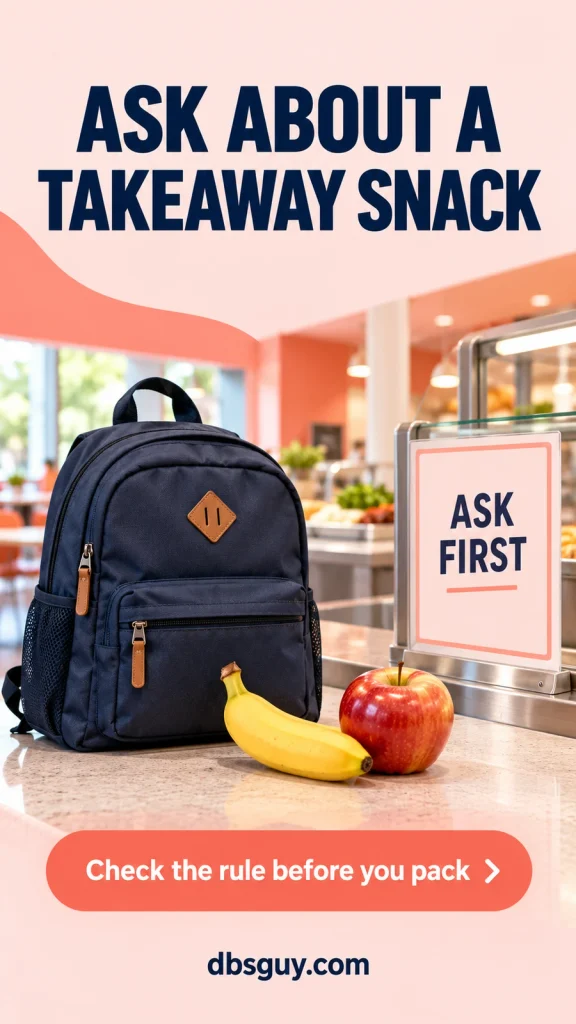
If a banana or apple is allowed, it can cover a gap between class and dinner without another café purchase. Take only what is permitted and what you expect to eat. Yogurt, cut fruit, sandwiches, and similar perishable foods need suitable cold storage; a backpack does not provide it. For a long day without refrigeration, ask which allowed options fit that situation.
18. Give an Approved Takeout Meal a Storage Plan
Before taking a perishable meal for later, decide where it will stay cold. Use your school’s approved container process and go directly to refrigeration if you are not eating promptly. A dorm fridge should measure 40°F or below; check with an appliance thermometer.
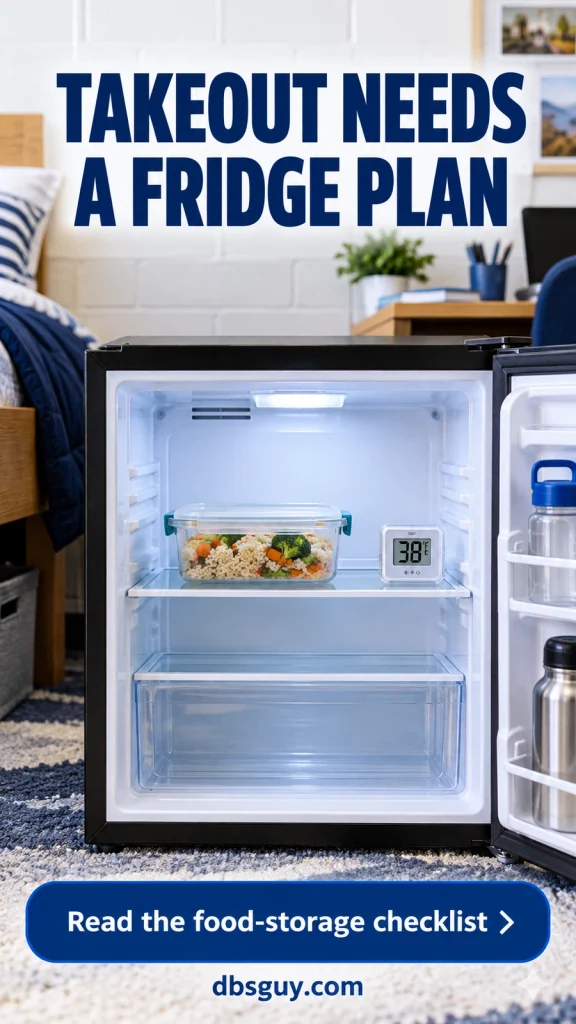
- Refrigerate perishables within two hours, or one hour above 90°F. Count time spent carrying the meal and sitting out, not just time on your desk.
- Use shallow containers for cooling. Discard food left out too long.
- Use properly refrigerated cooked leftovers within three to four days, sooner if an ingredient or school instruction requires it.
- Reheat leftovers to 165°F throughout in a microwave-safe container.
Check FoodSafety.gov’s food-safety guidance for handling and chilling basics. No reliable cold storage? Choose a meal you can eat now.
19. Give Dining Dollars a Job Before They Disappear
Check your usable balance, eligible locations, and expiration or rollover rules. Then divide the amount you can spend by the weeks it needs to last. Illustrative example: $120 across six weeks gives you $20 a week. That is a planning number, not a claim about campus prices.

Reserve that balance for meals your swipes cannot conveniently cover, such as a specific work shift or a late class. Compare the posted total, including any applicable tax, before buying. If you are running out despite using the included meals, ask dining services or a campus basic-needs office about support. A smaller allowance cannot fix a genuine shortage of food.
20. Ask Dining Staff for Help Before Food Becomes a Daily Problem
If allergies, celiac disease, religious requirements, or another dietary need make the menu hard to use, contact dining services. Ask whether a registered dietitian or designated manager can help, what documentation is needed, and how approved meals are arranged.

Bring specific questions: “Who can confirm ingredients?” “How do you handle cross-contact?” “What can I eat when the usual station is closed?” A label or an ingredient swap alone does not establish that a shared meal is suitable for you. For broader access problems—missed service hours, consistently inadequate choices, or not enough meals—describe the exact gap and ask which campus office can address it.
21. Save Three Fallback Meals You Can Actually Find
Keep a phone note with three dependable combinations and where to get them. For example: eggs and toast at breakfast, beans and rice at lunch, and a hummus wrap when the deli is open. Replace any example your campus does not reliably offer.
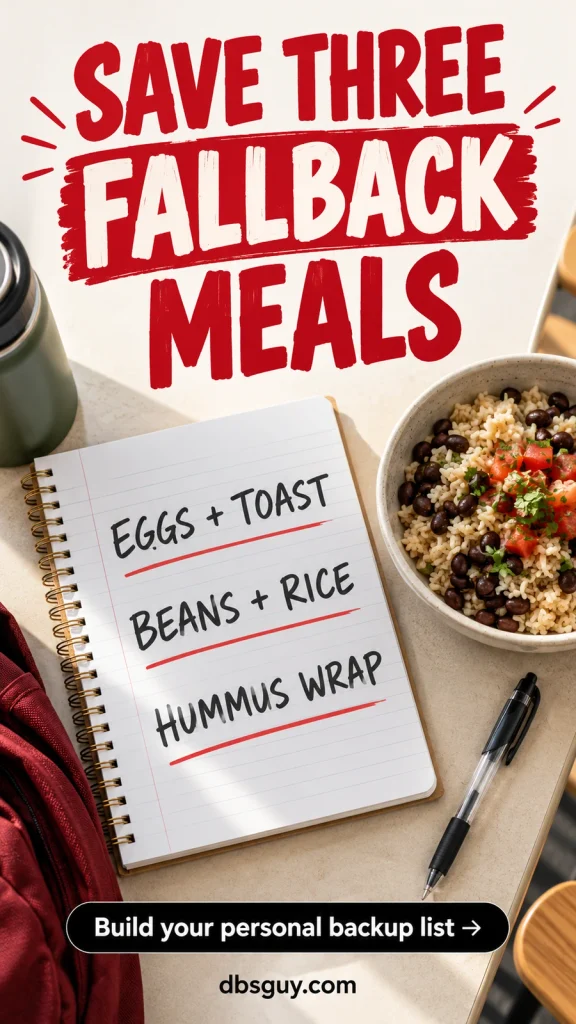
Record the station, service window, and one substitution beside each meal. That turns “nothing looks good” into a choice you have already worked out. Review the list when menus or hours change, especially around breaks. If you need a separate dorm-food backup for closed dining hours, start with 23 Easy Microwave Recipes for Dorm Rooms: No Kitchen Needed and choose something that fits your equipment and storage.
Common Questions About Dining Hall Hacks
Can I take food out of an all-you-can-eat dining hall?
Only as your school’s policy allows. Unlimited entry or buffet access does not itself grant unlimited takeaway. Ask about permitted items, approved containers, any fees, and whether taking a meal out uses the same swipe as eating inside.
What if my dining hall has very few ingredients?
Choose one workable base rather than trying to recreate every idea here. Bread plus an available filling, rice plus beans, or soup with toast may be enough to start. Use the menu you actually have, and tell dining staff if the available choices regularly fail to meet your needs.
Can these ideas work without a mini fridge?
Yes—the meals can be assembled and eaten in the dining hall. The storage hack is optional. Without reliable refrigeration or another way to hold safe temperatures, do not save perishable meals in your room for later.
How do I avoid getting bored with the same meal?
Change one component at a time: use salsa instead of vinaigrette, choose cooked vegetables instead of salad, or swap beans for chicken. Keep the parts you enjoy and check that any replacement is included and suitable for your dietary needs.
For your next dining-hall visit, pick one combination to try and one rule to confirm. A lunch you enjoy and can reliably fit between classes is a useful return on the plan you already paid for.
Also Read
- 23 Easy Microwave Recipes for Dorm Rooms: No Kitchen Needed — for meals outside dining-hall hours.
- 13 Instant Ramen Upgrades: Ditch the Flavor Packet — for a separate cooking option when you have the ingredients and equipment.
- Freshman Year: The Complete Survival Guide — for fitting meals, spending, and campus support into your week.