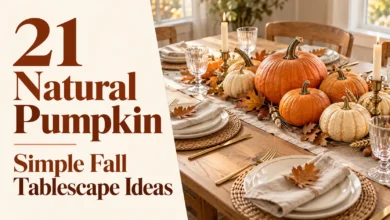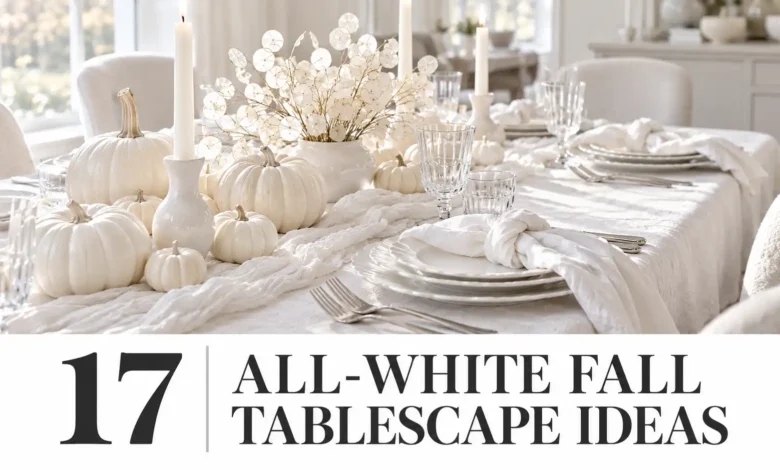
An all-white fall table needs texture and a recognizable autumn detail: a ribbed pumpkin, an oak-leaf shape, a soft velvet gourd, or a pumpkin-shaped serving piece. Start with white dishes and linen, then choose one of those features. You can keep the whole table pale without making every surface look the same.
These 17 fall tablescape ideas take white in different directions, from an eyelet-covered cottage table to a soup supper where the serving dish does the decorating. Pick the setup that fits your meal before adding extra pieces.
The images are AI-generated styling concepts. They illustrate the arrangements described here and do not document completed or tested table settings.
Choose the Setup That Fits Your Meal
- For visible texture: try the eyelet runner in idea 1, velvet in idea 6, or waffle cotton in idea 13.
- For a table without fresh flowers: choose the glass cloches in idea 4 or paper leaves in idea 5.
- For limited serving space: use place cards in idea 11, an unused table end in idea 15, or the removable tray in idea 17.
- For a special dinner: look at the damask setting in idea 9 or the soft LED lighting in idea 10.
Here, all-white means white and soft ivory decorative layers, with clear glass and ordinary silverware. Tiny natural pumpkin stems are fine; beige runners, brown woven chargers, green garlands, and gold accents would create a broader neutral palette. Compare your cloth and dishes together under the light you will use for dinner. If a crisp white makes an ivory plate look yellower than you like, repeat the ivory in a napkin or centerpiece so it feels deliberate.
1. Soften a Cottage Table with White Eyelet
An eyelet runner gives plain white plates a lacy border without requiring patterned china. Lay it over a smooth white tablecloth and group three small white pumpkins near the middle. Keep the napkins simply folded so the eyelet remains the main detail.
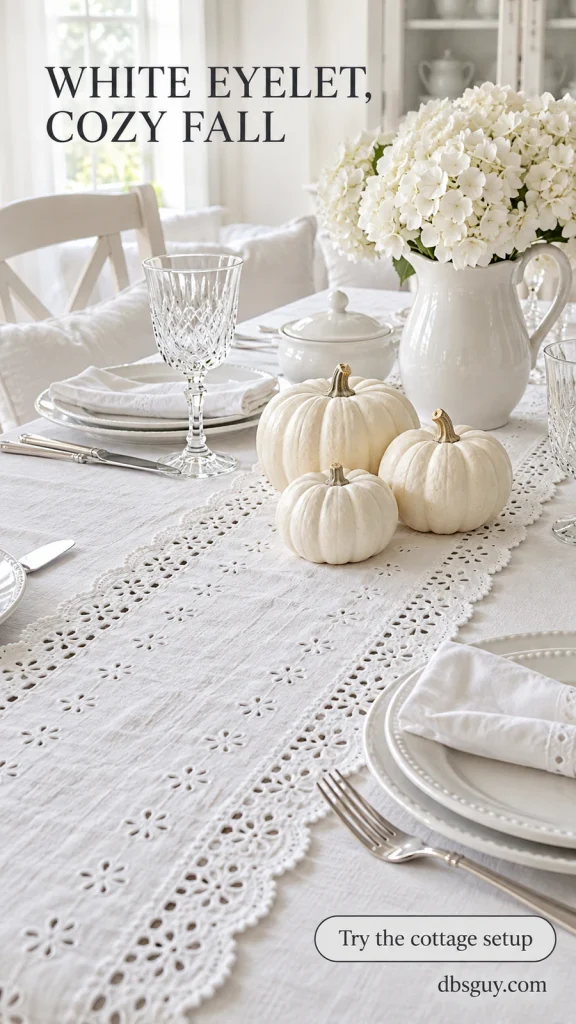
Check the runner under one complete place setting before arranging the rest. If its decorative edge disappears beneath the plates, fold it narrower or move the settings slightly outward while keeping them comfortably on the table. Use a flat stretch of fabric beneath each pumpkin; uneven lace folds can make small decorations wobble.
For more ways to combine simple dishes with textured linens, see our 15 Modern Farmhouse Fall Tablescape Ideas.
2. Give Ceramic Pumpkins a Little Breathing Room
A spaced procession of small white ceramic pumpkins suits a long rectangular table. Choose simple ribbed shapes and set them along a flat white runner, keeping the largest toward the middle. Their curved outlines give a clean-lined setting an autumn reference without a leafy garland.
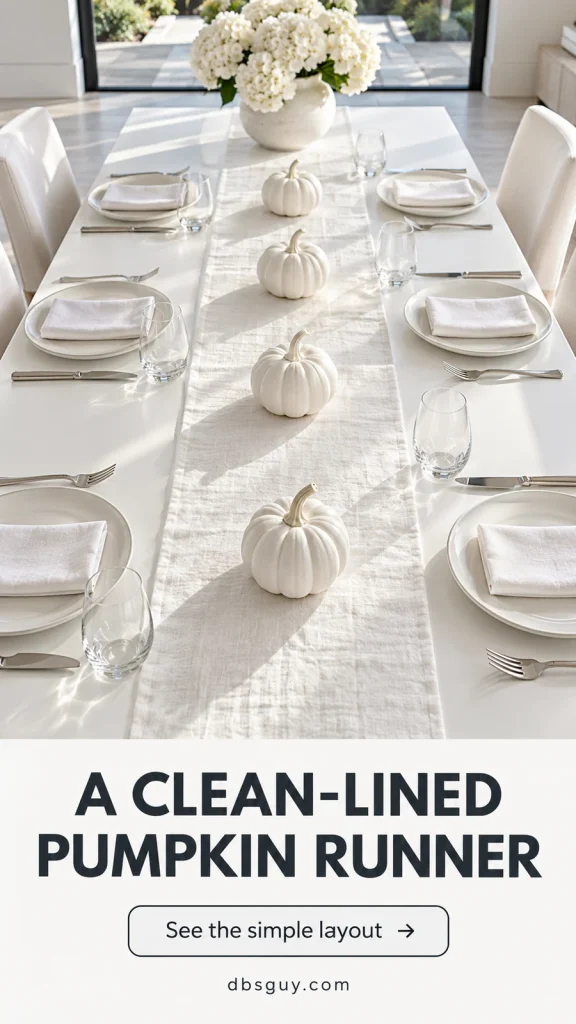
Do a serving-dish rehearsal before filling every gap. Put an empty platter and your largest bowl where they will be used, then position the pumpkins around them. The image shows the decorative arrangement; remove as many pumpkins as needed for the actual meal. A short table may need only two or three.
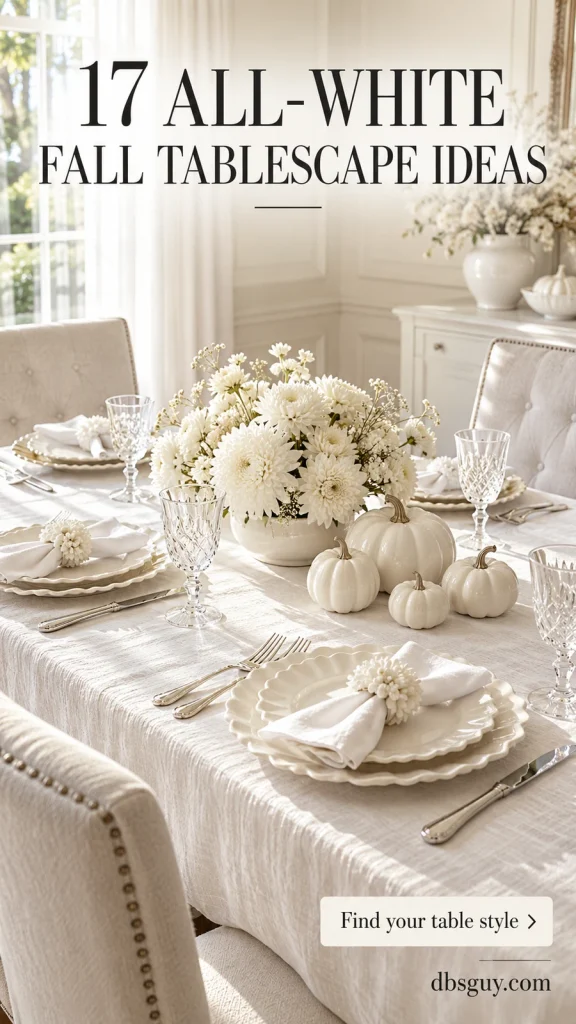
3. Make White Mums the Main Event
White chrysanthemums create a fuller floral centerpiece than a few scattered stems. Use a low, wide white footed bowl and trim the flowers into a compact dome. Conceal the leaves below the flowers to keep the visible arrangement white, then add two little white gourds beside the bowl.
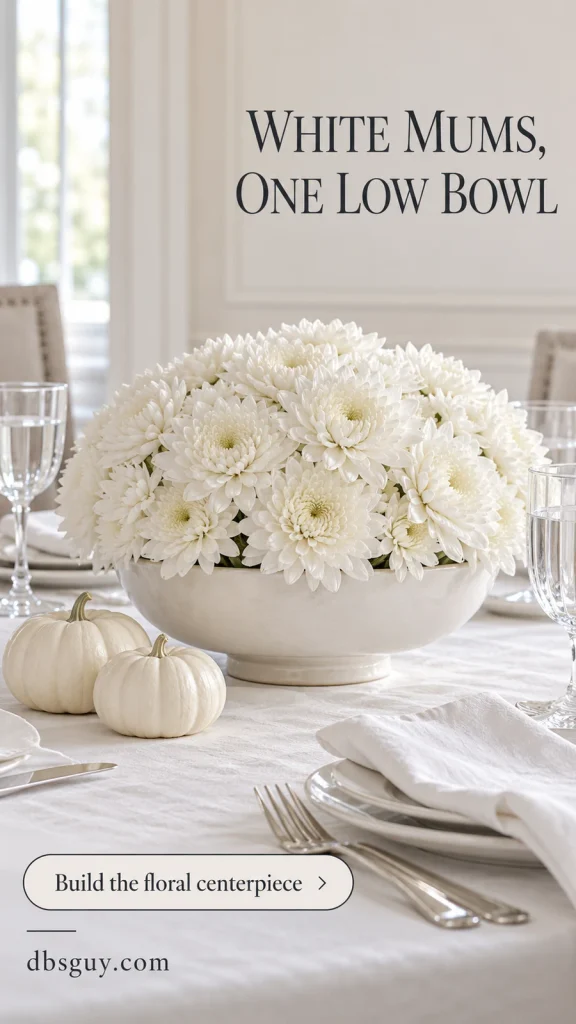
Choose a watertight vessel or fit a separate water container inside it. Add the stems a few at a time rather than making the dome taller whenever a gap appears. Sit down across from someone to judge the finished height and width. If the flowers block your view, shorten the arrangement or move the bowl to the sideboard.
4. Put Little Fabric Pumpkins Under Glass
Two glass cloches turn small white fabric pumpkins into a composed display. Put one pumpkin beneath each dome on a flat white base. A slightly taller cloche beside a shorter one creates variation without needing more objects or another color.
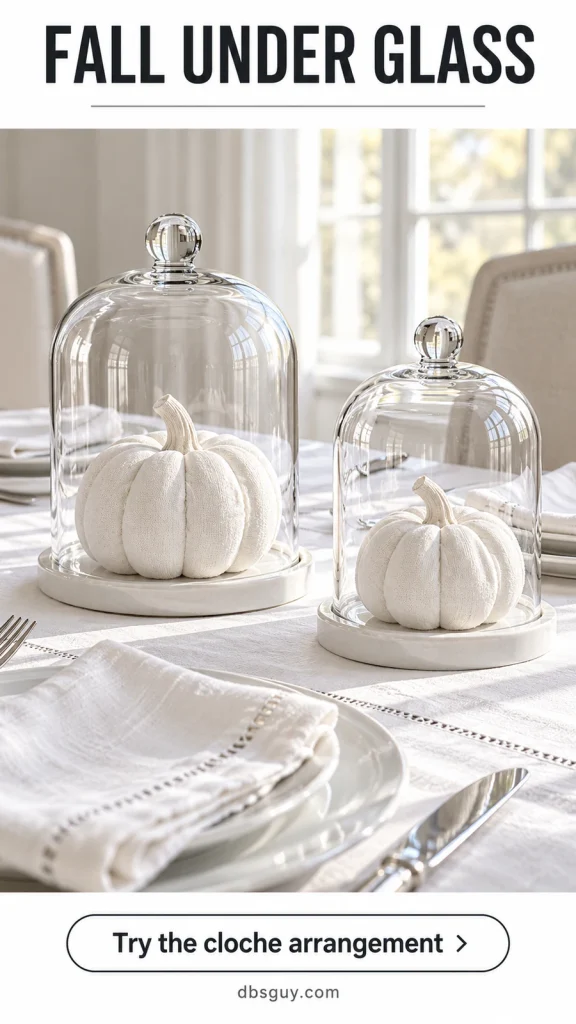
This works best when dinner will be plated elsewhere or the display can move before serving. Check the domes from a seated position; even transparent glass can interrupt conversation when it is tall or reflective. Leave room to lift each cloche straight up. Keep lights and candles out of these domes, which are used only to cover the fabric decorations.
5. Fold White Paper Oak Leaves into a Centerpiece
For a handmade option, cut three broad oak-leaf silhouettes from white paper, then accordion-fold each from side to side to form a raised central ridge. Open the folds gently and arrange the leaves at different low angles on a shallow white tray. Two miniature ceramic pumpkins can anchor the base visually.
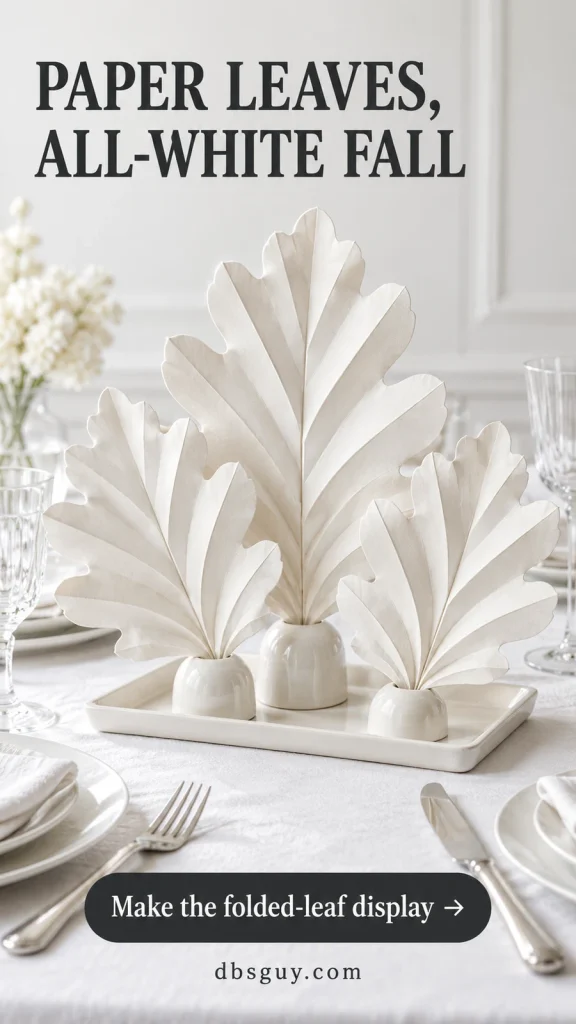
Support the leaves with small card stands or folded paper easels hidden behind them. Try one leaf first: very stiff cardstock may resist the folds, while thin paper may slump. Keep the finished tray out of the path of passing bowls and away from splashes. Store the leaves flat after the gathering, with their folds loosely closed.
6. Pair Ivory Velvet with a Satin Napkin Bow
Velvet pumpkins give the table a soft, light-catching surface. Place two ivory fabric pumpkins together on smooth white linen and tie a narrow white satin ribbon around each folded napkin. The contrast comes from velvet pile, satin sheen, and glazed plates rather than a new color.
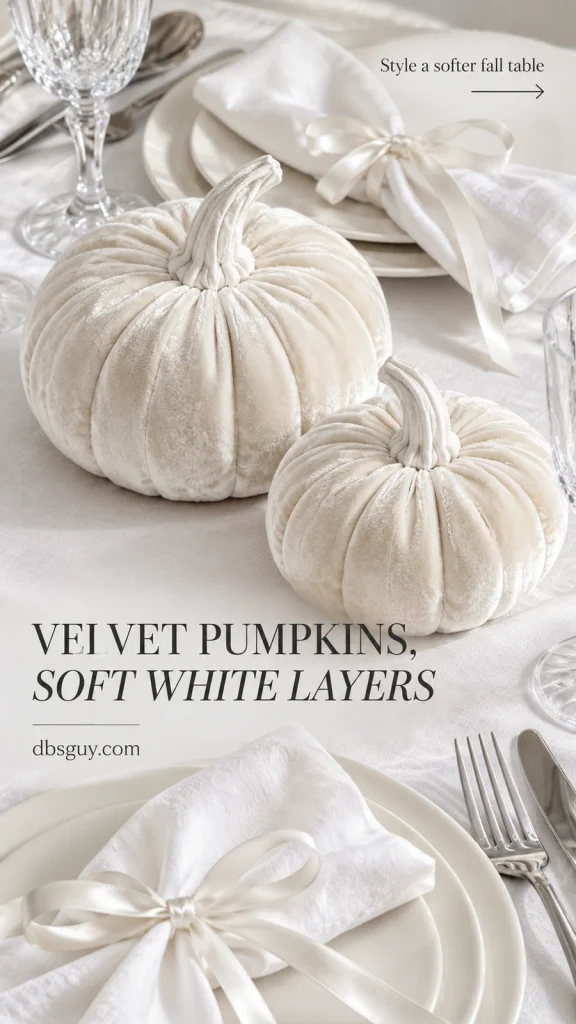
Keep the bows loose enough to slip off easily. A large ribbon can swallow a small plate, so check one setting before cutting ribbon for every guest. Fabric pumpkins belong away from serving spills; use a discreet washable base if needed. Skip additional lace or scattered beads here—the fabric pairings already give the setting plenty to look at.
7. Balance Matte Stoneware with White Oak Leaves
For a sculptural table, combine matte white stoneware with a low white faux oak-leaf garland. Let the broad leaves stretch loosely down the center rather than twisting them into a thick rope. A pair of glossy white ceramic gourds adds a little reflected light beside the chalky dishes.
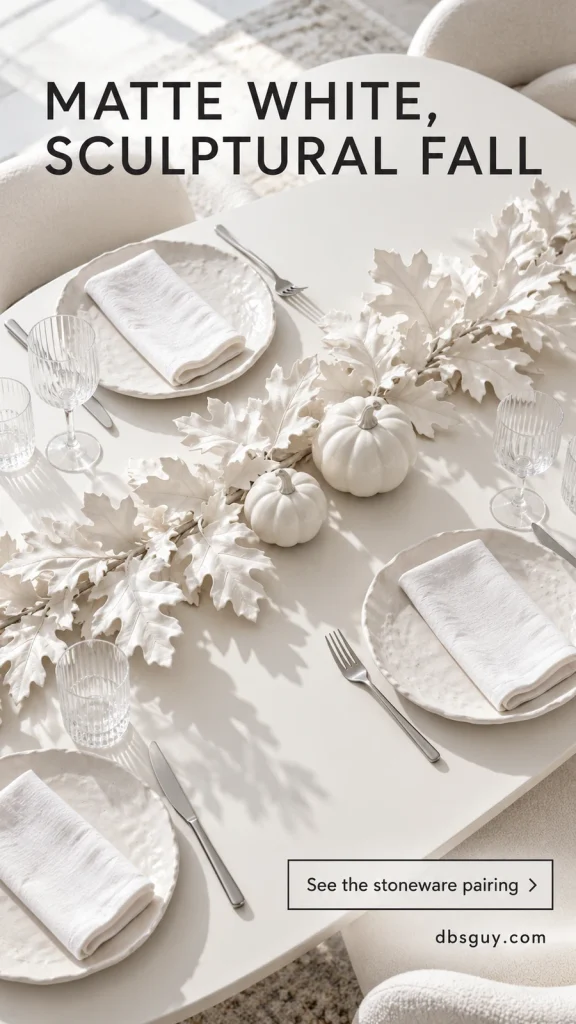
Look for foliage whose stems and leaf undersides are also white; exposed green wire changes the effect when guests sit down. Keep the leaves within the center strip and off the eating surfaces. If your table is narrow, shorten the garland instead of bunching it into a bulky mound. This setup needs no runner if the tabletop is already pale.
8. Let a Pumpkin Tureen Decorate a Soup Supper
A white pumpkin-shaped tureen can be both the fall detail and a useful serving piece. Set it on a white platter with handled soup bowls, plain underplates, folded white napkins, and the utensils your meal requires. There is no need to squeeze a second centerpiece beside it.
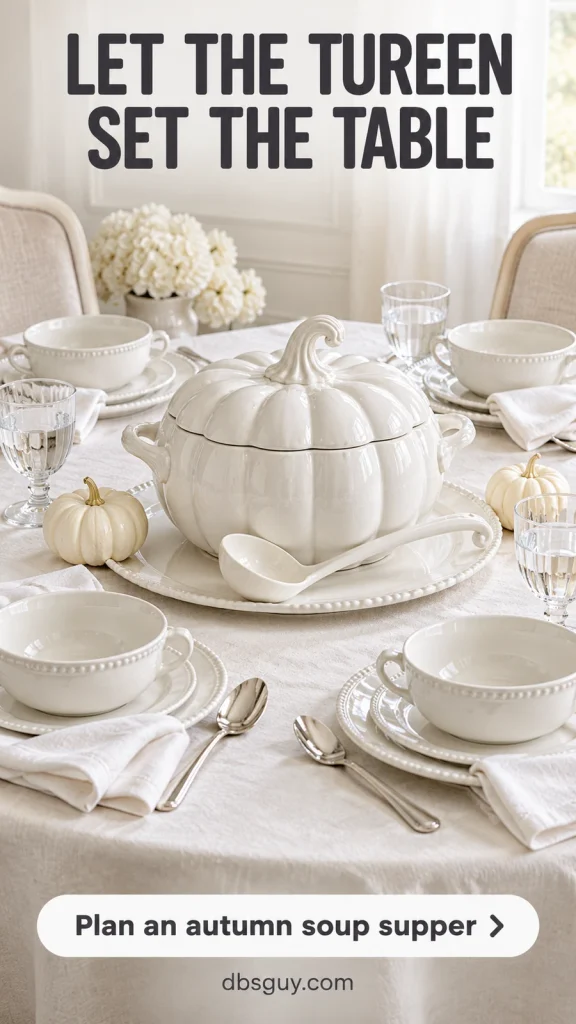
Use a tureen the maker identifies as suitable for food and hot liquids; a decorative pumpkin jar is not a substitute. Rehearse where the lid and ladle will rest before filling it. Put the platter on a heat-protective surface appropriate to your table, and serve from the sideboard if reaching across the table would be awkward. The meal can add its own color once served.
9. Layer White Damask with Pumpkin-Shaped Plates
White damask looks most interesting when light catches its woven pattern. Pair a leaf-patterned cloth with plain dinner plates and smaller white pumpkin-shaped salad plates. A hemstitched napkin and clear faceted glass finish a formal setting without metallic chargers or colored trim.
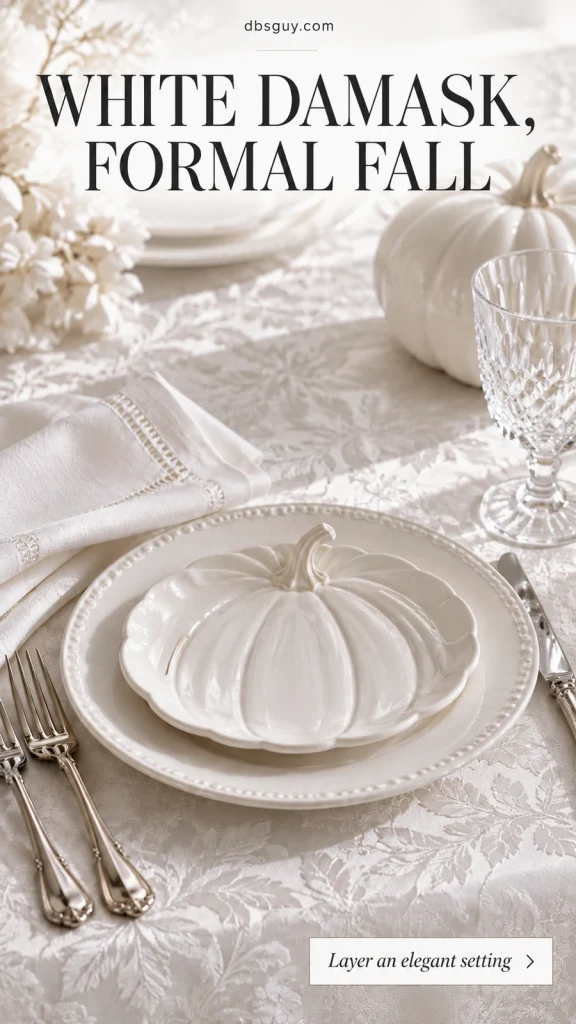
Use the smaller plate only if the meal needs it. If you are serving one course, put the pumpkin plate on the side for bread instead of stacking dishes guests must move. Check that the relief pattern still shows beside the cloth; if both patterns compete, keep the napkin plain and remove extra decor. One white pumpkin elsewhere on the table is enough.
10. Use Fluted Glass and LED Pillars for Dinner
Three white battery-operated pillar candles in broad fluted glass sleeves give an evening table a soft focal point. Vary the candle heights modestly, add one small white pumpkin, and keep the rest of the table simple. The glass repeats the vertical ribs in the pumpkin without needing more decoration.
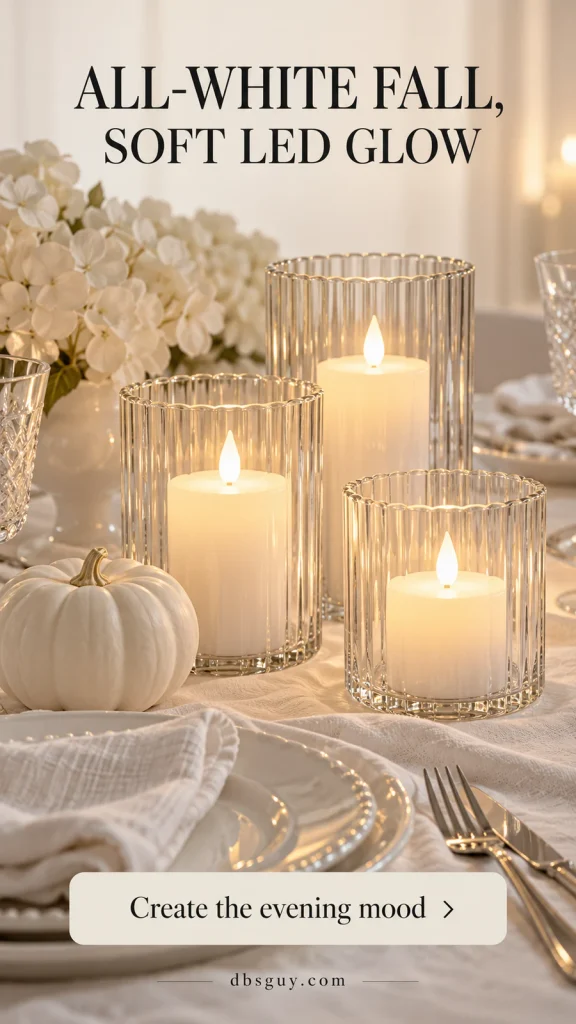
These are flameless candles; their glowing molded tips are not burning wicks. Choose sleeves wide enough for the candles to sit flat, and check that switches remain easy to reach. Try the group with your normal dinner lighting. It should add a warm accent while leaving enough room light to see the food and people across the table.
11. Move the Autumn Detail onto Leaf Place Cards
When serving bowls need the middle of the table, put the fall reference at each seat. Cut a white oak-leaf shape from cardstock and write one guest’s name on it in dark ink. Lay it on a simply folded white napkin so the leaf edge remains easy to see.
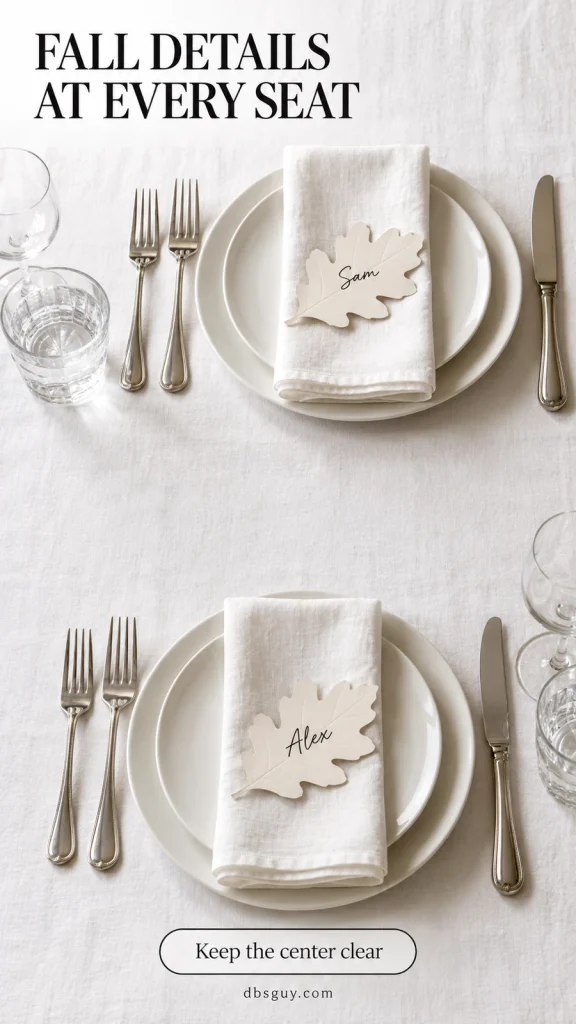
Trace one reusable leaf template for a consistent set, leaving a broad center for longer names. Keep the cards flat rather than scattering loose paper confetti around the plates. Guests can move their cards beside their glasses once seated, leaving the napkins easy to unfold. The empty center is part of this arrangement, so resist adding a pumpkin row afterward.
12. Give Each Guest a Miniature White Pumpkin
A tiny white ceramic pumpkin on its own saucer can double as a take-home detail. Set it above and slightly beside the dinner plate, with the saucer clear of the glass and utensils. Repeat the same small arrangement at each seat and keep the center lightly decorated or empty.
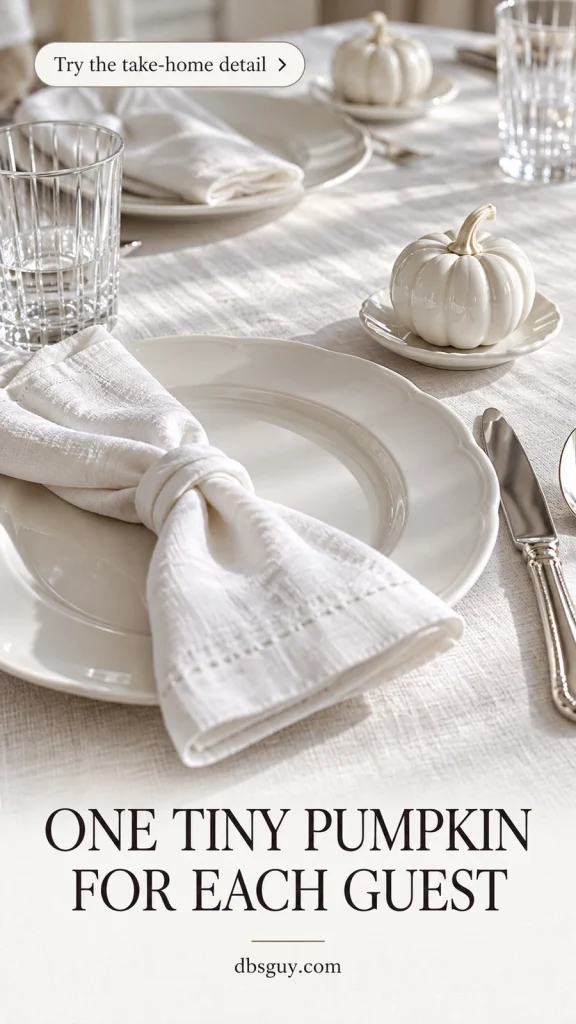
Check the actual footprint before buying multiples. On a compact table, even a miniature saucer may crowd the water glass; offer the pumpkins on a nearby console instead. Tell guests they may take one if that is your plan. These are decorations, so keep them separate from food and avoid adding loose embellishments that can fall onto the plate.
13. Set a Relaxed Brunch with Waffle Cotton
White waffle-weave cotton gives a fall breakfast table a softer, less formal base than damask. Use a narrow runner with plain mugs, cereal bowls, and white plates. One small white ceramic pumpkin near the coffee pot provides the seasonal cue without taking over the breakfast dishes.
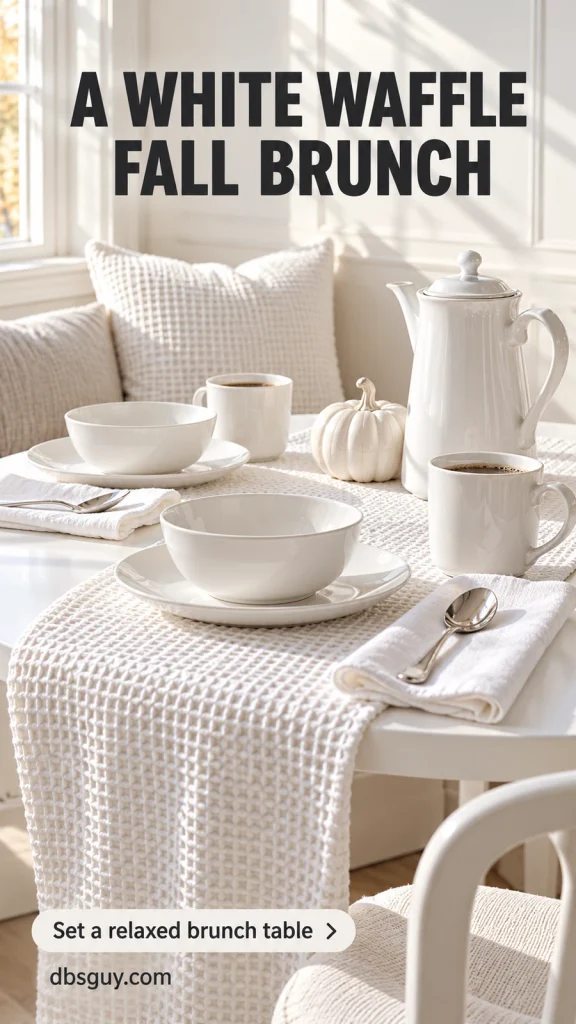
Use a washable table runner rather than a bulky throw. Keep the coffee pot and filled mugs on level surfaces; if the waffle fabric is thick, move them onto the bare tabletop or firm coasters. You can leave out salad plates and stemware when the menu does not need them. This version works especially well for two people in a bright breakfast nook.
14. Echo a Round Table with a Low Flower Ring
On a round table, arrange white chrysanthemum blossoms in a low ring around one squat white ceramic pumpkin. Build the ring in small water-filled floral vessels on a broad white platter, concealing the containers beneath the flowers. The circular shape relates to the table without sending a runner between the guests.
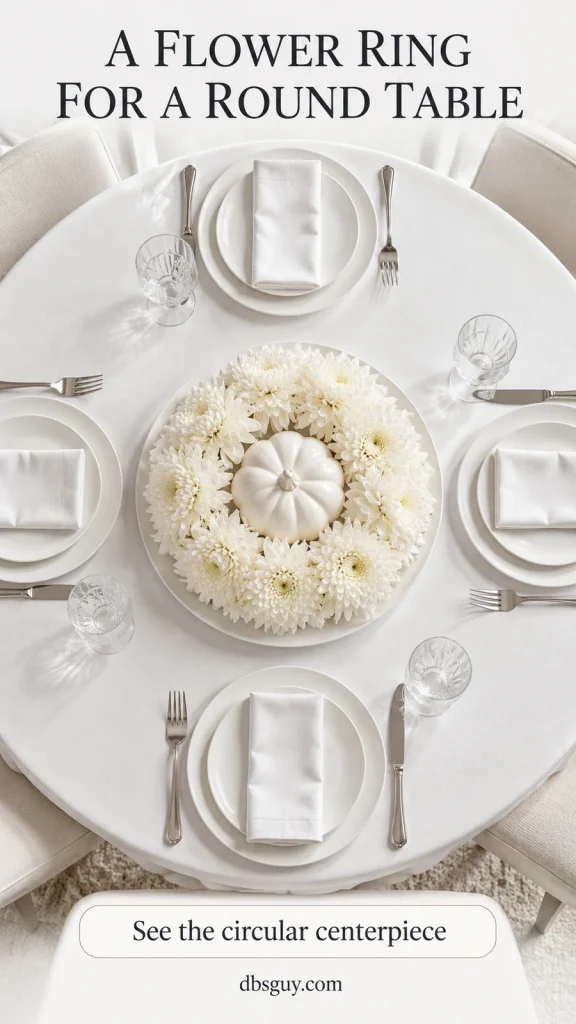
Set out all four place settings before choosing the platter. The ring should fit inside the useful center space, with room for glasses and passing food. Keep the pumpkin independent of the flower supports so the whole arrangement stays easy to dismantle. If dinner is served family-style, move the platter to a console before the bowls arrive.
15. Place a White Branch at an Unused Table End
A narrow table can have a fall arrangement without sacrificing its entire center. Put one airy white faux oak branch in a stable, wide-based white vase at an unused short end. Add two small ceramic gourds at the base and keep the long center clear for dinner.
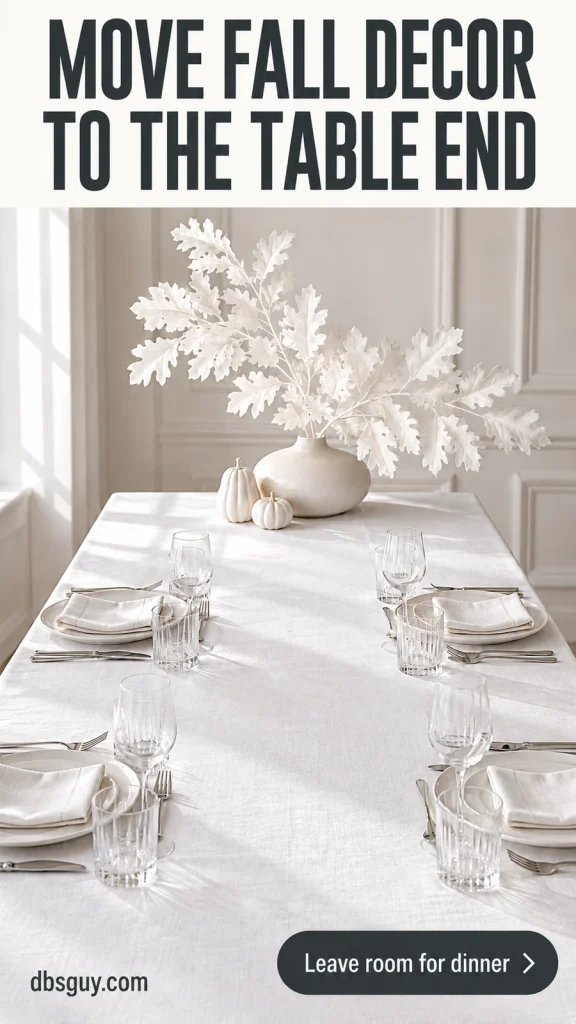
This layout works only when nobody needs that end seat. Angle the branch away from guests and check that its leaves stay out of the path to the table. A tall branch does not belong between two people who are trying to talk. If every seat is needed, move the arrangement to a nearby cabinet and let the white place settings carry the table.
16. Unify Mismatched White China with Plain Linen
Scalloped, beaded, and embossed white dishes can share a table even when they are not one set. Give them a smooth white cloth and the same simple napkin fold. A small white dish of ceramic acorns adds a fall shape while leaving the different plate rims visible.
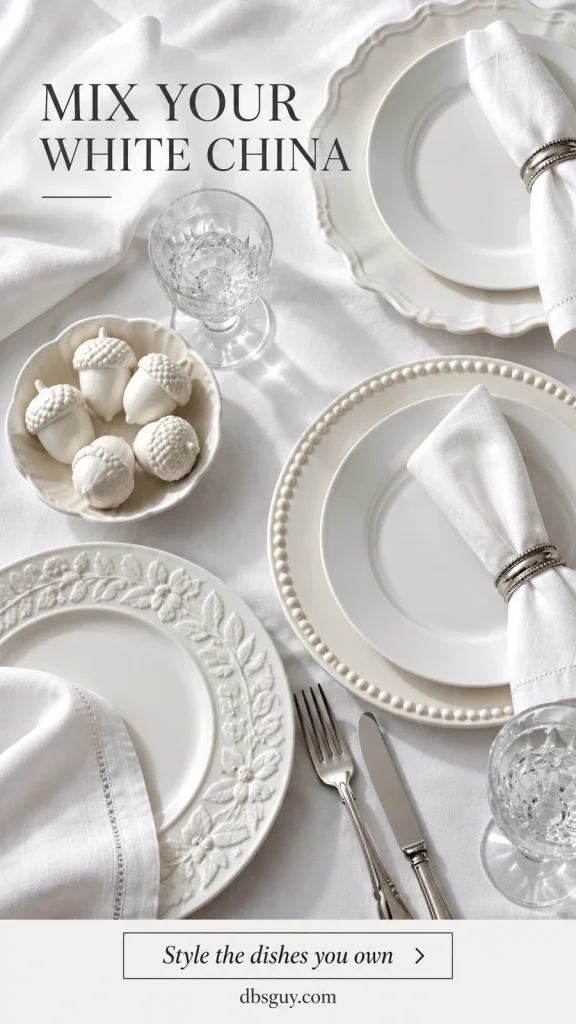
Arrange the dishes in a loose rhythm: alternate two rim styles or repeat one small plate across the settings. You do not need every seat to be identical. Compare the whites together before committing, and move one unusually gray or yellow piece to serving duty if it looks distracting. Use acorns with white caps as well as white bodies for this particular palette.
17. Put the Centerpiece on a Tray You Can Lift Away
For Thanksgiving, make the decorated table easy to turn into a working dinner table. On a low white handled tray, group two small ceramic pumpkins, a few white ceramic acorns, and one short LED candle in a broad glass cup. Keep every piece inside the tray’s rim and leave both handles accessible.
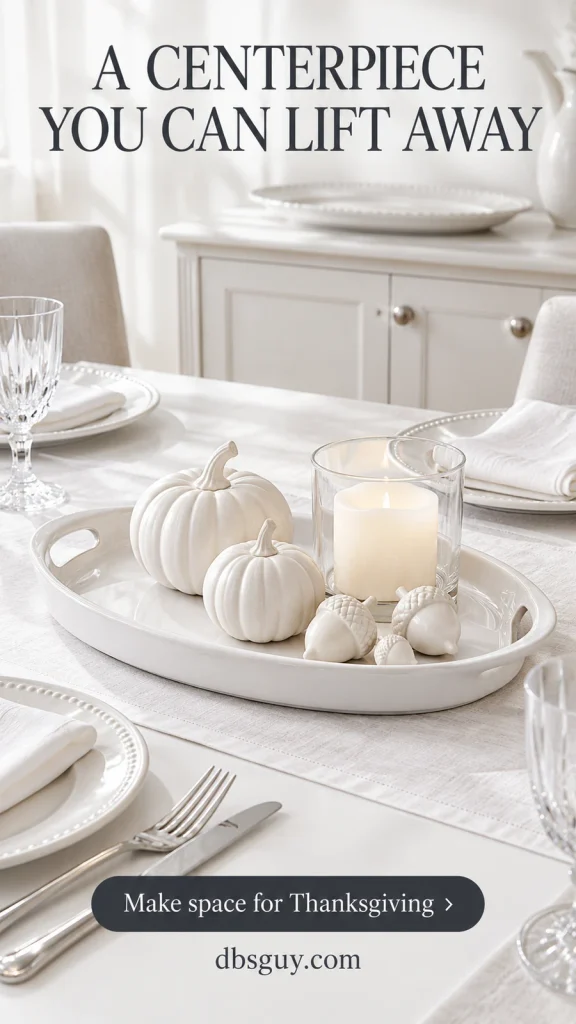
Lift the loaded tray once before guests arrive to check its weight and balance. Choose a nearby landing spot, then move it there before bringing out hot serving dishes. This is one of the most adaptable Thanksgiving tablescape ideas when the same surface must hold both the welcome display and the whole meal. The white linens and place settings remain after the centerpiece moves.
If you are still choosing the overall setting for your holiday meal, browse 5 Gorgeous Thanksgiving Tablescape Looks That Look Expensive (But Aren’t).
Make the Table Work Before Guests Arrive
Choose one main feature from the ideas above before combining details. Eyelet, velvet bows, folded leaves, and a full floral ring do not all need to be on the same table.
Set the table for the food, too. Put out the plates, glasses, bread dish, and empty serving bowls first. Add decorations only in the space that remains, then check the view from a chair rather than judging everything while standing.
Use LED candles for the close arrangements shown here, especially beside paper leaves and fabric. NFPA recommends battery-operated flameless candles. If you substitute real candles, keep them at least 12 inches from anything that can burn and extinguish them before leaving the room.
Questions About All-White Fall Tables
How do you make an all-white fall table feel warm?
Use surfaces that reflect light differently: matte stoneware, textured linen, velvet, and clear glass. Soft ivory can sit beside brighter white when it is repeated deliberately. Test the table under your actual dinner lighting; a pale palette does not require a brightly lit room or a new set of dishes.
Can you decorate for fall without orange or brown?
Yes. Pumpkin shapes, oak-leaf silhouettes, chrysanthemums, and acorns provide the autumn reference. Choose white versions of those forms and keep the textiles simple. You can omit pumpkins entirely by using paper leaf place cards or an all-white oak-leaf arrangement.
What is the simplest all-white centerpiece?
Two or three small white pumpkins in a compact group need little arranging. For an even clearer serving area, use the leaf place cards in idea 11 and leave out a centerpiece. Simple fall tablescapes work best when the decoration fits the meal rather than making guests rearrange it.
Do all the white dishes and linens need to match?
No. Repeat a shade or a material so the mix looks intentional. For example, pair ivory plates with ivory napkins over a brighter white cloth. Lay out one complete setting before decorating the whole table, and remove any layer that makes the combination feel busy.
Also Read
For another fall palette using familiar white dishes: 23 Olive Green Simple Fall Tablescape Ideas.