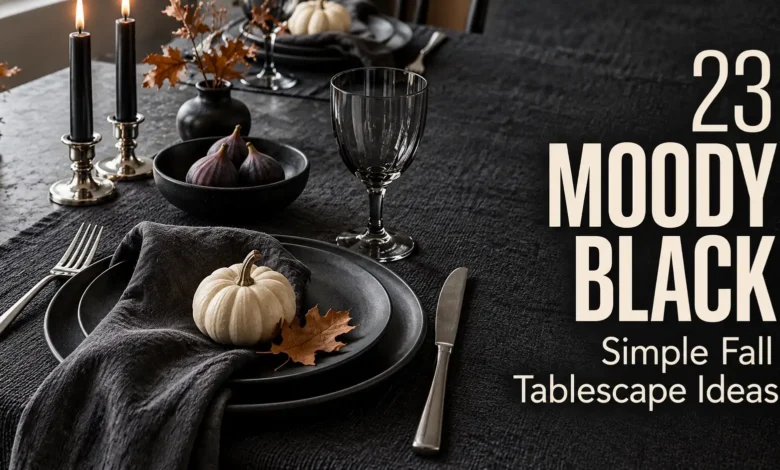
A moody fall table starts with contrast: black linen against warm wood, dark plates on woven mats, or ivory dishes over a black cloth. Choose one of those anchors, add a recognizable harvest detail, and leave enough open space for the meal. You do not need black dishes, black glasses, and black linens all at once.
These simple fall tablescapes offer 23 different ways to use black, from an everyday runner to a compact table for two. Start with the option that works with your dishes and the way you serve dinner. Each setup includes a practical adjustment, so you can borrow the idea without copying every object.

The visuals in this guide are AI-generated styling concepts. They illustrate the arrangements rather than documenting completed or tested tables.
Choose Your Starting Point
- Use the dishes you own: try the runner in idea 1, the black cloth in idea 2, or the transferware in idea 9.
- Skip fresh flowers: choose the fruit bowl in idea 7, leaf trough in idea 15, or squash bowl in idea 16.
- Leave space for serving: use the place markers in idea 11, movable board in idea 19, or buffet in idea 23.
- Work with a small table: begin with the two-person setting in idea 20 and add only what fits.
Black can be the background or a smaller accent. Choose one main black layer first, then a warm companion such as oak, amber, copper or rust. The suggestions below are styling options, not a checklist of items to buy.
1. Frame a Wood Table with a Black Runner
If you like your tabletop, let it show. Lay one black linen runner down the middle, group a few small orange pumpkins along it, and use your everyday white plates. Black napkins repeat the runner without covering all the warm wood.
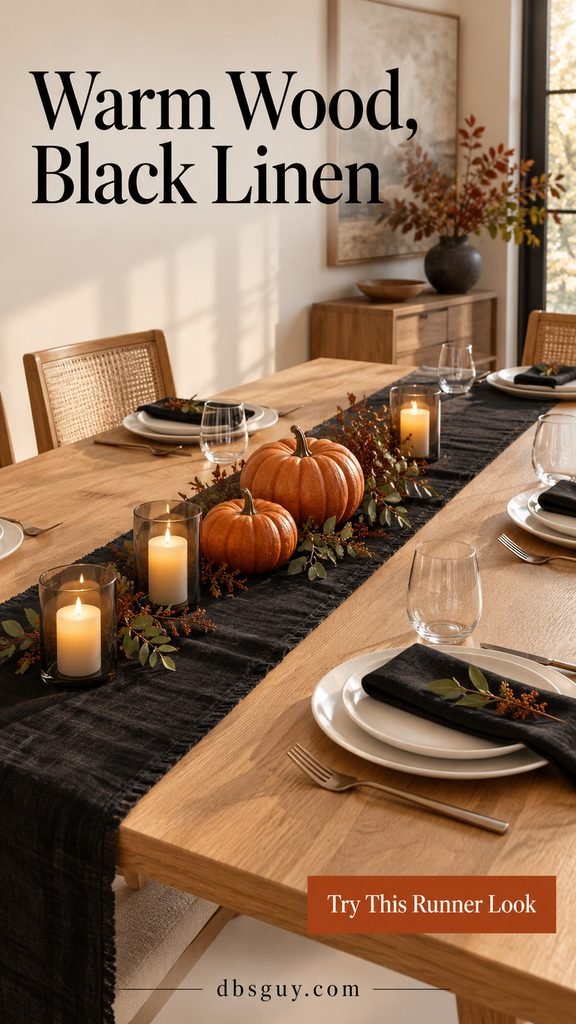
Set out the plates before settling the runner’s width. If the cloth pushes into the eating space, fold it narrower rather than pulling the plates toward the edge. Keep the pumpkins together in the central strip so each seat still has room for a glass and elbows. For the fuller version pictured, add a little foliage and battery-operated candlelight along the runner.
2. Make Ivory Dishes Stand Out on Black Linen
A full black tablecloth changes the background more dramatically than a runner. Balance it with ivory plates, cream napkins and clear glassware. One squat black bowl of rust-colored chrysanthemums supplies the fall color; there is no need for another decorative layer under every plate.
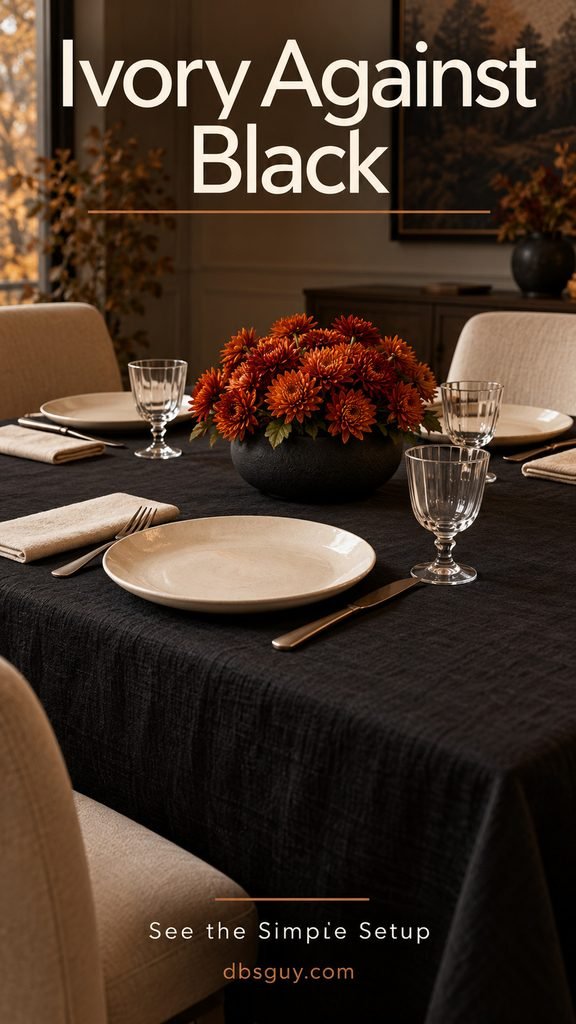
Look at the cloth in daylight before setting the table. Remove visible lint and smooth the area beneath the dishes according to the fabric’s care instructions. A flat surface lets the pale plate outlines do the work. If the room feels heavy, add more ambient light before adding more decorations.
3. Soften Black Stoneware with Woven Placemats
Matte black plates can feel relaxed when the layer beneath them has a natural texture. Put them on round woven placemats over a bare wood table, then add oatmeal napkins. A little olive foliage and a couple of ochre pumpkins are enough for the center.
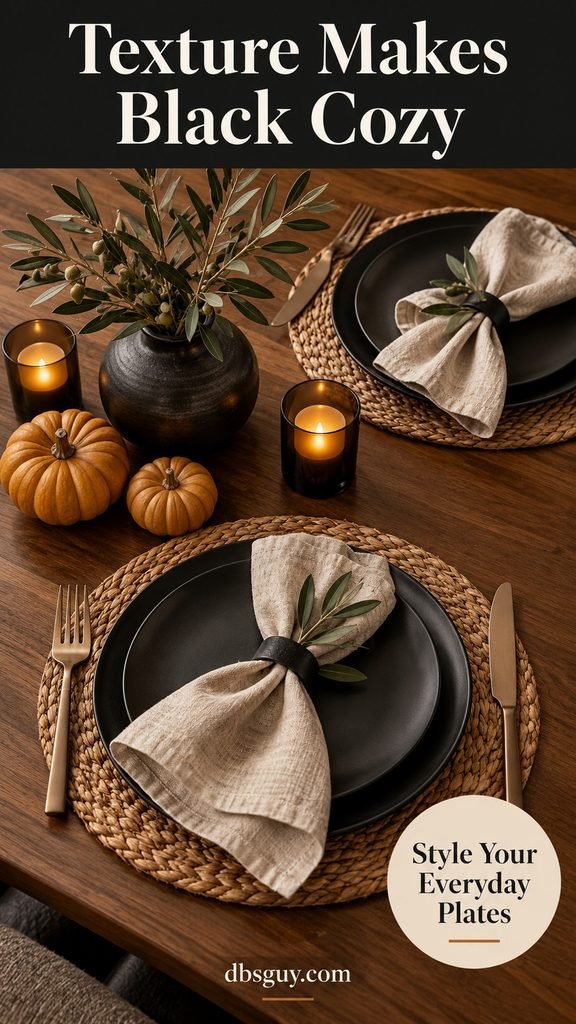
Choose placemats that stay flat beneath your plates. Raised or uneven weaving can make a small bowl wobble, so test the pieces together before dinner. Skip extra chargers here: the woven edge is the frame, and another layer would hide it. This is a good approach when you already own dark everyday dinnerware.
4. Use Copper as the Small Bright Detail
Copper-colored flatware brings a warm highlight to black placemats and napkins. Use white plates between the two so the setting has a clear outline. A small group of ochre pumpkins connects the metal’s warmth to the season without introducing another shiny finish.

Let one copper feature lead each setting. Flatware is enough on its own; the pictured version also repeats the finish in a small napkin ring. If you own rings rather than copper-colored utensils, use them with ordinary flatware. Keep the larger layers quiet and use your dinner plate as the food surface, with decorative metal pieces beneath or beside it unless they are intended for food contact.
5. Let Amber Glassware Carry the Harvest Color
If flowers are one more job you do not want, make the drinking glasses the color feature. Amber goblets catch the light above black plates and a flax runner. Cream napkins and a small dish of pears keep the rest of this lunch setting quiet.

Try one amber glass at a place setting before arranging the whole table. Beside heavily tinted plates or a very dark cloth, it may disappear; on a lighter runner, its color reads more clearly. Keep water glasses separate from any decorative vessels. For more fruit-and-flower color combinations, see our 17 Burgundy & Plum Simple Fall Tablescape Ideas.
6. Give Black Gingham a Mustard Accent
Black-and-ivory gingham makes a simple wood table feel casual. Run the checks down the middle, use plain ivory plates, and bring in mustard napkins. A compact group of small orange pumpkins finishes the harvest look without needing a floral arrangement.
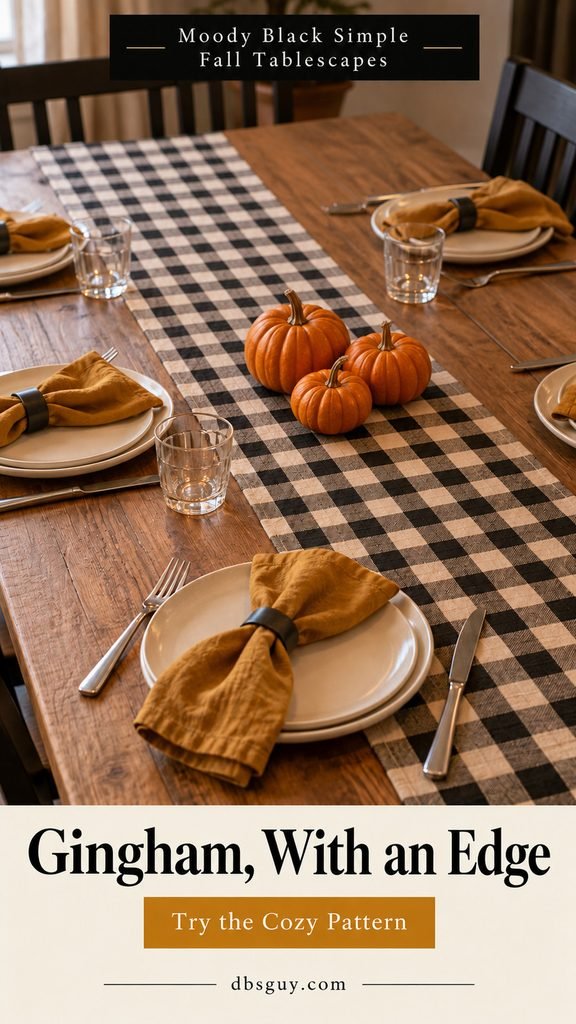
Let the runner be the main pattern. A second strong print on the plates can make the small table details harder to see. If your dishes are patterned, reverse the approach: use a solid runner and keep a checked napkin instead. Spread the runner flat under the pumpkins so the group rests steadily.
7. Fill a Low Black Bowl with Pears and Grapes
Whole Bosc pears and dark grapes make a centerpiece with no stems to arrange. Set them in a shallow black bowl over an ivory cloth. The pears’ brown-gold skins and the grapes’ deep purple give you a harvest palette while black plates connect the bowl to the settings.

Build a low mound rather than balancing fruit into a tower. If you intend to eat it, use a clean, food-safe bowl and keep paint, floral sprays and glitter away from the fruit. Leave the pears whole during the meal; cut fruit makes the arrangement messier to move and maintain.
8. Move a Russet Branch Arrangement to an Unused End
A narrow table needs its middle for passing food. Put a squat black vase of russet oak branches at one unused short end instead. Cream plates, rust napkins and a black runner carry the look through the rest of the table while the serving bowls get the center.
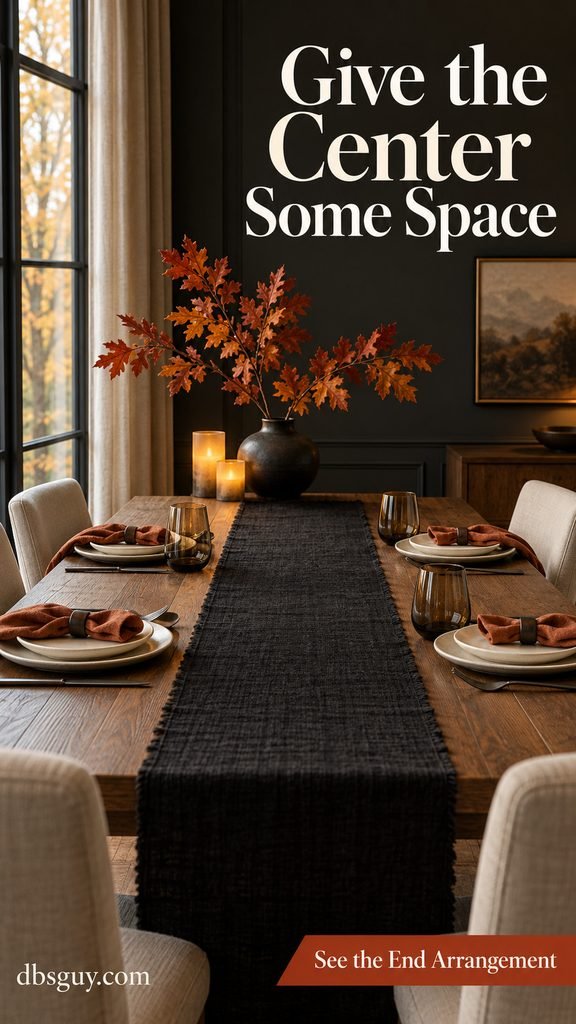
This only works when that end has no guest. Turn the branches away from the nearest place settings and check the view while seated. If you need every chair, put the vase on a nearby console. Moving a decorative feature off the table is a useful adjustment, not a reason to squeeze another object between the dishes.
9. Bring Out Black-and-Ivory Transferware
A patterned salad plate can provide all the detail a setting needs. Layer black-and-ivory transferware over plain dinner plates, then use caramel napkins and clear glasses on a walnut table. A small dish of white pumpkins adds a fall reference without competing with the plate designs.
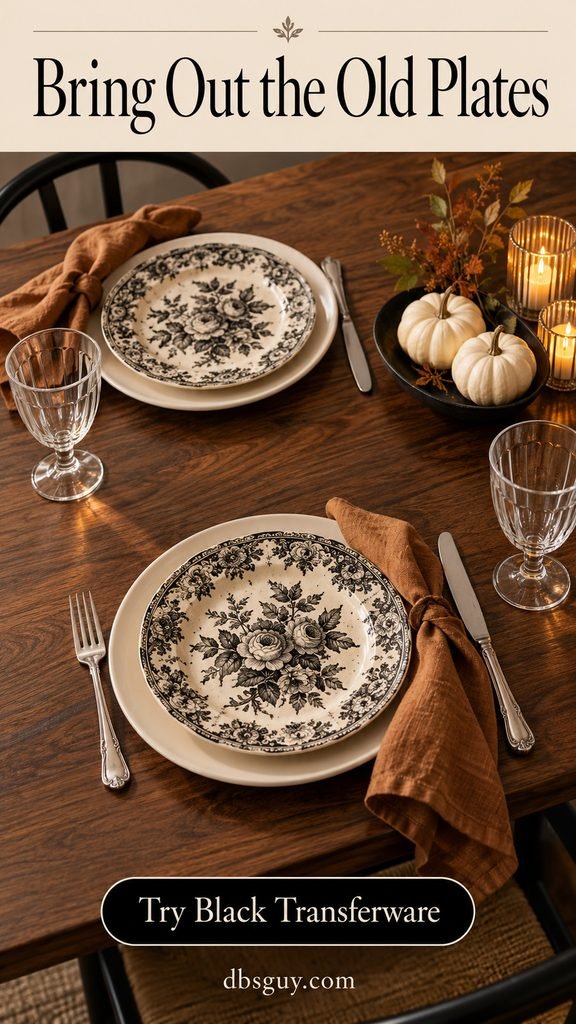
Different patterns can work together if they share a similar dark line color and pale background. Repeat the same napkin at every seat to connect them. Use dinnerware suitable for food; if an older or decorative plate’s intended use is uncertain, display it separately and eat from your everyday plates.
10. Divide a Few Blooms Among Smoked-Glass Bud Vases
Three short smoked-glass bud vases spread flowers along a rectangular table without one large centerpiece. Start with a rust chrysanthemum stem in each. An oatmeal runner makes the charcoal glass visible, while black napkins repeat its darker tone beside white dishes.

Space the vases around the dishes you will actually serve. The gaps are part of the design: leave one for a bread basket and another for a bowl. Cut stems so the flowers sit close to the vase openings rather than above everyone’s sightline. A short vase with a broad base is easier to work around than a tall, narrow bottle.
11. Turn Black Mini Pumpkins into Place Markers
A decorative black mini pumpkin can take the place of a separate centerpiece detail at each seat. Rest it on a folded cream napkin over the plate and tie a small ivory name tag around the stem. The pale tag stays readable against the dark pumpkin.

Pick pumpkins that guests can lift with one hand, and provide a clear spot above or beside each setting for them during dinner. Use finished decorative pumpkins or let any painted surface dry completely before styling. Keep these decorative pieces separate from food. This version works well when the center needs to remain open for a family-style meal.
12. Mount Golden Leaves on Black Place Cards
For a flatter place marker, attach a dry golden oak leaf to a black cardstock rectangle with small paper photo corners. Write the name beside the leaf in cream or white and place the card above the dinner plate. The black background makes the leaf’s outline easy to see.

Choose leaves that lie flat and do not crumble when handled. Paper leaves are a useful substitute if natural ones shed. Keep the card above the plate rather than on its eating surface, and make the handwriting large enough to read across the setting. You can leave the rest of the table almost bare.
13. Tie Oatmeal Napkins with Black Velvet
Black velvet ribbon gives a plain napkin a soft, dressier finish. Tie a loose bow around oatmeal linen and slip one dry cinnamon stick beneath the knot. Use ivory plates and warm wood underneath so the velvet remains visible; a couple of natural pumpkins can provide the larger fall shapes.
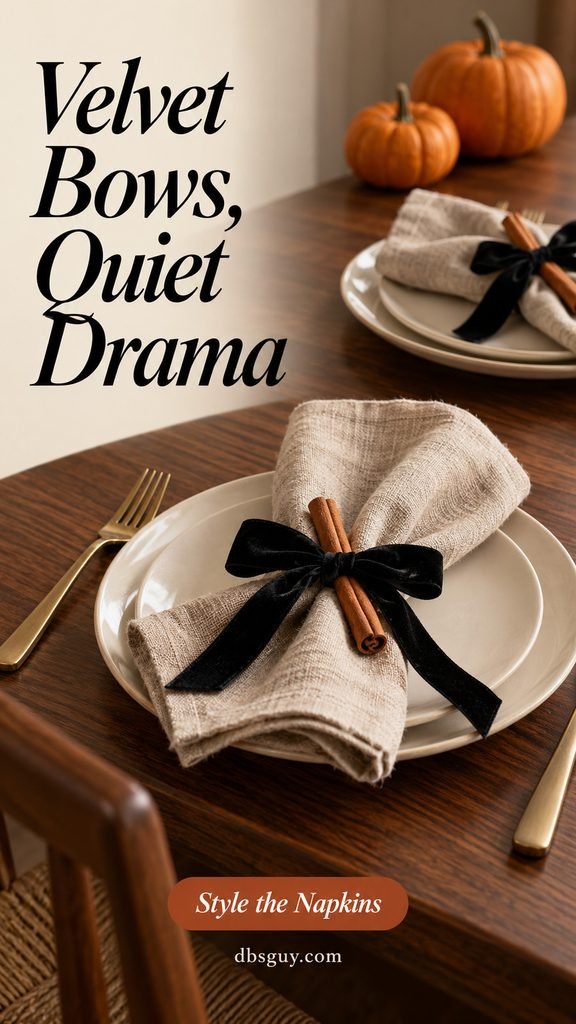
Leave enough slack for the bow to slide off easily. Avoid threading the ribbon around knives or forks, which makes the setting awkward to unpack. Treat the cinnamon as decoration and remove it with the ribbon before eating. This is an easy detail to repeat when you want the table to feel coordinated without adding more objects down the middle.
14. Use a Black Paper Runner for Gratitude Notes
A narrow strip of black kraft paper can become part of the conversation. Write “Thankful for…” in white down the middle and leave generous blank space for guests’ notes. Ivory plates, amber napkins and a few pumpkins at one end keep the paper from feeling like a classroom activity.

Test a white pencil or marker on an offcut first; not every writing tool shows clearly on black paper. Put a protective layer beneath the paper while writing if needed, then let the ink dry. Keep the runner away from wet glasses and hot serving dishes, and skip candles with this paper-based setup.
15. Arrange Magnolia Leaves in a Black Trough
Magnolia leaves offer two useful colors in one material: glossy green on top and copper-brown underneath. Overlap a modest line in a shallow black trough, turning some leaves over deliberately. Ivory plates and black napkins let the foliage be the only centerpiece.
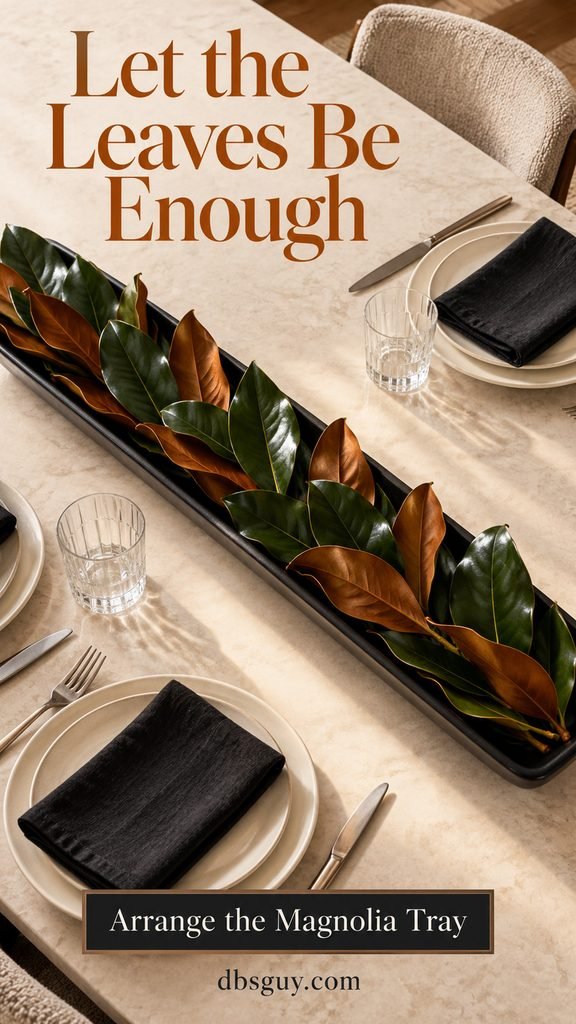
Contain the leaves inside the vessel instead of spreading them beneath glasses and plates. Remove loose debris before arranging and check that the trough’s base sits flat. You can shorten the line by using fewer leaves on a small table. There is no need to add flowers, pumpkins or candleholders once the contrasting leaf surfaces are visible.
16. Make Squash the Sculptural Centerpiece
Small delicata squash and ribbed cream-and-green gourds bring stripes and irregular shapes to a quiet table. Group them in one low black bowl over oatmeal linen. Black plates and cream napkins repeat the bowl’s dark-and-light contrast without needing flowers.
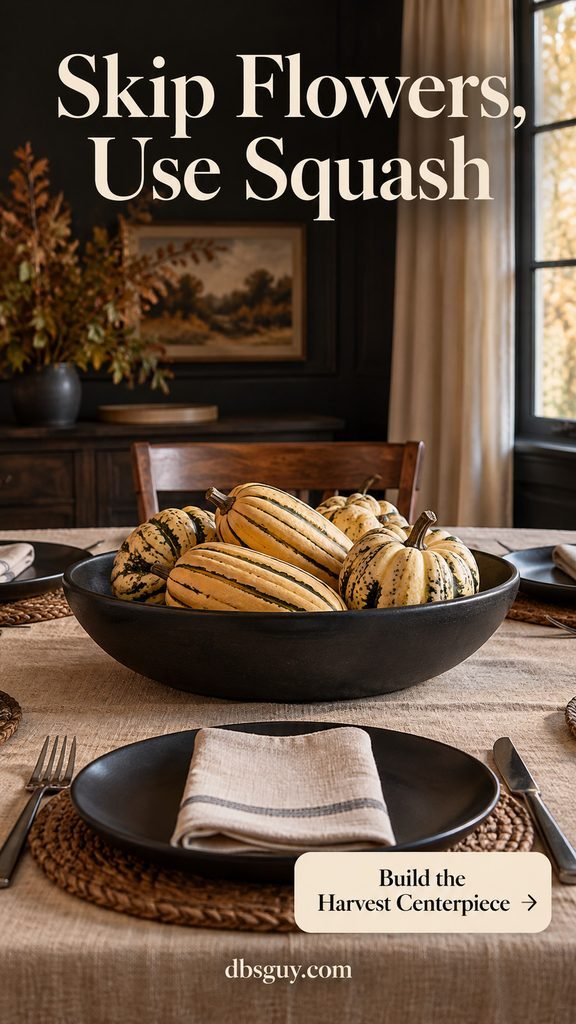
Choose a bowl broad enough for the vegetables to settle into one shallow layer. Put heavier pieces down first and nestle smaller ones into the gaps; avoid a precarious pile. If you plan to cook the squash afterward, use a clean, food-safe bowl and leave decorative finishes off the vegetables. Keep the whole arrangement small enough to lift away when serving space is needed.
17. Build an Almost All-Black Table with Different Finishes
An almost all-black setting needs visible differences between its surfaces. Combine matte stoneware, washed linen napkins, ribbed drinking glasses and a slightly lustrous black fabric layer. One unpainted russet pumpkin becomes the color accent rather than another layer of black decoration.
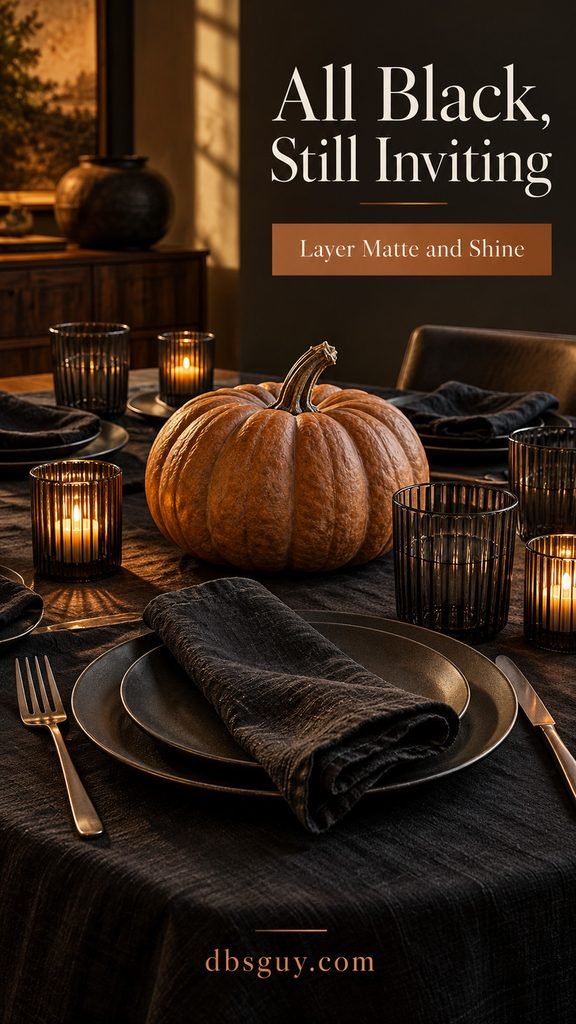
Check the setting with your dinner lighting on. If the plate edge disappears into the cloth, change either the cloth’s finish or the light level. Keep enough room light to see the food comfortably. This is the most dramatic option in the list, but it works through texture and lighting rather than a large centerpiece or lots of accessories.
18. Layer Black Lace over Natural Linen
Black lace can look soft and autumnal when the pattern has a light background. Lay a narrow floral lace runner over flax linen and use ivory plates with taupe napkins. A low clear bowl of cream pumpkins keeps this version neutral rather than Halloween-themed.
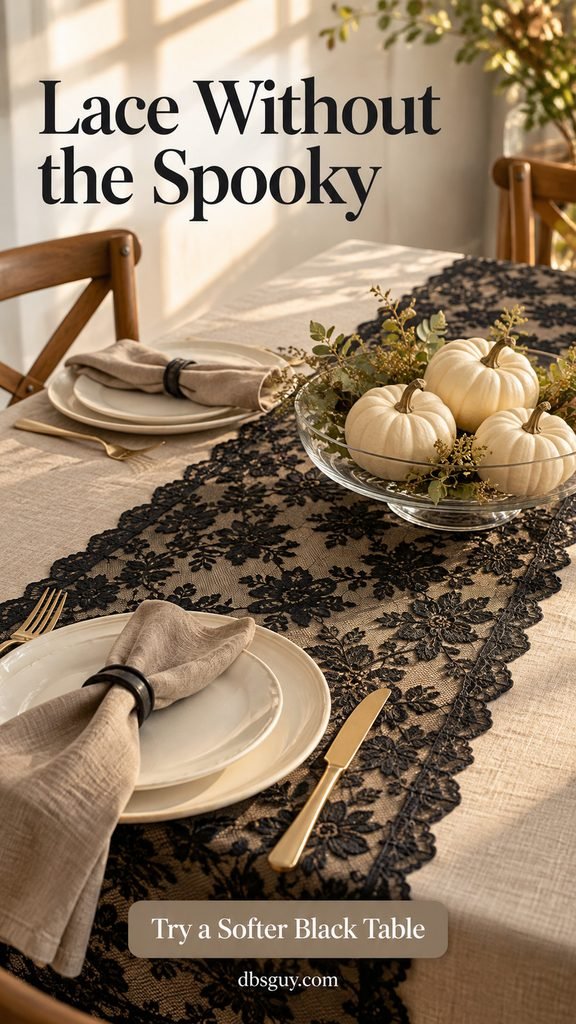
Use a flat section of lace with no bulky seam beneath the bowl. Let enough pale linen show on both sides for the pattern to read clearly. If your lace has a bold motif, leave the plates plain. This is a useful way to reuse a decorative textile without turning the whole table black.
19. Group the Decor on One Handled Board
A short wooden board with handles turns several small objects into one movable feature. Put a black decorative pumpkin, a couple of natural orange pumpkins and one short black LED candle on it. White plates and black napkins finish the table without another centerpiece.
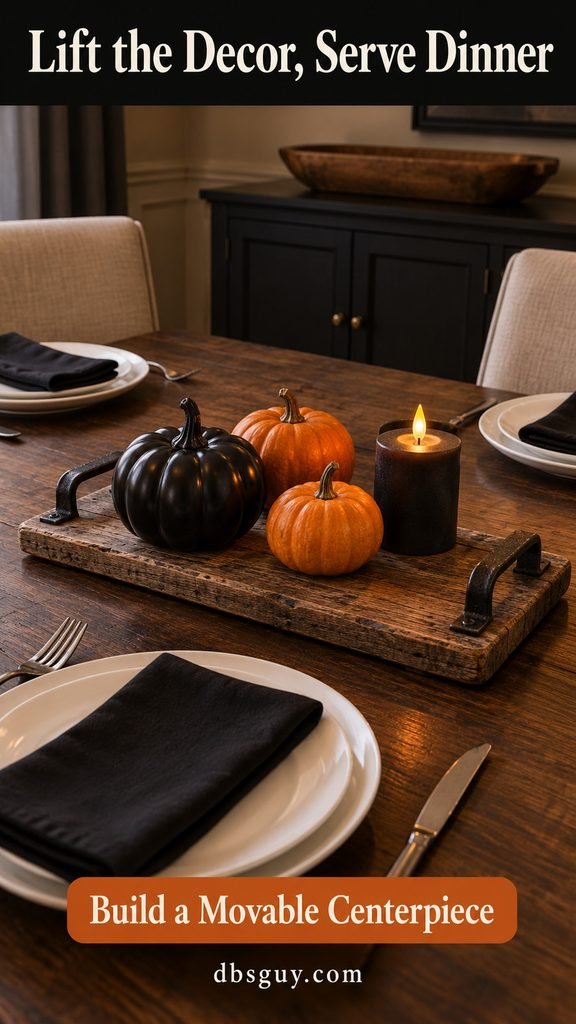
Leave both handles clear and test the board’s balance before setting the table. A board without a raised edge needs extra care: objects should sit securely, and nothing should roll. Set aside a landing spot on a sideboard, then move the whole group before the hot dishes arrive. The point is easier serving, so do not load the board until it becomes awkward to carry.
20. Keep a Bistro Table for Two Almost Bare
On a small round black table, the tabletop already supplies the dark anchor. Use two ivory plates, oatmeal napkins and clear glasses, then add one tiny black vase of short golden leaves. Skip the runner and chargers so the plates have room to sit comfortably.

Set out both glasses and a test serving dish before adding the vase. If it crowds the meal, put the leaves on the windowsill instead. A small table does not need a miniature version of every decorative layer. Two clean place settings with one fall reference are enough for an autumn dinner for two.
21. Space Black Lanterns Around the Serving Bowls
For a long table, repeat compact black lanterns instead of building one continuous garland. Use battery-operated candles inside and leave broad gaps for serving bowls. Ivory plates and black napkins connect the seats to the lanterns without adding loose decorations along the runner.
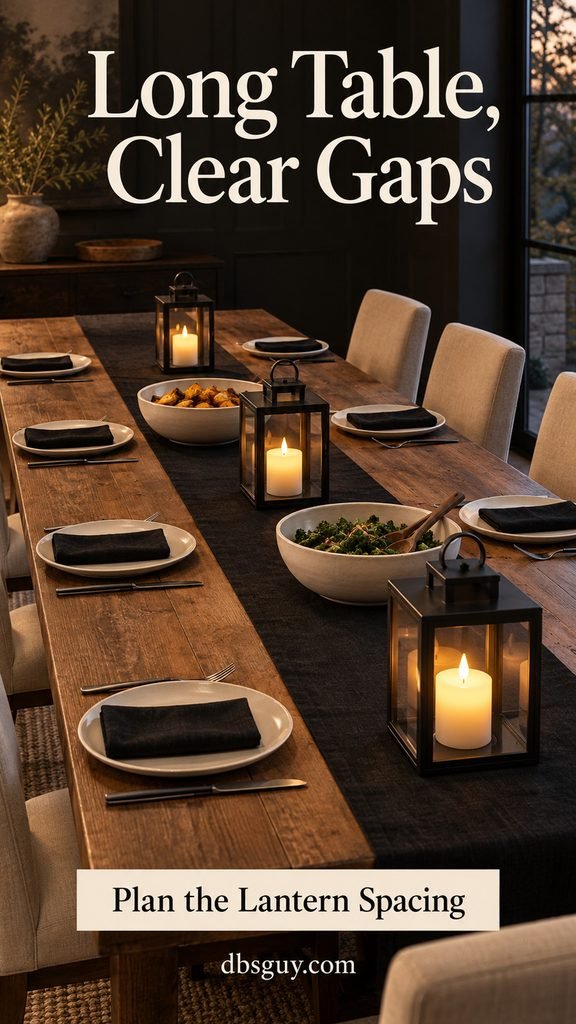
Arrange the empty serving bowls first, then fit the lanterns into the spaces that remain. The number you need depends on the table, not a decorating rule; two may work better than three. Check that doors, handles and corners stay out of reaching paths. For the rest of a gathering with friends, our 27 Fun & Cozy Friendsgiving Ideas Everyone Will Love offers ideas beyond the table.
22. Take Black Enamel Details to a Sheltered Porch
For a porch lunch, try ivory enamel plates with black rims, black napkins and a rust-and-black plaid runner. One low black lantern with a battery candle gives the center a clear focus. The combination feels autumnal even without a pile of loose leaves on the table.

Clip the runner beneath the tabletop and tuck napkin edges under the plates until guests sit down. Choose any lights for the conditions specified by their manufacturer and bring the setup indoors afterward. If wind or rain would make eating uncomfortable, use the same pieces inside. A sheltered spot and a practical backup matter more than matching the pictured arrangement exactly.
23. Give the Buffet Its Own Black-and-Ivory Setup
When the dining table needs every inch for guests, give the serving table the stronger styling. A black cloth makes ivory platters and bowls easy to distinguish. Keep one low, sturdy riser at the back, a stack of plates at the pickup end, and napkin-wrapped utensils where guests finish serving.

Put a compact pumpkin group in one back corner rather than between the dishes. Choose a riser intended to support the filled platter’s weight, and use heat protection appropriate to the serving pieces. Walk through the pickup order before adding food. This setup brings black into the gathering while the main table can stay simple.
Set Up the Table Around Dinner
- Decide where the food goes. A buffet, plated dinner and family-style meal leave different amounts of room for decor. Put an empty example of your largest serving dish on the table before choosing the centerpiece.
- Set one complete place. Include the plate, napkin, glass and utensils you will use. Check that the arrangement fits comfortably in front of its chair, then repeat it.
- Add the main feature. Pick one centerpiece approach rather than combining the fruit, flowers, lanterns and pumpkins from several complete looks.
- Sit down and reach across. Check the view of the opposite guest and the route to the serving bowl. Shorten a stem, shift a lantern or remove an object if it gets in the way.
If you are still choosing between a dark table and a lighter palette, browse our 5 Gorgeous Thanksgiving Tablescape Looks That Look Expensive (But Aren’t) before buying new linens.
Use Candlelight Where It Fits
The candle-based concepts here use battery-operated lights. For real candles, follow the U.S. Fire Administration’s candle safety guidance: choose stable holders, keep burning candles at least 12 inches from anything that can burn, and extinguish them when you leave the room. When that clearance will not fit around fabric, paper, ribbon or dried foliage, use flameless lights.
Questions About Moody Black Fall Tablescapes
How do I keep a black table from looking too dark?
Give the dark pieces a visible edge. Try ivory plates on a black cloth, woven mats beneath black dishes, or amber glasses on pale linen. Check the setting with the lighting you will use for dinner. Add usable room light if the plates and food are difficult to see.
Can I do this with white plates and no black dinnerware?
Yes. A black runner, cloth, placemat or napkin can establish the palette. Choose the piece that changes the part of the table you want to emphasize, then repeat black once in a small vase or place card if useful. Buying a full dark dinner set is optional.
What makes black decor feel like fall rather than Halloween?
Use recognizable harvest materials: whole pears, squash, pumpkins, golden leaves, warm wood and rust-colored flowers. Keep the shapes simple and leave themed Halloween props out. Ivory, camel, amber and copper soften the black while keeping the setting appropriate for an autumn dinner or Thanksgiving.
What is the simplest centerpiece for a Thanksgiving table?
Choose something low and contained that you can move without taking it apart: the fruit bowl in idea 7, squash bowl in idea 16, or handled board in idea 19. If the turkey and sides will fill the table, use place-setting details and let the food occupy the center.
Can I set the table the day before?
Arrange clean, dry linens, dishes and decorative pieces ahead if the table will stay undisturbed. Check fresh flowers and fruit on the day of the meal, refill vase water as needed, and switch on battery lights before guests arrive. Keep outdoor textiles inside until you need them.
Do I need a runner as well as a tablecloth?
No. A runner makes a narrow band; a cloth changes the whole background. Choose either according to your table and dishes. Layer both only when the top layer adds something useful, such as the visible lace pattern in idea 18.
Start with the dark layer that suits your existing dishes, then choose one harvest feature. Finish by checking the table from a guest’s chair: the arrangement should leave room to eat, talk and pass dinner comfortably.