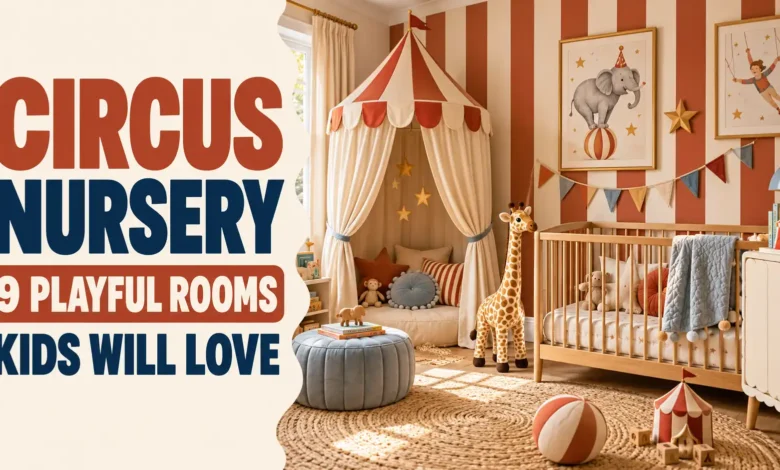
The easiest way to make a circus nursery feel charming is to choose one big-top detail, then give it room to shine. A striped wall, a gentle animal mural, or a painted tent around the reading chair can carry the theme without turning every corner into a carnival.
These nine circus nursery ideas range from classic red-and-cream stripes to soft pastels and a compact room layout. Each includes a color palette, a practical starting point, and an adjustment you can make for your own space. For the most recognizable circus look, start with Room 1. For softer color, try Room 2 or 5; for a small footprint, jump to Room 6.
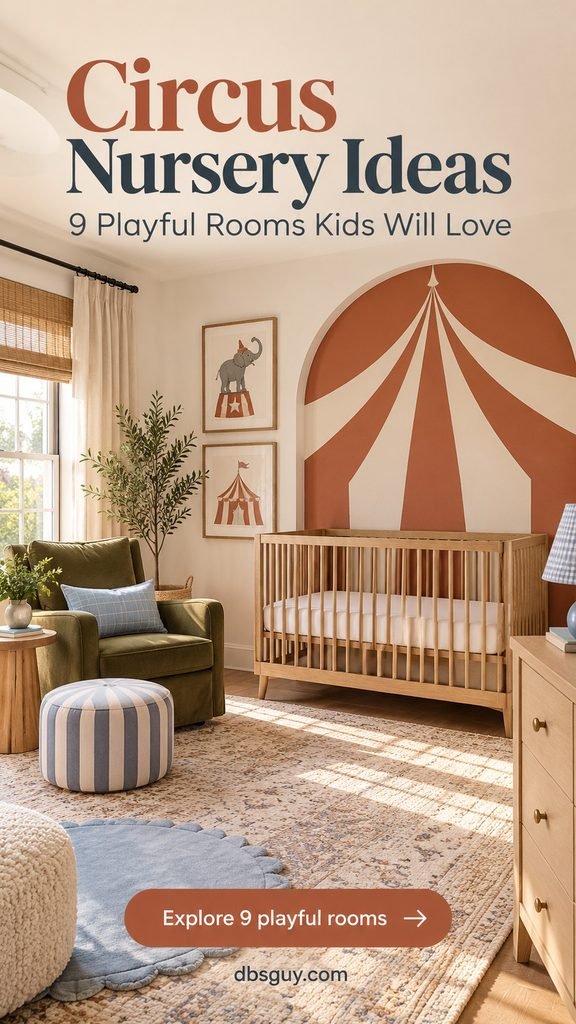
The images are AI-generated room concepts, not photographs of completed projects. They illustrate styling ideas; furniture dimensions, installation, and product safety need to be checked separately.
Start with the room you actually have
Measure the crib, dresser, and chair before choosing decorative pieces. Mark their footprints on the floor with painter’s tape, then check that the door, drawers, and chair can move freely. Place the circus feature on the wall that stays most visible once those essentials are in position.
Keep the theme on walls and in furnishings outside the sleep space. The American Academy of Pediatrics’ safe-sleep guidance calls for a firm, flat infant sleep surface with a fitted sheet and no loose bedding or soft objects. It also recommends room sharing without bed sharing for at least the first six months. You can prepare a nursery for feeding, changing, and play while your baby’s sleep space stays in your room.
1. A Classic Red-and-Cream Big-Top Room

Broad brick-red and ivory stripes make this room instantly recognizable. The softened red has a warmer, less graphic effect than bright scarlet, especially beside oak furniture and a cream chair. Use the striped wall as the main attraction and keep the remaining walls light.
For a painted version, divide the wall into equal-width bands and sketch the tent peak before taping. Try the pattern on paper first so you can see how it meets the ceiling and furniture. A wall painter can work from a measured elevation showing the stripes and peak; the concept image gives them a mood reference rather than a construction drawing.
A round, low-pile rug adds a subtle circus-ring reference. Skip another large pattern on the chair or curtains—the striped wall already has plenty to say. If your room is narrow, put the stripes on one short wall instead of wrapping them around the entire space.
2. A Pastel Circus with a Scalloped Border
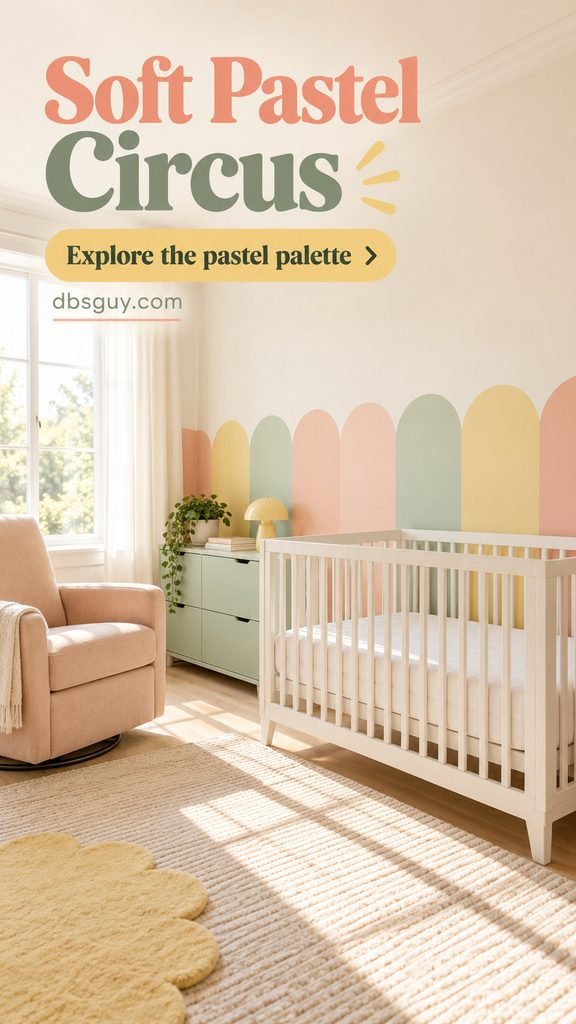
This version trades bold tent stripes for a scalloped border in peach, mint, and butter yellow. A white crib and pale peach chair make the colors feel light, while the curved border recalls the decorative edge of a circus tent.
Keep the wall above the scallops mostly cream. Pick one pastel for the largest upholstered piece and use the other two in smaller areas, such as a storage unit or painted trim. That gives the room a clear order instead of making every surface equally colorful.
Cut a reusable semicircle template from stiff card to help mark a painted border. Test the complete color combination on the actual wall in daylight and evening light before committing; mint can look much cooler beside some whites. For a rental, a removable border may suit you, but test adhesion and removal according to its manufacturer’s instructions.
This is a good choice when you love the circus theme but want a gentle backdrop that can later work with different books and artwork.
3. A Vintage Circus Poster Room

Let a small group of circus illustrations establish the theme. In this room, three coordinated prints sit above the dresser, while walnut tones and a faded rust-and-navy rug give the space an old-storybook feeling.
Choose illustrations with a similar background color so the grouping feels connected. Matching simple frames can make inexpensive reproduction prints look considered. Lay the arrangement on the floor before making holes, then use fixings appropriate to the wall and keep the artwork away from the crib.
Put the vintage character into art and color rather than an antique crib. Choose sleep furniture that meets current requirements, check recalls, and keep the manufacturer’s assembly instructions. Old circus memorabilia may also have small parts or peeling finishes, so it works better as an image reference than an accessible nursery object.
Keep one practical surface clear for daily care supplies. A fully styled dresser may look lovely in a picture but be frustrating when you need to set something down.
4. A Navy-and-Gold Circus Under the Stars

A navy accent wall gives the circus theme a nighttime storybook mood. Small painted gold stars and a cream tent outline frame an ochre chair; pale oak and an ivory crib wall keep the rest of the room from feeling too dark.
Use navy on one wall first, especially in a room with limited daylight. Space the stars loosely rather than filling every gap. A restrained scatter makes the tent outline easier to read and leaves the room feeling less busy.
The tent shape belongs behind the seating area. Paint creates the visual effect without fabric suspended over the crib. If you want a metallic look, compare finish samples: some gold paints read very yellow under warm lighting. A matte ochre star can be a simpler alternative.
Add practical light for feeding and changing without directing glare toward the sleep space. Keep lamp wiring secured and inaccessible, and choose the fixture for the room’s real tasks rather than its resemblance to a circus marquee.
5. A Sage-and-Oatmeal Animal Parade
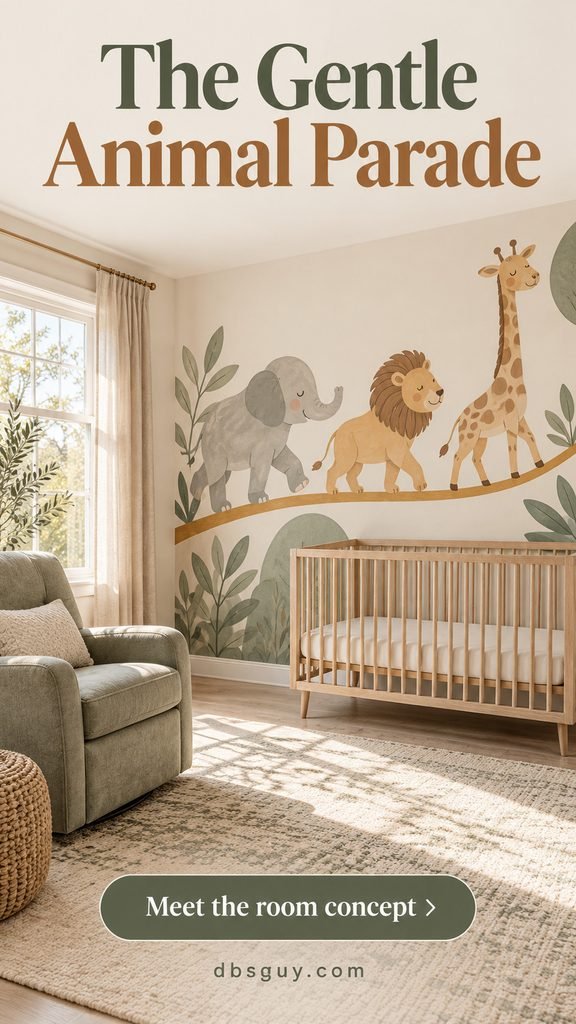
An elephant, lion, and giraffe parade brings personality to this room without relying on red stripes. Oatmeal walls, sage foliage, and ochre details make a soft background for the animals, while natural wood keeps the furniture visually connected.
The concept places flat painted animals on the crib wall, without hanging objects. You could instead move the mural to a play wall if you prefer a simpler sleep corner. Choose friendly, rounded illustrations with clear silhouettes; the concept does not need a realistic animal scene or elaborate circus equipment to communicate the theme.
For a custom mural, ask the artist for a scaled sketch showing where the dresser and chair will sit. Otherwise, you may lose the best part of the illustration behind furniture. Carry one mural color into the glider or storage baskets and leave the other accessories mostly neutral.
For more ways to pair green with cream and wood, browse our sage green bedroom color ideas. Borrow the palette combinations and adapt them to nursery furniture and a bare infant sleep space.
6. A Small Nursery with One Painted Circus Arch

A small nursery needs a clear layout before it needs more decoration. Here, the crib follows one wall, a narrow dresser sits at the far end, and a terracotta tent-shaped arch marks the chair corner. The open center makes the room feel more usable.
Choose furniture by its actual footprint. Measure the chair when reclined or rocking, and check the dresser with drawers open. A compact chair that blocks the door is still too large for that spot. Keep a clear route between the doorway, chair, and crib rather than filling the remaining floor with circus props.
The painted arch adds character without taking floor space. Make it wide enough to frame the chair, not just the chair’s back, and stop the decorative treatment there. One storage basket may be all the extra detail you need.
If you are comparing seating shapes, our bedroom seating and layout guide offers useful questions about scale and upholstery. Use those principles when choosing a nursery chair; buy only after checking your measured layout.
7. A Modern Room with Ringmaster Colors
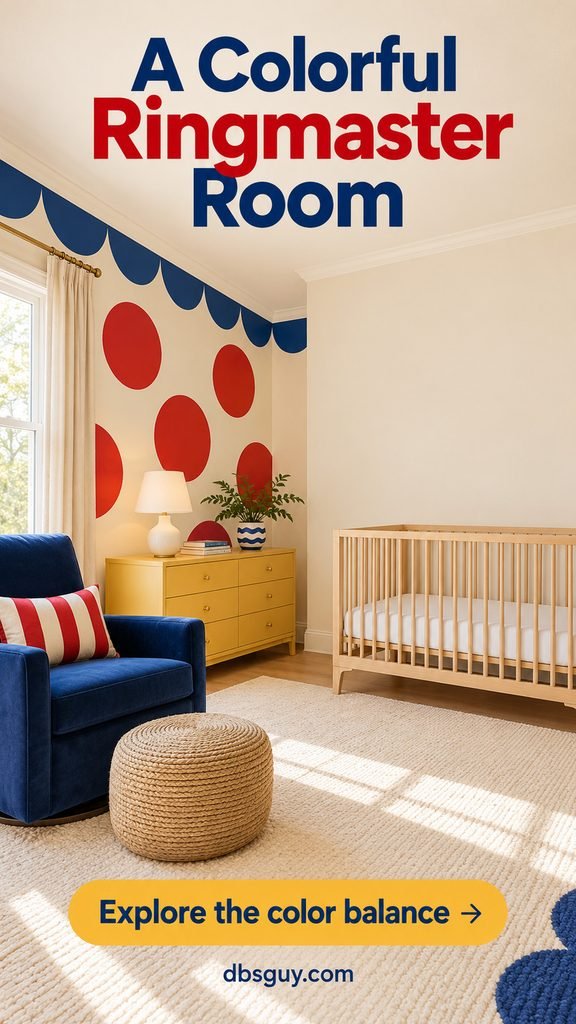
This room is for parents who want color without an all-over themed wallpaper. A cobalt chair, butter-yellow dresser, and red painted circles create a modern circus palette. Blue scallops repeat the chair color and help the pieces feel connected.
Use cream as the largest area of color. Then assign each brighter shade a job: blue for seating, yellow for storage, red for small graphic accents. This is an editorial styling approach, not a rule, but it makes shopping decisions much easier.
Start with the chair fabric before choosing matching paint. Upholstery options can be more limited than paint colors, and a nearly matching blue may feel accidental. Repeat the blue intentionally in the wall treatment instead.
The concept uses a low-pile rug with a bold blue-and-cream zigzag edge. Repeat only those two colors in the rug, or choose a plain cream version if you want fewer patterns. If you love the palette but worry it will be too strong, retain the blue chair and shrink the red accents rather than buying a completely different set of furniture.
8. A Lavender Carousel Storybook Room
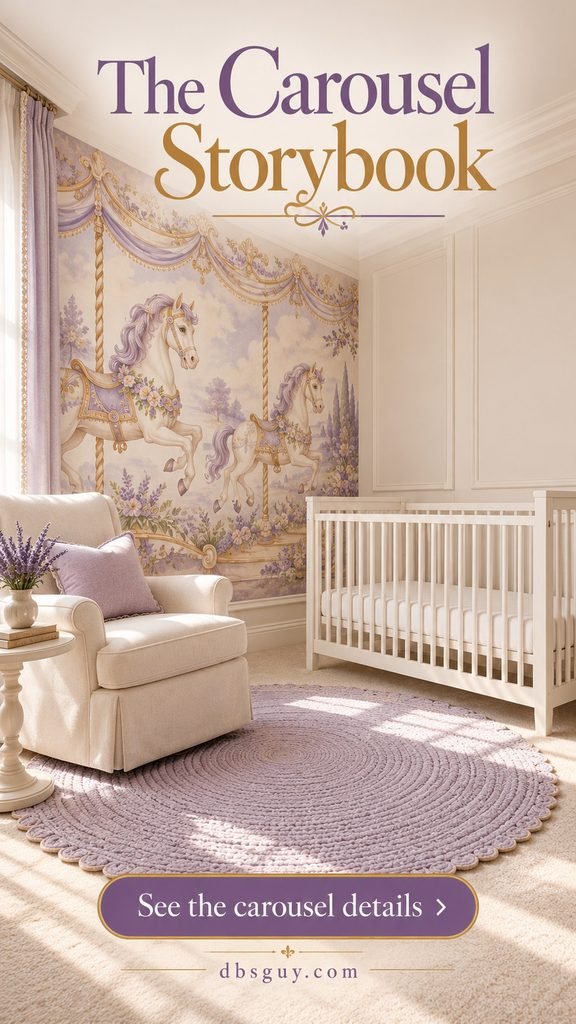
A carousel horse gives the nursery a fairground connection with a softer, more romantic character. Lavender, ivory, and touches of ochre create the storybook mood; a white crib and cream chair keep the mural as the focal point.
Choose one large illustrated horse rather than a crowd of small carousel motifs. Put it on a wall you can see from the doorway and give the illustration a little empty space around it. The round lavender rug repeats the curved fairground theme without adding another detailed pattern.
Ask a mural artist or wallpaper supplier how the artwork will fit your wall’s dimensions before ordering. A design that looks balanced in a product thumbnail may have its horse cropped by a door or furniture in your room.
Keep carousel imagery on the wall rather than using a decorative ride or rocking toy as nursery furniture. When your child is older, the lavender background can work with flowers, illustrated books, or other interests.
9. A Circus Reading Corner That Can Grow with Your Child
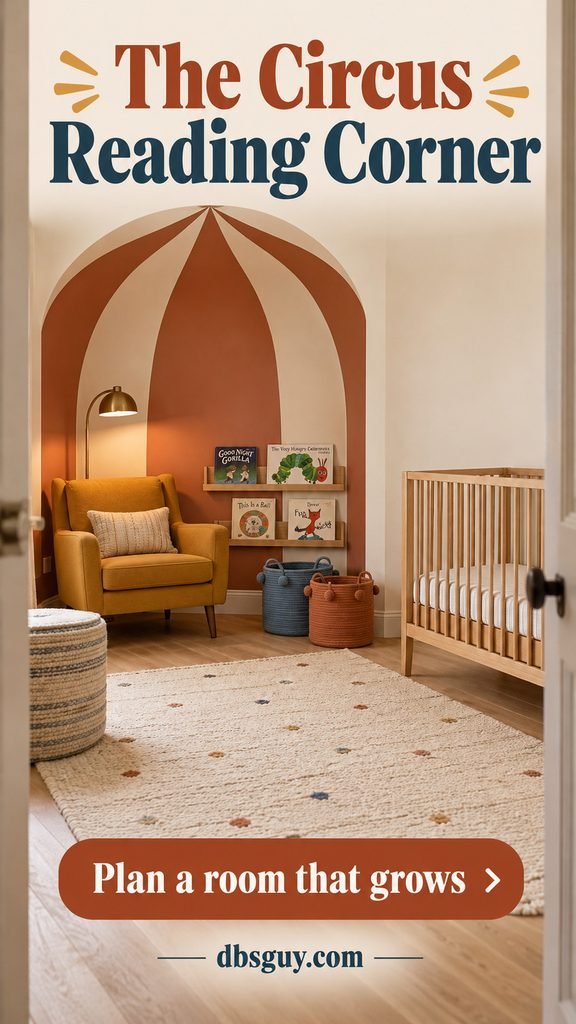
Instead of making the crib the center of the circus theme, make the reading corner the main event. A terracotta-and-cream painted tent frames a mustard adult chair, with a low book ledge nearby and blue and terracotta storage trunks for rotating toys.
In the baby stage, the chair gives an adult a comfortable place to read aloud. Later, the book display can become part of a supervised toddler reading routine. Secure the ledge, keep its contents age-appropriate, and leave the floor around it uncluttered.
Repeat the terracotta in one storage piece and introduce blue for contrast. The concept shows closed trunks; lightweight open bins without heavy lids are another option to consider for easier access. There is no need to add a fabric tent: the painted outline already creates the feeling of a little destination within the room.
For more seating and corner arrangements, see our cozy reading nook ideas for small spaces. Adapt adult-room inspiration to a child’s reach and activity level, then reassess the layout as climbing and independent play develop.
Bring your favorite circus nursery idea into real life
Save one complete room as your main reference, then choose three details to translate: the palette, the main wall feature, and one practical furnishing. Mixing the striped wall from one room, the star wall from another, and a carousel mural from a third can make the theme harder to read.
- Plan first: measure the essential furniture and check doors, drawers, and walking routes.
- Make one feature: choose stripes, a mural, a border, or a painted tent shape.
- Repeat selectively: carry two colors into the chair, rug, or storage.
- Finish for daily use: keep supplies accessible to adults and clear the floor of decorative props.
Anchor dressers and bookcases with suitable hardware following the manufacturer’s instructions; the CPSC’s furniture anchoring guidance explains why this matters. Choose cordless window coverings, keep the crib away from windows and accessible cords, and avoid hanging canopies or loose decorations over the sleep area. A concept image cannot confirm that a room or product is safe.
Circus nursery FAQs
How do you make a circus nursery feel calm?
Use a light background, one clear circus feature, and a limited accent palette. Pastel scallops and the sage animal parade are gentle starting points. This describes the visual mood; it does not promise better infant sleep.
Can you create the theme without painting?
Yes. Circus illustrations on a wall away from the crib, a striped rug, and a colorful chair can establish the theme. If you use removable wallpaper or decals, check the product’s surface requirements, test a sample, and keep peeling pieces inaccessible to children.
What should I spend on first?
Prioritize appropriate sleep furniture, a comfortable adult chair, and useful storage. Add the circus feature after the layout works. A print grouping or one painted wall can provide more visual impact than a collection of decorative objects.
Should I put a canopy over the crib for the big-top effect?
Use a painted tent outline on a nearby wall instead. It gives you the recognizable shape without fabric, ties, or suspended decor above the sleep space. Keep the crib interior bare apart from its fitted sheet.
Will the room still work when my baby becomes a toddler?
The palette, wall art, and reading corner can stay while the furniture and accessible objects change. Follow the crib manufacturer’s transition instructions and revisit anchoring, reach, and climbing hazards as your child grows. Keeping the circus theme in replaceable decor gives you flexibility when their interests change.
Start with the room whose layout is closest to yours. The most useful circus nursery inspiration is the one you can turn into a comfortable, workable space—not just a picture you love saving.