For January gel nail colors with depth, start with cocoa brown, mulberry, or slate blue in a smooth cream finish. If you want a little light in the color, compare oyster pearl, rose-taupe microshimmer, and midnight navy shimmer. These six options cover warm neutrals, muted color, and darker evening shades without relying on holiday nail art.
The useful choice is how you want the color to behave when your hand moves: stay visually solid, glow softly, or reveal tiny points of shimmer. Here’s how to choose each look and describe it at your appointment.
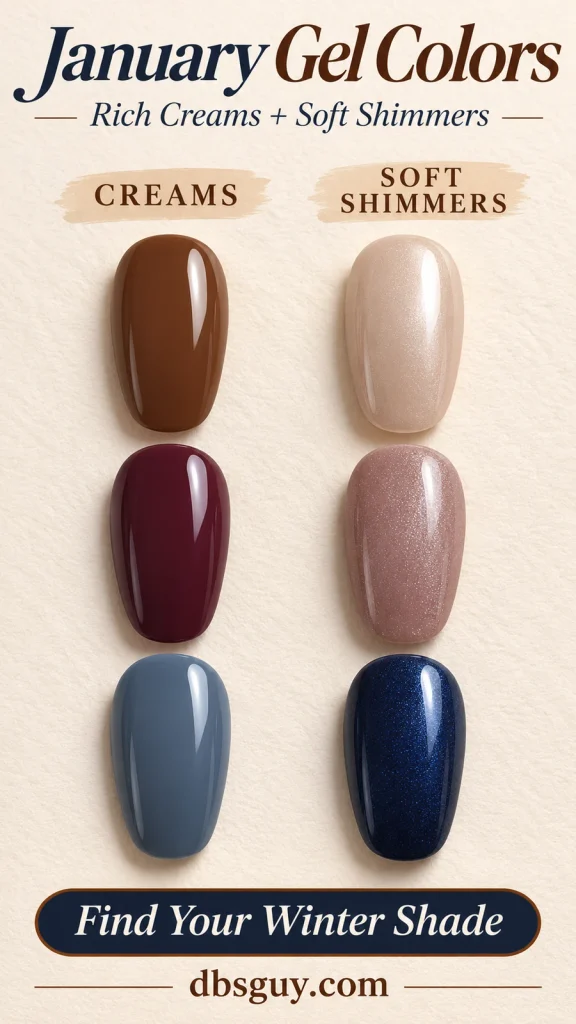
The images are AI-generated color concepts, not photographs of completed salon work or tested polish. Actual shades and shimmer strength vary by formula and lighting; use them to explain a direction, then confirm it on a finished swatch.
What “Cream” and “Soft Shimmer” Mean Here
A cream, often labeled crème, is a smooth color finish without visible sparkle. It can be glossy: the bright reflection from a shiny top coat is different from shimmer in the polish. “Rich cream” describes the cocoa, berry, and blue finishes below; it doesn’t mean all the colors are beige.
Soft shimmer adds fine reflective detail while leaving the base color easy to see. Oyster pearl has a broad, satiny glow; the rose-taupe and navy options show finer points of light. Finish names vary between brands, so ask to see the sample rather than choosing by the label alone.
If you’re comparing lighter blues, whites, and reds as well, our January gel nail color guide to icy blues, creamy whites, and deep reds expands those color families. This palette focuses on deeper creams and quieter reflective finishes.
1. Cocoa Cream for a Brown That Still Shows Its Color
A medium cocoa brown gives you a substantial neutral without going all the way to near-black espresso. Look for a brown that remains clearly brown in ordinary room light. The short squoval nails in the image keep the outline soft, with a glossy surface and no sparkle.

Choose this direction if you wear a lot of camel, cream, denim, or black and want one color to sit comfortably beside them. A neutral-to-cool cocoa looks quieter than an orange-leaning caramel. If the first sample reads too gray on your hand, compare a slightly warmer brown at the same depth before moving darker.
OPI describes its GelColor shade You Don’t Know Suzi as a mocha brown crème, which is a useful example of the finish terminology. It isn’t an exact match to this illustration, and your salon’s brown may come from another range.
Salon wording: “A medium cocoa-brown cream gel, fully covering and glossy, on short squoval nails. I want visible brown rather than almost-black espresso, with no shimmer.”
2. Mulberry Cream When You Want More Purple Than Red
Mulberry brings a purple-wine undertone to a dark manicure. It’s the option to compare when you like the depth of burgundy but want the berry color to lean toward plum. The reference uses short oval nails and a plain glossy finish, so the undertone does the work.

Hold a mulberry swatch beside both a wine red and a dark purple. That comparison makes it easier to spot whether you’re choosing a red-based berry or a more violet shade. For this look, pick the balance between them rather than the darkest option in the row.
Charcoal sleeves make a useful styling reference because they let the berry color stand apart from a neutral background. If the polish becomes almost black away from the salon lamp, ask for a lighter mulberry. Adding sparkle won’t solve an undertone or depth you don’t like.
Ask for: “A glossy, opaque mulberry cream with a visible purple-wine tone. Short oval nails, no shimmer, and enough berry color to see indoors.”
3. Slate-Blue Cream for Muted Color Without Sparkle
Slate blue sits between a straightforward blue and a gray neutral. Choose a medium, softened blue when a pale icy shade feels too light but navy feels too dark. The squoval set shown here is completely opaque, with no metallic or pearly effect.
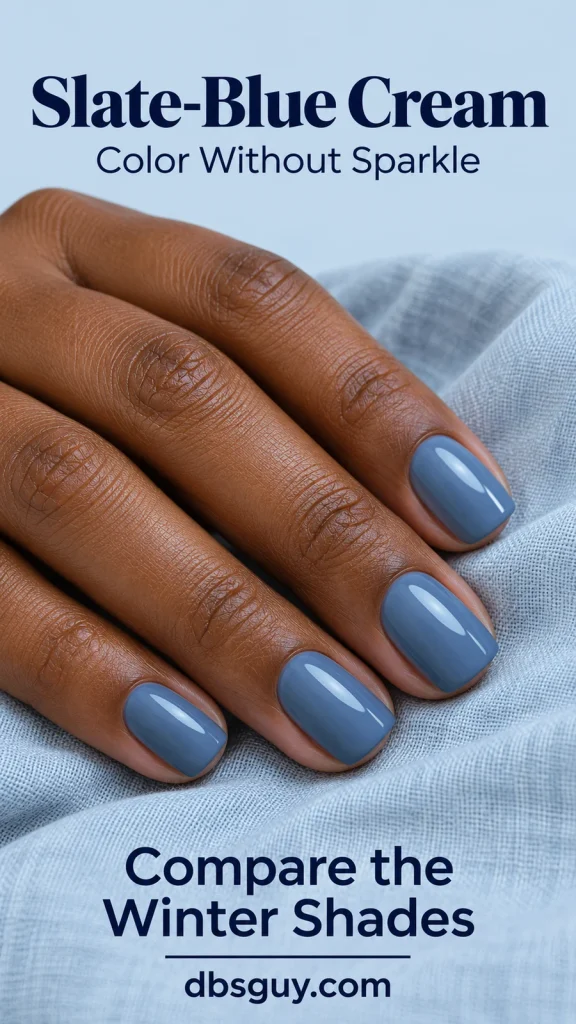
Check that the finished sample looks blue under both daylight and your usual indoor lighting. A heavily grayed shade may be closer to steel gray than you intended; a saturated blue may feel much brighter. Ask to compare one swatch on either side of your favorite instead of trying to decide from a bottle.
This is a useful place to keep the finish simple. If what you like is the color against a gray coat or blue shirt, shimmer may add a second effect you don’t need. You can also wear the shade on a short oval shape if that’s the outline you prefer.
Salon wording: “An opaque medium slate-blue cream with a muted gray undertone and a glossy top coat. No silver shimmer or cat-eye effect.”
4. Oyster Pearl for a Pale, Satiny Glow
Oyster pearl is the lightest choice in this palette: a pale beige-gray with a gentle pearly reflection. It’s a softer direction than a bright white and a different finish from a mirrored chrome. The short oval nails here show a diffuse glow across the surface.
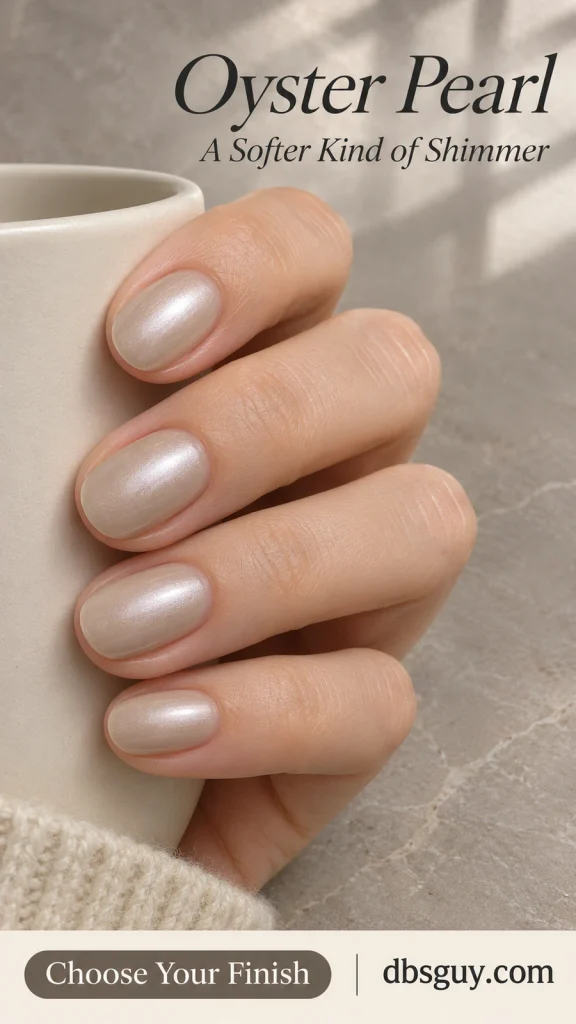
Watch the sample as you turn it. The color should still look like a pale neutral when the bright reflection moves away. If it flashes a strong pink, blue, or green that you don’t want, compare a more neutral pearl. If it looks too yellow, move toward a grayer or pinker beige.
Coverage deserves a separate decision. The illustration has soft coverage, but it isn’t intended as a clear wash over a strongly visible natural tip. Tell your artist whether you want the free edge hidden, then choose a formula that provides that coverage. Pearl is a finish, not a guarantee of opacity.
Ask for: “A pale oyster-beige gel with a soft pearl luster on short oval nails. A gentle glow, no mirror chrome or large glitter, and please show me the coverage first.”
5. Rose-Taupe Microshimmer for a Neutral With More Light
Rose-taupe combines muted pink with gray-brown, then adds a fine silver shimmer. It gives you more color than oyster while staying softer than a bright pink. On short rounded-square nails, the tiny reflective points are visible up close without becoming the whole design.

The balance between base color and shimmer matters more than the word “nude.” A very reflective sample may look silver from a distance; a sheer sample may show much more natural nail than this concept. Ask to see a colored, covering gel with fine shimmer if you want the illustrated effect.
Compare it with a plain rose-taupe cream before deciding. If you like both, look at them at arm’s length: choose the shimmer when you enjoy that extra flicker, and the cream when the uninterrupted color appeals more. A deeper rose-taupe is also worth comparing if the lightest option feels too pale beside your skin.
Salon wording: “A muted rose-taupe gel with even coverage and fine silver microshimmer. I want the rosy brown base to show, without a silver foil or chunky-glitter finish.”
6. Midnight Navy Shimmer for Dark Nails With a Blue Glint
Midnight navy keeps the base dark while tiny blue reflections give it movement. It’s the strongest contrast in the shimmer group. The short oval nails in the image stay navy between the points of light; there are no stars, gems, or separate accent nails.

See this one away from a spotlight before committing. Under bright light, a dark polish can reveal far more shimmer than you’ll notice during an ordinary day. Choose a sample you also like in its quieter state. If you want the blue visible all the time, compare a slightly lighter navy.
Specify an even distribution of fine shimmer if you don’t want a concentrated magnetic stripe. A cat-eye service can create a different pattern of reflection, and “shimmery navy” alone may not tell your artist which effect you mean.
Ask for: “A deep navy gel with fine blue shimmer spread evenly across every nail. Short oval shape, glossy finish, and no cat-eye line or large glitter.”
Make the Final Choice With Two Finished Swatches
Narrow the palette to one cream and one shimmer rather than comparing every bottle at once. Cocoa and rose-taupe make a useful warm-neutral comparison; slate blue and navy let you compare a solid blue with a darker reflective one. Oyster is the choice to keep in the running if you want a pale manicure.
Hold each finished sample beside your hand, then beside a sleeve you often wear. Check the base color, coverage, and reflection separately. You don’t need a skin-tone rule to approve a shade; the question is whether you like the contrast and undertone on your own hand.
Save the reference that comes closest and tell your artist what matters most about it. “This color, but without the sparkle” is more useful than asking for a vague winter look. If you’re also reconsidering length and outline, browse January almond nails: choosing between sheer neutrals and winter darks before your appointment.
A Few Gel-Service Details Worth Confirming
These are color directions, not a universal application recipe. Follow the gel manufacturer’s directions for the base, color, top coat, compatible lamp, and curing time. For example, OPI’s professional GelColor instructions call for thin coats and specify its lamp; don’t treat one system’s timing as a rule for every gel.
For hand protection during a gel manicure, the American Academy of Dermatology recommends broad-spectrum, water-resistant SPF 30 or higher on the hands, or dark, opaque gloves with the fingertips cut off. It also advises against picking off gel polish. If you have recurring nail problems, discuss them with a dermatologist rather than covering them with another set.
Questions Before You Book
Can cream gel nails still look shiny?
Yes. Cream describes the color finish without visible sparkle. A glossy top coat can create a bright surface reflection over that solid color. Ask for a cream shade with a glossy finish if you want shine without shimmer.
How do I ask for shimmer that isn’t too sparkly?
Show your artist a finished sample with the amount of reflection you like. Specify fine shimmer with the base color still visible, then view it at arm’s length and under ordinary light. Terms such as pearl, shimmer, and glitter can cover noticeably different effects between ranges.
Do these colors need extensions?
No added length is part of these color suggestions. All six concepts use short shapes. Tell your artist you want to keep your existing length; discuss any structural service separately from the color choice.
Can I choose a shade from the generated image alone?
Use the image as a starting reference. It doesn’t identify a tested product match, and screens and lighting can change the apparent color. Confirm the actual gel on a finished salon swatch before choosing.
Also Read
- Easy Short Nail Designs for January: Tiny Dots, Fine Tips and Soft Shimmer — when you want a small detail alongside your color.
- Almond Gel-X Nail Designs for January: Icy Tips and Soft Winter Shimmer — for tip-focused designs and a longer outline.