
For January gel nail colors, start with the amount of contrast you want: pale blue for a cool wash of color, creamy white for a light neutral, or deep red for a stronger finish against winter clothes. Then decide whether you want the natural nail to show through. That second choice can change the result as much as the shade itself.
For your January 2027 manicure, these six options keep the palette focused: two icy blues, two soft whites, and two deep reds. Each has a different reason to choose it, plus a clear way to describe the result at the salon. You can keep your usual comfortable nail length; none of these colors needs an extension or detailed artwork.
The visuals are AI-generated color concepts created for dbsguy.com. They illustrate shade, coverage, and finish, rather than documenting salon work or product testing. Use a real swatch beside your hand before choosing a polish.
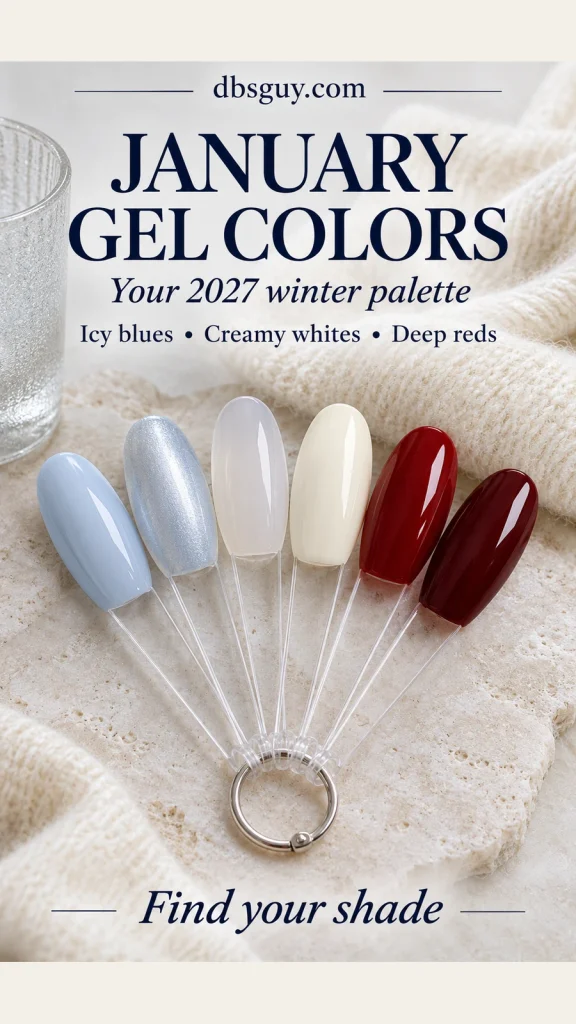
Choose Your January Color in Three Decisions
You do not need to settle on a brand or bottle name first. Narrow down what you want to see on your hand:
- Color: powder blue feels light and cool; white keeps the manicure neutral; cherry and wine red create a stronger contrast with pale sweaters.
- Coverage: a sheer milky shade lets some of your nail show. An opaque cream covers it. A pale color is not automatically sheer.
- Finish: the powder blue, whites, and reds below use a simple glossy surface. The silver-blue option adds a pearly reflection. Choose that one if you want the finish to contribute more to the look.
Compare finished swatches beside your own hand, first near a window and then in ordinary indoor light. Hold them next to a sleeve you actually wear. You may love the crisp contrast of a cool blue with camel wool, or prefer the quieter combination of ivory and oatmeal. There is no skin-tone rule you have to pass before wearing any of these colors.
1. Powder Blue for a Clean, Solid-Color Set
This is the simplest blue in the group: a pale, opaque cream with a glossy finish. There is no sparkle or translucent base to compete with the color. The short squoval shape in the reference makes it a useful choice if you want a noticeable winter manicure without adding length.
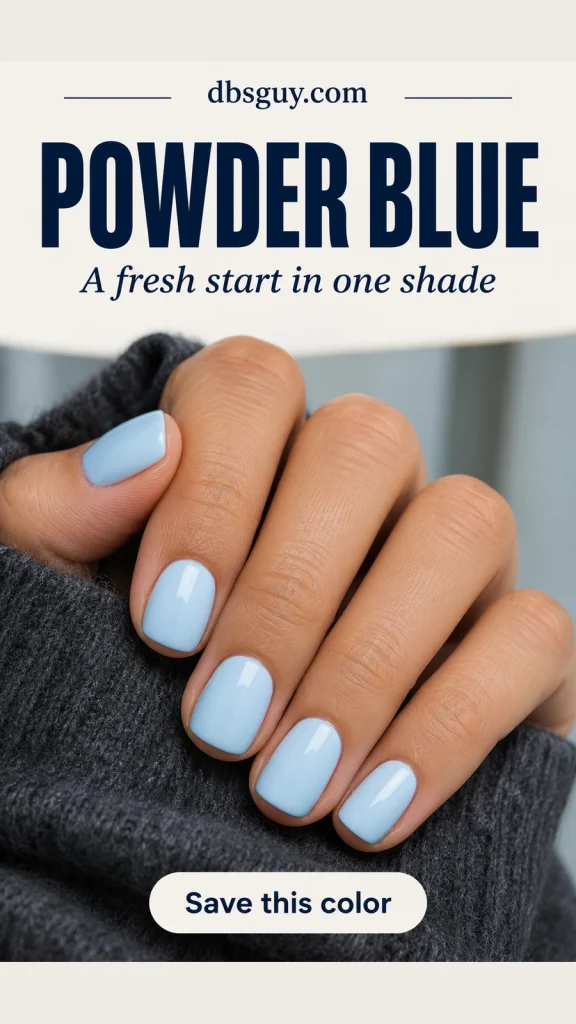
The shade should still look blue in normal room light. If a swatch reads almost white, ask to compare a slightly more saturated blue. If it feels too bright beside your hand, compare a softer, grayer version before committing. A cool powder blue and a green-leaning mint can look close in a bottle, so judge the painted sample.
Salon request: “I’d like short squoval nails with an opaque pale powder-blue gel and a glossy finish. Please keep it a plain cream color, with no shimmer.”
Wear it beside charcoal, navy, or a dark denim cuff when you want the blue to stand out. If you like this shade but would rather concentrate it at the edge, see our almond Gel-X designs with icy tips and soft winter shimmer.
2. Icy Silver-Blue for a Pearly Reflection
Choose this when plain blue feels a little too flat for what you have in mind. The color stays pale blue, but a fine silvery sheen makes the surface luminous. In the reference, the soft oval nails have an even pearly reflection rather than separate large glitter pieces.
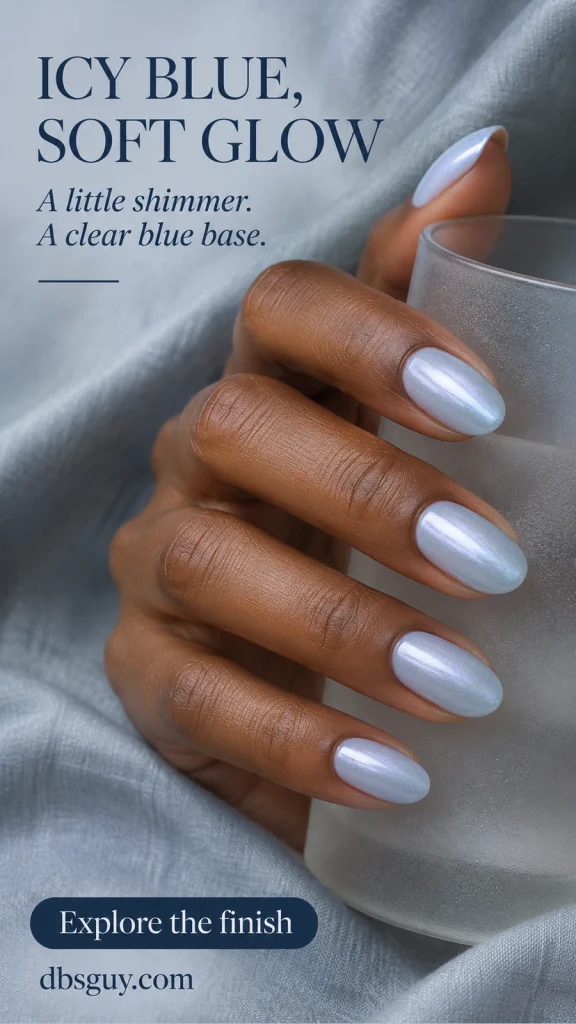
Look at the finished swatch while turning it slowly. You want to like the underlying blue when the reflection moves away, too. A very reflective sample can look nearly silver from one angle, so show your nail artist how much blue you want to keep visible.
Ask for: an icy blue gel with fine pearlescent shimmer and a glossy finish. Specify a gentle sheen if you do not want a mirror-like surface or a concentrated cat-eye stripe. Salon descriptions vary, so the sample matters more than the name on the menu.
This is an easy color direction for a winter dinner or a weekend outfit with silver jewelry. Keep all nails the same shade if the shifting reflection is the detail you want to notice.
3. Sheer Milky White When You Want Some Natural Nail Showing
Milky white gives a soft wash of white while allowing a little natural pink to remain visible. The rounded short nails here are deliberately translucent. They should not look like an opaque white manicure with a pink gradient painted underneath.
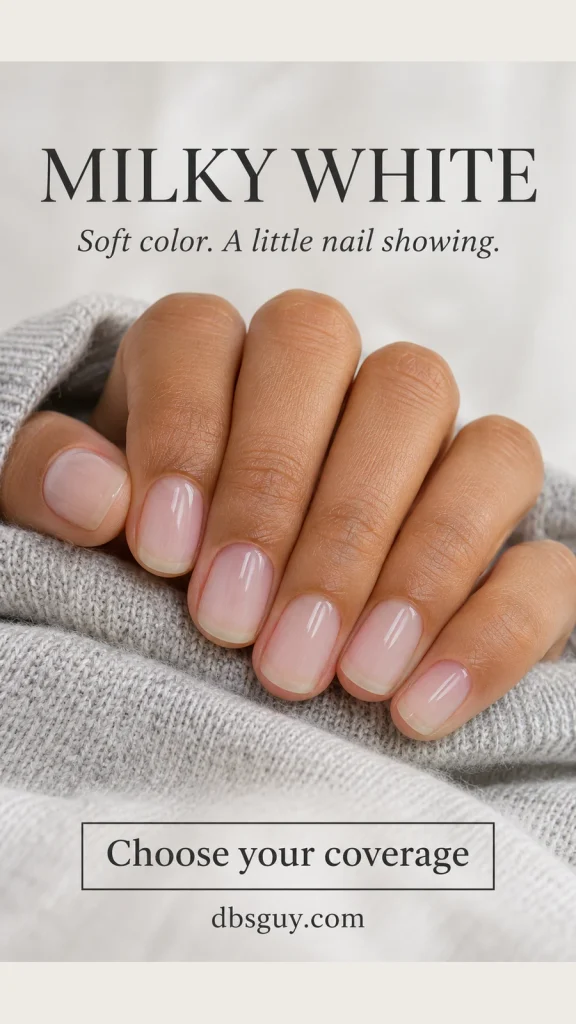
Decide how you feel about seeing your free edge before choosing this option. If you like the gentle coverage but dislike a visible tip line, ask your artist to show you a slightly more covering milky formula. Do not assume that adding more and more coats of a sheer product is the right way to get solid white.
A useful request is: “I want a glossy milky-white gel with some natural nail showing through, including a softly visible free edge. Please show me the coverage on one nail first.”
Keep the shape rounded or squoval if you want the color to stay understated. For a wider comparison of sheer white, ivory, and brighter coverage, our white nail guide from milky to bright shows the differences.
4. Creamy Ivory for Full Coverage With a Warmer Tone
Ivory is the choice when you want a solid pale manicure with a little warmth. Unlike the milky white above, this reference covers the natural nail. The off-white color sits comfortably beside camel wool and gold jewelry without the sharp appearance of a very bright white.

Check the warmth carefully. Some ivory swatches lean noticeably yellow or beige; others are only a small step away from neutral white. Hold a neutral white sample beside your preferred ivory to make that difference easier to see. Then choose the one you enjoy against your own skin.
Salon request: “I’d like an opaque warm ivory gel on short oval nails, with a glossy finish. I want an off-white cream, without a strong yellow cast.”
This is a good alternative if you like a light manicure but want more coverage than a sheer milk shade provides. Keep the surface plain so the creamy color remains the focus.
5. Deep Cherry Red for Color That Still Reads Red
A deep cherry red gives you richness without taking the manicure all the way to an almost-black shade. In this reference, the very short, softly squared nails keep a clearly red center and a smooth glossy reflection. The color provides plenty of definition on its own.
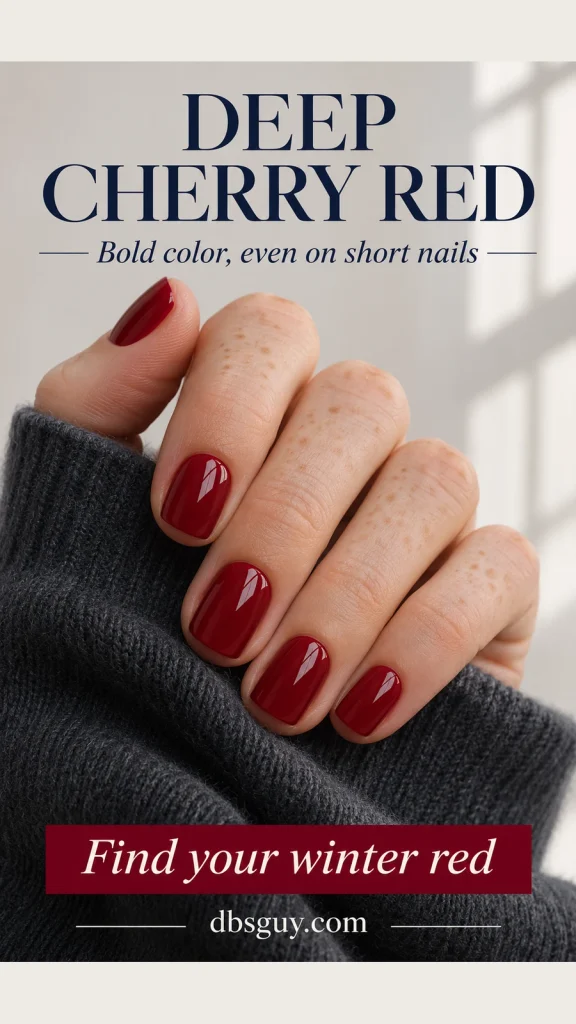
Compare the sample with the darker wine option below in the same light. Choose cherry if you want to recognize the red immediately, including indoors. Ask for a deep red that stays visibly red rather than a purple-leaning berry or a brown-heavy shade.
Try this description: “A glossy, opaque deep cherry red on very short nails. I want a rich red, with no glitter, and I do not want it to look black in room light.”
A short square or squoval shape gives the color a crisp outline; rounded nails soften that outline. Choose the shape you find comfortable rather than growing your nails just for the reference. Beside gray knitwear or a cream cuff, the red can be the strongest color in the outfit.
6. Dark Wine Red for a Moodier Winter Manicure
Wine red goes deeper, with a berry undertone that separates it from the cherry above. The reference uses a glossy finish on softly tapered oval nails. The edges and reflections still reveal the red, even though the color looks much darker away from the light.

This is the option to check most carefully indoors. If the swatch becomes indistinguishable from black and you want more red, compare a lighter wine rather than hoping the salon lighting tells the whole story. If you enjoy that nearly black depth, make sure you also like the berry tone that appears in brighter light.
Ask for: an opaque dark wine-red gel with a restrained berry undertone and a glossy topcoat. Show both red references if you are unsure; saying “darker than this cherry, but still red” can be more useful than naming a bottle you have only seen online.
Pair it with cream, chocolate, or camel when you want a dark manicure against a softer winter palette. The same color works on a short rounded nail; the oval length in the image is a styling choice.
Make the Salon Request About the Finished Swatch
Save one reference, then add three details when booking: your preferred length and shape, the amount of coverage, and the finish. A request such as “short oval, opaque ivory, plain gloss” leaves less room for misunderstanding than “winter white nails.”
Ask whether the color can be done on your natural nails. Gel polish describes the color service; choosing it does not mean you need extensions. If you already have an enhancement, tell the salon so it can advise on the appropriate appointment.
Judge a finished sample with its intended topcoat, rather than the bottle alone. There are no product-specific shade matches in this guide: these are visual directions you can compare with the gels your salon actually uses. For application, follow the specific gel system’s directions, including thin color layers and the recommended lamp and curing schedule. Keep uncured gel off the surrounding skin; do not improvise a universal curing time.
A Few Gel-Manicure Care Details
The American Academy of Dermatology’s gel-manicure guidance recommends broad-spectrum, water-resistant SPF 30 or higher on the hands before a gel manicure, or dark, opaque gloves with the fingertips removed to shield the covered skin during curing.
Arrange suitable removal rather than picking or peeling the color. Moisturize nails and cuticles between manicures, and consider regular polish if you have recurring nail problems. Unusual nail changes or persistent problems deserve advice from a board-certified dermatologist. Choosing a pretty color does not establish whether gel is suitable for your nails.
Questions About January Gel Nail Colors
Which of these colors works on very short nails?
All six can work because none relies on a large painted motif. Powder blue and cherry red give a clear outline, milky white offers a softer wash, and ivory gives full pale coverage. Choose the color and finish you like, then keep your comfortable length.
What is the difference between milky white and creamy white?
In this guide, milky white means translucent white with some natural nail showing. Creamy ivory means an opaque off-white with a warm tone. Coverage and undertone are separate: check both on a finished swatch rather than relying on the word “creamy.”
Can I wear deep red after the holidays?
Yes. A plain cherry or wine-red manicure does not depend on Christmas details. Leave the color unembellished if you want to wear it with everyday winter outfits throughout January.
Do I need gel to wear these colors?
No. You can look for the same color directions in regular polish. A “gel-effect” shine on an air-drying polish does not make it the same as a lamp-cured gel service. Check the product directions and choose the type of manicure you want first.
How do I choose between cherry red and wine red?
Choose cherry when you want a visibly red manicure in ordinary room light. Choose wine when you prefer greater depth and a berry undertone. Compare both beside your hand away from the brightest salon lamp, since that is where the practical difference is easiest to judge.
If you are still deciding, start with the sleeve you wear most. Put your two favorite swatches beside it and choose the one you would enjoy seeing there every day. A single well-chosen color can carry the whole manicure.
Also Read
- Almond Gel-X Nail Designs for January: Icy Tips and Soft Winter Shimmer — for ways to turn a cool palette into tip-focused artwork.
- 23 Winter Nail Designs: Snowflakes, Chrome and Cozy Knits — for winter patterns and textures when you want more than one solid shade.