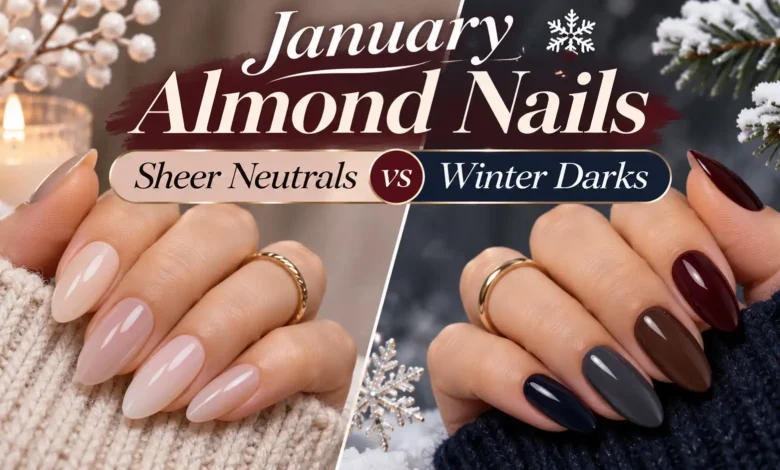
Choose sheer neutrals if you want your January almond nails to blend softly with your hands and make new growth less noticeable. Choose winter darks if you want a stronger outline and a manicure that adds color to simple winter clothes. If you keep changing your mind, a sheer base with narrow wine-colored tips gives you a little of each.
The useful question is how much color you want to see every time you reach for your phone. A pale, translucent manicure and a glossy blackberry set can share the same almond shape while feeling completely different. Here is how to choose the one you will still enjoy after the salon photo.
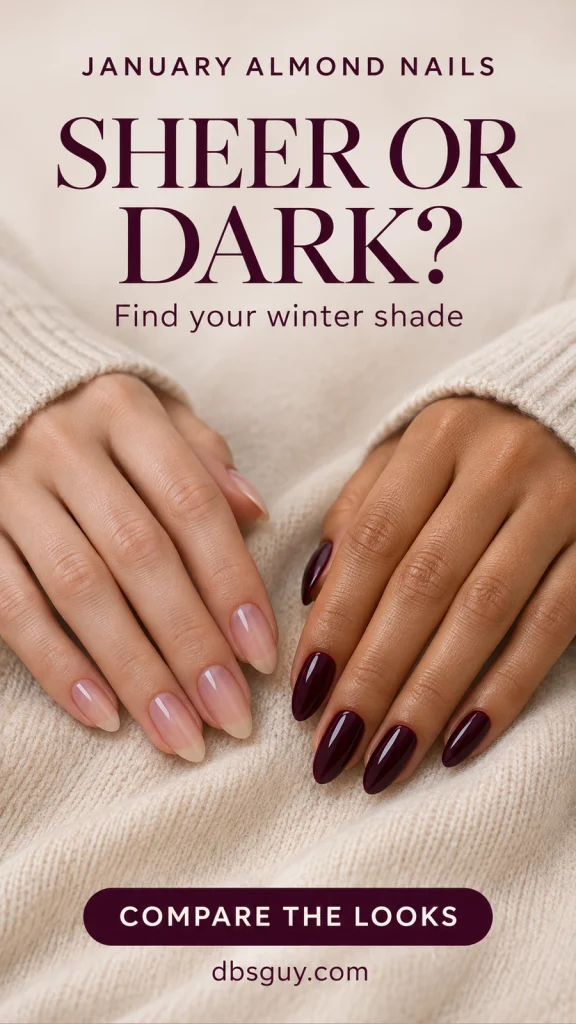
The images in this guide are AI-generated manicure concepts, created to illustrate the color and placement choices.
Start With Coverage, Then Choose Your Color
“Sheer” describes how much of the underlying nail shows through. “Neutral” describes the color family. A rosy beige can be translucent or fully opaque; a dark polish can also have a translucent, jelly-like finish. For this comparison, the choice is between a soft, sheer neutral and an opaque winter dark.
Before choosing a shade, decide whether you like seeing your natural nail line. If you do, ask to keep that transparency. If you want it blurred, ask for a little more coverage. If you want it completely hidden, a sheer reference may not deliver the result you have in mind.
- Choose a sheer neutral when you want subtle color, a less obvious growth line, and a manicure that stays visually quiet beside changing outfits.
- Choose a winter dark when you want the nail shape and color to stand out, and you are comfortable noticing small chips or a gap at the cuticle.
- Choose the narrow-tip compromise when you like a dark edge but want most of the nail to remain light and translucent.
Sheer Neutrals: A Softer January Reset
The rosy-beige reference below leaves the almond shape visible without drawing a dark border around it. The tint softens the nail underneath, while the glossy surface supplies most of the detail. This is a useful choice when your sweaters, coat, and jewelry already give you enough to coordinate.
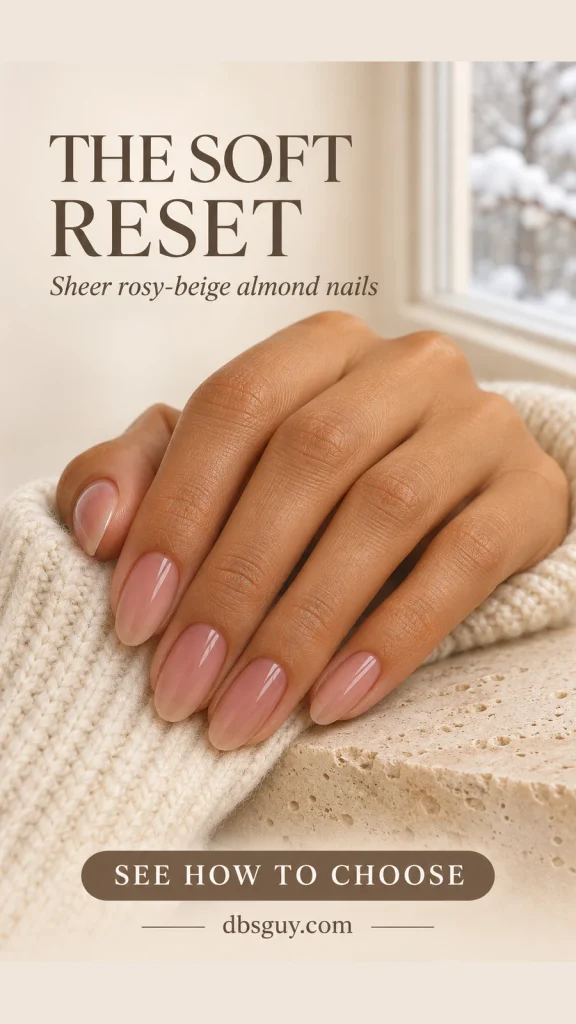
Look for a neutral you like against your hand, rather than trying to match a bottle to a skin-tone label. Hold a finished swatch close to your fingers in indirect daylight. Does the pink feel too sweet? Does the beige look gray? Would you prefer a little more warmth? Those observations are more useful than a rule that every warm or cool undertone needs one particular shade.
Keep skin depth and color preference separate. A sheer neutral does not have to be pale: a translucent beige-brown may give you the quiet effect you want, while a lighter rosy tint creates more contrast. You can choose either intentionally.
Ask at the salon: “I would like a soft almond shape with a sheer rosy-beige finish. Please show me a swatch at the intended coverage before doing the whole set. I want the natural tip softened, not completely covered.”
The tradeoff is that transparency also reveals more of the nail underneath. Uneven natural tips or differences between an extension and your own nail may remain visible. Adding coat after coat can turn the reference into a creamier, more opaque manicure. Decide which result matters more before application begins.
Winter Darks: Let the Almond Shape Stand Out
A glossy blackberry-wine shade makes the taper easier to see. In the reference, the color has a plum-red undertone where the light catches it, with deeper shadows toward the sides. The finish gives a plain charcoal sleeve a deliberate point of color without needing glitter or seasonal artwork.
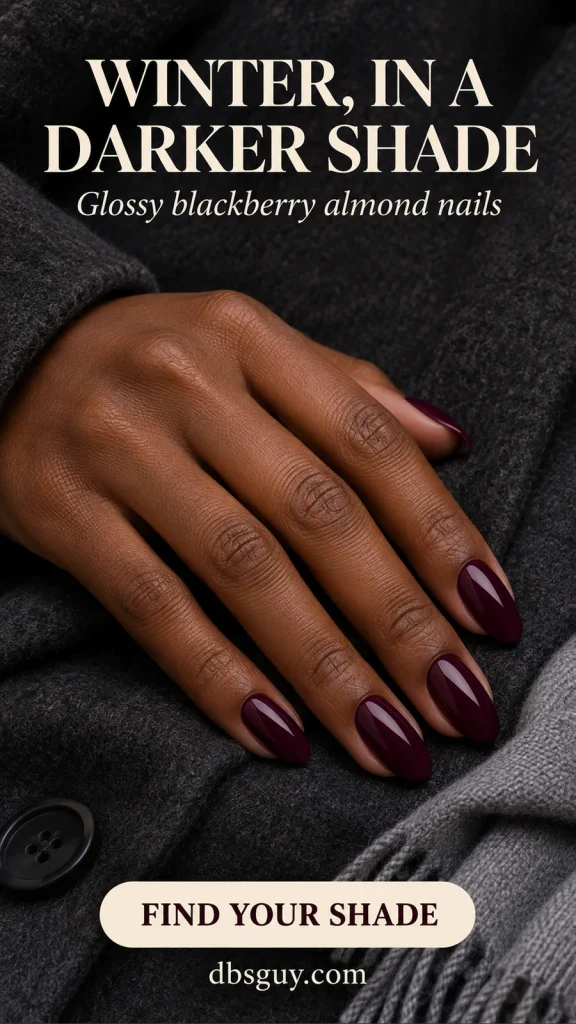
Check a dark swatch in two kinds of light: near a window and in ordinary indoor lighting. A shade that looks clearly purple or red in a bright close-up can read almost black indoors. If seeing the undertone matters to you, choose the swatch for the light you spend time in.
Blackberry is the example here, rather than a requirement for January. If you prefer a different dark family, compare an espresso brown or a midnight navy at the same coverage. Keep the shape, length, and finish constant so you are judging the color itself.
Ask at the salon: “I want a glossy, fully covered blackberry-wine color with a visible plum-red undertone. Please keep the almond tips softly rounded and the cuticle edge neat. I would like to check the finished swatch away from the task light.”
A dark polish creates contrast wherever it ends. That includes the tip, the cuticle edge, and any later chip. It does not automatically wear worse than a sheer shade; small changes can simply be more noticeable. If an exposed pale sliver at the tip bothers you, consider whether you will want to touch it up or change the color sooner.
If you decide you would like a small accent after choosing the base, 15 Elegant January Nail Art Ideas to Pair With Your Winter Jewelry offers ways to connect a manicure with the pieces you wear every day.
Want Both? Keep the Wine Color at the Tips
A fine wine-colored French tip solves a specific hesitation: you like the dark shade, but a fully painted nail feels like more color than you want. The sheer rosy-beige center keeps the manicure light, while the narrow curved edge traces the almond tip.
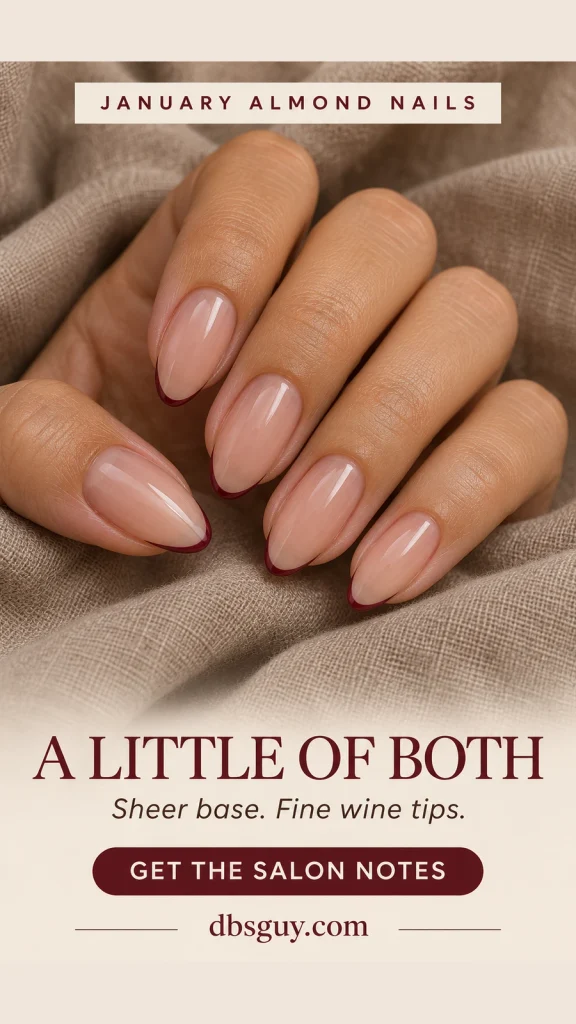
Ask for a fine curved smile line that follows the free edge, with most of each nail left sheer. On a shorter almond, keep the band proportionally narrow so it does not take over the nail. Show the image and say which part matters: the open center, the wine tone, or the thinness of the tip.
This compromise reduces the area of dark color, but it is not automatically easier to maintain. The colored detail sits right at the tip, where a small chip can interrupt the line. Choose it because you like that placement, rather than expecting it to outlast a full-color manicure.
Choose an Almond Length You Can Live With
A soft almond has tapered sides and a rounded point. You need some free-edge length to create that taper; on a very short natural nail, a softly rounded or oval shape may be the more practical starting point. Avoid chasing a narrow point by filing deeply into the sides.
Choose the shortest length that gives you the outline you like while leaving everyday tasks comfortable. If you type frequently or wear fitted gloves, show the technician the length you are comfortable using before choosing an inspiration photo. A dark shade does not require long nails, and a sheer shade does not require short ones.
If you already wear extensions, check the underlying tip color before committing to a sheer finish. The finished result includes whatever is visible beneath the polish. For a closer look at that route, see Almond Gel-X Nail Designs for January: Icy Tips and Soft Winter Shimmer.
Be Honest About the Upkeep You Will Notice
A near-natural sheer shade can make the boundary between polish and new growth look less distinct. That is a visual advantage, not a promise of longer wear. Application, the product system, your nail condition, and daily use still matter.
Think about your last manicure. Did you change it because the color bored you, because growth showed, or because a tip chipped? If growth was the annoyance, a sheer neutral is worth considering. If you loved the color but needed a shorter length, adjust the length before giving up the dark shade.
For an at-home regular-polish manicure, use the base coat and top coat recommended for your system and apply color in thin, even layers, letting coats dry as directed. OPI’s nail-polish application guide explains the sequence and keeping color clear of the cuticle. A sheer product’s coverage varies, so follow its directions rather than assuming every bottle needs the same number of coats.
Keep the first attempt simple: one color and a glossy finish make it easier to judge whether you like the shade and shape. If you choose gel instead, use the instructions for that specific system; regular-polish drying advice does not apply to curing gel.
Questions to Settle Before Your Appointment
Are sheer neutrals always the lower-maintenance choice?
They can be more forgiving visually when the shade is close to the nail underneath. They still need even application, and chips or wear can still show. Choose them for a softer appearance rather than a guaranteed longer interval between manicures.
Can dark almond nails look understated?
Yes. Keep the length comfortable, use one solid shade, and leave off extra artwork. The color will be more defined than a sheer neutral, but the overall design can remain simple. How strong it looks also depends on the contrast against your hand.
What if a sheer neutral looks chalky?
Check both the shade and the coverage. A white-heavy tint may be lighter than you wanted, or the finished application may be more opaque than the reference. Compare a warmer or deeper translucent swatch before adding another coat.
Do January nails need snowflakes or shimmer?
No. The colors and winter styling in these references provide the seasonal mood. A plain glossy finish keeps the decision focused on the shade you want to wear.
Take One Clear Request to the Salon
Pick the photograph that matches the amount of color you want, then specify four things: length, almond shape, coverage, and finish. For a soft reset, start with sheer rosy beige. For a more defined manicure, try glossy blackberry-wine. If the color you love is darker than the manicure you want, keep it to a fine French tip.
Check the swatch beside your hand before the full set begins. A small decision about transparency or undertone there is easier than trying to fix a finished manicure that feels too pale, too opaque, or nearly black.
Also Read
January Nail Art for Beginners: Simple Designs to Practice at Home — a next step when you are happy with your base color and want to practice a small detail.