January Ombré Nail Colors That Blend Frosty Whites, Blues and Soft Neutrals

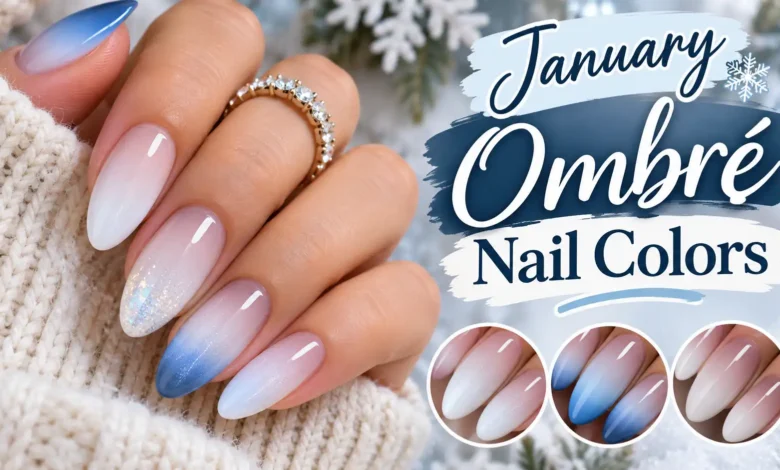
For a light January ombré, blend rose-beige into snow white or white into icy blue. For a softer neutral, try mushroom taupe fading to ivory. The detail that changes the whole manicure is which color sits at the cuticle and which ends at the tip.
These six pairings give you that placement, a suggested shape, and a clear way to describe the look at your appointment. Some stay almost bare; others put a little winter blue at the ends. Choose the color combination first, then adapt the length to your own hands.
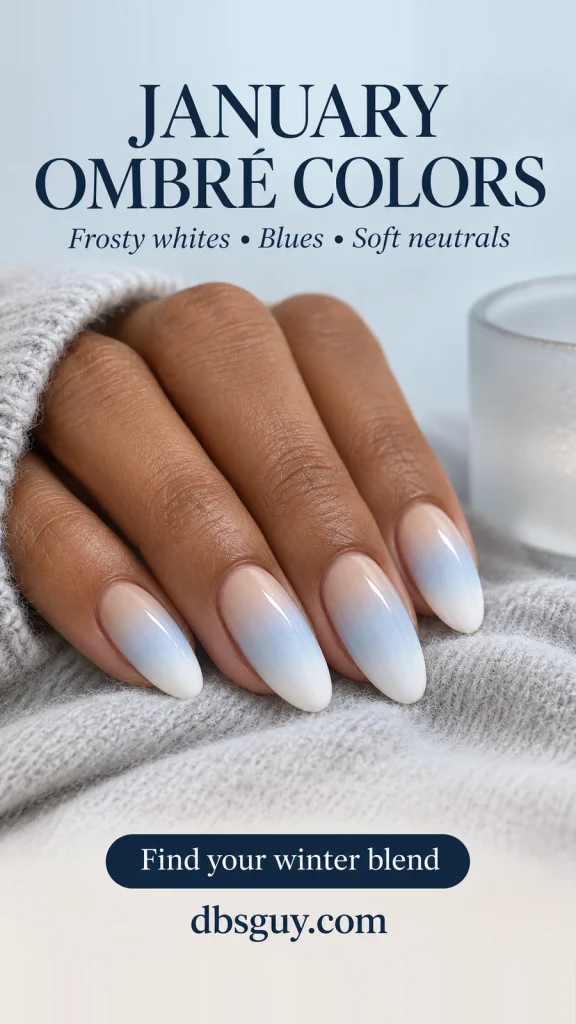
The visuals are AI-generated manicure concepts. They illustrate color, shape, and placement rather than completed salon work or tested polish results.
Choose the kind of fade you want to see
In this guide, ombré means two colors blending within each nail. Wearing five different solid shades across your hand gives a different result. Show your artist the reference so the word “gradient” does not leave that choice open.
- Almost bare: rose-beige into snow white, with a translucent base.
- Clearly wintry: white into ice blue, with blue at the tips.
- Muted and cool: dusty blue into pearl gray.
- Soft and earthy: mushroom taupe into ivory.
- Warm and creamy: cocoa-beige into cream.
- A little more contrast: sheer beige into smoky slate blue with fine silver shimmer.
Compare finished color samples beside your hand. A “nude” base can be rose, peach, beige, caramel, or brown; pale pink is only one option. Decide whether you want the base to blend with your skin or stand out against it.
1. Rose-Beige Into Snow White
This is the quietest white blend in the group. The rose-beige stays visible near the cuticle, while milky white gradually takes over toward the tip. It gives you the pale edge of a French manicure with a diffused meeting point.
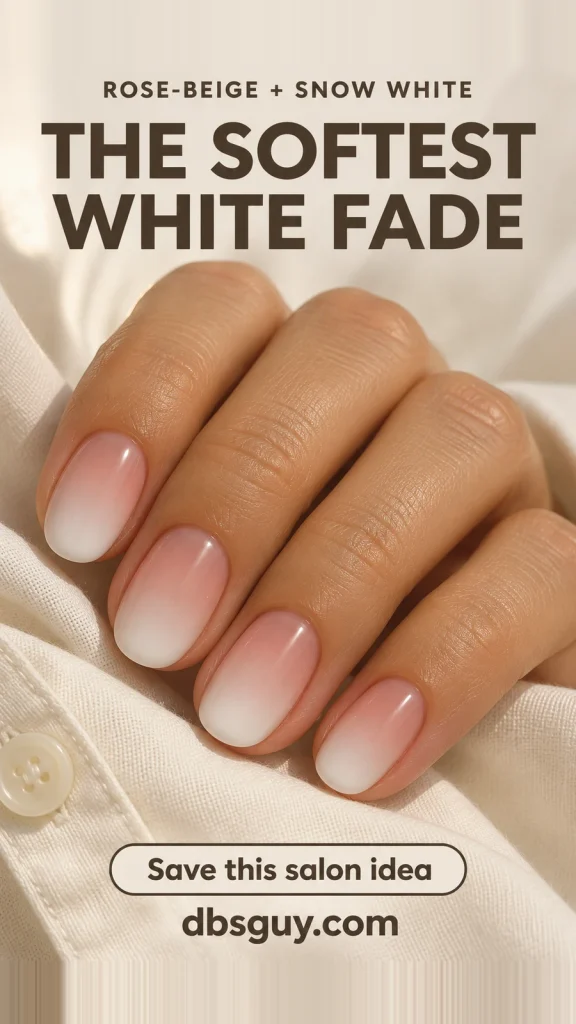
Short oval nails suit the restrained look. Ask for the strongest white in roughly the last third, with a wider, softer transition above it. Treat that proportion as a starting point: on a very short nail, the artist may need to reduce the white so the base remains visible.
Say at the salon: “Sheer rose-beige at the base, fading into soft milky white at the tips. Please keep the join blurred and the white gentle.”
If you want your natural nail line completely hidden, say so before the artist chooses the base. More coverage will make the result creamier than this translucent reference.
2. Snow White Into Ice Blue
Put the lightest color at the root and pale blue at the ends for a manicure that feels like a winter sky. Both shades stay light, so the blue supplies color without turning the tips into a dark border.
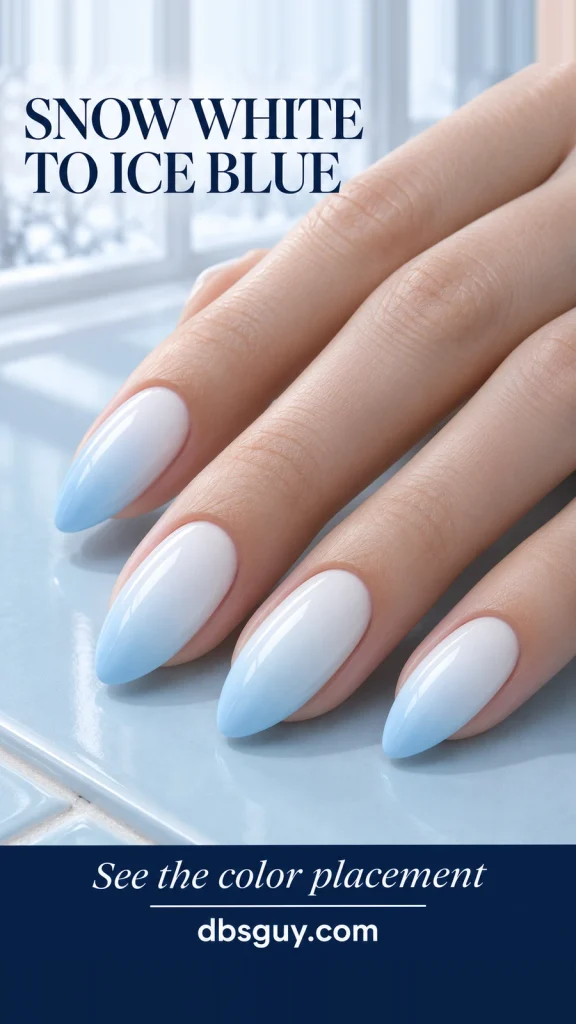
A medium almond shape gives the blend room to travel. Keep the blue powdery and slightly muted; a bright turquoise sample will create a different mood. A plain glossy finish lets you see the transition clearly without adding a separate pattern.
Ask for: “Snowy white near the cuticle, blending through almost-white blue into pale ice-blue tips on every nail. No crisp French line.” Check one sample in that direction before the full set is painted.
You can borrow this palette for short oval nails too. Keep the two shades close in lightness so the shorter blend does not read as two blocks. For other ways to use the color, explore 15 Blue January Nail Art Ideas With More Than Snowflakes.
3. Dusty Blue Into Pearl Gray
Choose this pairing when ice blue looks too pastel for your taste. A muted denim-blue base moves into pale gray at the tip, keeping the whole nail cool without making the end snowy white.
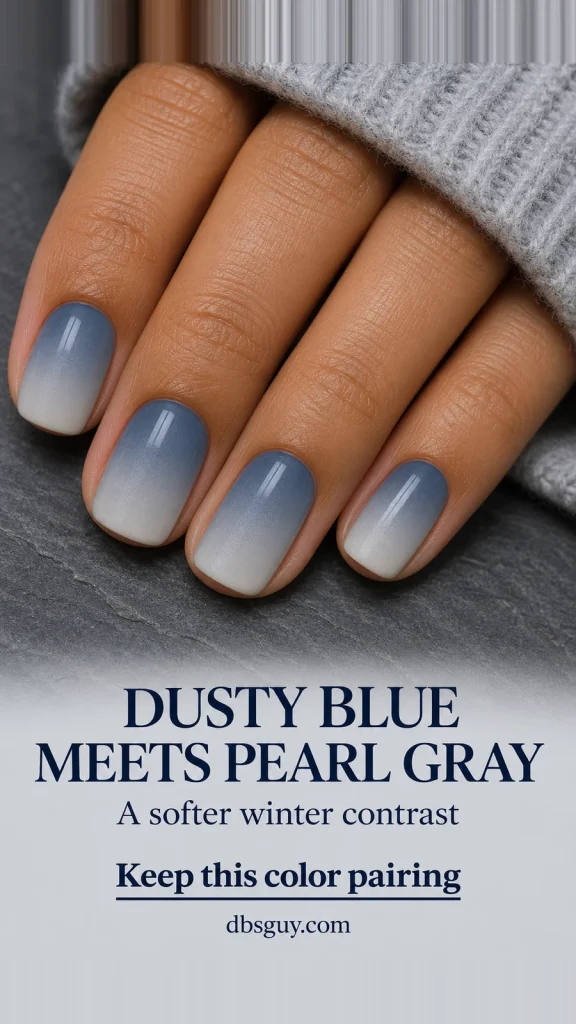
On a short squoval shape, the softly squared tip gives the pale gray a clear place to finish. Look for a blue with a gray cast rather than a strong green undertone. Compare the two colors together; you want enough difference to see the fade while keeping them in the same subdued family.
The reference has a faint pearl sheen. Ask to see it over the finished colors, because a strongly reflective topper can hide the blend in bright light. Keep it subtle if the color transition is your favorite part.
Your salon brief: “Muted dusty blue at the base, fading to pale pearl gray at the tips. Short squoval shape, with only a soft pearly reflection.”
4. Mushroom Taupe Into Ivory
Mushroom taupe brings a little brown and gray into a pale winter manicure. With warm ivory at the ends, it sits comfortably beside oatmeal knits, camel coats, and cream sleeves. This is an editorial color pairing you can use throughout winter, without a seasonal motif.
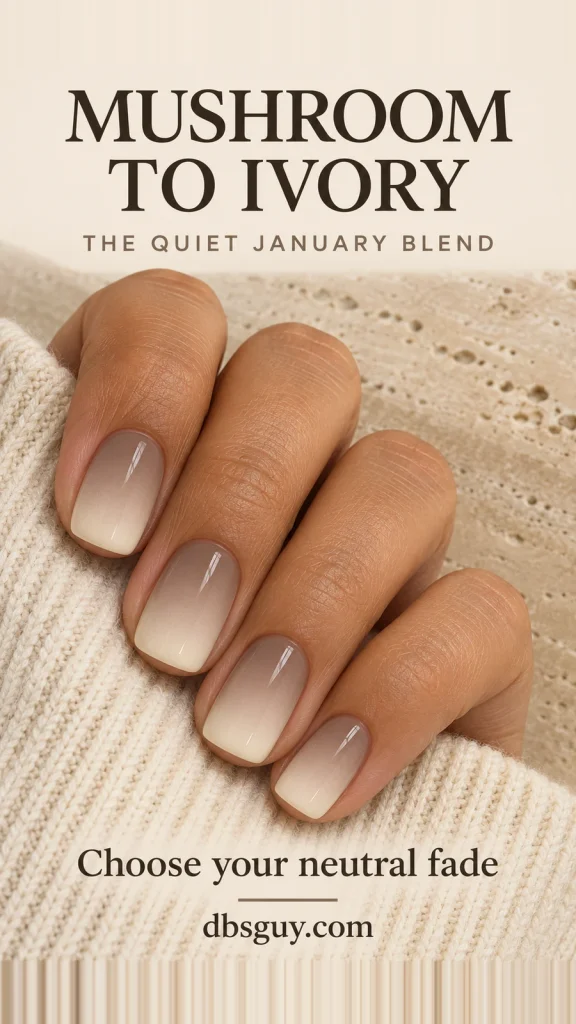
Keep the taupe visible around the base and let a beige-gray middle soften the move into ivory. The reference uses short squoval nails and a glossy finish. A sharply painted ivory edge would shift the design toward a French manicure, so point out the broad transition when you show the image.
Ask for: “Mushroom taupe at the cuticle, blended into warm ivory tips. Please keep a soft beige-gray transition between them.”
Check the ivory next to the taupe before application. If it looks more yellow than you want, try a less creamy off-white. If the taupe looks purple against your hand, compare a browner sample while keeping the same placement.
5. Cocoa-Beige Into Cream
A cocoa-beige root gives this neutral fade more depth than the rose-beige version. The center moves through latte beige before reaching a warm cream tip. On the deep brown hand in the concept image, the lighter ends create deliberate contrast.
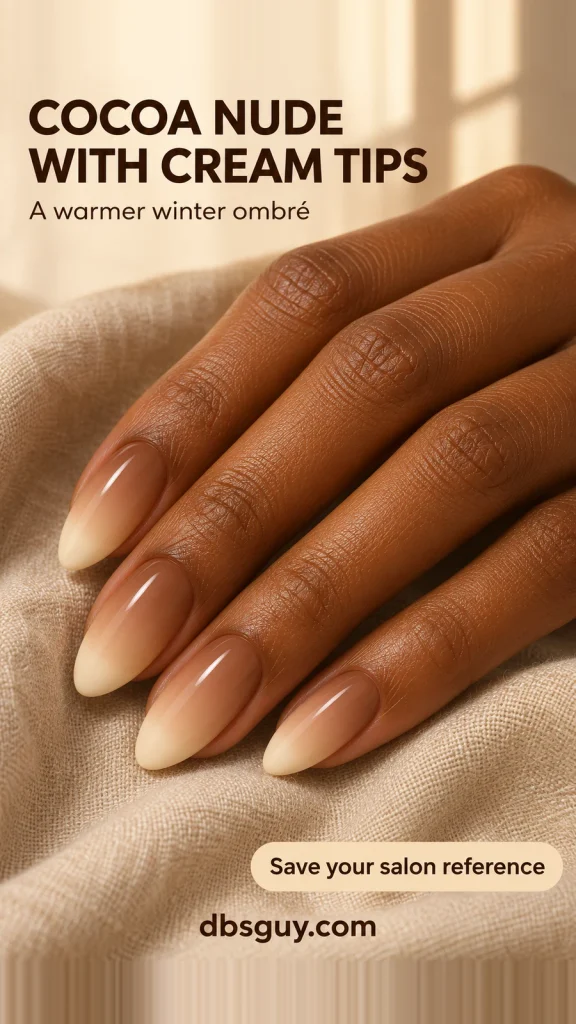
You can adjust the depth of the base without losing the design. Choose a cocoa or caramel swatch you enjoy against your own hand, then compare it with the cream. If the difference feels abrupt, ask your artist to show a longer transition through an intermediate beige.
Medium almond nails leave room for that gradual change. Keep the cream strongest near the outer quarter and the finish plain so the warm blend stays easy to see.
Say: “Cocoa-beige at the root, fading through latte beige into warm cream at the tips. I want a smooth gradient with no defined white band.” For more help choosing coverage, see January Almond Nails: Choosing Between Sheer Neutrals and Winter Darks.
6. Sheer Beige Into Smoky Slate Blue
This is the stronger blue option: an open-looking beige base blends into smoky slate at the ends. Fine silver microshimmer adds a frosty reflection where the blue is deepest. The shimmer supports the color rather than covering the whole nail.
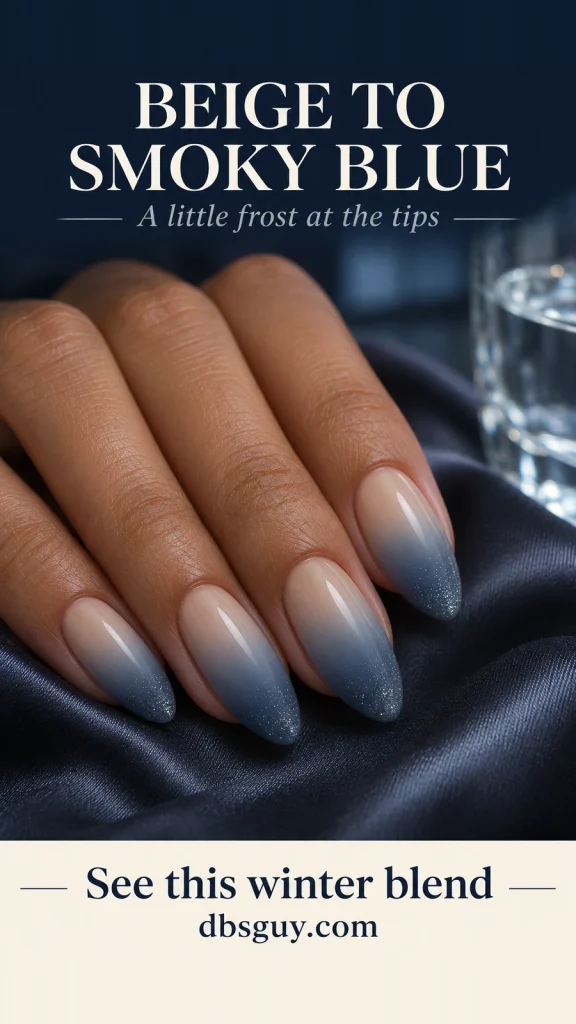
Ask for slate blue rather than navy if you want to keep a visible gray-blue tone in ordinary indoor light. In the reference, the strongest color and shimmer sit toward the outer quarter of medium almond nails, with a gradual blue-gray transition above them.
Show your artist this request: “A sheer beige base fading into smoky slate-blue tips, with very fine silver shimmer mostly at the ends. Keep the beige visible and the blend soft.”
Check the shimmer at arm’s length. If it reads as a solid silver cap, ask for a lighter application or skip it. The beige-to-blue gradient already supplies enough contrast to carry the manicure.
Turn the reference into a complete salon request
A color picture does not tell your artist which service you need. Tell the salon what is currently on your nails, the length you want, and whether you want regular polish, gel, or an enhancement. Ask whether ombré, removal, and any shimmer finish are included in the quote.
Bring one favorite image and identify the part you want to preserve: the base color, the tip color, the broad fade, or the finish. “This blend at my current short length” is more useful than asking for the entire reference when its length does not fit your routine.
Before repeating the design, check a finished practice tip or one sample nail. Look for the right color at each end, a middle that blends smoothly, and enough contrast to see the pairing. View it away from the brightest task light if possible.
If you are still choosing the service or length, January Nails: How to Choose Your First Manicure of the Year walks through those decisions.
Questions About January Ombré Nails
Can ombré work on very short nails?
Yes, though the transition has less room. Start with two shades close in lightness, such as rose-beige and milky white, and keep the stronger tip color small. You can use the color pairing on a round or squoval nail without copying a longer almond shape.
Do I need gel or acrylic to get the look?
No. Ombré describes the color effect, not the material underneath it. OPI demonstrates sponge-blended designs with regular nail lacquer, so extensions are not a requirement. The application method and finished look will depend on the products and the person applying them.
What is the difference between frosty color, shimmer, and matte?
Here, “frosty” describes the pale winter palette. Shimmer adds tiny reflective particles; matte describes a finish with little surface shine. You can have a glossy icy-blue ombré without glitter. Show a finish sample as well as a color sample if those distinctions matter to you.
Why can a pale ombré look like two separate stripes?
The transition may be too narrow, or the two end colors may be farther apart than you expected. Ask to see a broader blend or a closer color pairing on a sample. Adding a reflective finish is a separate design choice; decide whether the plain gradient works first.
Does an ombré manicure last longer?
The fade does not establish a wear time. A base close to your natural nail color may make the growth boundary less obvious, but that does not prevent chips or lifting. Ask about maintenance and removal for the actual service you choose.
What should I keep in mind if I choose gel?
The American Academy of Dermatology recommends broad-spectrum, water-resistant SPF 30 or higher on the hands before a gel manicure, or dark opaque gloves with the fingertips exposed. It also advises against picking gel off. Read its gel manicure care guidance for the full recommendations.
Pick the blend you want to wear all week
Start with rose-beige and snow white for the softest edge, white and ice blue for a light winter color, or mushroom and ivory for an earthy neutral. Save the image closest to your choice, then name the base, the tip, and the finish when you book. Those three details will help your artist understand the manicure you have in mind.