Start with something you know about the person: the flowers they buy for themselves, a color they always wear, or a place you have been together. Choose the bouquet around that detail, then explain the connection in a short note. Even a simple bunch feels considered when the recipient can see why you picked it.
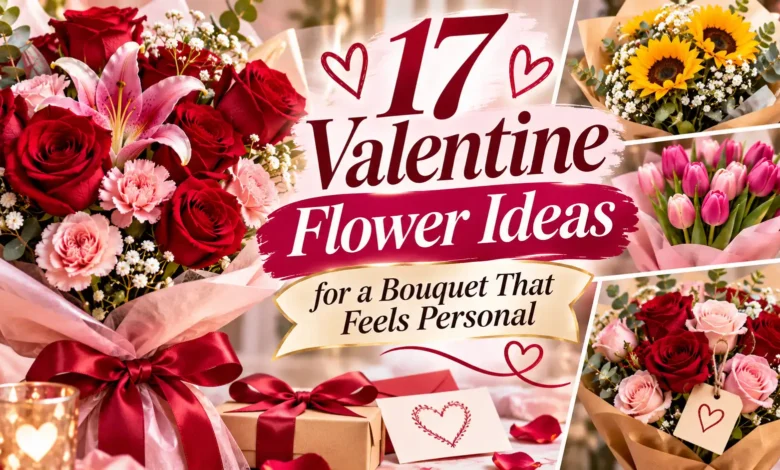
These 17 Valentine flower ideas include classic roses, cheerful mixed bunches, small arrangements, and handmade keepsakes. Each gives you a flower combination and a way to make it your own. Fresh-flower availability varies by location and supplier, so use the combinations as a design brief rather than a guaranteed February shopping list.

The visuals are AI-generated bouquet concepts, including the handmade designs. They illustrate the ideas rather than document finished florist orders.
Choose the Bouquet Around Their Everyday Life
Before choosing stems, settle three things: what they like, where the flowers will go, and whether they want something fresh or something to keep. A ready-to-display vase is useful for a delivery; a wrapped bunch works well when you can hand it over near home.
Check the household first. True lilies and daylilies are highly toxic to cats, including their pollen and vase water. Leave them out of a cat household. Other flowers and foliage can also be harmful, so check the exact ingredients rather than assuming a mixed bouquet is safe. The FDA explains the lily risk. If lily exposure is suspected, contact a veterinarian immediately.
1. Give Their Favorite Roses a Personal Finish
If they love red roses, give them red roses. Keep the flower choice simple and put the personal detail in the ribbon: cobalt blue for the coat they wear all winter, green for their favorite team, or ivory for a softer finish. A single-flower bunch lets that detail show without competing with several kinds of filler.
Ask for a hand-tied rose bouquet with natural foliage and visible stems. If you are choosing the size yourself, think about the vase they already own. Write why you chose the ribbon on the card; otherwise, the part that makes it personal may be easy to miss.

2. Build a Bouquet Around Their Signature Color
For someone who wears purple or fills their home with it, try lavender lisianthus, deeper violet spray chrysanthemums, and a little lilac statice. Staying within one color family makes the different flower shapes easy to appreciate. Ivory wrapping gives the purple room to stand out.
You can use the same approach for another favorite color. Give the florist a photo of the shade you mean, especially for words such as mauve or coral. Tell them whether matching the color matters more than using a particular flower, and ask before accepting dyed blooms if you want a natural-color arrangement.

3. Choose Flowers That Bring Back a Favorite Date
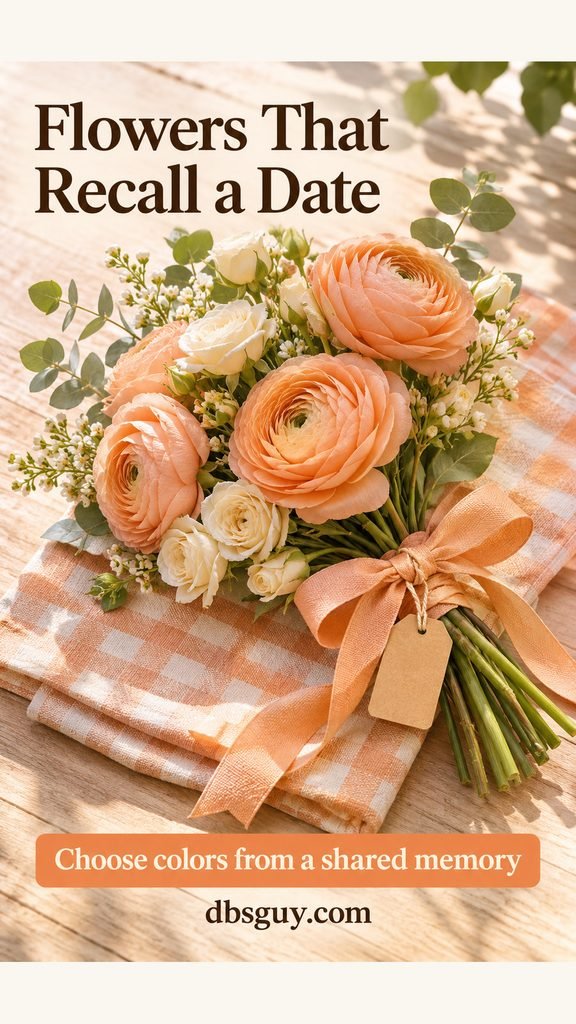
A peach-and-cream bouquet can recall a picnic, a sunset, or the little cafe where you first met. Peach ranunculus and cream spray roses give this version a loose, soft shape. An apricot cotton tie keeps it casual enough for a memory that involved a blanket and takeout.
Your flowers do not have to reproduce the scene literally. Pick two colors from the memory and put the explanation on a small tag: “For that evening by the lake.” Keep an original ticket or photograph in a separate envelope so moisture from the stems cannot damage it.
4. Make a Small Echo of Your Wedding Flowers
Revisit one recognizable part of the wedding bouquet: white roses, a favorite supporting flower, or the wide ivory ribbon. Here, white roses and white lisianthus create a small all-white arrangement with green buds breaking up the petals. It is a manageable bouquet for the kitchen table rather than a full bridal recreation.
Send the florist a wedding photo and name the detail you want to keep. If the original flowers are unavailable, preserve the color and overall shape with suitable substitutions. Add a line about something you remember from that day, so the gift carries more than a visual resemblance.

5. Send a Sunny Sunflower-and-Daisy Bunch
Golden sunflowers with small white daisy-flowered chrysanthemums suit the person who loves bright rooms, yellow sweaters, or an informal bunch from the market. Cream paper and a sky-blue ribbon keep the arrangement cheerful. Ask for daisy chrysanthemums if you want the small white-and-yellow blooms shown here; “daisies” alone can mean several different flowers.
Let the sunflower heads set the scale. A few can fill a modest bouquet, so the supporting flowers should sit between them rather than form a thick border. This is an easy direction for a friend or family member too: use the card to say what you appreciate about them.

6. Try Burgundy Carnations and Dark-Centered Anemones
For someone drawn to dark lipstick, velvet, or dramatic interiors, combine burgundy carnations with white anemones that have dark centers. Matte black wrapping gives the pale petals a clean outline. Keep the foliage restrained so the contrast between the two flowers stays visible.
Ask the florist to leave the anemones some breathing room rather than pack every head into a tight dome. If those flowers are unavailable, choose a replacement for the pale-and-dark contrast and agree on it first. The distinctive centers are part of this design, so an all-burgundy substitution would change its character.

7. Keep It Sculptural With a Few Calla Lilies
White calla lilies suit someone who likes clean lines and very little decoration. Ask for an open, asymmetric arrangement with a few narrow leaves and a slim, stable vase. The curved flower forms and spaces between the stems do most of the work; a large bow can overwhelm this one.
Choose the vase along with the flowers so the stems have support without becoming crowded. This option needs a household check: calla lilies can irritate pets’ mouths if chewed. They are different from true lilies, but that does not make them a pet-safe substitute. Choose another direction if pets can reach the arrangement.

8. Choose a Freesia Bouquet for Someone Who Enjoys Fragrance
If you already know they enjoy scented flowers, consider freesia in white, buttery yellow, and a little purple. Its arching stems carry both buds and open blooms, which gives a small vase arrangement movement. Ask for freesia to lead the bouquet rather than disappear among larger flowers.
Fragrance is a preference to check, especially for a shared office or a person who gets headaches around scented products. Ask the florist about the fragrance of the flowers they actually have, and avoid adding perfumed ribbon or a scented gift beside them. For someone who dislikes floral scent, choose a different idea with their input.

9. Ask About Double Tulips for a Ruffled, Peony-Like Look
For someone who saves pictures of full, ruffled peonies, ask the florist whether double tulips are available. Blush and peach varieties can give you that layered-petal look while keeping the recognizable tulip leaves and curved stems. A clear vase keeps the arrangement light.
Describe the look you want as well as the flower name: many-layered petals, soft colors, and a loose outline. This is a design alternative, not a promise that double tulips will be in stock or look identical to peonies. Leave room for the stems to move rather than wiring them into a rigid shape.

10. Wrap a Book Lover’s Posy in a Personal Page
Tie ivory spray roses and little purple button chrysanthemums into a small posy, then wrap it in a copy of a note you have written. The cream page and a thin plum ribbon give the bouquet a bookish finish. Use a reproduction of a meaningful letter if you have one you both like.
Protect the decorative paper with an inner florist wrap, and keep a water pack around the cut stems for the trip. Use copies so an original letter or book stays intact. For the note itself, try an invitation to browse a bookstore together; our Valentine card ideas offer other ways to connect the flowers to a personal message.

11. Let Two Shades of Carnations Fill the Bouquet
For a grocery-store bouquet you can assemble yourself, look for carnations in red or raspberry and dusty blush. Gather the shades into a rounded bunch, remove the store sleeve, and add plain kraft paper below the flower heads. Their frilled edges give a single-flower arrangement plenty of texture.
Choose stems with firm heads and petals that have not browned or become translucent at the edges. Compare the bunches available that day rather than assuming one flower is always the cheapest. If your budget is fixed, spend it on the flower colors the recipient likes and keep the wrapping simple.

12. Make a Tiny Lisianthus Posy for Their Desk
A small bouquet is useful when the recipient has a crowded desk or a narrow bedside table. Pink and cream lisianthus, including a few buds, can fill a short, stable vase without spreading across the whole surface. Trim and arrange for the actual container rather than buying a large bouquet and hoping it fits.
Check where it will sit before sending it to work. Choose a vase with a base that will not tip easily, and keep the flowers below the sightline between the recipient and a screen or colleague. Include the vase so the gift does not become a search for an office mug.

13. Arrange Flowers in a Pitcher They Will Want to Keep
A blue-and-white pitcher can make the vessel as personal as the flowers for someone who collects old ceramics. Try blush spray roses, pale yellow snapdragons, and white lisianthus. Keep the bouquet airy enough that the handle and pattern remain visible.
Check a secondhand pitcher for cracks and leaks before arranging. If you are unsure whether it can hold water, place a clean, watertight glass container inside and arrange in that. Choose the pitcher for their home rather than for the holiday alone; it can hold another bouquet after this one is gone.

14. Choose a Dried Strawflower Keepsake
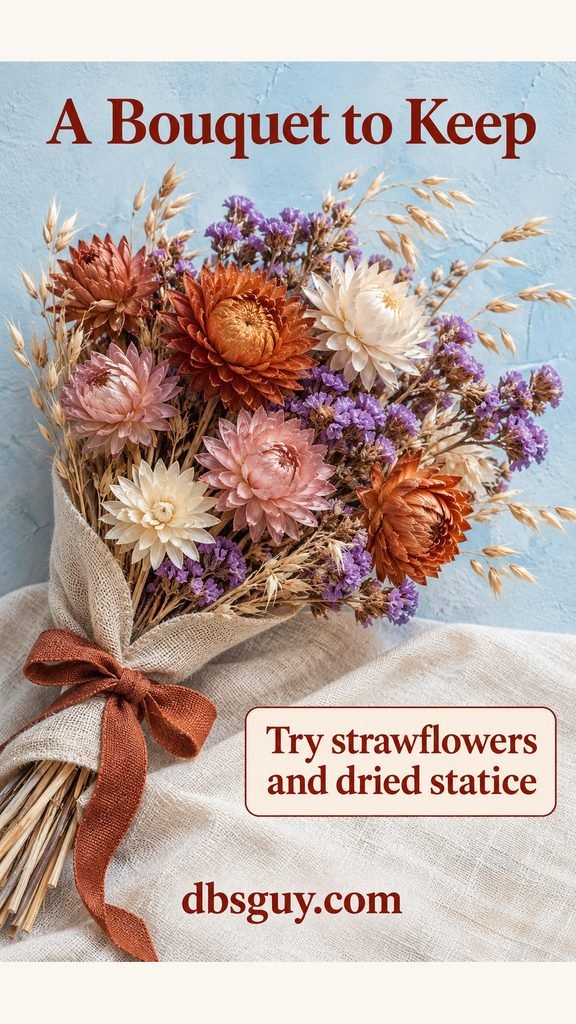
Dried strawflowers, statice, and fine grasses suit someone who likes rust, blush, and natural linen. The papery petals and branching stems make a different kind of bouquet from fresh roses. Tie it with a narrow rust ribbon and keep the wrapping low enough to show the texture.
Give it to someone who actually enjoys dried flowers; they can be brittle and shed. Display the bouquet dry, away from damp rooms, direct sun, and heat, and do not add vase water. It can be kept beyond the holiday, although its color and condition will change. Include that simple care note with the gift.
15. Order or Make Paper Flowers in Their Favorite Palette
A crepe-paper bouquet lets you choose combinations that do not depend on fresh-flower stock: coral poppies, blush roses, and ivory daisies, for example. Look for visible paper grain, shaped petals, and neatly covered stems. It is a keepsake option for someone who likes handmade objects or prefers not to receive fresh flowers.
If you are new to making paper flowers, start with one simple flower shape and repeat it in two colors. For a commissioned bouquet, send a palette and confirm its finished size and completion date. Paper flowers need no water; keep them dry and away from flames. They should not be described as allergy-proof.

16. Give Crochet Tulips to Someone Who Loves Yarn Crafts
Lilac and cream crochet tulips make a soft, compact bouquet for a person who appreciates knitted and crocheted work. The cupped flower shape keeps the stitches easy to see. Green yarn leaves, lavender wrapping, and an ivory cotton tie are enough to finish it.
Ask the maker about the yarn, the support inside the stems, and how to clean the finished piece. If you are making it yourself, use a pattern you can complete comfortably and finish any wire ends securely. Give it as a decorative keepsake rather than a child’s toy, and keep the care instructions with the bouquet.

17. Turn a Bouquet Into Something You Make Together
For someone who would enjoy an activity more than a doorstep surprise, bring coral spray roses, white daisy chrysanthemums, yellow button chrysanthemums, and two small vases. Sort the flowers into water-filled jars so you can see the colors, then take turns adding stems to an arrangement.
Start with a few branching stems to set the outline, add the larger flowers, and fill only the gaps you want to close. Trim the ends to fit the vase as you go, keeping leaves out of the water. Set the finished bouquet where you will eat or spend the evening. For the rest of the table, borrow a small accent from these Valentine decor ideas and leave room for the flowers you made.

What to Tell the Florist
Choose one priority before you order: the exact flower, the palette, or the overall shape. Tell the florist which part they can adapt. Confirm the full cost, including the vase and delivery, and ask about the shop’s order cutoff rather than relying on a general Valentine deadline.
For example: “They love purple and loose arrangements. Please use lavender and violet, with lisianthus if available. Keep the bouquet compact enough for a small side table, include a stable vase, and leave out scented greenery. Please contact me before changing the palette.” Add any household restrictions and ask for an ingredient list if you need to check plant safety.
For a delivery, confirm the recipient’s availability, the address, building instructions, and what happens if nobody answers. Ask the florist how to protect the flowers during the trip, particularly in cold weather. Do not assume a workplace can accept a large vase or a personal delivery.
Help Fresh Flowers Settle In
Use a clean vase and fresh water. Remove leaves that would sit below the waterline, then trim about ½ to 1 inch from the stem ends with a sharp, clean tool. Add commercial flower food according to its packet directions; avoid improvising a sugar mixture.
Check the water daily. If it becomes cloudy, wash the vase, replace the water, and rinse and recut the stems before putting them back. Keep the arrangement away from direct sun and heating or air-conditioning vents. Follow any flower-specific directions the florist includes. Dried, paper, and crochet bouquets stay dry.
Questions About Personal Valentine Bouquets
Do Valentine flowers have to be red or pink?
No. Their favorite color is a useful starting point, whether it is purple, yellow, white, or a mix. Explain the choice in the card if the color has a particular connection to them.
What if I do not know their favorite flower?
Look at flowers they have bought or pictures they have shared, or ask a straightforward question about what they like. If you want to keep the gift a surprise, choose a color you know they enjoy and let the florist work within that palette.
Do I need to follow traditional flower meanings?
You can use them as inspiration, but interpretations vary and the recipient may not know the same associations. A note about why you chose the flowers makes your own meaning clear.
How can I make a modest bouquet feel thoughtful?
Choose one or two colors they like, tidy the wrapping, and add a specific note. A small vase that fits their desk may be more useful than extra stems. For a second gift, choose one that connects to the person from these thoughtful Valentine’s Day gifts.