People Are Getting Bored Of Their Screens—These 25 Hobbies Explain What They’re Doing Instead


You unlock your phone to answer one message. Somehow, 47 minutes later, you know what a stranger made for lunch, which celebrity wore the wrong shoes, and absolutely nothing about where the last 47 minutes went.
At some point, “just scroll less” stops sounding like advice and starts sounding like telling someone to “just be less hungry.” The phone is right there. It contains your friends, entertainment, news, work, photos, music, shopping, maps, and approximately fourteen million people eager to show you what they are doing with their sourdough starter.
So maybe the more useful question is not, “How do I force myself to stay off my phone?”
Maybe it is: “What could I be doing that is interesting enough to make me forget about it for a while?”
That question appears to be landing with a lot of people. Pinterest’s 2026 Hobbies Trend Report says users are increasingly looking for hands-on, screen-free activities, while its September men’s report shows searches for “offline hobbies” up 551% and “no phone ideas” up 581%. The same report shows rising interest in pottery handbuilding, wood carving, woodworking, junk journaling and whittling. Pinterest’s 2026 Men’s Trend Report and 2026 Hobbies Trend Report both point in the same direction: people want things to do, not just more things to watch.
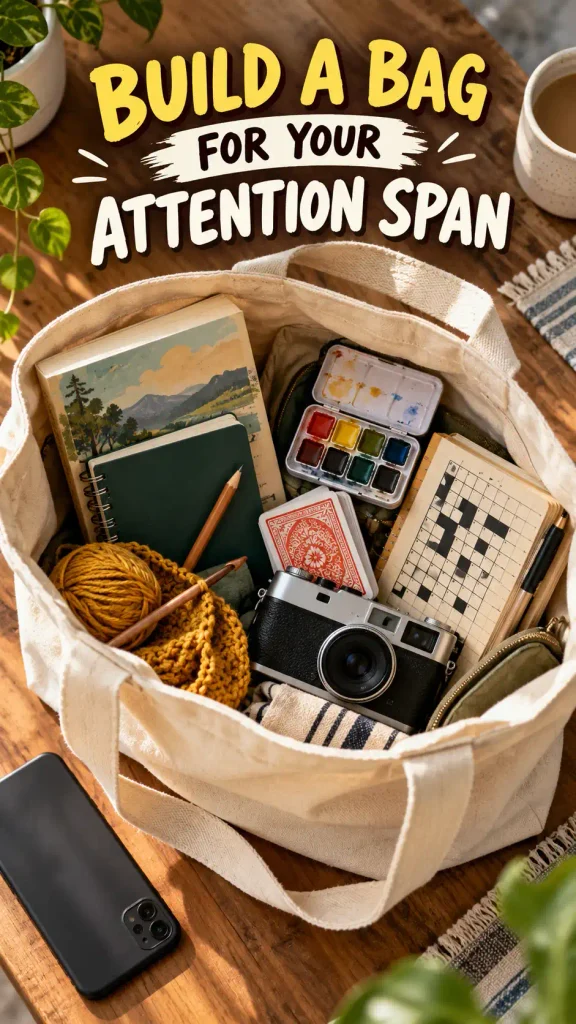
There is even an “analogue bag” trend: people are packing books, puzzles, knitting, sketchbooks and other little offline activities so they have something ready when the reflex to scroll appears. The Guardian described the idea as a kind of “toy box for your attention span,” while the Financial Times has reported a broader resurgence in analogue hobbies and physical media. The Guardian; Financial Times.
A useful reality check: hobbies are not magic medicine, and this is not a prescription to throw your phone into a lake. Recent reviews do, however, associate hobby participation and creative activities with outcomes such as enjoyment, social connection and wellbeing. A 2025 systematic review of craft-based interventions found encouraging short-term results but also stressed that the evidence quality varies, so sweeping claims deserve caution. The practical case for a hobby can be simpler: it gives your attention somewhere else to go.
And the best hobby is not necessarily the most impressive one. It is the one with low enough friction that you will actually reach for it on a dull Tuesday night.
Here are 25 that make a surprisingly convincing case for putting the phone down.
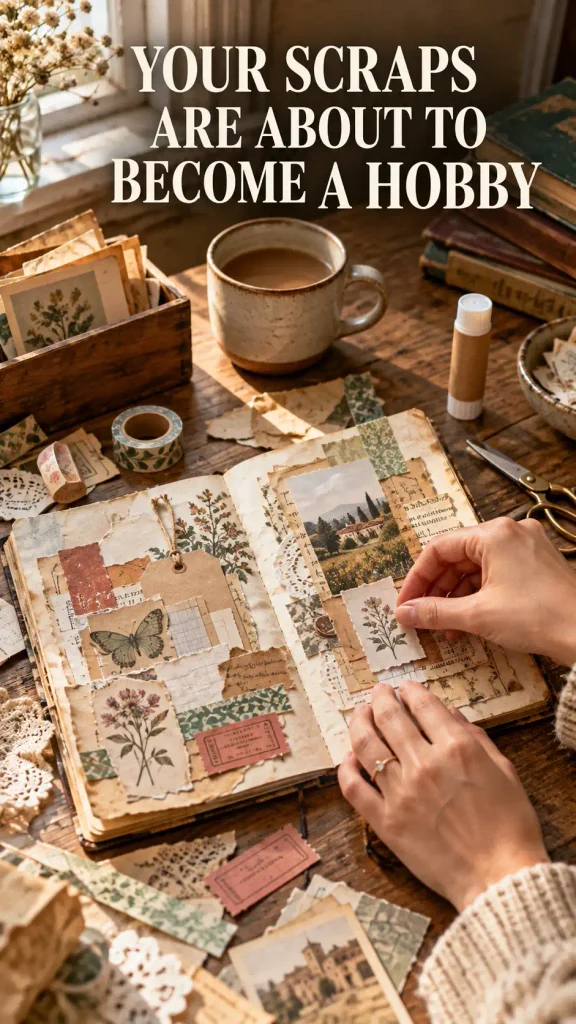
1. Junk Journaling: The Hobby Where “Messy” Is Basically A Design Style
If a blank journal feels like a test you are about to fail, junk journaling is the friendlier cousin who shows up with glue sticks and tells you there are no rules.
The idea is simple: collect scraps that would normally disappear—tickets, packaging, old paper, labels, receipts, magazine clippings, stamps, handwritten notes—and build pages around them. You can write a lot, write almost nothing, or simply arrange things until the page feels satisfying.
That low-pressure nature is part of the appeal. Pinterest’s September 2026 report shows searches for “junk journaling ideas” up 214%. It is creative without requiring you to know how to draw, and unlike an endless digital feed, the result is physically yours when you are done.
Easy first try: make one page about your week using only paper already in your house.
Cost to start: Very low.
Best for: collectors, sentimental people, anyone intimidated by “proper” art.
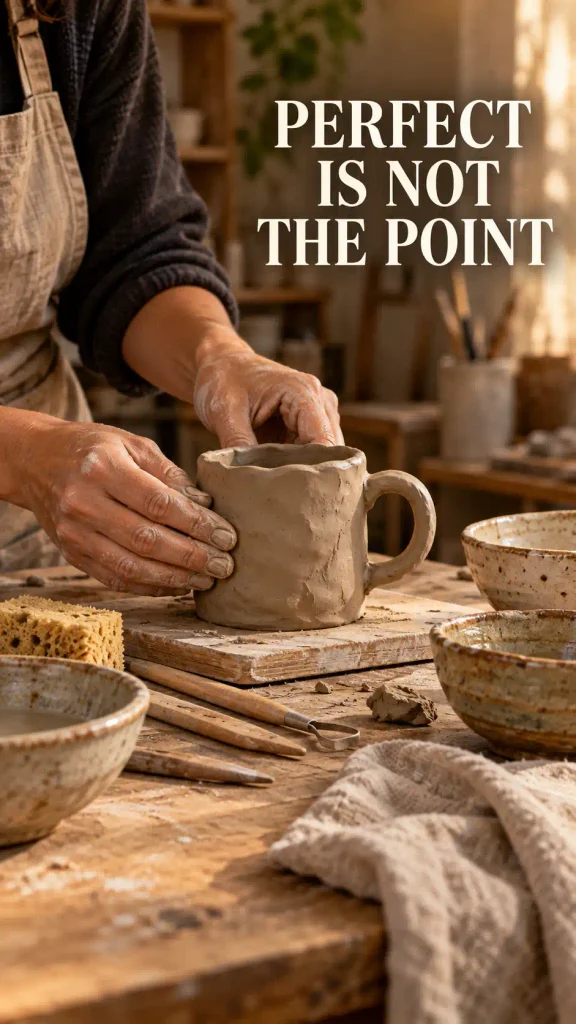
2. Handbuilding Pottery: Because A Slightly Wonky Mug Is Still A Mug
A pottery wheel looks glamorous until you realize clay can launch itself sideways with remarkable confidence.
Handbuilding is a gentler entry point. Instead of centering clay on a spinning wheel, you make forms with your hands using pinch pots, coils and slabs. A cup, spoon rest, incense holder or little trinket dish is enough for a first project.
Pinterest currently reports “pottery handbuilding” searches up 297%, and it is easy to see the appeal: clay gives instant physical feedback. Push here, the shape changes. Smooth there, it changes again. There is very little ambiguity about what your hands are doing.
If you want a finished food-safe mug, use a local pottery studio where pieces can be properly fired and glazed. If you just want to test whether you enjoy sculpting, air-dry clay is a cheaper, lower-commitment start for decorative objects.
Easy first try: a thumb-sized pinch bowl or ring dish.
Cost to start: Low with air-dry clay; higher with studio firing.
Best for: tactile learners and people who like useful objects.
3. Whittling: Making Something Slowly With One Small Knife
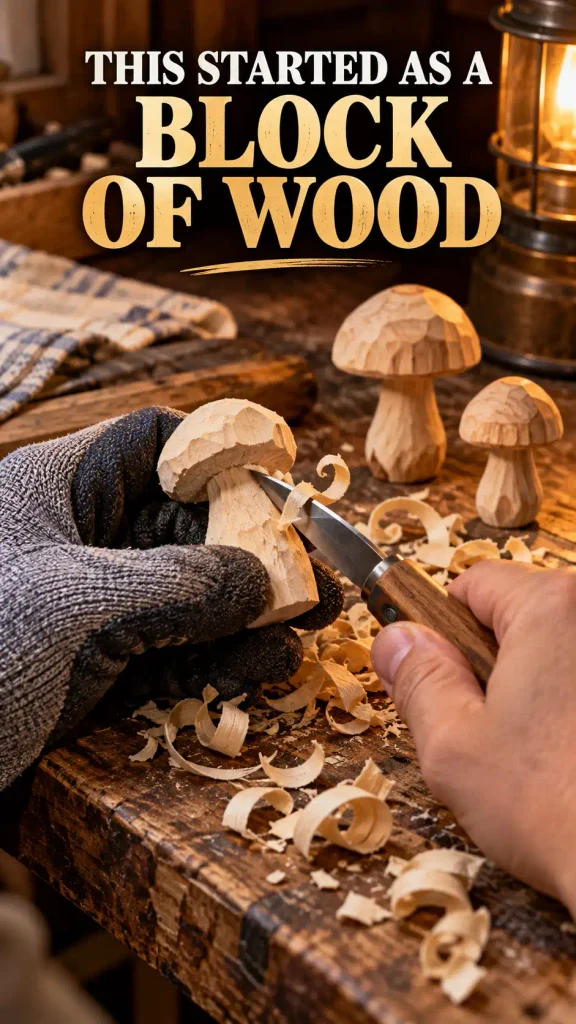
Whittling has an almost comically short equipment list: a suitable piece of wood, a proper carving knife, and enough patience not to expect a tiny wooden fox in six minutes.
Pinterest reports searches for beginner whittling projects climbing sharply in 2026. Part of the appeal is probably the pace. You remove one thin shaving at a time. The object gets better because you stayed with it, not because you tapped “undo.”
Start with soft carving wood such as basswood and a deliberately simple shape—a mushroom, spoon, little house, or abstract animal. Use a cut-resistant glove and carve away from your body. A sharp purpose-made carving knife is safer and easier to control than wrestling with a dull random blade from the kitchen drawer.
Easy first try: a simple wooden mushroom.
Cost to start: Low to moderate.
Best for: patient hands, quiet evenings, people who like small objects.
Safety: use a proper carving knife, protective glove, and safe cutting direction.
4. Crochet: One Loop, Then Another, Then Suddenly You Own A Tiny Frog
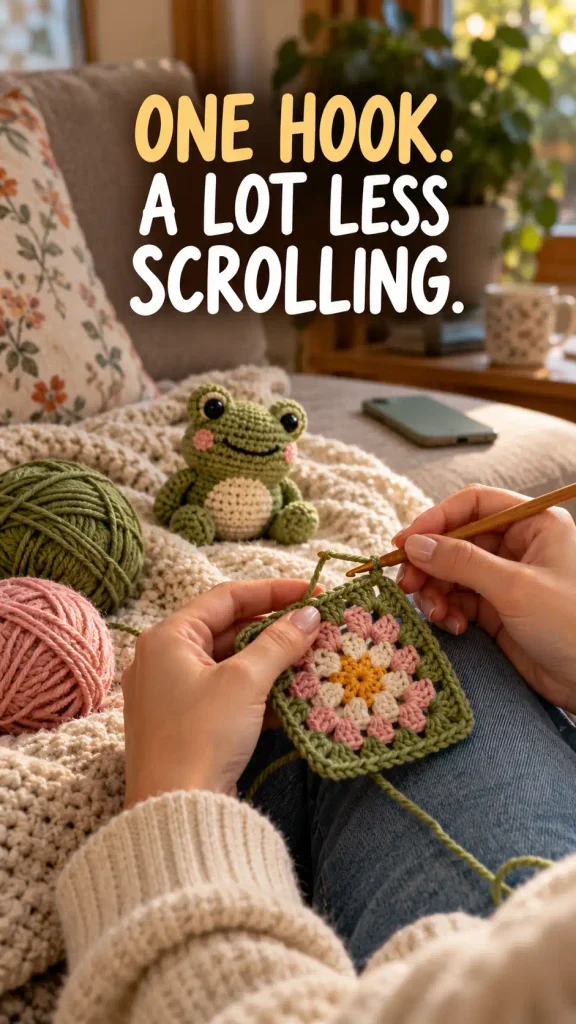
Crochet has an unfair advantage over many hobbies: the first useful skill is basically one hook making loops through other loops.
That does not mean your first row will look good. It may look like a confused shoelace. But the learning curve becomes rewarding quickly because each stitch is visible and repeatable.
Do not begin with a queen-size blanket unless you enjoy projects that outlive governments. Try a coaster, granny square, simple headband or tiny amigurumi shape. One hook and one medium-weight yarn are enough to discover whether the rhythm clicks for you.
The satisfying part is not just the finished object. It is watching the object exist a little more than it did ten minutes ago.
Easy first try: a granny square or simple coaster.
Cost to start: Very low.
Best for: restless hands, TV-listeners, commuters who are not driving.
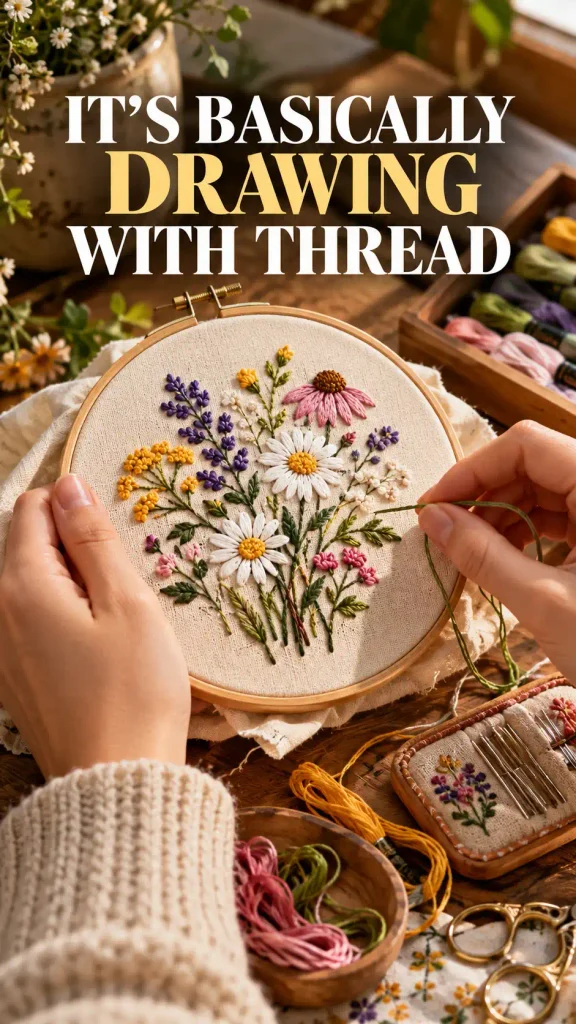
5. Embroidery: Doodling, Except The Pen Is Thread
If drawing feels too permanent, embroidery has a nice secret: the “line” is thread, and thread can be pulled back out.
A small hoop, cotton fabric, embroidery floss and a needle can take you surprisingly far. Start with a simple outline—leaves, initials, a little moon, a flower, a badly behaved cat. Learn a backstitch and a satin stitch. That is enough to make something recognizably yours.
Hand embroidery is also having a very visible moment on Pinterest; its 2026 Hobbies Report lists “hand embroidery art” among fast-rising craft searches. But the trend is almost beside the point. Embroidery has the rare quality of being repetitive without feeling empty.
Easy first try: stitch a tiny motif onto a scrap of cotton before touching your favorite shirt.
Cost to start: Very low.
Best for: detail-oriented people and anyone who likes slow visual progress.
6. Visible Mending: The Rare Hobby That Starts With Something Going Wrong
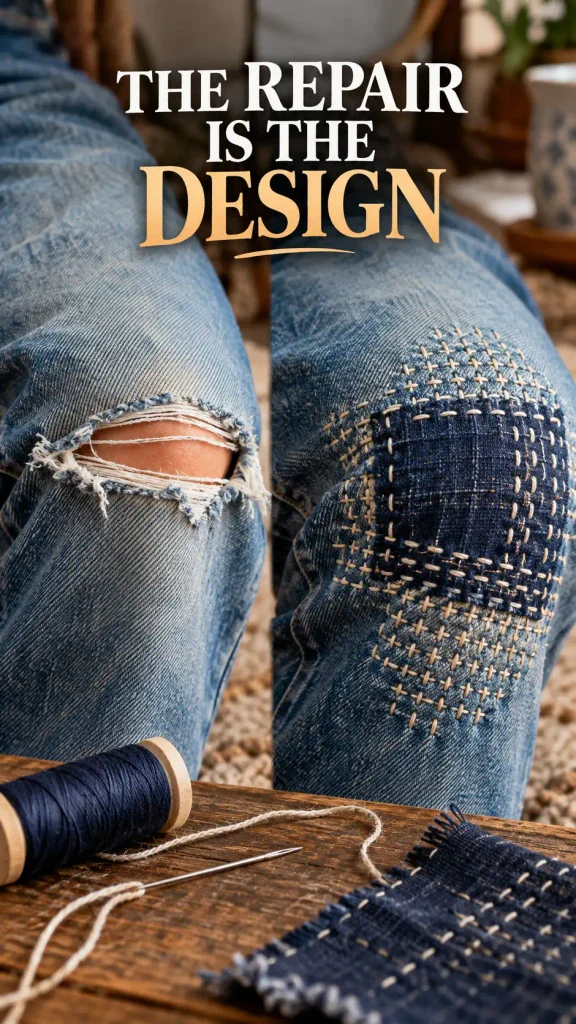
A hole in your favorite sweater is annoying. A repaired hole with contrast stitching can become the reason you like the sweater more.
Visible mending flips the usual repair logic. Instead of trying to pretend damage never happened, you reinforce it and let the repair show. Patches, darning and decorative running stitches can all work.
Start on something low-stakes: socks, work jeans, a tote bag. The goal of the first repair is not museum-quality needlework. It is learning how fabric behaves while making something usable again.
There is also a small satisfaction in getting a second win from something you already paid for.
Easy first try: patch a small denim tear from behind and stitch around it visibly.
Cost to start: Very low.
Best for: practical people who dislike waste.
7. Watercolor: A Hobby That Looks Better When You Stop Trying To Control It
Watercolor has one important personality trait: the water also gets a vote.
That is frustrating for about ten minutes and then strangely freeing. Pigment blooms. Colors bleed together. Edges dry unpredictably. The medium rewards learning what it wants to do rather than forcing every shape into obedience.
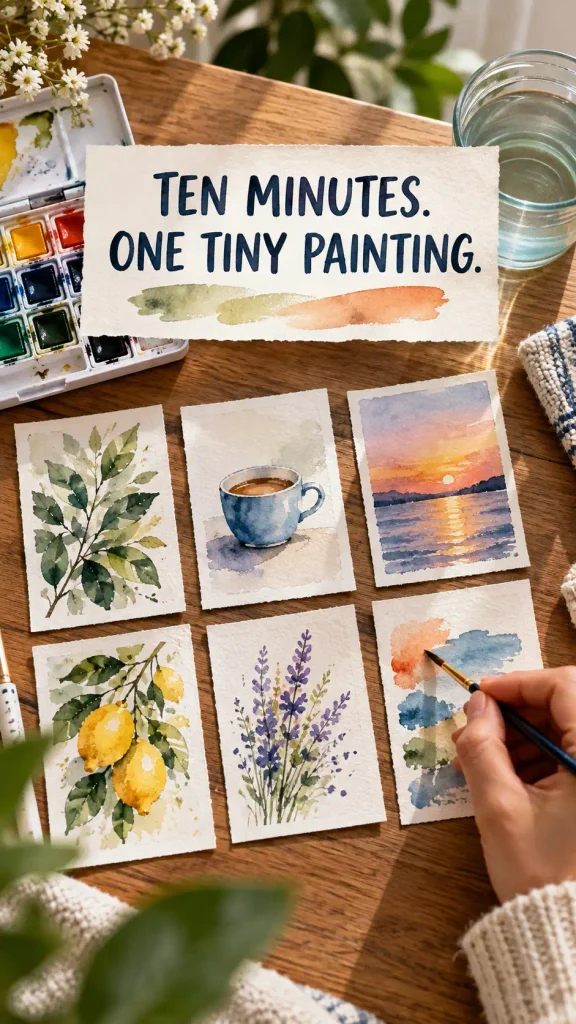
A tiny travel palette, one round brush and watercolor paper are enough. Paint six little squares instead of one ambitious masterpiece: a leaf, a cup, a sunset, a cloud, a lemon, a blob you later decide was intentional.
Small paintings remove the pressure to make something “worthy.” You can finish one before your brain has time to turn it into a performance review.
Easy first try: six postcard-sized mini paintings.
Cost to start: Low.
Best for: people who want art without a complicated setup.
8. Sketching: Give Yourself Permission To Draw Badly
People often quit drawing before they begin because they think drawing is the ability to make something look photographically correct.
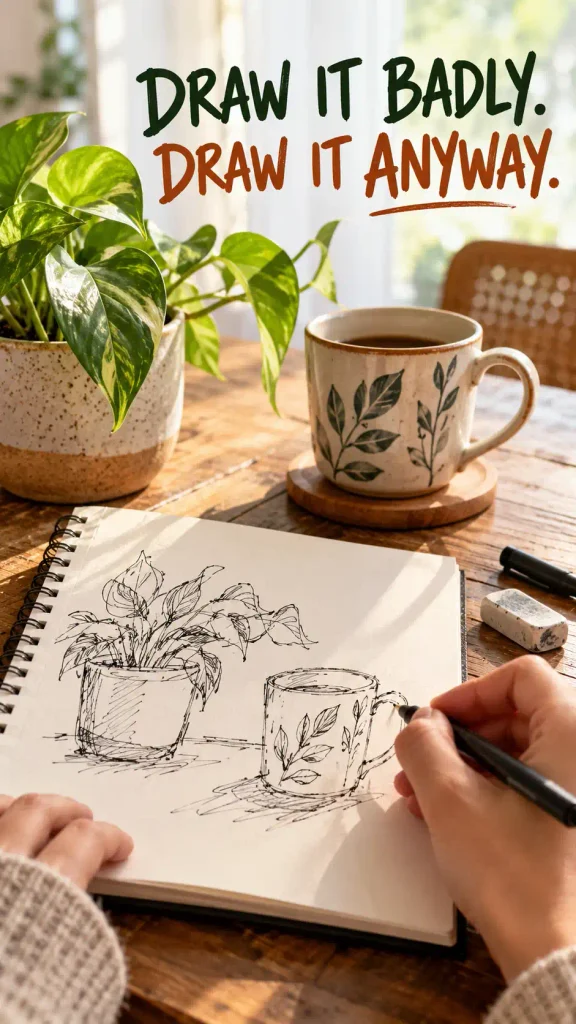
It can also be the ability to look at your coffee mug for three minutes and make a slightly crooked record of it.
That is a much easier hobby.
Use a cheap sketchbook and a pen you already own. Draw one object in front of you without erasing. Not because erasers are forbidden, but because endless correction can turn curiosity into homework. Date the page and move on.
The fun appears when, two months later, you flip back and realize your chairs have stopped looking like frightened spiders.
Easy first try: one object, five minutes, no erasing.
Cost to start: Almost nothing.
Best for: observers, travelers, café sitters, recovering perfectionists.
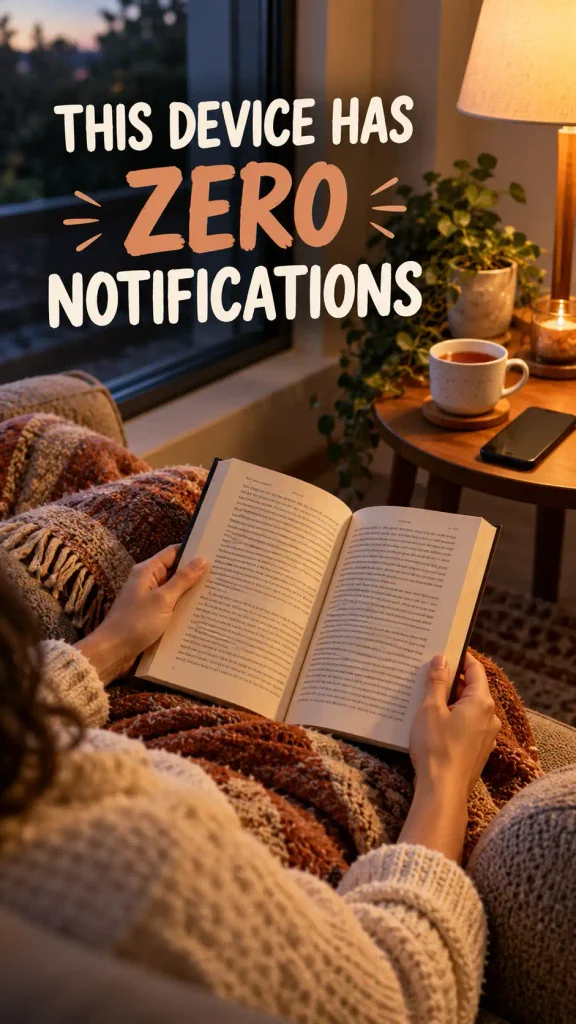
9. Reading A Physical Book: Radical Technology From Several Centuries Ago
A physical book is remarkably bad at sending notifications.
That is one of its strengths.
Reading for pleasure gives your attention a single lane instead of twelve competing ones. A 2025 review of reading and wellbeing found evidence around mechanisms including relaxation and escapism, while also noting that context matters and the research is still developing.
The mistake is choosing the book you think a cultured adult should be reading instead of the one you actually want to open. Thrillers count. Romance counts. Comics count. A 600-page history of drainage systems counts if that is genuinely your thing.
Put the book where the phone normally wins: beside the bed, on the sofa, in your bag.
Easy first try: ten pages before opening social media in the evening.
Cost to start: Free with a library.
Best for: anyone who misses having a longer attention span.
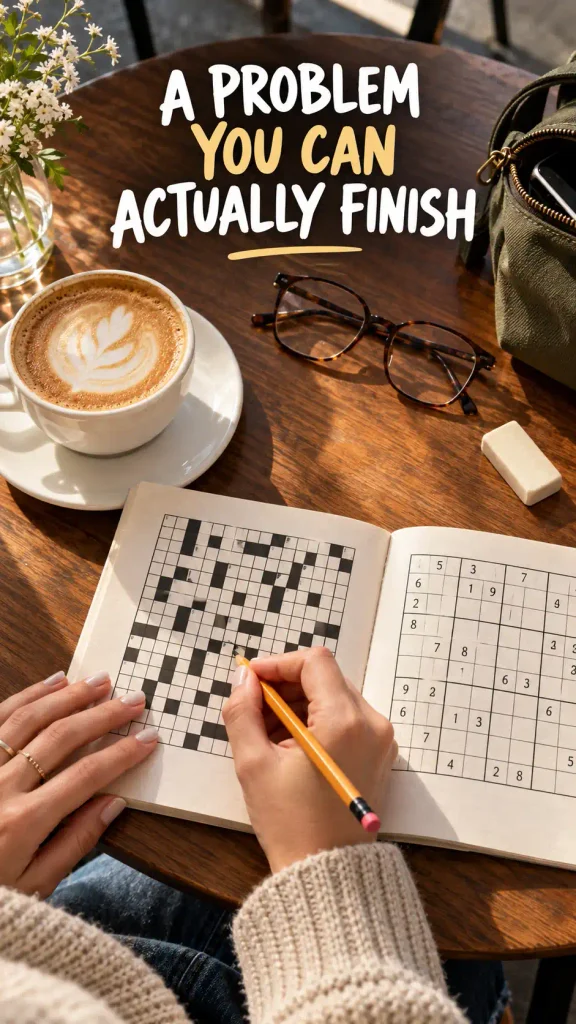
10. Crosswords, Sudoku And Logic Puzzles: Give Your Brain A Problem With An Ending
The internet is very good at presenting problems that never resolve.
A crossword is kinder. There is an empty box. Then, eventually, there is a letter in it.
Puzzle books are useful offline hobbies because the starting friction is almost zero. No table setup. No drying time. No tutorial marathon. Keep a small book and pencil where you usually scroll.
Choose a difficulty that lets you get traction. A puzzle that humiliates you for 40 minutes is technically offline, but it is not necessarily recreation.
Easy first try: one mini crossword or beginner sudoku.
Cost to start: Very low.
Best for: waiting rooms, commutes, coffee breaks, people who love small wins.
11. Bread Baking: Because Waiting Becomes Part Of The Hobby
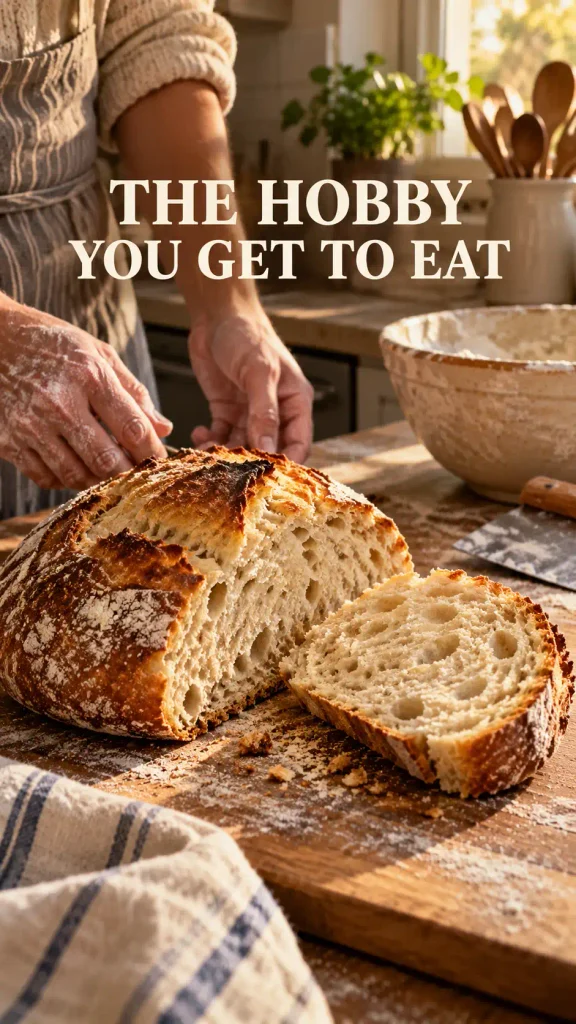
Bread is mostly flour, water, salt, yeast—and a surprising amount of “leave it alone for a bit.”
That makes it a nice counterweight to instant everything.
You mix. You wait. You shape. You wait again. Then your kitchen smells absurdly competent.
Do not begin by trying to cultivate a sourdough starter named after a Victorian poet unless that genuinely excites you. A basic no-knead yeast loaf teaches fermentation, shaping and baking with far less emotional administration.
The reward is unusually concrete: you finish the hobby session by eating the evidence.
Easy first try: a simple no-knead yeast loaf.
Cost to start: Low.
Best for: patient beginners and people motivated by snacks.
12. Growing Herbs: Gardening For People Who Do Not Own A Garden
You do not need land, overalls, or a dramatic hat.
A sunny windowsill can support a tiny edible project. Basil, mint, chives and parsley are familiar places to begin, depending on your light and climate.
The useful thing about herbs is that the feedback loop is visible. New leaves appear. You water. Something changes. Eventually, dinner gets better.
Research on gardening and horticultural activities has found generally positive associations with wellbeing, although studies vary considerably and should not be read as a medical guarantee. The lower-stakes argument is enough: caring for one living thing gives an evening a small rhythm.
Easy first try: one herb you already cook with.
Cost to start: Low.
Best for: windowsills, cooks, people who want a hobby with practical payoff.

13. Birdwatching: The Hobby That Makes A Normal Walk Feel Like A Treasure Hunt
A park can look completely ordinary until you start trying to identify who is making all that noise in the trees.
Birdwatching changes the task of walking. Instead of “go outside because that is supposedly good for me,” you have a mission: notice movement, listen for calls, spot shape and color, figure out what you saw.
You do not need expensive binoculars on day one. Start with your eyes, a small notebook and a local field guide. If you use an identification app, check it after observing rather than spending the entire walk staring into another screen.
The first time you recognize a bird without looking it up, something clicks. Your neighborhood suddenly has more inhabitants than you realized.
Easy first try: identify five birds within walking distance of home.
Cost to start: Free to low.
Best for: walkers, nature-curious people, anyone who needs a reason to look up.

14. Jigsaw Puzzles: Productive Procrastination With 1,000 Tiny Consequences
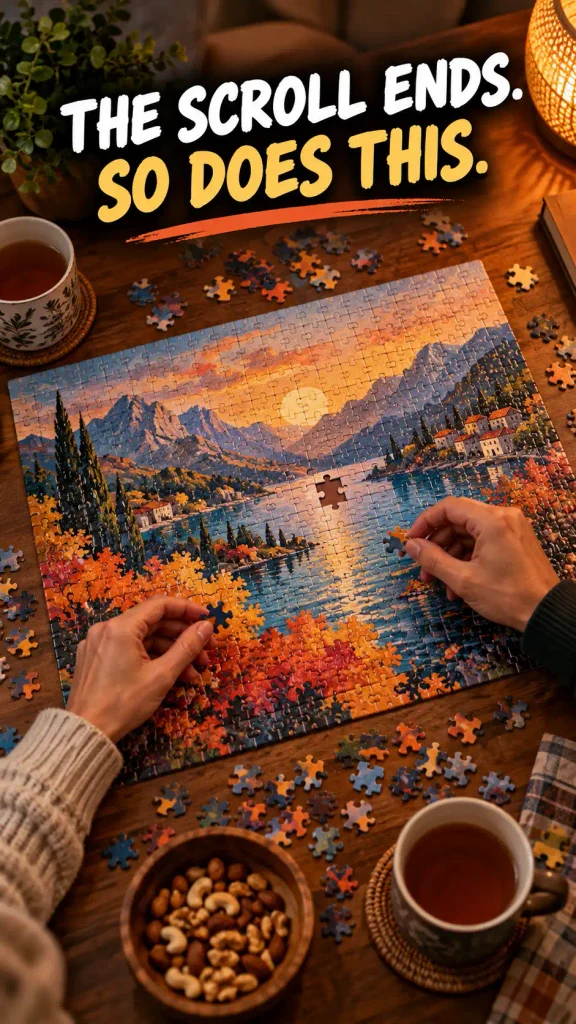
There is a particular kind of confidence that comes from finding the one beige piece that belongs in a mostly beige sky.
Jigsaw puzzles occupy your visual attention without demanding originality. That makes them useful on days when “make art” sounds exhausting but “keep scrolling” sounds worse.
Do not buy a 5,000-piece black-and-white cityscape because you are feeling ambitious in the store. A 300- to 500-piece puzzle can be completed without forcing your dining table into a six-week hostage situation.
And unlike a feed, there is a beautifully obvious moment when you are done.
Easy first try: 300–500 pieces with distinct colors and shapes.
Cost to start: Low; often easy to borrow or swap.
Best for: visual problem-solvers and companionable silence.
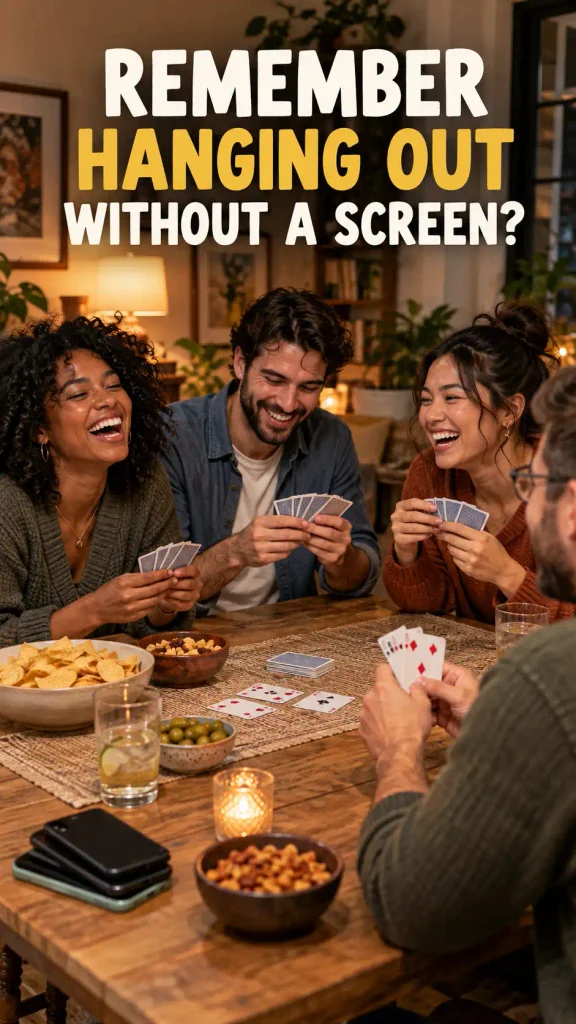
15. Board Games And Cards: A Hobby That Requires Other Humans To Be In The Room
Not every offline hobby needs to be a solo retreat from civilization.
A deck of cards can turn “we should hang out sometime” into an actual thing happening at a table. Board-game interest is also showing up alongside Pinterest’s broader push toward game nights, hosting and offline social rituals in 2026.
Start with games that can be explained quickly. The goal for a casual night is not to spend 90 minutes learning a rulebook that reads like international tax law.
Cards have an extra advantage: they cost almost nothing, travel anywhere and contain an absurd number of possible games.
Easy first try: a simple card game or a board game that teaches in under ten minutes.
Cost to start: Very low to moderate.
Best for: friends, couples, families, people bored of “we just watched something.”
16. Film Or Instant Photography: When Every Photo Costs Enough To Make You Look Twice
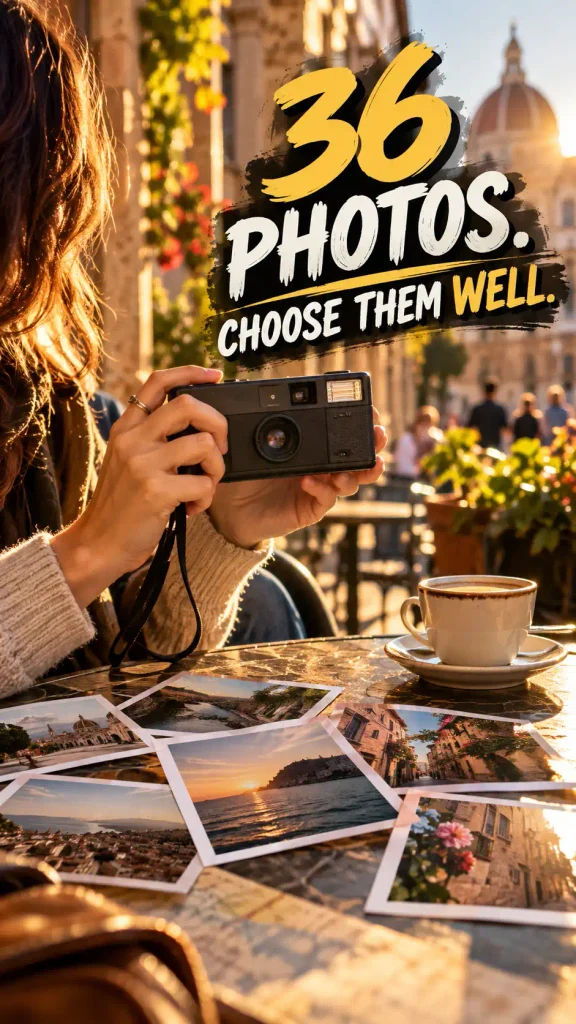
Digital cameras taught us to take 43 versions of the same sunset and choose later.
Film and instant photography reintroduce consequences.
You have a limited number of frames. You pause. You notice the light. You decide whether the thing in front of you is worth one of them.
That slower relationship with taking pictures is part of the broader analogue revival being reported in 2026, alongside physical journals, records and other tangible media.
You do not need to become a darkroom purist. A secondhand point-and-shoot or instant camera is enough to experience the constraint. Just price film and development before falling romantically in love with the idea; analogue photography can become an expensive little rectangle surprisingly fast.
Easy first try: one 24- or 36-exposure roll with a theme: doors, friends, shadows, your neighborhood.
Cost to start: Moderate to high over time.
Best for: people who take too many digital photos and look at almost none of them.
17. Miniature Building: Tiny Rooms, Suspiciously Large Amounts Of Concentration
There is something deeply funny about spending an hour making a chair the size of your thumb.
It is also extremely absorbing.
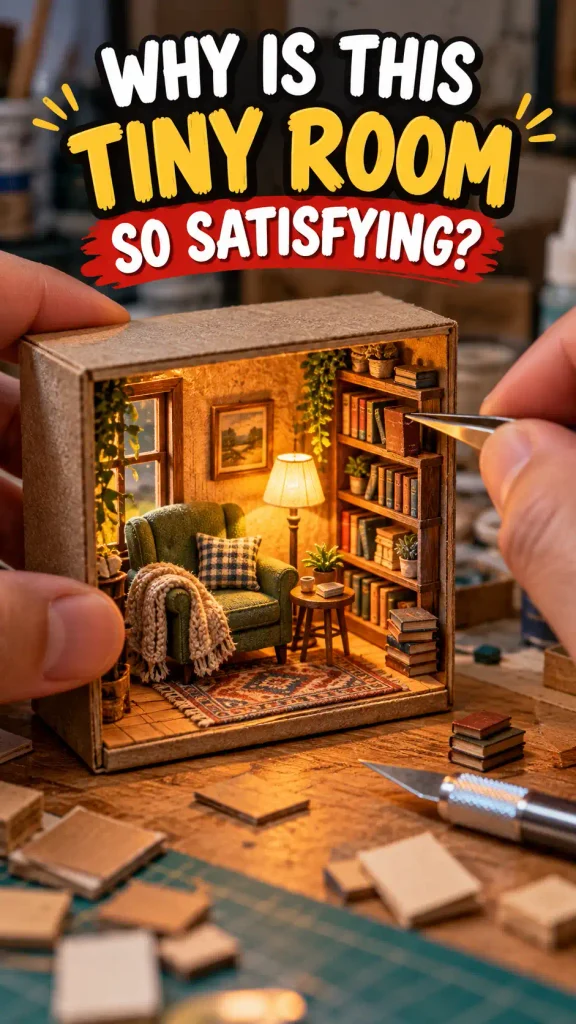
Pinterest’s current hobby data shows strong interest in mini rooms, dollhouse DIY, printable mini food and even miniatures made from trash. The appeal is easy to understand: miniature building combines design, problem-solving, painting and crafting without requiring space for a full-size renovation.
Start with one scene, not an entire dollhouse. A tiny reading nook made from cardboard, scrap wood and paper is enough. Suddenly packaging you used to throw away begins looking suspiciously like architectural material.
Easy first try: a shoebox-size reading nook or tiny café corner.
Cost to start: Low if you reuse materials.
Best for: detail lovers, world-builders, people who save tiny boxes “for some reason.”
18. Air-Dry Clay Charms: Small Enough To Finish Before You Lose Interest
Some hobbies fail because the first project is simply too large.
Clay charms avoid that problem by being gloriously tiny.
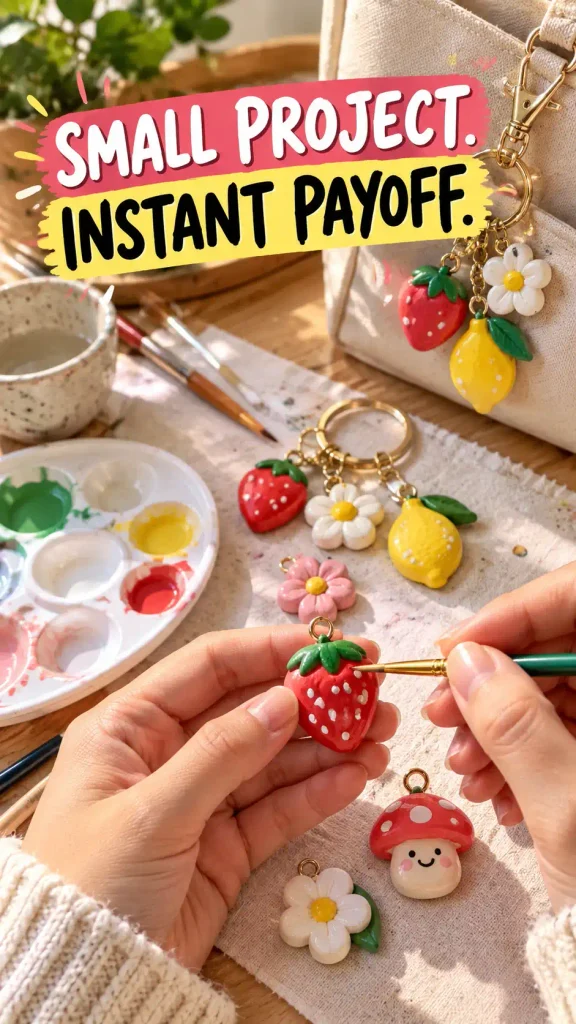
Make a fruit, little animal, food shape, bead, magnet or bag charm. Let it dry, sand rough areas if needed, paint it, and seal it according to the clay manufacturer’s instructions. Pinterest lists clay bag charms among its rapidly rising 2026 craft searches.
You can finish several in one sitting, which means mistakes do not feel expensive. Your first strawberry looks like a red potato? Excellent. The second strawberry has already learned from its ancestor.
Easy first try: three flat fruit or flower charms.
Cost to start: Low.
Best for: impatient creatives and gift-makers.
Note: air-dry clay is generally for decorative projects unless a product explicitly states otherwise.
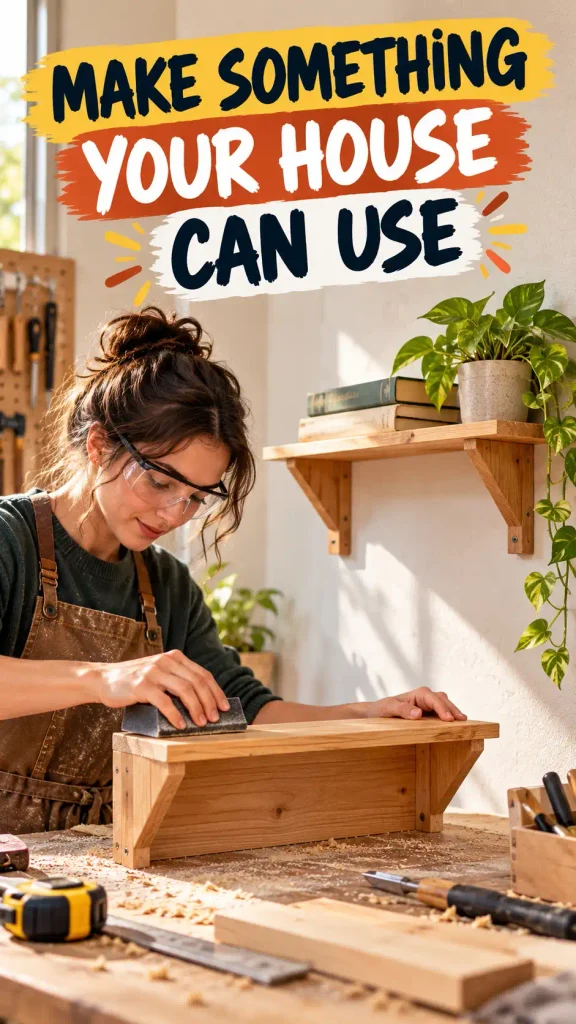
19. Simple Woodworking: Build One Thing Your House Actually Needs
“Woodworking” can sound like you need a garage full of machines and an ancestor who knew joinery.
You can start much smaller.
A basic shelf, plant stand, small box or book rest teaches measuring, sanding, fastening and finishing. Pinterest’s 2026 men’s report shows rising searches for easy woodworking projects, which fits the wider appetite for hobbies with visible, practical results.
Choose a plan designed for beginners and use tools you know how to operate safely. If a project requires unfamiliar power tools, learn from a qualified instructor or use a community workshop rather than improvising your way through machinery.
The reward is hard to beat: at the end, your hobby is now holding your books.
Easy first try: a small shelf or simple wooden book stand.
Cost to start: Moderate, depending on tools.
Best for: practical makers.
Safety: use proper eye protection and learn tool-specific procedures before cutting.
20. Flower Pressing: A Walk That Gives You Something To Do When You Get Home
A flower press turns “that tiny leaf is pretty” into an actual plan.
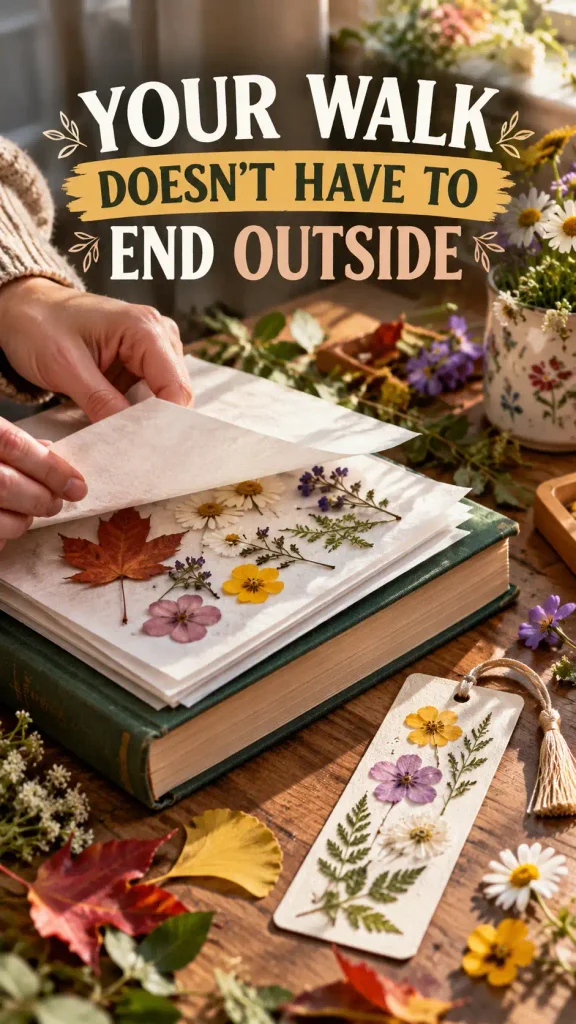
Collect only where it is legal and appropriate, avoid rare or protected plants, and press common leaves or flowers between absorbent paper under weight. Once thoroughly dried, they can become bookmarks, framed arrangements, cards or journal pages.
The hobby is half collecting and half arranging, which makes an ordinary walk feel slightly more observant. You begin noticing shapes you would have stepped past before.
If collecting wild plants is restricted where you live, use garden trimmings or flowers you already bought. The point is the process, not botanical crime.
Easy first try: press fallen leaves and a few garden flowers between paper inside a heavy book.
Cost to start: Almost nothing.
Best for: walkers, journalers and people who bring interesting leaves home anyway.
21. Calligraphy And Hand Lettering: Writing Slowly On Purpose
Most of us type faster than we think.
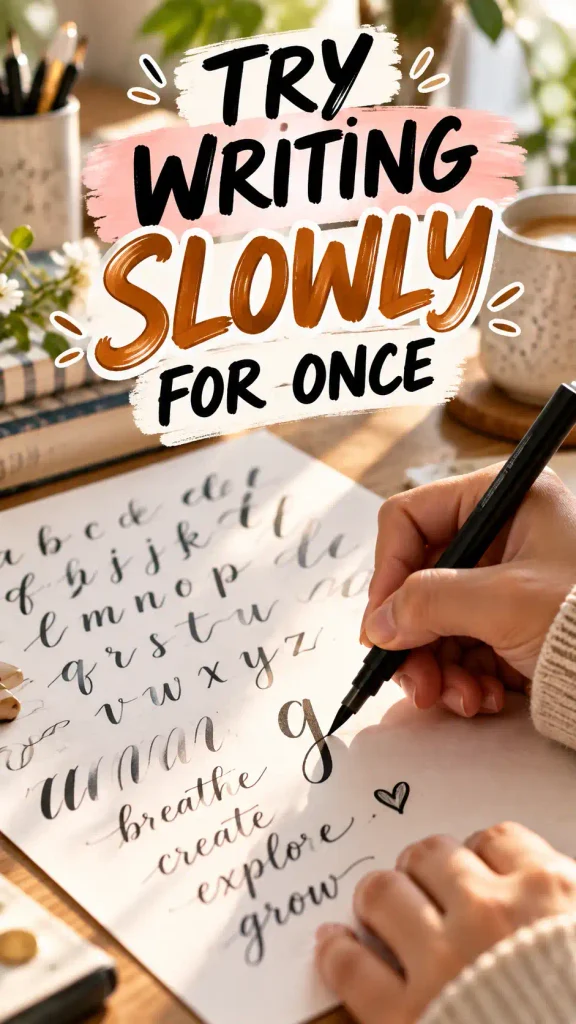
Hand lettering reverses that relationship. One word can take several minutes. The downstroke matters. Spacing matters. Suddenly “Happy Birthday” is an activity.
You do not need an expensive fountain pen collection. A brush pen or broad-tip marker plus ordinary practice paper is enough to learn pressure, basic strokes and letter shapes.
Start with words, not quotes. Nobody needs to spend their first evening painstakingly lettering “She believed she could so she did” while quietly losing the will to continue.
Easy first try: practice your name and five favorite words.
Cost to start: Very low.
Best for: stationery people, patient beginners, card-makers.
22. Letter Writing: The Message That Cannot Be Answered With A Reaction Emoji
A handwritten letter is wildly inefficient.
That is exactly why receiving one feels different.
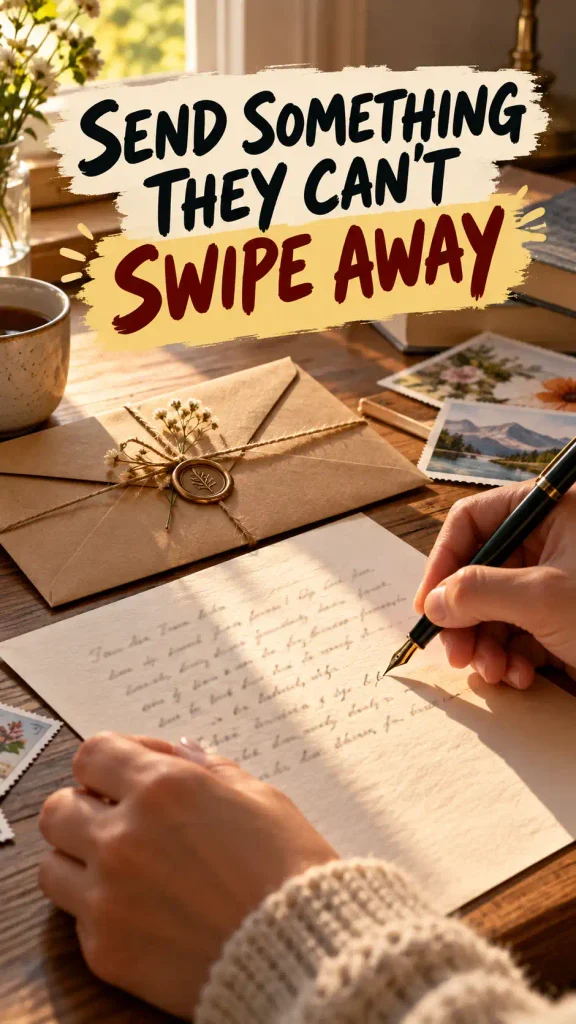
You have to choose paper, sit down, decide what is worth saying, write it by hand, find an envelope, locate a stamp and physically send the thing into the world. Friction becomes evidence that somebody bothered.
You do not need a dramatic pen pal on another continent. Write to a friend you usually text. Send your parents a note. Put a ridiculous postcard in the mail. Keep copies or photographs if you like remembering what you wrote.
It is communication, but slow enough to become a hobby.
Easy first try: one postcard to someone who is not expecting it.
Cost to start: Very low.
Best for: sentimental people and friends tired of sending voice notes.
23. Zine Making: Publish Something Without Asking An Algorithm For Permission
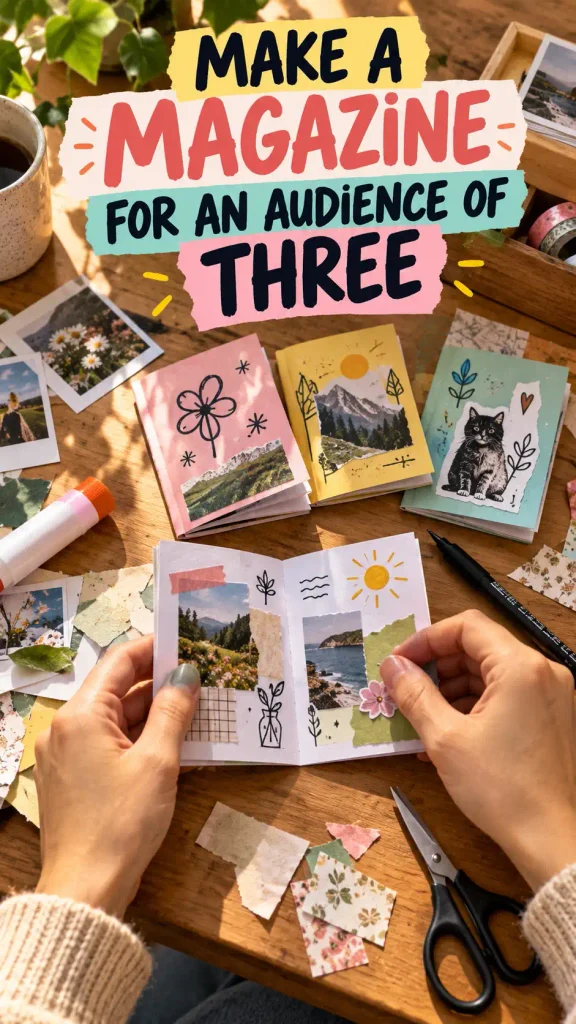
A zine can be eight folded pages about almost anything.
Your neighborhood cats. Sandwich rankings. Bad dates. Local architecture. Drawings of chairs. A tiny photo essay. A guide to plants you keep accidentally killing.
Pinterest’s 2026 Hobbies Report describes a “zine revival,” with rising interest in zine design, book logs and DIY photo albums. The format is appealing because it collapses writing, collage, drawing, photography and layout into one manageable object.
The easiest version uses one sheet of paper folded into a mini eight-page booklet. Make one copy for yourself. If it is good, make three more. Congratulations: you are now an extremely small publishing company.
Easy first try: an eight-page one-sheet mini zine about one oddly specific subject.
Cost to start: Almost nothing.
Best for: people with opinions, collections, sketches or niche obsessions.
24. Vinyl Listening: Try Listening To The Album Instead Of The Algorithm
Streaming made nearly every song available immediately, which is incredible.
It also made skipping incredibly easy.
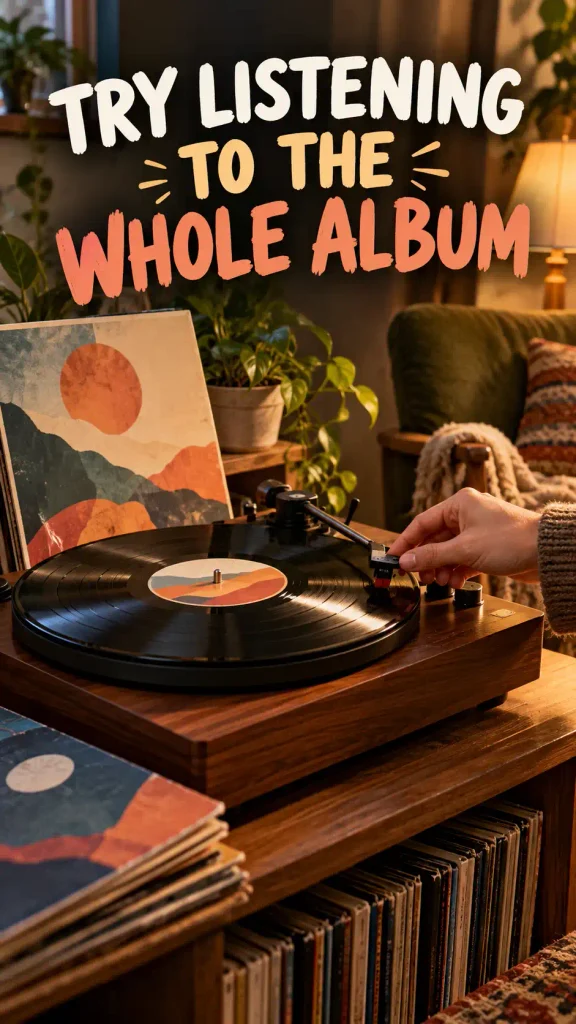
Putting on a record asks for a different kind of attention. You choose an album. You place it on the turntable. You hear songs you might have skipped. Halfway through, you physically turn the record over. It is inconvenient in a way that gives the music shape.
The wider analogue revival includes physical music media too; the Financial Times recently pointed to renewed consumer interest in vinyl, CDs and other tangible formats.
You do not need to become a collector with shelving concerns. Start with one album you genuinely love and listen to it from beginning to end while doing nothing else complicated.
Easy first try: one favorite album, start to finish, phone in another room.
Cost to start: Moderate if you need equipment.
Best for: music lovers who have accidentally turned music into background noise.
25. Build An Analogue Bag: The Hobby Kit For People Who Never Know What To Do Instead
This last one is less a hobby than a system for making the other hobbies easier.
The “analogue bag” idea gained attention in 2026 as people began packing screen-free activities—books, puzzles, sketchbooks, knitting, cards, watercolor kits—into one grab-and-go bag. The genius is not the bag. It is removing the decision.
When boredom arrives, your phone offers entertainment in one movement: hand to pocket.
Your offline option needs to compete with that.
So build a tiny kit that suits you: a paperback, pencil, pocket puzzle book, small sketchbook, deck of cards and one portable craft. Keep it by the sofa or take it to cafés, appointments and trips.
Do not make the bag so elaborate that organizing it becomes the hobby unless, admittedly, organizing bags is your hobby.
Easy first try: put three offline activities you already own into one tote tonight.
Cost to start: Potentially free.
Best for: anyone who says, “I want to use my phone less, but then what?”
There is a strange trap hidden inside the phrase “I need less screen time.”
It tells you what to remove, but not what to put in the empty space.
And empty space is exactly where the phone is strongest.
A hobby gives that space a shape. Something to hold. Something to finish. Something to get slightly better at. Something to show a friend. Something that still exists after the battery dies.
You do not need 25 hobbies. You probably do not even need five.
You need one that is easier to reach for than another hour of scrolling.
Which one would you genuinely try this week?
Sources & Further Reading
- Pinterest — 2026 Hobbies Trend Report
- Pinterest — 2026 Men’s Trend Report
- The Guardian — The rise of the analogue bag
- Financial Times — The anti-AI portfolio: fountain pens, Warhammer and film cameras
- PubMed — Exploring the Impact of Hobbies on Mental Health and Well-Being: A Scoping Review (2025)
- PubMed — The effects of crafts-based interventions on mental health and well-being: A systematic review (2025)
- PubMed — Creating arts and crafting positively predicts subjective wellbeing
- PubMed — Gardening, wellbeing and quality of life: umbrella review and meta-analysis
- PubMed — Reading for wellbeing: a realist review of evidence (2025)