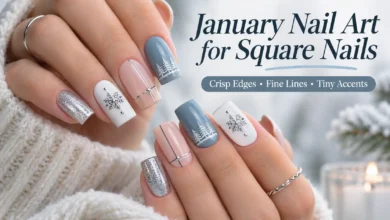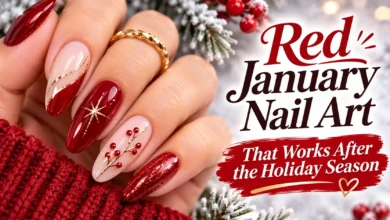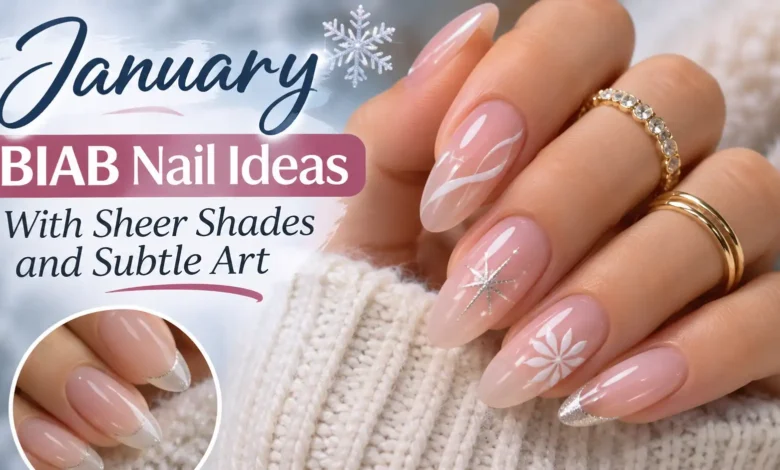
For January BIAB nails that feel soft but still have a little detail, start with a sheer blush, peach, or latte base and choose one small accent. An ivory micro French edge looks gently defined; a few snow dots or one blue snowflake make the winter reference clearer. A fine silver arc works when you want the detail to catch the light.
The seven looks below show different ways to keep the base visible. Each includes a placement plan and wording you can take to your nail appointment, with adjustments for shorter nails.
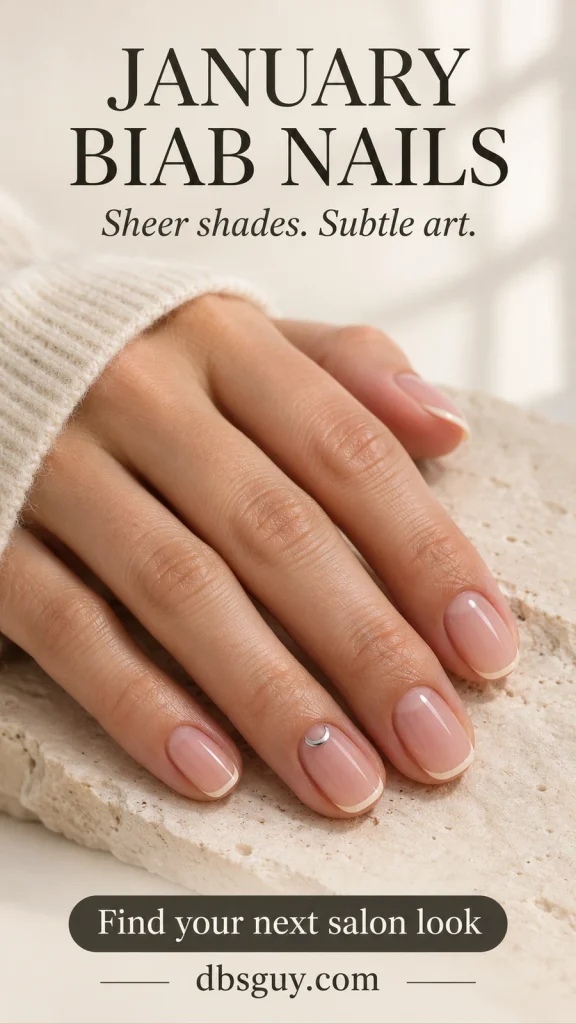
The visuals are AI-generated manicure concepts created for dbsguy.com. They illustrate color, shape, and art placement, not completed salon services or wear tests. Actual shade and transparency depend on your nails and the products used.
Choose the Sheer Base Before the Artwork
BIAB stands for Builder In A Bottle, The GelBottle’s branded builder gel. It describes a product system, not a nail-art style. Ask your salon which builder it uses; a similar-looking manicure may use another brand. The color and artwork can often be adapted, but the product’s application and removal instructions still matter.
For this collection, look for a tint that lets some of your natural nail show through. A milky shade will soften that view more than a clear rose tint. Neither needs to match the photo exactly to carry the design.
- Blush or rose: a useful starting point if you want a pink tint. Compare a cooler rose with a warmer pink against your own hand.
- Peach or warm beige: try these if a pale pink sample looks too cool or chalky on you.
- Latte or muted rose-mauve: consider these when you want more visible color while keeping a translucent effect.
Ask to see the color at the salon’s intended application thickness. Choosing a sheer formula is different from asking the artist to under-apply a builder that needs more structure. If you want your natural white tips hidden completely, explain that too: full coverage and a very transparent finish are different goals.
The references use short oval, squoval, and soft-square shapes. Keep a length that already suits your hands; there is no need to add extensions for a small accent. If you have almost no free edge, our extra-short January nail designs offer more placement ideas for a compact nail.
1. Sheer Blush With an Ivory Micro French Edge
This is the most classic option in the collection. A translucent rosy base meets a very narrow warm-white tip, giving the nail a clear outline without a broad band of white. It pairs easily with oatmeal knits because the ivory edge stays softer than a bright, opaque white tip.
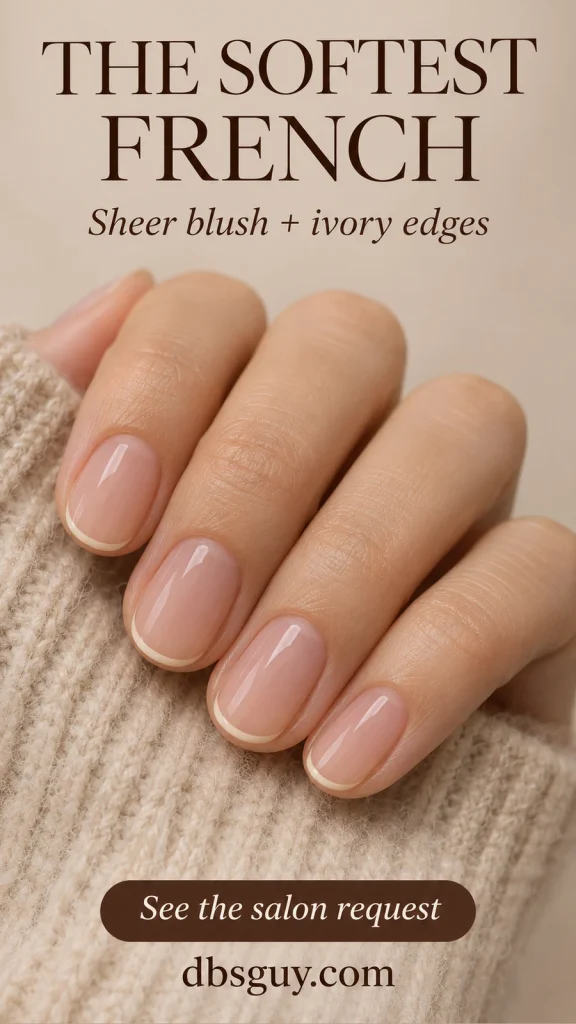
On a short oval, let the line follow the rounded edge and keep its width visually balanced across the hand. The little fingernail may need a finer stroke than the middle nail. A heavy tip can quickly take over a small nail, so check one finished example before the artist repeats it.
At the appointment: “I’d like short oval nails, a translucent blush BIAB shade, and the narrowest clean ivory French edge that suits my length. Please leave the base visibly sheer.”
Choose this if you like seeing a finished edge on every nail. For other tip treatments, browse our January French tip nail ideas and keep the same soft base.
2. Milky Pink With a Few Snow Dots
A small cluster of white dots gives milky pink a winter detail without needing an illustrated snow scene. The reference places the cluster near one outer corner of the ring fingernail. The other nails stay plain, so the dots feel like a deliberate accent.
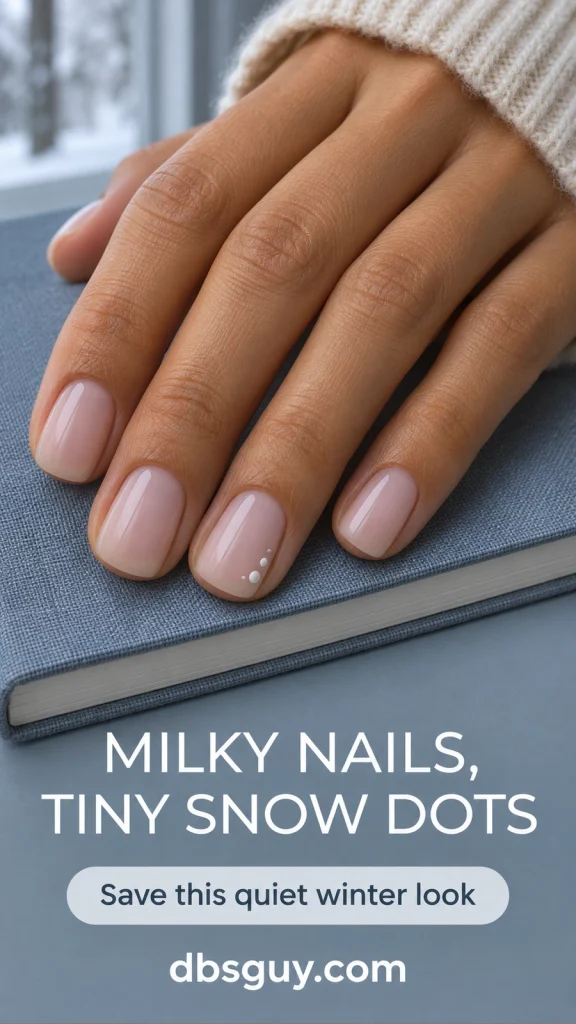
Use a few uneven sizes rather than identical dots in a rigid row. Keep open space between them so they do not merge into a white patch. A milkier base makes the contrast gentle; a clearer pink base makes each dot easier to see.
This is a useful choice for very short squoval nails because the cluster can move inward if the tip has little room. Reduce the number of dots before enlarging them.
Tell your artist: “Keep the milky pink soft and semi-sheer, with a small, flat white-dot cluster near one tip corner on each ring finger. Leave the remaining nails plain.” Check that the smallest dots are still distinct when you look at your hand from a comfortable distance.
3. Peach-Rose With a Fine Silver Cuticle Arc
If you wear silver jewelry, a single silver arc can echo it without adding a raised decoration. Here, a warm peach-rose base carries a fine curved line near the ring fingernail’s base. The curve follows the cuticle’s shape while staying entirely on the nail.

Ask for a flat painted line with a small visible gap from the skin. Keep the curve open toward the tip and leave the center of the nail untouched. A broad filled crescent would create a much stronger metallic accent than the fine-line version.
The placement is the main consideration: as the nail grows, the arc will move away from the cuticle. Choose it because you enjoy that base detail, and discuss maintenance with your artist rather than expecting it to stay in the same position.
Salon wording: “A sheer peach-rose base with one delicate silver arc above the cuticle on the ring fingers, please. I want a fine flat line, with the rest of the nails glossy and plain.”
4. Sheer Rose With One Icy Blue Snowflake
Choose the snowflake when you want the manicure to read as winter at a glance. Powder blue supplies the seasonal color while the rose base keeps the overall set soft. Only one nail needs the motif.
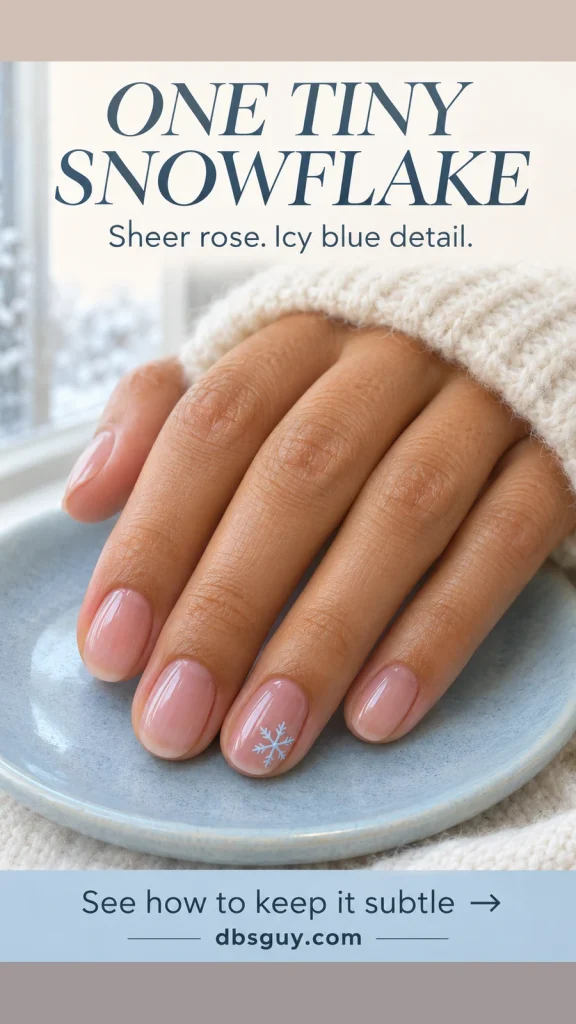
Place a small six-armed snowflake toward the ring fingernail’s tip, slightly off-center. Leave visible base around every arm. Fine, separated strokes matter more than lots of tiny branches; crowded lines can turn a snowflake into a blue spot on a short nail.
Bring a close reference and ask the artist whether a simplified painted snowflake or a suitably sized flat nail decal will work better at your length. The pale blue should be noticeable against the base before the full motif is added.
For your appointment: “I’d like a sheer rose overlay with one small icy blue snowflake on each ring finger, offset toward the tip. Please keep the other nails plain and the design flat.” On an extra-short nail, simplify the branches rather than spreading the snowflake across the whole surface.
5. Sheer Latte With One Espresso Curve
This warm neutral option brings a little definition to a sheer manicure. A fine espresso curve travels lengthwise across one latte-colored ring fingernail. It has more contrast than the ivory designs, but the narrow stroke and plain surrounding nails keep it restrained.
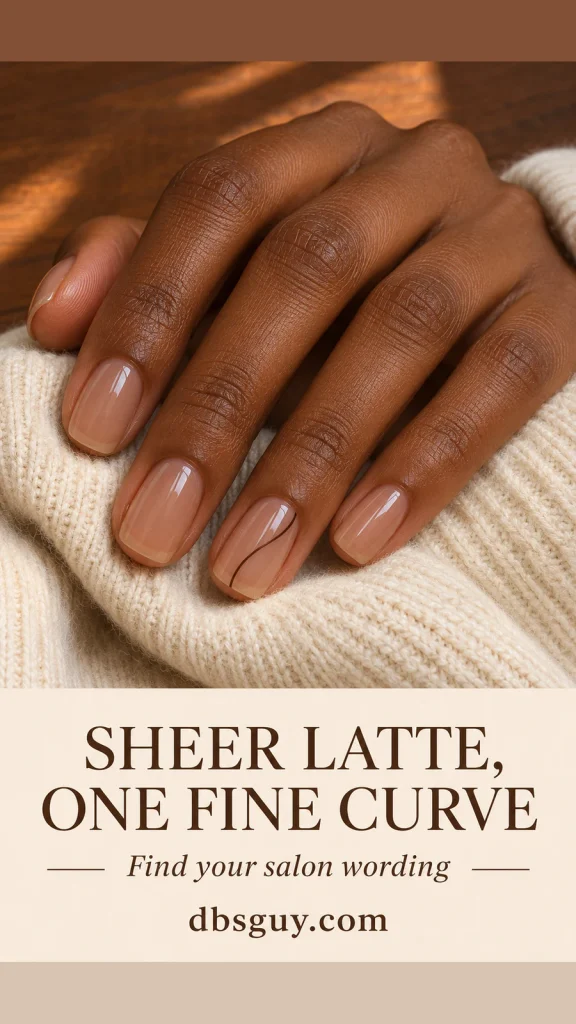
Start the line near one lower side and let it bend toward the opposite tip corner. Leave most of the nail uncovered. One continuous curve gives the eye a clear path; adding parallel swirls would change the look into a more detailed pattern.
Compare the latte sample with your hand before choosing it. If it appears too pale or gray, ask to see a warmer or deeper translucent neutral. The reference is a color relationship—soft base, darker line—rather than a requirement to use one particular beige.
What to request: “A sheer warm latte shade on short soft-square nails, with one very thin espresso curve on the ring fingers. Keep the center mostly open and the other nails plain.”
6. Muted Rose-Mauve With a Floating Ivory Outline
A small oval drawn inside the ring fingernail gives this set its graphic detail. It differs from a French tip because the line never needs to meet the free edge: it forms its own closed shape, surrounded by the rosy base.
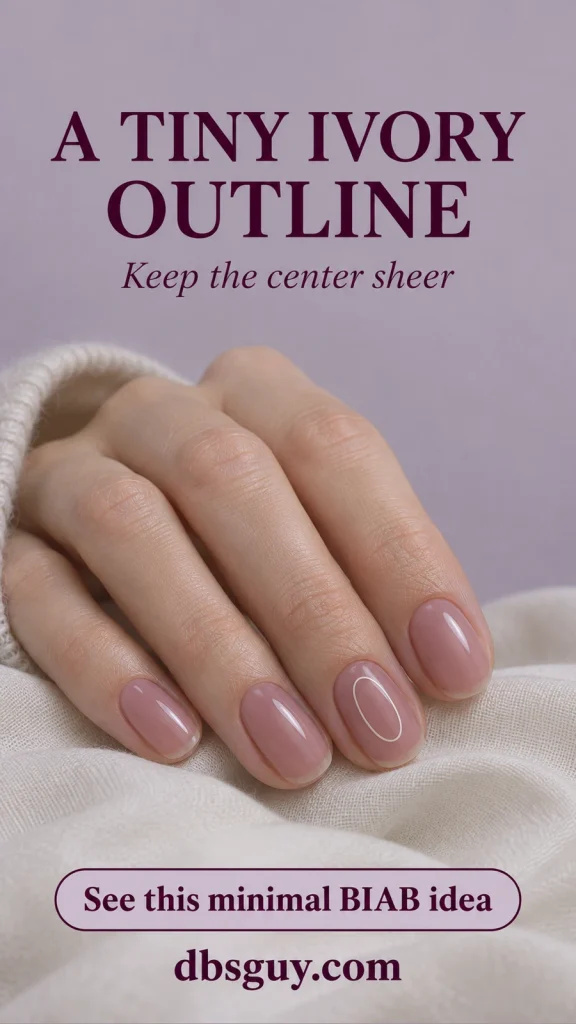
Choose a muted rose-mauve tint with enough transparency for the soft look you want. The warm-white outline should be fine and visibly inset from every edge. Keep its center the same color as the surrounding nail.
This design needs a little breathing room. On a narrow nail, make the oval slimmer. On a very short nail, ask your artist whether a smaller outline will remain readable; enlarging it until it touches the sidewalls loses the floating effect.
Show the reference and say: “One fine ivory oval outline centered inside each ring fingernail, with sheer rose-mauve visible both inside and around it. No filled center or raised frame.” Keeping the rest of the set plain lets the outline stand on its own.
7. Sheer Peach With a Champagne Shimmer Tip
For a little light-catching detail, try a sparse champagne shimmer fade on one tip. The peach-pink base stays visible, while the tiny particles gather near the ring fingernail’s free edge and become fewer toward the center.
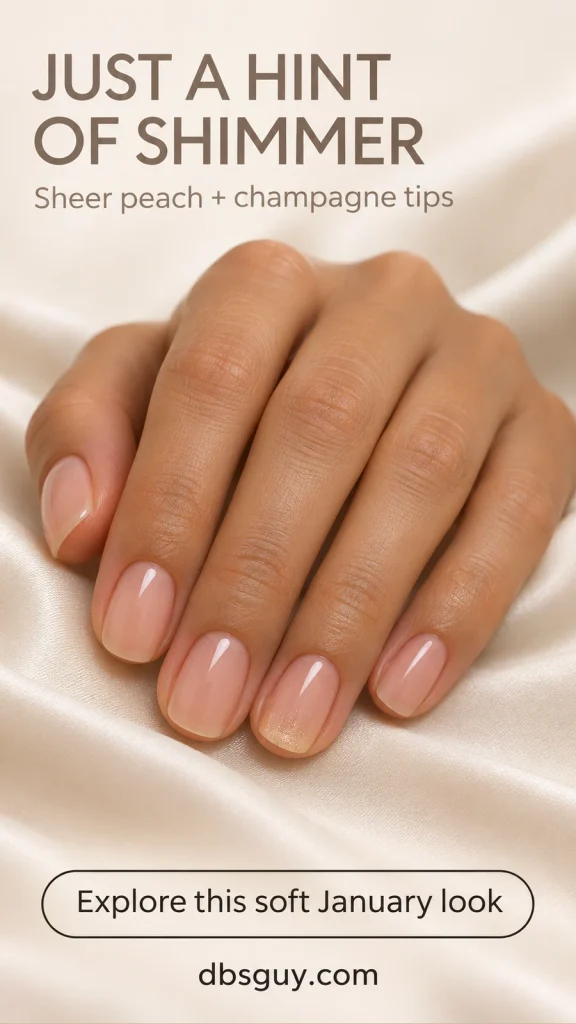
Ask to see the shimmer sample in softer light as well as under the salon lamp. Fine particles give a different effect from chunky glitter or metallic foil. You want scattered glints with sheer space between them, rather than a solid gold band.
The reference keeps the shimmer on the ring fingers. That is a useful limit if you want a small dressy detail for January dinners while keeping most of the manicure simple.
At the salon: “Sheer peach-pink nails with a very light champagne shimmer fade at the ring-finger tips. Please keep the centers clear of shimmer and leave the other nails plain.” If the sample looks too gold, ask for a less dense finish before committing to the full accent.
Turn Your Favorite Reference Into a Clear Booking Request
Send one chosen image and name the details you want to keep. Mention what is currently on your nails so the salon can allow for removal or maintenance. You can use this message:
“I’d like a short BIAB overlay in a sheer [rose / peach / latte] shade, with [chosen detail and placement]. I currently have [bare nails / gel / another enhancement]. Do you use The GelBottle BIAB or another builder, and what would the appointment include? Please confirm the price for removal, the overlay, and this nail art, plus the maintenance plan.”
At the appointment, confirm the length, compare a color sample against your hand, and check one art accent before it is repeated. Specify whether “one accent nail” means one on each hand. Those small decisions make the reference much easier to interpret.
Care and Removal Depend on the Product
Ask which formula was used and how it should be removed; not every BIAB formula has the same removal method. Arrange maintenance around your artist’s assessment of your nails, growth, and product condition. A sheer color does not make lifted product safe to leave in place.
The American Academy of Dermatology’s gel-manicure guidance recommends broad-spectrum, water-resistant SPF 30 or higher on the hands before curing, or dark opaque gloves with the fingertips removed. Avoid picking off gel, moisturize between manicures, and seek a dermatologist’s advice for persistent nail problems or unusual changes.
Questions About Sheer January BIAB Nails
Can I have these designs on my own short nails?
These references do not require long extensions. Ask whether an overlay suits your current nails, then scale the artwork to the space available. The dots and single curve are particularly flexible about placement. A French edge or closed outline needs enough room to stay distinct.
Will sheer BIAB hide my natural white tips?
A transparent tint may leave them visible. A milkier or more covering shade softens them more, but also changes the sheer effect. Show your artist how much of your natural nail you want to see rather than relying on the word “nude.”
Can I copy the look with regular polish?
You can ask for the same colors and artwork in regular polish, but that will be a different service from a BIAB overlay. For simpler home-friendly placement references, see our easy short January nail designs. Use the application and drying directions for your chosen polish.
How long should I leave a BIAB set on?
There is no single interval to promise for every formula and every person. Confirm a maintenance or removal plan with your artist when booking, and contact the salon earlier if product lifts or your nails become uncomfortable. Do not stretch the appointment just because a sheer shade makes new growth less obvious.