For a winter manicure you can wear beyond the holidays, start with one detail: a white snowflake on blue, a cool chrome finish, or a knit pattern in a soft neutral. You can keep the same idea on short nails by shrinking the artwork, limiting it to an accent finger, or choosing a finish that needs no illustration at all.
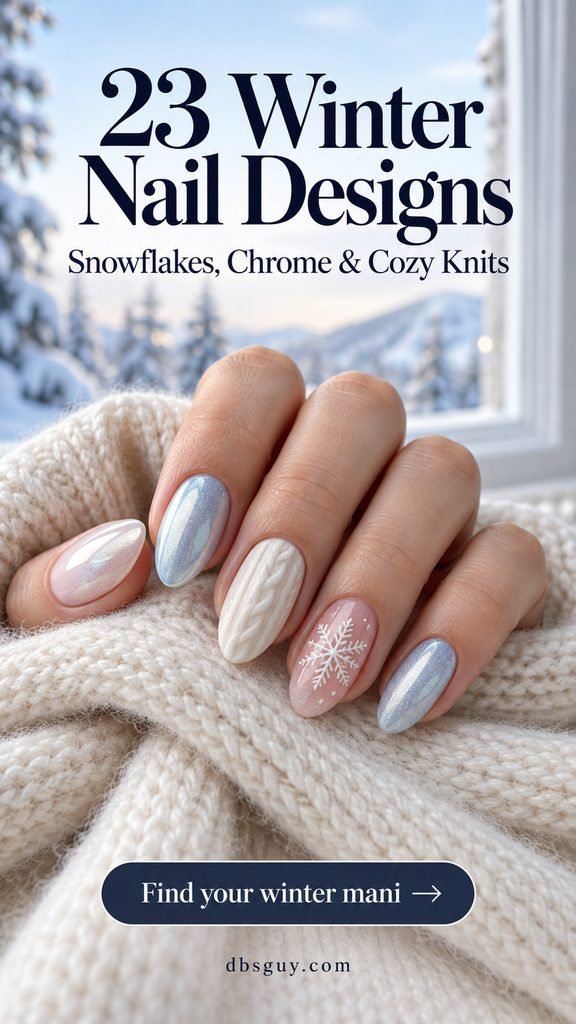
These 23 winter nail designs cover snowy, reflective, and sweater-inspired looks. Each includes a useful salon request or a simpler way to adapt it, so you can choose more than a pretty reference picture.
The images are AI-generated design concepts, not photographs of completed salon work. Use them to discuss color, placement, and texture with your nail artist; the finished result will depend on your nails and the products used.
Choose Your Winter Manicure by the Detail You Love
- For short nails: start with the single snowflake in design 1, slate dots in design 5, pearl glaze in design 7, or the glitter gradient in design 18.
- For shine without drawings: compare mirror silver in design 6, espresso bronze in design 9, and lilac glaze in design 10.
- For a sweater look: choose raised cable or ribbed details in designs 12–13, or flat Fair Isle and argyle patterns in designs 14 and 16.
- For a coordinated statement set: design 23 combines snowflakes, chrome, and knit texture with a specific plan for each finger.
Pick your comfortable length first. A reference with almond nails can still supply the palette for a short squoval manicure; the artwork may simply need fewer lines. For more compact layouts, explore our short December nail ideas.
1. Icy Blue Nails With One White Snowflake
Pale blue and one white snowflake give you a clear winter theme without filling every nail with art. Keep the surrounding nails plain and glossy so the small branches remain the focal point. A short squoval shape gives this version its neat, everyday feel.

Ask for a snowflake that fits inside the nail with blue showing around every branch. On a narrow nail, simplify the tiny offshoots rather than making the whole symbol microscopic. For a home version, compare the width of a flat snowflake decal with your nail before applying it; the decal should sit fully on the nail, away from the skin.
2. Midnight Navy With Snowdrift Tips
Here, the white detail sits at the ends of the nails like a little drift of snow. The uneven edge is the point: a softly broken outline looks different from a crisp French tip. A few white dots above the drift connect the design to snowfall.
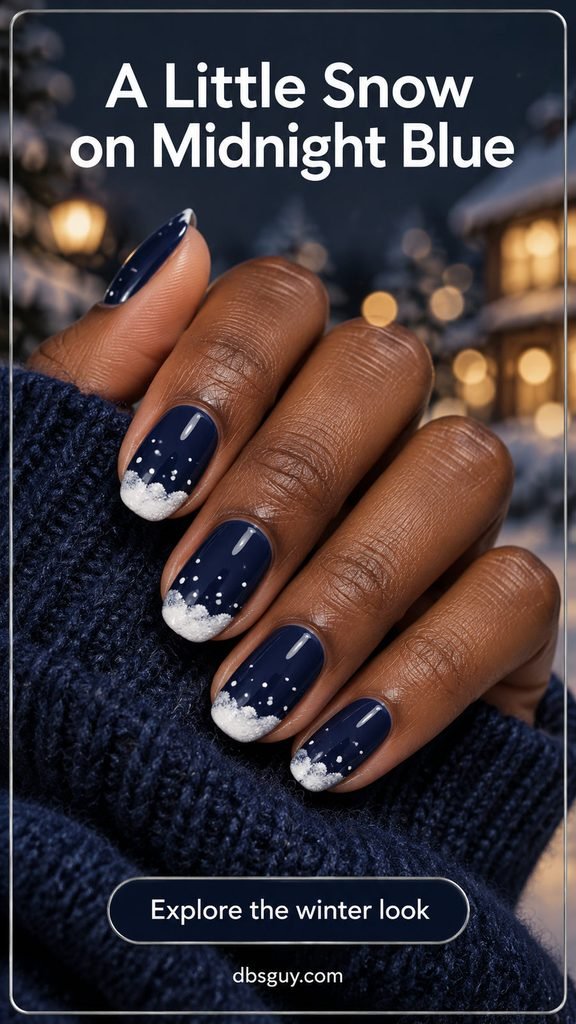
Request deep navy, low white tips, and a scattering of small dots with plenty of dark space between them. Keep the snowy band shallow on shorter nails. If painting with regular polish, let the navy dry before lightly stippling white along the edge; a solid white band would lose the soft, snowy effect.
3. Sheer Nails With Partial Snowflakes
A snowflake does not have to sit in the middle of the nail. Letting part of it enter from one side gives sheer pink-beige nails a quieter winter detail. Two accent fingers are enough, with the rest of the set left translucent and glossy.
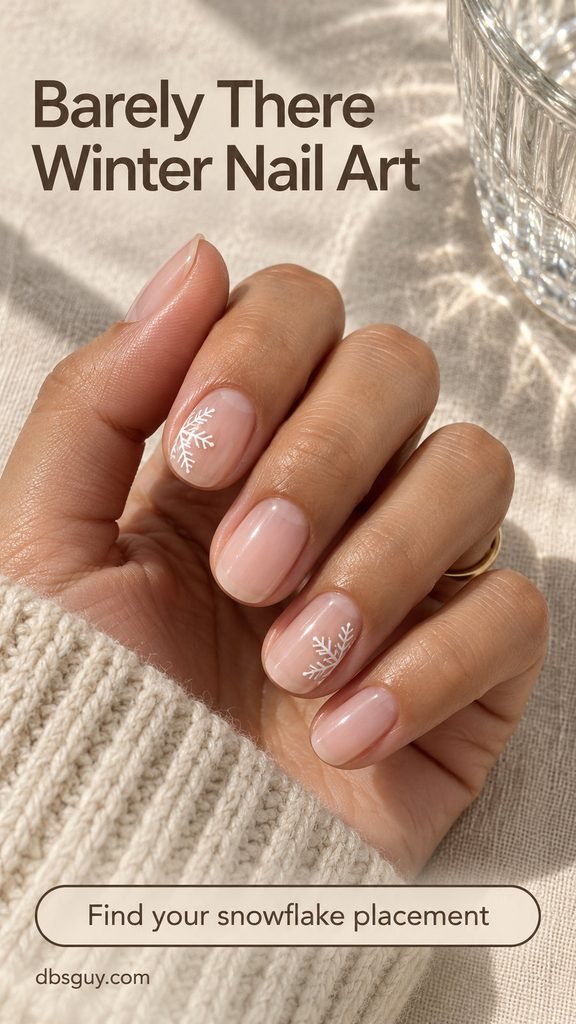
Show your artist which edge you want the motif to enter from. The visible branches should stay on the nail plate, with no product touching the surrounding skin. Match the sheer base to the effect you like—pink, peach, or beige—rather than assuming one shade will look equally transparent on everyone.
4. Burgundy With a Silver Snowflake Accent
Deep wine polish gives a silver snowflake strong contrast. This is a useful choice when you like dark winter nails but want one seasonal detail for dinners or evening plans. Keep the rest of the burgundy set smooth and glossy.

Ask for a fine, flat metallic snowflake instead of a raised charm if you want a smooth surface. Check the burgundy swatch beside something white: a blackened wine and a brighter berry create very different moods. On short nails, one compact snowflake with fewer branches will read more clearly than several overlapping motifs.
5. Matte Slate With Tiny Snowfall Dots
Blue-gray slate makes a softer backdrop than navy, and tiny white dots give it a snowy feeling without detailed brushwork. The matte finish is part of the look. It creates a quiet contrast with the crisp dots on the two accent nails.
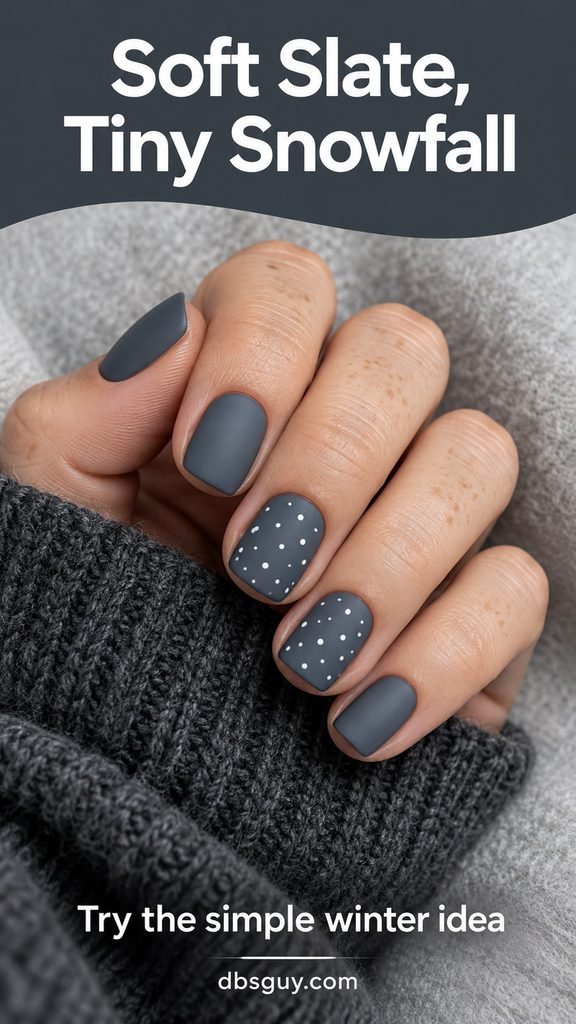
For a manageable regular-polish version, use a small dotting tool and vary the spacing. Practice first on a spare tip or a piece of foil to see how much polish creates the size you want. Use a compatible matte top coat as directed; a glossy finishing layer would change the intended surface. Leave some nails completely plain.
6. Full Mirror-Silver Chrome
Mirror silver makes the finish the entire design. Smooth, continuous reflections give it its metallic character, so it does not need glitter or extra artwork. Medium almond nails emphasize the curved reflection, but the same finish can be requested on a shorter oval shape.
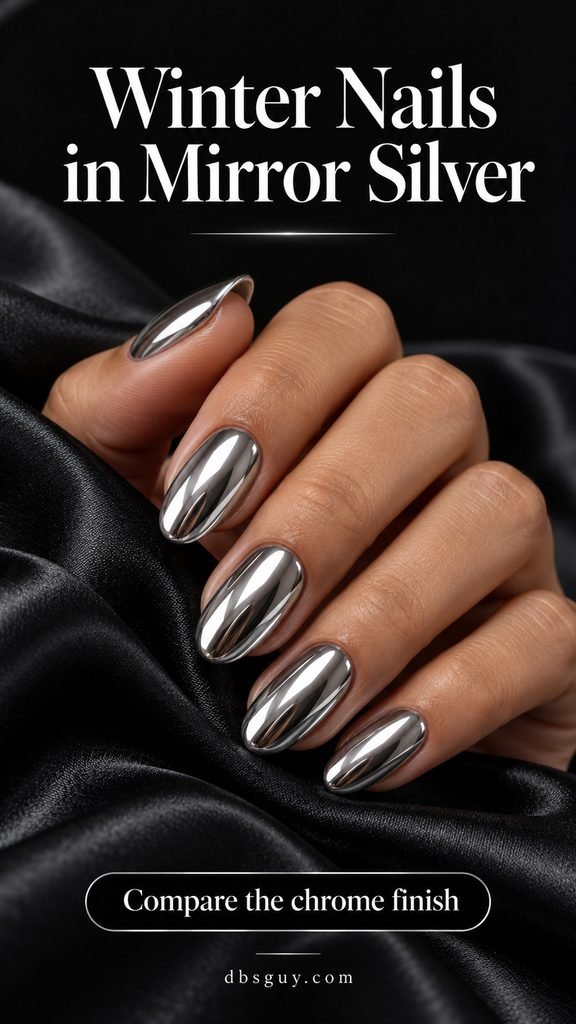
At the salon, say “reflective silver chrome” and show the reference; silver shimmer polish gives a different result. Ask to see a finished swatch under ordinary light before committing to all ten nails. If you prefer regular polish, choose a silver metallic lacquer as an interpretation, with the expectation that it may have visible fine particles rather than a mirror surface.
7. Milky White With a Pearl Glaze
For a gentler winter shine, use a translucent milky base and a light pearl effect. The nail still has softness and depth; it should not look like opaque silver metal. A short oval shape keeps the look simple enough for workdays and winter weekends.
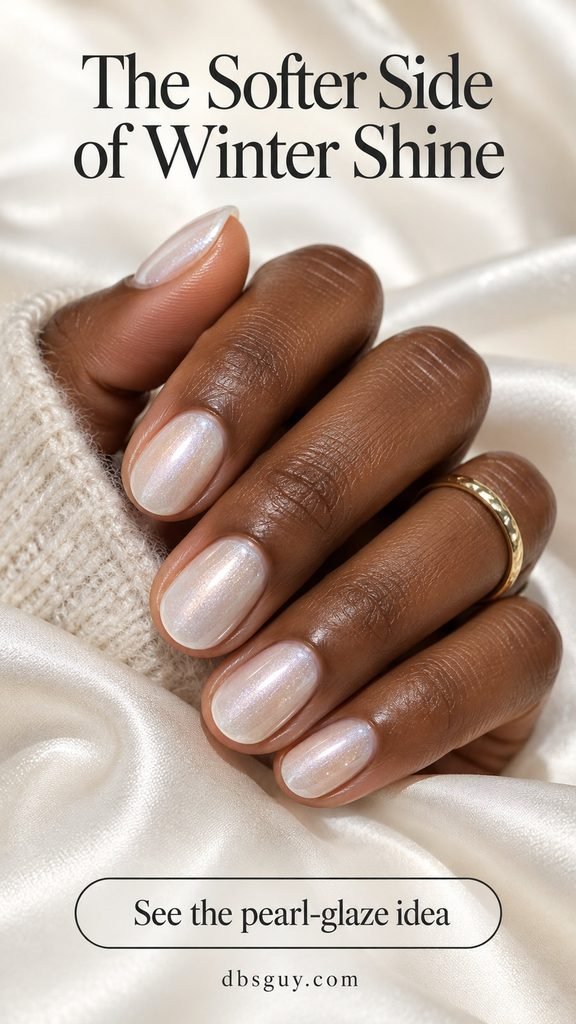
Request a milky, slightly translucent white with a subtle silvery sheen, and compare it with an opaque white swatch. If using regular polish at home, look for a sheer pearl or an appropriate pearl topper and follow its layering directions. Choose fine sheen over chunky sparkle when you want the quiet finish shown here.
8. Ice-Blue Chrome French Tips
Thin blue chrome tips give a familiar French manicure a winter change of color. The sheer base matters as much as the metallic edge: leaving most of the nail translucent keeps the blue line distinct.
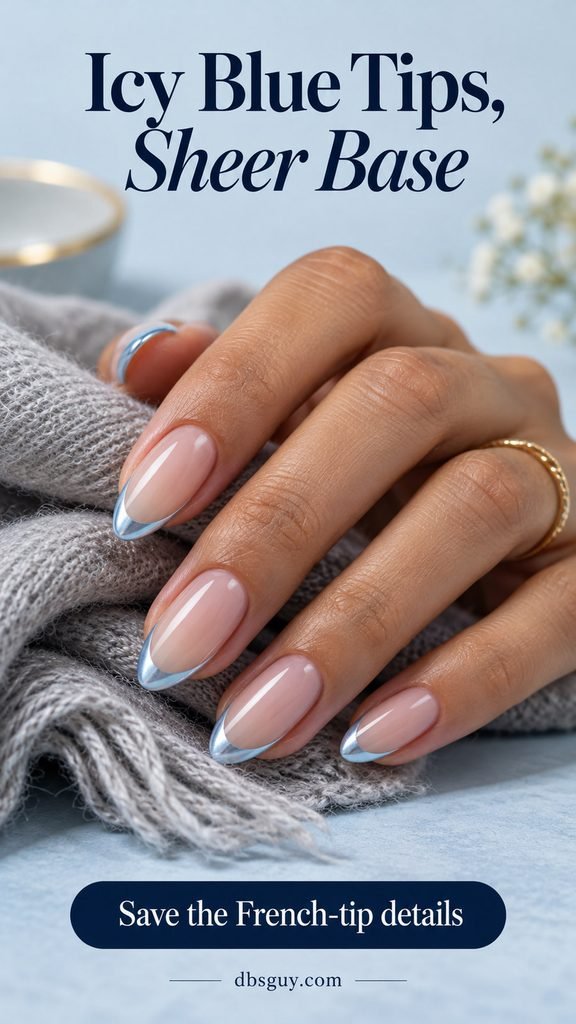
Ask your artist to establish the width on one nail first. A thick tip can take over a short nail, while a slim curve leaves room for the base. For a simpler home adaptation, paint the edges with blue metallic regular polish. Describe that as a metallic French tip rather than expecting it to reproduce the exact chrome reflection.
9. Espresso Nails With Bronze Chrome Shine
Winter nails can be warm, too. Espresso brown with a bronze-toned metallic sheen fits naturally beside camel coats, cream sweaters, and dark denim. The brown should remain visible beneath the highlights so the set keeps its coffee-colored depth.
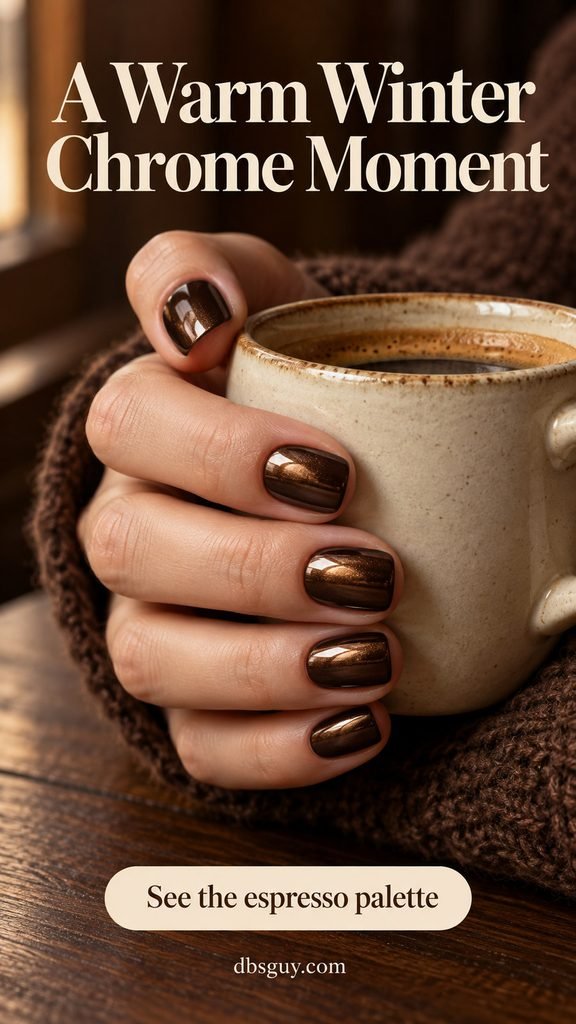
Bring both a color reference and a finish reference to your appointment. “Brown chrome” alone could mean anything from a silvery brown to a coppery surface. Ask for dark espresso with warm bronze reflection, then compare a swatch in daylight. A brown metallic lacquer offers another route if you like the palette and do not need a powder-chrome finish.
10. Lilac With an Aurora Glaze
A pale lilac base with a blue-violet shift gives winter nails color without adding a snowflake. The interest comes from highlights that change as the hand turns. Keep the base soft enough that the cool glaze remains visible.
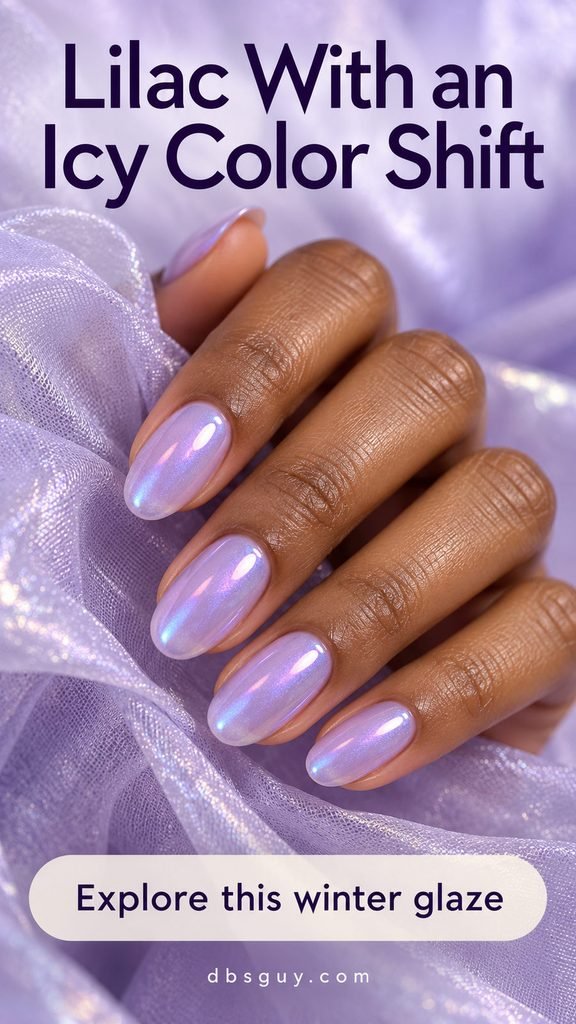
Ask to see the proposed topper over the actual lilac shade, since the base affects the finished color. Look at the swatch from more than one angle before choosing it. If you want a subtler version, request the effect on two accent nails and leave the others plain lilac. Skip extra foil so the shifting reflection stays easy to see.
11. Taupe With Champagne Metallic Half Moons
A small champagne crescent near the base of each taupe nail gives the set a jewelry-like detail. It is a good option if you want a little winter shine while keeping most of the manicure neutral.
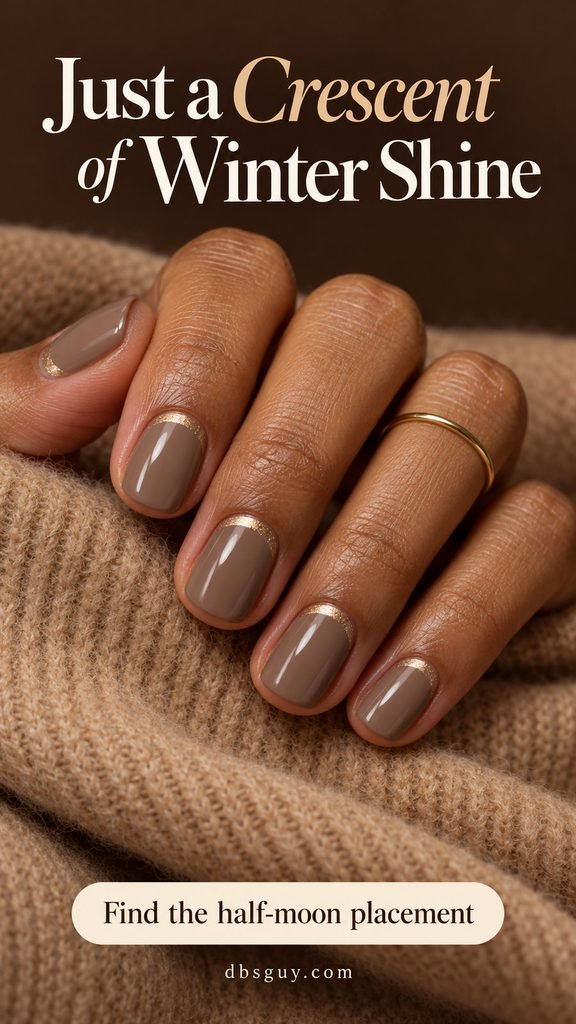
Request a slim painted arc following the curve near the cuticle, with a clean margin between polish and skin. Keep the center and free edge taupe. On very small nails, use the crescent on one or two fingers instead of widening it to make it noticeable. For more subdued palettes, browse our neutral December nail ideas.
12. Ivory With One Cable-Knit Accent
One ivory cable-knit nail brings sweater texture to an otherwise plain set. A central braid with narrow lines beside it gives the accent structure, while the same-color palette keeps it understated. Side lighting makes the shallow relief easier to see.
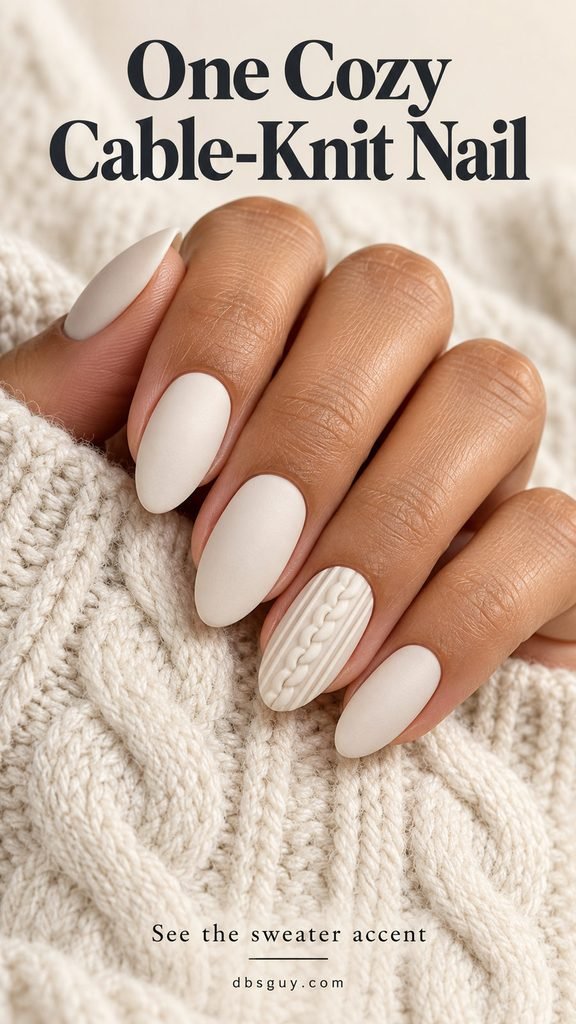
Specify that you want a raised pattern when booking; flat painted cables are a different interpretation. Ask your artist to keep the relief modest and suitable for your usual gloves and daily tasks. If you dislike surface texture, choose a flat ivory-and-beige cable drawing instead. The important detail is the braid, so there is no need to add dots, snowflakes, and gems around it.
13. Oatmeal Nails With Ribbed Sweater Lines
Lengthwise ribs offer a simpler knit pattern than a cable braid. Keep the color warm oatmeal and place the raised lines on two nails, leaving the others smooth. The tonal design lets texture do the work.
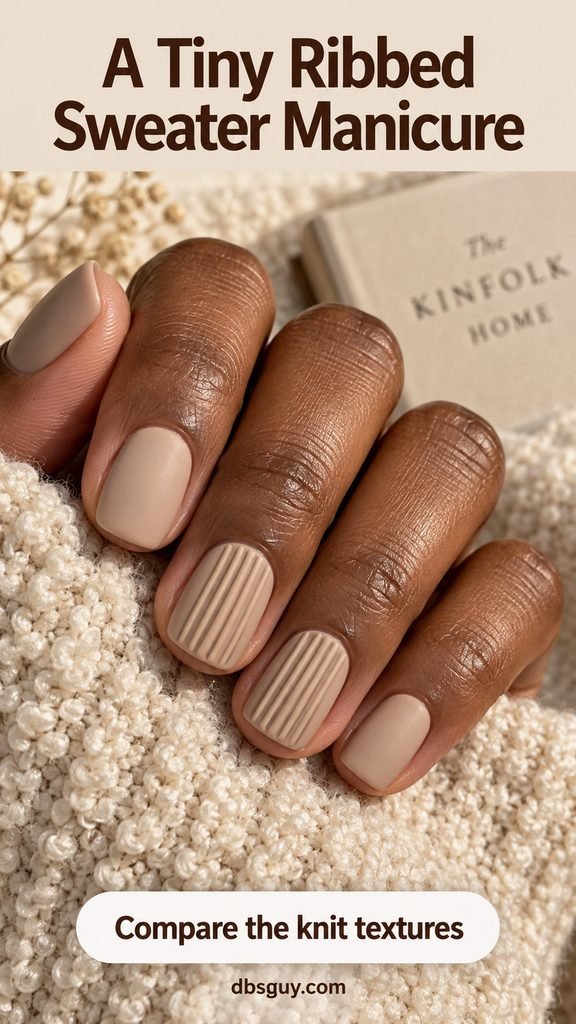
Ask for a few evenly spaced narrow ribs with visible gaps between them. On short nails, reducing the number of ribs usually communicates the idea better than squeezing in more. A flat version can be painted with a slightly lighter beige liner over an oatmeal base; it suggests ribbing without the raised feel.
14. Dusty Pink With a Flat Fair Isle Band
A small band of white diamonds and dashes gives dusty pink nails a sweater pattern with a smooth surface. Keeping the pattern in one row makes it easier to fit on a short oval nail than an all-over knit print.
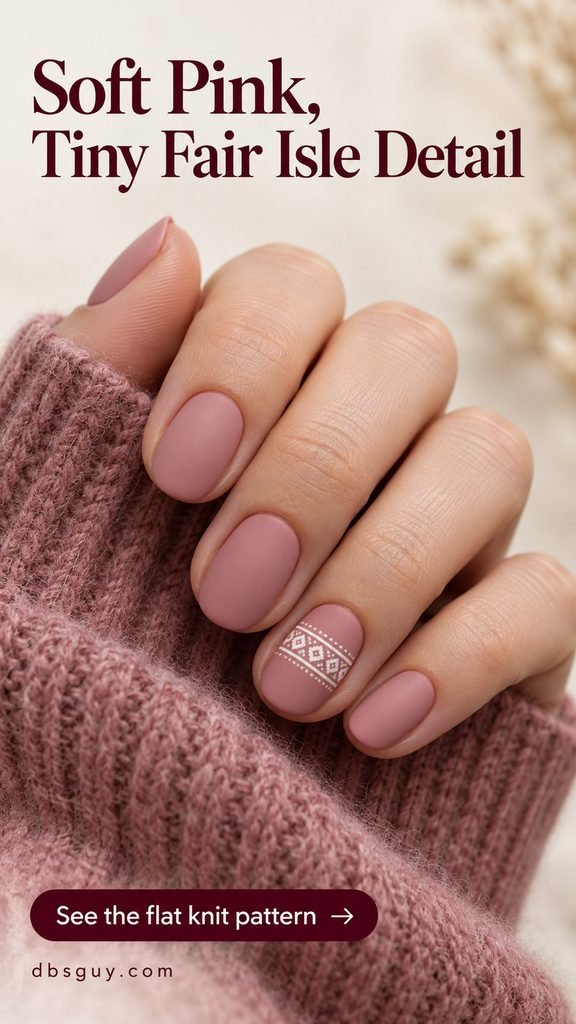
Choose one accent nail and ask for a narrow horizontal band around its middle. Let the artist simplify the repeat to your nail width; the tiny shapes need enough space to remain separate. A flat stamp or decal can provide a home alternative. Confirm the scale before application, because a pattern intended for a long nail may lose its rhythm when trimmed.
15. Matte Forest Green With Tonal Cable Knit
Deep forest green gives a cable-knit accent a moodier look than ivory. Use the same green for the base and raised detail, then leave the surrounding nails plain. The contrast comes from relief and light rather than a second color.
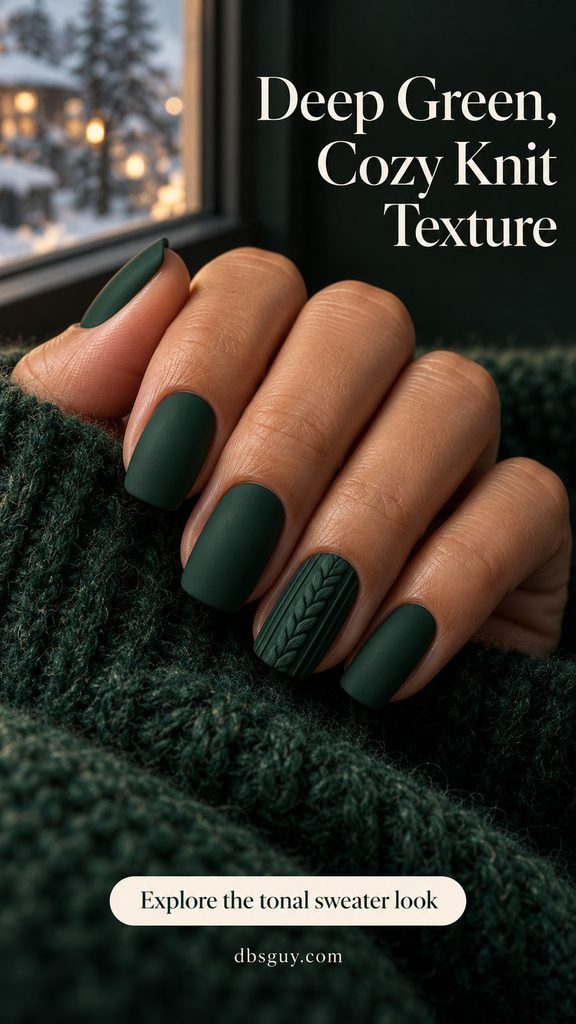
Ask to see the green in the finish you intend to wear: a matte swatch may look different from the glossy bottle color. Keep the braid broad enough to read, with only a few side ribs. For more ways to distribute knit details across a set, see our December sweater nail designs.
16. Chocolate and Cream Argyle
Argyle gives you a graphic sweater reference without a raised surface. Most nails stay chocolate brown, while a cream accent carries brown diamonds and fine caramel crossing lines. The limited palette helps the pattern feel connected to the plain nails.
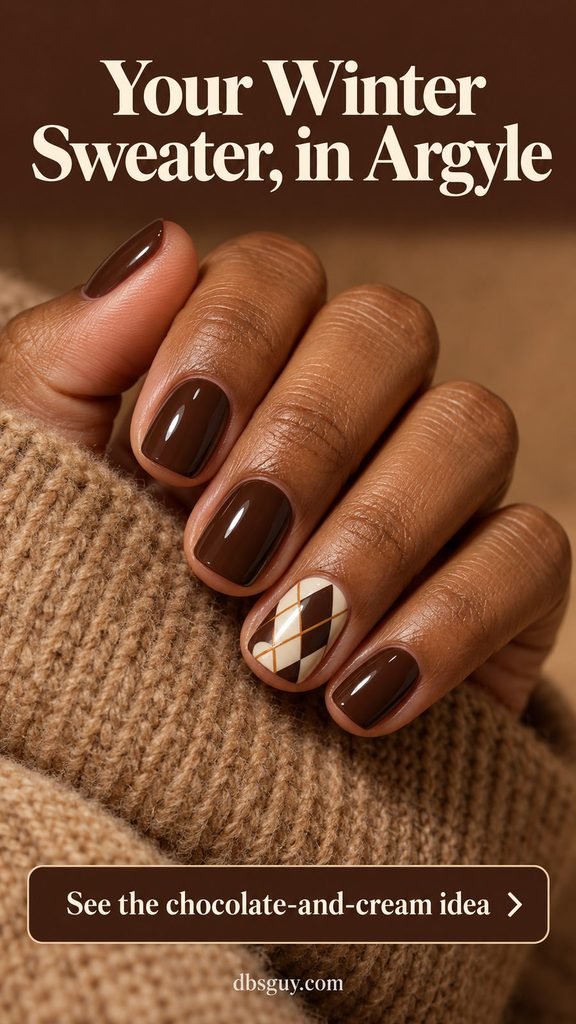
On a short nail, ask for one readable column of diamonds rather than a dense miniature print. Establish the larger shapes first, then keep the crossing lines thin. If the complete pattern feels too busy, use two brown diamonds on cream and omit the extra lines. That preserves the main idea while making the artwork easier to fit.
17. Frosted Ombré Tips
A soft fade from a sheer, cool base into snowy white tips suggests frost without a hard French line. The transition should look diffused, with the lightest color concentrated at the free edge.
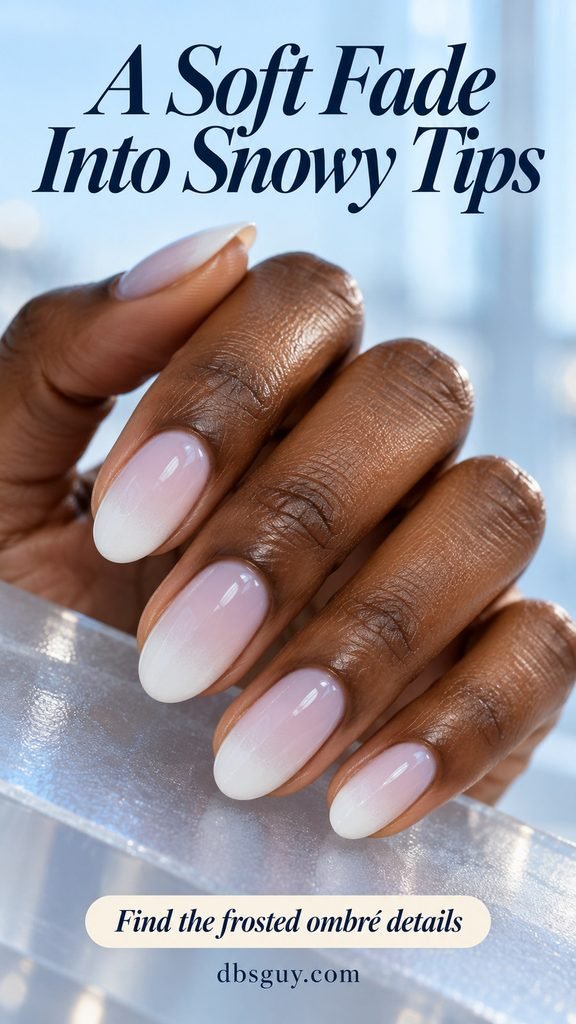
Ask for a gradual blend and show how far you want the white to extend. For a regular-polish adaptation, use small amounts of white on a cosmetic sponge and build the tip gradually over a dry base. Let layers dry as directed before finishing. Keep the white near the end of a short nail so some translucent base remains visible.
18. Sheer Nails With a Silver Glitter Gradient
Silver glitter concentrated at the tips creates a snowfall effect while leaving the base mostly clear. Unlike chrome, you should be able to see individual reflective particles. Fine glitter makes the fade easier to keep delicate.
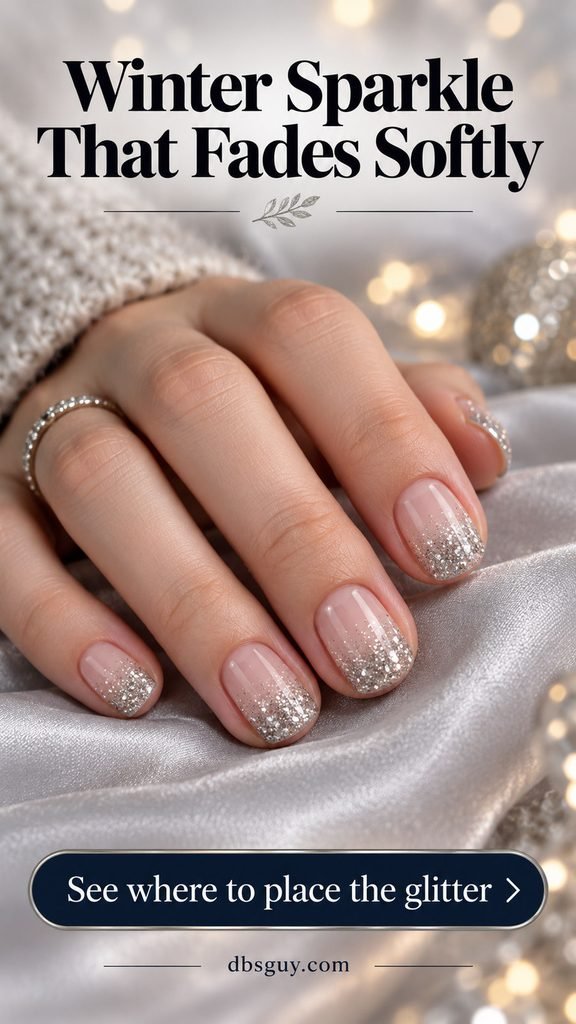
Use the densest sparkle at the free edge, then scatter less as you move toward the center. With regular polish, a small brush or sponge can help place the glitter instead of brushing an equally heavy coat over the whole nail. Stop before the cuticle area so the design keeps its light, open appearance. There is no need for an additional snowflake.
19. Milky Ice-Marble Accent Nails
Thin, irregular gray-blue veins give milky nails an ice-marble effect. Keep the pattern on two accent nails, with large areas of the pale base still showing. The open space separates this look from a dense stone print.
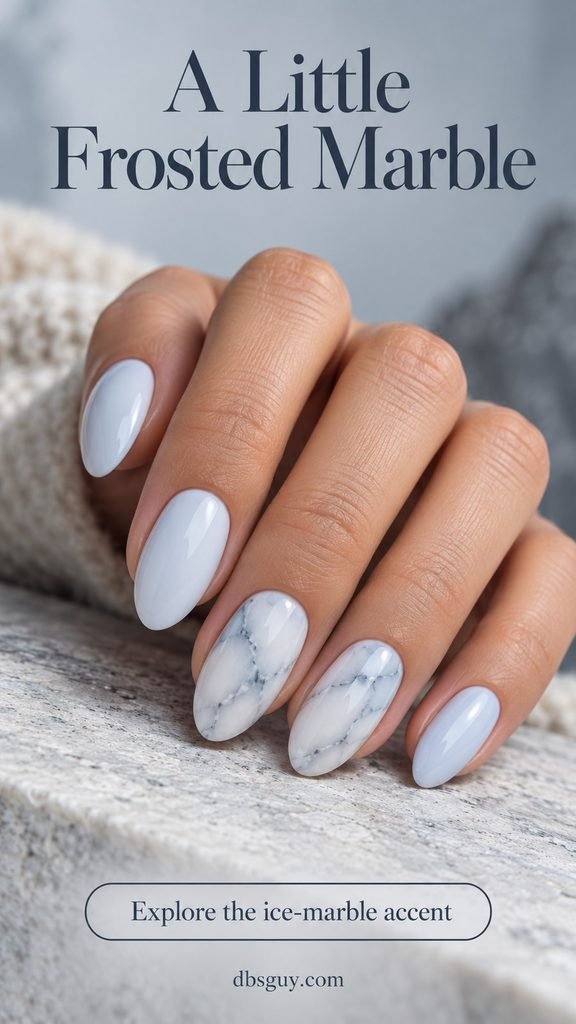
Ask for translucent-looking veins in a cool palette and explain that you want sparse lines rather than dark, heavy cracks. A short-nail adaptation can use a single wandering vein on each accent. Skip gold foil if you want to preserve the icy color story. Your artist can choose a marble technique suited to the products they use.
20. Frost-Blue Velvet Cat-Eye Nails
A blue magnetic manicure creates a luminous band inside fine shimmer. It has a different character from mirror chrome: the reflection looks soft and directional, with darker blue visible around it. The surface itself remains smooth.
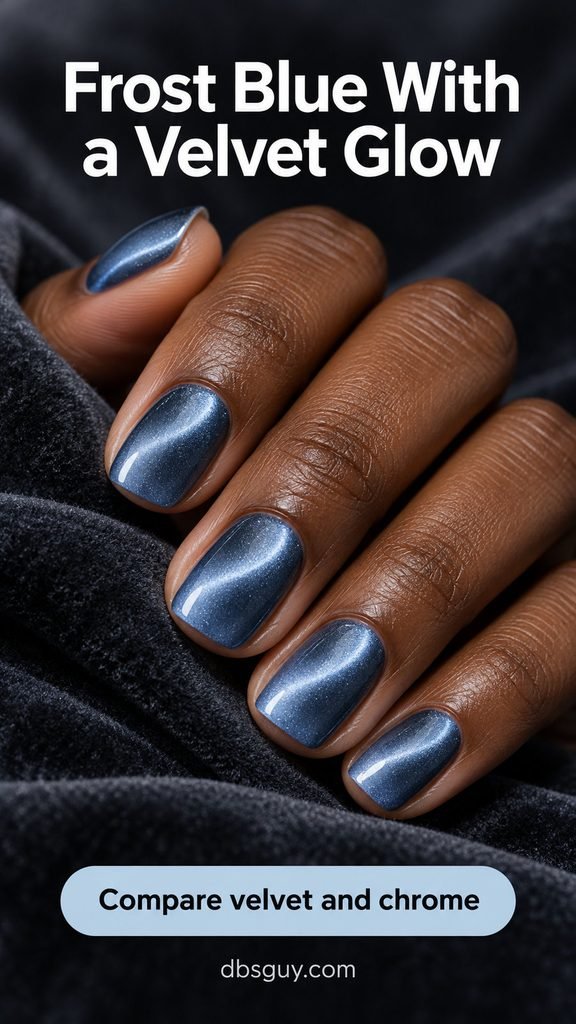
Ask for a silvery blue magnetic shade and show whether you prefer a broad glow or a more concentrated cat-eye curve. Check the first nail from several angles before the rest are finished. Plain shimmer polish will not create that same magnet-shaped band. Our velvet cat-eye nail guide has more reflection patterns to compare.
21. Midnight Navy With Tiny Silver Stars
Small four-point stars give navy nails a winter-night mood. This is a useful alternative if you like a seasonal manicure but prefer celestial details to snowflakes. Keep the stars on two accent nails and leave the others dark and glossy.

Request flat silver stars with clear space around their points. One or two per accent nail is enough; a crowded cluster can hide the navy base. If using stickers, choose a size that fits entirely within the nail edges. A few tiny silver dots can connect the stars, but stop while the individual shapes are still easy to distinguish.
22. Pale Gray With Charcoal Windowpane Plaid
A charcoal grid on a pale gray accent nail borrows its structure from a winter coat. One muted blue crossing line adds color without turning the pattern into a full tartan. The surrounding plain nails give the grid room to stand out.
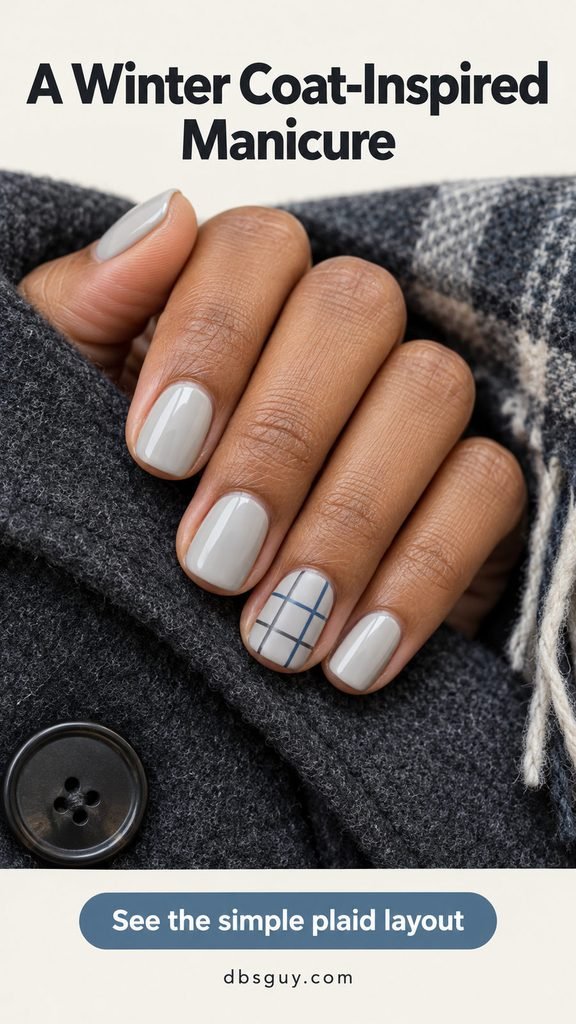
Ask for fine vertical and horizontal lines with generous spacing. Unlike argyle, this design uses squares and rectangles rather than diamonds. On short nails, two lines in each direction may be plenty. A stamping plate can help with a home version, provided its grid is scaled to your nail rather than filling it with tiny checks.
23. A Coordinated Snowflake, Chrome, and Knit Set
If you want all three themes in one manicure, give each a separate place. Pale blue, ivory, and navy hold the set together, while one detailed nail per texture prevents the design from becoming crowded.
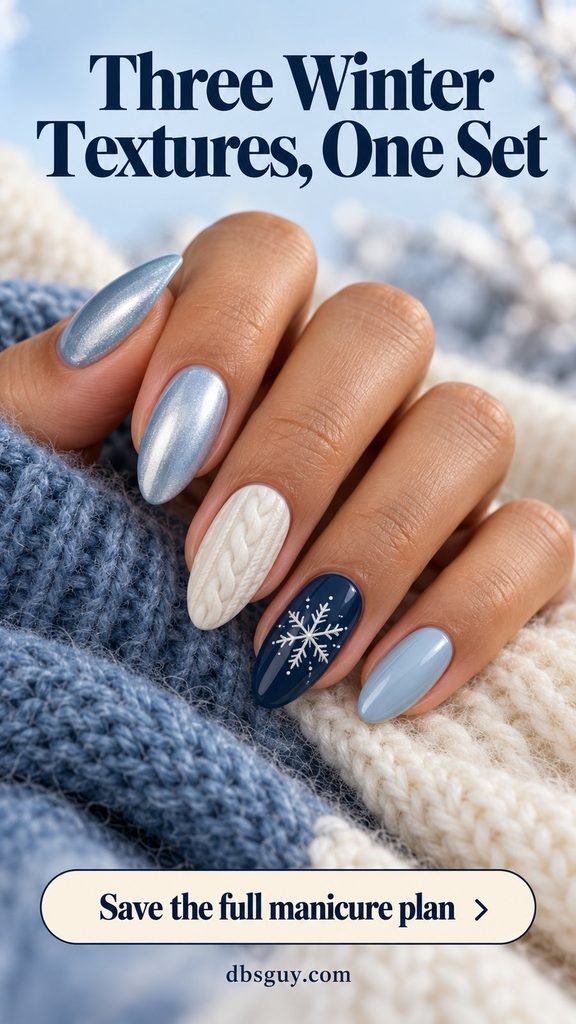
- Thumb and index: pale ice-blue chrome.
- Middle: matte ivory with one raised cable-knit braid.
- Ring: glossy navy with one white snowflake.
- Pinky: plain glossy pale blue.
Send the plan when booking so your artist can allow for multiple finishes and textured art. For short nails, use a flat cable drawing and a simplified snowflake. Keep the pale blue consistent across the chrome and plain nails; that repeated color is what makes the different surfaces feel like one set.
What to Tell Your Nail Artist Before the Appointment
Send one main reference, your preferred length, and the detail you most want to keep. Mention whether you want a smooth surface or raised texture. A useful request is: “I like design 12, but on short squoval nails, with just one low-relief cable accent.”
Ask which service suits the design, whether the artwork changes the quote, and what removal involves. These images show visual goals, not a universal product recipe. Chrome powders, gel layers, and textured art require their own compatible application instructions; there is no single lamp or curing time that applies to every system.
A Few Nail-Care Basics for Winter Manicures
The American Academy of Dermatology’s gel-manicure guidance recommends moisturizing nails and cuticles between manicures and avoiding picking off gel polish. Ask about tool cleaning and leave cuticles uncut. For a gel service, the AAD also advises broad-spectrum, water-resistant SPF 30 or higher on the hands, or dark opaque gloves with the fingertips exposed.
If you have recurring nail problems, discuss whether traditional polish would be a better choice. Persistent pain, irritation, or unusual nail changes deserve professional advice rather than another layer of polish.
Winter Nail Design FAQs
Which winter nail designs work best on very short nails?
Start with an all-over finish such as pearl glaze, or a small detail such as snowfall dots. A single partial snowflake can also fit. Choose the design according to the space on your actual nail: removing tiny branches or extra pattern repeats is often more effective than trying to shrink every detail.
Can I get a sweater look without raised gel art?
Yes. Flat Fair Isle bands, argyle, and painted cable patterns can suggest knitwear with a smooth surface. Tell your artist that the pattern matters more to you than the texture. The dusty pink Fair Isle and chocolate argyle ideas above show two different directions.
Can regular nail polish create these winter looks?
Many of the painted designs can be adapted with regular polish: dots, snowflakes, plaid, ombré, and glitter gradients are useful starting points. Metallic and pearl polishes can echo some reflective palettes. They may not reproduce a particular chrome-powder finish or raised texture, so choose the feature you actually want to keep.
What is the difference between chrome and velvet cat-eye nails?
Chrome describes a reflective metallic or glazed effect. A velvet cat-eye look uses magnetic polish to arrange its reflective particles into a glow or band. Salon names can overlap, so bring a reference and describe the reflection: mirrored, pearly, softly luminous, or sharply banded.
Do snowflake nails still work after Christmas?
They can. Blue, white, gray, and sheer bases keep the design tied to winter weather rather than a specific holiday. If you want an easy starting point for January, choose one snowflake on a plain base and leave out Christmas-specific motifs.