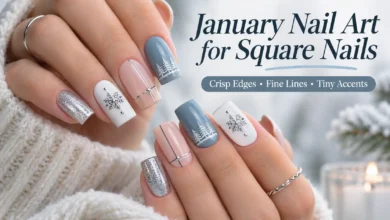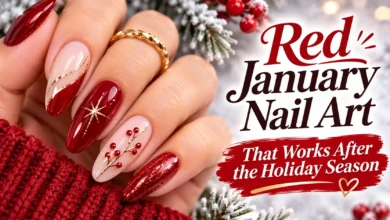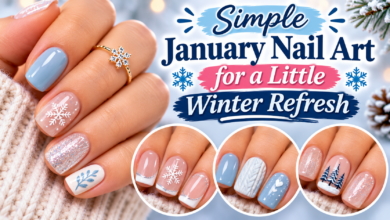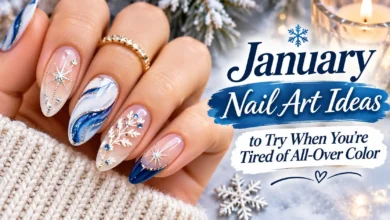
For cozy January nails, start with oatmeal cable knit, cocoa plaid, or a creamy latte swirl. For an icy finish, try a silver micro French, a lilac-to-white fade, or pale blue marble. Want a little of both? Pair champagne velvet with blue tips, or put white frost branches over warm cinnamon.
These 17 winter nail art ideas for January give you a specific pattern or finish to choose, plus a way to adjust it to your own nail length. The first six lean cozy, the next six lean icy, and the last five bring the two together.
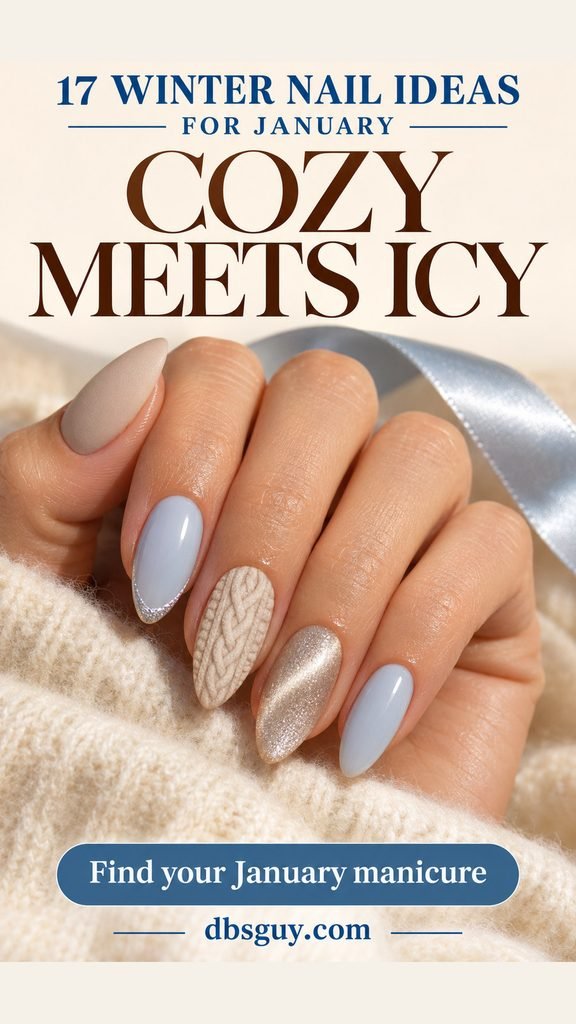
The visuals are AI-generated nail-art concepts created for dbsguy.com. They illustrate color, shape, finish, and placement; they do not document completed salon work or wear tests.
Choose the Detail Before You Choose the Length
- For a simple home manicure: snowfall dots in idea 8 need fewer precise lines than argyle or Fair Isle. The latte swirls in idea 4 leave room for an imperfect curve.
- For smooth nails: choose painted plaid, a flat herringbone accent, or color blocking. You can get a sweater reference without raised texture.
- For a salon appointment: bring the close-up and specify whether you want flat artwork, dimensional cable knit, or a magnetic reflection. Those are different requests.
Keep the length you enjoy wearing. On a smaller nail, remove a row, a branch, or a second accent before shrinking every detail. For more compact layouts, browse Extra-Short January Nail Designs With Tiny Details That Fit.
1. Oatmeal Cable Knit on One Accent Nail
A matte oatmeal set puts the sweater texture on the ring finger, where one central braid has room to stand out. Keeping the other nails plain makes the raised links and little side dots easy to see. It is a warm option when you want a winter theme without blue or sparkle.
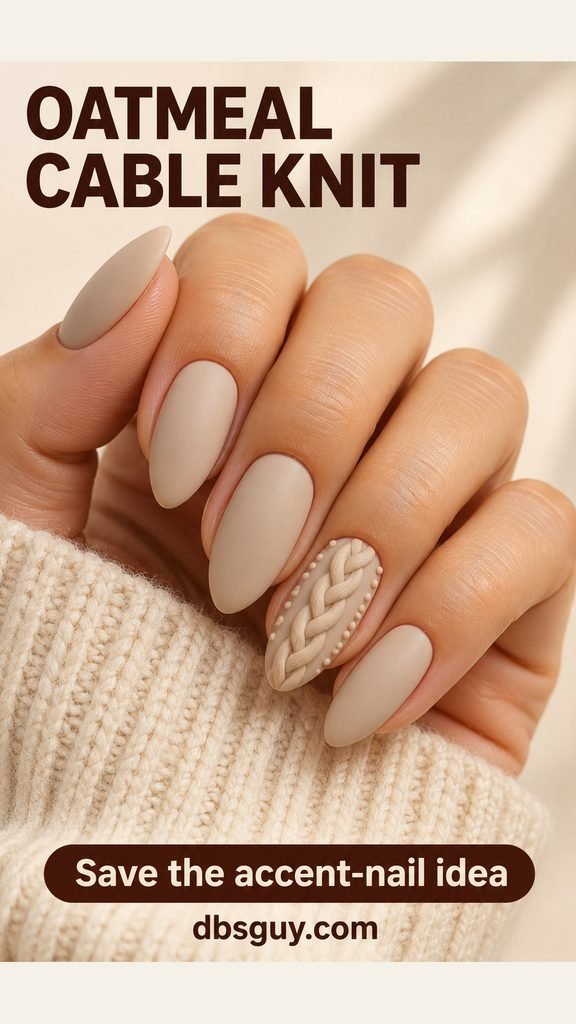
Ask your artist for a tonal cable: the braid should be close to the base color, with its shape supplying the contrast. Decide whether you actually want to feel the raised detail. For a smooth interpretation, request a flat painted braid instead. On short nails, shorten the braid and omit the side dots rather than squeezing the full pattern into the space.
2. Cocoa Windowpane on Short Squoval Nails
Two cream accent nails carry thin brown windowpane lines; the remaining nails stay glossy cocoa. The open rectangles give this plaid a quieter feel than a tightly packed tartan. Soft square corners suit the straight lines, although the pattern can also sit inside an oval nail.

Show your artist the amount of cream between the lines. A broad dark grid will change the balance of the design. If you are painting it with regular polish, let the cream base dry according to its directions before adding fine vertical lines, then horizontal ones. Start with one accent nail if keeping several intersections tidy feels fiddly.
3. Taupe Argyle With Slate Diamonds
Argyle has a different rhythm from plaid: broad diamonds do the work, with fine crossing lines adding the sweater detail. Here, taupe and slate diamonds sit on two cream nails beside plain mushroom-colored nails. The muted contrast pairs easily with gray wool or a camel coat.
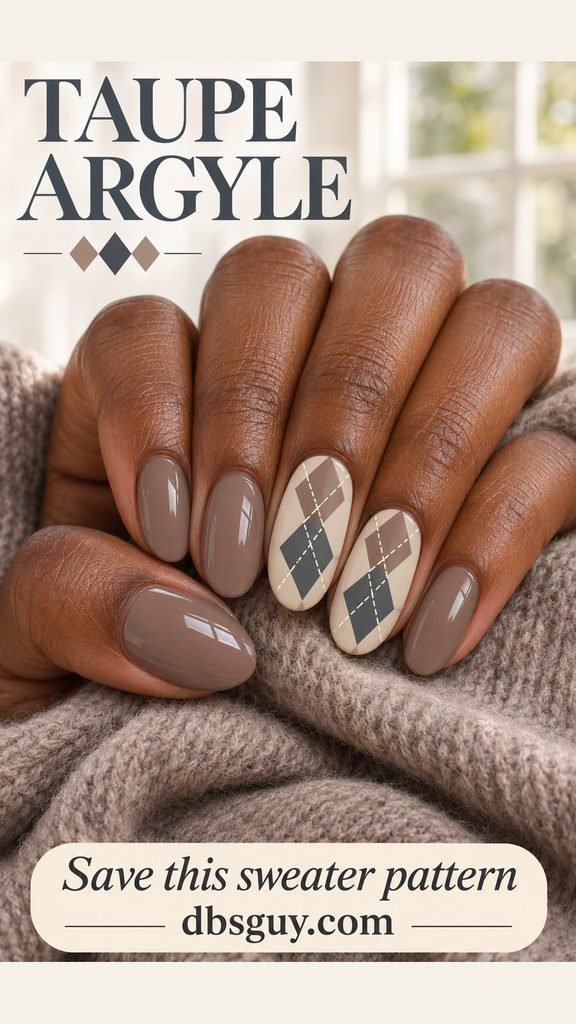
Request a small number of readable diamonds, then fit the crossing lines around them. On narrow nails, one vertical column of diamonds is enough. Choose this over windowpane if you like a larger geometric motif; the design needs fewer tiny cells, but the diamond outlines still call for careful placement.
4. Cream and Coffee Latte Swirls
Ivory and coffee-colored curves sweep across a sheer beige base, leaving pieces of the base visible. The warm colors suggest a latte without adding a literal cup illustration. Short oval nails give the swirls a rounded outline that feels relaxed rather than sharply graphic.
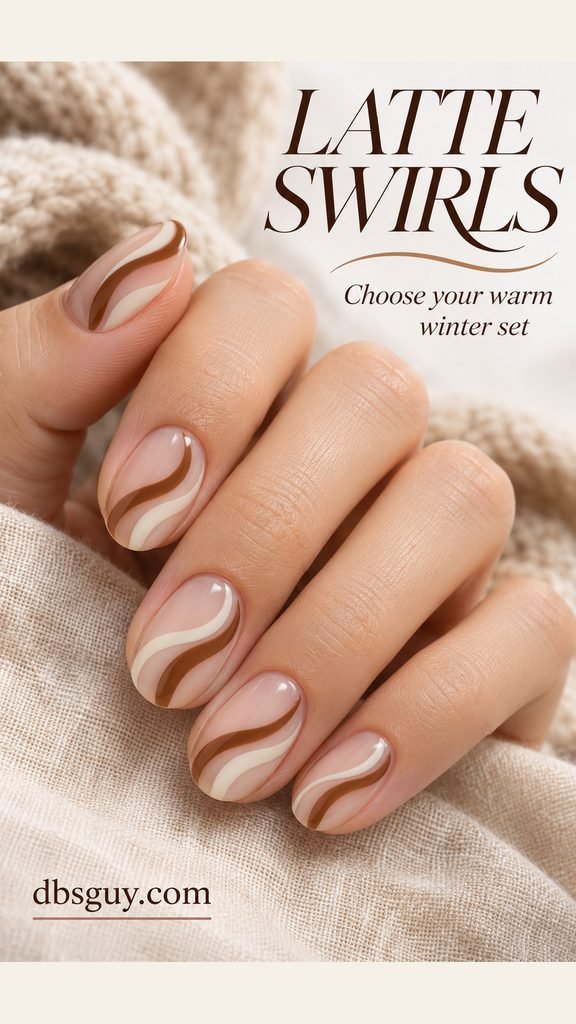
Use the same two colors across the hand, but let the curves vary slightly. For a home version, practice a broad ivory curve on a swatch, then add a narrower brown curve beside it with a fine brush. A few deliberate sweeps will read more clearly than many thin squiggles. If the base starts disappearing, stop adding lines.
5. Espresso Half Moons Against Warm Ivory
This design puts the dark color at the base of the nail. Small espresso semicircles sit within creamy ivory, leaving most of each short round nail light. It is a useful choice when you want the contrast of brown and cream with less linework than a sweater pattern.

Keep a slim, clean margin between the artwork and your skin. Ask for similar-looking proportions across the hand instead of identical measured semicircles on differently sized nails. For very short nails, make the dark area shallower; a deep brown half moon can otherwise take over the whole nail.
6. Pine Green With a Flat Herringbone Accent
A fine ivory herringbone pattern breaks up a satin pine-green set. The angled strokes meet around a central spine on the ring nail, suggesting woven fabric while keeping the artwork smooth. Deep green makes this a cozy alternative to the beige and brown designs above.
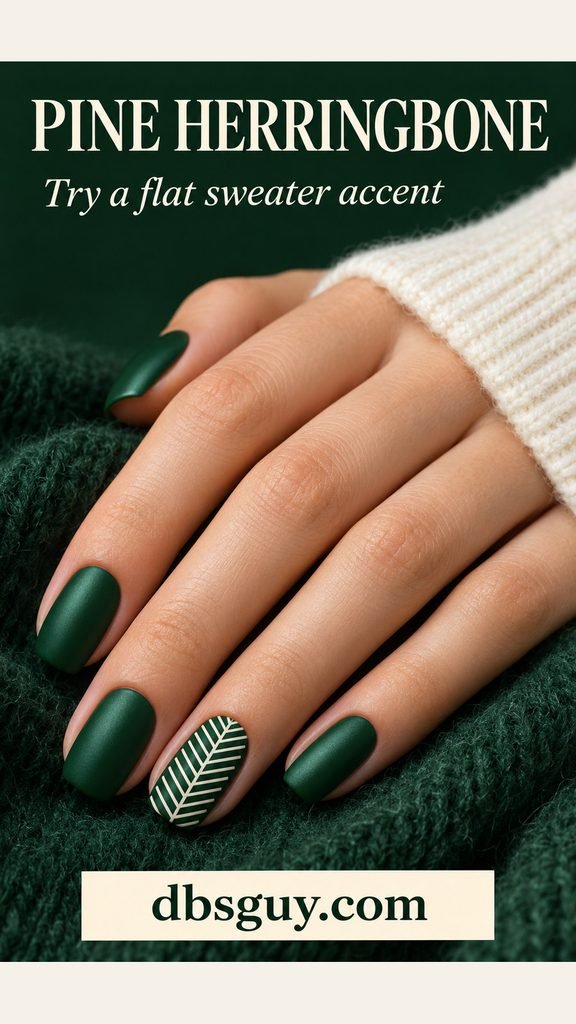
Bring a close view of the pattern rather than asking only for “green sweater nails.” Request fine, flat strokes and plain neighboring nails. On a shorter nail, use fewer pairs of angled lines with more green between them. The spacing matters more than reproducing every stroke in the reference.
7. A Silver Frost Micro French
A narrow silver edge adds an icy reflection to a sheer pink-beige base. Most of the nail remains translucent, so this is a light starting point if an all-over metallic manicure feels too bold. The reference uses almond nails, but the silver can follow a short rounded edge too.
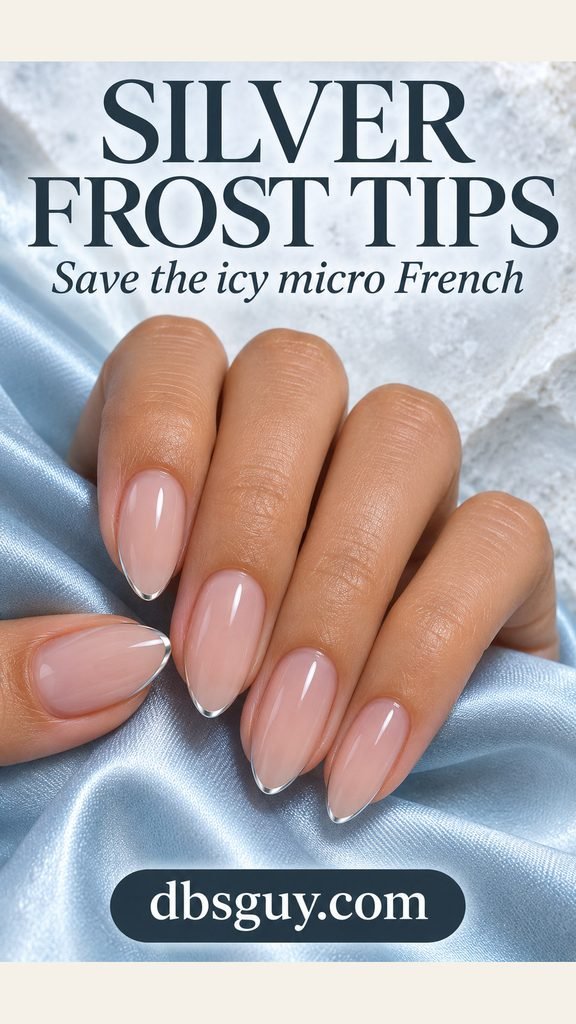
Ask to see a finished silver swatch: a mirror-like chrome effect and a sparkly metallic lacquer give different results. Keep the line narrow enough that the base remains the main surface. For more ways to change just the edge, see 17 January French Tip Nail Ideas Beyond the Classic White Edge.
8. Milky Blue With Snowfall Dots
Tiny white dots gather toward the tips of these short milky-blue nails, then become sparse near the base. The irregular spacing makes the dots feel like snowfall. There is no snowflake outline to draw, making this a more approachable home option than the detailed geometric patterns.

Over a dry blue base, place a few small white dots with a dotting tool, then fill selected gaps near the free edge. Leave open blue between them. Test the tool on a palette first so the first dot on your nail is not an oversized blob. Our guide to Easy Nail Art for January Using Dots, Lines and a Little Shimmer explains more small-scale placements.
9. Lilac Ice Ombré
Muted lilac fades into milky white toward the tips, creating an icy manicure without a drawn motif. The gradual transition is the feature, so the reference leaves off foil, dots, and stones. Medium almond nails give the fade room to unfold.
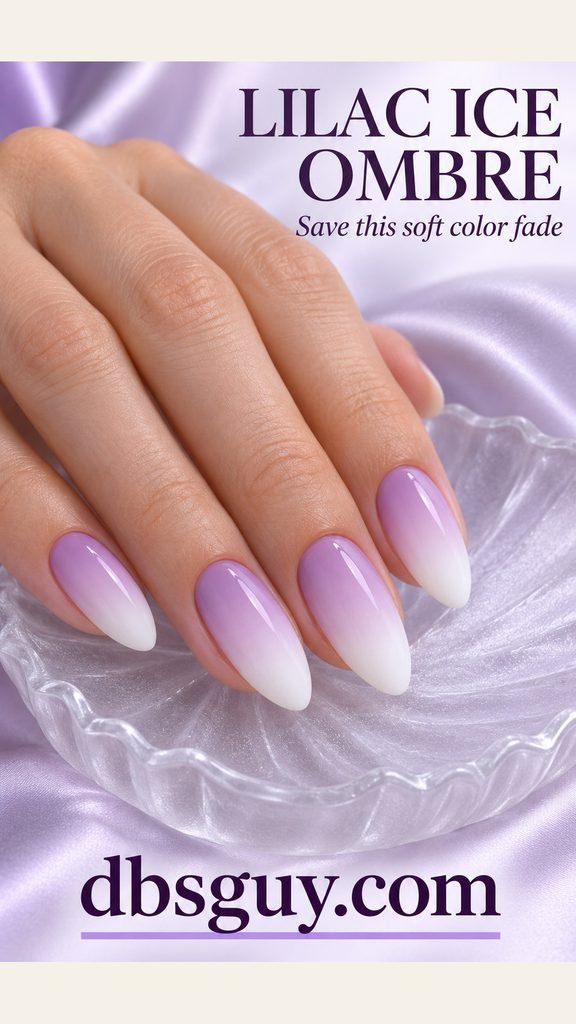
Tell your artist which color belongs at each end: lavender near the base, white at the tip. If you wear short nails, ask for a softer transition with less white so the result does not become a solid white tip with a thin purple border. A completed sample is more useful than choosing two bottles separately.
10. Midnight Navy With Tiny Winter Stars
Two small white stars stand out against glossy midnight navy. Plain neighboring nails keep the set dark and spare, while a few dots soften the empty space around the stars. It brings a winter-night mood without using snowy white or pastel blue as the main color.
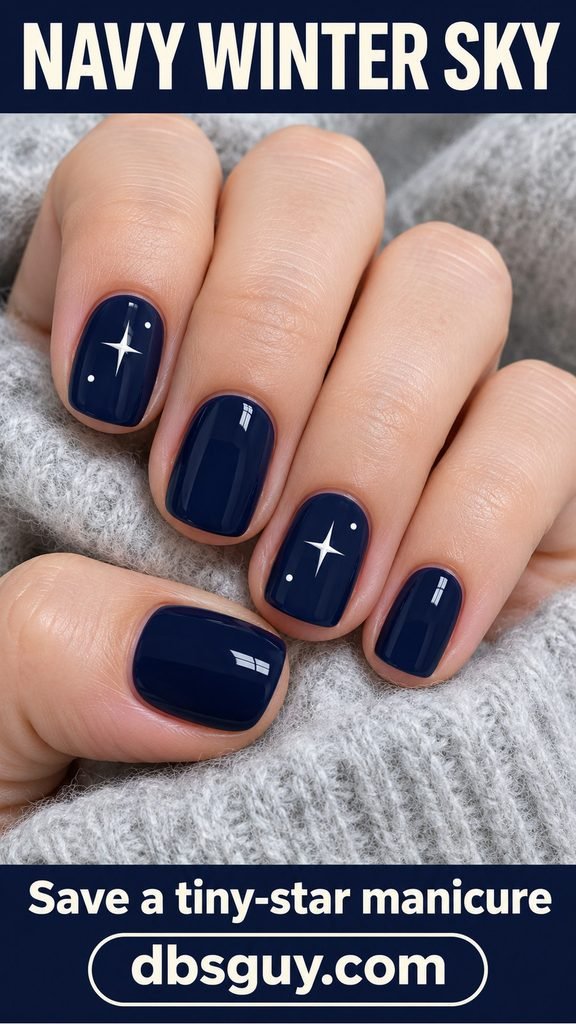
Keep each four-point star small enough to leave navy around every point. On very short nails, use one star on each ring finger and leave out the dots if they crowd it. Flat decals can substitute for hand-painting when you find a scale that fits; check their size against your actual nail before committing to a whole sheet.
11. Glacier-Blue Ice Marble
Pale blue translucence and fine angular white veins give these coffin nails a cracked-ice appearance. The veins wander instead of repeating in an even pattern. Enough blue must show between them for the finish to stay light and glassy.
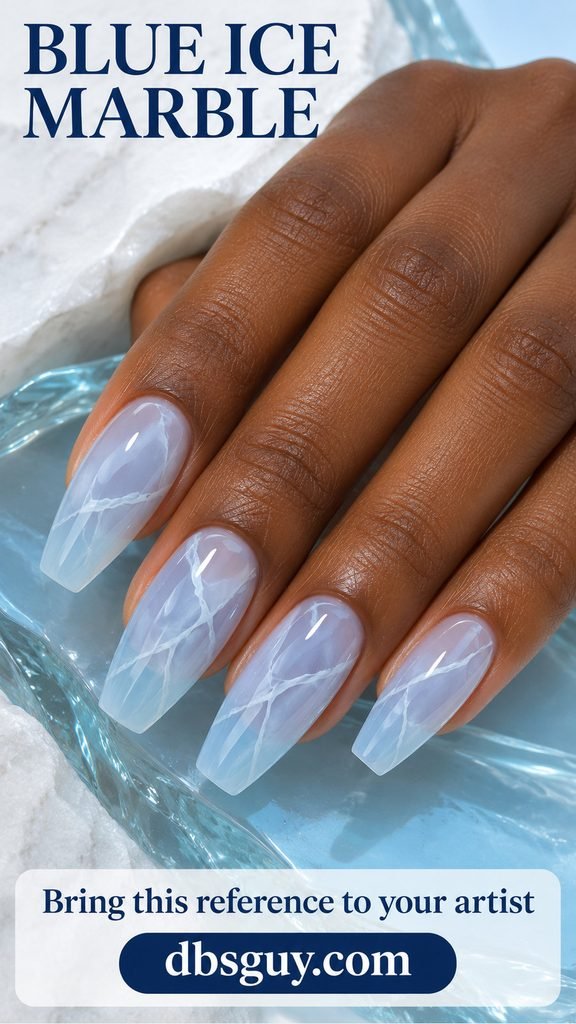
Ask for a few fine branching veins over a translucent-looking base, rather than dense white marbling. The coffin shape in the reference is optional. On a short oval nail, keep one main diagonal vein and a small branch, or use the marble on two accents beside plain blue. Adding opaque white everywhere would hide the effect you chose.
12. Pearl White With Matte Satin Ribbons
One broad matte ivory band crosses each pearly nail on a diagonal. The smooth pearl finish catches light around the quieter stripe, creating a ribbon effect without a bow or raised decoration. Short oval nails keep this winter-white design compact.
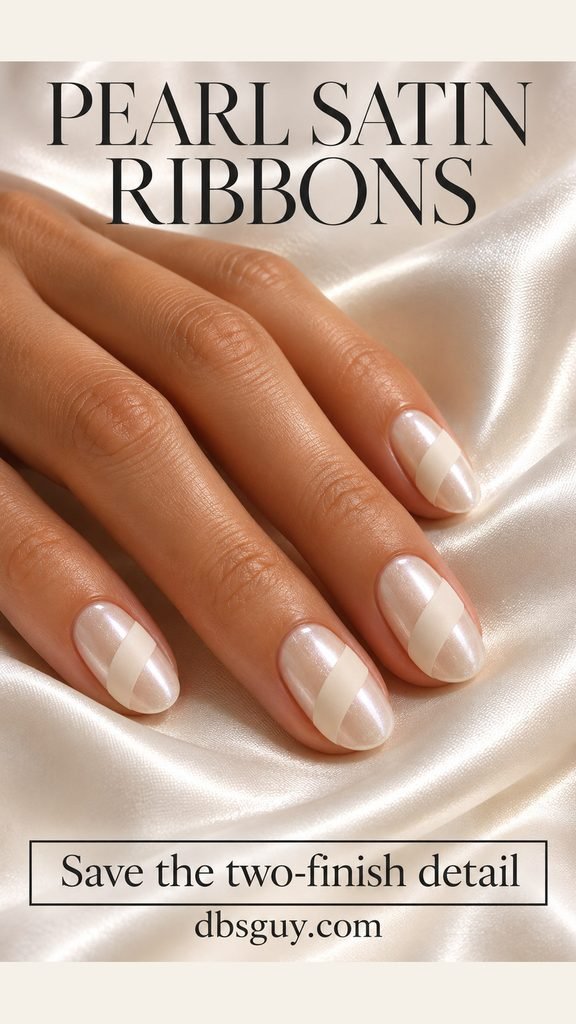
Ask to compare the two finishes on one nail before repeating the stripe. For a home interpretation, use compatible products and preserve the separate matte and glossy areas at the final step. An all-over glossy top coat would remove that contrast. Keep the band simple; additional narrow stripes would make the difference in finish harder to notice.
13. Champagne Velvet With Icy-Blue Tips
A luminous champagne surface brings warmth, while the slim blue tips supply the cold-weather color. The velvet effect comes from reflective magnetic polish, with a broad glow across the nail. It is a smooth visual effect, rather than a layer of fabric or fuzzy material.
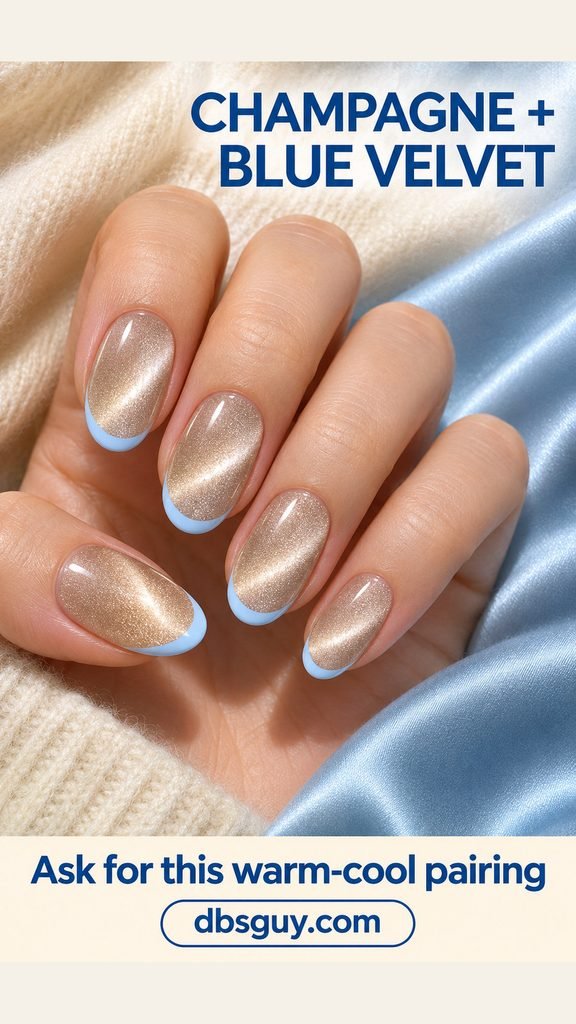
At the salon, specify a diffused velvet reflection beneath an opaque pale-blue French edge. Ask to view the sample from different angles because the reflection changes as the nail moves. Magnetic polishes need their matching technique and product instructions. A champagne shimmer lacquer with blue tips is a simpler alternative, though its reflection will look different.
14. White Frost Ferns Over Cinnamon
Fine white branches spread across two cinnamon-colored accent nails, like frost on a window. The warm base keeps the design from becoming entirely icy. Plain cinnamon on the remaining fingers gives the delicate branches a clear place to stand out.
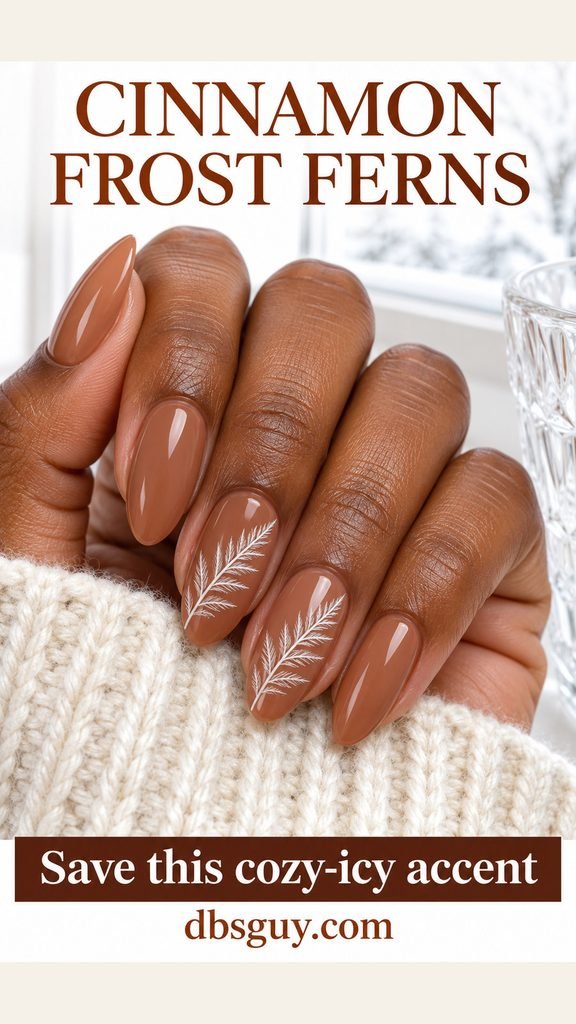
Ask for one slender diagonal stem with fine offshoots on each accent. Leave some cinnamon visible around the branches instead of filling every gap. On short nails, reduce the number of offshoots and decorate only one finger per hand. The recognizable detail is the branching shape; it does not need to extend from cuticle to tip.
15. Warm Blush With Crushed-Ice Foil
Sparse silver fragments sit along the tips of a sheer blush manicure. Their irregular shapes give a different reflection from the continuous silver edge in idea 7. Warm pink softens the icy metal, and the open nail beds keep the short squoval set airy.
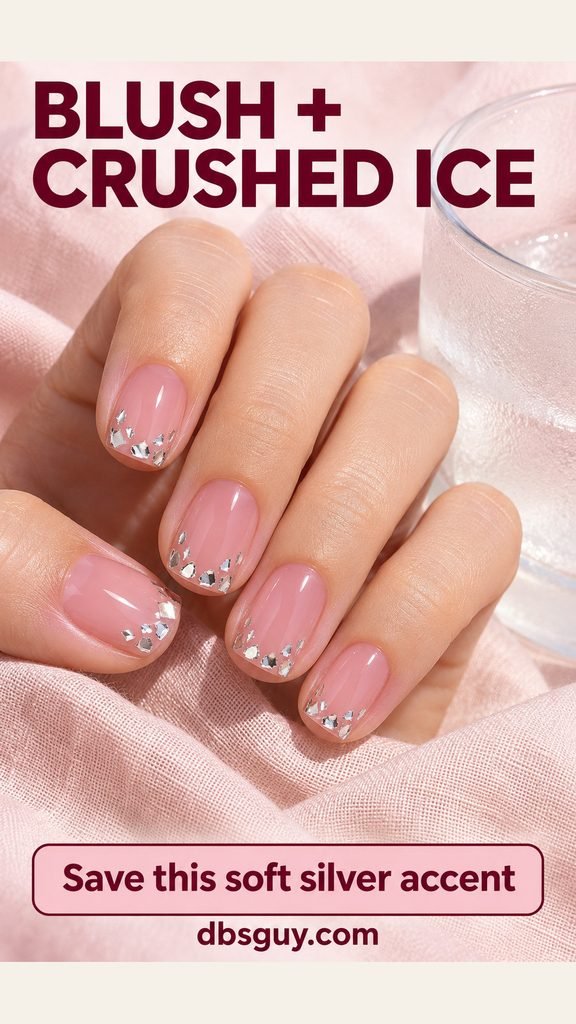
Request small, flat nail-art foil pieces with visible gaps between them. Large raised crystals would change both the appearance and feel. For a home version, use a foil product intended for nails and follow its application directions. Place fewer fragments on the smallest nails instead of trying to fit the same number on every finger.
16. Blue and Ivory Fair Isle
Two ivory nails carry compact blue rows of diamonds, dots, and chevrons; the other nails stay denim blue. This is the patterned-sweater option for someone who wants an unmistakably wintry design with a smooth surface. The horizontal bands distinguish it from the larger argyle diamonds in idea 3.
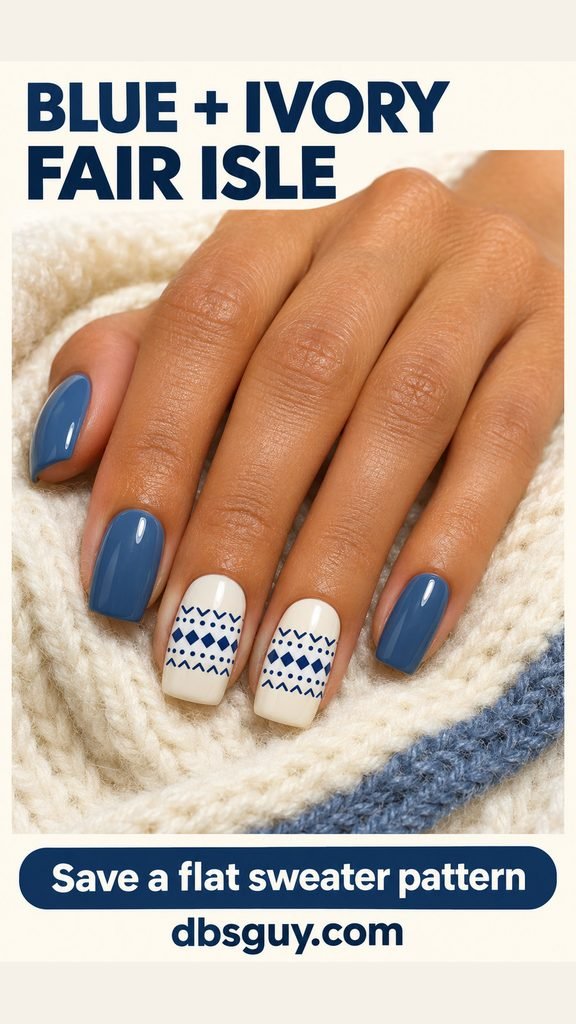
Start by choosing the central diamond row, then add the smaller surrounding marks only if there is room. A short nail may need just one band. Ask the artist to keep the artwork on the accent nails and the remaining blue nails plain, so the little geometric details stay readable.
17. Diagonal Taupe and Ice-Blue Color Blocking
Warm taupe and icy blue share each nail, divided by a fine diagonal silver line. The reference places blue toward the base and taupe toward the free edge. It is the most graphic way here to combine cozy and icy colors without a literal winter pattern.
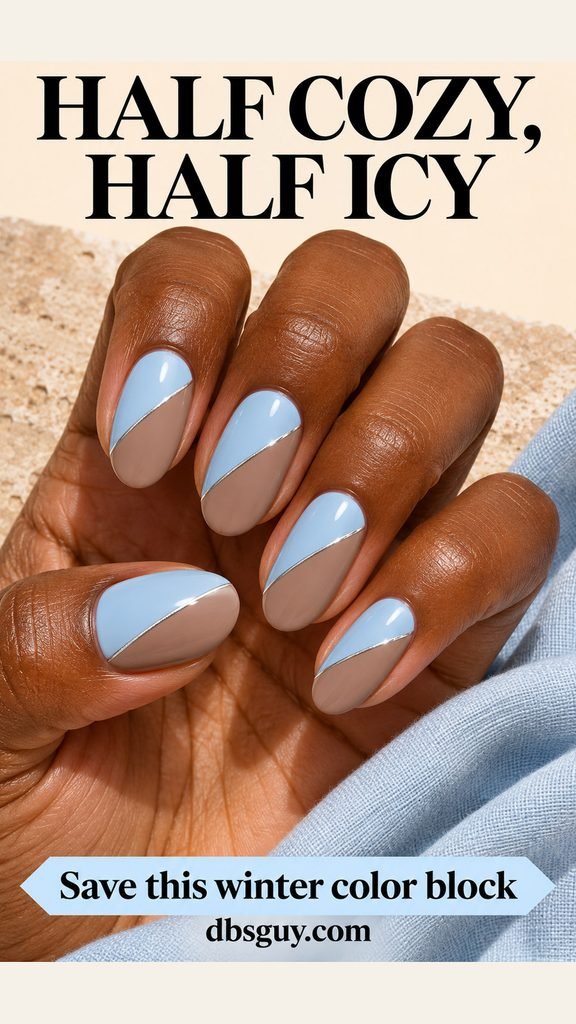
Choose the direction of the diagonal before painting the full set. Keep the split consistent across the hand and the silver finer than either color panel. On short nails, the two colors can carry the design by themselves if the extra line makes the boundary look crowded. Try the taupe and blue side by side on a swatch first; both should remain easy to distinguish.
Before Your Appointment or Home Manicure
Save the design you want, then note three choices: your usual length, which fingers carry artwork, and whether the finish should be flat, raised, matte, glossy, or magnetic. A reference can show the placement, but your own nail width may call for fewer details.
For regular polish, follow the base coat, color, artwork, and top coat directions, allowing the base to dry before drawing over it. For a gel service, follow the product system’s application and curing directions rather than borrowing a universal lamp time. The raised cable and magnetic velvet concepts are useful references to discuss with your artist.
The American Academy of Dermatology’s gel-manicure guidance recommends leaving cuticles uncut, avoiding picking off gel, and protecting hands during UV curing with broad-spectrum, water-resistant SPF 30 or higher sunscreen or dark, opaque fingerless gloves. Moisturize nails and cuticles between manicures, and seek professional advice for a persistent nail problem.
Questions About January Winter Nails
How do I make winter nails feel less Christmas-themed?
Choose a fabric pattern, a frosty finish, or a winter-night color instead of ornaments and holiday symbols. Cocoa plaid, pearl ribbons, and navy stars all give you a clear direction for January. You can also keep one winter accent and leave the other nails plain.
Which of these designs works on very short nails?
Start with espresso half moons, snowfall dots, or a small cluster of silver foil. They use compact marks rather than a whole illustrated scene. A cable, argyle, or Fair Isle pattern can still be adapted, but remove rows or links to keep the detail readable.
Can I wear these ideas with regular nail polish?
The flat dots, swirls, half moons, and color blocks can be interpreted with regular polish. A dimensional cable, a mirror-like silver edge, or a magnetic velvet reflection may need different products or a salon technique. Choose the specific finish you want before treating two versions as interchangeable.
What is the easiest way to combine warm and icy colors?
Pick one warm base and one cool detail: blush with silver foil, cinnamon with white branches, or champagne with blue tips. Keeping the placement consistent makes the pairing feel intentional. If you want the contrast to be the main feature, choose the diagonal taupe-and-blue design.