Do you dream of harvesting fresh greens from your countertop? Many people assume they need a sun-drenched greenhouse to grow food at home. Yet indoor kitchen garden ideas can help you cultivate a thriving harvest in dim corners, without a greenhouse.

Choosing the right greenery is the secret to success. Tomatoes often struggle without intense sun, but low-light plants such as leafy greens and herbs adapt well to shade. These resilient varieties let you enjoy homegrown flavors throughout the year.
Transforming your space is easier than you might think. These indoor kitchen garden ideas cover creative setup designs, supplemental lighting, and healthy crop maintenance. Turn your home into a productive sanctuary for fresh, nutritious produce.
Key Takeaways
- Leafy greens and herbs thrive better in limited sun than fruiting crops.
- Strategic placement helps maximize your available space for growth.
- Supplemental grow lights can bridge the gap during darker months.
- Consistent care routines ensure your harvest remains healthy and vibrant.
- Small-scale setups provide a sustainable way to access fresh ingredients daily.
Indoor Kitchen Garden Ideas (low-light/edible plants) for Every Home
Bringing nature indoors lets you grow a vibrant, edible sanctuary, regardless of your home’s natural light. Many people assume successful gardens require massive backyards or sun-drenched solariums. In reality, creative indoor kitchen garden ideas (low-light/edible plants) can provide fresh harvests year-round.

What Makes a Kitchen Garden Work in Low Light
Plants use photosynthesis to convert light into energy, but not every species needs intense, direct sun. Many low-light plants evolved in the dappled shade of forest floors. That history makes them strong candidates for kitchen gardens.
Select varieties that tolerate dim conditions naturally to keep your garden healthy with less intervention. These indoor kitchen garden ideas work best when crops favor foliage over fruit or flowers. Herbs and leafy greens are forgiving because they invest energy in sturdy stems and leaves.
Choosing Edible Plants for Windowsills, Counters, and Shelves
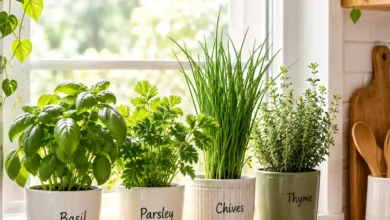
When selecting edible plants, consider each area’s kitchen microclimate. Windowsills usually provide steady light, making them suitable for herbs such as chives and parsley. Counters and shelves farther from windows may need shade-tolerant crops, including certain microgreens.
Group containers by light needs to simplify maintenance. Use vertical space, such as wall-mounted shelves, to expand your growing area without crowding work surfaces. This plan turns your kitchen into a practical, attractive living pantry.
Setting Realistic Expectations for Growth, Flavor, and Harvests
Remember that low-light conditions naturally shape your results. Expect slower growth rates than those of plants grown outdoors or in a greenhouse. Harvests may be smaller, but picking fresh ingredients at home offers unmatched satisfaction.
Flavor may also seem subtler because plants produce fewer essential oils without strong sun. Still, consistent care and proper soil moisture can produce vibrant and delicious results. Adjusting expectations helps you enjoy gardening while learning your indoor environment’s effects.
Assess Your Space Before Designing an Indoor Kitchen Garden
An indoor garden succeeds before you plant a single seed. First, evaluate your environment so your greens have the best chance to thrive. These indoor gardening tips can help you select strong locations for your project.
Finding the Brightest Available Areas
Identify which kitchen windows receive the most consistent light. South-facing windows usually work best, while east- and west-facing spots suit many varieties. Even with limited space, seek clear counters or shelves near these natural light sources.

Measuring Natural Light Throughout the Day
Natural light shifts significantly as the sun crosses the sky. A spot that seems bright at noon may fall into deep shadow by mid-afternoon. Observe your kitchen at different times to learn how long sunlight reaches your chosen surfaces.
If your space receives only a few hours of direct sun, focus on low-light plants. Understanding these patterns prevents disappointment and helps you choose species suited to your home.
Using Supplemental Grow Lights in Dim Rooms
Many kitchens lack the intense, all-day sun that some vegetables require. If your space is dim, modern technology provides a simple solution. Supplemental grow lights can supply the energy plants need to grow strong and healthy.
You can tuck these lights under cabinets or clip them onto shelves. They help your garden produce fresh harvests despite the weather outside.
Protecting Plants From Heat, Drafts, and Kitchen Fumes
Your kitchen is busy, yet it can challenge delicate greenery. Keep pots away from hot appliances, such as ovens or toasters, because they can quickly dry soil. Also, avoid placing plants directly near cold drafts from windows or air conditioning vents.
Watch for strong cooking fumes, smoke, and grease buildup. Good ventilation supports your health and helps your plants last longer. By selecting a stable, clean location, you create a peaceful sanctuary for your edible garden.
Low-Light Herbs That Are Easy to Grow Indoors
Turn your kitchen into a productive space by choosing edible plants that thrive without direct sunlight. Many culinary favorites need intense heat, but several varieties adapt well to the softer light in most homes. Growing herbs indoors offers a rewarding hobby and brings fresh, vibrant flavors to your dinner plate.

Chives for Small Pots and Frequent Harvesting
Chives rank among the most resilient choices for a kitchen garden. They tolerate lower light better than most perennial herbs and grow well in small, compact pots. Snip the green tops regularly, and they will quickly regrow for your next meal.
Mint for Containers With Consistent Moisture
Mint grows vigorously and prefers consistent moisture with partial shade. Because mint is hardy, it suits beginners who may occasionally forget their watering schedule. However, keep it in a dedicated container so it cannot crowd other plants.
Parsley for Countertop and Windowsill Gardens
Parsley is versatile and performs well in the indirect light of a bright windowsill. It prefers steady, cool conditions and soil deep enough to support its taproot. Keep it on your counter for a fresh garnish whenever you need one.
Cilantro for Cool Indoor Growing Conditions
Cilantro thrives in cool temperatures, making it an excellent choice for indoor environments. It bolts quickly in high heat, so place it away from the stove. Consistent, moderate light helps keep cilantro lush and flavorful.
Oregano, Thyme, and Sage With Supplemental Light
Unlike the herbs above, oregano, thyme, and sage are Mediterranean natives. They usually need stronger light to preserve their essential oils and compact shape. If you grow them, consider a small LED grow light to keep them healthy and prevent them from becoming “leggy.”
How to Prevent Aggressive Herbs From Taking Over
Some herbs, especially mint, have aggressive roots that can quickly dominate a shared container. Always plant these varieties in individual pots to protect your other edible plants. This simple step gives every herb enough space to thrive.
“The secret to a successful kitchen garden is not just the light you provide, but the care you take in selecting the right companions for your specific space.”
| Herb | Light Needs | Moisture | Best Container |
|---|---|---|---|
| Chives | Low to Moderate | Moderate | Small/Medium |
| Mint | Low to Moderate | High | Medium (Isolated) |
| Parsley | Moderate | Moderate | Deep |
| Thyme | High (Supplemental) | Low | Small |
Leafy Greens and Microgreens for Dim Indoor Spaces
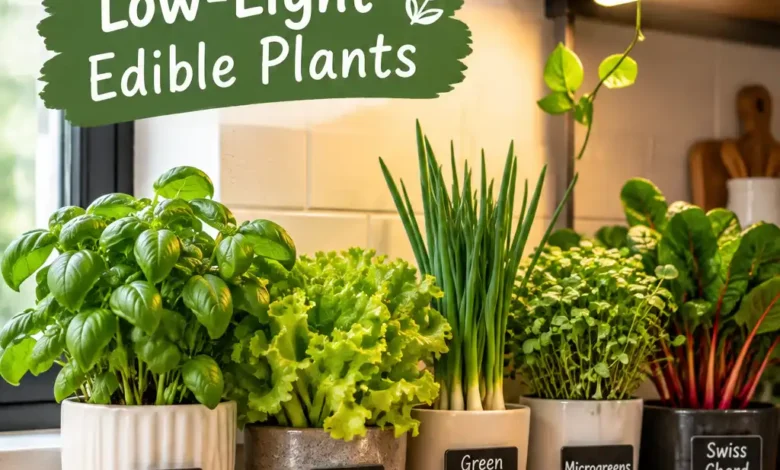
Leafy greens and microgreens offer a fast route to fresh harvests in dim indoor spaces. These edible plants suit beginners because they tolerate small containers and limited natural light. With suitable varieties, you can harvest fresh produce throughout the year.

Baby Lettuce and Salad Greens for Quick Harvests
Baby lettuce suits indoor gardeners seeking immediate results. It grows quickly and needs little soil, so shallow trays fit easily on a kitchen counter. Leaves are often ready for harvest a few weeks after planting.
Arugula for Cool Rooms and Compact Containers
Arugula thrives in cool indoor temperatures, making it resilient in chilly kitchens. Its compact rosette fits small pots and window boxes. These edible plants add peppery flavor and a gourmet touch to homemade salads.
Microgreens for the Lowest-Light Growing Areas
When natural light is scarce, microgreens offer a practical solution. Harvested at the cotyledon stage, these tiny edible plants need little energy to mature. Grow them in recycled containers with minimal soil for a steady supply of nutrients.
Asian Greens Such as Mizuna and Tatsoi
Mizuna and tatsoi are hardy greens that tolerate lower light better than many vegetables. They offer distinct texture and a mild, pleasant taste. These edible plants are highly productive and stay vigorous in indoor spaces with limited airflow.
Harvesting Greens Without Stopping Regrowth
To maximize your harvest, use the cut-and-come-again method. Snip outer leaves with clean scissors, but leave the central growing point intact. This technique encourages new foliage, allowing multiple harvests from one container.
Compact Edible Vegetables for Indoor Kitchen Gardens
You may be surprised by how many delicious vegetables can thrive on a kitchen counter. Although many people focus on herbs, adding edible plants provides fresh harvests year-round. Choosing suitable varieties is essential when working with limited square footage.

Effective small space gardening requires understanding each plant’s specific needs. Container depth and light requirements both influence a healthy yield.
Green Onions Regrown From Kitchen Scraps
Green onions are among the easiest vegetables to start indoors. Place the white root ends in a small glass of water, then watch them sprout within days. This effortless method keeps a fresh garnish available for meals.
Radishes in Shallow Containers
Radishes suit beginners because they grow incredibly fast. Their shallow roots allow them to thrive in containers as little as six inches deep. Consistent moisture keeps them crisp and flavorful.
Dwarf Peppers With Strong Supplemental Lighting
Dwarf pepper varieties are bred for compact growth. However, they need high-quality LED grow lights to produce fruit. Without sufficient intensity, plants may become tall and spindly instead of producing peppers.
Patio Tomatoes for Bright Windows and Grow Tents
Growing tomatoes indoors offers a rewarding challenge for any home gardener. Choose “determinate” or “patio” varieties that remain small and bushy.
“To plant a garden is to believe in tomorrow.” — Audrey Hepburn
These plants often need a gentle shake to assist pollination because indoor air lacks natural breezes.
Compact Carrots and Other Root Crops for Deep Pots
Carrots need deep containers so their roots can develop fully. Choose “nantes” or “round” varieties, which are naturally shorter. Proper soil drainage prevents roots from rotting in their pots.
Which Vegetables Are Usually Too Demanding for Low Light
Most fruiting crops, including full-sized tomatoes or peppers, struggle in dim conditions. These plants need far more energy than leafy greens to reach maturity. If your home lacks bright, direct sunlight, focus your small space gardening efforts on greens or herbs rather than heavy-fruiting edible plants.
Creative Kitchen Garden Designs for Small Apartments
Small space gardening becomes an art when vertical surfaces and mobile storage help you use limited room. Even with little floor area, you can grow a thriving collection of herbs and greens. Effective indoor kitchen garden ideas use each available inch while keeping your living space orderly.
When planning your kitchen garden design, consider wet soil’s weight and the need for waterproof protection. Trays or saucers beneath pots protect counters and floors from water damage. This safeguard matters especially for renters who want to protect their security deposits.

Sunny Windowsill Herb Gardens
The humble windowsill remains the most popular spot for growing fresh herbs. With compact pots, you can line up basil, cilantro, and chives in one row. Natural light is your best friend here, so choose windows that receive at least six hours of sun.
Tiered Shelving Gardens for Vertical Growing
If horizontal counter space is scarce, look toward your walls. Tiered shelving units let you stack plants vertically, multiplying your growing capacity. This approach suits apartment gardening because it clears the floor and creates a lush, attractive display.
Hanging Planters That Keep Counters Clear
Hanging planters use ceiling hooks or tension rods to save space. Suspended greens free valuable workspace for cooking and meal preparation. Always ensure your hooks are securely anchored to support the plants’ weight after they have been watered.
Rolling Plant Carts for Flexible Apartment Gardening
Rolling carts provide flexibility for gardeners who move plants throughout the day. You can wheel your garden toward a sunny window each morning and away from drafts at night. This mobility makes light exposure easier to manage in dim apartments.
Rail-Mounted and Wall-Mounted Container Systems
For a clean, modern look, rail-mounted systems offer an excellent choice. They often clip onto existing kitchen rails, so you need not drill holes in walls. Before installing permanent wall-mounted fixtures, check with your landlord to remain within your lease terms.
“The smallest garden can provide the greatest joy, turning a simple kitchen into a living, breathing sanctuary of flavor.”— Anonymous
By using these small space gardening techniques, you can enjoy fresh harvests year-round. Start small, then expand your collection as you grow more comfortable with your indoor environment.
Containers, Soil, and Drainage for Healthy Edible Plants
Choosing pots and potting mix is central to successful indoor plant care. When shaping your kitchen garden design, consider how both elements support plant growth. A prepared setting keeps herbs and greens vibrant throughout the year.
Selecting Pots That Fit the Plant and the Space
Select containers with enough space for roots, but do not overwhelm limited counter space. Small herbs such as chives thrive in four-inch pots, while larger greens may require deeper vessels. Material matters: porous terracotta improves airflow, while plastic retains moisture longer.

Why Drainage Holes Matter in Indoor Containers
Drainage holes are the most critical feature in any indoor container. They release excess water and keep roots from sitting in saturated soil. Without them, plants face a high risk of root rot and stunted growth.
Choosing Potting Mix for Herbs, Greens, and Vegetables
Do not use garden soil, which is often too heavy and may contain pests. Choose a high-quality, lightweight potting mix made for indoor containers. These mixes provide balanced aeration and moisture retention for edible crops.
Using Saucers, Trays, and Waterproof Counter Protection
Place saucers or waterproof trays beneath every pot to protect kitchen surfaces. They catch runoff and prevent water damage to countertops or shelving. Regular indoor plant care includes checking these trays to keep them clean and dry.
Cleaning Reused Containers Before Replanting
Clean old pots thoroughly before reusing them to prevent disease from spreading. Scrub each container with mild soap, then rinse it well before adding fresh soil. This step helps maintain a healthy kitchen garden design in your home.
Watering, Feeding, and Everyday Indoor Plant Care
Successful indoor plant care depends less on a strict calendar than on recognizing what your plants need. Your kitchen garden forms a living system that responds to your home’s specific conditions. Observe your plants daily, then provide the support they need to thrive.

Checking Soil Moisture Before Watering
The finger test offers a reliable way to assess water needs. Insert your finger about an inch into the soil and check for dampness. If the soil feels dry, water your plants.
Avoid following a fixed watering schedule because environmental conditions change constantly. Overwatering remains the most common mistake and can cause root rot and other health problems. Ensure your pots have proper drainage so excess moisture can escape.
Adjusting Watering for Low Light and Winter Conditions
During winter or in low-light corners, plants grow more slowly and use less water. Reduce watering significantly during these periods to keep the soil from becoming soggy. Consistent moisture helps, but waterlogged soil prevents roots from breathing.
“To plant a garden is to believe in tomorrow.”— Audrey Hepburn
Feeding Edible Plants Without Overfertilizing
Edible plants need nutrients to develop healthy leaves and stems, but excess fertilizer can cause serious harm. Use a gentle, water-soluble organic fertilizer at half the recommended strength. These indoor gardening tips provide herbs and greens with steady nourishment without burning delicate roots.
Pruning, Pinching, and Harvesting for Fuller Growth
Regular harvesting acts as pruning and encourages bushier regrowth. Pinch the top sets of leaves on herbs such as basil or mint to stimulate side-branching. This technique keeps plants compact and productive throughout the season.
Recognizing Wilting, Yellow Leaves, and Stunted Growth
Plants communicate their needs through appearance when you know the warning signs. Yellow leaves often indicate overwatering or poor drainage, while wilting can signal too much or too little water. Stunted growth usually suggests insufficient light or a need for fresh nutrients.
| Symptom | Likely Cause | Recommended Action |
|---|---|---|
| Yellowing Leaves | Overwatering | Check drainage and reduce frequency |
| Drooping/Wilting | Dehydration | Water thoroughly and check soil |
| Stunted Growth | Low Light | Move to brighter spot or add light |
| Brown Leaf Tips | Low Humidity | Mist leaves or use a pebble tray |
Grow Lights for Low-Light Herbs, Greens, and Vegetables
Turning a dim corner into a productive food source is easier than expected with the right lighting setup. Even without abundant sunshine, you can grow low-light plants successfully with modern technology. Supplemental lighting bridges limited natural rays and the energy greens need to flourish.

Choosing LED Grow Lights for Indoor Food Gardens
LED technology has transformed indoor gardening because it uses little energy and produces minimal heat. Unlike older incandescent bulbs, LEDs offer a full spectrum that mimics sunlight and supports healthy photosynthesis. Look for full-spectrum white LEDs so your herbs and vegetables receive balanced light.
Positioning Lights at the Correct Distance
Light intensity drops quickly as a fixture moves farther from the foliage. For most low-light plants, place lights 6 to 12 inches above the canopy. This distance provides enough energy for strong growth without causing leggy or weak stems.
Setting a Consistent Daily Light Schedule
Plants thrive on routine, much as people do. A simple plug-in timer can provide 12 to 16 hours of light each day. This consistency reduces stress and encourages steady, predictable growth throughout the year.
Balancing Natural Sunlight With Supplemental Lighting
You need not rely solely on artificial light when a window provides some natural light. Use grow lights to supplement daylight on cloudy days or during early morning hours. This hybrid approach helps low-light plants remain vigorous while keeping energy bills manageable.
Reducing Glare, Heat, and Energy Use in Living Spaces
Managing an indoor garden should not disrupt your home’s comfort. Aim fixtures downward to reduce irritating glare in living areas. Always secure cords to prevent tripping hazards and keep the setup tidy.
| Light Type | Energy Efficiency | Heat Output | Best Use |
|---|---|---|---|
| Full-Spectrum LED | High | Low | Herbs & Greens |
| Fluorescent (T5) | Medium | Moderate | Seed Starting |
| HID/HPS | Low | High | Large Vegetables |
Kitchen Scrap Gardening and Continuous Indoor Harvests
Beyond just growing herbs indoors, you can use kitchen scraps to keep your pantry stocked with fresh greens. This sustainable practice turns potential compost into an edible windowsill display. It can supplement your harvest while seeds or nursery starts mature.

Regrowing Green Onions, Celery, and Lettuce
Many vegetables offer quick, satisfying results. Green onions are easiest; place their white root ends in a small glass of water. New green shoots should appear within a few days.
Celery and romaine lettuce bases also respond well. Place the bottom inch of each stalk in shallow water, then watch fresh leaves emerge from the center. Consistency is key, so change the water every two days to prevent cloudiness.
Starting Herbs From Cuttings and Rooted Stems
If you are interested in growing herbs indoors, propagation from cuttings is highly effective. Soft-stemmed herbs such as basil, mint, and oregano root quickly in a jar of clean water. Once roots reach about an inch, transplant them into high-quality potting mix.
Saving Seeds From Store-Bought Produce
You can harvest seeds from store-bought peppers, tomatoes, or squash. Scoop out the seeds, rinse them thoroughly, and dry them on a paper towel for several days. Once dry, store them in a cool, dark place until your next planting cycle.
Staggering Plantings for a Steady Supply of Fresh Food
To avoid a feast-or-famine cycle, stagger your plantings every two weeks. This schedule keeps a fresh batch of greens or herbs ready for harvest. When growing herbs indoors, rotating containers helps maintain a continuous supply of ingredients for daily cooking.
Knowing Which Scraps Are Worth Regrowing
Set realistic expectations about how long scraps will produce. Green onions may provide multiple harvests, while celery often produces smaller, less flavorful stalks after its first regrowth. Use the following table to decide which projects deserve your time and space.
| Plant Type | Regrowth Method | Longevity | Harvest Quality |
|---|---|---|---|
| Green Onions | Water Jar | High | Excellent |
| Celery | Water to Soil | Low | Moderate |
| Lettuce | Water to Soil | Moderate | Good |
| Basil/Mint | Stem Cuttings | High | Excellent |
Managing Pests, Mold, and Food-Safety Risks Indoors
Maintaining a thriving indoor garden requires more than watering; it demands careful attention to plant health and safety. When you grow food in your kitchen, prioritize hygiene so harvests remain healthy and free from contaminants. Consistent indoor plant care helps prevent common problems before they begin.
Preventing Fungus Gnats With Better Moisture Control
Fungus gnats are small, annoying flies that thrive in damp, stagnant soil. They often signal that your watering habits may be too heavy for an indoor environment. To deter them, let the top inch of soil dry completely between waterings.
Good drainage is essential for preventing these pests. Ensure your pots have holes at the bottom, and never leave them in standing water inside a saucer. If you notice gnats, use yellow sticky traps to catch adults while adjusting moisture levels.

Spotting Aphids, Spider Mites, and Whiteflies Early
Pests can spread rapidly in a warm, enclosed kitchen environment. Regularly inspect the undersides of leaves and plant stems for signs of trouble. Early detection helps protect your garden without harsh chemicals.
- Aphids: Look for tiny, soft-bodied insects clustered on new growth.
- Spider Mites: Watch for fine webbing between leaves or tiny yellow stippling.
- Whiteflies: Notice small white insects that fly up when you brush against the plant.
Cleaning Leaves and Isolating Infested Plants
If a plant looks sick, move it away from healthy crops immediately. Isolation prevents pests from spreading throughout your collection. Gently wiping leaves with a damp cloth removes dust and small pests, helping plants breathe easily.
Proper indoor plant care includes removing dead or yellowing leaves. These decaying parts can attract mold and create breeding grounds for unwanted insects. Keeping plants tidy is one of the most effective indoor gardening tips for long-term success.
Using Food-Safe Pest-Control Methods Around Edibles
When treating pests on edible plants, safety is your top priority. Avoid synthetic pesticides without labels approving their use on food crops. Choose gentle, food-safe solutions, such as insecticidal soaps or neem oil, only when explicitly approved for edible plants.
Keeping Soil, Tools, and Harvests Clean
Unclean tools can carry bacteria or pest eggs. Wipe shears and trowels with rubbing alcohol after use to keep them sterile. Always wash your hands and harvested greens thoroughly before eating, keeping your kitchen garden a safe source of fresh food.
Best Plant Pairings and Seasonal Indoor Growing Plans
A thriving kitchen garden becomes easier to manage when you group plants by their environmental needs. An organized space gives each pot the light, water, and attention it requires. This thoughtful approach simplifies daily work and helps the garden flourish year-round.

Grouping Plants With Similar Light and Water Needs
Successful indoor kitchen garden ideas begin with plants that share similar needs. Place moisture-loving herbs, such as mint and parsley, together, away from drought-tolerant sage and oregano. This arrangement limits overwatering while giving each group the hydration it needs.
Check the group’s soil moisture before you reach for the watering can. Consistent monitoring is central to indoor plant care and keeps greens healthy. Plants sharing a tray can also create a microclimate that helps maintain humidity.
Pairing Herbs for Everyday Cooking
Pair herbs according to how you use them in the kitchen. Placing basil, oregano, and thyme in one container or on one shelf makes it incredibly convenient to reach for fresh ingredients while cooking. This plan keeps your most-used flavors within arm’s reach at all times.
When you grow these edible plants together, choose a container large enough to prevent overcrowding. Proper spacing improves airflow, which helps prevent common indoor plant issues. A well-organized herb station turns the kitchen into a functional culinary hub.
Growing Cool-Season Greens in Fall and Winter
As days grow shorter, shift toward cool-season crops such as arugula, spinach, and baby lettuce. These plants thrive in autumn and winter’s lower light, making them ideal for windowsills. They grow quickly and provide a steady supply of fresh greens when outdoor gardening is impossible.
Moving Heat-Loving Crops Under Stronger Lights in Summer
Summer is the season for heat-loving varieties, including dwarf peppers and patio tomatoes. These plants need intense light to produce fruit, so place them beneath your strongest grow lights. If they stretch toward the light, move them closer to maintain a compact, healthy shape.
Refreshing Containers Between Growing Cycles
Proper indoor plant care includes resetting the garden after each harvest. After a plant finishes its cycle, remove spent roots and refresh the potting mix with fresh nutrients. Clean containers thoroughly with mild soap to help prevent pathogen buildup. This preparation ensures your next batch of edible plants starts strong.
Conclusion
Thriving indoor harvests begin when you match your home’s conditions with suitable crops. Successful indoor kitchen garden ideas (low-light/edible plants) work with natural light instead of resisting it. Choose varieties that tolerate limited sun, and you create a dependable foundation for consistent success.
These indoor kitchen garden ideas show that a sprawling backyard is unnecessary for a rewarding harvest. Low-light plants let you use shelves, windowsills, and countertops with purpose. Careful drainage, quality soil, and supplemental lighting can transform dim corners into productive zones for edible plants.
Begin with a small, manageable arrangement that suits your current lifestyle. Expand your collection as confidence grows, and learn which species flourish in your unique microclimate. Each pot of herbs or tray of greens moves you toward a sustainable, rewarding kitchen experience.
What are the best low-light plants to start an indoor kitchen garden?
Limited sunlight favors leafy greens and selected herbs over fruiting crops. Indoors, mint, parsley, chives, and cilantro can thrive in low light. Microgreens offer a fast harvest because you pick them before they need much solar energy. To grow larger vegetables, such as Burpee patio tomatoes or peppers, you will likely need artificial light.
How can I implement a functional kitchen garden design in a small apartment?
Small-space gardening works best when you think vertically. Tiered shelves or wall systems like those from WallyGro expand growing space without crowding counters. A rolling plant cart is another popular strategy: move it toward bright windows by day, then tuck it away while cooking.
Do I really need grow lights for growing herbs indoors?
A south-facing window is ideal, but many homes lack enough direct sunlight. LED grow lights from brands like GE or Sansi can greatly improve your harvest. They provide the spectrum edible plants need to remain compact and flavorful. Without these lights, plants in dim areas often become “leggy,” stretch toward windows, and lose culinary potency.
What are your top indoor gardening tips for beginners?
Avoiding overwatering is the most important beginner tip because water evaporates much more slowly indoors than outdoors. Push your finger one inch into the soil; if it feels damp, wait another day. Use high-quality potting mix, such as FoxFarm Ocean Forest, and ensure containers have drainage holes. Heavy garden soil can compact and suffocate roots in pots.
Which edible plants are easiest to regrow from kitchen scraps?
Green onions are the undisputed champions of scrap gardening. Place their white root ends in a shallow glass of water or a small pot of Espoma Organic Potting Mix; they will regrow within days. You can also try this with celery bases and Romaine lettuce. While these offer fun indoor kitchen garden ideas, starting from seed remains more reliable long term for a continuous, nutrient-dense food supply.
How do I handle indoor plant care regarding pests and mold?
Fungus gnats are the most common issue, usually caused by keeping soil too wet. To manage them, let the soil dry slightly between waterings, and consider Mosquito Bits or sticky traps. For aphids or spider mites, use food-safe treatments like Bonide Insecticidal Soap. Keep your kitchen garden away from high-heat areas, such as the oven, or drafty AC vents; plant stress increases pest susceptibility.
Can I grow different herbs together in one large container?
You can, but group herbs according to their moisture and light requirements. Moisture-loving plants like parsley and cilantro, for example, pair well. Mint needs caution because its aggressive root system can quickly take over the entire pot. For best results in kitchen garden design, give mint its own container and group other herbs nearby for a lush, green windowsill aesthetic.