
A richer ribbon on the tree, a welcoming front door, and a dining table you can actually use: you can make Christmas 2026 feel special without replacing your entire decoration collection. These 40 Christmas decor ideas for 2026 cover the tree, porch, living room, kitchen, bedrooms, and smaller corners, with practical ways to adapt each look to your home.
For this year’s direction, Christmasworld’s 2026 trend presentation includes expressive nostalgic details, lighter transparent surfaces, and enduring materials. The ideas here interpret those themes alongside familiar holiday favorites; they are decorating choices, not a ranking of what every household will buy. Start with the pictures that fit your space, then use the details below to make them workable.

The visuals are AI-generated decorating concepts, created to illustrate each idea rather than document completed homes. Use your room’s measurements and product instructions when recreating a look.
Choose Your Starting Point Before You Shop
Pick one main focal point, one everyday surface, and one small finishing detail. A tree, a front-door bow, and a set of pillow covers might be plenty. If you are decorating a small apartment, a branch arrangement, paper stars, and a window-ledge scene can deliver the same sense of occasion with a smaller footprint.
Choose a main color, a supporting color, and one repeated material. Burgundy, cream, and brass feel warm; ice blue, clear glass, and pale wood feel lighter. Keep the large pieces you already like and change the smaller accents first. Measure door swings, tabletops, and storage space before buying anything bulky.
1. Give a Classic Tree Burgundy Velvet Bows

A familiar green tree looks refreshed when you add soft burgundy bows to ornaments you already own. Keep the bow loops generous and the tails uneven enough to fall naturally. Brass or warm gold ornaments make the wine color feel richer; bright silver gives it a cooler edge.
Begin with a few bows at different heights, step back, and fill only the gaps that need emphasis. Wired ribbon holds a sculpted loop, while unwired velvet makes a softer bow. Keep ribbon clear of the light bulbs and leave access to the tree stand so watering does not become a daily obstacle.
Also Read: 21 Christmas Tree Bow Ideas That Turn Simple Ribbon Into a Statement
2. Let Clear Glass Ornaments Catch the Light

Clear glass is useful when you want a decorated tree without a dense wall of color. Combine transparent baubles with a few pale blue or champagne pieces, letting the branches remain visible. Ribbed and smooth finishes give the light different surfaces to catch.
Use this approach near a window or beside a softly lit seating area. Put heavier ornaments on stronger interior branches and reserve the tips for lighter pieces. In a home with young children or curious pets, choose transparent shatter-resistant decorations instead; the airy appearance matters more than the material.
3. Mix Vintage-Style Ornaments With Family Keepsakes

A collected tree does not need every ornament to match. Striped baubles, painted wooden shapes, and a few familiar family decorations can share the branches when you repeat one thread, such as red ribbon or warm lights. The result has more personality than a perfectly coordinated boxed set.
Place the meaningful pieces where you can see them from the sofa, rather than saving them for the back. Fill the remaining spaces with simple balls that echo colors already present. If an older ornament is fragile, display it on a stable shelf or in a protective display instead of asking it to survive another crowded tree.
Also Read: 21 Vintage Christmas Decor Ideas That Bring Back the Magic of Childhood
4. Build a Terracotta and Olive Tree Palette

Terracotta, olive, and oatmeal work well in rooms that already contain wood, rattan, or warm beige upholstery. Use matte ornaments to keep the palette grounded, then add a little metallic shine so the tree still feels festive after dark. A woven collar finishes the look without adding another competing color.
Try the combination on one branch before committing to a whole tree. Olive decorations can disappear into dense greenery, so place some near lighter ribbon or the outer branches. Wrap nearby gifts in plain cream paper to carry the palette into the room without buying matching accessories for every surface.
5. Give a Slim Tree a Tailored Fabric Base

The bottom of a tree often looks unfinished even when the branches are beautiful. A neatly arranged fabric skirt can hide the stand and soften a narrow tree corner. Choose one substantial fabric, such as velvet or a wool-look textile, rather than several layers that spread into the walkway.
Fit the skirt around the stand after the tree is secured, leaving the watering point accessible. A few coordinated packages give the base shape before Christmas morning. In a small room, measure the decorated footprint, including gifts and fabric, rather than relying only on the tree width printed on the box.
6. Trade a Traditional Tree for a Decorated Branch
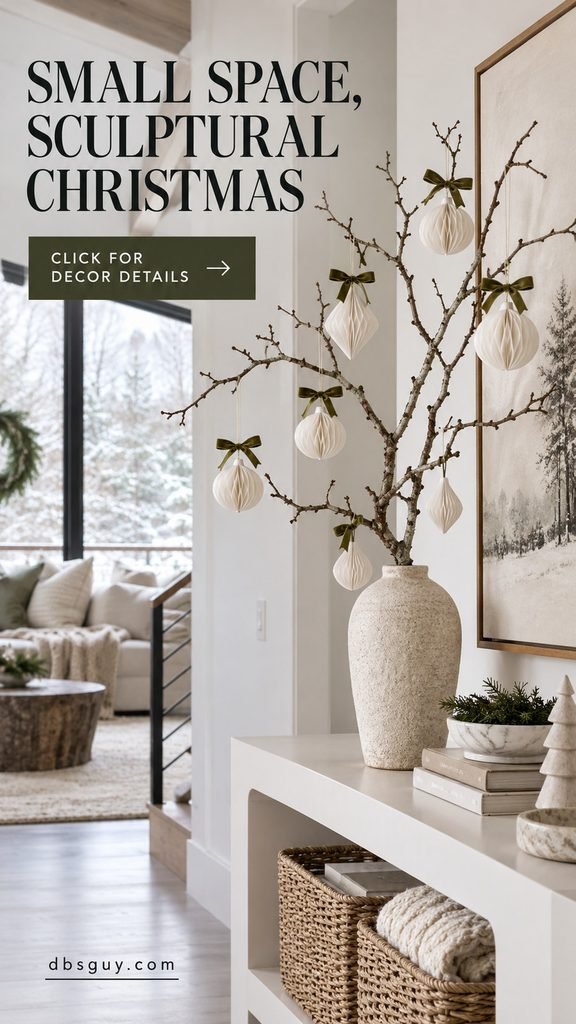
A sculptural branch can become the holiday focal point when there is no room for a full tree. Use a sturdy vase and a faux branch with a pleasing silhouette, then hang lightweight paper ornaments from the smaller offshoots. Limit the decoration so the shape stays visible.
This works on a console or shelf that will not be bumped during everyday use. Check the vase stability with the finished branch in place; a tall arrangement can be top-heavy. If pets or small children can reach it, move the display to a more secure location or choose a shorter tabletop version.
7. Use One Oversized Bow on the Front Door
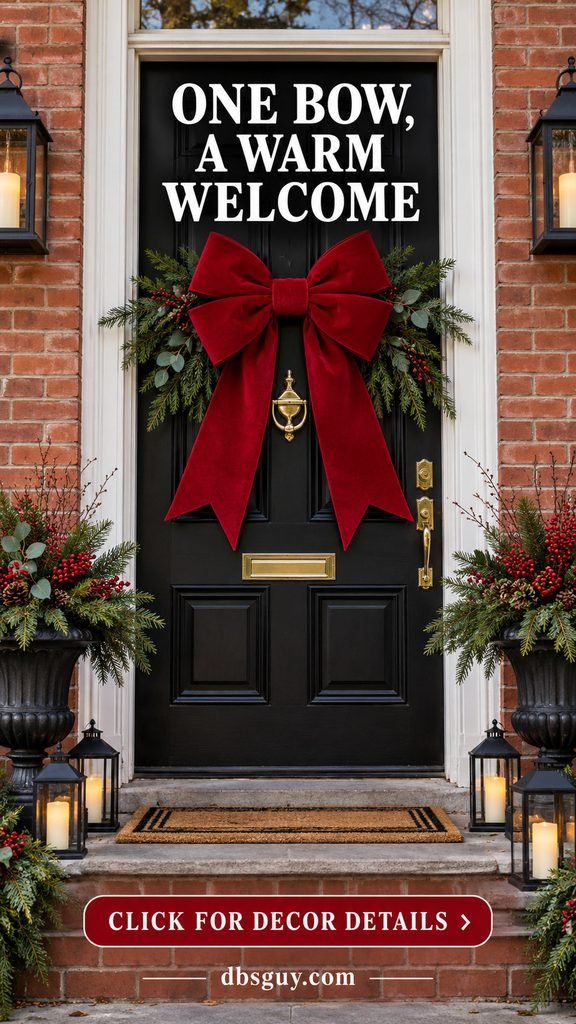
One generous bow gives the front door a clear focal point without a full porch display. Choose ribbon intended for the exposure your doorway receives, and let a small bundle of greenery peek behind the knot. Red on a black door is especially easy to read from the sidewalk.
Shape the loops on a work surface first, then attach the finished decoration with hardware suitable for the door and its weight. Check that it does not interfere with the knocker, peephole, lock, or door swing. A sheltered entry helps preserve the shape, but outdoor materials should still suit local rain and wind.
8. Pair a Magnolia Wreath With a Warm Metal Bell
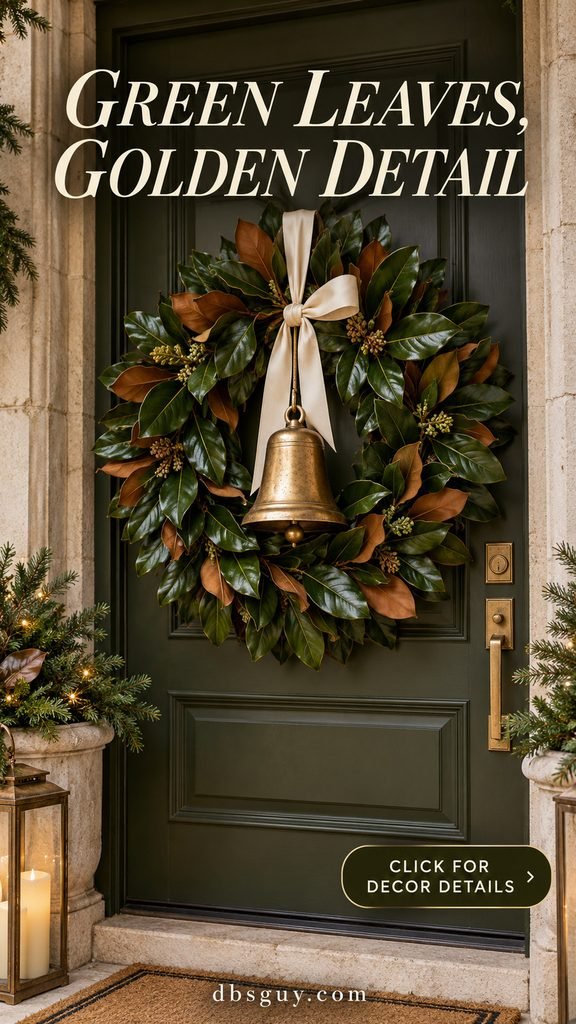
Magnolia leaves bring two colors to a wreath: glossy green fronts and warm brown undersides. An aged brass bell or a small cluster of bells adds a holiday note without covering the leaf texture. Cream ribbon keeps the combination lighter than a traditional red bow.
Use a faux wreath if you want a reusable version and less concern about drying foliage. Turn some leaves outward so both surfaces show. Choose a hanger that suits your door finish, and hang the wreath high enough to avoid repeated contact with the handle. The bell is a decorative accent, so it does not need to be loud.
9. Fill Porch Planters With Evergreen and Dogwood

Empty summer planters can hold a winter arrangement of evergreen stems, red dogwood, and pinecones. The upright branches give height, while shorter greenery hides the support below. This is a useful way to decorate a porch that has room beside the door but little space for furniture.
Secure the stems in a support appropriate for the planter and outdoor conditions; the arrangement should resist the wind rather than simply sit loose in the pot. Place it where it will not narrow the steps or doorway. Coordinate both planters, but let the branch shapes differ slightly so the pair feels natural.
10. Keep a Small Stoop Festive With One Outdoor Lantern
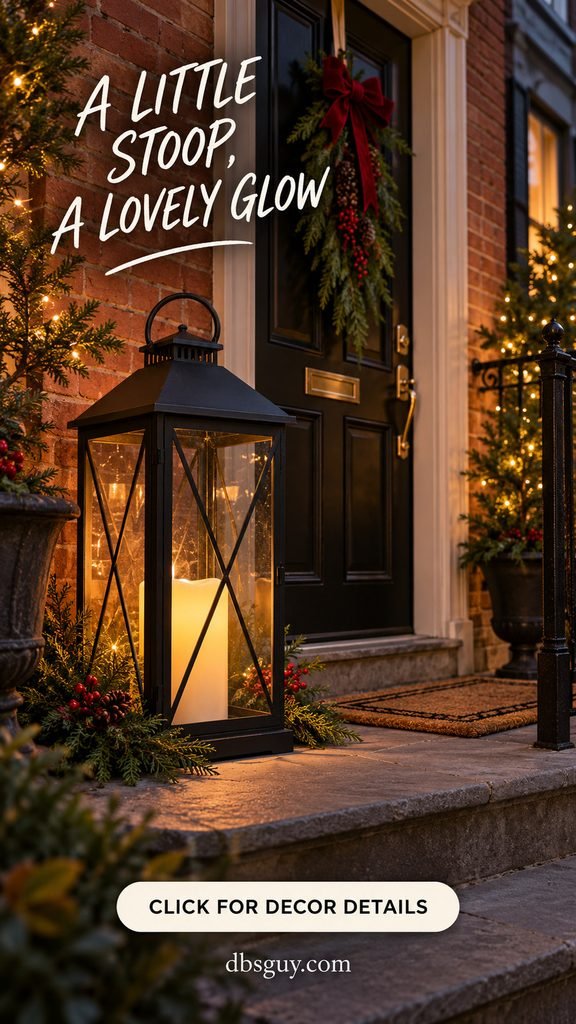
On a narrow stoop, one lantern beside the wall can do more than a row of objects along the steps. Add a simple door swag above it and keep the rest of the entry clear. The lantern creates a welcoming point of light while the greenery carries the holiday color.
Use a flameless candle and a lantern made for the weather exposure it will receive. Keep it away from the path of the door and anywhere a delivery box might push it into the walkway. If even one floor decoration crowds the entrance, use the door swag alone and let the existing porch light provide the glow.
Also Read: 17 Small Front Porch Christmas Decor Ideas That Make a Big First Impression
11. Turn an Entry Bench Into a Plaid Welcome

A bench needs only a tartan cushion, a folded throw, and a small wall decoration to feel ready for December. Keep enough of the seat free for someone to put on shoes. The useful space matters more than a perfectly staged row of pillows.
Choose a washable cushion cover if the bench sits near wet coats or snowy boots. Repeat one color from the plaid in a nearby bow or gift bag, then stop. If the entry already feels busy, skip the throw and use only the cushion; the pattern delivers plenty of holiday character on its own.
12. Decorate a Staircase With Greenery and Ribbon Knots
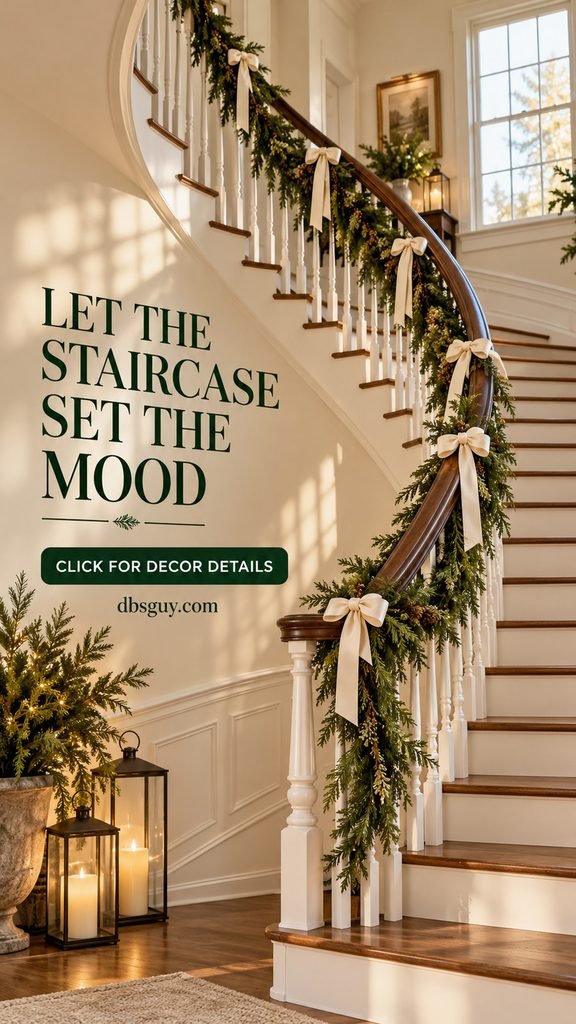
A staircase naturally leads the eye through the house, making it a good place for a continuous ribbon of greenery. Secure the garland along the outer side of the balustrade, then cover the attachment points with simple ribbon knots. The repeated knots feel quieter than large bows on every spindle.
Use ties or supports suitable for the rail finish and the decoration weight. Preserve a clear grip on the handrail and keep all greenery, wires, and tails away from the steps. One side of the staircase is usually enough; adding a second decorated rail can make a narrow hallway feel crowded.
13. Let a Mantel Garland Fall to One Side
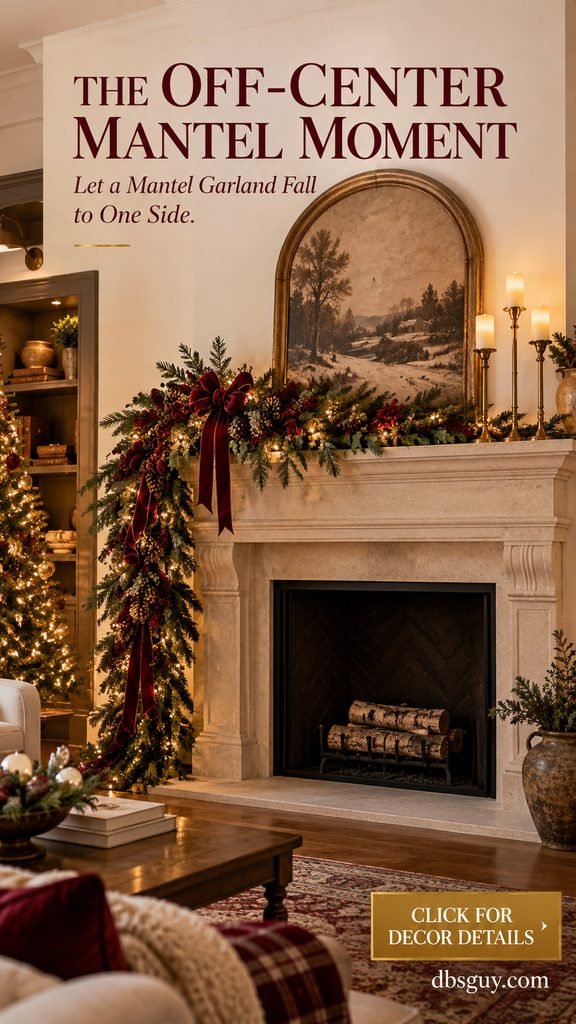
An off-center garland makes a mantel feel less rigid. Build a fuller cluster at one end, allow a short drape at the outside edge, and balance it with a few simple objects on the other side. You do not need identical arrangements at both ends.
Plan the weight and attachment points before adding ornaments. Keep the drape clear of the fireplace opening, and follow the fireplace manufacturer’s clearance requirements. The concept shown uses an unused fireplace; if yours will be lit, move combustible decor away as required. Flameless candlesticks give you a warm glow without placing flames beside greenery.
Also Read: How to Make Christmas Garland Look Fuller: 9 Easy Styling Tricks
14. Make Stockings a Soft, Coordinated Display
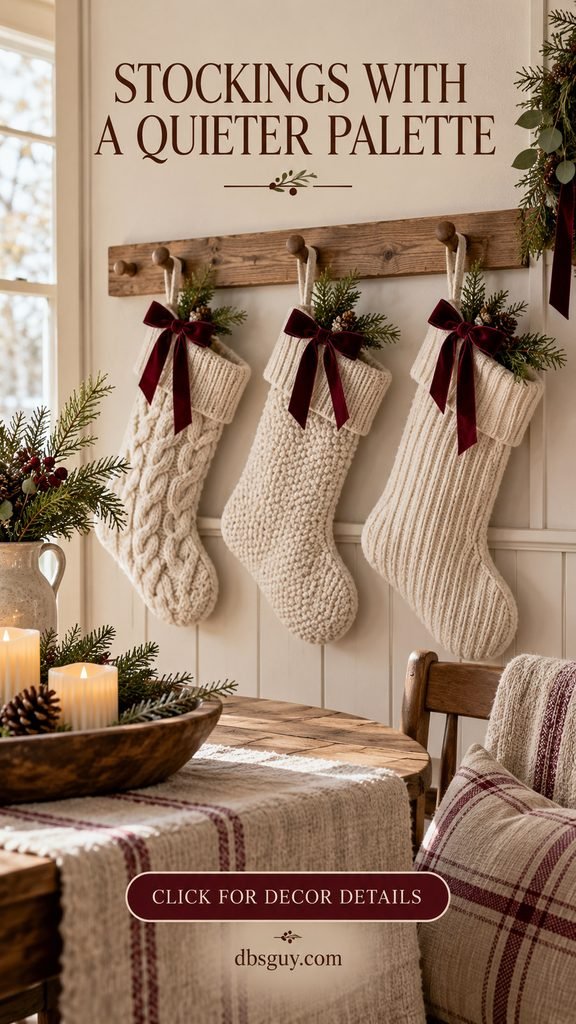
Matching color does not have to mean matching stockings. Cream cable knit, ribbed fabric, and a subtly patterned stocking can sit together when you repeat the same small burgundy bow. This approach is especially useful when family stockings have different textures but similar tones.
A wall peg rail offers an alternative to a mantel. Use a securely installed rail and observe its load limits when stockings are filled. Keep names or initials small enough to remain part of the display rather than its entire focus. If your collection is colorful, tie it together with ribbon instead of replacing pieces that already mean something.
15. Hang a Light Garland Over a Mirror
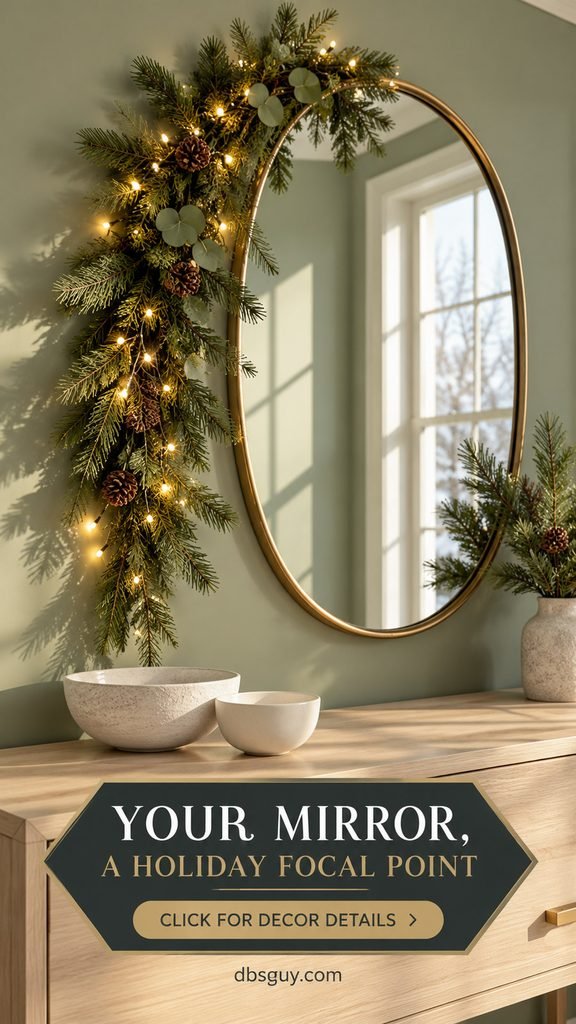
A mirror can anchor a holiday arrangement when there is no fireplace. Curve a lightweight garland around part of the frame and leave some brass or wood visible. The reflected room gives the greenery a little more presence without needing a large display on the console.
Support the garland independently with fixings appropriate for the wall or frame, rather than assuming the mirror’s hanging hardware can carry extra weight. Keep the console practical with space for keys or a small bowl. Use faux greenery if moisture or sap could mark the frame or wall.
16. Create a Low Ornament Centerpiece for the Coffee Table

A shallow bowl filled with ornaments brings the tree palette to the coffee table. Mix two finishes rather than several unrelated colors: matte plum with ribbed champagne, for example. A few short faux pine sprigs give the arrangement a softer edge.
Keep the centerpiece low enough to see across the table and leave room for drinks. Nest the ornaments securely so they do not roll out when the table is bumped. Use shatter-resistant pieces in an active family room, and keep delicate heirlooms for a less accessible display. This is a good place to use extras from an existing ornament set.
17. Swap Pillow Covers Instead of Buying New Pillows

Pillow covers offer a smaller storage commitment than a new set of filled cushions. Combine one solid velvet cover, one plaid, and one textured neutral. The different surfaces make a simple sofa feel layered without covering every seat.
Match each cover to the insert size and check the care instructions before buying. Pull a color from the room’s existing artwork or rug so the seasonal cushions feel connected to the house. When the holidays end, fold the covers into a small bin and return the everyday ones; keep a note of the sizes to make next year’s swap easier.
18. Light a Cabinet-Top Christmas Village
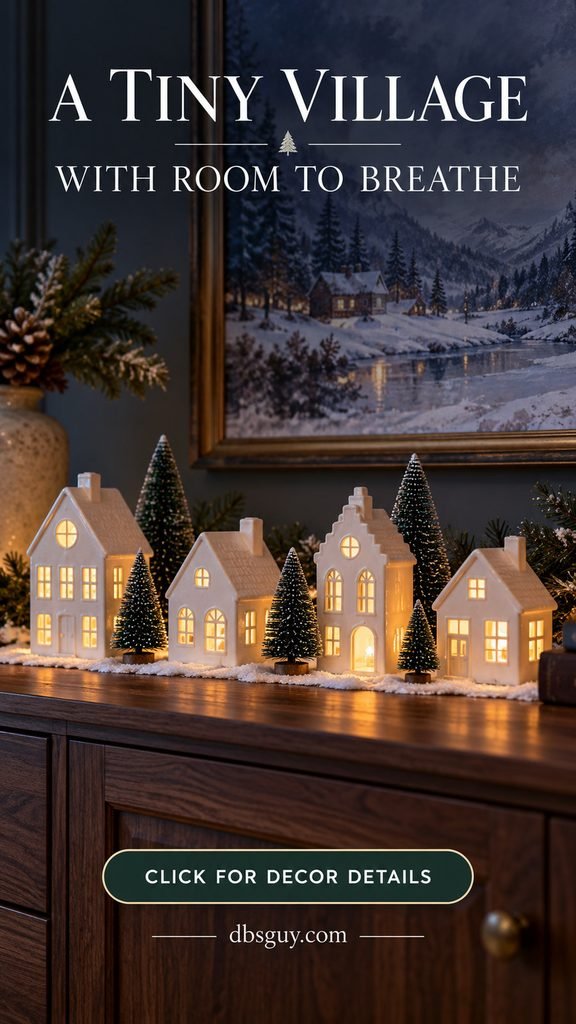
A village looks more intentional when the buildings have breathing room. Arrange a few ceramic houses on a cabinet, leaving small gaps for bottlebrush trees. Vary the heights gently so the scene can be read from across the room.
Battery-operated illumination keeps the arrangement simpler, though you still need accessible switches and secure battery compartments. Avoid covering ventilation openings or cords in decorative material. If your village contains mismatched pieces, use a plain background and consistent greenery to help them belong together. A smaller group often shows the individual houses better than an entire collection crowded onto one shelf.
19. Give a Bookcase One Holiday Story

Decorate one shelf around something personal: a holiday book, a winter print, a family photograph, or a handmade ornament. Add a small tree or wooden star and let the surrounding books remain where they normally live. The seasonal objects feel more meaningful when they sit among everyday belongings.
Choose a shelf that is easy to see from your usual seat. Leave space around the framed picture and avoid stacking fragile decor against books you regularly remove. You can build the entire arrangement from stored pieces. A limited display also makes cleanup easier because you have not displaced the contents of the whole bookcase.
20. Frame a Reading Chair With a Tabletop Tree
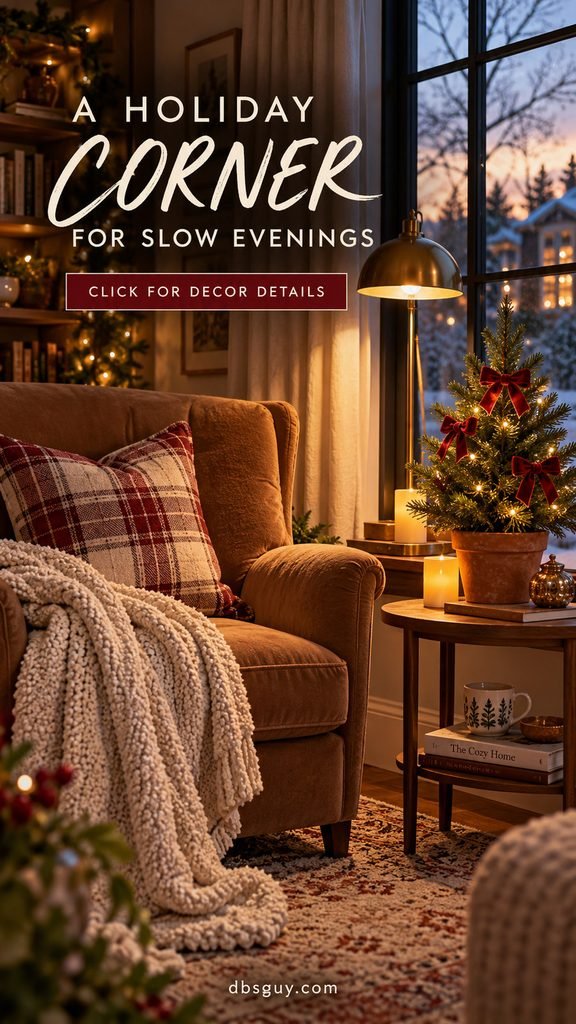
A tabletop tree can make a reading corner feel festive without rearranging the living room. Put it on a stable side table, add tiny bows or lightweight ornaments, and repeat one color in a throw. Keep the chair comfortable rather than treating it as a display stand.
Measure the tree with its pot and decorations before choosing the table. Leave a separate spot for a book or drink, and route any light cord away from the chair legs. A small artificial tree is convenient here; if you use a living plant, choose conditions that suit that plant rather than assuming any evergreen will thrive indoors.
21. Dress a Dining Table With a Low Greenery Runner
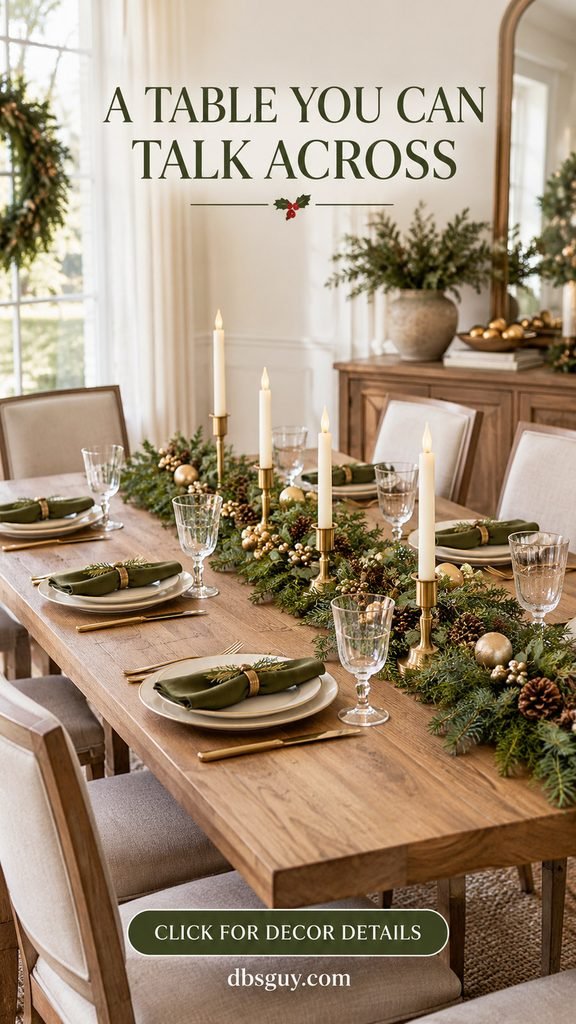
A low greenery runner gives a dining table a holiday center while keeping conversation easy. Use short faux stems along a narrow central strip, then tuck in a few flameless tapers. Cream plates and olive napkins complete the setting without requiring a special Christmas dinnerware set.
Set out the plates and serving dishes before deciding how wide the runner can be. Leave stems away from food, utensils, and guests’ elbows. If dinner is served family-style, divide the greenery into two smaller clusters with space between them. That adjustment keeps the table useful once bowls and platters arrive.
22. Use Velvet Ribbon as Simple Napkin Ties

A short length of velvet ribbon turns an ordinary cloth napkin into a seasonal detail. Fold the napkin loosely, tie the ribbon once, and let the ends fall over the plate. Burgundy on olive is rich, while ivory ribbon on a patterned napkin is quieter.
Keep the knot easy to untie so guests are not wrestling with their place settings. If you add a decorative sprig, use a clean faux piece and remove it before serving food. Cut all ribbon lengths together for a consistent appearance, then reuse them for gift tags after the gathering or store them with the napkins.
23. Group Flameless Candles on a Dinner Tray

A tray of flameless pillar candles is an easy way to add evening atmosphere to a dining room or sideboard. Vary the heights while keeping the tallest candle low enough for its location. A metallic tray reflects the glow and contains the arrangement visually.
Choose candles with secure battery compartments, especially where children are present, and check the operating instructions. Leave access to the switches and avoid overfilling the tray with loose greenery. A timer can simplify the routine if the model includes one, but switch the display off when appropriate rather than assuming every battery candle has the same features.
24. Style a Hot Cocoa Station on One Portable Tray
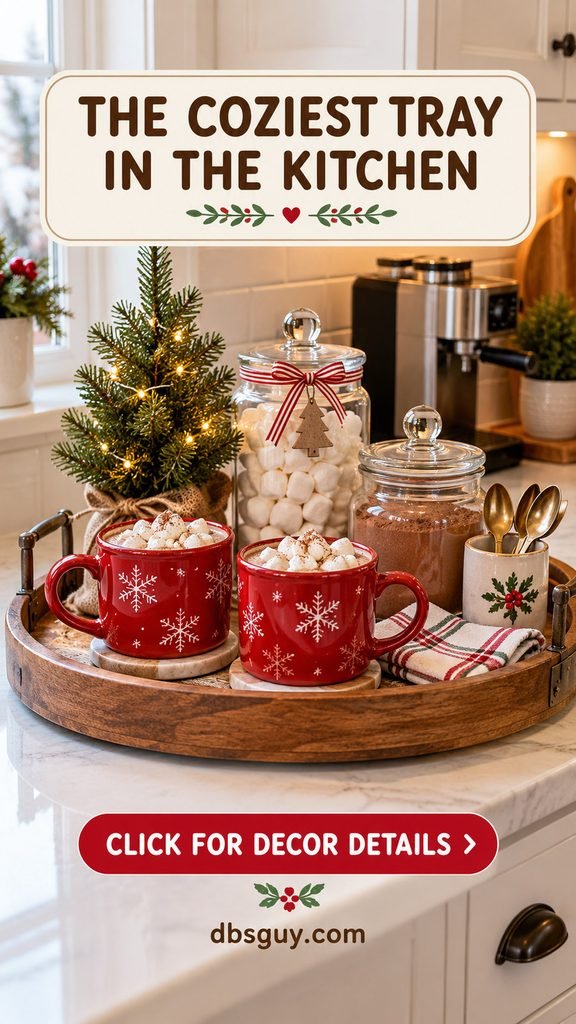
A cocoa station feels welcoming when it is easy to use and easy to move. Put mugs, a spoon cup, and a couple of closed ingredient jars on a tray. One miniature tree or seasonal tea towel supplies the decor; the drinks are the main attraction.
Leave the tray away from stovetop heat and splashing water. Keep food ingredients in suitable clean containers, and label them accurately if more than one person uses the station. For a small kitchen, set it out on weekends or when guests arrive, then move it off the counter when you need the preparation space.
25. Hang Mini Wreaths on Selected Kitchen Cabinets
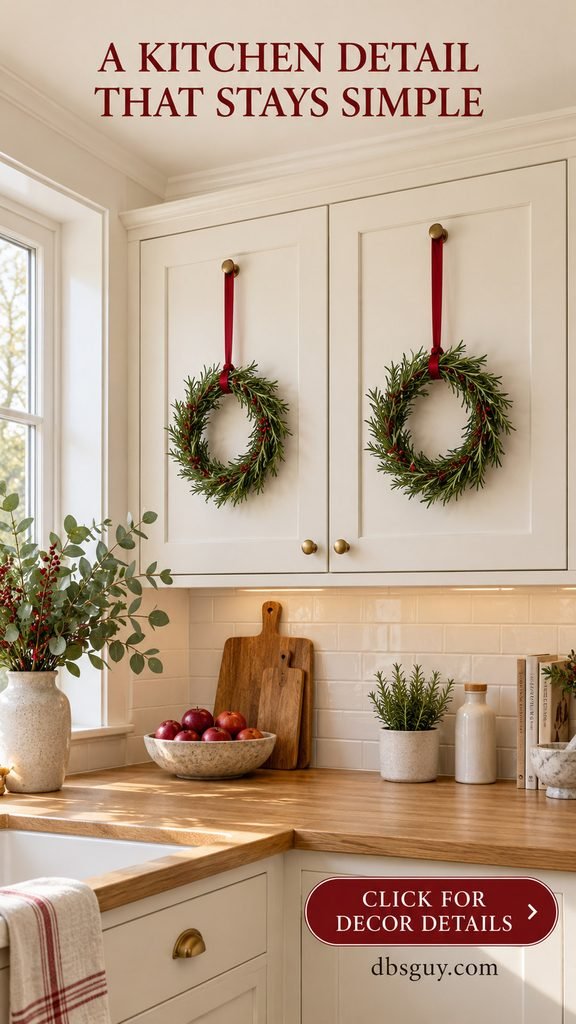
Two small cabinet wreaths can be enough to make a kitchen feel seasonal. Choose doors away from the range and sink, and use thin ribbon that echoes a color elsewhere in the room. Decorating selected cabinets feels lighter than hanging a wreath on every door.
Test the cabinet opening and closing with the finished wreath attached. The hanger should suit the door finish and should not force the door out of alignment. Faux greenery avoids shedding onto the counter, but it still needs to stay clear of heat, food preparation, and frequently used appliances.
26. Make a Dried-Orange Garland for a Sunny Window

Dried orange slices make a window display glow in daylight. String fully dried slices with a little space between them, adding a few decorative leaves if you like. The orange color works particularly well with wood trim, cream curtains, and simple greenery.
Let the slices dry completely before hanging them, and discard any that show mold or spoilage. Keep this decorative garland away from heat and places where pets might chew it; it is not a snack display. Use supports suitable for the frame and keep the garland clear of window controls. Store it only if it remains dry and in good condition.
27. Set Out a Winter Scene With Everyday Dishware
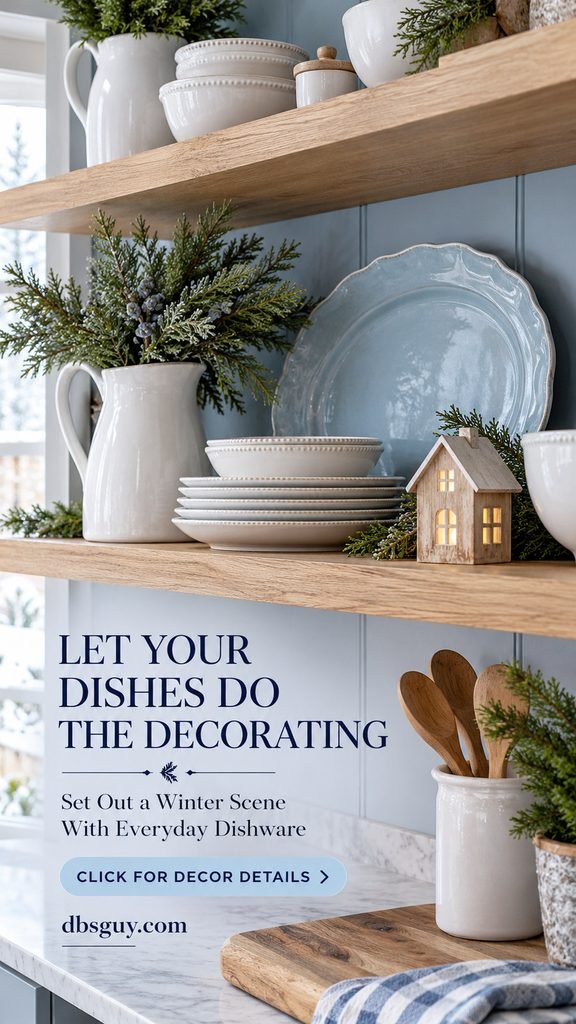
White pitchers and a favorite serving platter can become a winter display with almost no new purchases. Group the taller dishes at the back, add short faux cedar stems to one pitcher, and place a small wooden house at the front. The dishware gives the arrangement its shape.
Use pieces you will not need every day, or keep the arrangement easy to move. Wash dishes before returning them to food use, and avoid loading a shelf beyond its rating. If your dishes are colorful, choose a plain background and repeat one of their colors in the seasonal detail.
Also Read: 15 Christmas Kitchen Decor Ideas That Keep Your Counters Clear
28. Create a Reusable Fabric Advent Calendar
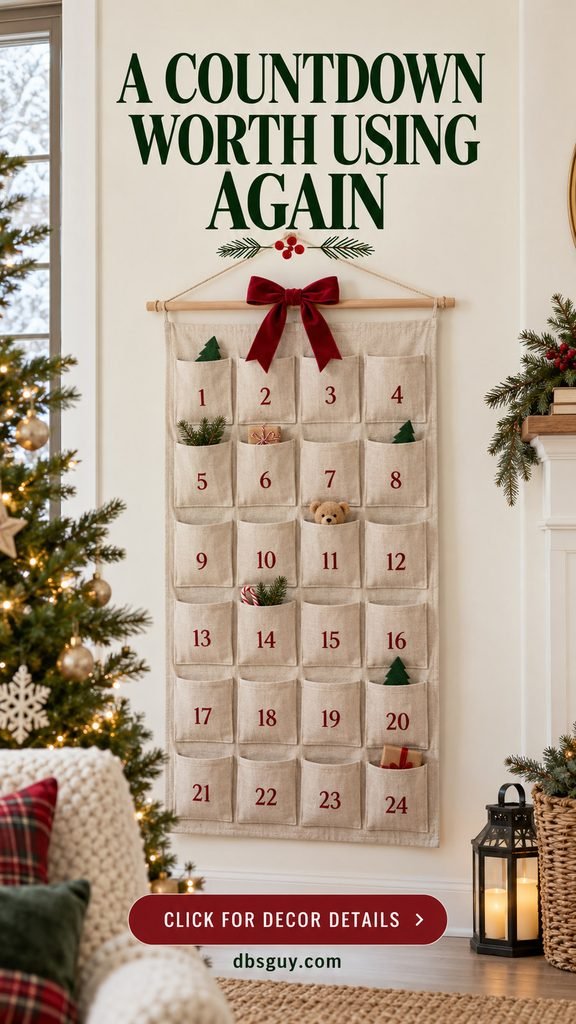
A fabric Advent calendar brings the countdown into the room without a pile of disposable packaging. Use 24 pockets for December 1 through Christmas Eve, filling them with activity notes, tiny treats, or a mix of both. Simple linen and a small bow can suit several decorating styles.
Match the contents to the people using it: a family movie choice, a neighborhood walk, or a note to bake together can be more practical than 24 objects. Hang the calendar securely, and keep small items or unsuitable treats away from children who should not have them. Fold the empty calendar for storage after the season.
29. Bring Christmas Into the Bedroom With One Quilt

A folded quilt at the foot of the bed can give the bedroom a December mood without turning it into another living-room display. Keep the main bedding neutral, then add a green-and-cream patchwork layer or one seasonal lumbar cushion. The limited palette helps the room stay restful.
Use bedding that is comfortable for your climate and easy to care for. A quilt you already own may provide enough color on its own. Keep bedside surfaces available for everyday needs; a bedroom does not require greenery, novelty figures, and a miniature tree to feel connected to the season.
30. Make a Guest-Room Tray Feel Thoughtful
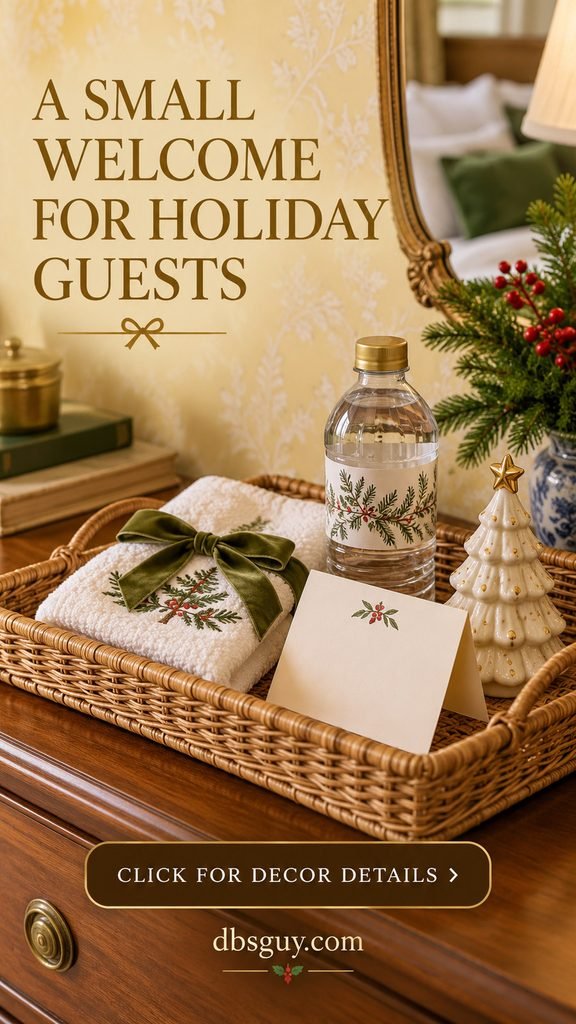
A guest-room tray can be both useful and seasonal. Arrange drinking water, a clean towel, and a short welcome note, then add one small ceramic tree. Set it on a dresser or another stable surface rather than leaving it balanced on the bed.
Ask what your guests actually need before filling the tray with extras. Keep fragrances optional and leave space for their belongings. The holiday detail should be easy to move, especially in a small room. A thoughtful welcome usually comes from useful basics presented neatly, not from buying a complete set of themed accessories.
Also Read: 19 Christmas Bedroom Decor Ideas for a Cozy Holiday Hideaway
31. Add a Washable Holiday Touch to the Bathroom
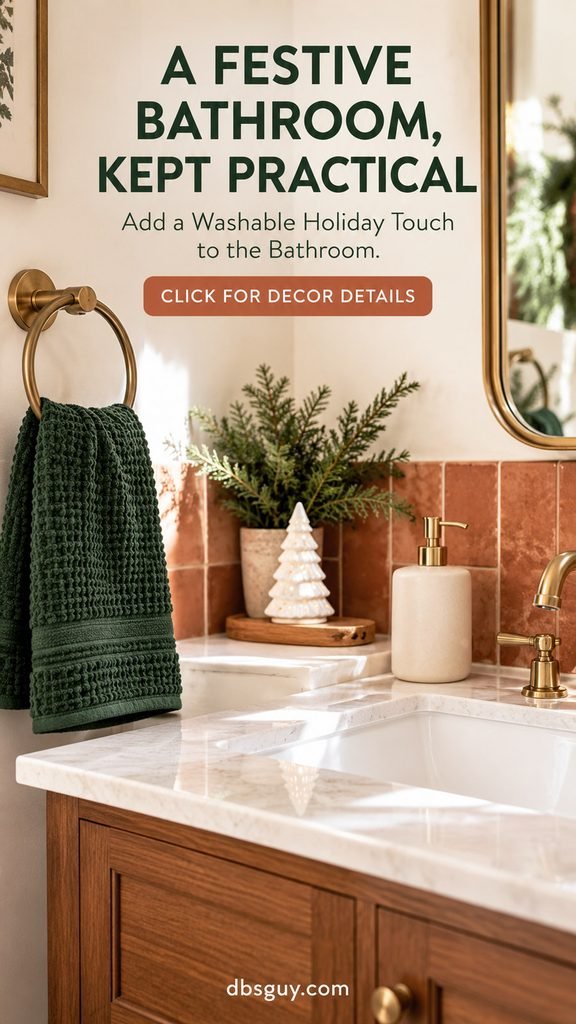
A deep green hand towel and one small ceramic tree are enough for a bathroom. Use washable textiles and put the decorative object on a dry, stable shelf. Keep the sink edge free so handwashing still feels straightforward.
Avoid loose glitter, delicate paper, and decorations that crowd the soap or towel. If the room has very little storage, choose the towel alone. This is a useful place to repeat a color from the rest of the house without copying a whole holiday arrangement into a humid, heavily used room.
32. Build a Felt-Tree Playroom Corner
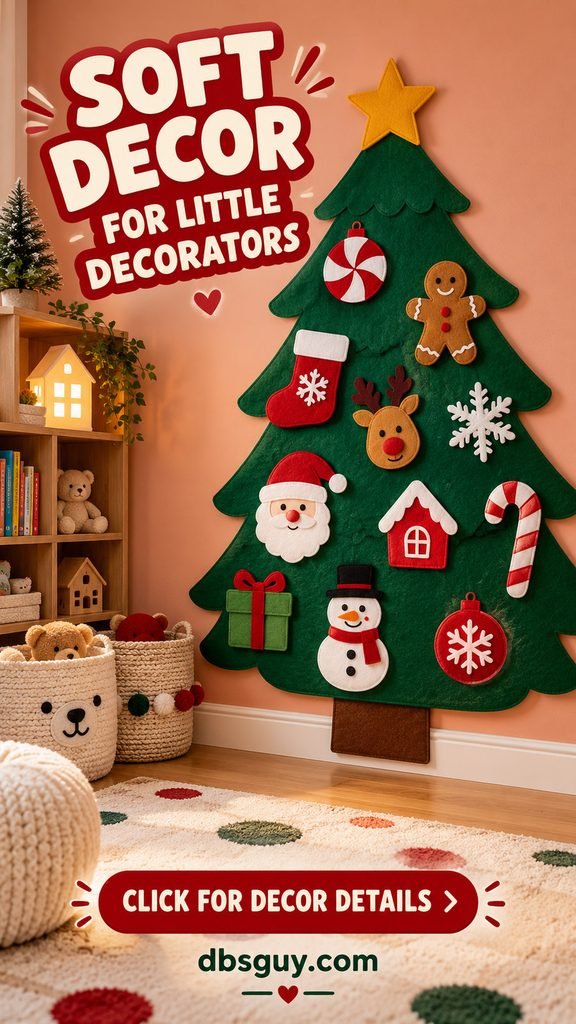
A felt-tree wall panel gives a playroom a festive feature that can also support supervised decorating play. Choose large, flat felt pieces that suit the child’s age, rather than ornaments with buttons, magnets, long cords, or small detachable parts. Keep the design simple enough to rearrange.
Secure the panel and check the materials and attachment method for the children using it. Soft does not automatically mean appropriate for every age. Leave the floor clear and store unused pieces where they will not scatter underfoot. An adult can keep the main tree arrangement intact while this corner gives younger family members their own creative space.
33. Give the Home Office a Tiny Seasonal Accent

A small ceramic tree and one ornament can make a work desk feel seasonal without interfering with the job it needs to do. Put them in a rear corner, away from the keyboard and frequently used papers. A navy or white finish works well if the office already has a restrained palette.
Keep the decoration below your screen’s sightline and away from cables or charging equipment. If the desk is small, use a seasonal desktop image or a postcard on the wall instead of another physical object. Choose something you enjoy seeing each day; this corner does not need to match the living-room tree exactly.
34. Hang Paper Stars Where There Is No Floor Space
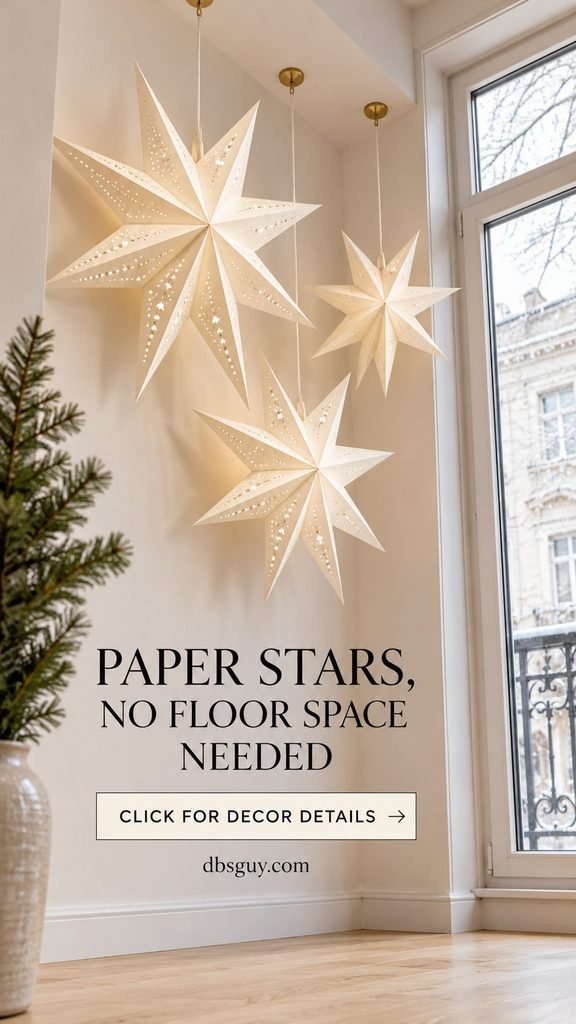
Folded paper stars draw the eye upward in a room with little spare floor space. Hang a small group at different heights near a window or in an empty alcove. Keeping the stars one color gives their folds and shadows a chance to do the work.
Use attachments appropriate for the surface and the stars’ combined weight, with cords out of children’s reach. Keep paper away from heat sources and do not add lights unless the decoration is specifically designed for them. Check how the stars fold down before buying; flat storage is a real advantage in a small apartment.
Also Read: 13 DIY Paper Christmas Decorations That Look Surprisingly Expensive
35. Make an Embroidery-Hoop Wreath With Fabric Scraps

An embroidery hoop makes a lightweight base for a fabric wreath. Tie short strips of plaid and cream fabric along the lower portion, then add a small faux greenery sprig. Leaving part of the wooden ring exposed gives the wreath a clear shape rather than a dense fringe all the way around.
Use clean scraps with colors that relate to the room, and trim stray threads once the arrangement is finished. Keep sharp cut ends or fasteners concealed and secure. This smaller wreath works on an interior wall or cabinet away from heat; it is a decorative indoor craft, not a weatherproof front-door replacement.
36. Display Salt-Dough Keepsakes on a Small Stand

Handmade ornaments are easier to appreciate when they have a display of their own. Hang a few finished salt-dough stars or hearts from a stable tabletop stand, keeping the colors simple. The slightly uneven edges are part of the charm, especially when the ornaments were made as a family activity.
Treat salt-dough decorations as non-edible objects and keep them away from pets and children who might put them in their mouths. Dry and finish them according to the recipe you use, then store only pieces that remain in good condition. If you are not making ornaments this year, the same stand can hold lightweight wooden keepsakes.
37. Arrange Decorative Gingerbread Houses on a Cake Stand

Reusable ceramic gingerbread-style houses give a kitchen or dining shelf the look of a sweet village without asking you to bake a display. A cake stand raises the scene above surrounding objects. Use a few houses and a couple of small trees, leaving the stand’s edge visible.
Check that the stand is stable and suitable for the combined weight. Keep this decorative arrangement separate from serving food, and clean the stand before returning it to kitchen use. Brown and white houses sit comfortably with ordinary cream dishware, so you can introduce the theme without buying a complete matching collection.
38. Let Coordinated Gift Wrap Finish the Room

Wrapped gifts can connect the tree to the rest of the room. Choose two or three papers that share a palette, then vary ribbon widths and simple tags. Cream, kraft, and olive give you enough contrast without making every package look identical.
Wrap according to the gift’s needs rather than chasing a decorative shape. Reuse ribbons and bags that are in good condition, and keep recipient labels readable. Put heavy packages at the bottom of the grouping and leave access to the tree stand. If gifts will travel to other homes, use sturdier ties instead of arrangements that only look good while sitting still.
39. Dress a Covered Patio With Winter Textiles

A covered patio can join the holiday decorating with a wreath and a few textiles brought out for a gathering. Green cushions and red plaid throws make the seating inviting, while a clear path keeps the area easy to use. You do not need a second full-size tree outside.
Use cushions intended for the conditions, and bring ordinary indoor throws back inside after use. Covered does not always mean dry: consider wind-driven rain and damp surfaces. Keep any lighting suitable for its outdoor location and follow its instructions. If winter weather makes the patio uncomfortable, let the wreath be the whole display and save the seating for a milder day.
40. Make a Window-Ledge Scene With Wooden Silhouettes

Flat wooden tree silhouettes give a window ledge a holiday shape without blocking much daylight. Group a few heights and add one small house if there is room. Keep the tallest piece to one side so the arrangement does not become a solid wall across the glass.
Check that each piece sits securely on the ledge and does not interfere with the window, blinds, or curtains. A narrow ledge needs a smaller display, not objects balanced over its edge. This is a useful option when you want a window decoration without adhesive on the glass or hanging cords.
Also Read: 17 Indoor Christmas Window Decor Ideas That Glow Beautifully After Dark
A Decorating Plan That Fits Real Life
Bring out your stored decorations before making a shopping list. Set aside the pieces you want to use, check their condition, and build the new palette around them. Buy only what fills a specific gap: ribbon for the tree, a cover for an existing cushion, or supports for a garland.
For a manageable schedule, choose your colors and check supplies in October or early November. Put up the indoor pieces when they suit your household’s routine, and time fresh greenery to its care needs and your climate. If you prefer waiting until after Thanksgiving, US Thanksgiving falls on November 26 in 2026. That gives you a clear starting weekend without making decorating a deadline.
Before switching on the finished displays, inspect lights and cords, follow the manufacturer’s limits, and use lighting suitable for its indoor or outdoor location. Water a cut Christmas tree as needed, keep flammable decor away from heat, and choose flameless candles near greenery and fabric. The CPSC holiday safety guidance is a useful final check.
Christmas Decorating Questions
What Christmas decorating styles feel current for 2026?
For a current-looking room, consider a collected mix of ornaments, tactile ribbon, transparent glass-style pieces, and quieter natural colors. A more expressive room might use saturated colors and nostalgic shapes. These are options rather than rules: choose the direction that works with your furnishings and the decorations you enjoy using.
How can I decorate for Christmas on a small budget?
Change ribbon, pillow covers, gift wrap, or the arrangement of items you already own. A bowl of spare ornaments, a display made from everyday pitchers, or a simple fabric wreath can create a new focal point. Prioritize the area you see most often, and leave a purchase on the list if you cannot yet name where it will go.
How do I make different rooms look connected?
Repeat one or two details rather than the entire design. Burgundy ribbon might appear on the tree, a napkin, and a stocking; cream textiles can link the living room to the bedroom. Let each room use the decorations that suit its function, so the kitchen remains workable and the bedroom stays restful.
What is the best approach for a small home?
Use existing surfaces and wall space before adding floor decorations. A compact tree on a sturdy table, lightweight stars in an alcove, or one seasonal shelf can become the focal point. Account for the complete decorated footprint, and keep exits, stairs, door swings, and everyday work surfaces clear.
How should I store decorations after Christmas?
Let decorations dry before packing them. Protect fragile pieces individually, wind ribbons loosely, and separate lighting so cords are not pulled against sharp objects. Label containers by location or theme, and take a reference photo of arrangements you want to repeat. Keep only items that remain in good condition and fit the storage space you have.
Choose the few ideas that make your own rooms feel welcoming. A coherent palette and thoughtfully placed details will carry the season further than an extra decoration on every empty surface.