

The quickest way to make a black and gray dorm room look expensive is to give the big surfaces a quiet finish, then repeat a few dark details. Think pale gray bedding, a charcoal throw, a black lamp, and storage that belongs together. You can leave the standard wood furniture and white walls exactly as they are.
These 13 ideas give you different places to start, from a tailored bed to a better-looking study corner. Pick the change your room needs most, then add one or two supporting details. You do not need all 13 to get a finished look.
The images are AI-generated design concepts, not photographs of completed dorm makeovers. Use them as visual references and adapt each setup to your room and housing rules.
Start With Your Actual Dorm Room
Look at the furniture, floor, and daylight before choosing your gray. A warm gray with a little beige can sit comfortably beside honey-colored wood. A cleaner silver gray may suit white furniture and a bright room. Put fabric samples or items you already own beside the desk in daylight and under the light you will use at night.
For a simple starting palette, keep the walls and bedding light, choose a medium gray for one textured layer, and use black in a few smaller shapes. This is a styling suggestion, not a rule about exact percentages. A room with little daylight usually gives you a good reason to keep the largest textile pale.
Read your own residence hall’s current decorating policy before buying wall fixings, lamps, headboards, or extra furniture. For example, the University of Michigan’s housing policy updates require supplied furniture to remain in the room and prohibit hanging items from sprinkler pipes. Those are Michigan’s rules; your campus may set different limits. Measure your mattress, desk, and available storage openings rather than assuming every dorm uses the same dimensions.
1. Give Pale Gray Bedding a Black Piped Edge

A narrow black border makes plain bedding look more tailored. It outlines the duvet and pillows without turning the entire bed into a dark block, which is useful when the bed takes up most of the room.
Choose a light gray duvet cover or comforter with simple black piping. Add matching sleeping pillowcases, one small black lumbar pillow, and a charcoal throw folded across the foot. The crisp edging supplies the detail, so the rest can stay plain.
Check actual bedding measurements against your mattress and insert. An overly wide cover can trail across the floor or hide storage you need to reach. If piped bedding is outside your budget, keep the plain gray set you own and introduce the black outline through a rectangular cushion or a framed print nearby.
2. Build a Tonal Bed With Three Different Textures

If you prefer a softer finish, let texture do the decorating. Smooth gray bedding, an open waffle-weave charcoal throw, and a pale bouclé cushion create visible layers even though the colors are close together.
Give each texture a separate job: the smooth fabric covers the largest area, the throw creates a broad band, and the cushion adds a smaller nubby detail. You should still be able to see the plain duvet between them.
This is a useful update when you already own gray linens. Buy only the missing texture, and check the care label before choosing a blanket or cushion cover. A removable washable cover is easier to manage in a dorm than an elaborate pillow you cannot clean conveniently. Skip additional fuzzy layers if the bed already looks crowded.
3. Make the Supplied Wood Furniture Part of the Palette

Honey-colored dorm furniture can give a black and gray scheme the warmth it needs. Treat the wood as another material in the room rather than something you have to hide.
Try warm gray bedding with a slightly beige undertone, then repeat matte black in a desk lamp, pencil cup, and one cushion. Leave the desktop visible. That stretch of wood connects the study area to the bed frame and keeps the room from feeling like unrelated furniture pushed together.
Before adding another accessory, view the room from the doorway. If the bed, desk, and chair already share a few colors, the scheme may be complete. Painting, wrapping, or replacing university furniture adds complications that this look does not need.
4. Use a Charcoal Backrest Pillow for a Headboard Effect

A substantial wedge-shaped backrest pillow can give the head of the bed a clear shape without a wall-mounted upholstered panel. The charcoal version shown here creates a darker backdrop for pale sleeping pillows.
Choose a backrest intended for use on a bed, and compare its width and depth with your mattress. It should sit securely in the intended position without bridging a gap or pushing your sleeping space too far toward the foot. Follow the product’s use instructions; it is a cushion, not a structural bed rail.
The tradeoff is depth. On a narrow bed, a thick wedge can take up space you want back at bedtime. Decide where it will go before buying it, and favor a removable cover. If your bed arrangement cannot accommodate one, the piped pillowcases in Idea 1 give you a simpler finished edge.
5. Hang Three Black-Framed Prints Above the Desk

Three related images in matching frames can give a study corner the order of a small gallery. Black-and-white photographs of buildings, landscapes, or places that matter to you work well with this palette.
Use equal-size lightweight frames and matching mats. Lay the arrangement on the floor first, then measure the total width, including the gaps. Center the group on your desk area, and keep the spacing consistent. The repeated frame shapes matter more than expensive artwork.
Use only a mounting method permitted by housing and suitable for the specific wall and frame weight. Removable adhesive is not automatically approved or harmless to every surface. If wall mounting is off limits, display the same three images on a freestanding desktop photo holder sized to leave your work area usable.
6. Anchor the Study Area With a Black Desk Mat

A plain black desk mat gives a laptop, notebook, and everyday supplies a shared background. It is especially useful when the supplied desktop is a different finish from the other furniture.
Measure the space you actually use for your laptop and writing before choosing the mat. Leave room for the lamp base, and check that the mat lies flat without interfering with drawers or the chair. A wipe-clean surface is a practical choice for an area used daily.
Keep one gray pencil cup and the notebook you are using within reach. Route the charging cable toward the rear edge, with enough slack to plug it in comfortably. Do not pinch it in a drawer or cover equipment ventilation. The finished look comes from giving ordinary supplies clear places, so decorative organizers can stay optional.
7. Add a Small Shaded Lamp for Evening Light

Gray can look quite different once the overhead light is on. A compact table lamp with a pale gray fabric shade gives the room another lighting option and a softer-looking evening corner.
Choose a stable lamp that your campus allows, with a bulb type and wattage suited to the fixture. A warm-white bulb is a useful starting preference for this look; compare it with your bedding before committing to more matching lights.
Place the lamp where its shade stays clear of pillows and blankets and where you can reach the switch. Keep the cord out of the walking route. This lamp provides an evening glow; retain suitable task lighting for reading and studying. In a shared room, check the view from your roommate’s pillow so the light does not shine straight toward them.
8. Introduce Chrome Through One Useful Accent

A silver-toned accent gives matte black and gray a sharper finish. A small chrome lamp beside a shallow black tray is enough to make the materials feel considered.
Use the tray for things that already land beside the bed, such as a watch or earbuds. Keep part of the surface free for a phone and water. On a tiny bedside table, choose either the lamp or the tray if using both would make the surface awkward.
You do not need to match every metal in the room. Let the chrome be one deliberate detail, then repeat black elsewhere. For a rechargeable lamp, follow its charging instructions and your housing policy. Before buying anything shiny, check the base size: a slim stem can still come with a surprisingly wide footprint.
9. Put a Fine Windowpane Pattern on the Floor
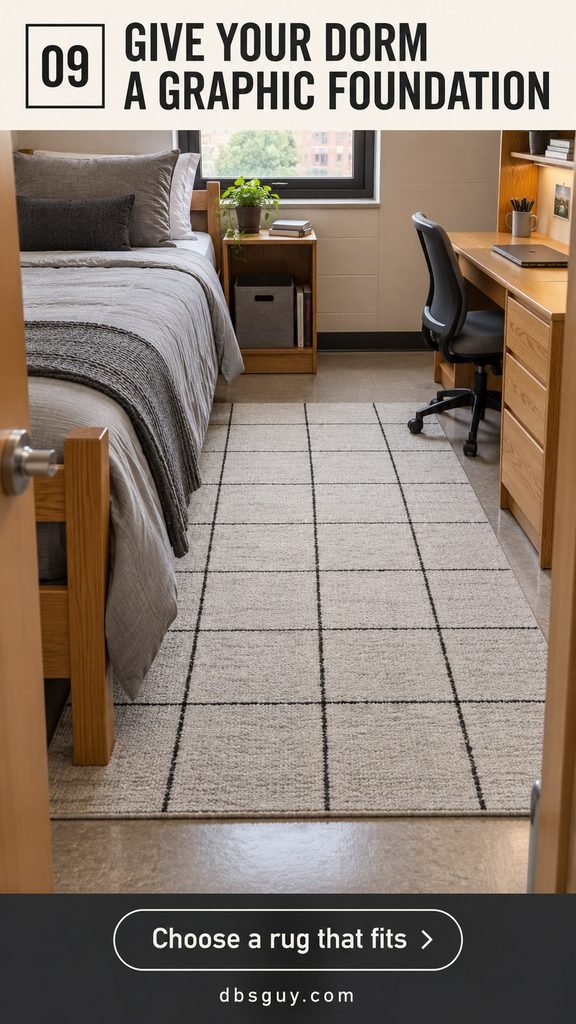
A pale gray rug with thin black grid lines brings pattern into a room with mostly solid bedding. The open spaces between the lines keep the pattern easy to read without adding another large dark surface.
Mark out the proposed rug size on your room plan before shopping. Check door movement, desk-chair travel, and the path between the beds. A rug that looks right in a photo may be inconvenient if its edge lands exactly where the chair wheels catch it.
Choose a low-pile or flatweave option when it suits your floor and cleaning routine, with a floor-compatible backing or pad as needed. Keep edges flat and cords off the rug’s underside. If you use this graphic floor pattern, keep the duvet simple so the two areas do not compete for attention.
10. Make Under-Bed Storage Look Like a Set

Matching charcoal bins give visible under-bed storage a consistent front. They also let you keep the bedding neatly tucked instead of relying on a long cover to hide everything.
Measure the opening between the bed supports, its usable height, and the depth you can reach. Allow room for lids and handles, then check how far each bin must pull out. The concept shows three bins; your bed might fit two, or need a different shape.
Sort by use rather than filling each container at random: spare linens in one, off-season clothes in another, and occasional supplies in the last. Keep frequent-use items nearest the accessible side. Use the bed’s existing approved configuration, and do not add improvised risers to make a chosen bin fit. Start with the storage space you actually have.
11. Arrange the Bed Like a Daybed During the Day

If the long side of your bed sits against a wall, backrest cushions can make it feel more like somewhere to sit between classes. This gives you a lounge setup without adding a sofa to the room.
Tuck a gray quilt neatly over the mattress and arrange charcoal cushions along the wall side. The image uses three large cushions, but use fewer if that leaves a more comfortable seat. One smaller patterned cushion can be the accent.
Try the arrangement with pillows you already own before buying a full set. Sit down and check that you have enough depth to relax. Also plan the bedtime reset: the cushions need a clean place to go, and they must not block a bed ladder, guardrail, vent, or access route. If the daily rearranging feels like a chore, simplify the cushion count.
12. Coordinate Roommates With Reversed Colors
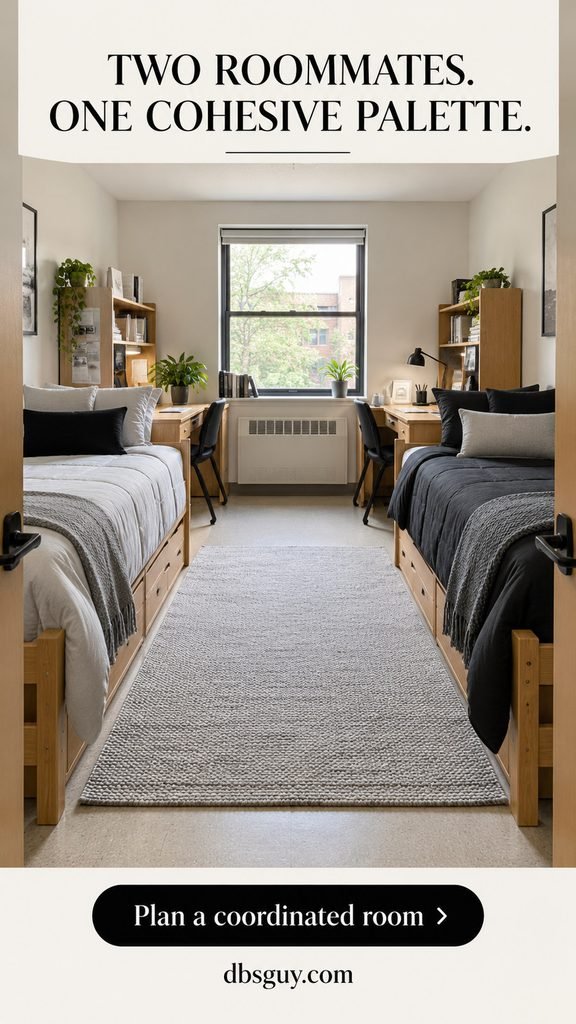
A shared room can feel connected without identical beds. Give one bed pale gray bedding with a black accent, and the other charcoal bedding with a pale gray accent. The colors repeat, while each person gets a different balance.
Agree on any shared purchase, such as the rug, before ordering. Compare each roommate’s existing bedding and supplies so you can coordinate around things you already own. Similar lamp finishes or pillow shapes can connect the two sides without requiring matching sets.
Keep the center aisle useful and leave each person’s desk, drawers, and sleep area accessible. A coordinated palette does not require rearranging the entire room or buying twice as much decor. Personal photographs, books, and a favorite blanket can stay part of either side.
13. Give the Dresser a Useful Black-and-Gray Vignette

A small black-framed tabletop mirror, a charcoal catchall, and one compact plant can give the dresser a finished appearance while leaving it useful for getting ready.
Choose a mirror designed to stand securely on a surface, with its own stable base, and place it well back from the edge. Do not improvise by leaning a wall mirror against the dresser. Open the drawers and check that your usual movements will not knock the arrangement.
Group the small items at one side and leave the other side open. A faux plant works if you want greenery without another care routine; an existing photo or small personal object can take its place. The empty area is intentional. You still need somewhere to put the things that arrive during an ordinary day.
Where to Spend First
Start with the part of the room that looks unfinished. If the bed dominates the view, put your attention into well-fitting bedding. If everyday supplies cover every surface, storage will do more for the room than another cushion. If the evening feels harsh, consider a suitable lamp.
Use what you have before filling a shopping cart. Existing black frames can become a set when the mats and prints coordinate. A gray blanket can supply the texture. Matching bin fronts matter more visually than matching every container hidden in a closet.
For a small first update, choose one main change and two repeats: a piped duvet, a black pencil cup, and a black lumbar pillow, for example. Live with that arrangement before adding the next layer.
Questions About Black and Gray Dorm Decor
How do you keep a black and gray dorm room from looking too dark?
Keep a large area light, such as the duvet, rug, or existing walls, and place black in smaller details. If the room still feels heavy, remove one large dark textile before buying brighter accessories. Check the setup in both daylight and evening light.
Can this palette work with orange-toned wood furniture?
Yes. Try a warm gray or greige beside the wood, and use black to connect the lamp, desk supplies, and bedding accents. Compare the actual fabrics in the room; a gray that looks neutral online can look noticeably blue beside warm wood.
Do all the greys need to match?
No. A pale base, medium gray layer, and charcoal accent can look more interesting than one identical shade everywhere. Place them together first and look for an undertone you enjoy. If one piece looks out of place, move or remove it rather than buying more things to make it fit.
What can you change when wall decor is not allowed?
Focus on bedding, a desk mat, allowed lamps, fitted storage, and tabletop accessories. Those choices can establish the whole palette. Confirm permissions for any additional item instead of assuming that a no-drill product is allowed.
How do you make the room look expensive on a limited budget?
Prioritize fit, repeated finishes, and usable empty space. One properly sized bedding set, a tidy desk, and consistent storage fronts usually make a clearer design statement than lots of unrelated decorative purchases. Buy the missing practical piece first.
Also Read
When the holidays arrive, 19 Christmas Bedroom Decor Ideas for a Cozy Holiday Hideaway offers seasonal details you can adapt to your own space. Check each decoration against your dorm’s rules before bringing it into a residence hall.