Is Volufiline Really a Filler Alternative? Here’s the Truth About the Plumping Ingredient

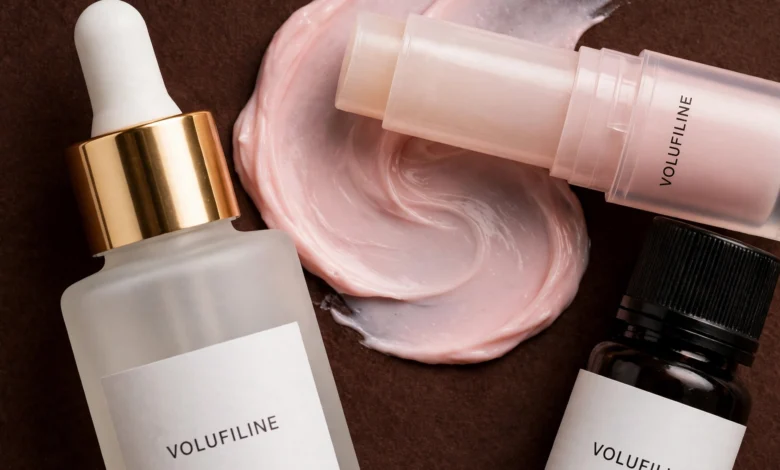
Right now, fullness is in fashion, and injectable fillers sit among the most sought-after cosmetic treatments. Still, not everyone is ready to commit to a needle. That gap is where Volufiline has found its moment: a skincare ingredient being talked up online as a way to help skin look fuller and more voluminous, without an appointment.
If you spend time on TikTok or Instagram, you have probably already come across it. Dermatologist Anna Karp says it has been trending heavily on social media, with online searches up by more than 200% over the past year — and, as a result, she has been fielding plenty of patient questions about it.
Meet the Experts
- Anna Karp, DO — board-certified dermatologist in New York City at Journelle Skin, and Assistant Clinical Professor of Dermatology at NYU School of Medicine.
- Andrew Park, MD — board-certified dermatologist at Dermatology Associates Beverly Hills.
- Ron Robinson — cosmetic chemist and founder of Beautystat.
- Daniel Behroozan, MD, FAAD, FACMS — double board-certified dermatologist at the Dermatology Institute of Southern California.
What Is Volufiline?
Andrew Park describes Volufiline as a plant-based extract with roots in Eastern Medicine, promoted for giving skin a visibly fuller, plumper look when it is applied to the skin regularly over time. It has surged again in the last few months, he notes, but it is not new at all: it first appeared almost twenty years ago, and Park suggests that long history itself hints at how much — or how little — it can actually do.
It can be used anywhere on the face where extra volume is wanted, with the lips, cheeks, jawline, under-eyes, nasolabial folds and neck named in particular. Ron Robinson adds that it shows up in a range of creams and serums, and that it can be used on the body as well as the face — essentially, wherever someone wants more volume.
On an ingredient list, look for it under two names: hydrogenated polyisobutene and anemarrhena asphodeloides root extract.
How Does It Work?
Park is frank about the evidence: there is almost no independent research into how Volufiline really works. One working idea is that it helps skin look fuller by encouraging the fat cells beneath the skin to hold on to more fat. Other research, he says, offers only weak support for anti-ageing and anti-wrinkle effects from its active compounds.
Anna Karp draws a contrast with hyaluronic acid, which gives a temporary plumping effect by drawing hydration into cells. Volufiline, by comparison, is promoted as working through lipid storage inside adipocytes — the fat cells. In theory, persuading those cells to store more lipids could make a treated area look slightly fuller over time.
Karp points to in-house research from Sederma, the French company behind the ingredient, which reported a small volume increase when a 5% formula was used twice a day for 28 to 56 days. What interests her about the mechanism is that it could potentially reach the subcutaneous layer, rather than simply hydrating the surface.
The Benefits
Beyond any volume effect, Karp says Volufiline serums may also improve skin texture, leaving it smoother and more even. She describes the ingredient as well-tolerated and plant-derived, and as something that slots easily into an existing routine.
Accessibility is a big part of the appeal for her: there is no procedure, no downtime, no needles and no appointment. For someone curious about filler but not ready for it, she presents Volufiline as a low-commitment way to explore volume support.
Park adds a reassurance grounded in the ingredient’s age on the market: having been sold for just under two decades, products containing it are likely harmless when applied to the skin, and there have been no major safety reports about it. He still cautions that every person’s skin is different, with different sensitivities.
He also notes that Volufiline almost always arrives alongside other helpful skin or lip ingredients — peptides, hyaluronic acid, oils and emollients — so it will bring some temporary volumising effect in any case, as hydrating products always do.
Does It Work for Everyone?
Daniel Behroozan warns that results can differ widely from person to person. Age, skin quality, how much volume has already been lost, the exact formulation, how consistently it is used, and each individual’s biological response can all shift the outcome.
Karp adds that the benefits are likely to show up most clearly in people with mild volume loss who are earlier in the ageing process. Where someone has a significant structural volume deficit, she says, a topical ingredient simply cannot do what an injectable can. Skin type, age and the specific formula all play a part too.
The Risks
Robinson says Volufiline can be used on most skin types, with sensitive or acne-prone skin the exception. Anyone unsure about trying it, he advises, should patch test first to check for an allergic reaction.
Behroozan agrees that it is generally considered well-tolerated when used as directed in cosmetic formulas. As with any skincare ingredient, though, side effects are possible, and they may include redness, irritation, itching, sensitivity reactions, breakouts in acne-prone skin, and allergic reactions to other ingredients in the formula.
Can It Replace Filler?
Park’s answer is no: Volufiline does not replace what filler can achieve. Injectable filler quite literally puts volume back under the skin, with results that are immediate and consistently measurable. Even if Volufiline’s claims were fully verifiable, he says, it would have minimal to no effect on reshaping the face the way filler can.
Karp adds a point in its favour: unlike injectables, it carries no systemic risk. The biggest risk, in her honest view, is unrealistic expectations — anyone expecting filler-level results is going to be disappointed.
The Final Takeaway
If you are not expecting Volufiline to match injectable fillers, the ingredient can still be a good one. Karp’s advice is to set expectations honestly: think subtle and gradual, not dramatic. Effects are mild, and no large peer-reviewed clinical trials show that Volufiline can restore facial volume in a major way. With steady use, though, patients may notice treated areas looking a little softer and fuller, with the skin surface appearing plumper. She frames it as a maintenance or enhancement tool rather than a correction, and generally recommends formulas that pair Volufiline with other skin-supportive ingredients.
Consistency is the key point she stresses: this is not a one-use transformation. She advises giving it at least 4 to 8 weeks before judging whether it is making a difference.
What excites Karp about ingredients like this one is what they signal for topical skincare as a whole — a move beyond simple hydration towards structural support. The field is still in its early days for clinical data, she says, but the mechanism makes sense in theory, and she would like to see more robust, independent studies. In the meantime, she considers it a smart addition to a routine for anyone focused on keeping volume.