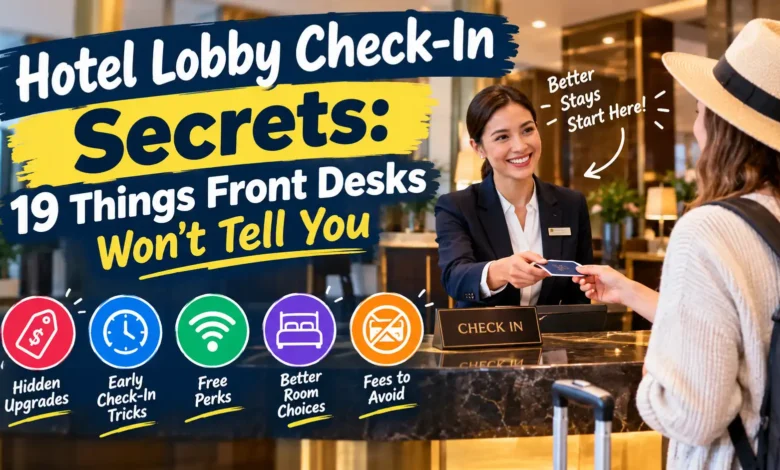
Before you take the room key, confirm the card hold, the charges still due, your room requirements, and checkout time. Those four answers can prevent more trouble than a vague request for “anything complimentary.”
Hotel lobby check-in secrets are usually details a rushed arrival conversation leaves out. Most front desks will explain them if you ask. This guide gives you 19 useful questions, what the answers mean, and what to do next—without pretending that upgrades or fee waivers are guaranteed.

The images in this guide are AI-generated editorial concepts, not photographs of named hotels or proof of available amenities.
The 45-second hotel check-in conversation
If there is a line behind you, start with these four questions and save the rest for a quieter moment:
- “What will you authorize on my card today, and how much is an incidental hold?”
- “What charges remain beyond what I already paid?”
- “Does this room meet the bed type and other requirements on my reservation?”
- “What is my confirmed checkout time?”
Have your photo ID, accepted payment card, confirmation, and booking messages ready. If a specific feature is essential, arrange it before arrival rather than relying on a quick conversation at the counter.
1. A card hold can appear even when your room is prepaid
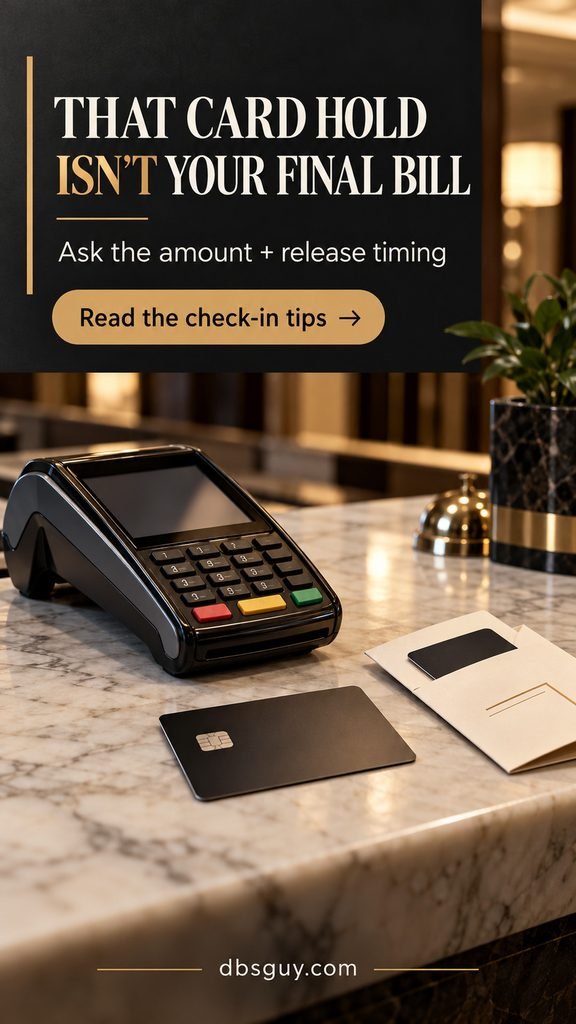
Paying for the room in advance does not necessarily cover incidentals. Hilton’s payment guidance, for example, says a hotel may still authorize a card for items such as food, parking, and other extras. A pending authorization and your final settled bill are different things.
A credit-card hold uses available credit; a debit-card hold can tie up money in your account. The amount and release timing vary. Do not budget around a universal “back tomorrow” promise.
Ask: “How much are you authorizing in total, how much covers incidentals, and when do you release that authorization?”
Keep your checkout receipt. If a hold lingers beyond the expected window, ask the hotel whether it has released it, then ask your card issuer about its processing time. Switching cards at checkout may leave the original authorization pending temporarily.
2. A mandatory fee and an optional extra need different questions
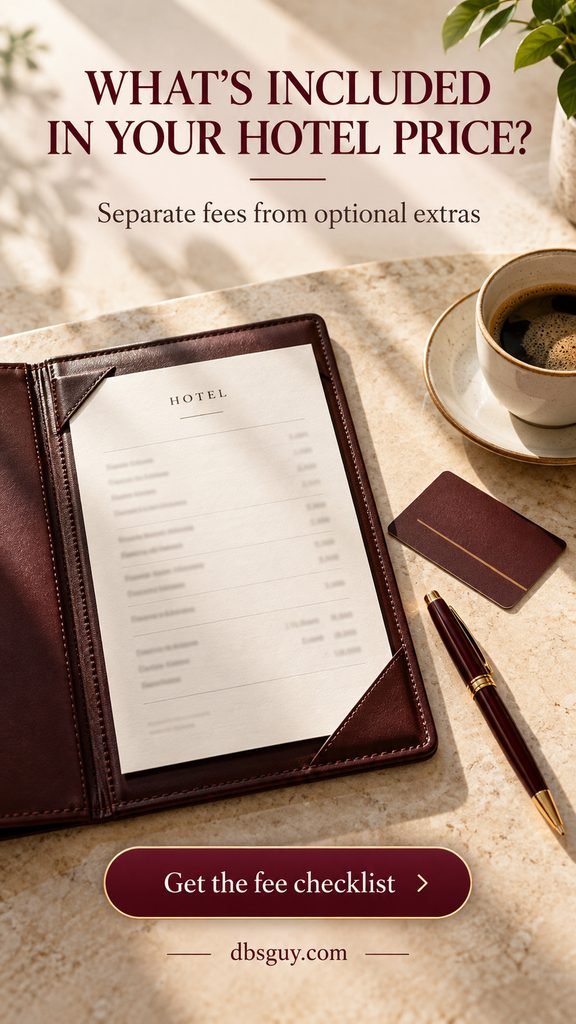
A resort or destination fee is not automatically optional because you plan to skip the pool. Under the FTC’s US rule on unfair or deceptive fees, required lodging fees must appear in the displayed total price. Government charges, including taxes, and optional add-ons may be shown separately, with the final payment amount disclosed before payment.
The FTC’s consumer explanation makes the key distinction: price transparency does not ban fees.
Ask: “Which charges are already included, which are mandatory, and which depend on something I choose to use?”
Check parking, pet charges, breakfast, and paid upgrades against your booking. If a new required fee conflicts with your confirmation, show the document and request an explanation. Keep any agreed correction in writing; do not assume the desk can erase every disclosed charge.
3. Early check-in depends on a room being ready
An early-arrival note tells the hotel your plans. It does not necessarily reserve a clean, inspected room at that hour. Even an apparently quiet lobby cannot tell you whether the previous guest has checked out or housekeeping has finished.
Contact the property before traveling and distinguish a request from a paid, confirmed early-access option. Ask about the cancellation terms if you buy that option.
Try: “I expect to arrive around 10 a.m. Is early access confirmed or subject to availability? If nothing is ready, can you text me when a room is available?”
If immediate access is essential after an overnight flight, ask about reserving the previous night and confirming the late arrival. That is a different booking decision from hoping an early room opens up. Otherwise, make a luggage-storage and breakfast plan.

4. After midnight, the reservation date matters more than the clock
Imagine arriving at 1 a.m. Saturday and wanting to sleep immediately. You generally need a reservation beginning Friday night, with your late arrival confirmed. A booking beginning Saturday ordinarily starts at the property’s Saturday check-in time.
Ask the hotel to spell out the dates and overnight access. Smaller properties may have a limited reception schedule or a separate procedure for late arrivals.
Say: “My flight gets in late, and I expect to reach you at 1 a.m. Saturday. Can you confirm the correct check-in date, note my arrival, and explain how I will get in?”
If your travel is delayed, update the property promptly and save its response. Do not assume an app check-in or a guaranteed reservation removes every no-show or overnight-access issue.

Also read: Airport Outfit Ideas: What To Wear When Traveling.
5. A loyalty number does not make every booking eligible for every perk
Adding your membership number is sensible. Whether you earn points, qualifying nights, or on-property benefits can also depend on your rate, booking channel, status, and brand.
For example, Marriott Bonvoy’s terms exclude certain third-party bookings from qualifying rates and associated benefits. Some travel-advisor or credit-card packages have their own benefits, so “third party” is not a complete description of what you bought.
Ask: “Is this reservation eligible for my member benefits, and which benefits apply to this particular rate?”
Bring the package terms if breakfast, a credit, or an upgrade was advertised. If a benefit is essential, verify it before booking. Joining a free program can be useful, but basic membership is not a promise of a suite.

6. An upgrade may be available without being complimentary
“We have an upgrade available” does not tell you the price. Ask whether the offer is complimentary, a nightly supplement, or a total charge for the stay.
A useful script: “Are any complimentary upgrades available on this reservation? If there is a paid option, what would the extra cost be for my entire stay, including applicable taxes and fees?”
Confirm the actual improvement: more floor space, a separate bedroom, a view, or a balcony. A higher category may not help if your priority is quiet or a specific bed arrangement.
Availability can change from night to night, so ask whether you would keep the upgraded room throughout the stay. Mention a real occasion naturally if relevant; avoid invented celebrations or the assumption that cash slipped across the desk guarantees a result.

Also read: A Night at The Maker Hotel.
7. “Quiet room” works better when you describe the noise you want to avoid
A high floor can still sit below a rooftop bar. A courtyard-facing room can still overlook equipment. Describe your priority and let staff suggest a location that fits the building.
Try: “Quiet matters more to me than the view. If possible, could you place me away from the elevator, ice machine, event spaces, and the busiest street?”
You do not need every condition at once. A light sleeper on a business trip might prioritize hallway traffic; someone sensitive to bass might ask about bars and events first. These are room preferences, not a guarantee of silence.
Make the request before arrival, then reconfirm it before accepting the key. Once inside, listen for obvious noise before unpacking. A specific description also helps if you need to request a move later.

8. A requested bed or connecting room is not always a booked feature
Look at the actual room category on your confirmation. A booking for two queen beds differs from a general room booking with “two beds requested” in the notes.
Similarly, rooms close together are not necessarily connected by an interior doorway. Ask what the property means by “adjoining,” “adjacent,” or “connecting.” Hilton offers a specific Confirmed Connecting Rooms booking option at participating properties; an ordinary request is different.
Ask: “Are the two beds and interior connecting door confirmed in my booking, or are they preferences?”
For families, verify occupancy limits and any rollaway or crib arrangements in advance. If an essential confirmed feature is unavailable at arrival, explain that before accepting a substitute. Ask for a workable solution and clarify any price difference.

9. Late checkout needs a confirmed time, not a hopeful note
“We will try” is a request status, not permission to stay past the normal deadline. Ask whether the answer is final or when you should check again.
Some loyalty tiers have defined late-checkout benefits, with property and brand exceptions. Others offer it only when available. Marriott’s published benefits illustrate why a blanket claim such as “members always get 4 p.m.” is unreliable.
Ask: “Can you confirm checkout at 1 p.m., tell me whether there is a fee, and add the agreed time to my reservation?”
Once confirmed, ask whether the key needs updating. If late checkout is unavailable, switch to a bag-storage plan and ask about any permitted facilities after checkout. Leaving belongings in the room is not a substitute for approval.

10. Bag storage can solve the gap between your flight and your room
You may not need an extra hotel night just to avoid carrying a suitcase around town. Some properties store luggage before check-in or after checkout, but availability, fees, and collection hours differ.
Ask: “Can you store my bag until this afternoon, what does it cost, and what is the latest pickup time?”
Find out whether the bag goes to a staffed luggage room, the bell desk, or another arrangement. Keep the claim ticket and clarify whether you collect it yourself or request delivery once the room is ready.
Keep ID, medication, valuables, and anything you need that day with you. If storage is unavailable, arrange a separate service before heading out. Asking this question ahead of time is especially useful for a morning arrival followed by sightseeing.

Also read: NYC in Winter: 5-Day Itinerary Beyond Times Square.
11. The desk may be able to move your room but not rewrite your booking
A room assignment and a reservation contract are different problems. Staff may be able to help with an available room move while a date change, cancellation, or refund needs the company that sold the stay.
Marriott’s reservation guidance directs guests with third-party bookings to the original booking source for changes or cancellations. Other properties and sellers have their own arrangements.
Ask: “Can the hotel make this change directly, or does the booking provider need to authorize it? What information should I give them?”
Keep both the seller’s confirmation and the hotel’s reference if they differ. Save cancellation deadlines before travel. When plans change, establish who is handling the request and ask for written confirmation of the outcome; a conversation alone does not prove a refund has been approved.

12. A prepaid confirmation does not replace the guest’s ID or payment requirements
A reservation in someone else’s name, a card you cannot present, or a minimum-age rule can interrupt check-in even when the room is paid for.
Hilton notes that the minimum age to register varies by hotel. Properties also set payment and identity requirements, so check the specific hotel’s policy rather than assuming every US hotel uses the same age threshold or accepts the same card arrangement.
Before arrival, ask: “What photo ID and payment method must the arriving guest present? If someone else is paying, what authorization process do you require?”
If your companion will arrive first, ask the hotel how to add them as an authorized guest. Use its official process for payment authorization and sensitive documents. A forwarded booking email should not be your whole plan.

13. “Accessible” needs a conversation about the features you actually require
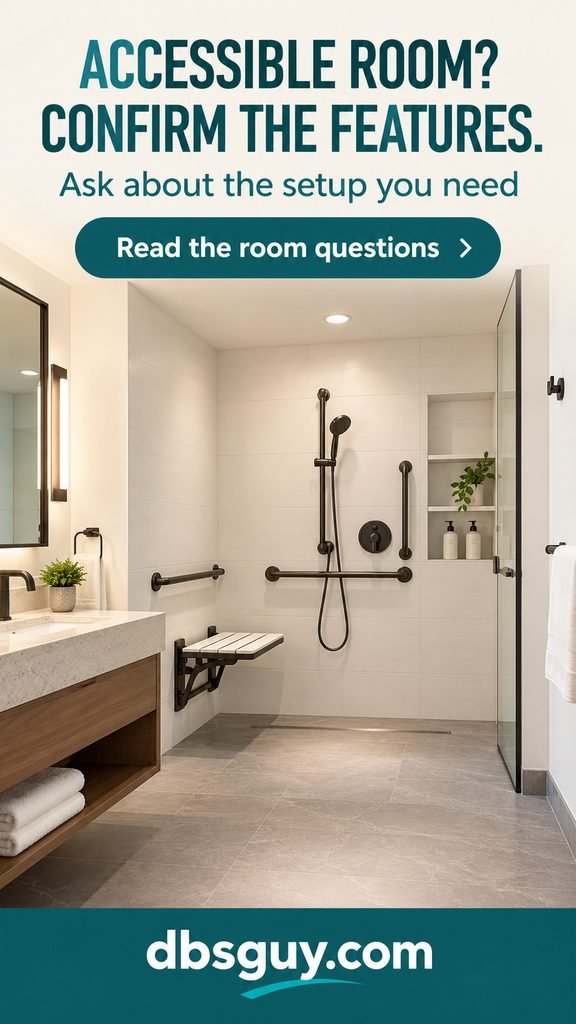
A room label is too broad if your stay depends on a particular bathroom setup, bed access, or hearing-accessibility feature. Describe your needs and ask the property to confirm the relevant features before travel.
For example, a roll-in shower and a bathtub with grab bars are different arrangements. Ask about shower seating, the route from parking or reception, and any measurements important to your equipment. For hearing access, specify the alerts or communication features you need.
Try: “I booked an accessible room with a roll-in shower. Can you confirm that exact room feature and the step-free route to it?”
Keep the written confirmation and reconfirm at check-in. If staff proposes an upgrade or substitute, check that it preserves your required features before agreeing. More space does not automatically make a room suitable.
14. Breakfast included, breakfast credit, and lounge access are different benefits
Ask where breakfast is served, what is covered, which guests qualify, and when service ends. A restaurant credit may offset only part of a meal; lounge access may have separate hours and food arrangements.
At participating Hilton properties, eligible members can receive a daily food-and-beverage credit. Hilton’s guidance says unused credit does not roll over and eligible purchases must be charged to the room. That is different from unlimited breakfast for everyone in the booking.
Ask: “Is breakfast fully included or covered by a credit? Where can I use it, for how many registered guests, and how should I charge it?”
For an early departure, ask whether there is any available option before service opens. Before ordering, check what your package actually covers.

15. Housekeeping and useful extras may require a request
Do not assume the room will receive a full service every day. Hilton, for example, publishes different housekeeping schedules by brand and region, with additional services available by request.
Ask: “What is the housekeeping schedule here, and how do I request fresh towels or extra service?”
If you need a toothbrush, extra pillow, crib, or charger, ask about the specific item. The hotel may have it, loan it, sell it, or have nothing available. Confirm any fee, deposit, return rule, and delivery timing rather than assuming everything at the desk is complimentary.
Mention preferences that affect service, such as working in the room during the afternoon. An early request gives staff a clearer task than discovering at midnight that the item you needed is unavailable.

16. A digital key can save time without answering your questions
Mobile check-in is convenient when your reservation is straightforward. It does not explain an unfamiliar card hold, verify every room preference, or turn a pending request into a confirmed benefit.
Hilton’s Digital Key guidance says guests may still need to visit the desk for identification and can request a physical key even after receiving a digital one.
Use the app, then ask: “I checked in online. Can you confirm my room request and checkout time, and give me a physical key as a backup?”
Before leaving reception, make sure you know how to reach staff if the key fails. If an assigned room does not meet an essential need, resolve that before treating the app’s selection as final. A short desk conversation can still be worthwhile.
17. “Fully booked” calls for a relocation plan
A confirmed reservation can still turn into an arrival problem if the hotel cannot accommodate you. Ask what happened, whether another room is genuinely available, and who is arranging the alternative.
Some loyalty programs publish reservation guarantees with specific eligibility, brands, and compensation terms. Marriott Bonvoy has an Ultimate Reservation Guarantee, but its conditions should not be treated as a promise covering every guest at every hotel.
Ask: “Can you arrange a comparable available hotel, confirm who pays for it and transport, and give me the arrangement in writing?”
Check the replacement location, bed setup, and required accessibility features. If you booked through a seller, involve its support team too. Keep receipts and messages, and get the next room confirmed before heading across town.

18. A room problem is easier to explain before you settle in
Take a brief look at the room before spreading out your belongings: check the bed setup, obvious cleanliness issues, heating or cooling, and the features you specifically reserved.
If something is wrong, describe the observable problem and the solution you need. “The air conditioner is not cooling, and I need a room where it works” is more useful than “This room is terrible.”
Ask: “Could someone fix this promptly, or is a room move available? Please confirm whether there would be any additional charge.”
A photo can document a visible issue; note when you reported it and the response. Follow up if the agreed action does not happen. If a condition feels unsafe, leave the room and seek staff assistance immediately. Do not manufacture a complaint to obtain an upgrade.

19. The itemized bill deserves a look before you leave
Your checkout folio—the itemized stay bill—should let you match charges against your booking and actual purchases. An emailed receipt is useful, but review it while you can still easily speak with the property.
Check the nightly rate, recorded nights, taxes, parking, food charges, credits, and any agreed adjustment. For a prepaid third-party stay, the hotel folio may show only property-collected extras; keep the seller’s receipt too.
Ask: “Can I review the itemized folio and confirm which charges are settled and which card entries are still pending holds?”
If something is unfamiliar, ask for the charge detail rather than assuming it is an error. Save a corrected folio if the hotel makes a change. Afterward, compare settled card transactions with your receipts, distinguishing pending authorizations from posted charges.

Also read: A Weekend Trip to Hudson, New York.
Before arrival: a small checklist that saves lobby time
- Save the essentials: confirmation, rate terms, hotel contact details, payment requirements, and messages confirming important features.
- Make one priority clear: quiet, two beds, a connecting door, or a specific accessible setup. Distinguish essential booked features from preferences.
- Confirm unusual timing: a morning arrival, an overnight delay, or a planned late checkout deserves a direct question.
- Plan for busy dates: holiday weekends, major local events, and conference periods make a backup arrival plan especially useful. Request early; keep your expectations tied to written confirmations.
Hotel check-in FAQs
What is the best time to check in for a free upgrade?
There is no dependable universal hour. Inventory, your reservation, eligibility, and the hotel’s arrangements matter more than a timing trick. Share your request ahead of time and ask at arrival. Do not deliberately miss your travel schedule hoping late arrival will unlock a better room.
Can I refuse a hotel’s incidental hold?
Do not assume the hotel will waive it. Ask before arrival about the amount and accepted alternatives. Even with a prepaid room, a property may require an accepted payment method for incidentals. Clarify the policy before making a nonrefundable booking if the hold would be a problem.
Can I check in without the person who booked?
It depends on whether the arriving person is properly authorized and meets the property’s ID, age, and payment requirements. Ask the hotel how to add that guest and complete any required payment authorization before travel.
Should I book directly to get better treatment?
Compare the total price, flexibility, and benefits you will actually use. Direct booking may qualify for a brand’s member benefits, while a travel-advisor or card package may offer separate perks. Choose from the written terms rather than a promise that one channel always gets the best room.
What should I do if my confirmed room type is unavailable?
Show your confirmation, explain which feature matters, and ask for an appropriate alternative. Clarify any rate adjustment, relocation, or refund process before accepting it. A workable bed arrangement or accessibility feature deserves more attention than an upgrade label.
The question to ask before taking the key
“Could we confirm the charges, the room features I booked, and checkout time before I head upstairs?” It is short, polite, and useful. Add the question that matters most to your trip, save the answer when it changes your booking, and start your stay with fewer loose ends.