
Small-space Christmas decor works best when the holiday details fit around the life already happening in the room. A narrow tree can occupy a spare corner. A door can carry a wreath. Pillow covers can change the feeling of a sofa without adding another thing to store on the floor.
These 15 ideas give you different ways to decorate a small living room, entryway, kitchen, or dining area. Choose the ones that suit your available space rather than trying to use the whole list. The suggested measurements are starting points, not rules; your furniture and the decoration’s actual dimensions should decide the final fit.
The images are AI-generated decorating concepts, intended to show possible arrangements rather than document completed homes.

Start with the Space You Actually Use
Before choosing decorations, open the doors and drawers, pull out the dining chairs, and walk your usual route through the room. Keep those movements available. Measure a tree’s widest branches and stand, not just its height, and check how far a wreath or hanging decoration projects.
Pick one main feature, then repeat its color in a couple of smaller details. Pine green with cranberry and ivory is an easy starting palette; blue and champagne or warm wood and cream can work just as well. The room does not need a completely new color scheme.
For lighting and tree placement, follow the NFPA’s Christmas tree safety guidance: keep trees at least 3 feet from heat sources, leave exits clear, and switch tree lights off before going to bed or leaving home. Inspect lights and follow their instructions. Water a cut tree daily.
1. Put a Pencil Tree in a Truly Spare Corner

A pencil tree suits a room that has a little unused floor space but cannot accommodate the spread of a full tree. Its tall, narrow shape can make a clear focal point beside an armchair or at the end of a sofa.
Mark the proposed footprint with a few pieces of paper before shopping. For example, a tree advertised as 24 inches wide still needs room for its stand, ornaments, and nearby furniture. Check the assembled dimensions rather than relying on the word “slim.”
Use small ornaments and one ribbon color so the branches do not look overloaded. Champagne baubles and ivory ribbon soften the olive-and-wood setting in the concept image. Keep the base stable; if you use a decorative container, it must accommodate the proper stand rather than replace it with an improvised support.
If the corner is part of your daily walking route, choose the tabletop or flat wall version instead. A tree is a good fit only when the room still works around it.
2. Give an Existing Console a Tabletop Tree
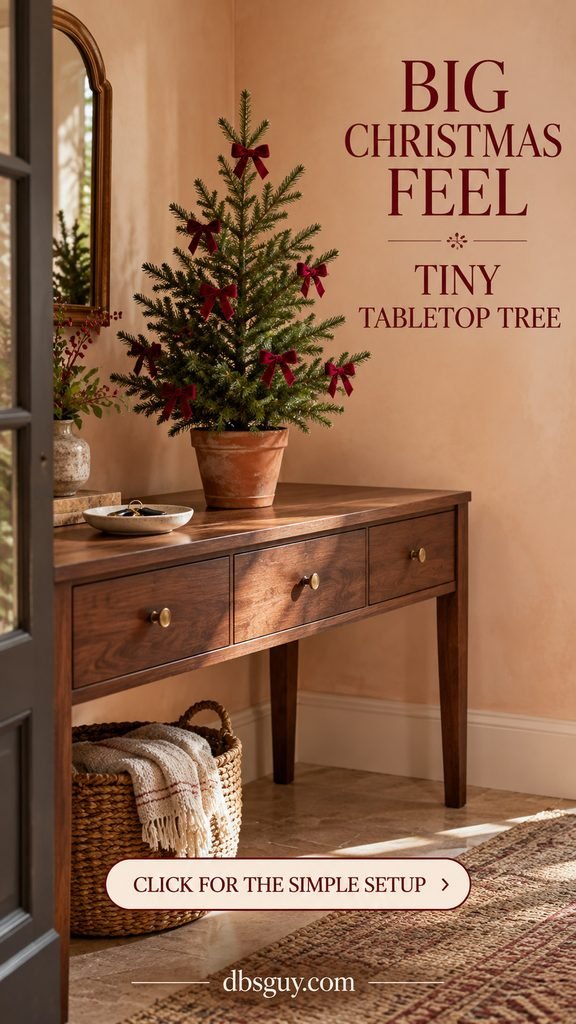
A tabletop tree brings the Christmas shape up to eye level without introducing another piece of furniture. An entry console, sideboard, or broad dresser can provide a useful home for it.
Try a tree around 18–24 inches tall as a starting point, then measure its base and branch spread against the available surface. Remove a year-round decorative object first. Leave the keys, charging spot, or other daily essentials where they are easy to reach.
The unlit version shown here relies on small cranberry bows and a terracotta pot. That combination has enough texture and color without a cord across the surface. Place the tree well back from the edge, and use a stable base appropriate to the tree.
A broad miniature tree can take more room than you expect. If it covers the whole console, reduce the tree size rather than balancing it on a stack of books or squeezing essentials beneath the branches.
Also read: 17 Small Apartment Christmas Decor Ideas That Save Precious Floor Space
3. Make a Flat Felt Tree for a Narrow Wall
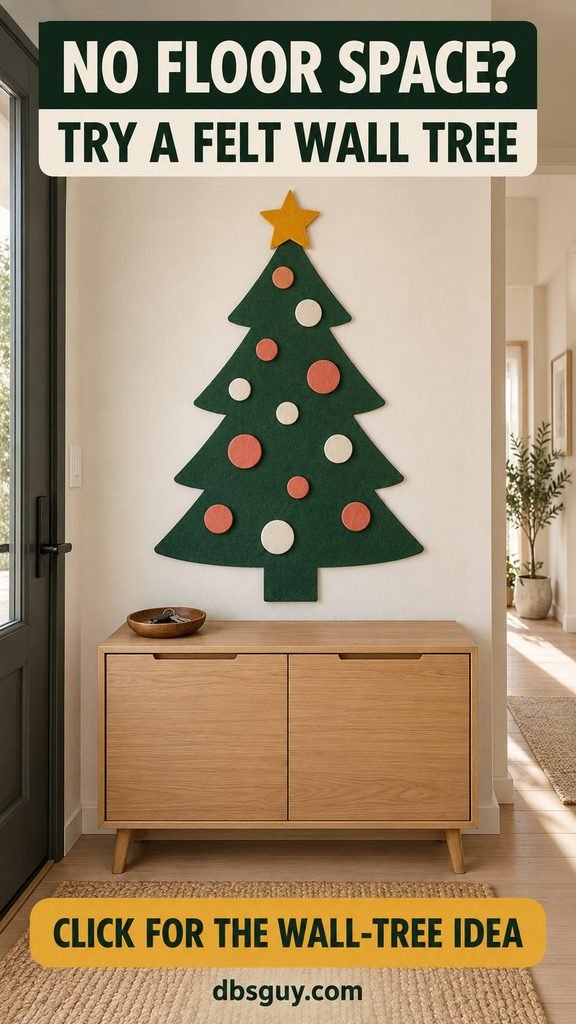
A felt tree is useful when there is no sensible place for a stand. The silhouette gives a hallway or small living room a recognizable Christmas feature with very little depth.
Cut a simple tree shape from firm felt, or choose a ready-made panel. A height of about 30–36 inches can be a manageable starting size above a small cabinet. Lay out the shape and flat ornaments on a table before attaching the panel.
Keep the design simple: green felt, a star, and circles in two colors. The coral and ivory pieces in the image add a playful detail without turning the wall into a collection of separate hanging objects.
Use an attachment approved for the panel’s weight and your wall finish, following its preparation and removal instructions. Do not assume any adhesive is damage-free on every painted surface. Keep the panel unlit, away from heat, and out of reach if small detachable pieces could be a problem.
4. Let the Inside of the Entry Door Carry a Wreath
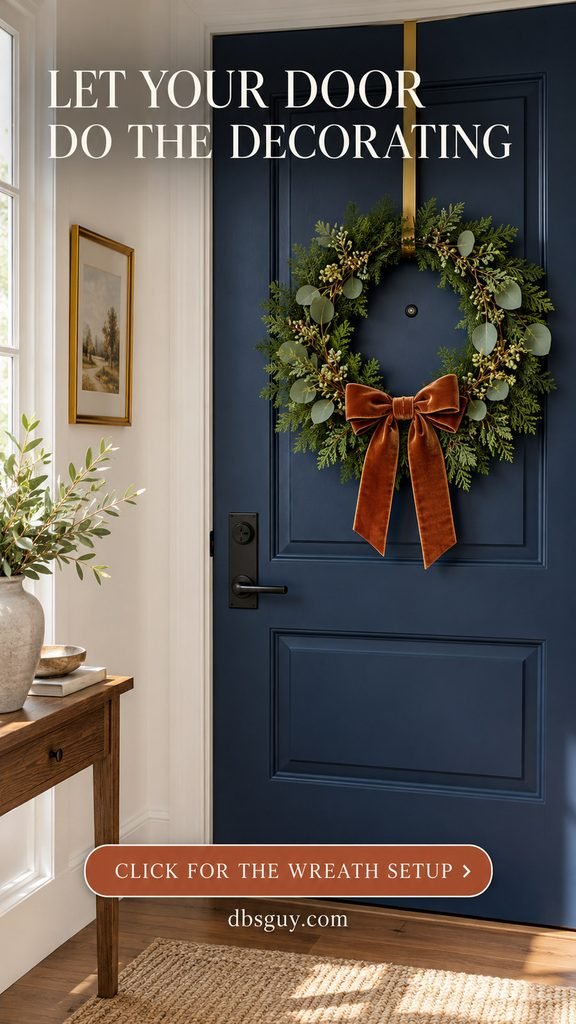
The inside of the entry door is often visible from a small living room. A single wreath there can make the whole space feel more seasonal, especially when the entry has no room for a console.
Choose a shallow wreath sized to the door panel. An 18-inch wreath may be a sensible starting point, but its depth and the door’s movement matter as much as its diameter. Leave the handle, lock, peephole, and any required door hardware accessible.
Use a suitable door attachment. A hanger that changes how the door closes is not a workable solution; check your building’s rules for an apartment entry or fire-rated door before adding anything.
One cinnamon or cranberry bow adds warmth against a dark door. Open the door fully and close it normally after decorating. If the wreath catches the wall or affects the latch, move it to a different suitable location.
5. Hang Empty Stockings on a Peg Rail
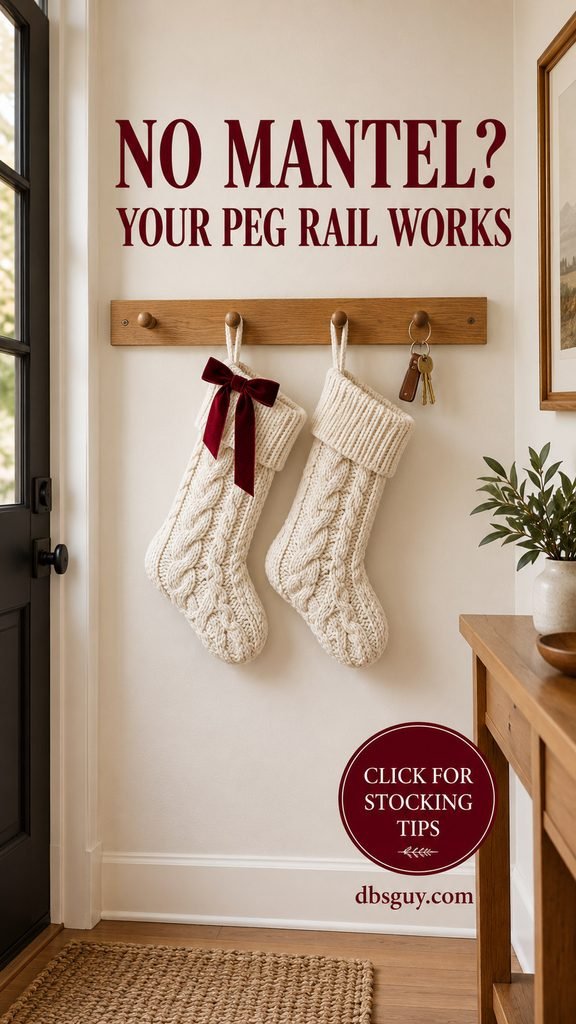
You do not need a mantel to have stockings. An existing, securely mounted peg rail can provide a natural place for a pair, especially in a narrow entry or living area.
Check the rail and its fixings for the total load. Display stockings empty, with short loops and their fabric clear of doors or anything that could snag. Leave a peg for the keys or bag the rail normally holds.
Two ivory knit stockings and one small burgundy bow create a quiet arrangement. The texture makes the display feel complete without adding a heavy garland overhead.
Filled stockings can be much heavier than the decorative version. Put gifts elsewhere unless the rail, pegs, and installation are rated for the resulting weight. Avoid suspended loaded stockings where a child could pull them down.
6. Change the Sofa Covers, Not the Amount of Seating

Textiles are an easy choice when both floor and display surfaces are busy. Change a cover on a cushion you already own, then fold a winter throw over the arm or back.
Start with one recognizable pattern. Cranberry tartan feels festive beside a plain cream knit; a deep green velvet cover can do the same job in a quieter room. Match the new cover to the existing insert so you are not also buying another bulky cushion.
Keep the normal number of pillows. If guests have to move several cushions before sitting down, the extra ones are taking useful space. A neat fold also makes a throw easier to reach and less likely to trail into the walkway.
Put the everyday covers in the same storage spot the holiday covers occupied. At the end of the season, swap them back. The empty seasonal covers take much less room than a second set of filled pillows.
Also read: 19 Christmas Bedroom Decor Ideas for a Cozy Holiday Hideaway
7. Use a Fabric Advent Calendar on a Clear Wall
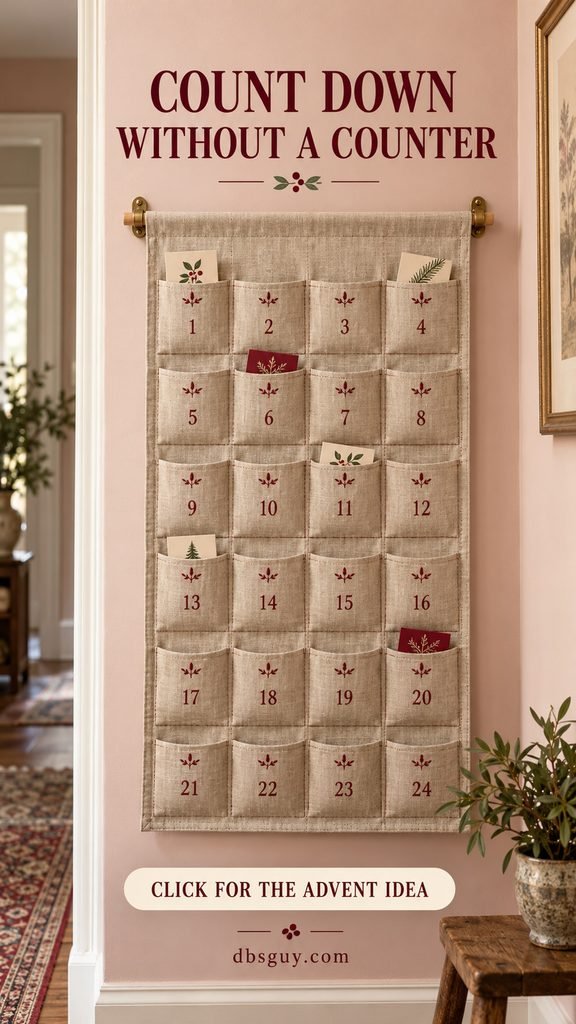
A fabric Advent calendar combines an activity with a wall display. It is a good choice for a home where a box-style calendar would occupy the only clear counter.
Choose a panel with pockets large enough for the contents you plan to use. Measure its full width and height, including the hanging support. Place it on an accessible wall away from a door swing, heating equipment, and loose cords.
You can fill the pockets with small paper notes: pick a Christmas movie, call a relative, choose tonight’s music, or read a holiday story. Those activities keep the pockets light and avoid buying 24 separate trinkets.
The concept uses a natural linen panel with 24 pockets in a four-by-six arrangement. Check the numbers and pocket count when buying or making your own. Use suitable secure fixings, and keep small contents and any hanging loops appropriate to the ages in the home.
8. Collect Spare Ornaments in One Lidded Jar

An ornament jar gives spare baubles a purpose when you do not have a tree—or when the tree already has enough decorations. It also keeps a group of small objects together instead of spreading them across the table.
Use a stable vessel you already own. An apothecary jar around 8–12 inches tall can work on a side table, provided its base fits comfortably and the table still has room for its usual use.
Choose two related colors, such as burgundy and champagne. Add larger baubles first, then settle smaller ones into the gaps without forcing them. The different finishes catch the room’s existing light; the jar does not need an added light strand.
Use shatter-resistant ornaments when appropriate. A glass jar itself remains breakable, so choose another container or location where children or pets could knock it over. Keep the display back from the edge.
9. Turn One Bookshelf Bay into a Mini Forest

A bookcase can carry a small Christmas scene without an extra shelf or table. Choose one bay that you can clear by putting a few decorative objects away.
Try three bottle-brush trees in different heights, such as approximately 4, 6, and 8 inches. Leave a visible gap between them. Muted green and ivory work well with oak shelving, while a colorful collection can suit an already playful room.
Keep the trees on their own bases and fully inside the shelf edge. Preserve access to books you use often instead of decorating in front of them. The shelves and furniture should be installed and secured as their manufacturer requires.
One bay is enough to establish the idea. Filling every shelf with little trees makes the display harder to see and creates more pieces to pack away. The empty space around this small group is part of its appeal.
10. Tie Simple Bows Around Two Cabinet Doors
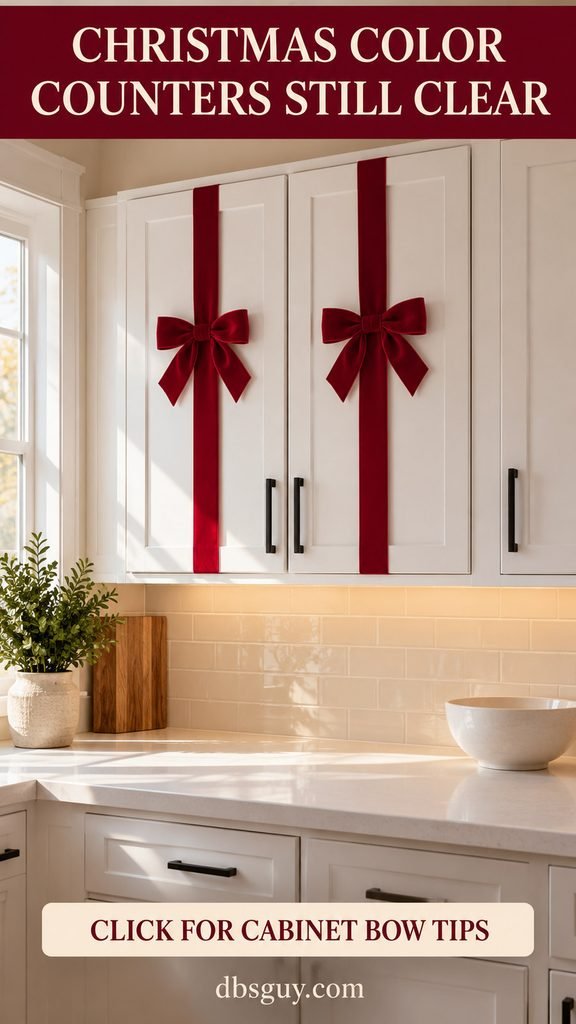
Cabinet bows use the front of existing furniture rather than the kitchen’s preparation area. Two matching bows can be enough for a compact kitchen.
Choose a pair of doors away from the stove, toaster, and other heat sources. Soft ribbon about 1–2 inches wide gives the effect without a large loop projecting into the room. Check that the finish tolerates contact with the ribbon.
Wrap a length around each door and secure it on the inside with a method suitable for the surface. Keep the ribbon clear of hinges, catches, and handles. Open and close the doors before finishing the bows; they should operate normally.
A small bow looks neater than gift-wrapping every cabinet. If the ribbon slips or prevents a door from closing, choose a different spot rather than tightening it against the hardware.
Also read: 15 Christmas Kitchen Decor Ideas That Keep Your Counters Clear
11. Keep a Cocoa Corner on a Movable Tray
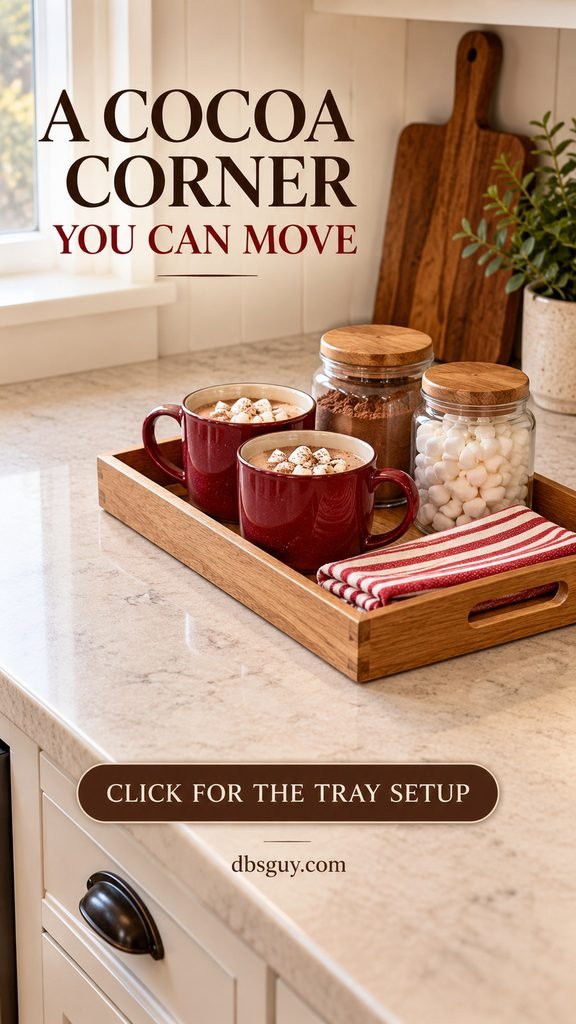
A cocoa corner makes the holiday detail useful. Keep it compact enough to lift away instead of turning it into a permanent claim on your kitchen.
Begin with a handled tray that fits the available surface; about 10 by 14 inches is a useful example to measure against. Add two mugs, a closed cocoa container, and a small closed jar of marshmallows. Use the jars and mugs you already have if they suit the space.
Keep this as a storage and serving setup, separate from a kettle, hot appliance, or cooking area. Prepare hot drinks in the normal clear work zone. Store ingredients according to their labels and keep them protected from moisture.
A cranberry mug or striped napkin tucked into the tray can carry the Christmas color. Before arranging everything, decide where the tray will go when you need the counter. If there is no convenient resting place, reduce it to two mugs and one container.
The image shows the tray during serving, with the mugs filled. Between drinks, wash and dry the mugs and return only clean, dry items to the setup.
12. Add Small Bows to the Dining Chair Backs
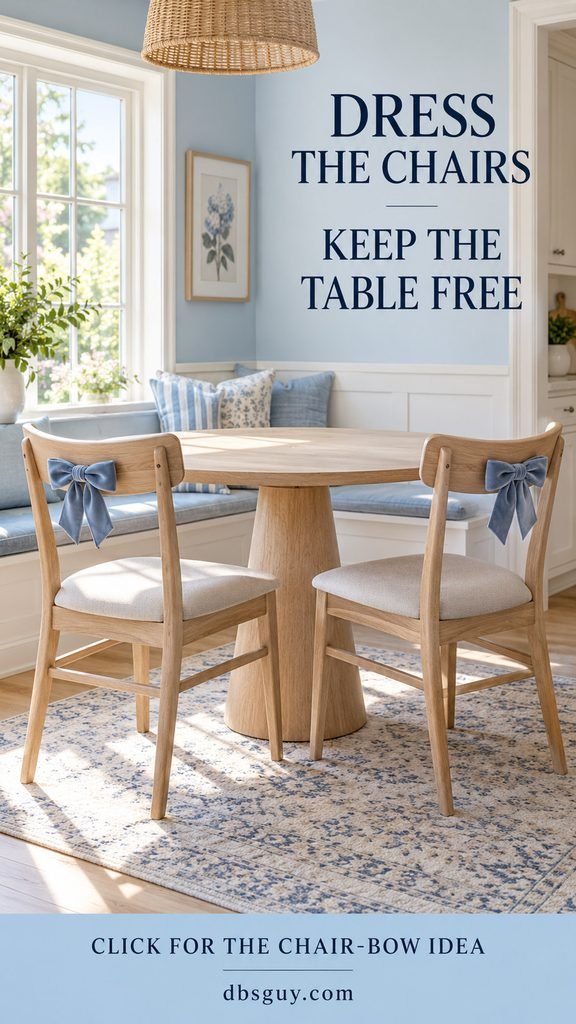
Chair bows are helpful when a small dining table cannot spare room for a centerpiece. The decoration stays on the furniture while the surface remains available for plates or work.
Use chairs with a suitable upper back rail. Tie a small bow securely without covering a grip point or affecting how the chair is carried. Keep the tails short, clear of the seat and floor, and on the back rather than the side where they might catch clothing.
Dusty blue velvet gives the pale wood chairs in the image a soft winter look. Burgundy cotton ribbon or forest green grosgrain can also work. Start with two chairs rather than decorating every seat.
Sit down and pull each chair out after tying the ribbon. If you can feel the knot through the back or it keeps sliding, change its placement or skip the bow on that chair.
13. Swap the Art Inside a Frame You Already Hang

A winter art print can supply the Christmas mood when you have no spare corners or display surfaces. Reuse an existing frame and keep the wall arrangement as it is.
Choose artwork sized to the frame and mat opening. An original sketch, your own photograph, or a print you have permission to use can feature a snowy path, evergreen branches, or a simple winter landscape.
The scene in the concept image uses deep green trees and warm ivory snow in a brass frame. Those colors connect naturally to greenery and cream textiles elsewhere in the room.
Store the everyday artwork flat in a protective sleeve while the seasonal piece is displayed, and avoid overfilling the frame. This is a particularly useful choice when the wall already has a secure fixing and you want no new installation.
14. Hang One Unlit Paper Star in a Clear Window Area
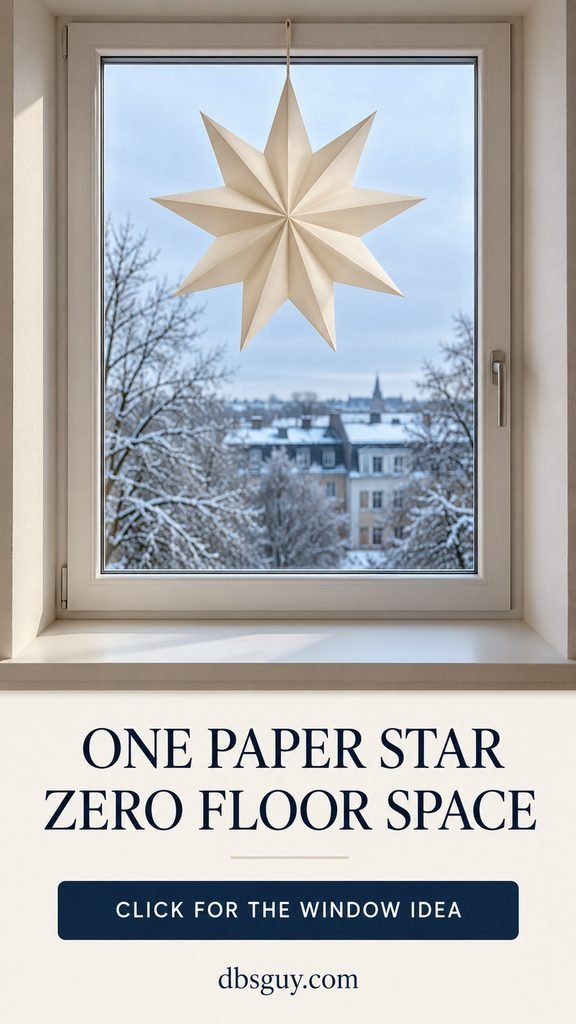
A paper star gives a small room a recognizable holiday shape without needing a collection of objects on the sill. A single star can be more readable from the sofa than several tiny decorations.
Start with a lightweight star about 10–14 inches across and check its scale against the window. Use a suitable secure fixing in a clear upper area and a short individual tie. Keep moving panes, handles, blinds, and required escape access unobstructed.
Leave an ordinary paper star unlit. Do not insert a bulb or wind a light strand through a handmade paper decoration. Daylight or the room’s existing light can reveal the folds, as shown in the concept.
Choose a dry position away from condensation and heating equipment. If the window treatment would catch the star, place it on a suitable interior wall instead. Paper pieces should have room to hang without brushing fabric.
Also read: 17 Indoor Christmas Window Decor Ideas That Glow Beautifully After Dark
15. Use One Low Centerpiece You Can Lift Away
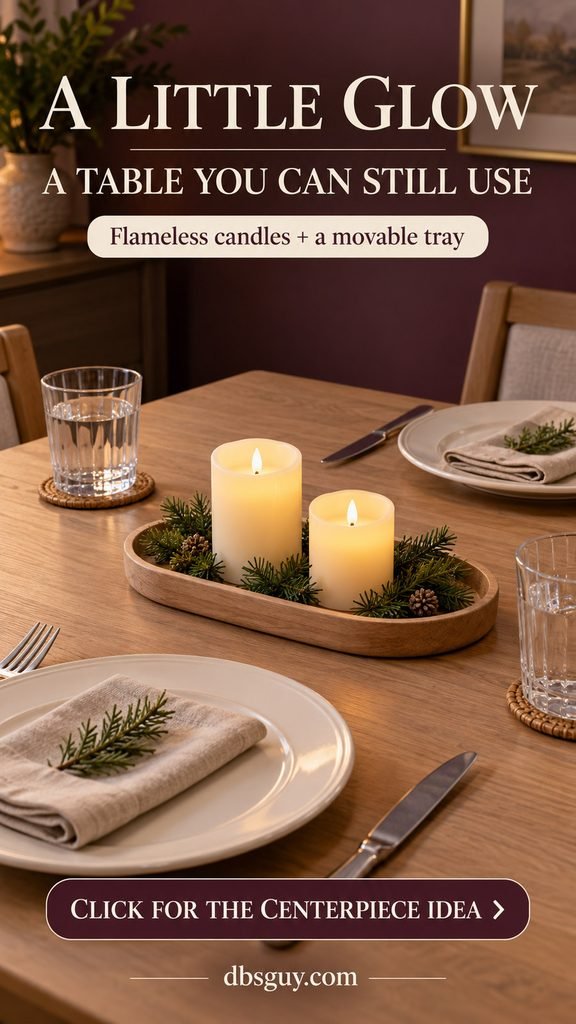
A small table can still have a centerpiece if the whole arrangement fits on one removable tray. This works especially well on a dining table that also serves as a desk.
Try a shallow oval tray around 12–16 inches long, then check it with your normal place settings. Keep the arrangement low enough to see across. If the tray crowds the plates, choose a smaller one or remove it during meals.
Use a few pieces of unlit faux greenery and one or two purpose-made flameless pillar candles. Keep their switches accessible and follow the battery instructions; secure battery compartments are particularly important around children.
The concept shows ivory candles and greenery against a light wood table. There is no need for more ornaments around the tray. Store the whole display on a suitable shelf when the tabletop needs to become a work surface.
Choose a Few Ideas That Fit Together
For a small living room, a pencil tree can be the main feature, with one tartan cushion carrying its color to the sofa. If the floor is already full, let a flat felt tree or an art swap provide the focal point and keep the seating arrangement as it is.
In a compact kitchen and dining area, cabinet bows can add color while a cocoa tray and chair bows make the spaces you use feel festive. The tray should have a place to move, and the chairs should remain comfortable.
Before buying anything, picture how you will store it in January. Flat art, empty fabric covers, and a folded calendar are easier to tuck away than a rigid display. Check whether a paper star actually folds closed; permanently assembled pieces need a box that protects their shape.
Stop when the room feels welcoming and still works comfortably. A few details you can enjoy every day are enough.
Questions About Small-Space Christmas Decorating
How can I decorate for Christmas with no room for a tree?
Use a door wreath, a flat felt tree, or a seasonal artwork swap as the main feature. Add a pillow-cover change or small chair bows if they suit the room. You can have a recognizable Christmas palette and focal point without a tree stand.
How do I make a small room feel festive without making it look crowded?
Remove a few everyday decorative objects before adding seasonal ones. Choose one main feature and repeat its color in a small number of accents. Keep useful surfaces partly clear, and check the view from the doorway rather than judging each display only close up.
What Christmas decorations are practical for a rental?
Textile swaps, freestanding objects on suitable existing furniture, and art changes inside existing frames need few installation changes. For attached decor, check your lease, the surface, and the fixing instructions. A product described as removable still needs the right finish, preparation, and removal method.
When should I decorate a small home for Christmas?
There is no required date. Late November is a useful planning point for many US households, but you can decorate earlier or later. Measure and choose your reusable pieces first; if you want a cut tree, plan around its care and condition rather than leaving a drying tree in place just to match a calendar.